God in Her Glory {1b}: A Good Facebook Debate (for a change)


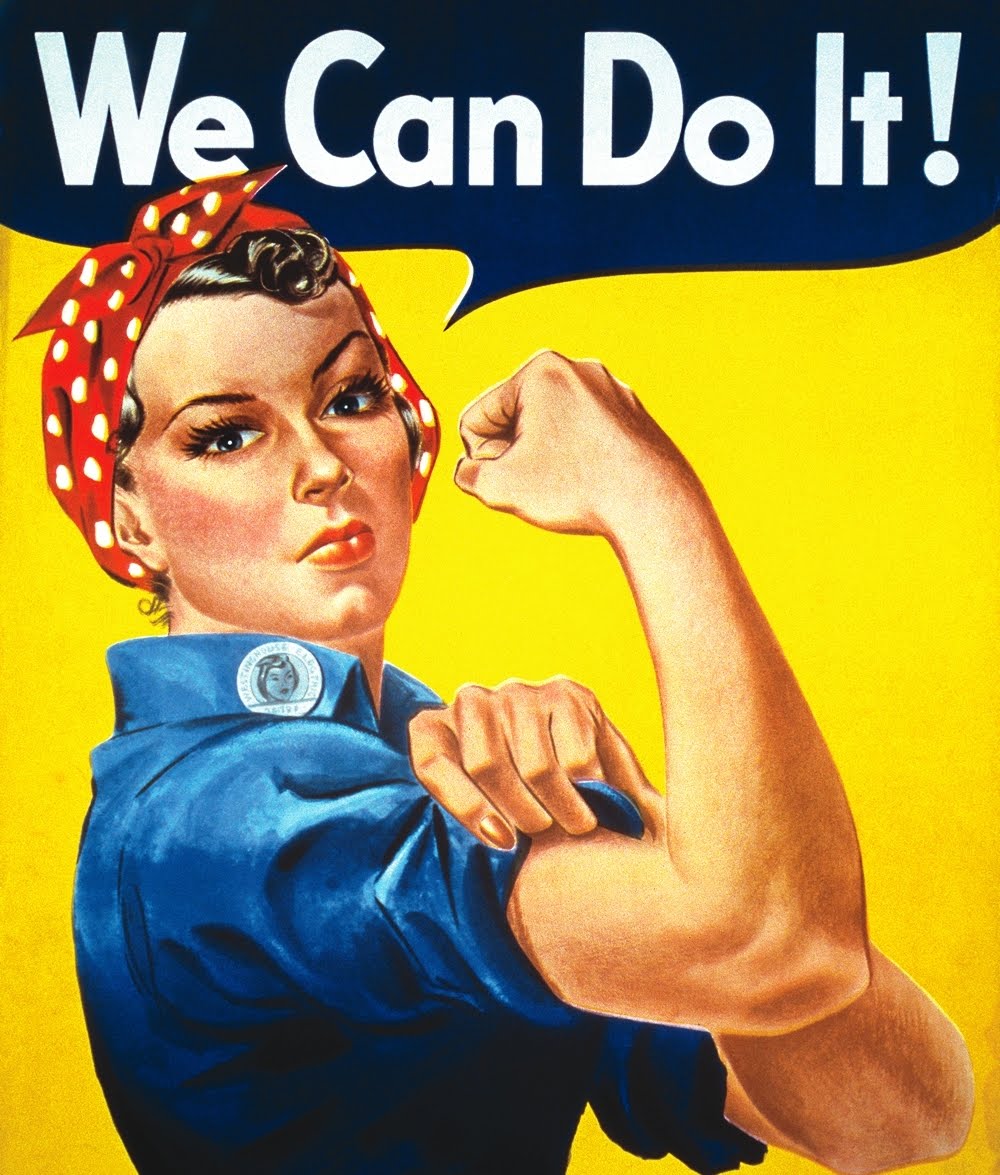
wwii-woman-we-can-do-it-feminismWow. I’ve actually been surprised at the response to the last post in this little mini-series on using feminine language to talk of God. I thought I was addressing one simple thing in the life of churches, but I misjudged the degree to which people would feel like this touched on everything from their thoughts on the Bible to the nature of Jesus himself. One of the best sets of exchanges was on Facebook in response to yesterday’s post. Below, I’ve reproduced a lightly edited version of the conversation. I hope you find it interesting as well. And let me know what you think!

DEBATER: Your post says, “The model of God as Father may be profound and true; but it is not the only model, and it does not render other models less true or profound.”  It’s Jesus’ own self-disclosure and revelation of God. It’s more important than any other ‘model’ and it isn’t really a model. “Father” is not a metaphor. Its a reality for Jesus. And I’m not talking about Jesus’ physicality like his weight or hair color. Jesus revelation is of God as Father. That’s the particularity. He said pray to God as father. And he’s the Son. That’s ontological. The feminine is redeemed in Jesus, but its redeemed not by Jesus taking on the sign of the feminine, but by taking on the sign of the masculine redeemer of the oppressed and abused feminine.

ME: Your last line especially uses terms and ideas entirely foreign to the Scriptures. I’m actually shocked that you saw no issue in writing that. Women need a male redeemer to be redeemed? Even if you point to the ancient cultural idea of the male kinsman-redeemer, surely you aren’t saying that this (clearly) cultural accommodation is some revelation of the essentially gendered nature of God and redemption? The Old Testament also had lambs being sacrificed, and not people. Does that mean that Jesus in some sense had to partly be an “actual” lamb rather than a metaphorical one?
Continue reading
God & Her Glory {1}: “Our Mother, Who Art in Heaven…”


T78 INT 70

Well, they warned me.

It was my first year at my first seminary. I had the honor of being chosen for an “Inter-Seminary Seminar” course in which people from five very different seminaries got together, were given a topic they all disagreed about, and then spent a semester writings papers to and debating with one another.

One of those seminaries was a liberal Lutheran one. I was told ahead of time that the students (usually women) from this school, every year, always made a big, emotional deal about masculine language being used in the papers. And indeed, at the beginning of every single paper discussion, the first comment was always a tear-filled lament over the use of masculine pronouns throughout the paper.

And so, when it was my turn to write a paper, I tried to be sensitive to this. I changed “mankind” to “humanity”, “brothers” to “brothers and sisters”, etc. And yet, when my paper came up for discussion, they opened up once more with an impassioned complaint against the male-centered language. I told them that I had tried to be sensitive to that. They said, “no, the problem was in your use of the masculine pronouns for God!
Continue reading

National Geographic (& a poem) on International Women’s Day


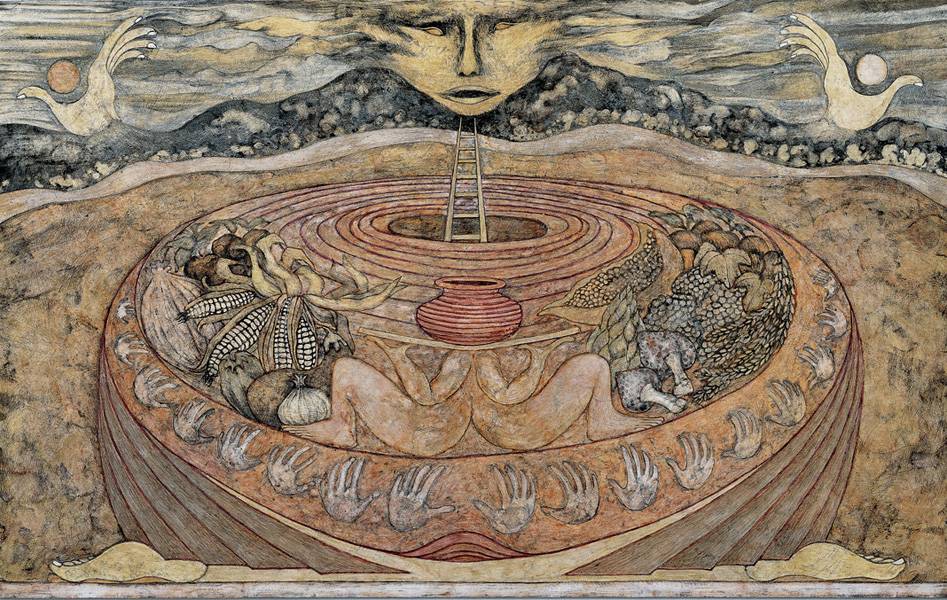
Sandorfi-KalfonariumToday is International Women’s Day, and to honor it, National Geographic has a powerful photo spread of women from around the world, called “Portraits of Strength”. While looking through some of the comments, I saw this beautiful poem posted by the poet herself. Read the poem, see the pictures, and listen to the stories of a woman today.

I am a tree
Helen Bar-Lev

Did you think I was a woman?
Oh no, I am a tree
rooted and immovable
impossible to conceive
the scenes
that I have seen

Now gnarled and warped
weathered and aged
wrinkled and withered
bent to the ends of recognition
too rigid to give in
to the whim of man
I stand true to the tune
of the wind echoing
my own inner rhythm
persistent, consistent, constant

Perhaps every tree
was once a woman –
only a woman could stand so strong
fall so proud
when the axe of age claims her
and earth sets a bed for her

© 10.2006 Helen Bar-Lev


[image credit: “Kalfonarium” by Istvan Sandorfi]

On Theology: Choose Your Own (Feminist) Adventure


Delaunay-City-Paris

I recently told some friends about this year’s Lent series on “Male Feminist Theology”. One of them looked at me suspiciously and said, “I know what each of those three English words mean by themselves, but I have no idea what they mean together; it sounds like you’re fitting together things that don’t naturally go together”.

People often hear phrases like “Black Theology”, “Liberation Theology”, or “Feminist Theology”, and feel like there is a profound arrogance at play–isn’t simple “Theology” enough? Why must each group have their own pet theological opinions that belong only to them? But this is to profoundly misunderstand these theologies.
Continue reading

Quick Christian Feminism Quiz: What do you think of this image?


edwina-sandys-christa-edit

From Lynn Japinga’s excellent Feminism & Christianity: An Essential Guide (p.93):

Artist Edwina Sandys created a sculpture of a female form, arms outstretched as if hanging from a cross. The sculpture, entitled Christa, has created controversy wherever she is displayed. Critics say the statue defies the historical fact that Jesus was a man. Some viewers feel that the symbol of the cross is degraded or even blasphemed by a Christ in female form. Others are disturbed by the sexual overtones of the naked woman. Some people are troubled by yet another violent image of female suffering. A few people see in the sculpture the message that the death of Jesus symbolizes the pain of all human suffering.

The response to [this image] reveals various theological assumptions. Some people dismiss…the sculpture because they are literally false. Jesus was a man. End of discussion. Other people consider these images offensive and uncomfortable. It insults Jesus, and them as well, to think of him as a woman. These imaginative reconstructions of important events in the life of Jesus pose an important theological question: What difference does it make that Jesus was male?

Have at it. What do YOU think about this piece? What’s your first gut reaction? Why? What difference does it make that Jesus was male?

Continue reading

Lent & Male Feminism: Reflections & Repentance


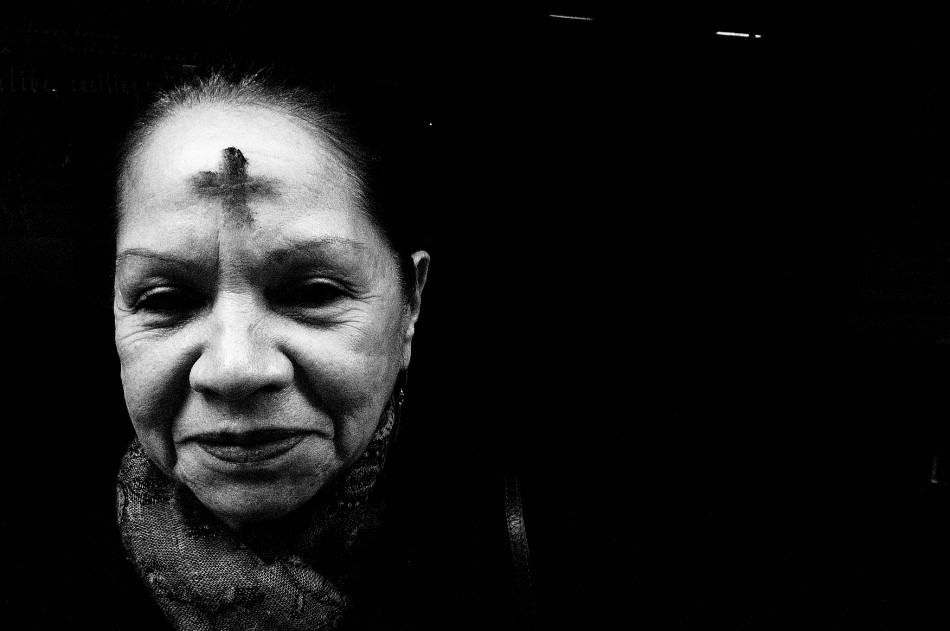
ash-wednesday-faces-of-the-faithful-photos

Today is Ash Wednesday. It is the beginning of the Lent season of the Christian Church Calendar. It is the time of year in which we turn up the volume on those darker whispers in our hearts to hear what they say. We turn our ears to the cries of the world bear the wounds of a weeping earth in our hearts and hands. And oh, the wounds are deep.

We come to this Lent with the weight of so much on our collective shoulders: so much brokenness, so much injustice, so much pain, heartache, death, and violence in the world. I honestly thought that 2015 would bring relief from 2014. So far, it has not.

But in the midst of the chaos that reigns both within and without, I am determined to turn my thoughts and this blog towards one area in which the Church as a whole needs to repent; an area in which I feel we can make some real progress in this day and age: Women in the Church.

I do have an on-going series on this topic that I’ve been adding to for the past couple of years, but I think it’s important and helpful to turn towards it particularly now. Lent has always had a deep connection to this topic for me.
Continue reading

Why my soul is glad to have feminists around me


wwii-woman-we-can-do-it-feminismThis is a post in our on-going series on Women in the Church.

As I wrote last week, I was at my in-person seminary intensive the past two weeks. While there, I met a woman who is about to be ordained a minister in my denomination. We were all sharing our stories and I told her I was raised a Southern Baptist. Having been raised in area where they have little to no foothold, she had only had one experience with a Southern Baptist.

She was working a table at a conference where an older gentleman carrying a large briefcase approached, telling her how excited he was about the next speaker–a “fellow Southern Baptist”. Not being familiar with the speaker’s work, this woman asked the gentleman what the work was on. He put his briefcase on the table, opened it up and pulled out a large tome, saying “this is his book, and it is wonderful.” He almost began to summarize its contents, but stopped short, instead pulling out a much smaller paperback, saying “but that book may be too hard for you to understand. Here, look at this one. It’s much simpler.”

He then realized he had no idea why a woman would be at this conference in the first place. He asked, “and so what do you do?”

She told him that she was at seminary studying for her Masters of Divinity.

This gentleman quietly put the books back in his suitcase, shut it, locked the clasps, looked at her, and solemnly said, “you know you’re going to burn for that, right?” And he walked away.

Continue reading

AMAZING Interview and Q&A about Women in the Church


haddad-mimi-rhe-egalitarian-womenWell, I think it’s time to restart our on-going series on Women in Ministry, don’t you?

While researching a particular argument for limiting Womens’ role in the Church, I stumbled on this interview and Q&A on Rachel Held Evans’ blog. It is a conversation with Mimi Haddad, President of Christians for Biblical Equality. And it is wonderful.

This whole disagreement about Women in the Church can produce a lot of noise that’s difficult to sift through. Too often, people on both sides end up retreating back to their respective sides and both fulfilling a lot of stereotypes while lobbing that accusation at the other side. This ends up entrenching the conversation even more deeply and intractably. The conservatives end up speaking sort of demeaningly about women (even unintentionally) and accusing egalitarians of not believing the Bible, all while egalitarians end up resorting to radical and simplistic feminist-sounding rants and calling all conservatives misogynists.

Haddad’s interview is wonderful because it moves against this. She is gracious, though firm in her convictions, and maintains the big picture of the discussion rather than getting lost in the rabbit-hole of interpreting individual proof-texts. She speaks in such a conversational, disarming, and winsome way. She brings up common-sense and clear-headed perspectives that are such a breath of fresh air for someone who sits for too long trying to pick apart individual texts. You can tell she loves the Church and the Bible and wants to honor them both well.

It also reinvigorated me to continue this discussion. There is still much more to be said, and as I have the privilege of being part of a church that will be ordaining its first female elder next month (the first church of this kind I’ve been a part of!), these issues are especially pertinent to those around me and the discussions we’re having.

And so, in the weeks to come, see this space fill back up with this discussion. Many of the things I want to write about will be building upon many of the ideas found in this interview and Q&A. So, if you want a big picture preview of what’s come, check it out. Really, I can’t recommend it enough.

Two quick questions for all you complementarians out there….


I’m still in the process of writing my first post on a specific text (1 Timothy 2:8-15). It’s not done yet (I chose to have an amazing of night full of wings and really good friends instead of writing it).

Because of the impending holiday weekend and the travel days that it entails, I’ll probably be putting that one up on Monday (sorry to get everyone fired up just to drop you for almost a week), but in the meantime, I wanted to solicit some help from my more conservative friends out there (also usually called “complementarians“) on a couple of questions I’ve had during this on-going series on Women in the Church. First:

Under a complementarian view, what would the traits of a failed husband in this respect look like? In other words, what does a “feminine” husband look like? Does that look anything like the way you think women are supposed to act in the home?

What I’m getting at is this: when I think of these answers (on both extremes), I think of terms like “weak, passive, indecisive, silent, not-present, abusive, exploitative, manipulative, and aggressive”.
Continue reading

A “vagina” & minor theological disagreement is going to keep a good book off of a Christian bookstore’s shelves


Just look at that smile. Doesn’t seem like the face of someone that wants to destroy Christianity, does it? Well, some would disagree, and one Christian bookstore wants to protect us from her.

One of the best voices in contemporary Evangelicalism today is Rachel Held Evans. She writes about many things, but a major part of her writing–and the topic of her most recent book A Year of Biblical Womanhood: How a Liberated Woman Found Herself Sitting on Her Roof, Covering Her Head, and Calling Her Husband “Master”–is the place of woman in Christian homes and churches.
Continue reading