Women & the Church: What’s Adam & Eve got to do with it? [1]


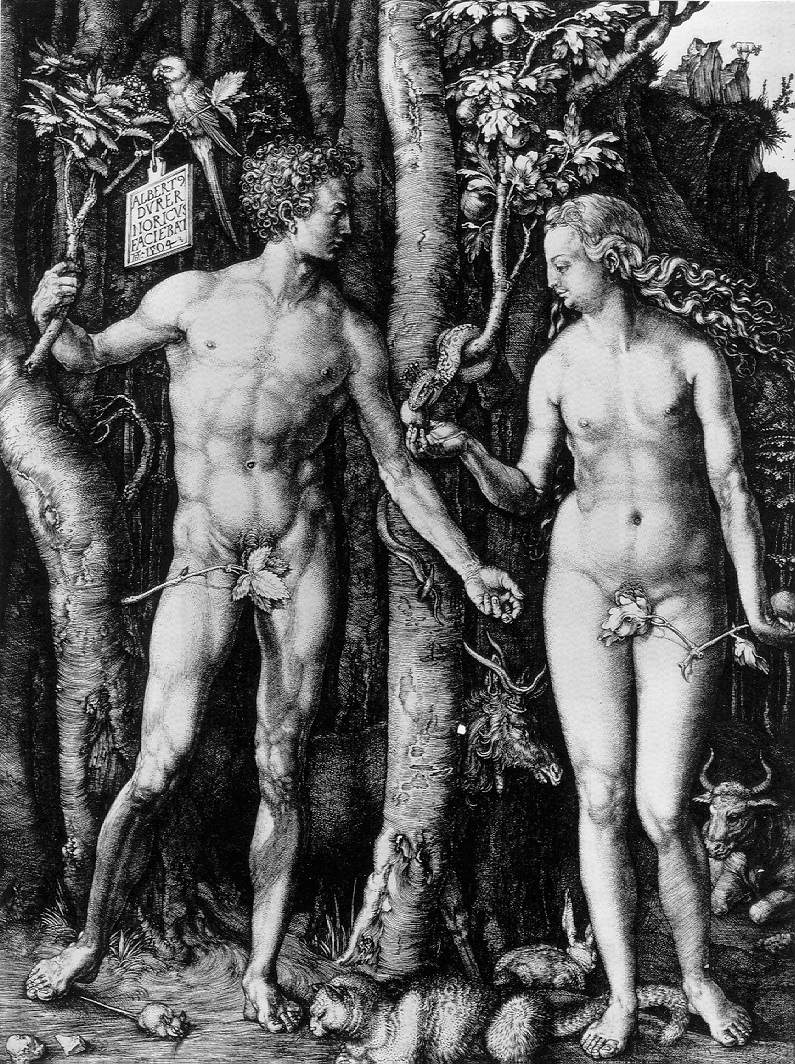
durer-bw-adam-eve

As I’ve been looking into these “Women in Ministry” discussions for this on-going series, they usually follow a similar pattern. Conservatives will point to some Bible verses, Egalitarians will point to the context (as I did in our last post), and then, at some point, the conservatives bring up this simple, yet logical and reasoned argument:

Yes, you can point to the cultural context all you want, but at the end of the day, Paul’s reason for what he says, is not the cultural context, but the very structure of pre-sin creation in which God created Adam first. This is something that’s true no matter the context.

Now, I’ve said repeatedly that my egalitarian beliefs come not from desire to move away from the Bible, but my attempts to be all the more obedient to it. And so, I want to take this argument as seriously as possible. I’ll attempt to do that in these posts.

As I started writing up the problems I had with this “creation-order” argument, it became so long, that I had to break it up into two posts. Today, we’ll focus on the particular Timothy passage in question and other related things that Paul writes. Tomorrow we’ll focus on the Genesis story itself to see what it might say to this.

The Timothy Passage

Continue reading

Advent & Sex-lessness: here’s to singleness & celibacy!


sandorfi-le-pardon-wide

Yesterday, I wrote a post about some implications of Advent on sex. And, of course, I stressed the goodness and beauty and transcendance of that act as God intended it.

And it was one of my least read posts in a long time (as an update, interestingly, this is to date one of my most-read posts of all time!). I’m wondering if people are tired of hearing Christians talk about sex ad nauseam.

It is my humble opinion that the American Church right now is currently obsessed with sex. Well, to be fair, it’s always been obsessed with it; but now, it seems, the obsession is with “taking it back” and yelling and screaming about how Christians are just as sex-crazed, sex-eager, and sexually exciting as the most ardent secular hedonist.

Of course, they all qualify it by saying (as I even said yesterday) that this (oh my god really amazing Christian sex that we value so much) has to be “within the confines of marriage”. And so, this sex-obsession often expresses itself in an equal obsession with marriage. Preparing people for it, encouraging people towards it, beating up guys that aren’t “pursuing” women (or at least “preparing to”), and giving women tips on how to attract a “good, godly husband.”

And yet, yesterday, when I was thinking about the Advent of God into the world in the person of Jesus Christ, and the idea of the Incarnation, I realized something:

What is the story of Advent but the story of a virgin girl who has a virgin birth of a man who will remain a virgin his whole life?

The story of the Incarnation is, relatively speaking, one of the most “sex-less” stories in the Bible.

Continue reading

Advent & Sex: we are holy ground


Huber-untitled-crop

Update: I’ve also written some Advent thoughts on singleness and celibacy.

In Advent, we celebrate that God came as a human, in a mysterious act called the Incarnation. But in this act, God didn’t merely clothe himself in humanity. Flesh and blood were not the trappings of God. Instead, he became human. It was no mere illusion, nor was it a facade God took on.

God became flesh and blood.

God found it suitable (desirable, even!) to take on a body–a created, formed, physical, material body. The implications of this are huge. Take sex for example.

Advent show us that the created world can contain God, and it still does not violate God’s Holiness–his “Otherness” or “Separated-ness”. He can know his Creation in such union and intimacy and yet still remain transcendent above it. Our bodies do not challenge his Holiness. He can take it on and still remain Other. He became “one” with us in a similar way to how we become “one” with others in sex. With this in mind, let’s unpack some implications:

Continue reading

Advent & Mary: Ordained as Prophetess, Priestess, & Queen


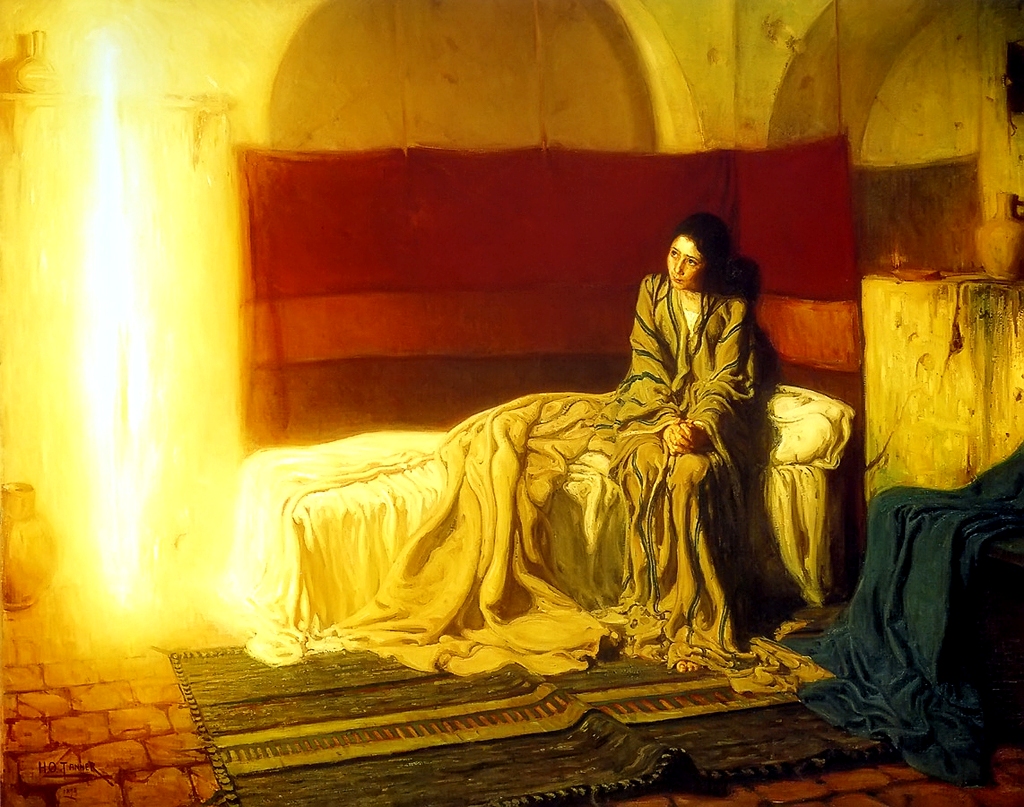
Tanner-the-anunciation-mary

This Advent, we’re seeing how this season affects parts of our lives we usually don’t associate with it. Follow the series here. This post is also filed in the series “Catholics Aren’t Crazy” and “Women Leading Stuff in Churches“.

If a woman is revered by the church for giving the faithful their savior, then surely women are good enough for leadership roles in the church to save it. –Vishwanath Ayengar

I ran across that quote in some letters to the editor of Newsweek a couple of years back in response to a cover story arguing that if women were ordained as priests in the Catholic Church, there wouldn’t have been any sex abuse scandal. I don’t know if that’s true, but the quote is insightful and (hopefully) thought-provoking.

I can hear conservatives now: Well, God used a donkey to speak! He used Caiaphas the high priest to unknowingly prophesy about Jesus before sentencing him to death! He used Judas to bring about Christ’s crucifixion and therefore our salvation! It doesn’t mean that they were fit to be ordained pastors!

Yeah, yeah, I get it. This post isn’t necessarily meant as a “proof” or “defense” of women’s place in ministry (though it’s a part of my on-going series on the topic). I just want to revel a bit in some divine mystery. Can we all just put our swords down and marvel?
Continue reading

Top 10 Reasons Why Men Shouldn’t Be Ordained [casual fri]


In this on-going series on women in the ministry of the church, I’ve certainly tried very hard to not be snarky, sarcastic, or ungracious to those that disagree with me on these issues. Nevertheless, this was a bit of fun I could not resist. It’s from a post on the (now defunct, it seems) blog Christian Feminism (of course). It was originally a comment left on one of their posts. I loved this list so much, I decided to post a few of my favorites from the list. Enjoy.

Top 10 Reasons Why Men Shouldn’t Be Ordained

10. A man’s place is in the army.

9. For men who have children, their duties might distract them from the responsibilities of being a parent.

8. Their physical build indicates that men are more suited to tasks such as chopping down trees and wrestling mountain lions. It would be “unnatural” for them to do other forms of work.

7. Man was created before woman. It is therefore obvious that man was a prototype. Thus, they represent an experiment, rather than the crowning achievement of creation.

6. Men are too emotional to be priests or pastors. This is easily demonstrated by their conduct at football games and watching basketball tournaments.

5. Some men are handsome; they will distract women worshipers.

4. To be ordained pastor is to nurture the congregation. But this is not a traditional male role. Rather, throughout history, women have been considered to be not only more skilled than men at nurturing, but also more frequently attracted to it. This makes them the obvious choice for ordination.

3. Men are overly prone to violence. No really manly man wants to settle disputes by any means other than by fighting about it. Thus, they would be poor role models, as well as being dangerously unstable in positions of leadership.

2. Men can still be involved in church activities, even without being ordained. They can sweep paths, repair the church roof, change the oil in the church vans, and maybe even lead the singing on Father’s Day. By confining themselves to such traditional male roles, they can still be vitally important in the life of the Church.

1. In the New Testament account, the person who betrayed Jesus was a man. Thus, his lack of faith and ensuing punishment stands as a symbol of the subordinated position that all men should take.

Women & the Church: 2 things that began changing my mind


the journey

If it’s not obvious so far, I wanted to make something clear before we begin: these posts in this series on Women the Church are walking through the same path my own journey took get to where I am.

In my last post, there was a concern that a friend brought up that I didn’t get to talking about the biblical texts enough. Well, this is because both egalitarians and complementarians are looking at the same biblical texts. In my own shifts on this issue, the key changes were not “new” Bible verses I found.
Continue reading

Women & the Church: we’re ALMOST to the Bible, but first…


Well, we’ve gone through some of my own journey and some of the ways this discussion goes, but the real meat of this discussion centers around a few key biblical texts. Various refutes and refutations’ refutes can be found with any easy Google search. I don’t necessarily want to re-hash the more widely-publicized textual minutiae of the issue, though some of that will be necessary.

In this post, I could easily just list the three primary offending texts and then talk about how my view differs from others’ views. But those other people’s views don’t come out of thin air. They are based in many more (and, epistemologically more important) assumptions and bigger issues that usually never get touched on.

And so, as I continue this series, today I just want to touch on the ways people go about using the Bible in this, and then defending how I feel like we should use the Bible here. After this post, beginning next week, I promise we’ll start getting into actual biblical texts. But we need to do this first.

Because, as anyone that has studied theology begins to realize, everything comes back to your chosen interpretive method and filters–what’s usually referred to as a “hermeneutic”.

Continue reading

Obama’s War on the World (and Americans) vs. the War on Women


No, this isn’t a full post (I’m still not blogging). Just wanted to vent. A week ago, a damning piece of journalism was published in the New York Times. Or at least, it should have been damning. It was a piece by Jo Becker and Scott Shane on Obama’s free use of, and unilateral decision-making authority in, Executive “kill lists” against those he uses secret intelligence to deem as “threatening”, including American citizens. Times editors, commentators, and blogs were writing about this all last week.

And nobody cares.

I was shocked that this article made barely a ripple in the media, the blogosphere, the twittersphere, facebook, and our societal conversation in general. As others have wondered, have we really let this nation go this far down this path, that it no longer phases us? These actions by Obama are a neo-conservative’s wet dream, and liberals don’t want to–under any circumstances, it seems–criticize their guy whom they, perhaps, feel is the “lesser evil”. After all, it’s an election year.

But what does phase us as a culture? What causes the blogosphere and editorials to go crazy? A New York Times article about a tech lawsuit with this golden opening line: “Men invented the internet”. (It also has a few other gender offenses.)

Is this article insensitive and silly? Yes. Should it be talked about and criticized? Yes. Is there consistent inattention and inaction given to the needs, abilities, rights, and presence of women in our national story (and Church)? Absolutely.

But is this “War on Women” worse than Obama’s War on the World, our civil liberties, and American citizens themselves? I challenge you to answer that yourself.

(And once again: no, I don’t consider this blogging.)

On Masculinity (here’s looking at you, Driscoll & Piper) [QUOTE]


I know it’s a little long for a quote, but I promise, it’s very worth your time.

Within Christianity, the masculine image of God is often defined in these terms of control, power and dominion. Much of the Christian faith, though, requires that men recognize their limitations and depend on God. We accept salvation through his son and sanctification by the power of the Holy Spirit. It is a faith where the last shall be first (Mk 10:31), marked by a life of service to others….

Consider the definition offered by John Piper: “At the heart of mature masculinity is a sense of benevolent responsibility to lead, provide for and protect women in ways appropriate to a man’s differing relationships” ([Recovering Biblical Manhood and Womanhood] Piper and Grudem, 2006, p. 35). It is a definition that emphasizes leading, providing for and protecting women. But it offers no insight on how men relate to one another. Depending on your reading of this definition, it either smacks of male chauvinism or places greater value on women’s needs. No doubt well intentioned, it offers little guidance for men who are already confused, wounded and lost about their masculinity….
Continue reading

Open Mic: A Theology of Transgenderism? (pt.iii)


As I said in a previous post in this series (Part 1, Part 2), this problem of how the Church must address Trangenderism will be an increasing problem as time goes on. This is mainly because of how the whole idea of gender identity has changed in the past 100 years.

It is only since Sigmund Freud that we use our sexuality as an “identity”. And it’s only after the Enlightenment that living in light of one’s natural identity is seen as the highest ideal.

Now, Christianity agrees with the Enlightenment on this point, but with a caveat. A very, very important caveat that should shape this entire discussion, especially as it pertains to how we actually counsel and interact with transgendered individuals.

The caveat is this: humanity is the image-bearer of God. We are called to reflect and live in light of that Image. When we don’t do this, we are actually going against how humanity was truly designed to live. We are, in effect, acting less human, not more.

Therefore, as we become Christians and our hearts are (slowly) changed, we live more and more as our fully-human, Resurrection selves. Being joined to Jesus as our representative for true humanity, we find our truest, most truly human identity in him–not in our sexuality, not in our physical sex, not in our gender.

In Christ there is neither slave nor free, Jew nor Gentile, male nor female, gay nor straight. There is only Christ.

Continue reading