Law & Grace, Law & Grace | Genesis 17.1-18


When Abram was ninety-nine years old, the Lord appeared to Abram, and said to him, “I am God Almighty; walk before me, and be blameless. And I will make my covenant between me and you, and will make you exceedingly numerous.” Then Abram fell on his face; and God said to him, “As for me, this is my covenant with you: You shall be the ancestor of a multitude of nations. No longer shall your name be Abram, but your name shall be Abraham; for I have made you the ancestor of a multitude of nations. I will make you exceedingly fruitful; and I will make nations of you, and kings shall come from you. I will establish my covenant between me and you, and your offspring after you throughout their generations, for an everlasting covenant, to be God to you and to your offspring after you. And I will give to you, and to your offspring after you, the land where you are now an alien, all the land of Canaan, for a perpetual holding; and I will be their God.”
Genesis 17.1-8

Those Lutherans are on to something. God really does seem to come at this on the front end with some works and law, and then does the covenant switcheroo.
See other Marginalia here. Read more about the series here.

The God of Chance & Randomness | Genesis 13.14-18


The Lord said to Abram, after Lot had separated from him, “Raise your eyes now, and look from the place where you are, northward and southward and eastward and westward; for all the land that you see I will give to you and to your offspring forever. I will make your offspring like the dust of the earth; so that if one can count the dust of the earth, your offspring also can be counted. Rise up, walk through the length and the breadth of the land, for I will give it to you.” So Abram moved his tent, and came and settled by the oaks of Mamre, which are at Hebron; and there he built an altar to the Lord.

Genesis 13:14-18

I find it really interesting that this promise comes after Abram more or less left this land allotment to chance and Lot’s choice. He let Lot choose what land he wanted, and then God pretty much says to Abram “everything else Lot didn’t choose is yours!” This becomes the Promised Land for the people of God. And it was essentially leftovers. Oh the tension between Providence and Human Action!

See other Marginalia here. Read more about the series here.

Covenantal Confusion (on my part) | Genesis 6:18


But[, Noah,] I will establish my covenant with you; and you shall come into the ark, you, your sons, your wife, and your sons’ wives with you.

Genesis 6:18

I really don’t get how the idea of Covenant fits into the narrative flow here. Is this covenant “different” than the Abrahamic one? How so? What happened to it? How do we know that the Abrahamic covenant isn’t just a new administration of the Noahic one?

See other Marginalia here. Read more about the series here.

Weirdest. Love story. Ever. | Genesis 29.10-12


Now when Jacob saw Rachel, the daughter of his mother’s brother Laban, and the sheep of his mother’s brother Laban, Jacob went up and rolled the stone from the well’s mouth, and watered the flock of his mother’s brother Laban. Then Jacob kissed Rachel, and wept aloud. And Jacob told Rachel that he was her father’s kinsman, and that he was Rebekah’s son; and she ran and told her father.

Genesis 29.10-12

Weirdest. Love story. Ever.

Also notice that he kisses her even before they’re betrothed.

See other Marginalia here. Read more about the series here.

Haha. Such a great narrative turn. | Genesis 6.5-8


The Lord saw that the wickedness of humankind was great in the earth, and that every inclination of the thoughts of their hearts was only evil continually. And the Lord was sorry that he had made humankind on the earth, and it grieved him to his heart. So the Lord said, “I will blot out from the earth the human beings I have created—people together with animals and creeping things and birds of the air, for I am sorry that I have made them.”

But Noah found favor in the sight of the Lord.
Genesis 6:5-8

Greatest narrative turn ever.

See other Marginalia here. Read more about the series here.

You marry a family | Genesis 29.13-14


When Laban heard the news about his sister’s son Jacob, he ran to meet him; he embraced him and kissed him, and brought him to his house. Jacob told Laban all these things, and Laban said to him, “Surely you are my bone and my flesh!” And he stayed with him a month.

Genesis 29.13-14

Well isn’t this interesting? Rachel’s father says the same the marital vows to Jacob that Adam said to Eve. It just goes to show you that marrying one person is, quite literally, marrying their family. This is what covenant is. Think of the implications for church life as well. When someone joins the church they’re joining the entire family. This is why it is so deeply flawed to see Baptism as one’s individual “public declaration”. It is the marital vows of God and his family toward us that bring us into the family.

See other Marginalia here. Read more about the series here.

Noah, Prophecy, & the Comfort of the Earth | Genesis 5.28-29


When Lamech had lived one hundred eighty-two years, he became the father of a son; he named him Noah, saying, “Out of the ground that the Lord has cursed this one shall bring us relief from our work and from the toil of our hands.”
Genesis 5.28-29

Noah’s name means “comfort” or “rest”. This is an interesting prophetic statement concerning Noah. Hebrew irony at its best. The same Hebrew word for “earth” is used here as “ground”. Same word as in “God created the heavens and the earth”. So, how Noah will bring “relief” from the toil is by playing a part in the undoing of God’s creation of “the heavens and the ground”. In other words, he comes out of the ground to bring comfort to that ground by undoing the ground. Oh, Hebrew.

See other Marginalia here. Read more about the series here.

Abraham’s son Ishmael was part of Covenant! | Genesis 17.23-27


This is my covenant, which you shall keep, between me and you and your offspring after you: Every male among you shall be circumcised… and it shall be a sign of the covenant between me and you…. Both the slave born in your house and the one bought with your money must be circumcised. So shall my covenant be in your flesh an everlasting covenant. Any uncircumcised male who is not circumcised in the flesh of his foreskin shall be cut off from his people; he has broken my covenant.”… As for Ishmael, I have heard you; I will bless him and make him fruitful and exceedingly numerous; he shall be the father of twelve princes, and I will make him a great nation. But my covenant I will establish with Isaac, whom Sarah shall bear to you at this season next year.”…. Then Abraham took his son Ishmael and all the slaves born in his house or bought with his money, every male among the men of Abraham’s house, and he circumcised the flesh of their foreskins that very day, as God had said to him…. And his son Ishmael was thirteen years old when he was circumcised in the flesh of his foreskin. That very day Abraham and his son Ishmael were circumcised; and all the men of his house, slaves born in the house and those bought with money from a foreigner, were circumcised with him.
Genesis 17.23-27

Yes, God said that Ishmael would not be the primary bearer and “administrator” of the covenant, but he still bears its marks. Reminds me of a reading from Lesslie Newbigin where he talks about how through our election and Covenantal relationship with God, Salvation is extended to all the nations. “Election” isn’t about blessing; it’s about responsibility to extend the Blessing to others.

Other peoples (even those not in the elect people of God) participate in and receive the full benefits of being part of the Covenant. To be elect is to extend these Covenantal blessings to all nations (as we see here with Abraham). To be marked as God’s is to be placed on mission.

Ishmael was still joined to the covenant! Praise God for his gratuitous grace!

See other Marginalia here. Read more about the series here.

Death & Life; Names & Vows | Genesis 3.20-21


The man named his wife Eve, because she was the mother of all living. And the Lord God made garments of skins for the man and for his wife, and clothed them.
Genesis 3.20-21

I don’t know why I’ve never noticed this before. Why does Adam only name Eve after they sin? Further, of all the things to do after receiving the curse from God, he does this covenantal, marital act: he gives her a name.

I know this isn’t in this text, nor was it on the mind of the original writer, but it reminds me of the odd line in Revelation where God promises to give each person a new name that only He and they will know.

It seems that in the whole sweep of redemptive history, the Bride of the first Adam received a new name when he brought death, just as the Bride of the second Adam receives a new name when he brings life.

See other Marginalia here. Read more about the series here.

This is why Genesis was written (and Ken Ham doesn’t see it)


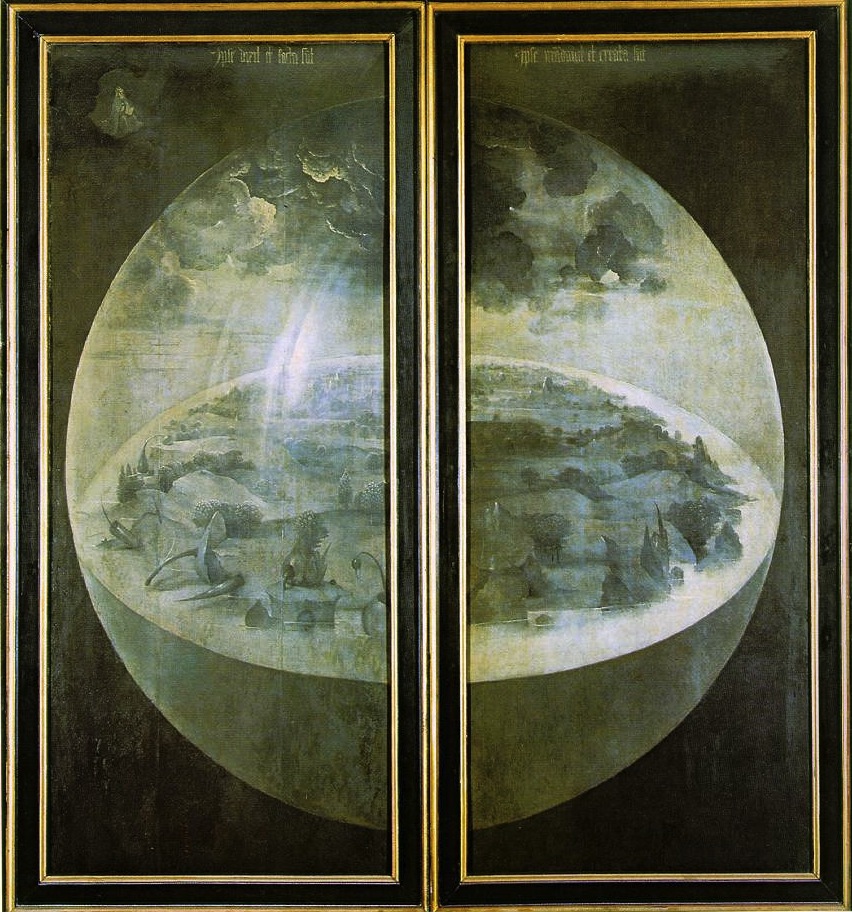
Bosch-Garden-Earthly-Delights-Outer-Wings-Creation-WorldIf my Facebook feed is representative of the general population at all, then I can confidently say that most of you have heard about the debate between Ken Ham and Bill Nye about creationism and evolution.

On this blog, I try not to get too much into issues of great contention in the church family when I don’t think it’s necessary, especially when I think it would unnecessarily prevent someone from reading this blog with a free conscience, or just mess with their head too much. But this is the one issue that I have felt the freedom to be blunt, bold, consistent, and loud about my opinion. So, I don’t have too much to add to everyone else out there that was more or less lamenting this debate more than celebrating it. Maybe I’ll have some thoughts next week coming at it from a different angle, but we’ll see.

Today, I wanted to share with you a video from the in-person portion of my Hebrew class a couple of weeks ago. To get an A in the class I have to translate, memorize, and recite a section of the Genesis 1 in the Hebrew. To help us with that, my professor made a video of him reciting it and acting out the recitation in front of us.
Continue reading

Abraham almost loses his son & he worships?! | Genesis 22.13-14


 And Abraham looked up and saw a ram, caught in a thicket by its horns. Abraham went and took the ram and offered it up as a burnt offering instead of his son. So Abraham called that place “The LORD will provide”; as it is said to this day, “On the mount of the LORD it shall be provided.”
Genesis 22.13-14

This is right after the whole “sacrifice Isaac” thing. To me, this such an odd response. Not only does Abraham worship God after this, which is crazy enough as it is, but he also sets up a memorial to remember this by! If I were him, I’d need some space from this God for a bit and I’d want to forget this incident as soon as possible.

I’ve always thought it odd that the book of Hebrews puts such an emphasis on Abraham and calling him the “father of faith” and extols his faith so much. Whenever I read that I think about how he had Ishmael with Hagar, due to a lack faith, and (twice) gave his wife up to be the wife of someone else because he was scared they’d kill him–another example of a lack of faith!

But then I read things like this and I think to myself, “Oh yeah, now I get it.”

See other Marginalia here. Read more about the series here.

Women & the Church: What’s Adam & Eve got to do with it? [2]


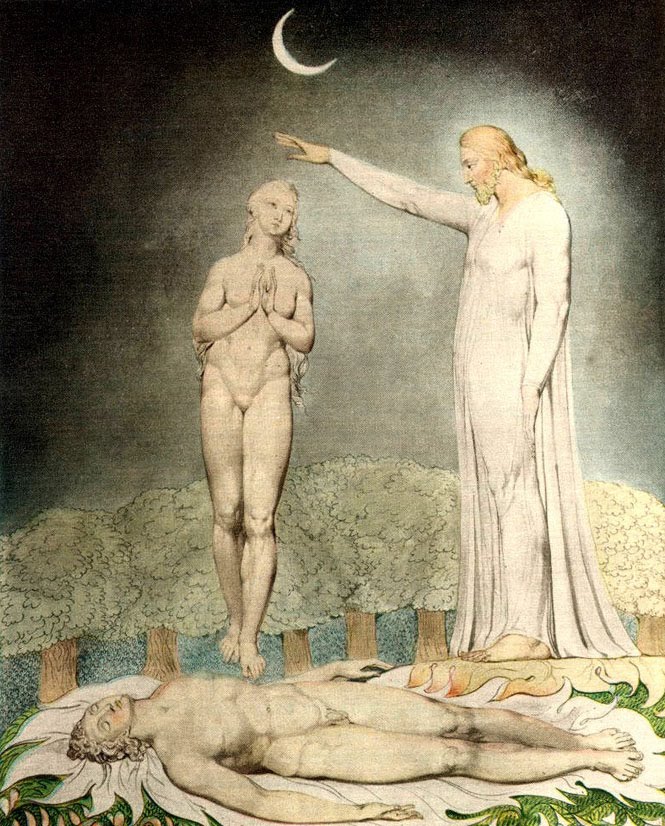
blake-creation-eveYesterday, in our on-going series on women in leadership roles in the church, we began looking at an argument often given by conservative complementarians when presented with the cultural context behind 1 Timothy, some of the most seemingly clear verses in scripture that limit a woman’s role in the church. Oftentimes, egalitarians offer the cultural context to show that these woman-limiting verses are in fact speaking to specific things going on at the time (as I did), rather than some eternal prohibition for all churches at all times.

The conservative response that we began looking at is when they say that the cultural context is all well and fine, but Paul’s foundation for what he says does not appear to be the immediate context at the time, but rather the very structure of creation itself. We looked at those verses to try and argue that this is not at all what Paul is doing in the text.
Continue reading

Women & the Church: What’s Adam & Eve got to do with it? [1]


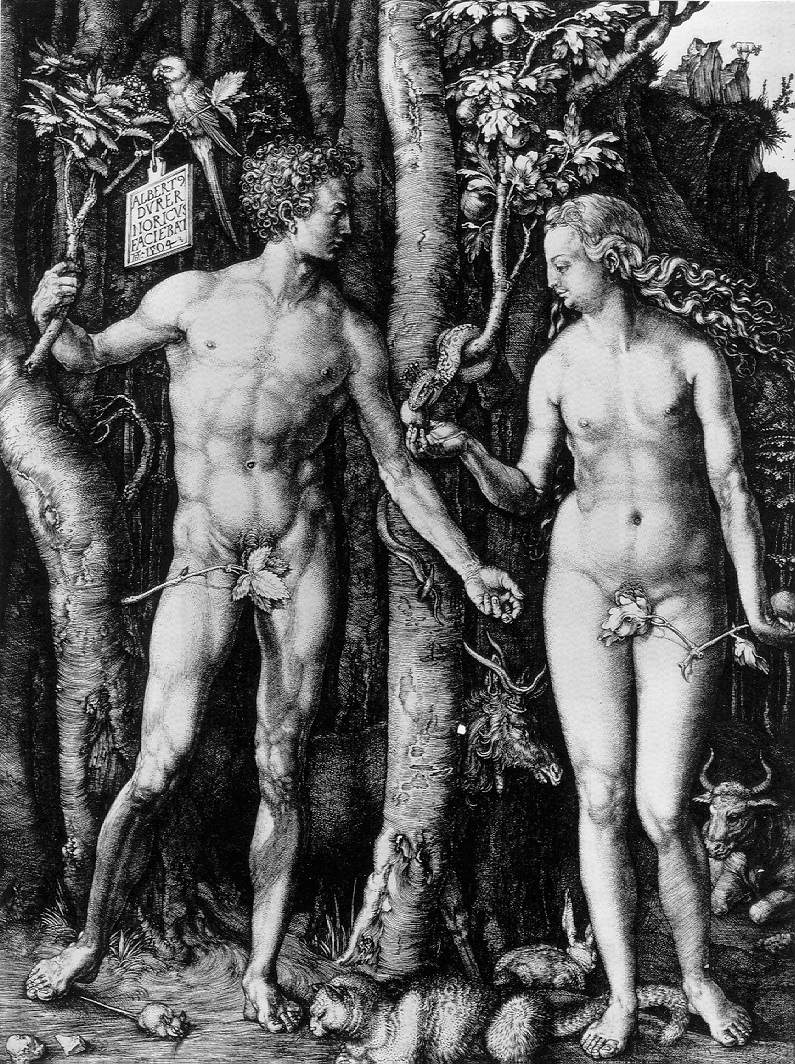
durer-bw-adam-eve

As I’ve been looking into these “Women in Ministry” discussions for this on-going series, they usually follow a similar pattern. Conservatives will point to some Bible verses, Egalitarians will point to the context (as I did in our last post), and then, at some point, the conservatives bring up this simple, yet logical and reasoned argument:

Yes, you can point to the cultural context all you want, but at the end of the day, Paul’s reason for what he says, is not the cultural context, but the very structure of pre-sin creation in which God created Adam first. This is something that’s true no matter the context.

Now, I’ve said repeatedly that my egalitarian beliefs come not from desire to move away from the Bible, but my attempts to be all the more obedient to it. And so, I want to take this argument as seriously as possible. I’ll attempt to do that in these posts.

As I started writing up the problems I had with this “creation-order” argument, it became so long, that I had to break it up into two posts. Today, we’ll focus on the particular Timothy passage in question and other related things that Paul writes. Tomorrow we’ll focus on the Genesis story itself to see what it might say to this.

The Timothy Passage

Continue reading

Class 6: NT Letters, Revelation, & The Bible in Worship (WE’RE DONE!)


This week was the last week in the six-week Bible Survey class I’m been doing at my church.

It’s been an honor to do this class, and I feel like this last one went especially well. Others seemed to find it genuinely helpful.

We ended our time in this class by talking for a little bit about how we can use the Bible–and all the information we just gleaned these past weeks–in our own, personal, spiritual lives.

To conclude the class, this Saturday we will be going to University of Pennsylvania Museum of Archaeology and Anthropology. You really won’t want to miss this. I’ll be putting a post up on this tomorrow.

For those that have followed in class and online, thank you so much for doing so. It was such an honor to be able to do this class, and I can’t believe I was given the time and grace to do it.

I hope that these resources are found to be helpful to those that invest their time into them; and that they draw each of you into a greater knowledge, love, and desire for our God as He meets us in our Scriptures.

And lastly, over the next months, I will be compiling all of these notes, as well as other essays I’ve written on the Bible in the past and self-publishing a book in both print and electronic forms. If you think about it, please pray for me. I’m starting to see that self-publishing is a lot more costly and complicated than I had originally thought.

This Lecture Covers:

  • A chronological survey of the contents and background of Paul’s letters
  • Discussion of the contents and background of the other letters of the  New Testament
  • A talk about that crowd-favorite, Revelation. We talked about how it fits into the greater story of Scripture, how it’s often misread, how to properly read it, and it’s contents and background
  • How one should approach the Bible to build up their spiritual life
  • Practical methods people can employ to know God through the Scriptures

**Side Note: twice in the audio of this lecture, I refer to Galatians and James as books that may each have been the “first book of the Bible written”. I meant to say “New Testament”, not “Bible”. Sorry.**

Download: [Audio] [Notes] Continue reading