I Am A Fearful Man (and i need to get over it) {pt2}


[Read Part 1 and Part 3 of this series]

And… intensity at work, lack of sleep, church home group beginnings, Fall TV premieres, a trip with the lady to meet the parents, and two weeks later, I find myself here, computer atop my lap, typing these words over a bowl of stove-top-made oatmeal. I’m ready to pick this blog post up again after more facebook, blog comments, and text messages than usual asking when the next post would be. This sets up a pressure under which I don’t work well, but it’s a pressure I feel is appropriate to bring up considering the content to follow.

In my last post, I unpacked a bit of my own story which has led me to often be perceived as an arrogant overly-sure man–and indeed I see this in myself often. But I went on to point out how this arrogance is not necessarily at its root sprung from pride or over-confidence, but rather a deep fear and insecurity that at the end of all things I wouldn’t be found pleasing to the God I know I love.

Continue reading

on Babel, Language, & Identity (a liturgy)


[This was a liturgy I delivered at my church this past Sunday as we concluded our series “in the beginning”.  Here is the amazing message that followed this liturgy.]

Greeting and Preparation

Leader: The Lord be with you.
People: And also with you.

Hello, my name is Paul, and welcome to Liberti Church. Liberti Church is a group of people trying to figure out what it means to be a community of believers in Jesus Christ both in and for this city. This may be your first time here–you may have randomly wandered in here or a friend brought you; or, you may be a regular attender here. Either way, we hope you feel welcome to fully participate in this time and space set aside to worship our God.

Continue reading

On Poetry & Atheism (I’m Writing for Patrol Magazine)


Sorry things have been so slow this week on the blog.  I’m still trying to find my rhythm for writing while I have this new full-time job.

As of late last week, I am the newest writer for the blogs at Patrol Magazine. Patrol is a great site putting forward some of the best writing available on culture, the arts, and spirituality from the perspective of post-everything twenty-somethings. I am the Thursday contributor to “The Scanner” section of the site. The Scanner is the place for “daily culture, media, views, and blather.” Today, my first article went up. Here’s the link:

Poetry is the Only Thing That Can Save Atheists, Says Other Hitchens Brother

I’m really excited and grateful to have the opportunity to contribute to one of my favorite sites. Like I said, you can see my writing every Thursday there on Patrol Magazine. As I continue writing, you can see all of my articles here.

Does anyone have any ideas for future posts?

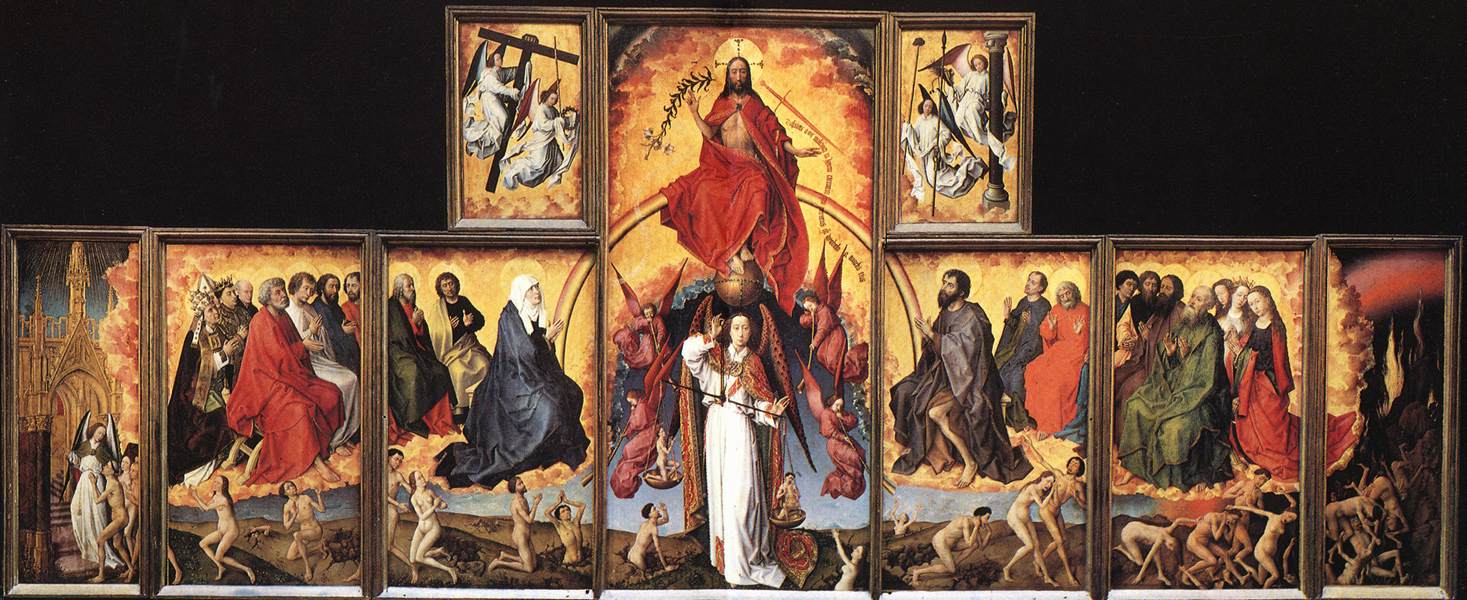
[Art above: “The Last Judgment” by Rogier van der Weyden. Just read the article. It’ll make sense.]

“Lord have mercy…”


[journal entry dated 2/28/10]

Father? Daddy?

I’m so f—-ed up. That’s just the best phrase for it. It’s Lent. It’s only a week in and I’ve already broken my fast several times. Why? Why can’t I just…stop?

(Okay, I get it.)

The point of giving something up for Lent is not to just “give something up”. At the heart-level it’s supposed to be a sign of devotion to You. That’s what it is at heart. And you know our hearts, Daddy. You know they’re weak. You know they’re willing. I’m willing Father, I’m just so f—-ing weak…

Ha!

I sound like “high-school Paul” all over again with those old Christian flavors of angst and “emo-ness”. I suppose there’s a place for him somewhere in my walk with You. But what is it? I’m not quite sure. But I don’t think he’s supposed to be here right now.

I’m secure. I’m loved. I’m Yours. I’m pleasing to You. I’m approved.

Continue reading

The Triune God is Beauty{3}


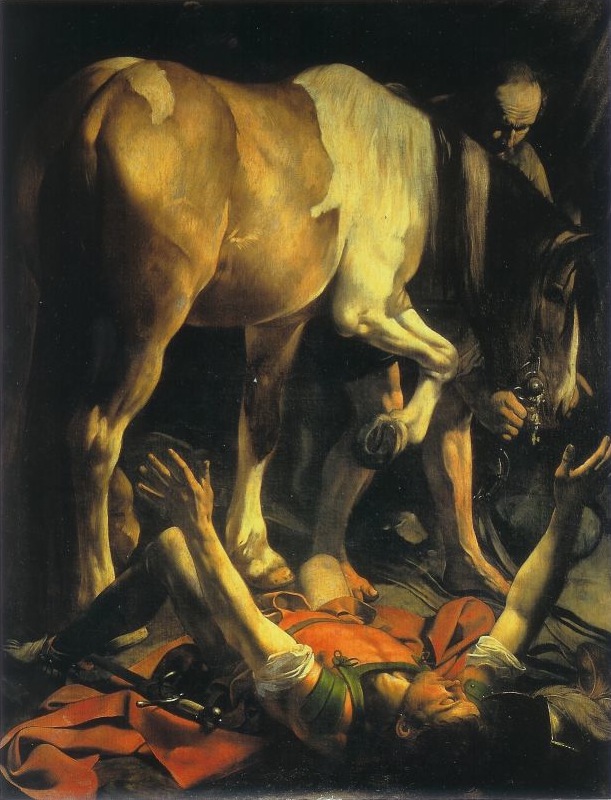
Caravaggio - The Conversion of Saint Paul 3bThis is the third part in what will end up being a fairly long and comprehensive series on Beauty. It’s based on a recent message I gave on the topic. You can find the full audio and full manuscript below. [Bold: things I had time to say // Regular: things I didn’t have time for] So far, we’ve seen why we long for Beauty, we’ve discussed what it is, now let’s apply this definition.

What is beautiful?

First and foremost, the Triune God is beautiful.

He is Three Persons (complexity) existing in One Deity (simplicity). Just think of that word God. That is the human term that he has chosen to be acceptable for us to call him. Those three letters contain the simplest expression of the Sovereign Creator God of the Universe. Most old school systematic theologies are structured the same basic way: the first actual section of theology is reserved for “the Doctrine of God”, and the first thing you learn about God is his “unknowability”. This is the fact that God is infinite, inexhaustible, holy, and completely separate from all things we could ever conceive or understand. We cannot know him. Any pursuit we go on to know him will always be futile. Just the fact that the Infinite God has revealed anything to us in a way that we can actually understand is beauty itself. He is the perfect and complete tapestry within which all things are woven together in the first place. He is peace. He is shalom. He is Beauty. But let’s look at His distinct persons as well.

God the Father is beautiful.

In Exodus 3, Moses is talking to this God who is showing Himself through a burning bush and he asks this God “Who are you?” The huge transcendent God simply says “I am that I am”. So, in the Bible and in the creation, God the Father reveals Himself clearly enough that we can know who we should worship. Think about it. The infinite God who is outside of time and space uses finite things within time and space to communicate himself. This Infinite Head of the Godhead reveals the Infinite strands of who He is in one of the simplest of tapestries: “I AM”. This is beautiful.

God the Holy Spirit is beautiful.

1 Corinthians 2 says, “As it is written, ‘what no eye has seen, nor ear heard, nor the heart of man imagined, what God has prepared for those who love him’” We often stop there. We talk about all those infinite promises God has made that no one has seen and no one can know. But this isn’t the case. Read on. Paul writes that all these things that no one has seen, all these infinite and glorious promises that would blow our minds “God has revealed to us through the Spirit. For the Spirit searches everything, even the depths of God. For who knows a person’s thoughts except the spirit of that person, which is in him? So also no one comprehends the thoughts of God except the Spirit of God. Now we have received not the spirit of the world, but the Spirit who is from God, that we might understand the things freely given us by God.” The Infinite complex Spirit of the Infinite complex God dwells within finite simple believers and what’s more, he communicates the previously unspoken thoughts of God Himself. So through the mediator of the Holy Spirit, God weaves his thoughts into the tapestry of our souls.

God the Son is beautiful.

Of course, we go to John 1 for this: “In the beginning was the Word and the Word was with God and the Word was God. He was in the beginning with God. All things were made through him, and without him was not any thing made that was made. . . And the Word became flesh and dwelt among us, and we have seen his glory, glory as of the only Son from the Father, full of grace and truth. . . For the law was given through Moses; grace and truth came through Jesus Christ. No one has ever seen God; the only God, who is at the Father’s side, he has made him known.” He is the ultimate earthly reflection of beauty. He is the living word of God. He is God of God in the flesh of man. The ultimate, infinite, precious, all-consuming, King of Kings and Lord of Lords takes on the form of a child born in a manger. Oh the humility. Oh the beauty in this act we call the Incarnation, where the infinite God takes on finite humanity.

Though much more could be said (and maybe should be) I feel I’ll stop there. This is an all too-brief picture of why/how God is beautiful, but this is because most people acknowledge that if there is a God, He is in fact what we would think of as beautiful. Otherwise He wouldn’t be worthy to worship. Most would agree with what I’ve written if in fact this was the God that existed. We’ll discuss that more next week. On Wednesday, though, we’ll talk about worship, nature, science and how all those things connect. It’s one of my favorite sections. Here are the links I mentioned earlier:

Click for Manuscript Pdf

Manucscript

Click here for sermon audio

Audio

{3John11} | Of Translations, Repentance, and Worship


bible-greek-manuscript

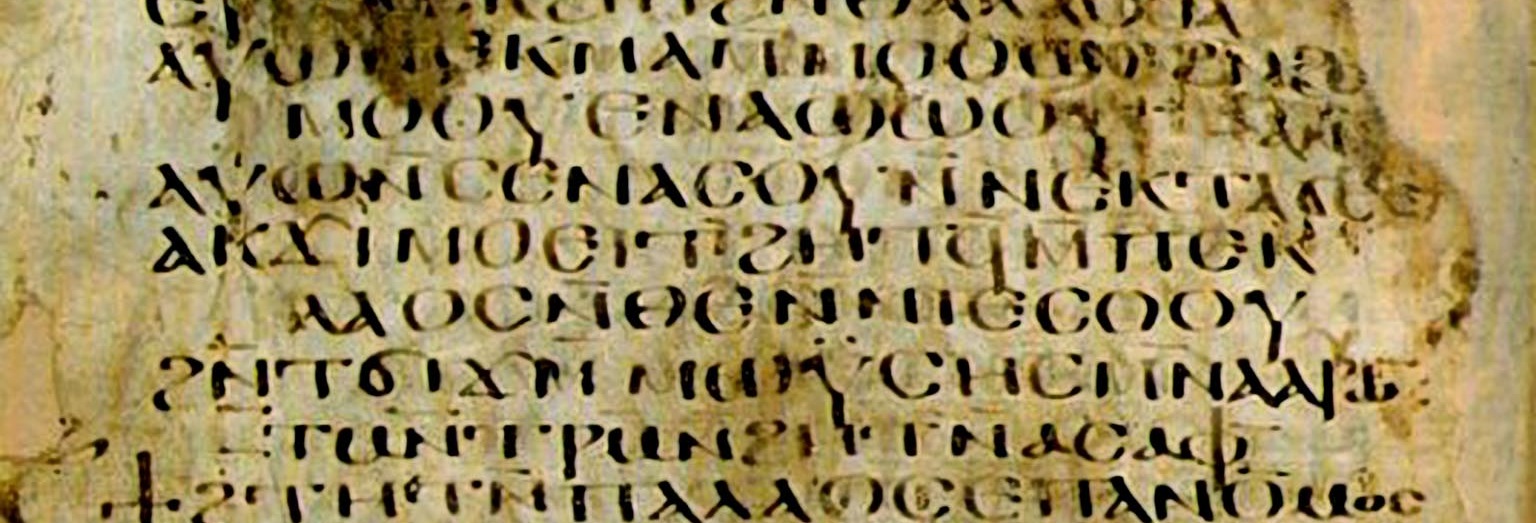
ὁἀγαθοποιῶνἐκτοῦθεοῦἐστιν· ὁκακοποιῶνοὐχἑώρακεντὸνθεόν.

[ho agathopoion ek tou theou estin; ho kakopoion ouk heoraken ton theon.]

The one who does good is

[of/from/because of/in the manner of/apart from/part of/controlled by]

God.

The one who does evil has not seen God.

{3John11}

Forgive these fragmented and perhaps poorly-written or elementary thoughts. I write this post not to “show off my Greek” (today was the first I had opened it up in the past couple of months) nor to confuse people by talking very technically. I (hopefully) write this as worship.

I finished translating 3 John today. I’m starting with the shortest New Testament book and just continually trying to translate up to the longest. It’ll probably never be done, but it’s some sort of system, so it works for me. I always know what’s next so that’s helpful.

Anyway, like I said earlier, this was the first day I had gone back to 3 John in a couple of months. I only had a few more verses left so I quickly finished it and then started the first couple of verses of 2 John. I then began to shut my books and move on to the next item on my reading list when I realized something: I couldn’t even remember vaguely what I had translated in 3 John. I had been so concerned with just translating and “getting it done” that I forgot to even meditate or think on it.

I turned to my translation and looked over what I had written and the above verse popped out at me. So, I’m writing this as my act of both repentance for having this gift of the ability to translate and not using it to know God more, and as my act of worship, that I might explore some nuances in this text.

The problem with this verse is a problem common in any language: the preposition. That word εκ [ek] means any of the bracketed things above. Most simply, it’s translated as “of”, but the question always turns to “what does ‘of’ mean here? “Which of the myriad of possible translations does this mean? Well, you look at the context.

What I noticed is that whatever it means, it’s supposed to be a contrast to “The one who does evil has not seen God”. So whatever this “of God” means, it is in contrast with “not seeing God”. It also means that being “of” or “from” God is a matter of seeing him. To see Him is to be joined to Him, to be of Him, or to be from Him. I don’t know enough about Greek to make a definitive call about precisely which translation is correct, but this idea is enough for me: walking obediently so as to please God is a matter of seeing God, and those that continue in disobedience show that they have not.

The way this is phrased let’s us know that whoever is walking obediently can take no credit for this, because their obedience is of/from God. But at the same time, those that are still walking in disobedience bear the full weight of responsibility for their disobedience because they have not seen Him. It is a mystery that leads to God’s greatest Glory and our greatest joy.

So for those saints weary under the weight of their sin and disobedience, be encouraged: obedience and doing good is not a matter of striving and fighting your own will. It is a matter of seeing Him and therefore being joined with Him so that all our being, living, and moving is from/of/in the manner of God. Seeing and therefore being joined to Him through Christ allows us to move according to His nature and will. All disobedience, sin, and evil results from not seeing God. He is our hope. He is our salvation.

Let us therefore fix our eyes on Him, and run.

Textual Criticism & the Glory of God


Here is the summary of my final paper for the Textual Criticism portion of my New Testament Intro class.  Enjoy:

My ultimate goal in all these classes is doxological.  That’s how I’m judging my success; not by grades, but whether not I have a greater affection for Christ at the end of each course.  I can say I have that at the end of this course, but it’s not without a price, I feel.

What do I do with, say, the ending of Mark?  How do I preach that text?  Though I absolutely disagree with the Textus Receptus-only arguments, I must say there’s something romantic and (dare I say) “Reformed-sounding” in their arguments.  The idea that God is Sovereign and Providential enough to bring about a final text, even with all its textual errors is enticing (probably because it removes all further critical thought from the process).

It’s ultimately more difficult to reject these notions, though, because you’re forced to face a few realities.

Mainly, what do we do with these texts, then?  If we keep them, then we’re Catholic because we’re placing tradition over the Word as it originally was.  If we get rid of them we seem liberal because we’re subjecting and changing the Bible based on an authority outside of itself.

What about the hypothetical stay-at-home mom that comes to me with the ending of Mark, wanting to know what it means?  Do I unpack textual criticism on her and tell her it wasn’t original so don’t worry about it?

In that case, what if Jesus’ words in John 8:1-11 have been such a comfort to her through the darkest of times?  Is that the Word of God, while the ending of Mark (snakes and all) is not?  How much doubt will it give her to know that there are words in her Bible that John Mark didn’t actually write?  In short, what are the pastoral implications of textual criticism? I don’t know.

Personally, I’m fine with things as they are—keeping very unlikely readings out of the text and just footnoting much.  I’m facing no faith-crises because of this.  I see how far God would go to condescend Himself and thereby draw me to Him, even amidst the messiness of scribal error and change.

I’m just in that very good spot of wrestling through things to see how they fit in a context of proclamation and ministry.  I’m sure they do—they must.

I’m finding that seminary accomplishes its very interesting call of answering many of your questions all while giving you many more, bigger, and deeper questions to grapple with along the way.  This is good.  This will certainly give me more nuance in my ministry of God’s word and His people—a greater understanding of the depth and complexity of God’s Word.

I see now things aren’t so black and white, and that’s by design.  If it weren’t, then we would trust God and His Word on a basis other than Himself.  He will force us to live this life by faith and by no other thing will we be able to fully rest upon—not even the individual black and white text on the page of the Bible, but rather on the Sovereign, Supreme, all-Beautiful, all-Righteous, all-Knowing, all-Just, and all-Gracious God of the Bible.

Mark Nicks of Cool Hand Luke


Anyone that knows me well knows that my favorite band is Cool Hand Luke.  They have had this title since about my sophomore year of high school and it seems that their musical stylings have matured along with my musical tastes, leading me to love them all the more through the years.  Anyway, I saw them play a show in Newport News last night and it was absolutely incredible.  Mark Nicks, the lead singer/songwriter of the band stopped before the last song to talk for a bit and ended up preaching this seventeen minute-long sermonette that touches on everything from politics to current church trends.  Usually, bands talking for a while can get annoying, but this was awesome.  He’s so humble in what he says and so right at the same time.  So, I decided to post this up for everyone else to hear as well.

Click here for Mark’s “Sermon”

_