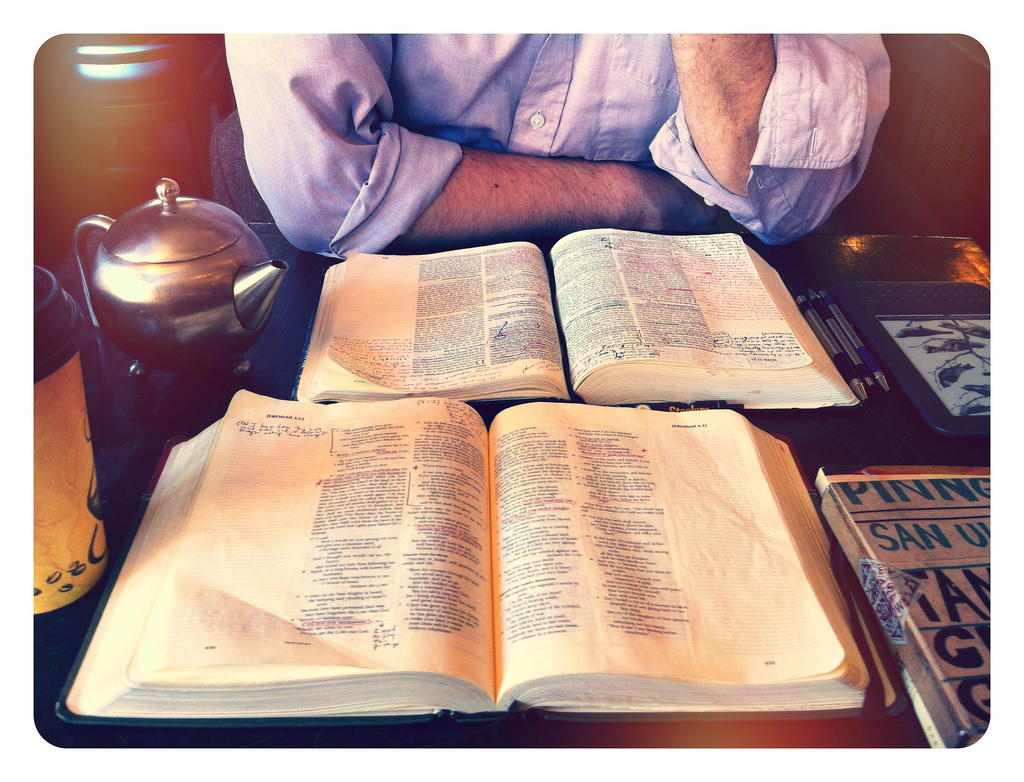
{tuesday} | prayer & readings for Holy Week (2013)


For Holy Week: reading schedule/reflections.
{More on the why and how of Lent here.}

prayer.

O God, by the passion of your blessed Son you made an instrument of shameful death to be for us the means of life: Grant us so to glory in the cross of Christ, that we may gladly suffer shame and loss for the sake of your Son our Savior Jesus Christ; who lives and reigns with you and the Holy Spirit, one God, for ever and ever. Amen.
(from the liberti Lent & Easter 2012 prayerbook & the Book of Common Prayer)

Continue reading

{monday} | prayer & readings for Holy Week (2013)


For Holy Week: reading schedule/reflections.
{More on the why and how of Lent here.}

prayer. 

Almighty God, whose most dear Son went not up to joy but first he suffered pain, and entered not into glory before he was crucified: Mercifully grant that we, walking in the way of the cross, may find it none other than the way of life and peace; through Jesus Christ your Son our Lord, who lives and reigns with you and the Holy Spirit, one God, for ever and ever. Amen.
(from the liberti Lent & Easter 2013 prayerbook & the Book of Common Prayer)

Continue reading

readings & reflections for Holy Week (2013)


scripture readings for the week.
as the week progresses, check back here and click on the appropriate day for Prayer and Scripture text for that day

(from the liberti Lent & Easter 2013 prayerbook & the Book of Common Prayer)
Continue reading

{palm sunday} | prayer & readings for Holy Week (2013)


For Holy Week: reading schedule/reflections.
{More on the why and how of Lent here.}

prayer.

Almighty and everliving God, in your tender love for the human race you sent your Son our Savior Jesus Christ to take upon him our nature, and to suffer death upon the cross, giving us the example of his great humility: Mercifully grant that we may walk in the way of his suffering, and also share in his resurrection; through Jesus Christ our Lord, who lives and reigns with you and the Holy Spirit, one God, for ever and ever. Amen.
(from the liberti Lent & Easter 2013 prayerbook & the Book of Common Prayer)
Continue reading

Advent & the Goodness of Worldliness, c/o Dietrich Bonhoeffer [QUOTE]


‎”I remember a conversation that I had in America thirteen years ago with a young French pastor. We were asking ourselves quite simply what we wanted to do with our lives. He said that he would like to become a saint (and I think it’s quite likely that he did become one). At the time I was very impressed, but I disagreed with him, and said, in effect, that I should like to learn to have faith. For a long time I didn’t realize the depth of the contrast. I thought I could acquire faith by trying to live a holy life, or something like it. I suppose I wrote The Cost of Discipleship as the end of that path. Today I can see the dangers of that book, though I still stand by what I wrote.

I discovered later, and I am still discovering right up to this moment, that it is only by living completely in this world that one learns to have faith. One must completely abandon any attempt to make something of oneself, whether it be a saint, or a converted sinner, or a churchman (a so-called priestly type!), a righteous man or an unrighteous one, a sick man or a healthy one. By this-worldliness I mean living unreservedly in life’s duties, problems, successes and failures, experiences and perplexities. In so doing we throw ourselves completely into the arms of God, taking seriously not our own sufferings, but those of God in the world–watching with Christ in Gethsemane. That, I think, is faith: that is metanoia; and that is how one becomes a [human] and a Christian (cf. Jer. 45!). How can success make us arrogant, or failure lead us astray, when we share in God’s sufferings through a life of that kind?”

— Dietrich Bonhoeffer, Letters and Papers from Prison (via Kait Dugan)

Advent & Sex-lessness: here’s to singleness & celibacy!


sandorfi-le-pardon-wide

Yesterday, I wrote a post about some implications of Advent on sex. And, of course, I stressed the goodness and beauty and transcendance of that act as God intended it.

And it was one of my least read posts in a long time (as an update, interestingly, this is to date one of my most-read posts of all time!). I’m wondering if people are tired of hearing Christians talk about sex ad nauseam.

It is my humble opinion that the American Church right now is currently obsessed with sex. Well, to be fair, it’s always been obsessed with it; but now, it seems, the obsession is with “taking it back” and yelling and screaming about how Christians are just as sex-crazed, sex-eager, and sexually exciting as the most ardent secular hedonist.

Of course, they all qualify it by saying (as I even said yesterday) that this (oh my god really amazing Christian sex that we value so much) has to be “within the confines of marriage”. And so, this sex-obsession often expresses itself in an equal obsession with marriage. Preparing people for it, encouraging people towards it, beating up guys that aren’t “pursuing” women (or at least “preparing to”), and giving women tips on how to attract a “good, godly husband.”

And yet, yesterday, when I was thinking about the Advent of God into the world in the person of Jesus Christ, and the idea of the Incarnation, I realized something:

What is the story of Advent but the story of a virgin girl who has a virgin birth of a man who will remain a virgin his whole life?

The story of the Incarnation is, relatively speaking, one of the most “sex-less” stories in the Bible.

Continue reading

Advent & Sex: we are holy ground


Huber-untitled-crop

Update: I’ve also written some Advent thoughts on singleness and celibacy.

In Advent, we celebrate that God came as a human, in a mysterious act called the Incarnation. But in this act, God didn’t merely clothe himself in humanity. Flesh and blood were not the trappings of God. Instead, he became human. It was no mere illusion, nor was it a facade God took on.

God became flesh and blood.

God found it suitable (desirable, even!) to take on a body–a created, formed, physical, material body. The implications of this are huge. Take sex for example.

Advent show us that the created world can contain God, and it still does not violate God’s Holiness–his “Otherness” or “Separated-ness”. He can know his Creation in such union and intimacy and yet still remain transcendent above it. Our bodies do not challenge his Holiness. He can take it on and still remain Other. He became “one” with us in a similar way to how we become “one” with others in sex. With this in mind, let’s unpack some implications:

Continue reading

Advent, Evolution, & Absolution [RE-POST]


Today, I’m re-posting a piece I wrote exactly a year ago for last year‘s Advent series. During this year‘s, we’re seeing how the Advent event affects parts of our lives that we usually don’t associate with it. Today, it’s Advent and Evolution. You can follow the series here.

It’s Advent. A time where we especially orient ourselves towards rejoicing and celebrating the fact that God did not remain far off and merely create a “legal” or “dogmatic” satisfaction for the plight of his creation and creatures. Rather, he broke into it and came into his creation and among his creatures. In this year’s Advent series, we’re exploring how, in this Coming, Jesus took on our creaturely formcare-taking functioncomprehensive fallenness, and communal formation.

First, God took physical, human, creaturely form. In the study I did–and subsequent lecture I gave–on Beauty a couple of years ago, I defined “Beauty” as the attribute of something that expressed complexity simply. Is not this God-in-human-flesh (theologically referred to as the Incarnation) the most beautiful of all miracles to take place? The Infinitely Complex God inhabits the simplest of human forms: a child.

Continue Reading –>

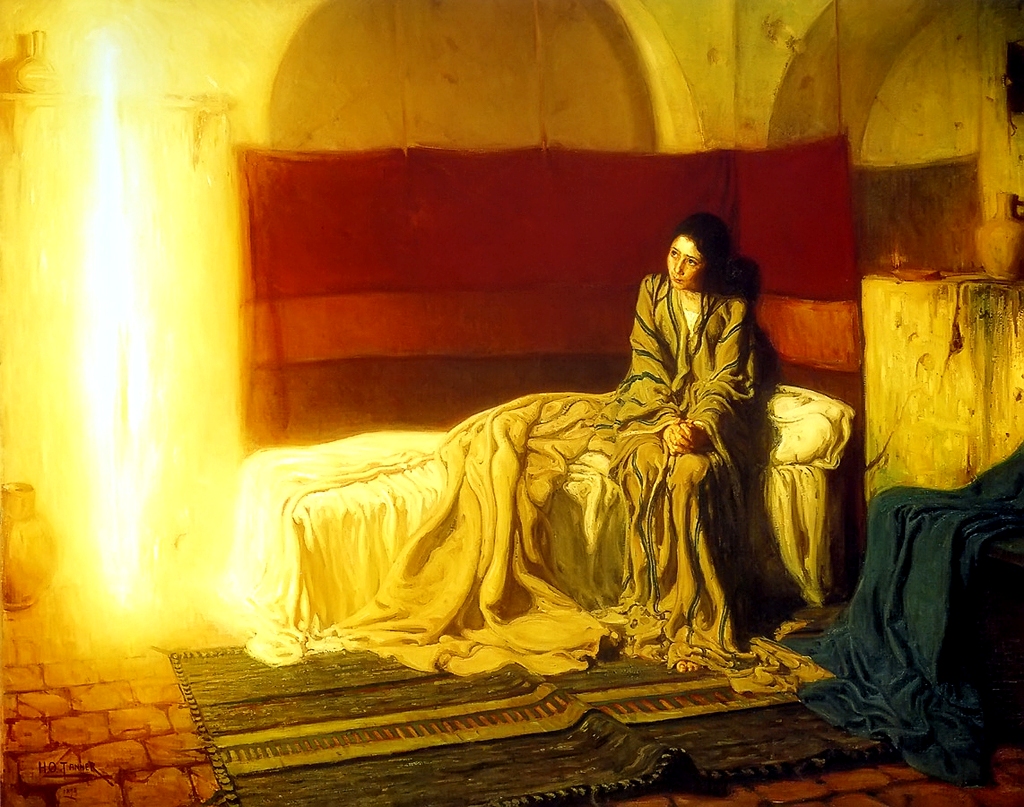
Advent & Mary: Ordained as Prophetess, Priestess, & Queen


Tanner-the-anunciation-mary

This Advent, we’re seeing how this season affects parts of our lives we usually don’t associate with it. Follow the series here. This post is also filed in the series “Catholics Aren’t Crazy” and “Women Leading Stuff in Churches“.

If a woman is revered by the church for giving the faithful their savior, then surely women are good enough for leadership roles in the church to save it. –Vishwanath Ayengar

I ran across that quote in some letters to the editor of Newsweek a couple of years back in response to a cover story arguing that if women were ordained as priests in the Catholic Church, there wouldn’t have been any sex abuse scandal. I don’t know if that’s true, but the quote is insightful and (hopefully) thought-provoking.

I can hear conservatives now: Well, God used a donkey to speak! He used Caiaphas the high priest to unknowingly prophesy about Jesus before sentencing him to death! He used Judas to bring about Christ’s crucifixion and therefore our salvation! It doesn’t mean that they were fit to be ordained pastors!

Yeah, yeah, I get it. This post isn’t necessarily meant as a “proof” or “defense” of women’s place in ministry (though it’s a part of my on-going series on the topic). I just want to revel a bit in some divine mystery. Can we all just put our swords down and marvel?
Continue reading

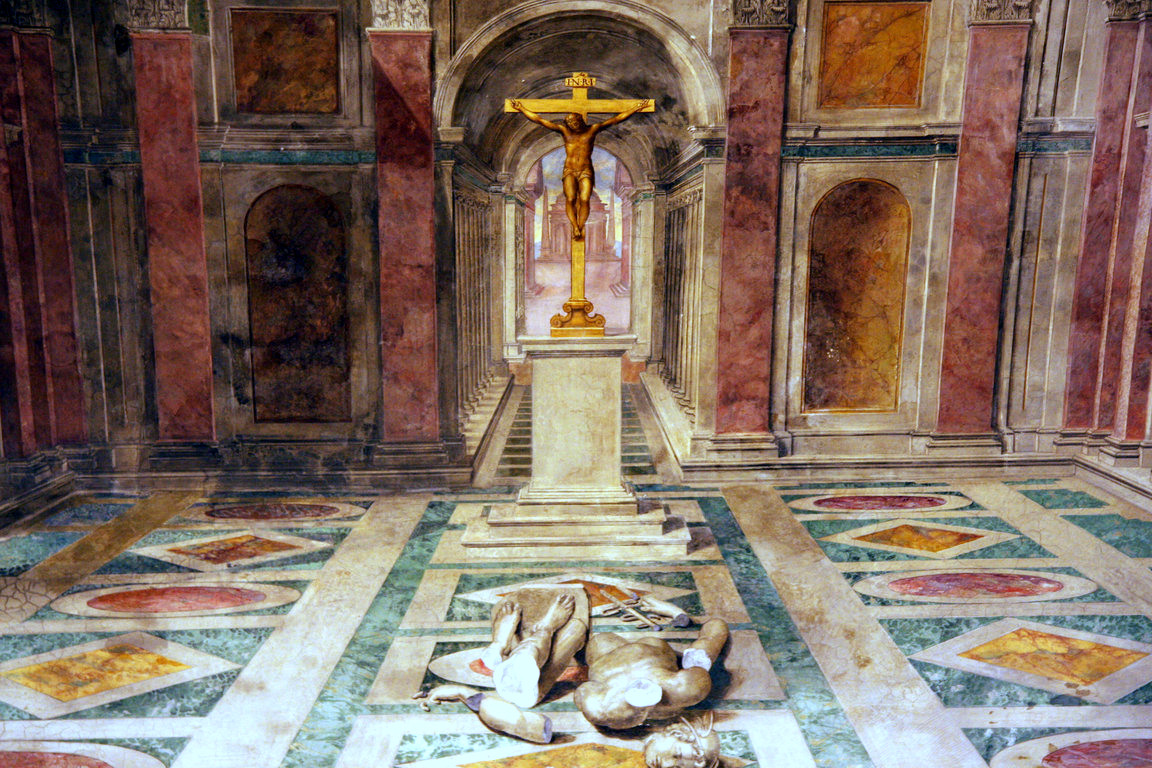
Advent & Politics: The Government is on His Shoulders


laureti-triumph-christianity-pagan-statue

This Advent season, we’re seeing how the Advent event affects parts of our lives that we usually don’t associate with this time. You can follow the series here.

The book of Isaiah is a minefield for biblical studies, mainly because of the development it seems its contents went through to get to its final form. It appears to be a strange stitching together of many writings, perhaps by many people, for several different purposes. But in all of its complexity and mystery, there is one theme that it consistently holds throughout its contents: politics. The political movements of the nation of Israel and the nations around it–and God’s movement in and through all of it–occupy most every chapter of the book.

Interestingly, this is also where many of the most dramatic and explicit messianic prophecies are found–specifically Advent prophecies. When telling the Christmas story, the gospels quote Isaiah (I believe) more than any other Old Testament book. Images of virgins, Emmanuel, Davidic lineage, “roots of Jesse”, and John’s “voice crying in the wilderness” all find their source here.

There seems to be an intimate connection between politics and Advent.
Continue reading

A Prayer for Thanksgiving


Father in Heaven, Creator of all and source of all goodness and love, please look kindly upon us on this Thanksgiving and receive our heartfelt gratitude in this time of giving thanks:

We thank you for the splendor of the whole creation, for the beauty of this world, for the wonder of life, and for the mystery of love.

We thank you for the blessing of family and friends, and for the loving care which surrounds us on every side.

We thank you for setting us at tasks which demand our best efforts, and for leading us to accomplishments which satisfy and delight us.

We thank you also for those disappointments and failures that lead us to acknowledge our dependence on you alone.

We thank you for all the graces and blessings you have bestowed upon us, both spiritual and temporal: our faith and religious heritage, our food and shelter, our health, the loves we have for one another, our family and friends.

Above all, we thank you for your Son Jesus Christ; for the truth of his Word and the example of his life; for his steadfast obedience, by which he overcame temptation; for his dying, through which he overcame death; and for his rising to life again, in which we are raised to the life of your kingdom.

Grant us the gift of your Spirit, that we may know him and make him known; and through him, at all times and in all places, may give thanks to you in all things.

Dear Father, in Your infinite generosity, please grant us continued graces and blessing throughout the coming year.

Amen.

(modified from The Book of Common Prayer)

The Pain & Substance of Gratitude. Happy Thanksgiving. [REPOST]


Yesterday, the annual meal referenced in this post occurred at my work, so I thought I’d re-post this today on this Thanksgiving Eve.

Sorry that this isn’t your typical feel-good Thanksgiving post.

On Tuesday, my job had a large Thanksgiving lunch for all the staff and clients we serve. I got my food and sat down next to some of my coworkers and across from a client I had never seen before. She was very friendly. She didn’t ask me my name or anything; she just began asking me questions about what I was doing for the holiday, where I was going, if my parents were still alive/together, if I had any siblings, so on and so forth.

As she kept firing one question about my Thanksgiving week after another, I started to feel the awkward tension developing because I wasn’t returning any of these questions back at her. I wondered if my coworkers thought this was odd of me to do, but it was very intentional.

Continue reading –>

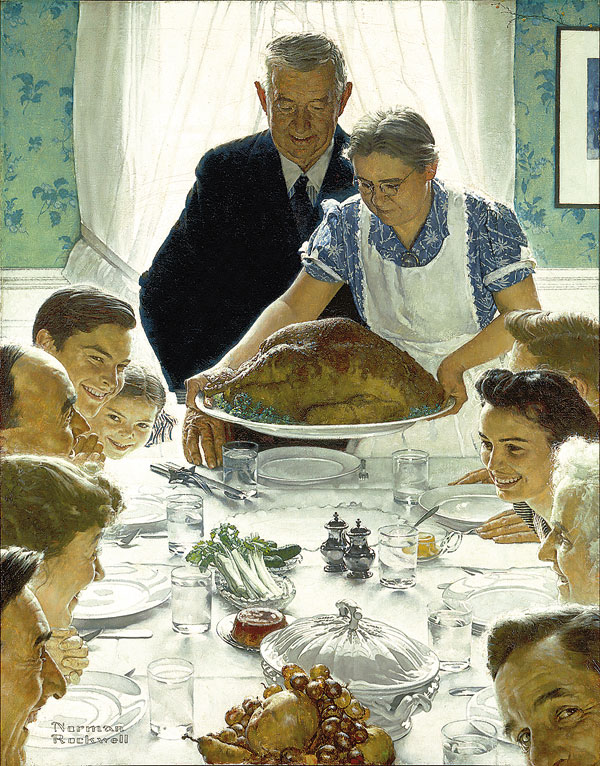
[art credit: “Freedom From Want” by Norman Rockwell]

Prodigal, Let’s Go Home {pt.1} [GUEST POST]


This is Austin’s final response to a conversation we’ve been having on the blog concerning the Nature of God and Evil in the world–I know: light stuff, right? Here are the relavant links, if you’re interested: I wrote a post mentioning God taking death onto his own self; Austin took issue with this; I replied with a full-on development of the idea that God’s Nature is like an unfolding narrative–one in which there is Evil and Death; Austin responded by critiquing some of my Bible interpretation; I then wrote two posts, one responding to his response, and one telling of my fears that I’m wrong (where I also quote the James Joyce book Austin references below, as well as list out my 5 main premises for my thoughts he responds to here). This post is Austin’s final words on this (or part 1 of those words, at least). I’ll have a few concluding thoughts next week.

_______________________

Is then the whole of life only a contradiction; can love not explain it, but only make it more difficult? That thought he could not endure; he must seek a way out. There must be something wrong with his love.

—Kierkegaard, The Expectation of Faith

I, like Paul, am one who has been deeply affected by Joyce’s story. That story, A Portrait of the Artist as a Young Man, is really the central struggle of my life: Artist or Theologian? Much in that book, including the scene that Paul elaborated in his response, continues to resonate in the sometimes hollow-feeling caverns of my mind. “I shall never swing the thurible…the oils of ordination shall never touch my head.” Those words wounded me and have stayed with me like a scar, long after their initial cut. I, too, am often much afraid.

Like Jacob, I wrestle with God. Israel indeed.
Continue reading

Debates with Atheists (And Good News for Them)


Recently, a friend sent me a link inviting me to a debate between a prominent evangelical intellectual and a prominent atheist thinker. It made me remember how I used to eat those sorts of things up when I was in college, and I really appreciated this friend sending it, but at this point in my life, I genuinely had no interest whatsoever.

Eventually, you realize that every debate of this sort goes the exact same way. At some point–without fail– there’s comes a moment when the evangelical says something to which the atheist responds with “well, what proof [or “evidence” or “basis” or “reason”] do you have to make such a claim!”, to which the evangelical responds with something like “well, it’s faith” (or something like that).

And then the debate should end. The fool’s errand of these events has been exposed.

Continue reading

Using the Bible to Meet with God


Last week, I asked a bunch of you how you go about using the Bible and the study of its contents to actually nourish your soul and meet with God. I got some great responses both here and on Facebook. This week, I wanted to put up how I ended up approaching this during the class I taught at my church. It’s super short, not very deep, and much more can/should/will be said. For what it is, I hope it’s genuinely helpful and speaks to how we might meet God through the Scriptures.

How do we move from the Facts of the Bible to the God of the Bible? From knowing the Bible, to knowing the Person? From Scripture being informational to formational?

The Meeting Place of God

As I said in the first class I taught, the Bible is not the passive “Revelation of God”. It is the place through which the Holy Spirit actively “reveals God” to us. When it comes to the Bible, we should start thinking more in verbs, not nouns. The Bible is “simply” a meeting place for God and his people, where he might meet them as he desires, by His Spirit.

When we meet God in Scripture, its the convergence of four things: Us and our faith, God and His Spirit.
Continue reading