Universal Intimacy: The Beautiful Transition | Matthew 11:25-39


At that time Jesus said, “I thank you, Father, Lord of heaven and earth, because you have hidden these things from the wise and the intelligent and have revealed them to infants; yes, Father, for such was your gracious will. All things have been handed over to me by my Father; and no one knows the Son except the Father, and no one knows the Father except the Son and anyone to whom the Son chooses to reveal him.

“Come to me, all you that are weary and are carrying heavy burdens, and I will give you rest. Take my yoke upon you, and learn from me; for I am gentle and humble in heart, and you will find rest for your souls. For my yoke is easy, and my burden is light.”
Matthew 11:25-39

What a beautiful transition; from words of exclusivity to words of rest and invitation. It is precisely into the intensely exclusive intimacy between the Son and the Father into which we are invited to come and find rest. This is true Christian “Universalism”: the whole cosmos is brought into the exclusive, fiery love of the Trinity.
See other Marginalia here. Read more about the series here.

The Good News changes, the Good News gifts | Acts 20.32


“And now I commend you to God and to the message of his grace, a message that is able to build you up and to give you the inheritance among all who are sanctified.”
Acts 20.32

Nice. The message of grace itself is enough to sanctify and grow them. Just the message. Further, this message–again, the message itself–gives us the inheritance of the Holy.

See other Marginalia here. Read more about the series here.

Women at the Cross | Matthew 27:55-56


Now when the centurion and those with him, who were keeping watch over Jesus, saw the earthquake and what took place, they were terrified and said, “Truly this man was God’s Son!”

Many women were also there, looking on from a distance; they had followed Jesus from Galilee and had provided for him. Among them were Mary Magdalene, and Mary the mother of James and Joseph, and the mother of the sons of Zebedee.
Matthew 27:55-54

It’s really interesting to me that Matthew adds this little addendum to the end of the account. Why point out the women that were there? Is the assumption that all the men have scattered, and so Matthew had to show his sources for this story?

See other Marginalia here. Read more about the series here.

A Biblical Critical Advent: Luke’s Cosmic Christmas


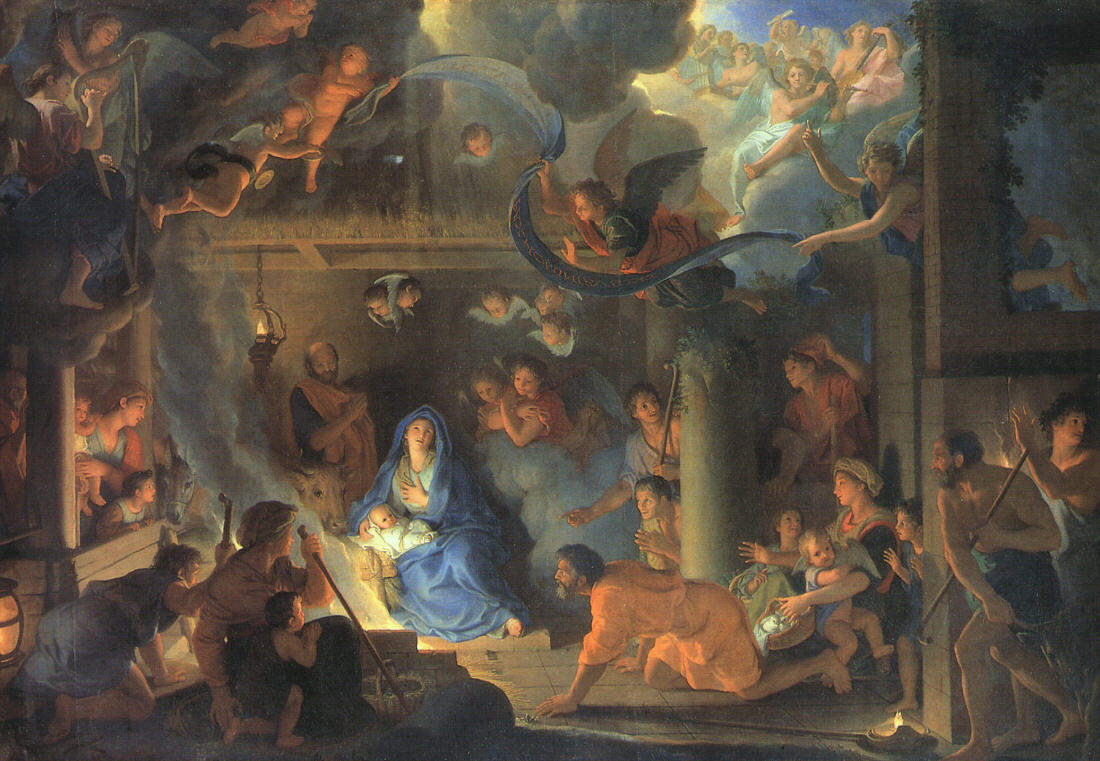
Charles-le-Brun-Adoration-of-ShepherdsFor Advent this year, I wanted to put up a few posts looking at Matthew and Luke’s Nativity stories as they were meant to be read: as two separate stories with their own purposes and themes. We often just mush them together, and I think we lose something in that process. Last week, we sat with Matthew’s Nativity story. Today, we turn to Luke’s Christmas.

Matthew’s Nativity focuses on how Christmas plays right into Israel’s own story; how this is exactly how the Jewish Messiah should be expected to have come into the world. Luke’s Gospel, on the other hand, emphasizes Jesus’ significance to the entire world, all parts of society, and the entire cosmic order.

In other words, Jesus’ mission in Luke is much larger than simply Israel. These and other Lukan themes are brought out quite strongly and explicitly in his Nativity narratives. Today we’ll see how he does this through signs of the universal mission of Jesus, the story’s emphasis on the lowly and powerless, and his stories of Spirit-filled joy.

Continue reading

A Biblical Critical Advent: Matthew’s Old Testament Christmas


root-jesse-matthew-icon

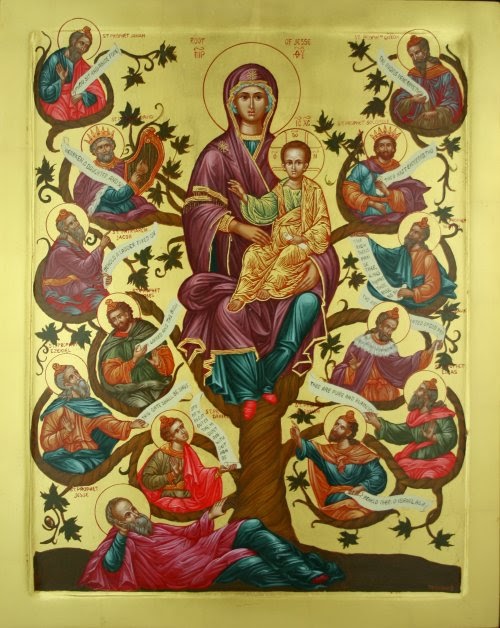
For Advent this year, I wanted to put up a few posts looking at Matthew and Luke’s Nativity stories as they weren’t meant to be read: as two separate stories with their own purposes and themes. We often just mush them together, and I think we lose something in that process. Today, we look at Matthew’s Christmas Story.

It’s well-known that the Gospel of Matthew portrays Jesus as the fulfillment of Jewish messianic expectations. But the path Matthew takes in doing this moves against the way most messianic expectations played themselves out at time. Matthew recalibrates these expectations to show how even in Jesus’ infancy and birth, his “Messiah-ness” includes a retelling of Israel’s own history, both good and bad.

You can see this especially clearly in the way Matthew crafts his version of the Nativity story. Today, we’ll look at three particular aspects of this story that show his unique thematic and purposeful crafting of the birth story: his use of people and names, geography, and the fulfillment of the Old Testament.
Continue reading

Have yourself a biblical critical Christmas


Nativity-logosSorry, this post isn’t about the pessimism and critical irony that can sometimes mark how we engage in this time of year. When I use the phrase “biblical criticism”, I’m referring to (as Wikipedia says) the  “[scholarly] study and investigation of biblical writings that seeks to make discerning judgments about these writings”.

Last year, I wrote about how the story of the Wise Men can inform our doctrine of the Bible. This Advent, I want to do a brief series where we use the tools of scholarly observation to look at each of the two Nativity compositions (yeah, only two out of four gospels have them) and see each of them on their own terms.

For millennia, the birth narratives of Jesus Christ in the Gospels have captivated readers both within and without the Christian faith. Their reading and meditation form the beginning of the Christian Church calendar, and their theological implications of Incarnation form the foundation of nearly all of the distinctives of the Christian faith.
Continue reading

What is the Proclamation of the Word?


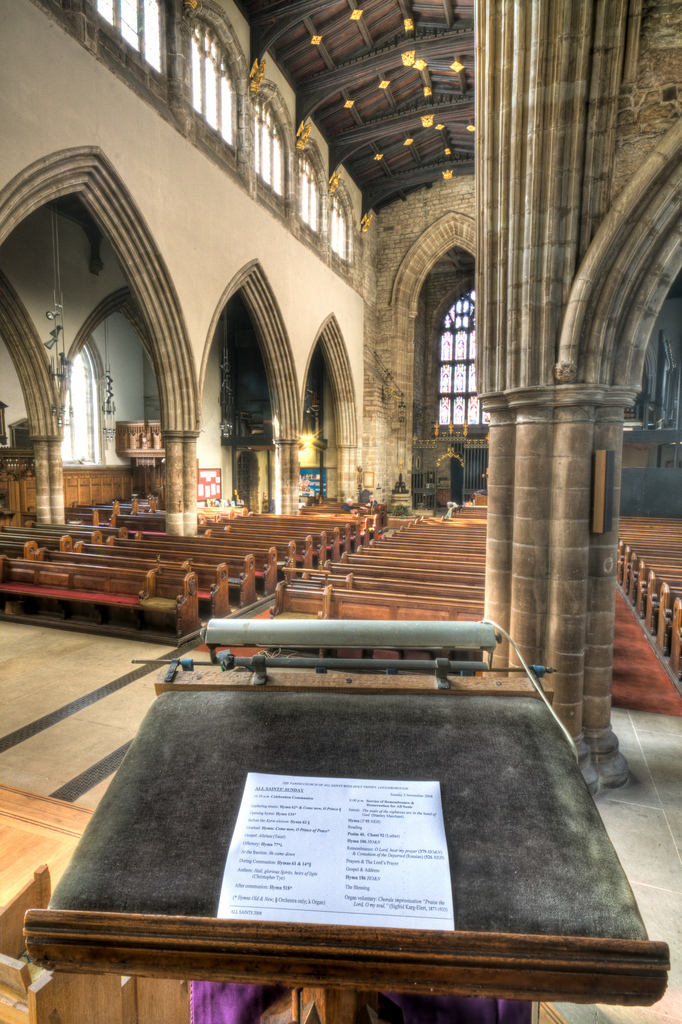
pulpit-church-hdr-bibleFor a class recently, I had to read a bunch of items on the part of a worship service in which the Bible is front and center. This “section” of the service is called “The Proclamation of the Word”, or more generally, the “sermon” or homily”. I ran across this great quote:

The very act of preaching, in fact, sets up questions and problems.  Most people no longer understand the difference between preaching and other types of public speaking…. Many people think of a sermon as an occasion for being entertained, instructed, or inspired in matters of religion — hence the customary comment at the church door, “I enjoyed your sermon.”  Nowadays, it is only congregations who have been engaged in a new way of thinking for a long time who are going to sit expectantly waiting for the Word of God to be spoken — for preaching, properly understood, is the good news that God preaches through human beings.  Astonishingly enough, this is the method of communicating that God has chosen.  This is an offensive idea; there are a hundred complaints to be brought against it.  Most common is the objection, “How can anyone presume to speak the Word of God?”  Or to put it another way, “How can any human being be so arrogant as to think he is a mouthpiece of God?”  How indeed?  It is a very good question.  The validity or invalidity of preaching rests on such issues as these. (Fleming Rutledge, Not Ashamed of the Gospel)

I think Rutledge is right (and not just because she is an incredible preacher–all you complementarians could learn a thing or two from her!): people don’t seem to really see preaching as fundamentally different than any other lecture or other public speaking. Preaching is often (subtly and unspokenly) seen (or at least treated) as “mere” personal edification–similar to a book discussion or philosophical lecture or self-help conference.
Continue reading

I wrote a paper on the ending of the Gospel of Mark. And here it is.


Lindisfarne Gospels -- MarkI usually never post items like this on the blog. But hey, it’s Friday. Below you’ll find a brief academic paper I wrote exploring different scholarly views on the ending to the Gospel of Mark. I’ve written devotionally on that ending before, but this gave me a chance to explore more of the scholarship behind it.

As a general rule, I don’t think people should put up blog posts that have a Works Cited page attached (haha). Such posts usually go against everything the blog medium stands for: brevity, clarity, and accessibility.

But as I researched this topic, I found it difficult to find similar, short, web-accessible writings and bibliographies like this so, in the interest of academic exploration, I’m putting the paper up here for all the future Googlers that might be able to use this, and for those of you that might care about some of the scholarly opinion concerning Marks’ incredibly odd ending. Enjoy. (You can also find this document on Scribd.)

___________________________

BL537 Paper #1: The Ending of Mark

For centuries, the Gospel of Mark more or less sat dormant, gathering the dust of Church interest. It was a broken Gospel, after all. It was a crude, geographically confused, narratively-challenged, more-or-less bastardized version of The Gospel of Matthew. And what of that ending?
Continue reading

Injustice & The Human Jesus (and some more Syria thoughts)


oldrich-kulhanek-untitled2For one of my seminary classes (which started this week) I’ve had to read the Gospel of Matthew. When you read a large chunk of a Bible book in one sitting, you really do get to make connections and get perspective you didn’t have before. I had many moments like that when reading Matthew yesterday, but I had one particularly poignant moment that relates to all of the Syria talk that’s going on in our country right now, and adds to my own comments a couple of days ago.

In Matthew’s Gospel, Jesus begins preaching on his own, gathers some disciples around him and continues teaching while they watch. Eventually, in Chapter 10, he sends this community of people, encouragement, and support off to do ministry in various towns in the wider area and to do what he has been doing among them.

Which means he is alone again.
Continue reading

How Liturgy Shapes & Makes Us


schrott-cross-church-office-apartment

UPDATE: I posted a brief history of liturgy and its movements.

A couple of nights ago, those that help lead and facilitate the worship service at my church met to discuss how we should continue to grow and remain faithful to our mission in the city of Philadelphia through our liturgy and music. It reminded me once more of how much I love being a part of this church and its tradition, and how excited I am to live life with these people.

Meditating on these discussions about our liturgy, I was reminded of the myriad of ways that the structure of one’s worship service forms the people that sit there each Sunday. I thought of how liturgy functions. If you go to a church, it has a liturgy: some structure that proclaims a certain story and shape of existence, and it changes people to fit into that shape and story.

And this got me thinking of a document I wrote up a couple of years ago to help train and encourage those leading liturgy at our church. In it, I wrote about six “facets” of the diamond that is liturgy. And that’s what I wanted to post here today.

These are some ways that liturgy acts to shape us. After each thing, I’ve given a sample topic and tried to show how liturgy functioning in that way can speak to and shape someone in that area. This was originally meant as a guide for people that introduce the service and try to acclimate people to the liturgy.

I hope this reminds us that liturgy matters, and being intentional about your liturgy is such an important part of leading and ministering within your church context. If you don’t serve as a leader in this aspect of your church’s life, and don’t really speak to liturgy formation, I hope this helps you recognize the formative nature of your church’s liturgy, and that it helps you connect to and engage with your church in a deeper, more intentional way. For more on this, I could not suggest more highly James K.A. Smith’s book Desiring the Kingdom.

Continue reading

Our Easter Hope: Jesus Didn’t Rise from the Dead


statue-easter-bookHappy Easter! Let me greet all of you with the same Easter greeting that has been offered by generations upon generations of Christians before:

Alleluia, Christ is risen!

(And you respond with:)

Christ is risen indeed, Alleluia!

Now I don’t know how many of you have grown up saying that or have eventually settled into traditions that do, but I wonder how many of us have noticed the grammar of that statement. Why has it never said, “Alleluia, Christ rose”, or “Alleluia, Christ has risen”?

There is an extremely important and immensely practical aspect of the Resurrection that, as I’ve moved in more and more church circles, I’ve realized has either become de-emphasized, forgotten, or never known in the first place:

Jesus did not rise from the dead.
Continue reading

Death & Taxes: Converting the Purse, Rejoicing the Heart


paul-money-lent-12-02

On Friday, I finally got my W-2. Saturday night, I did my taxes. It was a very, very encouraging experience. And not just because I’m getting a refund. Tax night was a time of deep celebration, reminder, and reflection on how God moves and changes people, especially me.

I’ve always had a big problem with faithfully giving to other things, especially my churches. Though I grew up going to churches, this was not a discipline I was able to observe at home. Eventually, waiting tables through college and having spent most of my adult life living paycheck to paycheck, I became an expert of rationalizing my lack of generosity to my church and other causes.

Some may think that this is certainly not one of the bigger crises in one’s life. After all, we each individually know what our ability to give is, and no church should reserve the right to tell us otherwise, right? Well…

Continue reading

Christianity: paradox & Paradise, fall & Fall


I had the privilege of spending a long weekend these past few days in western Pennsylvania under the kindness and hospitality of my girlfriend and her family. It’s a place that is hard to describe without falling into cliches of big sky, clear air, and bright stars. It’s near the area that Johann Jacob Burkhardt, my first ancestor in America, settled in 1754 after sailing from Germany and landing in Philadelphia exactly a week ago today. I made almost the exact same trek as Johann and his family, from the rivers of Philly to the rural countryside of unsettled Pennsylvania.

Strangely, in the rest of Pennsylvania that I have seen, the trees are still mostly green and just starting to turn for the Fall. But here, this weekend marked the peak of that beautiful transition. The pictures above and below should testify to this (click them for larger versions). They were taken only a couple of days ago–with my phone (fun fact: the picture directly above this text was taken from Mt. David, the highest point in Pennsylvania).

I can’t express to you the beauty my eyes and soul were able to behold.
Continue reading

I’m Obsessed with Myself (a blog fast)


I haven’t talked about it much (on this blog or to many people), but for the past 6 or 7 months I’ve been in professional counseling, primarily for anxiety (and it’s various outward expressions). There is a constant tension and busyness inside me that keeps me from living so many aspects of life. The counseling has been challenging, amazing, and painfully slow in the growth it has been producing in me.

But growth it has produced.

A couple of weeks ago, I decided to take a week off from the blog, somewhat as an experiment. That week, I experienced more freedom from the various expressions of anxiety in my life than I had for years. I began to experience once again that communion with Christ I’ve written about wanting before. I was reading his Word, praying, and serving those around me with such calm and freedom.

I then thought to myself, “Wow. That was amazing! Now, I can go back to blogging.” I came back to the blog all last week, and all the anxiety came rushing back with it.

Continue reading