Women & Church History: The Bad Reformation & the Good News {pt.3}


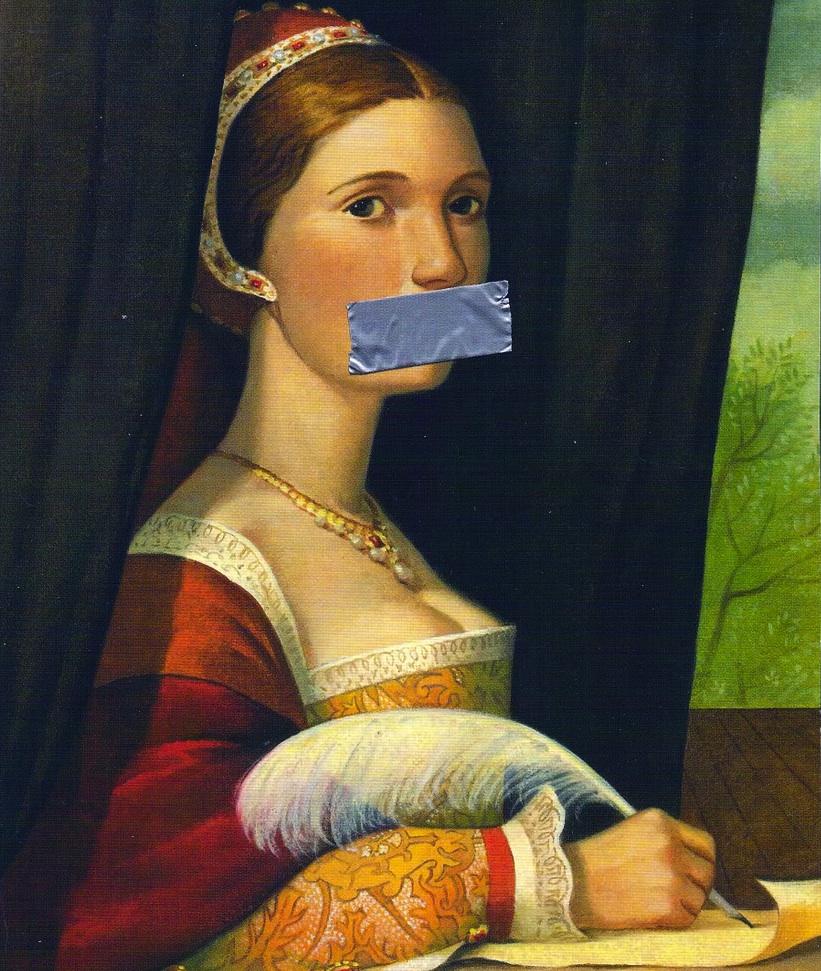
Silencing-Women-duct-tapeThis is a post in an on-going series on Women in the Church.

The past couple of days, we’ve been talking about the historical development of this whole “Women in Church Leadership” idea. in the first post, we talked about why this is so important, and in the second post, we discussed where this change in ideas concerning ordained female leadership happened. Today, let’s talk Reformation and concluding thoughts.

Continue reading

Women & Church History: the century we’re still recovering from {pt.2}


Dubay-lizglass-eyeThis is a post in an on-going series on Women in the Church.
Yesterday, I began talking about the history of Women in the early Church. Up front, I gave my primary source for information, this issue of Christian History Institute Magazine on “Women in the Early Church”, which I will quote from in this post. If you need more information, you can go there.

I also gave a brief sketch of my view: women were quite active in leadership in the first two-centuries of the Church, but come the 200s, some radical things began to change in the Church–things that still effect us today, especially as it pertains to women in ministry.

(Most of this material is comes from the excellent article “The Early Controversies Over Female Leadership” by Dr. Karen J. Torjesen.)
Continue reading

Church History: Where have the female leaders been? {pt1}


sandorfi-quo-vadis[This is a continuation of our on-going series on Women in the Church]

Update: Part 2 is now up.

First off, one of the main limitations of writing is the necessity of producing summary titles for what you write. This post should, more precisely, have the title “Where have all of the ordained, teaching, preaching, and leading female leaders in Church History been?” But I can only put so much in the title before it becomes absurd.

I say that because even complementarians (who don’t think women should be ordained) will freely acknowledge the valuable place women (in general) have had in the Church over the years. They simply think that, in spite of gifting or value, God has placed limits on who should lead his church in ordained, official ways. So…sorry for any confusion.

When it comes to the Bible and the contemporary benefits women in Church leadership could offer, I’m pretty comfortable, confident, and secure in my egalitarianism. I think it is a faithful, consistent, practical, and edifying view to hold, and I see evidence for it written and displayed all over the place.

And yet, I’m in the extreme minority, relative to Church History.
Continue reading

Epiphany: a great time to talk Magi & biblical errancy


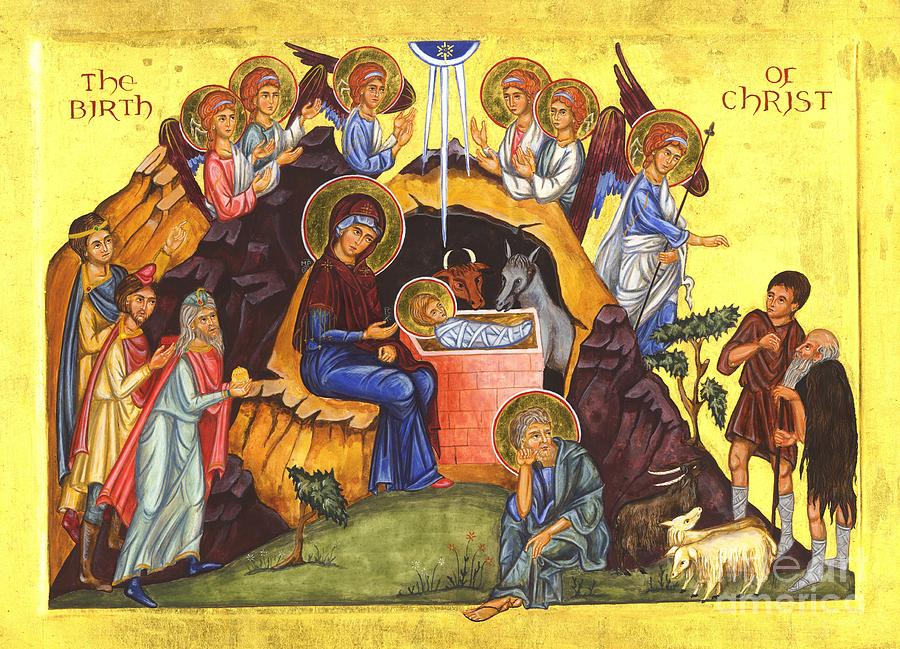
advent-nativity-icon This Church season of Epiphany primarily celebrates the coming of the wise men to see the young Jesus. Now think of the popular conceptions of the “wise men”. I imagine the picture that comes to mind is much like the one above: a quaint manger, farm animals, some shepherds, and the three wise men, presenting their gifts to the newborn Jesus.

I’m not sure how many of us know how wrong this is.

The wise men did not visit Jesus in the manger, their paths did not cross at all with the shepherds (that we know of), and, contrary to some of the most well-engrained church and musical traditions, their number is not given–“three” is just a guess. This guess is probably based on the fact that three gifts were offered (though the 6th-century Armenian Infancy Gospel, the source of the Western tradition of the wise men’s names and ethnicities, lists far more than just three gifts). The Eastern Church tradition even says it was twelve.

And yet, for over a thousand years, on into the present day, these traditions concerning the Wise Men have persisted. We know the sources of these traditions, we know when they became popularized, and we know how they’ve been used in Christian preaching and church life through the centuries. Every Advent season, even the most cursory drive in the suburbs will offer nativity scenes peppered with three wise men adoring the manger-laden Christ.

This reminded me of Jannes and Jambres.
Continue reading

Jesus’ Wife fragment judged a fake [casual fri]


hmm… so did you hear about that fragment found recently that talked about Jesus’ wife? (By the way, here’s a great segment Jon Stewart did on this.)

Daniel B. Wallace's avatarDaniel B. Wallace

“News flash: Harvard Theological Review has decided not to publish Karen King¹s paper on the Coptic papyrus fragment on the grounds that the fragment is probably a fake.” This from an email Dr. Craig Evans, the Payzant Distinguished Professor of New Testament at Acadia University and Divinity College, sent to me earlier today. He said that Helmut Koester (Harvard University), Bentley Layton (Yale University), Stephen Emmel (University of Münster), and Gesine Robinson (Claremont Graduate School)–all first-rate scholars in Coptic studies–have weighed in and have found the fragment wanting. No doubt Francis Watson’s comprehensive work showing the fragment’s dependence on the Gospel of Thomas was a contributing factor for this judgment, as well as the rather odd look of the Coptic that already raised several questions as to its authenticity.

View original post

Join Us for a Tour of Biblical History at the Penn Museum this Saturday!


As a fitting conclusion to the six-week Bible Survey Class I’ve been teaching at my church, I’ll be leading a tour of The University of Pennsylvania’s Museum of Archaeology of Anthropology, focusing on much of the Biblical History we covered in the class. The museum has a very rich collection of items from the regions and eras in which most all of Biblical History unfolds. We will be following the unfolding storyline of the Bible as we travel to each section, learning the context and the history that set the stage for the faith many of us now call our own.

If you’re interested, meet us at 10am this Saturday, August 25th in the courtyard in front of the main entrance (pictured above). Note: There’s a smaller entrance at street level some may confuse as the main entrance. We will be up the steps where the main fountain is.

The cost is $12 for adults and $8 for students (and well worth the price). The museum is located at 33rd and Spruce (map), right across the South St bridge. (Parking advice: park on the east side of the South St bridge in the Graduate Hospital area and then walk over the bridge). See you there!

Class 6: NT Letters, Revelation, & The Bible in Worship (WE’RE DONE!)


This week was the last week in the six-week Bible Survey class I’m been doing at my church.

It’s been an honor to do this class, and I feel like this last one went especially well. Others seemed to find it genuinely helpful.

We ended our time in this class by talking for a little bit about how we can use the Bible–and all the information we just gleaned these past weeks–in our own, personal, spiritual lives.

To conclude the class, this Saturday we will be going to University of Pennsylvania Museum of Archaeology and Anthropology. You really won’t want to miss this. I’ll be putting a post up on this tomorrow.

For those that have followed in class and online, thank you so much for doing so. It was such an honor to be able to do this class, and I can’t believe I was given the time and grace to do it.

I hope that these resources are found to be helpful to those that invest their time into them; and that they draw each of you into a greater knowledge, love, and desire for our God as He meets us in our Scriptures.

And lastly, over the next months, I will be compiling all of these notes, as well as other essays I’ve written on the Bible in the past and self-publishing a book in both print and electronic forms. If you think about it, please pray for me. I’m starting to see that self-publishing is a lot more costly and complicated than I had originally thought.

This Lecture Covers:

  • A chronological survey of the contents and background of Paul’s letters
  • Discussion of the contents and background of the other letters of the  New Testament
  • A talk about that crowd-favorite, Revelation. We talked about how it fits into the greater story of Scripture, how it’s often misread, how to properly read it, and it’s contents and background
  • How one should approach the Bible to build up their spiritual life
  • Practical methods people can employ to know God through the Scriptures

**Side Note: twice in the audio of this lecture, I refer to Galatians and James as books that may each have been the “first book of the Bible written”. I meant to say “New Testament”, not “Bible”. Sorry.**

Download: [Audio] [Notes] Continue reading

Class 5: Intertestament, pt. 2; NT Intro; Gospels; Acts


This week was the fifth week in the six-week Bible Survey class I’m doing at my church.

And wow, we covered a lot in the class. But still, this class probably had the greatest percentage of material I had prepared that was not actually touched on in the talk. This makes the manuscript that much more full of extra material.

Covering the topics above, I have 35 pages of material below.

You may have noticed that I never actually finished the materials I talked about last week. Well, entering into an entirely new testament of the Bible put me in a mindset that I just couldn’t go back to finish up writing about every one of the Prophets. I’ll do it someday. I promise.

Lastly, mark your calendars for August 25th, where we will be going to University of Pennsylvania Museum of Archaeology and Anthropology. You really won’t want to miss this. Details to come next week.

This Lecture Covers:

  • A discussion of the Political and Religious history between the Old and New Testaments
  • An Introduction to the Background of the New Testament
  • Background and context of Jesus, his upbringing, and his life
  • Survey of the content and background of the Gospels.
  • An extensive and in-depth look at the book of Acts.

Download: [Audio] [Notes] Continue reading

Class 4: Prophets, pt. 2; Wisdom Books; & Intertestamental Period, pt. 1


This week was the fourth week in the six-week Bible Survey class I’m doing at my church.

We didn’t quite get to the Introduction of the New Testament like I had planned. This class was a bit different than other ones. Rather than focusing on a lot fo content of each book, this week was mostly a “tour” of these sections of the Bible and History, with some “highlights” along the way. The main point was to give people a bigger picture of these things to help them read the Bible themselves.

Just like last week, my notes are very incomplete. Most everything I said is in there, but I definitely want to provide a lot more in the notes than I say–and that hasn’t been filled in for most of the books so far. I will be spending the next two weeks filling that in. Once I’m done, I’ll let you all know. Thanks for your patience.

Lastly, I know I did a very poor job at telling the story of the Intertestamental history. I will try this again and condense it more in the next class. I will be much better prepared then.

This Lecture Covers:

  • Principles to keep in mind to help when reading the Prophetic books
  • Highlights from the Prophetic Books
  • Survey of the content and some of the background of the Wisdom Books of the Old Testament, with a special focus on the content of Job
  • Survey of the History between the Old Testament and New

Download: [Audio] [Notes] Continue reading

notes from last week’s class are finally done!


Earlier this week, I posted the audio and incomplete manuscript for Class 3 for the Bible Survey class I’m doing. Last night, I finally finished polishing up the notes with all the extra information I wasn’t able to say in the class. I hope it’s helpful. This final manuscript comes in at 36 pages long (admittedly, that’s with size 14 font to make it easier to read online, but still), so there is lots of stuff there that wasn’t talked about (especially with Kings, Chronicles, Ezra-Nehemiah, and Esther).

So, check it out below, download it, share it, critique it, and let me know what you think! I’d love to get some feedback on these to know if they’re actually helpful. Enjoy, and thanks for your patience! (and P.S. don’t forget about the Dead Sea Scrolls trip tomorrow.)

Class 3: The Historical Books & Prophets, pt. 1


This week was the third week in the six-week Bible Survey class I’m doing at my church.

And yes, we actually covered all the books of the Old Testament from Joshua to Nehemiah, did an intro to the Prophets, and had a brief discussion on the ethical problems with the “Old Testament God” in an hour.

You can find a small article I wrote on those atrocities and “ethical dilemmas” of the Old Testament attached to the end of the Notes below.

At the time of this writing, I’m not quite done with the notes, but I wanted to get the lecture audio to everyone. So, below you will find an incomplete version of the notes. I will upload a revised version later today (or tonight) with everything else filled in. I’ll update this post when that happens, as well as the Scribd doc below.

Also, as I posted about earlier today, as part of this class we will be going to the Dead Sea Scrolls exhibit this Saturday in Philadelphia. There are also discounted tickets available. Check the link, and I hope to see you there!

This Lecture Covers:

  • A discussion of the Deuteronomistic and Priestly Histories of the Old Testament
  • Survey of the content and background of the Historical Books of the Old Testament from Joshua to Nehemiah
  • An general introduction to the Prophets
  • A discussion concerning the atrocities committed in God’s name by the Israelites in Joshua and Numbers

Download: [Audio] [Notes] Continue reading

Class 2: The Rest of the Pentateuch (from Exodus to Deuteronomy)


This week was the second week in the six-week Bible Survey class I’m doing at my church. We went through the rest of the Pentateuch, or more specifically, Exodus through Deuteronomy. I was originally hoping to do all the historical books of the Bible, then I was just hoping to get through Joshua. I did neither. We just got to Deuteronomy. But that will be okay.

In the recording, there’s also a brief discussion we ended up having on the importance of historicty and the Old Testament–a topic that’s only going to more of issue as we move forward in this class. Be sure to listen and get in on the discussion! You can follow the class on the class page above.

**Remember, we have next week off, so the next lecture is on 7/22, with our first field trip on 7/28.**

This Lecture Covers:

  • Review of the foundational ideas of the Bible we talked about last week
  • A more refined response on my part on the doctrine of “Revelation”
  • Survey of the content, background, and application of Exodus through Deuteronomy
  • Discussion concerning the historicity of the Old Testament and its importance

Download: [Audio] [Notes] Continue reading

Class 1: The Bible & it’s Story, OT Intro, & Genesis


This past week, I started the Bible Survey Class I mentioned earlier today. It’s a six-week class going through a theology and history of the Bible and its contents, with an emphasis on these facts helping to build up the spiritual life of Christians. It also goes into a lot of the historical development and issues behind the Bible, so it could also be of interest to non-Christians. You can follow the class on the class page above.

This Lecture Covers:

  • What is the Bible?
  • What is Revelation?
  • The History of Israel
  • The History of the Old Testament
  • Genesis: Contents, Background, and relevance to Christians

Download: [Audio] [Notes]

[audio https://prodigalpaul.com/Bible%20Survey/Bible%20Survey%201-Intro-OT-Genesis.mp3]

READ THIS BOOK: “Genesis For Normal People” by Peter Enns & Jared Byas


A theologian whom I respect and a professor with whom I went to seminary have teamed up to offer a really great book on the first book of the Bible. Genesis for Normal People: A Guide to the Most Controversial, Misunderstood, and Abused Book of the Bible is a walk-through of Genesis following its themes and history. They open with these words:

Genesis is an ancient story. This may sound like an obvious or even patronizing way to begin. Of course it’s an ancient story. But once we look at what this means, that short phrase might be the most important thing to remember about Genesis. It will guide the rest of this book, showing us how to approach Genesis and what we should expect from it.

For many, the opening book of the Bible is a little confusing. It reads strangely, it doesn’t “sound” like any other book of the Bible, and, as Christians, we don’t know why we would even want to read it (except maybe for the first few chapters, but even those have a bunch of problems of their own).

Ever wondered what a sane, intelligent, and faithful understanding of Genesis would be in light of the findings of science or history? Ever pondered what the relationship between Adam and Darwin might look like? Have you ever been confused by a random history channel special that cast doubt on some of the stuff in Genesis? Ever tried to read the darn book only to only to ask yourself why you started to in the first place? Do you want to know how it connects to the rest of the Bible? Would you want all this talked about and explained in everyday terms with little prior biblical or theological knowledge needed?

Well, this is the book for you. (If you’re still skeptical, you can read a wonderfully comprehensive review of the book here.)

A quick note for any atheists or skeptics that find themselves reading this: this book is also for you. As a champion of (what I feel are) “not crazy” ways of reading Genesis, I have received a lot of pushback from atheists over the years who try and argue that the only true and faithful ways to read the book are in those (what I feel are) “crazy” ways. They try and say that if you “accommodate” the difficulties in Genesis away, you no longer have the faith you were trying to defend in the first place, and so you might as well abandon the whole enterprise. I challenge you to read this book and walk away feeling the same way.

_______

As far as obtaining the book, I have good news, and I have bad news:

Good News: it’s only $1.99 (for a limited time, then it will go up to $4.99)

Bad News: at least for now, it’s only available for Kindle E-Readers.

The Good News about the Bad News: you can download free apps on your computer, phone, or tablet to read the book anyway. A recent survey by the Pew Research Center showed that computers were the most popular device to read an ebook on; not a phone, tablet, or even a Kindle. So….you have no excuse.