 We’ve been doing a little series here at the blog on Beauty. I recently gave a talk on it and I’m taking excerpts of the full manuscript, the fruit of several months of labor, and posting them online for all to enjoy and engage with. In this post, I break some of the order in the original manuscript to talk about both space and time. My point is simple: nature and history are beautiful. I’m applying a definition of beauty I discuss here, that says that Beauty is the attribute of something that expresses complexity, simply. To help explain that, I’ve been using the imagery of complexity represented as the strands that make up everything in the universe. Beauty is when these strands are woven together into a tapestry we can perceive with our senses (physical or spiritual). We’ve already discussed how God Himself is beautiful. Next week we’ll talk about the beauty of humans and then art. Should be good. The links to the full manuscript and the message audio are at the bottom. [Bold: things I had time to say in the talk// Regular: things I didn’t have time for]
God’s creation is beautiful.
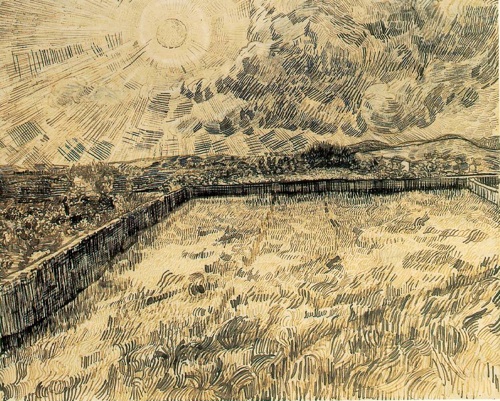
The Bible clearly tells us in several places that nature proclaims God’s Glory, and that many of God’s invisible attributes are made plain to us by Creation. Thomas Aquinas, in his book Divine Names, in the section on God being called “Beauty” says that divine beauty is the motive for God creating all of this. God loves his own divine beauty so much that he wants to share it as much as possible. So, he creates creatures and mysteriously communicates this likeness of Beauty to them. God intends everything in creation to become beautiful in the fullness of His divine Beauty so, just like he has placed a deposit of eternity into our hearts, He has placed a deposit of that beauty in creation. Modern science was birthed out of an awe for this beauty. People looked out on the earth and saw that it worked on ordered processes, and these people determined to find out what those laws and processes were. Science and medicine is humanity accomplishing what theologians call the “Dominion Mandate” – when God commands the first humans to “subdue the earth”. Science is the process of looking deeply into the tapestry of the created world and seeing what strands comprise it. They get to stare into the inner workings of the beauty of God in this world. It’s sad that the Church has so divorced itself from this endeavor of worship. The comedian Steve Martin is also a novelist and playwright. He wrote one of my favorite plays called “Picasso at the Lapin Agile“. The premise is pretty simple: what would happen if Pablo Picasso, five years before he painted his definitive painting Les Desmoiselles d’Avignon met a young scientist named Albert Einstein in a small cafe a year before he published a little book called “The Theory of Relativity”? It’s one of the smartest and funniest plays I’ve ever seen. There’s a scene about halfway through where Picasso lays out his creative process and then looks at Einstein and says, “But what do you know about it anyway? You’re just a scientist. You just want theories”. Einstein replies with, “Yes, but like you, the theories must be beautiful. Do you know why the sun doesn’t revolve around the earth? Because the idea is not beautiful!” He further explains this and then Picasso says, “So you bring a beautiful idea into being.” God’s creation, and the laws that run it, are beautiful.
History is beautiful.
As our text says, History is the context in which all things are being made beautiful. This is where the Beauty of God, His creation, humans, and their creations all collide and interact in order to bring about this beauty and peace in the world. It is the ultimate tapestry in which all these strands are being woven together. One of the best understandings of history I’ve ever heard came from Harold Best, dean of Wheaton College’s Conservatory of Music and author of the incredible book that everyone should read before they die “Unceasing Worship” in a message he gave called “Continuous Worship: Is “Worship” the Only Word for Worship?” In it, he points out that the Eastern mind sees time as circular. Life repeats itself and moves in consistent cycles. The Western mind, on the other hand, sees time as linear, with a definite beginning and a definite ending. Now most of us have heard this before and then were told the various reasons why the Western idea was right.
Best, in the message, and our text tonight, both point out how our modern Western bias is misguided. Our text tells us some of the ingredients God uses to make all things beautiful in their time. And God employs these same list of things over and over and over again through time. In fact, one of the consistent themes of the book of Ecclesiastes is the vain repetitions and cycles that seem to make up life. In Best’s message, he points out that time is in fact neither linear nor circular. It’s helical – in the shape of helix. That shape, so essential to the creation and sustenance of life is actually woven into time. Life moves in circularly as it linearly moves through time. Assuming that’s true, let’s apply our definition of Beauty and see what happens. History is the story of God liberating all of creation from its bondage to decay and ugliness into participation in the glory and Beauty of God. If this is true, then every moment that goes by means the further Beautifying of the world. Imagine, then, time as moving in this circular fashion towards the glory and Beauty of God, the earlier parts being made of less woven strands and slowly, over the years, through time, God employs people, situations, art, Jesus, and the Cross to weave these strands ever and ever more securely together into the Image of Heaven.
What this means then is that time isn’t merely moving forward toward some point in the future we call “Heaven” or “the end of time”, Heaven is actually invading the present as we speak, as we sit here, as art is made, as people are seen as beautiful – we are actually ushering in heaven on earth as those strands are pulled tighter and tighter together to form this epic tapestry of history. In Marilynne Robinson’s book Gilead, she writes from the perspective of an old Congregationalist preacher about to die. This man, reflecting on life and heaven says this as he thinks about this very topic we’re talking about: “I feel sometimes as if I were a child who opens its eyes on the world once and sees amazing things it will never know names for and then has to close his eyes again. I know this is all mere apparition compared to what awaits us, but it is only lovelier for that. There is human beauty in it. And I can’t believe that, when we have all been changed and put on incorruptibility, we will forget our fantastic condition of mortality and impermanence, the great bright dream of procreating and perishing that meant the whole world to us. In eternity this world will be Troy, I believe, and all that passed here will be the epic of the universe, the ballad they sing in the streets. Because I don’t imagine any reality putting this one in the shade entirely, and I think piety {and a love for God has done on this earth] forbids me to try.” Jonathan Edwards described history flowing into the Beauty and Glory of Heaven like this: As time moves forward now and on through eternity, God’s people are ever steadily rising higher and higher into the Glory of God, perhaps with an increasing velocity towards a height to which they will never attain. This history is beautiful. Don’t waste it on trivial, lower, ugly things.

Manucscript

Audio

 I have


 the long way home