prayer & reflection for Ash Wednesday


prayer for the day.

Almighty and everlasting God, you hate nothing you have made and forgive the sins of all who are penitent: Create and make in us new and contrite hearts, that we, worthily lamenting our sins and acknowledging our wretchedness, may obtain of you, the God of all mercy, perfect remission and forgiveness; through Jesus Christ our Lord, who lives and reigns with you and the Holy Spirit, one God, for ever and ever. Amen.
(from the liberti Lent & Easter 2012 prayerbook & the Book of Common Prayer)
Continue reading

The Formation of God | Advent {6}


All last week, I offered some meditations on this season of Advent. I actually have several more I’ll be posting more or less every day until Christmas, but today I’ll be offering the last in this little alliterated series in which we’ve been exploring how in the Advent event, Jesus took on our creaturely form, care-taking function, comprehensive fallenness, and now, communal formation.

We spend a lot of time and energy in this season focusing on how Jesus has changed everything and how the implications of Advent change much of our lives and existences. But Jesus did not merely come to change and affect things, but to also be changed and affected by them.
Continue reading

Mark’s Endings, the Church’s Beginnings, & History’s End


Having recently finished my own personal study on the Gospel of Mark, I just had a few thoughts on the ending of the book, what it meant for the early church, and what it means for us today. So, first, if you’ve never read the last chapter of Mark, let me encourage you to do so here.

You’ll see it’s really weird. There are reasons why most sermons on this part of Jesus’ story don’t often come from this book. It doesn’t have an actual Resurrection account. There seems to be some humor (the ladies ask “who’s gonna roll away the stone when we get there?” They look up and it’s rolled away and Mark adds, “it was very large”). The angels say “tell the disciples and Peter about all this”, but the women are scared and don’t say anything. And then it just ends (assuming the last part isn’t original, as we’re about to talk about). The ending seems to not carry with it the same reverence, awe, gravity, and seriousness of the moment that other Gospels seem to have. It’s almost playful. As far as Gospel accounts go, it’s definitely odd.
Continue reading

The Practice of His Presence


Well it’s that time again. Anyone that has followed this blog for a while knows that I go through “blog angst” from time to time and now and again. I get into a “funk” and question the direction and content of my blog-writing. By now the script for my whining and pining is well-formed and well-documented, but it always seems to end up at the same place: I need to make this blog more personal; it’s not the right venue for in-depth theological engagement; I need not be scared of putting myself in this thing (as I’ve written before).

And this angst could not come at a stranger time for me to try and talk about my personal spirituality rather than using the theological stuff to keep myself at a distance.

Continue reading

Pain, Sickness, Spirits & the Bible (my final reply)


[Update: I have posted Steve’s final reply to this. Also, a friend has added her thoughts to the discussion. Click through the links to join in.]

Over the past week or so, I’ve been having a little discussion about sickness, illness, and God with Steve Wolf. While I was really sick several weeks ago, I wrote about how God met me in that sickness. Steve took issue with my attributing my sickness to the Providence and Purpose of a God seeking to mold me and shape me. I responded to him, he responded to me. And now, I am offering my own final words on this before moving on. If he responds, I will be more than happy to post his comments.

Though this is an important issue–and, as I said yesterday, one that I feel Steve’s view could hurt a lot of people–it is an issue that concerns such a small percentage of such a small percentage of people out there. I apologize that my reply here directly speaks to his points without quoting him, forcing you to go back and read his comments; but, for the sake of space and simplicity, I thought it best just to put my thoughts up. Please feel free to comment and engage. Though I will not post anymore  on this, it doesn’t mean we can’t discuss further. I know this is long, but I’ve given it sub-headings for easier navigation (and skimming). With all that being said…

My Response: Steve, thanks for your response. First, to answer your questions (and give some clarifications): yes, I have received the Baptism of the Holy Spirit (as according to 1 Cor 12:13), I have received the gift of tongues, and I fully believe in the contemporary and ongoing healing ministry and gifting of the Holy Spirit. Now, some replies to some of your points:

Continue reading

Pain, Sickness, Spirits & the Bible (the reply) [Guest Post]


[Update: After this post went up, I then posted my final response. Then Steve gave his. Lastly, a friend posted her thoughts on the discussion as well. Follow the links to get in on the rest of the discussion]

Late last week, I wrote up a response to a comment left on a post of mine I wrote about pain, suffering, and sickness in light of the goodness of God. Steve Wolf was the commenter, and he ended up writing a comment responding to my response. To respect his work in his reply, I wanted to post it up as a full post to bring attention to it. For the most part, I will leave it up to the reader to determine if my original concerns were answered. I will put up a few brief final responses tomorrow for those who are interested. Then, I’ll write about some other things.

Once again, for all those reading, this is a “family discussion” between brothers. Steve and I both definitely disagree on this–and we both think the other’s viewpoint could do damage to others who were to sit under the teaching–but I do not doubt that Steve is a brother whose primary desire is to honor God in what He has called him to do; and in that, I want to fully love and support him. So, without further ado, here is his reply:

Greetings Paul,

Wow, that was quite a long response to such a short comment! Ha Ha I guess you also are quite passionate about the subject at hand. I appreciate your last paragraph, and will treat you as a brother in Christ. I don’t want to attack anyone personally, but feel impressed to speak against false doctrine and religious traditions of man that have a damaging effect on the body (the church). I can see by your response that we don’t have the same beliefs in a few areas, but I want to focus on sickness and healing.

Don’t confuse persecutions with sickness. We can’t escape the one, but can the other. I answer Paul’s thorn in my post “Stupid Free Will“. Timothy was told to drink a little wine because the water in that area was making him sick, and he was being legalistic for not drinking a little for his stomach’s sake. 2 Tim 3:16 says that the Word of God makes us complete and thoroughly equipped for every good work- sickness is not a teaching tool of our loving Father.

I honestly believe most of your points are answered in my post Healed: a Fresh Prospective, but it is a 4- pager, so I will try and condense my response. The whole point for my comment was to (1) Identify the source of all sickness and disease as NOT from God, but rather Satanic in origin, or at the least, a product of this fallen world. Isaiah 5:20 says “Woe to those who call evil good, and good evil…”

It is simply not true to think that God would lead you into the wilderness of sickness to teach you a lesson. Granted, this was the practice under the old covenant. We, however, are living under the New Covenant of Grace. I hope you understand that many of the Old Testament examples you used do not apply to a New Testament saint – a born-again believer. God placed all of the sins of mankind on His Son Jesus, and He bore the totality of His wrath toward sin.

God is no longer imputing man’s sins against him (2 Cor 5:18-19). Even David said , “blessed is the man to whom the Lord shall not impute sin.” I believe we are completely righteous before God because of our faith in His Son.”Therefore we conclude that a man is justified by faith apart from the deeds of the law(Rom 3:28). “Therefore having been justified by faith, we have peace with God through our Lord Jesus Christ (Rom 5:1). “Much more then, having been justified by His blood, we shall be saved from wrath through Him (Rom 5:9). You must believe God doesn’t cause or send sickness to a person. The O.T. way of “do good get good, and do bad get cursed” has been done away with.

Sickness and disease are described as curses under the O.T. law. Deuteronomy chapter 28 is quite clear on what God considers a curse, and what He considers a blessing. Now for the good news- the Gospel. Gal 3:13-14 “Christ has redeemed us from the curse of the law, having become a curse for us for it is written, Cursed is everyone who hangs on a tree, that the BLESSINGS of Abraham might come upon the Gentiles in Christ Jesus, that we might receive the promise of the Spirit through faith.”

In other words, we get all of the blessings, and none of the curses because of our faith in Jesus! Which is why Eph 1:3 says, “Blessed be the God and Father of our Lord Jesus Christ who HAS blessed us with EVERY spiritual blessing in heavenly places in Christ Jesus.” We then use faith to appropriate (make manifest in the physical realm) what God has already freely given to us by His grace.

Sickness and disease have no place in your body, and you have the authority to use the name of Jesus to enforce God’s Word concerning your healing. Have you not read that by His stripes we WERE healed (1 Peter 2:24)? Healing was provided for in the atonement just as much as forgiveness of sins. That’s why we take the bread and the wine. His body was broken so that ours wouldn’t have to be. His blood was shed for the forgiveness of all our sins, and representative of this new covenant of grace we live in.

I never said all sickness was caused by a spirit of infirmity, but viruses and especially cancer are kept alive by that spirit. I would really recommend reading my post titled “Spirit of Infirmity?” Jesus came that we might have life, and have it more abundantly. The enemy comes to steal, kill, and destroy. I have watched all kinds of sicknesses, diseases, and cancers bow before the mighty name of Jesus. God wishes above all things that we prosper and be in good health – any other teaching is actually anti-Christ in that it denies the finished work of Jesus.

There is so much more to be said, but I don’t have time today. Have you received the Baptism of the Holy Spirit? With the baptism comes power my brother. We can argue doctrine till we are blue in the face, but as Paul puts it, “I will come to you shortly, if the Lord wills, and I will know not the word of those who are puffed up, but the power. For the kingdom of God is not in word but in power.” (1Cor 4:19-20) If I were ministering to you in person (and you were still sick) I would lay hands on you and My God would confirm the word I have given you with power!

Anything less is just words, and you can get those anywhere =). Not trying to plug my book, but I think you would find it refreshing. Peace.
Pain, Sickness, Spirits, & the Bible (a response to a comment)


[Update: the original commenter ended up responding to this post. I then gave my final response, and then he gave his. Lastly, a friend posted her thoughts on the discussion as well. Follow the links to get in on the rest of the discussion.]

Yesterday, Steve Wolf of Steve Wolf Ministries left a comment on a blog post I wrote a few weeks ago when I was super sick. Perusing his site, I could tell this is a topic he is particularly passionate about, so I really hope I don’t start some blog war, but rather some constructive “family discussions” between brothers and sisters. I wrote out my reply in the comment box of the post, and when it was done, it was long enough and had enough stuff in it to justify an entire post, so here it is.  Here is his comment, where he quoted me and wrote out his reply:

“And so, in a lot of ways, to move past pain is to move past God. This God came down to taste pain, so that now pain, heartache, rejection, isolation, doubt, fear, and insecurity are now part of the divine experience. To know those things is to know God!”
WOW! Seriously? You speak a lot of God, so would you mind backing up any of these statements with the Word of God? Sickness and disease are curses not blessings. A cold virus is kept alive by a spirit of infirmity – you know, the very thing Jesus liked to cast out of people.

Continue reading

Unceasing Worship (a liturgy)


[photo by p*p on flickr]

[This was a liturgy I delivered at my church this past Sunday as we continued our series from Luke called “conversations with jesus”.  Here is the audio from the message that followed this opening liturgy.  Much of this opening material I stole from the incredible book Unceasing Worship by Harold Best]

Greeting and Preparation

Leader: The Lord be with you.
People: And also with you.

Hello, my name is Paul, and I want to welcome you Liberti Church. Liberti is a community of individuals still trying to figure out this Christian faith we’ve found ourselves in. And if you’re around here long enough you’ll see that we all do this to varying degrees of imperfection, more often than not. So, whether this is your first time here, or you are firmly rooted in this community, I hope that your time here today is meaningful; that you feel warmly welcomed and that you are able to experience the God we love in a tangible, real way.

In a few moments we’re going to stand and do the whole traditional, super structured, church thing. We’re going to read things back and forth, say them together, sing some songs, stand up, sit down, stand up again, say hello to one another and listen to a sermon. It’s easy to look at all this and begin to think that all these trappings and movements are what it means to be a Christian; that this is the substance of our faith. It’s easy; after all, we can see, observe, and measure our participation of these things.  But that’s not why we do this.

Continue reading

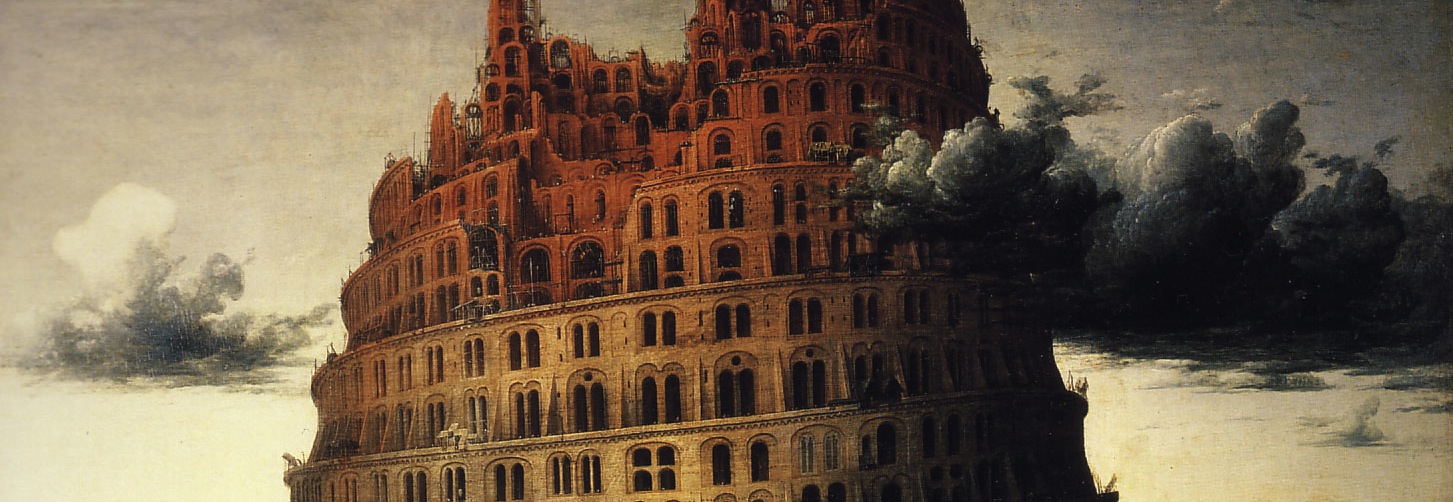
on Babel, Language, & Identity (a liturgy)


[This was a liturgy I delivered at my church this past Sunday as we concluded our series “in the beginning”.  Here is the amazing message that followed this liturgy.]

Greeting and Preparation

Leader: The Lord be with you.
People: And also with you.

Hello, my name is Paul, and welcome to Liberti Church. Liberti Church is a group of people trying to figure out what it means to be a community of believers in Jesus Christ both in and for this city. This may be your first time here–you may have randomly wandered in here or a friend brought you; or, you may be a regular attender here. Either way, we hope you feel welcome to fully participate in this time and space set aside to worship our God.

Continue reading

It’s that time of year again….Lent.


I was just reading the article I wrote last year when I gave up Facebook for Lent. So much has changed. I remember that last year I saw fasting during Lent as some Catholic thing that might be a good idea to do. Also, my reason for giving up Facebook was to help me in the areas of procrastination and discipline.

On the discipline front, it’s funny to have watched how things have played out since then; even more so in light of this year’s Lent. As I finished up that second semester of seminary, my procrastination and discipline issues only worsened.As I dropped out and spent the summer woefully unemployed and poor, my nights got later, I became completely unproductive on nearly every front, and my soul seemed to shrivel because of my lack of discipline and consistent pursuit of God.

In the Fall I moved to a new church community and slowly started to become revived. For the first time I began to understand Calvin’s assertion that theology is only truly theology when it’s lived out. I can no longer divorce orthodoxy from obedience. As time went on, I got swept up in the various means of grace that God has given his church (to be talked of more later), and I was drawn to Him. In the midst of my “dry season” (as we charismatics call them) I feebly reached for a few resources to keep the dwindling flame alive. I eventually got my hands on a sweet copy of the Book of Common Prayer. As of about a month ago, after getting some help, I actually began getting up at a consistent early time and doing some morning devotions. I’ve even been doing some evening devotions as well. I’ve been more consistent in my thinking, writing, and planning. It’s been amazing. I feel my soul revived. After reading that Lent post from last year, I can’t help but wonder if this newfound discipline and productivity are the fruits of the grace obtained in last year’s Lent season.

Continue reading

The Triune God is Beauty{3}


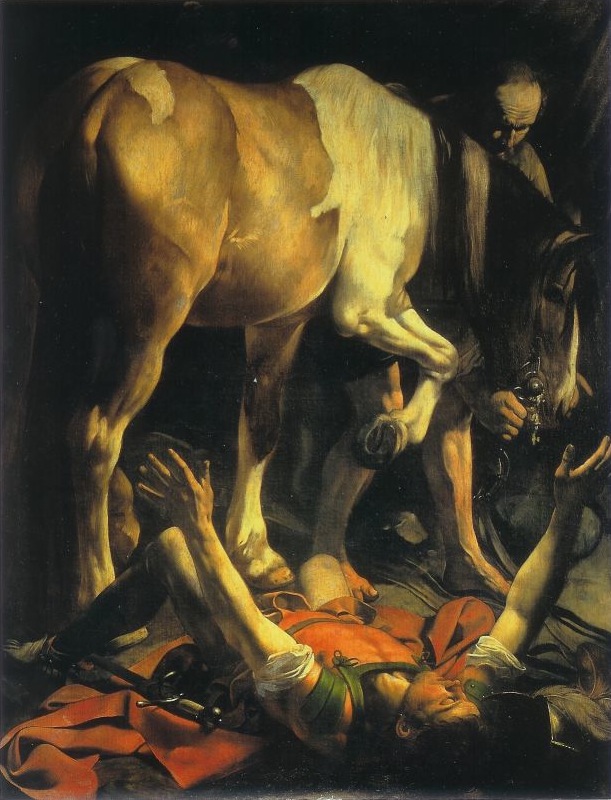
Caravaggio - The Conversion of Saint Paul 3bThis is the third part in what will end up being a fairly long and comprehensive series on Beauty. It’s based on a recent message I gave on the topic. You can find the full audio and full manuscript below. [Bold: things I had time to say // Regular: things I didn’t have time for] So far, we’ve seen why we long for Beauty, we’ve discussed what it is, now let’s apply this definition.

What is beautiful?

First and foremost, the Triune God is beautiful.

He is Three Persons (complexity) existing in One Deity (simplicity). Just think of that word God. That is the human term that he has chosen to be acceptable for us to call him. Those three letters contain the simplest expression of the Sovereign Creator God of the Universe. Most old school systematic theologies are structured the same basic way: the first actual section of theology is reserved for “the Doctrine of God”, and the first thing you learn about God is his “unknowability”. This is the fact that God is infinite, inexhaustible, holy, and completely separate from all things we could ever conceive or understand. We cannot know him. Any pursuit we go on to know him will always be futile. Just the fact that the Infinite God has revealed anything to us in a way that we can actually understand is beauty itself. He is the perfect and complete tapestry within which all things are woven together in the first place. He is peace. He is shalom. He is Beauty. But let’s look at His distinct persons as well.

God the Father is beautiful.

In Exodus 3, Moses is talking to this God who is showing Himself through a burning bush and he asks this God “Who are you?” The huge transcendent God simply says “I am that I am”. So, in the Bible and in the creation, God the Father reveals Himself clearly enough that we can know who we should worship. Think about it. The infinite God who is outside of time and space uses finite things within time and space to communicate himself. This Infinite Head of the Godhead reveals the Infinite strands of who He is in one of the simplest of tapestries: “I AM”. This is beautiful.

God the Holy Spirit is beautiful.

1 Corinthians 2 says, “As it is written, ‘what no eye has seen, nor ear heard, nor the heart of man imagined, what God has prepared for those who love him’” We often stop there. We talk about all those infinite promises God has made that no one has seen and no one can know. But this isn’t the case. Read on. Paul writes that all these things that no one has seen, all these infinite and glorious promises that would blow our minds “God has revealed to us through the Spirit. For the Spirit searches everything, even the depths of God. For who knows a person’s thoughts except the spirit of that person, which is in him? So also no one comprehends the thoughts of God except the Spirit of God. Now we have received not the spirit of the world, but the Spirit who is from God, that we might understand the things freely given us by God.” The Infinite complex Spirit of the Infinite complex God dwells within finite simple believers and what’s more, he communicates the previously unspoken thoughts of God Himself. So through the mediator of the Holy Spirit, God weaves his thoughts into the tapestry of our souls.

God the Son is beautiful.

Of course, we go to John 1 for this: “In the beginning was the Word and the Word was with God and the Word was God. He was in the beginning with God. All things were made through him, and without him was not any thing made that was made. . . And the Word became flesh and dwelt among us, and we have seen his glory, glory as of the only Son from the Father, full of grace and truth. . . For the law was given through Moses; grace and truth came through Jesus Christ. No one has ever seen God; the only God, who is at the Father’s side, he has made him known.” He is the ultimate earthly reflection of beauty. He is the living word of God. He is God of God in the flesh of man. The ultimate, infinite, precious, all-consuming, King of Kings and Lord of Lords takes on the form of a child born in a manger. Oh the humility. Oh the beauty in this act we call the Incarnation, where the infinite God takes on finite humanity.

Though much more could be said (and maybe should be) I feel I’ll stop there. This is an all too-brief picture of why/how God is beautiful, but this is because most people acknowledge that if there is a God, He is in fact what we would think of as beautiful. Otherwise He wouldn’t be worthy to worship. Most would agree with what I’ve written if in fact this was the God that existed. We’ll discuss that more next week. On Wednesday, though, we’ll talk about worship, nature, science and how all those things connect. It’s one of my favorite sections. Here are the links I mentioned earlier:

Click for Manuscript Pdf

Manucscript

Click here for sermon audio

Audio