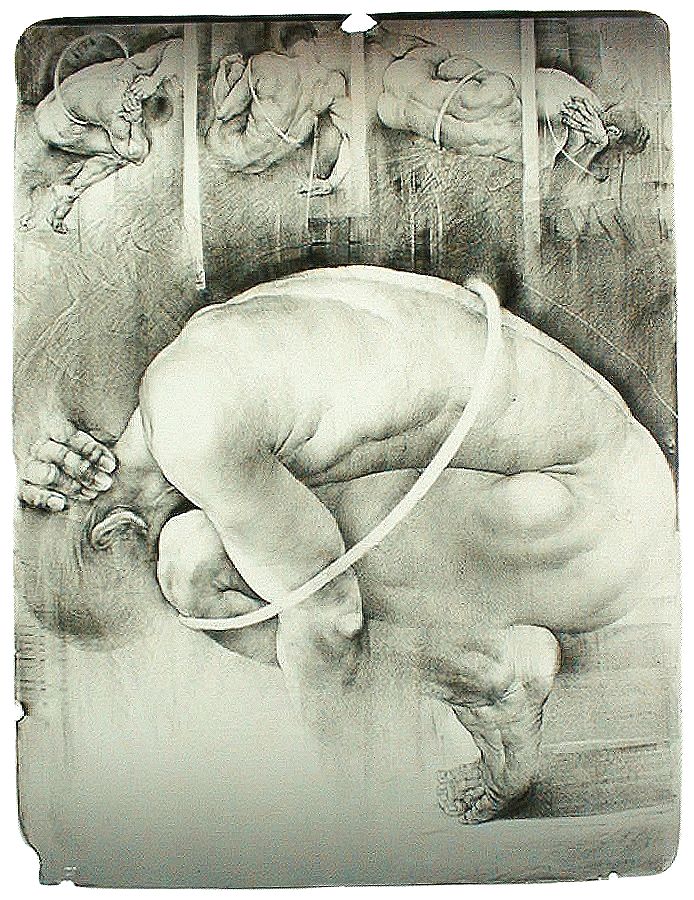
{wednesday} | prayer & readings for Holy Week (2012)


For Holy Week: reading schedule/reflections + local Holy Week gatherings.
{More on the why and how of Lent here.}

prayer.

O God, by the passion of your blessed Son you made an instrument of shameful death to be for us the means of life: Grant us so to glory in the cross of Christ, that we may gladly suffer shame and loss for the sake of your Son our Savior Jesus Christ; who lives and reigns with you and the Holy Spirit, one God, for ever and ever. Amen.
(from the liberti Lent & Easter 2012 prayerbook & the Book of Common Prayer)

Continue reading

Nietzsche, the Cross, & the Weight of the World | Lent {8}


If every second of our lives recurs an infinite number of times, we are nailed to eternity as Jesus Christ was nailed to the cross.  It is a terrifying prospect. In the world of eternal return the weight of unbearable responsibility lies heavy on every move we make. That is why Nietzsche called the idea of eternal return the “heaviest of burdens”. If eternal return is the heaviest of burdens, then our lives can stand out against it in all their splendid lightness.

But is heaviness truly deplorable and lightness splendid?

…. The heavier the burden, the closer our lives come to earth, the more real and truthful they become.

Conversely, the absolute absence of a burden causes man to be lighter than air, to soar into the heights, take leave of the earth and his earthly being, and become only half real, his movements as free as they are insignificant.

What then shall we choose ? Weight or lightness?

— Milan Kundera, The Unbearable Lightness of Being
Continue reading

{tuesday} | prayer & readings for Holy Week (2012)


For Holy Week: reading schedule/reflections + local Holy Week gatherings.
{More on the why and how of Lent here.}

prayer.

O God, by the passion of your blessed Son you made an instrument of shameful death to be for us the means of life: Grant us so to glory in the cross of Christ, that we may gladly suffer shame and loss for the sake of your Son our Savior Jesus Christ; who lives and reigns with you and the Holy Spirit, one God, for ever and ever. Amen.
(from the liberti Lent & Easter 2012 prayerbook & the Book of Common Prayer)

Continue reading

Free Holy Week Music: Cool Hand Luke’s “Of Man” & Lent Mixtape


All of us know that one of the things that can affect our mood like no other is music. And so, to that end, I wanted to tell you about one of my favorite albums ever, by my favorite band ever (they’ve had that title since I was in high school, so I promise, I’m not just exaggerating for effect), Cool Hand Luke’s Of Man.

Continue reading

Holy Week & Meditations on Radical Grace


Last year, on Palm Sunday, I got the privilege to deliver a little message to a group of men at the prison ministry my church does each month. I ended up building off of that message and its outline and writing a series of blog posts meditating on Holy Week and the radical, scandalous grace inherent in the story and actions of Jesus over those days. For your mediation this year over Holy Week, I wanted to post these links for your perusal and, hopefully, your blessing.

The Scandal of Holy Week

{i} the forsaking of God | In this post, we meditate on the fact that Holy Week was the week-long process by which everything–from humanity to creation to God Himself— forsakes Jesus. We see that true disciples are not those that never forsake Jesus. In fact, we will all forsake Jesus in radical ways at some point.
Continue reading

{monday} | prayer & readings for Holy Week (2012)


For Holy Week: reading schedule/reflections + local Holy Week gatherings.
{More on the why and how of Lent here.}

prayer.

Almighty God, whose most dear Son went not up to joy but first he suffered pain, and entered not into glory before he was crucified: Mercifully grant that we, walking in the way of the cross, may find it none other than the way of life and peace; through Jesus Christ your Son our Lord, who lives and reigns with you and the Holy Spirit, one God, for ever and ever. Amen.
(from the liberti Lent & Easter 2012 prayerbook & the Book of Common Prayer)

Continue reading

readings & reflections for Holy Week (4.1-7.2012)


scripture readings for the week.
as the week progresses, check back here and click on the appropriate day for Prayer and Scripture text for that day

(from the liberti Lent & Easter 2012 prayerbook & the Book of Common Prayer)

Continue reading

a Philly Holy Week schedule | Lent 2012


First of all, my church has been raising money to purchase and deliver over 1,000 meals to needy families around the city for Easter. They are delivering these meals on Saturday, and they really need drivers for the deliveries. It would only take 2 or 3 hours of your time, and you can pick which hour you begin. Click here to sign up. Tomorrow is the last day to sign up for this.

Thursday: Maundy Thursday Service
liberti: center city, 17th and sansom, 7pm
This day commemorates Jesus’ Last Supper with his disciples and his washing of their feet.

Friday: Good Friday Service(s)
liberti: center city, 17th & Sansom, 6:30pm
On Good Friday, Christians remember Jesus’ death on a cross for the sake of the world. liberti will hold a service of songs, Scripture readings, and darkness

city church, at Woodland Pres Church, 42nd & Pine, 7pm (with meditative prelude at 6:45pm)
A Tenebrae service that mournfully observes the darkness of Jesus’ death and our need for God’s redemption (Tenebrae is Latin for “shadows”). Worship with us as our Lenten focus on God’s deliverance culminates in Jesus’ statement on the cross: “It is finished.”
(This is the Good Friday service I always go to. It’s amazing, and if you’d like to join me, let me know. We can carpool.)
Continue reading

On Palm Sunday (or, “Oh, the Glory, the Beauty, & the Tragedy of Being Human!”) [REPOST]


This past Sunday was Palm Sunday, the Christian holiday that ushers in Holy Week. It celebrates the “triumphal entry” of Jesus into Jerusalem (Mk 11:1-11). Seen with the insight of hindsight, though, this is one of the oddest “triumphal entries” one could imagine. It is the triumphal kick-off for what will be the death of the Son of God.

Lately, I’ve been thinking about the common “courtroom” analogy for the Gospel. You’ve surely heard it: You are standing before a judge. You are guilty. The punishment is death. It is a right and just penalty for your crimes. But then Jesus comes in and freely offers to take your punishment for you on your behalf so you can be set free. Will you accept this gracious offer?

Many an atheist has pointed out the logical flaws in this analogy, but I think there are even bigger issues I have with it. Really, it only works if the parties involved in this switch are seen as equals. A pure man for a guilty man — seems like an even trade, right? But how then does the death of this one man absolve the sins of a multitude? How is this even just?

Continue reading

Love: The Beginning & End of Divine Suffering | Lent {7b} [GUEST POST]


[Yesterday, my good friend Austin Ricketts kicked off this two-part post, part of my own Lent series, talking about how the “disposition” or “intention” of God is Love, firstly exercised towards God’s own Self in the Trinity. And this Love moves away from the lover toward the loved as it is given. Therefore….]

Update II: In an interesting twist, Austin has since recanted these comments, though I still entirely agree with these original ones. So….I’m going to keep them up, but with this comment.

death & distinction in God

The reason why death is an appropriate notion by which to understand this relation, then, is that death entails separation or distinction between two or more things that otherwise belong together.

Death is not an end of life, necessarily, but rather a limit and transition.  For humans, the Bible points out that there is a limit and transition that occurs at material death.  At that time, humans exist as a bodiless soul, at least until the final resurrection.

Death is a separation or distinction between two or more things that naturally belong together; in the case of humans—a body and a soul.

Considering God again, “separation” can’t really be the right word.  Distinction is more orthodox.  I mentioned earlier that it is incorrect to see a “lessening” of the Father’s being when transitioning to the Son.  That’s because there isn’t a lessening of being at all.  Quite the opposite.
Continue reading

Love: The Beginning & End of Divine Suffering | Lent {7a} [GUEST POST]


[Note: Today, we have another post by my good friend Austin Ricketts. I asked for him to write some of his thoughts on the current Lent series I’m doing and this is what he came up with. He’s written other things for my blogs before, and each time, I end up with my mind blown. This post certainly follows in that tradition. This piece is a bit longer (even after breaking it up into two posts), but I encourage you to read it in its entirety. Really, you will not be disappointed.]

Update: Part 2 of this post is up.

Update II: In an interesting twist, Austin has since recanted these comments, though I still entirely agree with these original ones. So….I’m going to keep them up, but with this comment.

When delving into the mystery of the Trinity, it is inevitable that one approaches Light too bright to see through, a mountain too high to climb, a cave too deep to spelunk.  That this is the case does not mean that one shouldn’t move into any light, climb as highly as she can, spelunk as deeply as he may.  That would be an unbiblical quietism, and unhealthy for the soul.  The soul needs exercise.

Here I attempt to exercise my soul by exorcizing the ancient demons called simplicity and impassiblity.  I pray that I do this while abiding in love.  But I do it nonetheless.
Continue reading

The Slain God of Evolution | Lent {6}


This Lent, we’ve been going through a series meditating on some of the implications of the fact that we worship a God who was “slain before the foundations of the world”–in eternity past–and therefore has some aspect of “slain-ness” to his very nature.

In the last couple of posts, we’ve been focusing on what this means for the many references in which the Bible says that the world was created “through Jesus”. What might it mean that the world came into being through a suffering and slain Lord? What might it mean for our own suffering?

This got me thinking about Evolution.

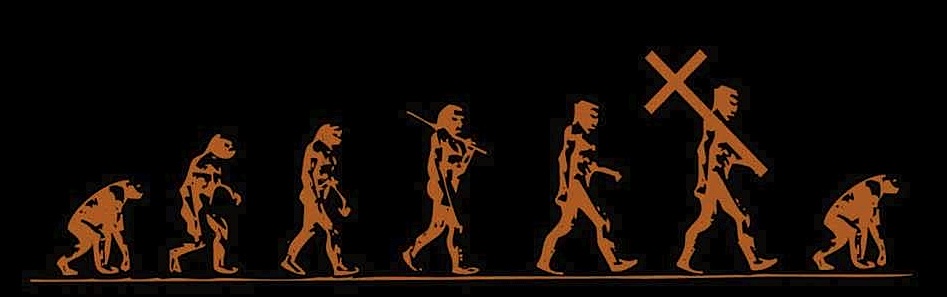
Obviously, the main vehicle driving Natural Selection is death and dying. This is one of the biggest hindrances that Christians have to the idea of Evolution. If our usual categories are correct of a “good” creation “falling”, and only then ushering “death” into the world, how does the thoughtful Christian deal with the realities of Evolution?

I think this Lenten idea of God’s “slain-ness” can help.
Continue reading

prayer & reflections for Lent, wk5 (3.25-31.2012)


prayer for the day.

Almighty God, you alone can bring into order the unruly wills and affections of sinners: Grant us grace to love what you command and desire what you promise; that, among the swift and varied changes of the world, our hearts may surely there be fixed where true joys are to be found; through Jesus Christ our Lord, who lives and reigns with you and the Holy Spirit, one God, now and forever. Amen.
(from the liberti Lent & Easter 2012 prayerbook & the Book of Common Prayer)

Continue reading

Catholics Aren’t Crazy: Paul Ryan & the 2013 House Budget


Yesterday, House Republicans unveiled their own 2013 budget to counter President Obama’s proposed budget.

Now, neither of these have (or will) become law. These annual budgets are merely proposals and are often political statements of priority. Both the President and the House write their budgets, not realistically, but extremely, hoping that once negotiation begins, they’ll walk away with more of what they want.

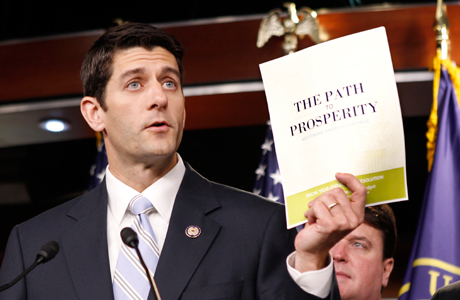
But still, like I said, these proposals are expressions of priority and direction to which a party will try and “bend” the nation’s spending. The House Budget Committee Chairman, Paul Ryan, said as much when he unveiled the plan (upon which he bears the final word), calling it “a choice between two futures” (others called it “careless”).

Continue reading

Christ’s Heart Breaking in Us | Lent {5}


Lent is a season in which God’s people meditate on the slaying of Jesus on the Cross and all that is within them (and outside of them) that made that Cross necessary. So to that end, we’ve been doing a series meditating on the fact that Christ is the Lamb who was “slain before the foundations of the world”. We’ve been thinking through what it might mean that Jesus, in some sense, has been suffering for all time.

[suffering]

We’ve said that the Cross was an in-breaking of the suffering essence of God into our world. Think of it as a volcano that emerges after a millennia of quiet tectonic plate shifts. Eternity and infinity–past, present and future–break into the world at the Cross; eternity is the backdrop against which the death of Christ occurs.

We’ve also said that the world has a certain “slain-ness” to it as well, due to being created “through” a slain and suffering Christ.

Today I want to ask: What might that mean for our own suffering and death?
Continue reading