On Palm Sunday (or, “Oh, the Glory, the Beauty, & the Tragedy of Being Human!”)


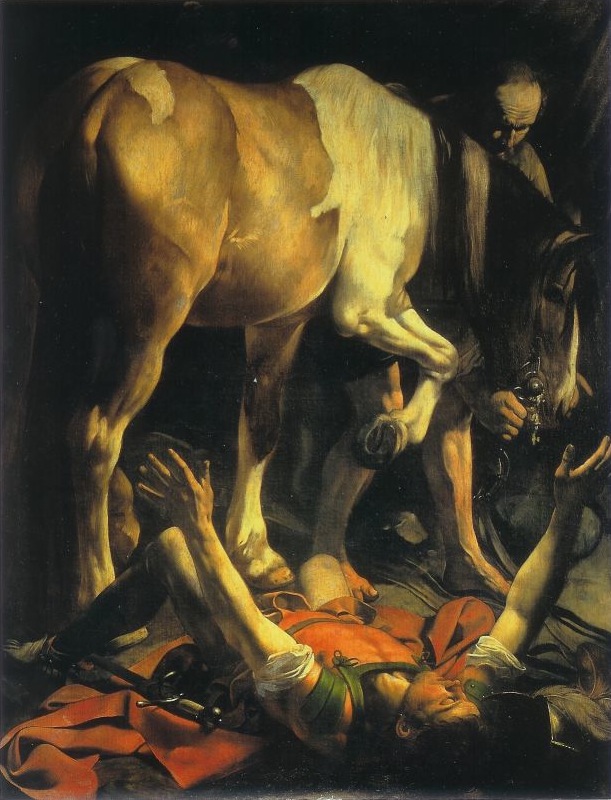
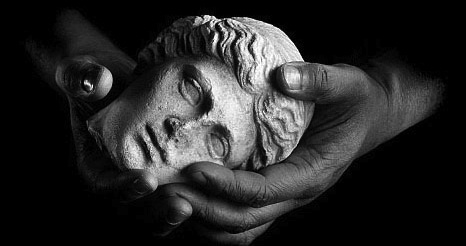
This past Sunday was Palm Sunday, the Christian holiday that ushers in Holy Week. It celebrates the “triumphal entry” of Jesus into Jerusalem (Mk 11:1-11). Seen with the insight of hindsight, though, this is one of the oddest “triumphal entries” one could imagine. It is the triumphal kick-off for what will be the death of the Son of God.
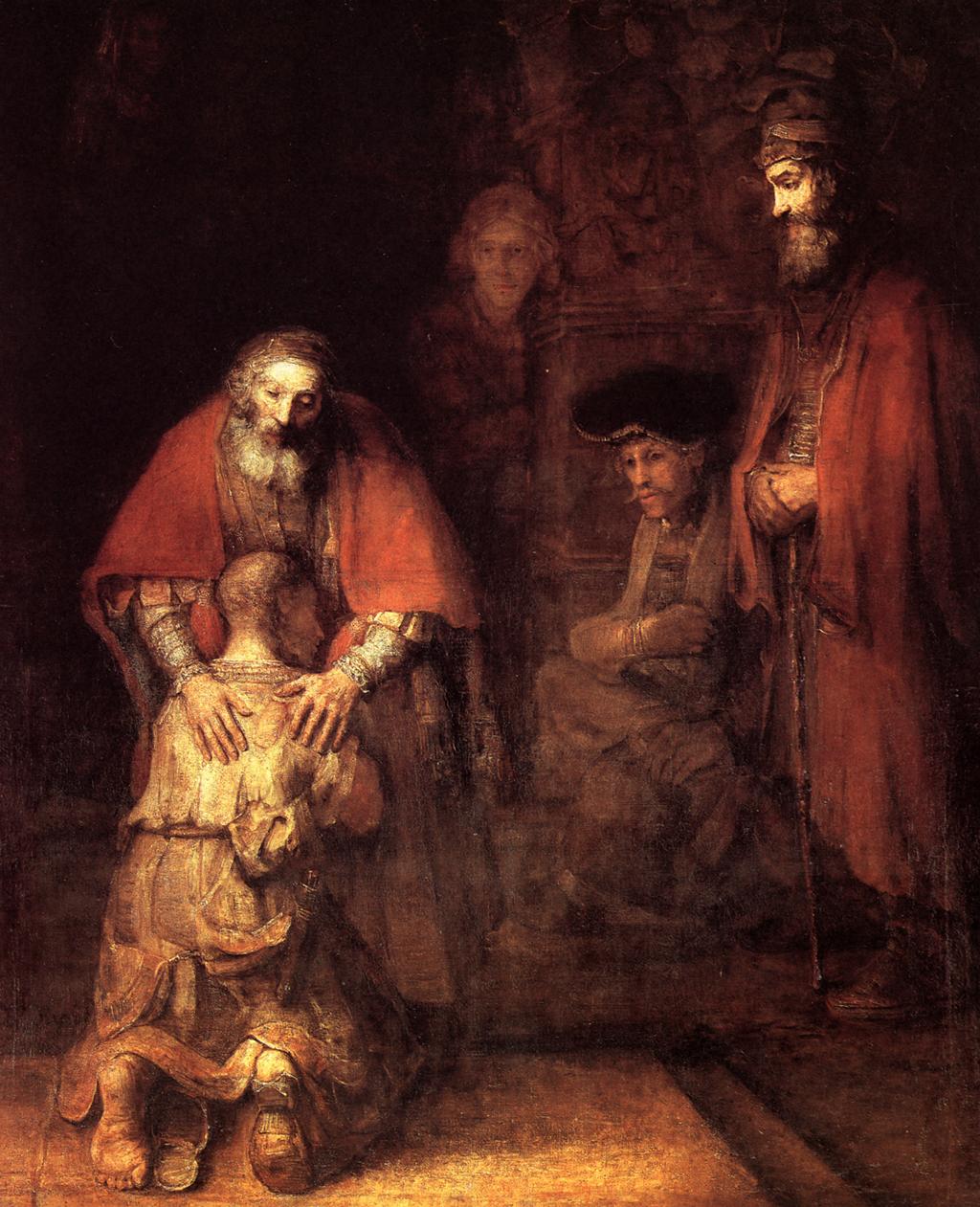
Lately, I’ve been thinking about the common “courtroom” analogy for the Gospel. You’ve surely heard it: You are standing before a judge. You are guilty. The punishment is death. It is a right and just penalty for your crimes. But then Jesus comes in and freely offers to take your punishment for you on your behalf so you can be set free. Will you accept this gracious offer?

Many an atheist has pointed out the logical flaws in this analogy, but I think there are even bigger issues I have with it. Really, it only works if the parties involved in this switch are seen as equals. A pure man for a guilty man — seems like an even trade, right? But how does the death of this one man absolve the sins of a multitude? How is this even just?

Continue reading

Last night, I broke bread with Kenny G


Channeling my inner stereotypical-broken-hearted-teenage girl, I went to WaWa last night to pick up some Ben & Jerry’s (Stephen Colbert’s “Americone Dream”, in case you were wondering.  I’ve written before about the spiritual experiences both  B&J have brought me.). I had just gotten off work and was about to head home, pig out, and catch up on some TV. I pulled in, got some gas, and then pulled up to the side of the actual store to get my ice cream.

I saw the usual “poor guy” sitting on the pavement on the side of the building asking everyone that passed by for their spare change. The usual little battle happened inside my mind: Oh God, I’m going to get asked for money aren’t I? Okay, what walking path can I take that keeps me just far enough away from him that he doesn’t actually ask me. I’d rather say nothing than have to say no and feel bad later. Ah! What am I thinking! Stop it, Paul! Why are you so heartless? This is not the Gospel. Serve him.

Continue reading

Repentance (for Liberti & my Home Group)


I help lead a home meeting for Liberti Church: Center City. In these home meetings we usually further discuss the sermon from Sunday and try and see what bearing it might have on our everyday life. As most everyone knows, I have started my new job now and had to work last night so I wasn’t able to attend the home group. So, I thought I’d write out my thoughts here.

This post is mainly trying to place this past week’s message in the broader context of our current series “Lent For Everyone”. The first week, we looked at Jesus’ temptations in the desert to show us how we are meant to live life here and now in the “desert” of history — after our freedom from slavery but before the Promised Land (Audio). The second week of Lent Jared preached on how the God of Christianity  is unlike any other god we make, because of his Covenantal character, and how He does not demand that we bound ourselves to Him, but rather He commits Himself to us (Audio). This past week we heard God in Isaiah 55:1-9 invite us toward the gift of repentance, and in that find life (Audio). Next week, he will talk about the celebration this God is actually inviting to take part in (Audio), and in the final week, he will talk about who this King is that has been with us all along (Audio). In our home meeting, we’ve been talking about these ideas and how our sins reveal the true nature of our hearts.

Continue reading

Some Protestant Leftovers on Scripture & Inerrancy


The other day I posted an article on how Roman Catholics look at Scripture. When I originally wrote it, it was far too long to post online in its entirety. Therefore, I cut out some chunks, that I’d like to post now. They are mainly on how I believe the current landscape is in typical Evangelicalism in America. I know I’m using broad strokes to talk about these things, but I assure you, this mindset is still very strong, especially in the South. Here it is:

Oh, the Bible. It’s the lifeblood of the Church. It’s our backbone. Why? Well, the logic goes like this: there’s a God who’s so far beyond our understanding that we can know nothing of Him unless He reveals it to us. That’s what Christian believe the Bible is–the revelation of God. This may sound fairly simple–and it is, in one sense–but in some areas, this truth of Scripture sometimes brings more confusion and disagreement than clarity and insight. Because, let’s face it, it’s difficult to grasp that the God that is SOOOO beyond our understanding revealed himself through–of all mediums–a book? And what’s more: this book? It’s tough to read many (most?) parts of the Bible and think “this is the revelation of GOD.”

Continue reading

Open Mic: John Yoo, Torture, & Christian Ethics


Yesterday I wrote about how Catholicism views the idea of torture and how a possible response to it and it’s socio-political effects can be found in the Eucharist.  That article was written because the idea of Torture has come front and center in the political discourse once more.  For those not keeping track of the current political climate concerning the previous administration, John Yoo is a law professor at the University of California, Berkeley that was given the charge by the Bush administration and the CIA to define the nature and limits of “enhanced interrogation techniques“. He along with Jay Bybee authored the famous “torture memos” which gave legal justification for the use of waterboarding, sleep deprivation, and other techniques in order to get information from suspected terrorists.

Last year, the Office of Professional Responsibility wrote a report finding the two men guilty of professional misconduct and recommended the Justice Department do a full investigation. Ealier this month, both Bybee and Yoo were officially cleared of all wrongdoing in the eyes of the Department of Justice. Further, the DOJ strongly suggested that no further investigation nor disciplinary action from the bar should be sought. Last week the Department officially closed its investigation. Yesterday, the top ethicist of the Department of Justice said that not only did Yoo and Bybee do nothing criminal, but neither did they even act unethically. (Full summary of the metanarrative of all of this can be found here.)

Continue reading

Open Mic: A Prolegomena of Transgenderism (pt.ii)


UPDATE: This series is finished. Part 1 can be found here and Part 3 is here.

Yesterday, I started a little miniseries on Transgenderism in response to a question a friend sent me. They were wondering how Christians are supposed to look at this particular issue. I laid out the questions and definitions involved here and asked for feedback (be sure to read all of those comments). Today, I’m talking about a “Prolegomena of Transgenderism”.

Prolegomena” is just a big (but appropriate) word that basically refers to all the things we must keep in mind before trying to answer big questions. For example, in Systematic Theology, Prolegomena is when we lay out the very foundation of our knowledge about the given topics and the presuppositions that will guide us through the rest of the endeavor. That’s what this post is. I want to explore a couple of perspectives that have driven a lot of the answers I’ve seen about this before trying to come to firm conclusions in the next post. So, with all that being said, let’s get started.

Continue reading

Holy Day Meditations: Jesus Presented at the Temple


The backbone of my morning and evening meditations and prayer has become the Anglican Book of Common Prayer. It has taken me a while to figure out how to use it (with a lot of help from a friend), and I’m still clumsily trying to make my way along, but it is an amazing book. It gives just the right amount of both freedom and structure to give me both guidance and excitement. I’m really enjoying it. Secondly, I am a relatively new member of a church that belongs to the Reformed Church in America. Both of these things has led me to encounter ancient church documents, creeds, and traditions I was never exposed to as a Bible Belt Southern Baptist.

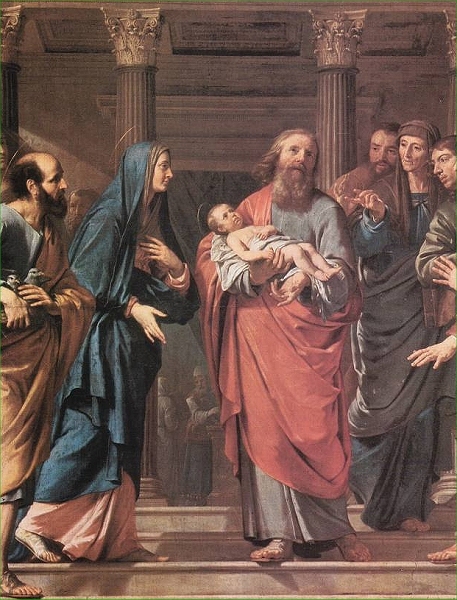
One of those newfound traditions that is really becoming a major part of my life is the Church Calendar. According to the calendar, we are currently in the season of Epiphany, where the church celebrates the travel of the Wise Men to see Jesus, therefore declaring him King and Lord among all the nations, and today is the Church Holy Day on which we celebrate Jesus’ presentation by His parents in the temple (forty days after Christmas) (Luke 2:22-40). As I went through the Daily Lectionary this morning, I found that focusing on this event and meditating on it bore some very real personal fruit that I wished to share.

Continue reading

Writing in Hope & Angst (a Lament, a Praise)


Okay, now for a personal post. I usually don’t do these, but some encouragement/wisdom from others might help. I don’t know what exactly has been the cause, but the past few weeks have seen my desire to write and effect change rise to a level I’ve previously never known, only to be brought low by information on every side.
If I had to guess, I think my increase in desire and confidence to write has been inflamed by several fronts. First, intellectually, I’ve been experiencing a clarity and creativity of thought concerning books I’ve been wanting to write. Books that have been rolling around in my mind for about a year finally have some shape, structure, and direction. Also, I’ve been feeling more confident in my ability to think and subsequently express those thoughts in writing. This little slavery and atheism series I’ve been doing has been giving me a chance to flex some muscles I didn’t know were there. This has led to lots of affirmation and encouragement from others concerning my writing prospects. This has put writing in the front and center of my mind.

But, anxieties and insecurities ensue, both from within and without . . .

Continue reading

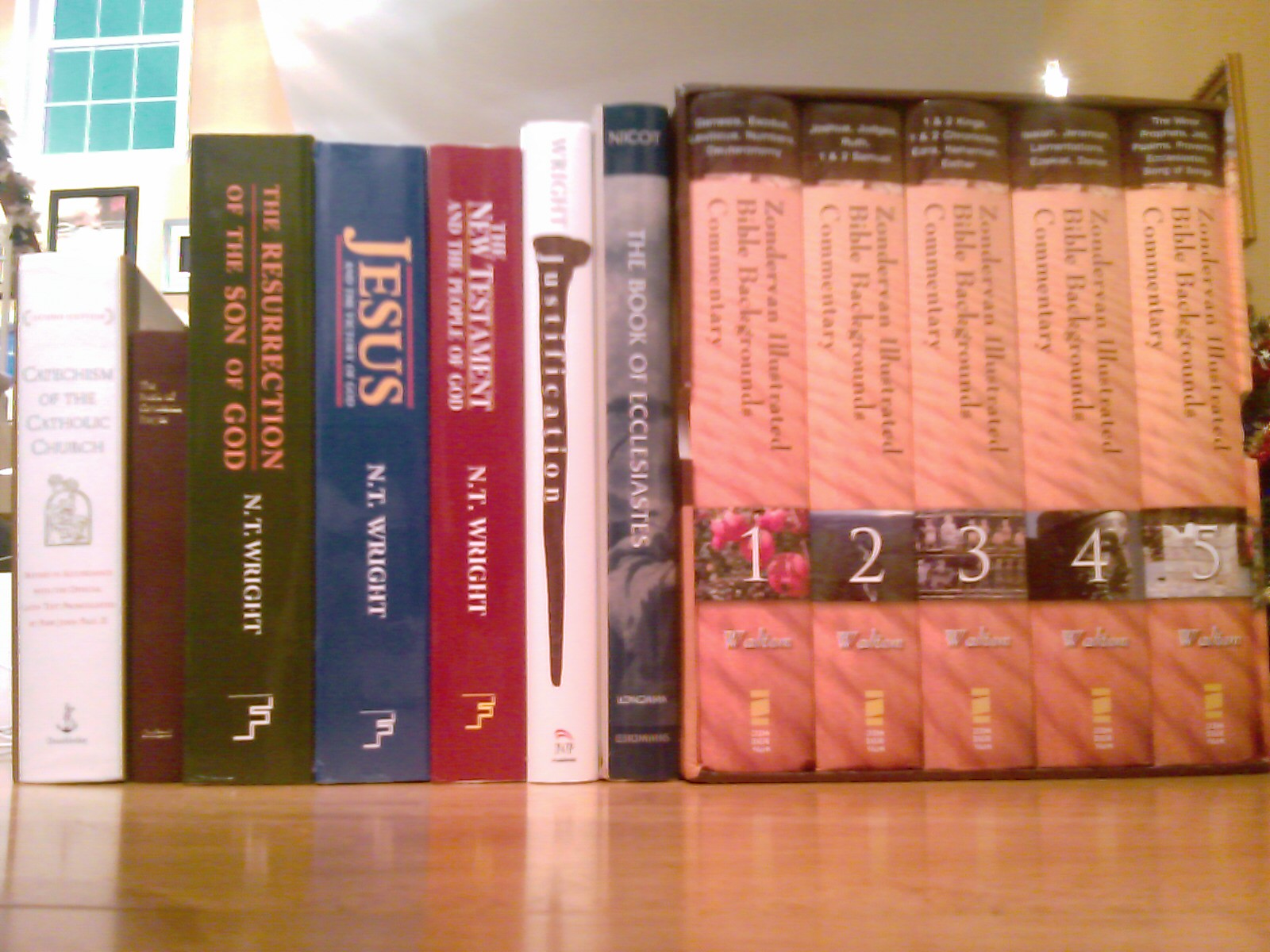
What an Ex-Seminarian gets for Christmas


In order from left-to-right:

“O Sovereign, Come” (an original Advent hymn)


On this beautiful White Christmas (at least where I’m at), for those precious few of you that will make it online today, I wanted to put up a hymn I wrote a about a year ago.  I pray this encourages you and creates anticipation for the Advent that is to come. Merry Christmas.

O Sovereign, Come

Our chains behind us, our sin before us
showing all our crippling need.
Your Grace within us, Your Spirit upon us
transforming our every deed.

After our freedom and we pass through the Red Sea,
let us not forget the desert comes.

Refrain:
Rip through the clouds, tear through the skies;
Let us see that you’re God on High.
O Sovereign, Come.  Seize our hearts.
Show yourself as Beautiful.

Your triumph of Glory, You crimson Cross
heralding Your Sovereign Way
of life through our death, enduring our thorns,
completing Your sufferings in ourselves.

Let us embrace your cross that’s set there before us
and know that it precedes the crown.

Refrain

On that day, when freed from sinning,
how I’ll see Thy lovely Face.
Clothed then in blood-washed linen,
how I’ll sing Thy Sovereign Grace.

Refrain

For Advent: A Reform & Revive Repost by David Schrott


In honor of this Advent/Christmas Eve, I decided to repost an article on Reform & Revive written almost exactly a year ago by my good friend (and incredible photographer) David Schrott.  He is an amazing writer (and here) and an even more amazing friend.  This article reflects much on the year that brought the writing into existence with anticipation for the year to come.  Well, having been with him and watching him for that year, it was an amazing moment for me to read this and see all that has been done in his life.

The article has all that Advent is about.  It’s a reflection on the work of God in the past to build your anticipation for the work of God to come.  May this article stir you, sober you, and give you a sense of both the fallenness of the world that is and the glory of the world to come.  Here’s the full link:

http://reformandrevive.com/2009/12/24/there-is-no-one-like-you-adv-days-2324-hellogoodbye-0809-repost/

Also, feel free to check out an article I wrote for Going To Seminary magazine for Advent called “The Beauty of Theology (an Advent Call)”

Lastly, if you’re in town (Philly, that is), my church Liberti: South Philly is doing what should be a beautiful Christmas Eve service tonight (details).

Merry Christmas Eve

The Bible, Slavery, & Atheists{2b}: Theology & Ethics | Reform & Revive


By the time I finished the next article in the series, it was substantive enough and socially-oriented enough to warrant being posted on my webzine Reform & Revive.  The previous post was on on how secular Philosophy can inform our view of ethics and contribute to the discussion of Slavery, Atheism, and the Bible.  This one is about how Christian theological ethics can uniquely inform our ethics in modern times.  The article covers a LOT of ground and is the longest one I’ve written yet in this series.  Hopefully that’s not a turn off.  This article has more of my thought concerning truth and Biblical interpretation than perhaps any one article I’ve ever written contains.  Here’s the link:

http://reformandrevive.com/2009/12/22/a-theology-of-ethics-contemporary-applications/

It seems in light of my earlier post I’ve decided to pour more of myself into this series, rather than just quickly finishing it off.  Hopefully it’s helpful.

Lastly, I keep getting private emails, texts, and messages from Christians talking about how much they’re enjoying this series, and how helpful it is to them, but hardly any Christians are publicly commenting.  I’m getting tons of comments from my atheist friends, though.  Discrepancy?  I think so.  If you have a thought, please leave it.  It could be really helpful to get more input on this and diversity of thought on this.

Thank you all for your support and encouragement.  It means a lot.

The Bible, Slavery, & Atheism: Part 1b


this is real (I did it myself)

The next post is pretty much done, but I wanted to send out this quick note before moving on. The previous post revealed a lot of things that I neglected to make clear. My fault. Sorry.

First and foremost, the last post was not meant to settle the question on slavery and the Bible. I just wanted to get out what the Bible actually says about it. The most I wanted to accomplish toward addressing the issue was to let people see a clear trajectory within Scripture wherein no part is inherently contradictory to the parts before or after it, no more than a seed is contradictory in nature or form to a fully blossomed flower. I also wanted to give a sense of the complexity of the issue. In every passage that lies out even the most comprehensive sets of morality and ethics for the Israelite people, you never see slavery there. It was never an action that was consistently seen as something moral. It’s not a freedom that the Israelites are free to use whenever they desire; it’s used sporadically, meaning that there must be something else going on beyond some explicit commentary by God on the moral nature of slavery. The New Testament is clear that the crucifixion of Christ was something that was foreordained and ultimately brought about by God, but this neither expunges the moral responsibility of the people that actually did it, nor says that God is all about crucifixion and thinks it is “morally neutral” or “ethically okay”. He clearly thinks it is wrong and evil, and yet He clearly ordained it, allowed it, and used it to bring about his promised redemption to the world.

Continue reading

An Open Response to Some Atheist Friends Regarding Slavery & Biblical Ethics (pt. 1)


[First off, this is a long one, and only part 1 of 6, so beware before you start reading.]

On Facebook, there appeared a status by an old atheist friend of mine from undergrad named Larry (supported by another friend Christopher). Here was the thesis of the post:

Regarding moral relativism the christians are hypocritical. They say they believe in a moral objectivity given by god…but how is it then, that they believed slavery was a product of the old days, as it was applicable to the time it was practiced (and sanctioned by the bible) but now condemn it? The bible, last I checked did not change. I think this is a PRIMARY example of moral relativism exhibited by the church and christians. So how can they sit here and tell us that a proof for god is moral objectivity?

In other words, how could the ethics of Christians change over time if the book they supposedly base their ethics upon has not changed? Either the God that inspired the Bible was completely incompetent in his revelation or there was no God revealing anything at all. The note caused a discussion that resulted in almost 90 comments, and I quickly realized that if I were going to respond, it would need to be in a more lengthy manner than a Facebook comment (which is not the most helpful of mediums of debate). So here it is. I’d like to respond to the ideas that came out in the discussions. I want to disagree with them on the basis of five ideas:

Continue reading

{3John11} | Of Translations, Repentance, and Worship


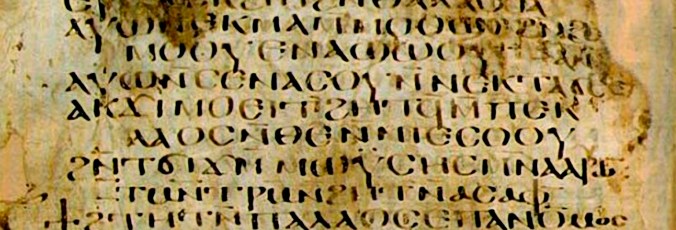
bible-greek-manuscript

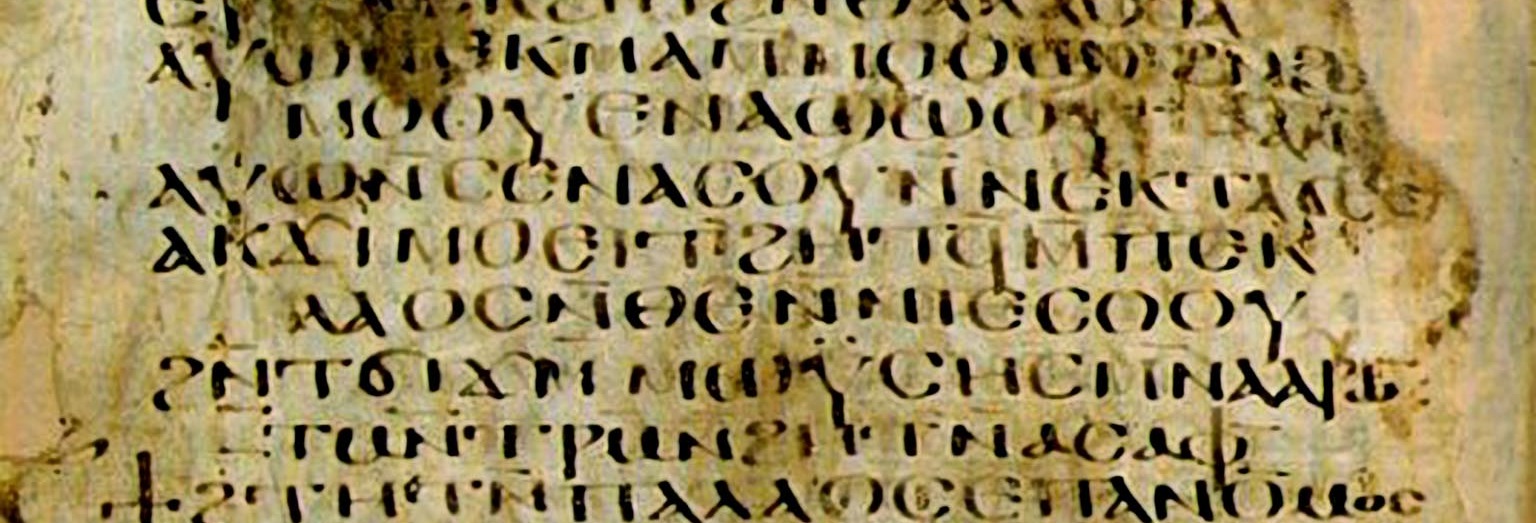
ὁἀγαθοποιῶνἐκτοῦθεοῦἐστιν· ὁκακοποιῶνοὐχἑώρακεντὸνθεόν.

[ho agathopoion ek tou theou estin; ho kakopoion ouk heoraken ton theon.]

The one who does good is

[of/from/because of/in the manner of/apart from/part of/controlled by]

God.

The one who does evil has not seen God.

{3John11}

Forgive these fragmented and perhaps poorly-written or elementary thoughts. I write this post not to “show off my Greek” (today was the first I had opened it up in the past couple of months) nor to confuse people by talking very technically. I (hopefully) write this as worship.

I finished translating 3 John today. I’m starting with the shortest New Testament book and just continually trying to translate up to the longest. It’ll probably never be done, but it’s some sort of system, so it works for me. I always know what’s next so that’s helpful.

Anyway, like I said earlier, this was the first day I had gone back to 3 John in a couple of months. I only had a few more verses left so I quickly finished it and then started the first couple of verses of 2 John. I then began to shut my books and move on to the next item on my reading list when I realized something: I couldn’t even remember vaguely what I had translated in 3 John. I had been so concerned with just translating and “getting it done” that I forgot to even meditate or think on it.

I turned to my translation and looked over what I had written and the above verse popped out at me. So, I’m writing this as my act of both repentance for having this gift of the ability to translate and not using it to know God more, and as my act of worship, that I might explore some nuances in this text.

The problem with this verse is a problem common in any language: the preposition. That word εκ [ek] means any of the bracketed things above. Most simply, it’s translated as “of”, but the question always turns to “what does ‘of’ mean here? “Which of the myriad of possible translations does this mean? Well, you look at the context.

What I noticed is that whatever it means, it’s supposed to be a contrast to “The one who does evil has not seen God”. So whatever this “of God” means, it is in contrast with “not seeing God”. It also means that being “of” or “from” God is a matter of seeing him. To see Him is to be joined to Him, to be of Him, or to be from Him. I don’t know enough about Greek to make a definitive call about precisely which translation is correct, but this idea is enough for me: walking obediently so as to please God is a matter of seeing God, and those that continue in disobedience show that they have not.

The way this is phrased let’s us know that whoever is walking obediently can take no credit for this, because their obedience is of/from God. But at the same time, those that are still walking in disobedience bear the full weight of responsibility for their disobedience because they have not seen Him. It is a mystery that leads to God’s greatest Glory and our greatest joy.

So for those saints weary under the weight of their sin and disobedience, be encouraged: obedience and doing good is not a matter of striving and fighting your own will. It is a matter of seeing Him and therefore being joined with Him so that all our being, living, and moving is from/of/in the manner of God. Seeing and therefore being joined to Him through Christ allows us to move according to His nature and will. All disobedience, sin, and evil results from not seeing God. He is our hope. He is our salvation.

Let us therefore fix our eyes on Him, and run.