{Good Friday} | prayer & readings for Holy Week (2015)


prayers & readings from Liberti Church’s 2015 Lent & Easter Prayerbook
{click for more Lent Posts}

Worship

call to prayer

Be pleased, O God, to deliver us;
O LORD, make haste to help us!
– from Psalm 70:1

the Gloria Patri

Glory be to God the Father, God the Son,
and God the Holy Spirit.
As it was in the beginning, so it is now,
and so it shall ever be, world without end.
Amen!
Continue reading

{Maundy thursday} | prayer & readings for Holy Week (2015)


prayers & readings from Liberti Church’s 2015 Lent & Easter Prayerbook
{click for more Lent Posts}

Worship

call to prayer

Be pleased, O God, to deliver us;
O LORD, make haste to help us!
– from Psalm 70:1

the Gloria Patri

Glory be to God the Father, God the Son,
and God the Holy Spirit.
As it was in the beginning, so it is now,
and so it shall ever be, world without end.
Amen!
Continue reading

{wednesday} | prayer & readings for Holy Week (2015)


prayers & readings from Liberti Church’s 2015 Lent & Easter Prayerbook
{click for more Lent Posts}

Worship

call to prayer

Be pleased, O God, to deliver us;
O LORD, make haste to help us!
– from Psalm 70:1

the Gloria Patri

Glory be to God the Father, God the Son,
and God the Holy Spirit.
As it was in the beginning, so it is now,
and so it shall ever be, world without end.
Amen!
Continue reading

{tuesday} | prayer & readings for Holy Week (2015)


prayers & readings from Liberti Church’s 2015 Lent & Easter Prayerbook
{click for more Lent Posts}

Worship

call to prayer

Be pleased, O God, to deliver us;
O LORD, make haste to help us!
– from Psalm 70:1

the Gloria Patri

Glory be to God the Father, God the Son,
and God the Holy Spirit.
As it was in the beginning, so it is now,
and so it shall ever be, world without end.
Amen!
Continue reading

{monday} | prayer & readings for Holy Week (2015)


prayers & readings from Liberti Church’s 2015 Lent & Easter Prayerbook
{click for more Lent Posts}

Worship

call to prayer

Be pleased, O God, to deliver us;
O LORD, make haste to help us!
– from Psalm 70:1

the Gloria

Glory be to God the Father, God the Son,
and God the Holy Spirit.
As it was in the beginning, so it is now,
and so it shall ever be, world without end.
Amen!
Continue reading

Quick Christian Feminism Quiz: What do you think of this image?


edwina-sandys-christa-edit

From Lynn Japinga’s excellent Feminism & Christianity: An Essential Guide (p.93):

Artist Edwina Sandys created a sculpture of a female form, arms outstretched as if hanging from a cross. The sculpture, entitled Christa, has created controversy wherever she is displayed. Critics say the statue defies the historical fact that Jesus was a man. Some viewers feel that the symbol of the cross is degraded or even blasphemed by a Christ in female form. Others are disturbed by the sexual overtones of the naked woman. Some people are troubled by yet another violent image of female suffering. A few people see in the sculpture the message that the death of Jesus symbolizes the pain of all human suffering.

The response to [this image] reveals various theological assumptions. Some people dismiss…the sculpture because they are literally false. Jesus was a man. End of discussion. Other people consider these images offensive and uncomfortable. It insults Jesus, and them as well, to think of him as a woman. These imaginative reconstructions of important events in the life of Jesus pose an important theological question: What difference does it make that Jesus was male?

Have at it. What do YOU think about this piece? What’s your first gut reaction? Why? What difference does it make that Jesus was male?

Continue reading

Tender words for a terrified father | Mark 5.35-36


While he was still speaking, some people came from the leader’s house to say, “Your daughter is dead. Why trouble the teacher any further?” But overhearing what they said, Jesus said to the leader of the synagogue, “Do not fear, only believe.”
Mark 5:35-36

Jesus first offers comforting words to this father. He doesn’t put down his lack of faith, as he does with the disciples on the boat in the previous chapter, nor does he brag of his own authority to raise the dead. Instead, Jesus simply gives him a call not to fear, only to trust. What sensitive, heartfelt, loving words these are.

See other Marginalia here. Read more about the series here.

Anna, the Prophet of the Lord | Luke 2.36-38


There was also a prophet, Anna the daughter of Phanuel, of the tribe of Asher. She was of a great age, having lived with her husband seven years after her marriage, then as a widow to the age of eighty-four. She never left the temple but worshiped there with fasting and prayer night and day. At that moment she came, and began to praise God and to speak about the child to all who were looking for the redemption of Jerusalem.
Luke 2.36-38

What a powerful testimony. She was only married for seven years before her husband died. She had been a widower for 84 years. What pain and loneliness she must have felt. And yet, how did she spend it? Serving God’s people as a prophet, being especially in tune with those “looking for Israel’s redemption” and then proclaiming Jesus to them. Even before the Cross and Resurrection, Jesus was the answer for the longing of God’s people for redemption.

Also, Luke said he went through all of the accounts and picked and chose what would get “in” and what wouldn’t. Of all the little anecdotes he chooses to keep in and keep out, he chooses this. What a powerful woman she must have been for her to have been seered into the collective consciousness of God’s people retelling this story.

See other Marginalia here. Read more about the series here.

Is There No Rest for God’s Weary Ministers? | Mark 6


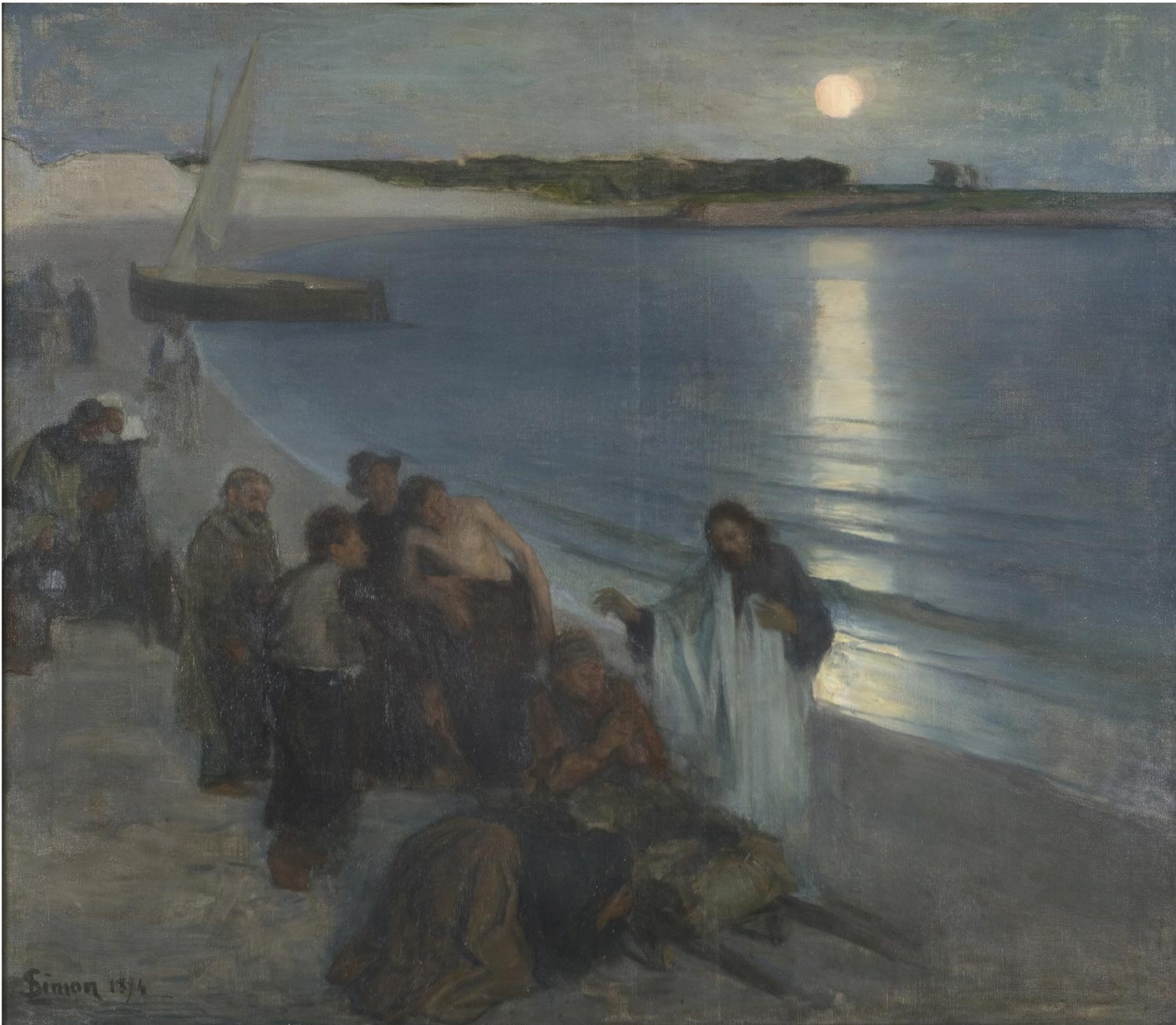
Lucien Simon-Christ Performing MiraclesReading through the sixth chapter of Mark, I recently noticed a way that Jesus relates to his disciples which is, at first, incredibly encouraging, but then gets exceedingly hard.

This is right after he had sent his disciples out, two by two, to try out this whole “ministry thing” by themselves. According to Mark, it was an incredibly powerful and effective time of ministry for them. They saw powerful things done, and they were able to play a part in them. They return from their first “ministry internship”, and this is where we pick up the story.

The apostles gathered around Jesus, and told him all that they had done and taught. He said to them, “Come away to a deserted place all by yourselves and rest a while.” For many were coming and going, and they had no leisure even to eat.
Mark 6.30-31

Jesus’ pastoral concern extends not only to his flock but also to the shepherds. They have done so much ministry and now he insists that they withdraw and rest and eat. Also, they shouldn’t simply do this by themselves as individuals, but with those who are also doing ministry. The leaders of the church should rest together as fellow weary workers.
Continue reading

Jesus Getting Snarky Over the Sabbath | Luke 6.1-5


One sabbath while Jesus was going through the grainfields, his disciples plucked some heads of grain, rubbed them in their hands, and ate them. But some of the Pharisees said, “Why are you doing what is not lawful on the sabbath?”

Jesus answered, “Have you not read what David did when he and his companions were hungry? He entered the house of God and took and ate the bread of the Presence, which it is not lawful for any but the priests to eat, and gave some to his companions?” Then he said to them, “The Son of Man is lord of the sabbath.”
Luke 6.1-5

I’ll be honest, I really don’t understand Jesus’ logic here. Yes, I get that Jesus is referencing this David story to simply say that there is precedent for eating food (even holy food) on the Sabbath. But if that’s the case, his logic is this: “You don’t like what I’m doing? Well, based on a very simplistic reading of the Bible, someone else did it, therefore I can do it.”

He does know that David also did the whole adultery and murder thing with Bathsheeba, right? Just because someone else did it, doesn’t explain why you have the right to do it. Secondly, after saying saying all this, he goes ahead and says that it doesn’t even matter anyway because he is “lord of the Sabbath”.

So, in the end, it seems to me like Jesus is just trying to be snarky here.

See other Marginalia here. Read more about the series here.

Jesus in His Father’s House: Rebuke, Encouragement, & Promise | Luke 2.46-51


After three days they found him in the temple, sitting among the teachers, listening to them and asking them questions. And all who heard him were amazed at his understanding and his answers. When his parents saw him they were astonished; and his mother said to him, “Child, why have you treated us like this? Look, your father and I have been searching for you in great anxiety.” He said to them, “Why were you searching for me? Did you not know that I must be in my Father’s house?” But they did not understand what he said to them. Then he went down with them and came to Nazareth, and was obedient to them. His mother treasured all these things in her heart.
Luke 2.46-51

These are Jesus’ first words in Luke. I wonder if this is a prophetic word for all of us looking for redemption, salvation, peace, and God’s presence. I wonder if he looks at us, and says “Why were you looking for me? Didn’t you know I’d be in my Father’s house?” In two short and simple questions, Jesus gives us a rebuke (Why have you run yourself ragged looking in all the wrong places?), an encouragement (You have found me nonetheless.), and a promise (And I’ll always be right here for you to find me.).

No wonder this was something for Mary to treasure. We should treasure it as well.

See other Marginalia here. Read more about the series here.

Name the Darkness: Jesus & Our Persistent Demons | Mark 5:6-9


When he saw Jesus from a distance, he ran and bowed down before him; and he shouted at the top of his voice, “What have you to do with me, Jesus, Son of the Most High God? I adjure you by God, do not torment me.” For he had said to him, “Come out of the man, you unclean spirit!” Then Jesus asked him, “What is your name?” He replied, “My name is Legion; for we are many.”
Mark 5:6-9

Well this is interesting. It seems like Jesus had said words of exorcism earlier and it, in a sense, hadn’t “worked”. I wonder if the tradition behind this story was of a man so demon possessed that Jesus’ first try at getting rid of them failed. That certainly seems to be the case here. Jesus had commanded the demon to leave the man, and it didn’t.

Now, I don’t like pulling what seems like “self-help lessons” from things like this, or appealing to pop psychology, but this could be instructive in a ministry context. Jesus has appealed to his word and his authority to bring healing and to cast out the disorder and evil in this person’s life. It hasn’t worked. It is so big, it goes so far back into the past, and the issues seem so numerous, that it just isn’t going to take a quick shot to the soul.

So in light of this, how does Jesus respond? He asks the person’s name. Yes, the demon responds, but there’s no indication that Jesus is only talking to the unclean spirit here. He asks the man name, and he answers by identifying himself by his evil. But this is still progress. He gives name to what is haunting and hurting him, and this diagnoses his soul and gives Jesus the insight on how to bring healing to this man.

Giving name is powerful for healing and change and even getting rid of demons.

See other Marginalia here. Read more about the series here.

As Jesus said: the Bible is NOT “the Word” | Mark 4:33


With many such parables he spoke the word to them, as they were able to hear it…
Mark 4.33

Those that are not Christians can still do righteousness. But Take note: it is within the parable that the “word” is found. It is not the parables themselves. It is a vehicle for “the word” even as it is not that word itself. The “word of God” is not as simplistic as one ancient text or book. It must be discerned, sought after, and found. The Word is within the Bible’s words–“behind them”, in a sense–it is not the words themselves. We can’t confuse this.

See other Marginalia here. Read more about the series here.
Sometimes God’s Heart breaks mine | Mark 4:10-12


When he was alone, those who were around him along with the twelve asked him about the parables. And he said to them, “To you has been given the secret of the kingdom of God, but for those outside, everything comes in parables in order that

‘they may indeed look, but not perceive,
    and may indeed listen, but not understand;
so that they may not turn again and be forgiven.’”

Mark 4.10-12

I simply don’t understand what this says about the heart of God. It seems at odds with everything else Jesus does. Is this just a temporary thing in order for the Gentiles to join in the mystery of redemption? Or is it truly as cold and calloused as this seems? Any help here would be appreciated.

See other Marginalia here. Read more about the series here.

A Holy Saturday kind-of Easter (on doubting the Resurrection)


Rothko-blue-and-gray

The culmination of Lent is Holy Weekend, prefaced by Maundy Thursday and consisting of Good Friday, Holy Saturday, and Easter Sunday. I realized that each year that I have been really intentional about my Lenten engagement, one of those four “Holy Days” seems to overshadow the the others and carry over into this Easter season (yes, it’s a season).

There are some years where the foreshadowing and ever-repeating Presence of Jesus in Communion makes Maundy Thursday the highlight (or lowlight?) of Lent. Some years, the utter darkness, weight, and drama of Good Friday overtake me and linger in my mind well into Easter season. And still others, no matter how I try to reflect and meditate on sinfulness and fallenness, I still can’t escape the lighted joy and horizon-cresting dawn of Easter, whose anticipation overshadows (or over-brightens?) my Lenten experience, making all the doom and gloom seem foreign to me.

For me, this year is a Holy Saturday kind-of Easter.
Continue reading