Yep. The gospels depict Jesus as God. | Matthew 28.1-10


After the sabbath, as the first day of the week was dawning, Mary Magdalene and the other Mary went to see the tomb. And suddenly there was a great earthquake; for an angel of the Lord, descending from heaven, came and rolled back the stone and sat on it. His appearance was like lightning, and his clothing white as snow. For fear of him the guards shook and became like dead men. But the angel said to the women, “Do not be afraid; I know that you are looking for Jesus who was crucified. He is not here; for he has been raised, as he said. Come, see the place where he lay. Then go quickly and tell his disciples, ‘He has been raised from the dead, and indeed he is going ahead of you to Galilee; there you will see him.’ This is my message for you.” So they left the tomb quickly with fear and great joy, and ran to tell his disciples. Suddenly Jesus met them and said, “Greetings!” And they came to him, took hold of his feet, and worshiped him. Then Jesus said to them, “Do not be afraid; go and tell my brothers to go to Galilee; there they will see me.”
Matthew 28.1-10

Wow.  This here clearly says that they worshiped Jesus. And he does not at all correct them or steer them to worship elsewhere. This is in stark contrast to the angel in Revelation.
See other Marginalia here. Read more about the series here.

Jesus came from some weird stock | Genesis 19.30-38


Now Lot went up out of Zoar and settled in the hills with his two daughters, for he was afraid to stay in Zoar; so he lived in a cave with his two daughters. And the firstborn said to the younger, “Our father is old, and there is not a man on earth to come in to us after the manner of all the world. Come, let us make our father drink wine, and we will lie with him, so that we may preserve offspring through our father.” So they made their father drink wine that night; and the firstborn went in, and lay with her father; he did not know when she lay down or when she rose. On the next day, the firstborn said to the younger, “Look, I lay last night with my father; let us make him drink wine tonight also; then you go in and lie with him, so that we may preserve offspring through our father.” So they made their father drink wine that night also; and the younger rose, and lay with him; and he did not know when she lay down or when she rose. Thus both the daughters of Lot became pregnant by their father. The firstborn bore a son, and named him Moab; he is the ancestor of the Moabites to this day. The younger also bore a son and named him Ben-ammi; he is the ancestor of the Ammonites to this day.
Genesis 19.30.38

Wow, the ancestral origins of Christ are incredibly odd.

See other Marginalia here. Read more about the series here.

Death & Life; Names & Vows | Genesis 3.20-21


The man named his wife Eve, because she was the mother of all living. And the Lord God made garments of skins for the man and for his wife, and clothed them.
Genesis 3.20-21

I don’t know why I’ve never noticed this before. Why does Adam only name Eve after they sin? Further, of all the things to do after receiving the curse from God, he does this covenantal, marital act: he gives her a name.

I know this isn’t in this text, nor was it on the mind of the original writer, but it reminds me of the odd line in Revelation where God promises to give each person a new name that only He and they will know.

It seems that in the whole sweep of redemptive history, the Bride of the first Adam received a new name when he brought death, just as the Bride of the second Adam receives a new name when he brings life.

See other Marginalia here. Read more about the series here.

Advent & Hoping for God to be With Us


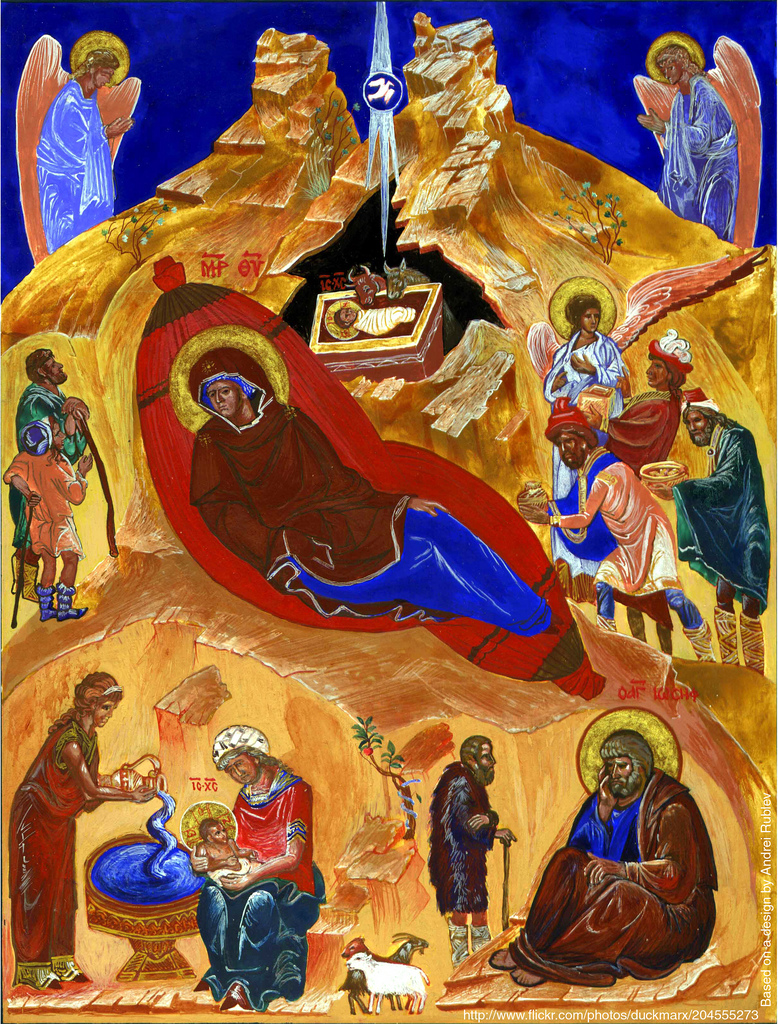
icon-Nativity-christmasThis is the meditation I wrote that appeared in this weekend’s reading and reflection in Liberti Church’s Advent 2013 Prayerbook, which can be downloaded for free.

The Reading:

Again the Lord spoke to Ahaz, saying, Ask a sign of the Lord your God; let it be deep as Sheol or high as heaven. But Ahaz said, I will not ask, and I will not put the Lord to the test. Then Isaiah said: “Hear then, O house of David! Is it too little for you to weary mortals, that you weary my God also? Therefore the Lord himself will give you a sign. Look, the young woman is with child and shall bear a son, and shall name him Immanuel.

If you’ve been keeping up with this Prayerbook (or any Advent guide), then congratulations! I hope it’s spoken to you and you have experienced God in its readings and meditations.

That being said, you might be wondering: why is this Prayerbook continuing after Christmas Day?

It was only a couple of years ago I found out that in the Church Calendar, Christmas is not just a day—it’s an entire season! Advent Season leads into Christmas Season. Why is this? Advent has a similar relationship to Christmas that Lent does to Easter: it’s meant to be the time of reflection, preparation, and repentance that prepares us for the unbridled, no limits, over-the-top celebration and joy of Christmas. Our spiritual ancestors knew that celebration takes time and preparation. That’s what Advent has been.

But now we’re in the Christmas Season—the time of complete unfettered celebration. But why?
Continue reading

A Biblical Critical Advent: Luke’s Cosmic Christmas


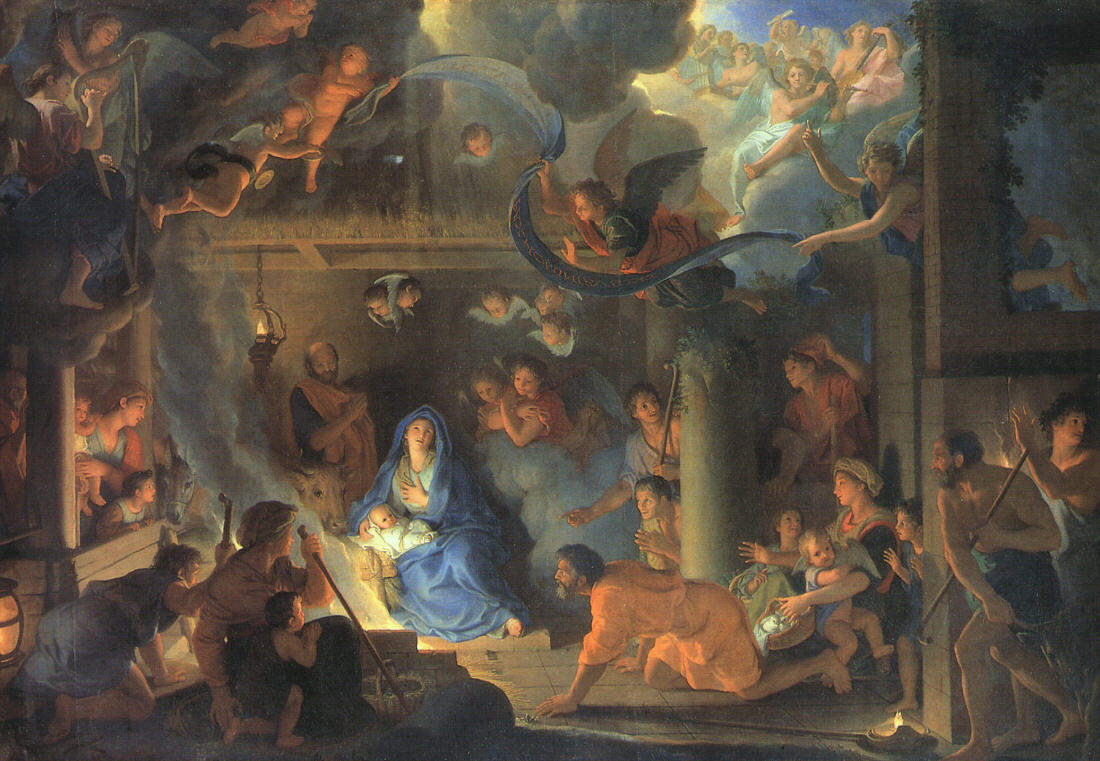
Charles-le-Brun-Adoration-of-ShepherdsFor Advent this year, I wanted to put up a few posts looking at Matthew and Luke’s Nativity stories as they were meant to be read: as two separate stories with their own purposes and themes. We often just mush them together, and I think we lose something in that process. Last week, we sat with Matthew’s Nativity story. Today, we turn to Luke’s Christmas.

Matthew’s Nativity focuses on how Christmas plays right into Israel’s own story; how this is exactly how the Jewish Messiah should be expected to have come into the world. Luke’s Gospel, on the other hand, emphasizes Jesus’ significance to the entire world, all parts of society, and the entire cosmic order.

In other words, Jesus’ mission in Luke is much larger than simply Israel. These and other Lukan themes are brought out quite strongly and explicitly in his Nativity narratives. Today we’ll see how he does this through signs of the universal mission of Jesus, the story’s emphasis on the lowly and powerless, and his stories of Spirit-filled joy.

Continue reading

Advent & Longing for Home


Sandorfi-MadeleineThis is the meditation I wrote that appears in a reading and reflection in Liberti Church’s Advent 2013 Prayerbook, which can be downloaded for free.

There is an incredibly profound way in which we don’t feel at Home in our own humanity.

Too often, Christians see their own personal spiritual growth as a loss, a lessening, or an abandoning of their own humanity. This can lead us to subtly use people and things to try and find our soul’s Home. And so we awake to find anxiety, manipulation, doubt, guilt, and self-loathing ruling and reigning so many parts of our lives and relationships. (Am I alone in this?)

We can sometimes think of Christianity as a process of our souls leaving the “Home” of their weakened humanity and finding a “new, spiritual Home” in Jesus. The logic goes that you were originally one way, then Jesus “saved” you, and now you are able (and are commanded) to be something else, now that you are His.

But Advent radically flies in the face of this.
Continue reading

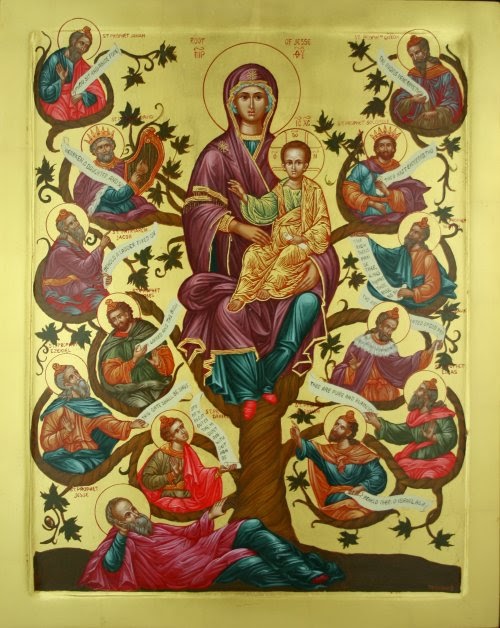
A Biblical Critical Advent: Matthew’s Old Testament Christmas


root-jesse-matthew-icon

For Advent this year, I wanted to put up a few posts looking at Matthew and Luke’s Nativity stories as they weren’t meant to be read: as two separate stories with their own purposes and themes. We often just mush them together, and I think we lose something in that process. Today, we look at Matthew’s Christmas Story.

It’s well-known that the Gospel of Matthew portrays Jesus as the fulfillment of Jewish messianic expectations. But the path Matthew takes in doing this moves against the way most messianic expectations played themselves out at time. Matthew recalibrates these expectations to show how even in Jesus’ infancy and birth, his “Messiah-ness” includes a retelling of Israel’s own history, both good and bad.

You can see this especially clearly in the way Matthew crafts his version of the Nativity story. Today, we’ll look at three particular aspects of this story that show his unique thematic and purposeful crafting of the birth story: his use of people and names, geography, and the fulfillment of the Old Testament.
Continue reading

Have yourself a biblical critical Christmas


Nativity-logosSorry, this post isn’t about the pessimism and critical irony that can sometimes mark how we engage in this time of year. When I use the phrase “biblical criticism”, I’m referring to (as Wikipedia says) the  “[scholarly] study and investigation of biblical writings that seeks to make discerning judgments about these writings”.

Last year, I wrote about how the story of the Wise Men can inform our doctrine of the Bible. This Advent, I want to do a brief series where we use the tools of scholarly observation to look at each of the two Nativity compositions (yeah, only two out of four gospels have them) and see each of them on their own terms.

For millennia, the birth narratives of Jesus Christ in the Gospels have captivated readers both within and without the Christian faith. Their reading and meditation form the beginning of the Christian Church calendar, and their theological implications of Incarnation form the foundation of nearly all of the distinctives of the Christian faith.
Continue reading

A night so holy and silent | Carols in Prose


winter-snow-trees-bwFor my Advent series this year, I am going through Christmas Carols and unpacking them, re-writing them in prose, hoping to pull out more of their meaning, theology, significance, and beauty. Here’s today’s source material.

As holy as that night was–as anointed, blessed, prophesied, and sacred as it was–it was just as silent. You know in winter when find yourself in the midst of falling snow, and it almost has a loud silence? It was like that.

Who knew that this utter holiness and cosmic in-breaking would be so quiet? So…uneventful? Yes, there were angels and such, but they were far away with us. There at the manger? Silence.
Continue reading

May God give rest to you weary, happy souls | Carols in Prose


flinks-angels-anouncing-the-birth-of-christ-to-the-shepherds

For my Advent series this year, I am going through Christmas Carols and unpacking them, re-writing them in prose, hoping to pull out more of their meaning, theology, significance, and beauty.  Here’s today’s source material.

I pray that God may give rest to all of you. Those of you that are tired and in need of rest, and yet you doggedly hold on to a soul-merriment and joy that cannot be taken from you. I pray he grants you rest and lets nothing steal your soul’s joy.

Especially in this season, I pray he strengthens that joy as you remember that he has come among us in Christ, our Savior, whose birth we celebrate during this time. We remember that he came as a human–but not just that. We remember he came as the weakest and most frail of human forms: one who is born.

But we don’t jut remember that he came, or even just how he came–but also, why.

This Advent season precedes Christmas as Lent precedes Easter–it’s a time to meditate on the darkness, weight, and tension of this world. The darkness and power that drew us away from God as Home; the darkness from which we were saved. And in this, we are given that rest, comfort and joy.

Oh, that we might experience God’s good news of comfort and joy proclaimed from the rooftops of our lives! Just think of that: Comfort. And Joy.

Continue reading

Advent & Hoping for Justice


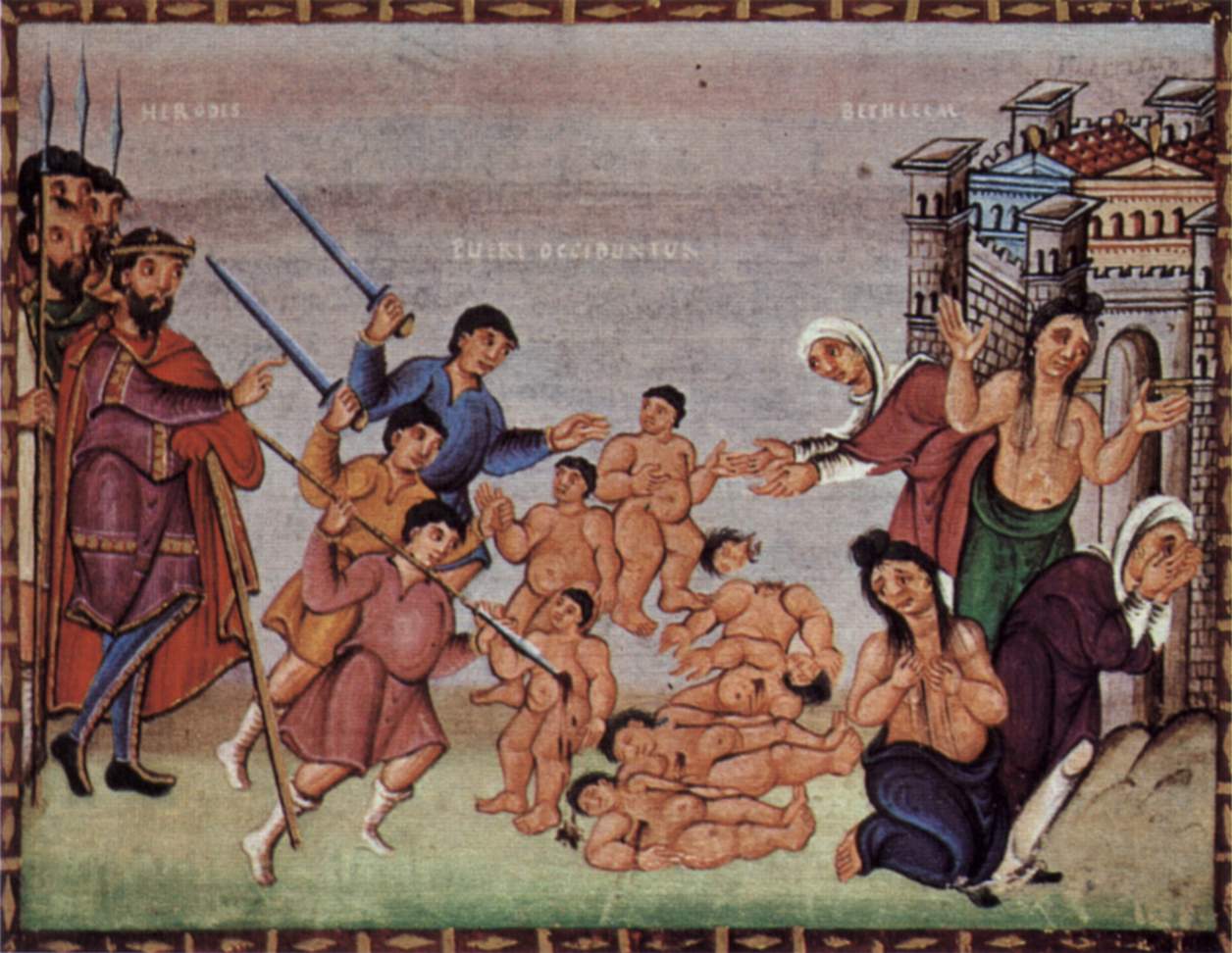
Massacre-of-innocentsThis is the meditation I wrote that appears in today’s reading and reflection in Liberti Church’s Advent 2013 Prayerbook, which can be downloaded for free.

First, a question.

Think back on the Christmas story. After Jesus is born, when he’s about three-years old, King Herod puts out a decree calling for the death of all infants, trying to kill Jesus. An angel comes to Joseph in a dream and tells him to flee to Egypt to prevent Jesus from dying in this slaughter.

Here’s the question: why flee to Egypt?

If they stayed and Herod killed the child Jesus, wouldn’t that still be the Son of God dying unjustly at the hands of a Roman provincial governor? Why go to all that effort to wait 30 years later for the same thing to happen on a cross?
Continue reading

Advent & Hoping for Peace


Rothko-untitled-2This is the meditation I wrote that appears in today’s reading and reflection in Liberti Church’s Advent 2013 Prayerbook, which can be downloaded for free.

This world is anything but peaceable. Humanity is constant in its injustice and wickedness inflicted upon one another across this world. It makes you wonder if “humane” is a misnomer. And we can’t just blame all of this on free will, either. The natural world rages against us with its own violence with staggering regularity. And all of this hits home the most when it’s those closest to us that suffer under this world with little peace on hand.

We look at all of this and ask that oldest of questions: “Why?” But when we open the pages of Scripture, we don’t find answers to this seemingly core thread running through our existence. The God of the Bible seems far more concerned with answering “what” questions than “why” questions–what is the nature of reality? what is the problem with the world? what is the solution?

But there is good news for all of us that struggle against the violence of this world: Advent.

In Advent, God does not merely see our why‘s and disregard them as silly and human; he does not simply leave us to our own to wrestle and struggle and doubt. He doesn’t answer our whys. He simply looks at us and the world with compassion, acknowledges to us the way things are, and rolls up his sleeves to address it.
Continue reading

Father Abraham, had many sons; and many sons, Moses did not.


Rothko-9-White-Black-Wine-1958So…I had my mind blown this past week.

I’m taking this class on the idea of “worship” in all its dimensions, and we read a few pieces that gave me an entirely new framework to understand the Bible, particularly the Old Testament, and how God works in those stories. And no, I’m not exaggerating.

In Genesis 15, God makes a covenant with Abraham, and it’s a little weird, mainly because it’s entirely on God. He promises that he will be Abraham’s God. He promises he will give him many descendants. He promises to make those descendants a blessing to the world. And, most importantly, he takes all of the potential negative consequences of breaking the covenant on Himself. In essence, he makes this covenant with Himself on Abraham’s behalf.

What’s Abraham’s part in this whole thing? “He believed the Lord; and the Lord reckoned it to him as righteousness”, the text says (and he’s supposed to circumcise his kids as a visible mark of his belief). This is one of the earliest and clearest depictions of the unconditional grace-driven nature of God’s relationship to humanity and the world–a relationship that would later be called “The Gospel”. In fact, the Apostle Paul would look at this moment in Genesis and say:

Just as Abraham “believed God, and it was reckoned to him as righteousness,” so, you see, those who believe are the descendants of Abraham. And the scripture, foreseeing that God would justify the Gentiles by faith, declared the gospel beforehand to Abraham, saying, “All the Gentiles shall be blessed in you.” For this reason, those who believe are blessed with Abraham who believed.

Okay….so what?
Continue reading

Karl Barth: Our Freedom, Our Home, & God’s Directing [AMAZING QUOTES]


karl_barth crop

I’m writing this long paper on the ancient Christian Practice of Discernment. In my research, I pulled out some Karl Barth, my favorite theologian (hands down), and got to soak in the beauty of these words, and I wanted to share them. Now, for people that don’t read “real” and “proper” theology, this is it. It’s circular, it repeats itself, and it’s unnecessarily complicated and unclear. I know. I get that. But I promise, if you can spend a few minutes, quiet yourself, and focus, I promise the pay-off is huge. This guy stands as a tower over all of modern theology and deserves more attention than he gets. I’ve done slight edits to some of the wording and paragraph breaks for clarity. Enjoy.

* * * * * * * *

God’s direction is an all-powerful decision, His own divine act of lordship. By this means, too, God vindicates His honor and maintains His glory. By this means, too, He exercises authority….

God’s direction is the directing of humans into the freedom of His children. It is this which has taken place in Jesus Christ no less uniquely than the once-for-all fulfillment of the divine sentence on all humanity. In suffering in our stead the death of the old nature, and bringing in by His resurrection the life of the new, He has made room for the being of all humanity to be at peace with God.

On the basis of what we are and is not by virtue of the divine sentence passed and revealed in Jesus Christ… we have no other place but this—the kingdom in which God can be at peace with us and us at peace with God. Jesus Christ…is the all-powerful direction of God to us to occupy this place, to live in this kingdom. If we are told in Him who we are and are not, we are also told in Him where we belong, where we have to be and live.

Continue reading

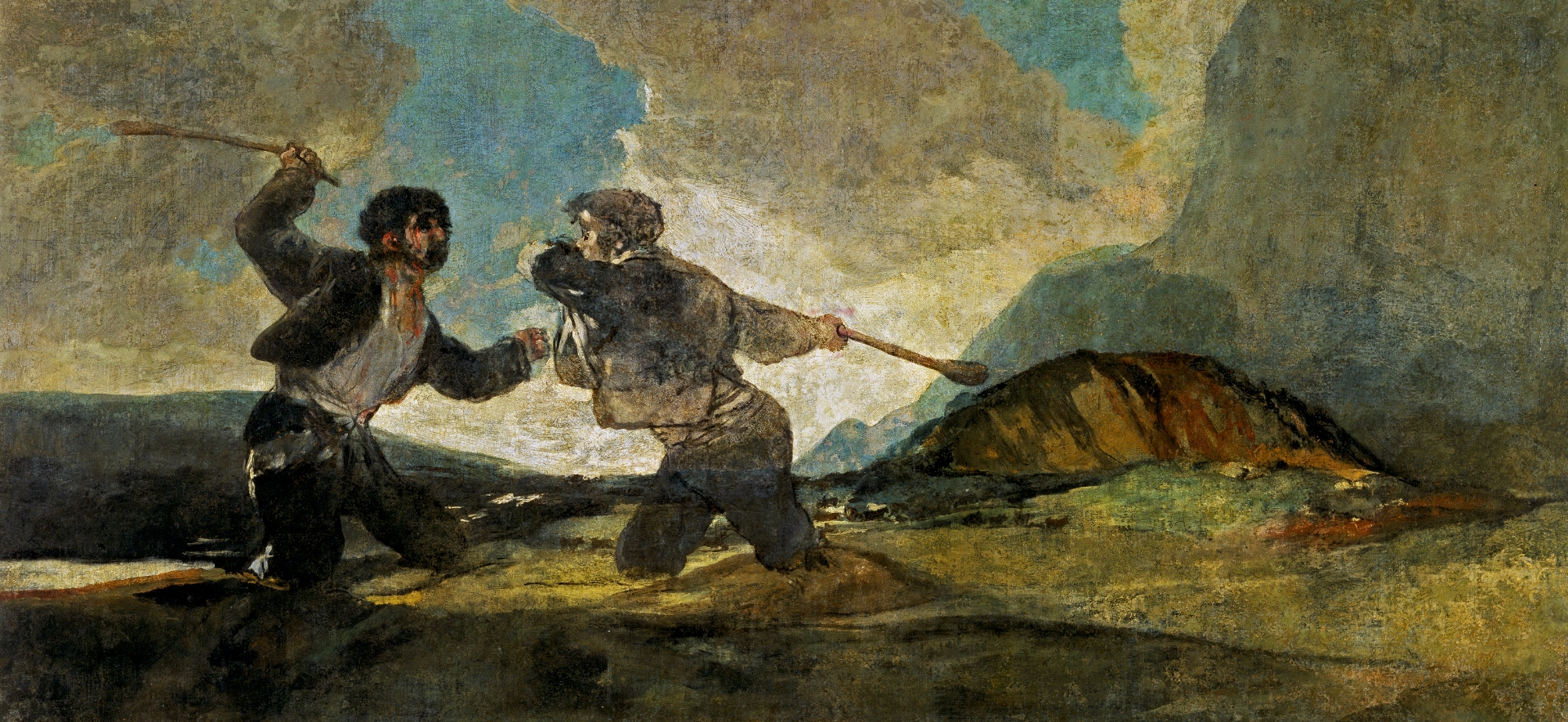
How to wear your theological offensiveness (conservative, liberal, & atheist)


Francisco_de_Goya_y_Lucientes_-_Duelo_a_garrotazos-small

Reading through Luke, I was struck by a dimension to Luke’s portrayal of Jesus I hadn’t noticed before. I also think, in these times where more people are able to have more platforms to speak their mind on issues, it’s an important dimension to take into account.

In Luke chapter 4, we see Jesus officially kick off his public ministry. He does this by standing up at his hometown synagogue, reading some verses from Isaiah and saying that these words are fulfilled in his arrival. He then adds commentary on this, highlighting how Israel has fallen out of God’s favor and so this fulfillment won’t come to them. This enrages the people and they try and kill him right there by throwing him off a cliff (yeah, it’s kind of funny). But he gets away.

Jesus offended these people deeply. He spoke what he believed to be true about God and the world, and they didn’t like it. And yet, people spoke offensive words in the ancient world all the time. There were many Messianic figures, and yet their words didn’t “stick” like Jesus’ did. His words ended up not simply gathering people that agreed with him, but actually changing minds, even while offending those that would be offended.

How did he do this? How can we do this with our own theological (or a-theological) beliefs? How should we wear our beliefs that might be very offensive to others?
Continue reading