{Easter Sunday} | prayer & readings for Easter Week (2013)


For Easter Week: reading schedule/reflections.

prayer.

Almighty God, who through your only-begotten Son Jesus Christ overcame death and opened to us the gate of everlasting life: Grant that we, who celebrate with joy the day of the Lord’s resurrection, may be raised from the death of sin by your life- giving Spirit; through Jesus Christ our Lord, who lives and reigns with you and the Holy Spirit, one God, now and for ever. Amen.
(from the liberti Lent & Easter 2012 prayerbook & the Book of Common Prayer)

Continue reading

{Holy saturday} | prayer & readings for Holy Week (2013)


For Holy Week: reading schedule/reflections.
{More on the why and how of Lent here.}

prayer.

O God, Creator of heaven and earth: Grant that, as the crucified body of your dear Son was laid in the tomb and rested on this holy Sabbath, so we may await with him the coming of the third day, and rise with him to newness of life; who now lives and reigns with you and the Holy Spirit, one God, for ever and ever. Amen.
(from the liberti Lent & Easter 2012 prayerbook & the Book of Common Prayer)

Continue reading

{Good friday} | prayer & readings for Holy Week (2013)


For Holy Week: reading schedule/reflections.
{More on the why and how of Lent here.}

prayer.

O God, Creator of heaven and earth: Grant that, as the crucified body of your dear Son was laid in the tomb and rested on this holy Sabbath, so we may await with him the coming of the third day, and rise with him to newness of life; who now lives and reigns with you and the Holy Spirit, one God, for ever and ever. Amen.
(from the liberti Lent & Easter 2012 prayerbook & the Book of Common Prayer)

anima Christi

Soul of Christ, sanctify me
Body of Christ, save me
Blood of Christ, inebriate me
Water from Christ’s side, wash me
Passion of Christ, strengthen me
O good Jesus, hear me
Within Thy wounds hide me
Suffer me not to be separated from Thee
From the malicious enemy defend me
In the hour of my death call me
And bid me come unto Thee
That I may praise Thee with Thy saints and with Thy angels
Forever and ever
Amen.

Continue reading

{Maundy thursday} | prayer & readings for Holy Week (2013)


For Holy Week: reading schedule/reflections.
{More on the why and how of Lent here.}

prayer.

Almighty Father, whose dear Son, on the night before he suffered, instituted the Sacrament of his Body and Blood: Mercifully grant that we may receive it thankfully in remembrance of Jesus Christ our Lord, who in these holy mysteries gives us a pledge of eternal life; and who now lives and reigns with you and the Holy Spirit, one God, for ever and ever. Amen.
(from the liberti Lent & Easter 2012 prayerbook & the Book of Common Prayer)

Continue reading

{wednesday} | prayer & readings for Holy Week (2013)


For Holy Week: reading schedule/reflections.
{More on the why and how of Lent here.}

prayer.

Lord God, whose blessed Son our Savior gave his body to be whipped and his face to be spit upon: Give us grace to accept joyfully the sufferings of the present time, confident of the glory that shall be revealed; through Jesus Christ your Son our Lord, who lives and reigns with you and the Holy Spirit, one God, for ever and ever. Amen.
(from the liberti Lent & Easter 2012 prayerbook & the Book of Common Prayer)

Continue reading

{tuesday} | prayer & readings for Holy Week (2013)


For Holy Week: reading schedule/reflections.
{More on the why and how of Lent here.}

prayer.

O God, by the passion of your blessed Son you made an instrument of shameful death to be for us the means of life: Grant us so to glory in the cross of Christ, that we may gladly suffer shame and loss for the sake of your Son our Savior Jesus Christ; who lives and reigns with you and the Holy Spirit, one God, for ever and ever. Amen.
(from the liberti Lent & Easter 2012 prayerbook & the Book of Common Prayer)

Continue reading

{monday} | prayer & readings for Holy Week (2013)


For Holy Week: reading schedule/reflections.
{More on the why and how of Lent here.}

prayer. 

Almighty God, whose most dear Son went not up to joy but first he suffered pain, and entered not into glory before he was crucified: Mercifully grant that we, walking in the way of the cross, may find it none other than the way of life and peace; through Jesus Christ your Son our Lord, who lives and reigns with you and the Holy Spirit, one God, for ever and ever. Amen.
(from the liberti Lent & Easter 2013 prayerbook & the Book of Common Prayer)

Continue reading

readings & reflections for Holy Week (2013)


scripture readings for the week.
as the week progresses, check back here and click on the appropriate day for Prayer and Scripture text for that day

(from the liberti Lent & Easter 2013 prayerbook & the Book of Common Prayer)
Continue reading

Palm Sunday: Future-Tense [photo sermon]


church-easter-tree

Continuing WordPress’ uncanny timing of photo challenges with the Christian Church calendar, this week’s theme is “Future-Tense“. In essence, they’re wanting pictures that anticipate something to come; something that’s being waited for; some future thing who’s presence is felt in the picture, even in its absence.

This is most appropriate today, as it’s Palm Sunday of 2013.

It takes some real significance for an event from the Bible to find itself as a major Church Holiday. Considering that, it can be odd that Palm Sunday is one of these: there’s nothing really unprecedented or special about it in and of itself.

There are other places in the gospels where Jesus is proclaimed king, proclaimed Messiah, prophecies are fulfilled, large groups believe in him, and even several times he enters Jerusalem. So what’s so special about this moment?

The future.
Continue reading

{palm sunday} | prayer & readings for Holy Week (2013)


For Holy Week: reading schedule/reflections.
{More on the why and how of Lent here.}

prayer.

Almighty and everliving God, in your tender love for the human race you sent your Son our Savior Jesus Christ to take upon him our nature, and to suffer death upon the cross, giving us the example of his great humility: Mercifully grant that we may walk in the way of his suffering, and also share in his resurrection; through Jesus Christ our Lord, who lives and reigns with you and the Holy Spirit, one God, for ever and ever. Amen.
(from the liberti Lent & Easter 2013 prayerbook & the Book of Common Prayer)
Continue reading

Reflections on Psalm 51: the People & their Fallen King [intro]


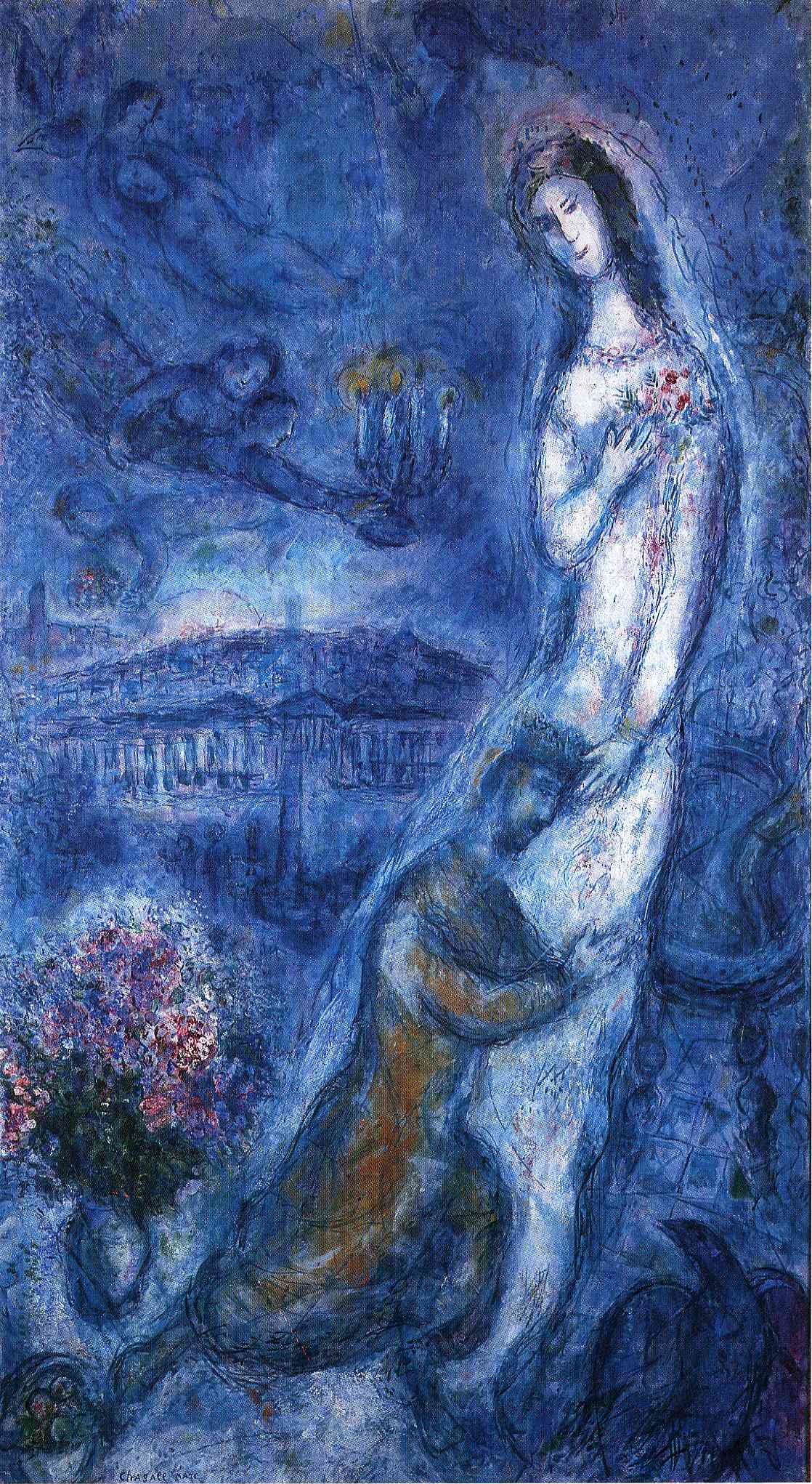
bathsheba-marc-chagallWhen it comes to talking about Repentance, there are few favorite passages to study than Psalm 51. As part of this year’s Lent series on Repentance, I’d like to spend the rest of this series exploring this Psalm verse-by-verse.

So today we begin. But not with verse 1. Instead we begin with that superscription found above it:

To the choirmaster. A Psalm of David, when Nathan the prophet went to him, after he had gone in to Bathsheba.

This is actually an important place to start. Most of the Hebrew writings we have outside of the Old Testament are pieces that were written to fill in gaps left in the biblical account. It seems the people of God have always had difficulties living with what God did not tell them.

Continue reading

The Story of Repentance: believing vs. achieving


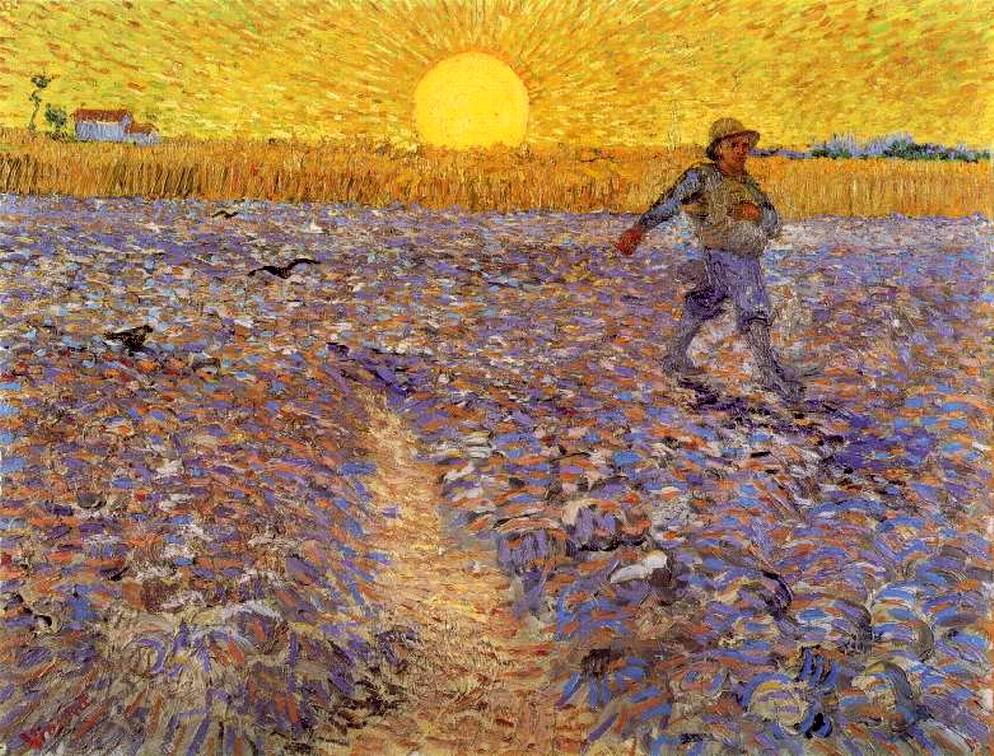
Van Gogh-Sower with Setting SunThis post is part of my 2013 Lent series: Reflections on Repentance.

I almost titled this post “theology in the service of real-life”.

The last time I wrote about repentance, I talked about the difficulties I have with some of the ways people in the Church talk about repentance. I then started researching the topic. And as I did, I found some amazingly helpful realizations about this in the Bible.

So today, I just wanted to take some time and explore this topic throughout the entire story of the scriptures. Hopefully, we can come to some conclusions about what repentance means for us today, and perhaps even some answers to our previous concerns in the last post.
Continue reading

Resurrection Gives Us Joy in Lent & Death


La-Pieta-IYes, as cliché as it is, I’m watching the new Bible mini-series on the History Channel. I’m actually enjoying it. A few things are odd (the ninja angel, for one), and they made some interesting choices on what to leave out (was the extended Sodom sequence really worth cutting out the entire Exodus story, Wilderness wandering, and golden calf rebellion?). But there is still a sense of ownership, that this is our story.

(Side note: for those of us that study the Bible and don’t necessarily think historicity is the highest purpose for which it was written, it’s encouraging to still feel that feeling of identity-formation when encountering our story–even when it’s seen as “just” a story.)

Anyway, a review of the show is not why I’m writing today. I just had a brief thought I wanted to share.

In Episode 1 of the mini-series, we see Pharaoh’s son die at the end of the plague sequence. Watching him carry the pale, lifeless body of his son, it reminded me of Michelangelo’s la Pieta (a version of which you can see above). It was actually quite moving, and I was surprised that I only realized now the sadness of this part of the story. Continue reading

Barth: to Repent & Pray is to Die [QUOTE]


This post is part of my 2013 Lent series: Reflections on Repentance.

In the first book of Karl Barth’s Church Dogmatics, as he is reflecting on God as Creator, Barth begins meditating on the fact that this Creating God is also our Father. He begins talking about what “Fatherly Lordship” might look like, and what impact this “Fatherly” dimension might have on how we look at his “Lord-ly” commands on us–like the command to “repent”. And so, as he is focusing on God’s Fatherhood in the Gospels, he writes these beautiful words on repentance:

Metanoien [the Greek verb for “repent”], to reverse one’s thinking, to think afresh, to think through to God and His kingdom, really means in the rest of the New Testament too, and here in the Gospels especially, to consider the fact that we must die. But it does not just mean this, but whatever else it might mean, it can mean only that if first and decisively it means this.

Further, note that “Thy name”, “Thy kingdom”, and “Thy will” are the objects of the first three petitions of the prayer directed to “our Father, which art in heaven” (Mt. 6:9f), and it is on these that the three which follow rest. In the context of the New Testament, then, the Thy makes these petitions absolutely equivalent to the saying : “Teach us to reflect that we must die.”

The Sex-Slave’s Name is Jesus


sandorfi-le-pardon-wide

In preparation for my upcoming Guatemala blogging trip next month, I’ve been reading the wonderful book Geography of Grace by Kris Rocke and Joel Van Dyke. It opens by talking about the horrific story of Judges 19, where a nameless woman who is no more than a sex-slave, is given to a gang of men who gang rape her all night. She is then dismembered while still alive and the parts of her body are mailed to the twelve tribes of Israel. I found these lines so beautiful and redemptive in the just of such darkness.

When reading Judges 19 with a sanctified imagination, it is as if we become the disciples of Jesus on the road to Emmaus in Luke 24. This passage tells of the disciples’ long walk with the stranger who is suddenly revealed as Jesus when he reenacts that meal on the night that he was betrayed. Just as the stranger is revealed to be Jesus in the breaking of the bread, so too is the unnamed woman revealed to be Jesus in the breaking of her body.

“Just as you have done it to the least of these . . . ”

lf we reflect long enough on the heart of the unnamed Woman [of Judges 19], We will come to know not only her heart, but her name as well. We will dare to give her the dignity of a name that she has been denied for more than three thousand years. We will even dare to name her the name above all others.

As grace flows downhill and pools up in Judges 19, We are confronted with what looks like a cesspool. It is offensive and scandalous beyond words, but if we can hold our gaze long enough and reflect on the Woman, she teaches us a hard but liberating truth-that she was not alone in her abandonment. She was not alone when she was handed over to the mob. She was not alone when she was gang-raped and beaten that night. She alone was not cut into twelve pieces and handed out to Israel. God was with her that night. God too was abused, beaten, raped, and dismembered. Where is God? God is with us, particularly among the least. Immanuel.