For Lent: Free Music, Readings, & Devotionals


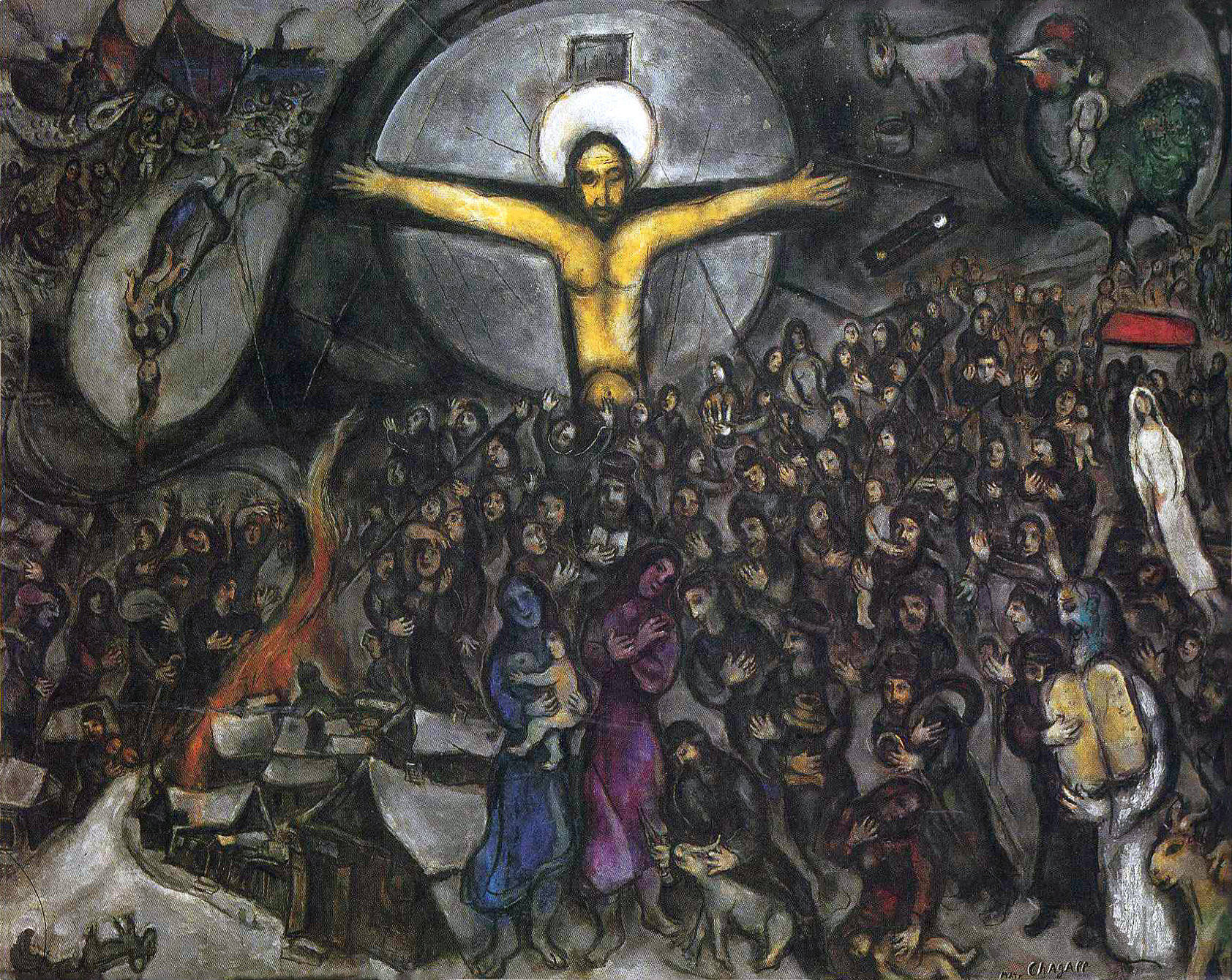
chagall-exodus

I’ll be honest, one of the reasons why I love Lent and the Church Calendar is because it is a helpful corrective for my own personal lack of personal discipline. I’m not especially skilled at putting together my own structure, and so I really flourish when structure and pattern is placed on me from the outside.

This is especially true with spiritual practices. To engage with a Church season like Lent, I often need to give myself a blog series to keep me thinking on a theme for the season (see above, under “Lenten Posts“). I really do well with reading plans, prayerbooks, music albums, etc. If you find yourself in the same boat, here are some resources for this year’s Lent that some of you may find helpful.
Continue reading

Orthodox Holy Week, Continued.


I wish everyone I know and love could come to Holy Week. The service of the Twelve Gospel Readings is so rich. It is long and it is rigorous (3 hours) but that is the purpose of liturgy — to re-form us in the spirit of Christ, away from the World, and that takes work. A lot of it. After the reading of the 5th Gospel, the lights go nearly out. The Priest enters carrying the icon of Christ on the Cross (video can be seen here). It is a slow procession and he hymns: Continue reading

Lent: Poems, Mixtapes, Prayerbooks – Oh My!


chagall-exodusI’ll be honest, one of the reasons why I love Lent and the Church Calendar is because it is a helpful corrective for my own personal lack of personal discipline. I’m not especially skilled at putting together my own structure, and so I really flourish when structure and pattern is placed on me from the outside.

This is especially true with spiritual practices. To engage with a Church season like Lent, I often need to give myself a blog series to keep me thinking on a theme for the season (see above, under “Lent Posts“, and also check out this year’s series). I really do well with reading plans, prayerbooks, music albums, etc. If you find yourself in the same boat, here are some resources for this year’s Lent that some of you may find helpful.
Continue reading

Wolterstorff: the liturgy & worship of lament [quote]


job-silohetteLast week, I was in Michigan again for my seminary program. Tomorrow I will post some reflections on my time there. Today, I want to offer you this amazing post-length excerpt by Nicholas Wolterstorff from an amazing piece of his called, “Trumpets, Ashes, & Tears” (pdf):

I suggest that there is yet one more thing which the believer experiences in his life of dispersion and which he brings with him to the liturgy….

As we human beings travel through life we experience pain and suffering–in part our own, in part that of others. Some of this pain and suffering is non-innocent suffering; it is punishment for, or the consequence of, moral evil. But not all of it is that.

The suffering of the Israelites in the brickyards of Egypt was not the consequence of their sin, nor was the suffering of the Jews in the camps of Auschwitz. Some of the suffering of our world even resists our seeing it as the counterpart of anyone’s sin–the accidental death of a child, for example.

Continue reading

Longing for Liturgy (a Catechumen’s reflection on Holy Week) {by David Schrott}


In recent years, and prior to my Orthodox catechesis, I heard many a Protestant writer or preacher lament that Easter was not of enormous import to most Christians when it was the eminent Christian holiday.  I didn’t share that view. Easter was an after-thought for me – another spring holiday without much real significance. Little did I know that it was the cultural liturgy of the market-place that informed my position towards the holiest of Christian celebrations.

Liturgies form us. Whether they are cultural or religious, we are moved to be formed in the image of something and in the West, the market-place is driven by the most powerful liturgy called Consumerism. Christmas is the most powerful holiday in our culture and not because of what it is or what it means; it is the most powerful because of the 30-something day cultural liturgy from Black Friday til Christmas day that forms our hearts not toward God, but towards pretty much everything else. As James K.A. Smith notes in his book Desiring the Kingdom, the Culture understands liturgical formation better than the modern church does.photo1

The Holy Orthodox Church is not the modern church.  Before I decided that Orthodoxy was the church of the Apostles, the Fathers and Christ himself, I longed for liturgy without knowing what I was longing for. I think this is the basis of the modern Evangelical root of church innovation. The Western Christian wishes to attach himself or herself to something, but doesn’t know how or have the framework for doing so; so innovation in church methods based on market research emerge. A few years ago, I’d fast all of Good Friday (and accidentally get drunk when breaking fast that night with beer and bread; Lord have mercy!) or round up friends for a Maundy Thursday dinner or try to watch the Passion movie. These were my own personal longings for connectedness to Holy Week and the larger Church; these were longings for liturgy. Little did I know that there was already a place where these connections existed and they existed nearly unchanged for most of 2000 years.
Continue reading

The Mission of Confession: the World needs the Church to Confess


yoder-farm-bw-snow-instagram

And the Lord said, “What have you done? Listen; your brother’s blood is crying out to me from the ground!
Genesis 4.10

I was taking another look at the verses I wrote about earlier this week, and was struck by a few more thoughts I wanted to share. As I said then, the passage is structured liturgically. The story of Cain and Abel follows the flow of liturgy that God’s people have used for the duration of their existence. (It’s usually something like this: Call to Worship–>Call to Confession–>Passing the Peace–>Word–>Sacrament–>Benediction)

I pointed out that the blood-soaked soil “crying out” was the first instance of lament in the Bible, and it appears in the “Call to Confession” section of this odd liturgy-story, and it shows us how the world bears the weight of our own sin. Looking at it again, though, I see it means much more than just that.

Continue reading

The Liturgy of Cain & the Tears of the Earth


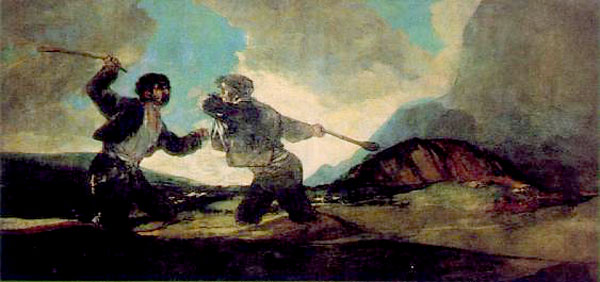
de Goya-fight with cudgels"Our Lent series this year is “The Weeping Word“, where we’re meditating on key places in the Scriptures where Lament, crying, tears, and weeping happen. Today, we look at the first instance of this in the Bible.

There is a particular rhythm that God’s people have always used in their liturgy. If you pay attention, you’ll see this rhythm pop up in lots of different places throughout the Christian Scriptures. My favorite unexpected place where this shows up is in the story of Cain and Abel.

Worship

The story opens with these two brothers coming to worship, answering an implied Call to Worship that issues from God. This is where the liturgical rhythm begins. God calls us to worship him, and we respond by offering him this worship to him.

But everyone comes to worship from different places, and not everyone’s heart and offering is pure.

And the Lord had regard for Abel and his offering, but for Cain and his offering he had no regard. So Cain was very angry, and his countenance fell. The Lord said to Cain, “Why are you angry, and why has your countenance fallen? If you do well, will you not be accepted? And if you do not do well, sin is lurking at the door; its desire is for you, but you must master it.”

Our worship gets twisted and directed towards the wrong things, and this is what we call sin. Offering worship wrongly and to the wrong things. Wrong worship produces wickedness within us.

“Cain said to his brother Abel, “Let us go out to the field.” And when they were in the field, Cain rose up against his brother Abel, and killed him.

Continue reading

Sin: God’s Favorite Part of Being God


sandorfi-le-pardon-wide

Lent is a time that we dwells a lot on Sin. It’s a preparation for Easter and celebrating the Resurrection, and so to prepare for this, we must meditate on those things that Resurrection itself addressed. Resurrection was a response to Sin and Death. The more we feel and dwell in the reality of our Sin and Death, the more tangible Resurrection becomes.

This can seem morose, annoying, unnecessary, or not in line with our identity as Christians. Should we do this though it might make us depressed, feel like self-focused navel-gazing, or if it distracts us from much of the rest of our Christian living?

There’s definitely a time and place for it and a degree after which it becomes unhealthy, but more than what this does for/to us or our emotional state, could I offer another reason that it’s good to have times where we bring our focus to our weakness and sinfulness?

God loves it.
Continue reading

The most succinct defense of infant baptism I’ve ever read.


“It might be argued that there is not one explicit reference in the New Testament to a child being baptized. Have we any warrant then for doing it? If we require explicit texts for our practice, then there would be no warrant for women to come to the Lord’s Table. There is no single explicit reference to that in the New Testament. Our warrant is not in isolated texts or precedents, but in the Gospel itself. Christ died for men and women, adults and infants, and we acknowledge that in faith in baptism…”

— from James B. Torrance’s beautiful book Worship, Communion, and the Triune God of Grace 

Lent & Ash Wednesday for Kids (….or maybe not)


rabu-abuLast night, my church had their Ash Wednesday service. I had the honor of helping lead the liturgy by offering the greeting and opening introduction/ explanation. Unlike most times we gather, the kids stayed in the service so I was asked to make sure my opening words were at least somewhat comprehensive to children.

This turned out to be one of the most helpful exercises for me. I ended up spending more time thinking through these brief opening words than I normally do and crafting each line as intentionally as possible. And so, for the heck of it, I thought I’d throw this up on the blog for anyone who was struggling with explaining Lent and/or Ash Wednesday to their young ones, and also to get your thoughts on how best to communicate this to kids. Here’s what I said:

(Lent: Two things hold us back)

Tonight kicks off the Church season of Lent. Most all of us live our lives wanting to be better people than we are right now. But if we’re honest, there are two things that can get in the way of that sometimes and make us frustrated as we try and become the people we want to be.
Continue reading

Welcome to Ash Wednesday. Lent begins.


ash-wednesday-pew-lentToday is Ash Wednesday. In just under two months from today we’ll come to the highest point in the Christian Church calendar, Easter. That is where we’ll celebrate Christ’s Resurrection and how God’s perfect world broke into the present and our greatest enemies–sin and death–were conquered and shown to have no more dominion over us and the rest of the world. It’s meant to be the most effusive, overflowing, even ridiculous time of joy.

And yet, when we look at Jesus’ Resurrection, we see that before it ever took place, there was Death. And before that, there was an entire lifetime of loneliness, pain, suffering weakness, and isolation. We see that it was a life surrounded by evil forces and whispers that haunt and hurt Jesus and the people he loved.

And so, our early Church Mothers and Father thought it would be wise to have this time before Easter to prepare, so we might end up celebrating during Easter all the more.

Resurrection was itself a statement against our two greatest enemies: Sin and Death. And so to participate in Resurrection, we take the time of Lent to meditate and press into those things to which Resurrection was the response. We do this not out of morbidity, but out of anticipation.

Continue reading

Lent begins tomorrow. (Will you just give it a try?)


Jesus & The Cross

I grew up in a church tradition that did not take seriously the Christian Church Calendar. Even as I went to college and moved into communities that took some level of tradition more seriously (which was usually limited to quoting Puritans and Reformers in sermons), the Church Calendar wasn’t that big of a deal. It was seen as something sort-of cool that could be incorporated into the already established life of the Church; a buffet from which leaders could pick and choose some aspects that might be helpful in organizing some sermon series or songs. But it certainly wasn’t seen as something that a church should actually incorporate itself into, or build it’s own rhythm around.

I’ve had the privilege of having this paradigm rocked the past several years at my church, and have fallen in love with the Church calendar. It influences much of the rhythm and timbre of my everyday life–both ecclesial and otherwise. I find such life in living within a stream of thought that was not simply created within the past generation by baptizing modern Western American cultural ideas.

I love finding myself as embedded within the cloud of witnesses that have gone before me as possible–even those I may disagree with passionately and fundamentally. Because, at the end of the day, they are my family, and families have traditions. Sure, you can be “that guy” that does his own thing and doesn’t participate in the family rhythms, but where’s the life in that?

Continue reading

The Privilege of Church-lessness: a Donald Miller post-script


donaldmiller-bw-2Donald Miller put up another post sort of talking more about his church attendance thoughts, this time talking about how the doctrine of the “priesthood of believers” means he does sacraments on his own and whenever he wants because God has given us all “agency” in this world to do that kind of stuff. He longs that pastors would empower their people to feel free to do these sort of things as well.

I made my thoughts clear last week about how wrong I think he is on this stuff (especially so with the sacraments. He even says he does baptisms for other people even though he himself has never been baptized). I won’t rehash that here. I did want to bring up one thing I noticed in his other posts that was more explicit in this last post. He writes:

To be fair, I’m wired a bit differently. I’m creative and I’m a risk taker. I realize a mistake I often make in my writing is assuming people are wired the way I’m wired. They aren’t. Most people are looking to “do it right” and play by the rules. This saves them from the trouble I often find myself in.

I can’t get past the the feeling here that Miller is saying that “most people” (read: “those that go to church”) at least primarily go to church because they want to “do it right” and “play by the rules”; that not going to church is an act of freedom, while those that still go are bound by something Miller thinks he has freed himself from. It’s not that he necessarily thinks he’s “better” than others, but I fear he makes a dangerous division within the Body of Christ between himself and “most people”.
Continue reading

The Body of Christ, Broken (a guest post for Restoration Living)


family-old-moustache

Yeah, that’s my family (I’m in the front left). This was one Easter Sunday in the 90’s in Dallas, Texas, at a time and place where (I promise) it was absolutely appropriate to dress like that for Easter (except the glasses, of course). I look at this picture a lot, and not just to chuckle. I find it so oddly and powerfully symbolic of what life in the Bible Belt was like.

You see, my family was deeply wounded by “Church folk” throughout my childhood. Just as in the picture, people in the Church would live their Christian lives dressed up and looking good, all while wearing masks, disguising who they really were. When things were hard at home, people at church had no categories to process it. After all, to be a Christian is to be cleansed by Jesus and walk in new life, right? Failures, sins, and brokenness were seen as signs of some disobedience – some place where you weren’t “okay.”

_______________

And so begins a guest post I wrote for a wonderful site that should be on all of your radars, Restoration Living. Read the rest of the post here.

Donald Miller is just plain wrong about church. But it’s not his fault.


donald-miller-bw-1

Donald Miller, author of Blue Like Jazz, started a little kerfuffle last week when he wrote about how he doesn’t really go to church any more. He doesn’t learn much about God through sermons, and he doesn’t connect with God through songs. Church just doesn’t connect with him in any way and doesn’t fit within his own learning style, which is far more participatory. He says the Church is all around us and in believers so he feels free to “have church” in the way(s) that most connect him to God and others.

Well, this caused quite the backlash. He wrote again a couple of days ago in response, but it seems that most people still really disagree with him.

But here’s the problem: Donald Miller is absolutely right in everything he says if he still insists on calling himself an “Evangelical”, or at least using that as his frame of reference.

If you consider yourself an Evangelical in any traditional sense, and you’re looking at Donald Miller’s church practices with dismay, well then welcome to your future–the logical conclusion of your theology and how you’ve practiced church for a few generations now.
Continue reading