A Sacrament Primer (and some questions I still have)


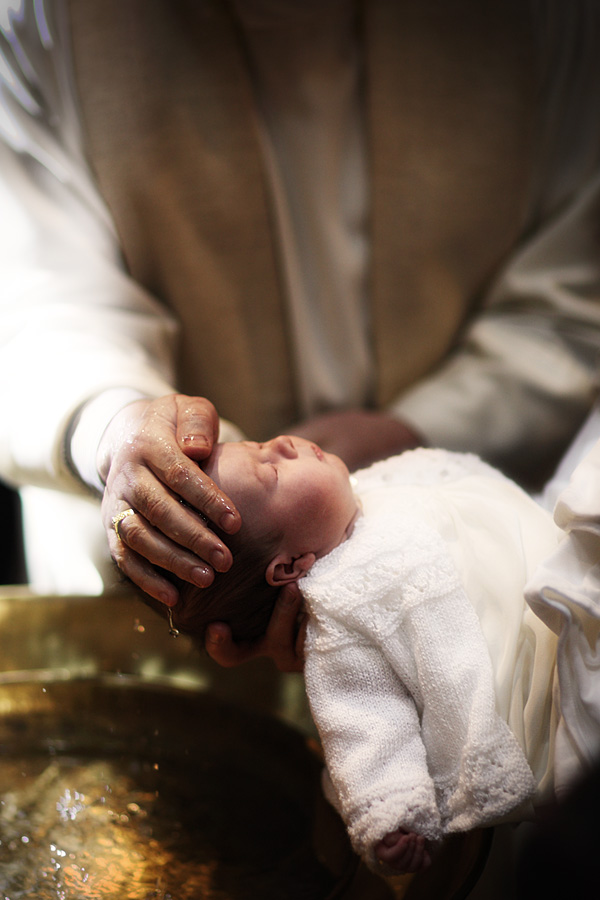
infant-baptism-water-7

For my worship and liturgy class, we had to write up a little thing explaining how we would explain the Sacraments to an everyday person. We were also supposed to throw up some questions that we might still have about them. Here are is mine.

In the beginning of the Bible, we see God create what amounts to a “temple-world”. He wants to dwell in this temple, with his people, and make it his home. He ordains priests to care for it but they fail. So God puts in motion a plan and story to rebuild this world and re-prepare it for his dwelling.

The focal point of this story and our entire faith is Jesus Christ. He is God among us having come dressed in humanity. The Gospel of John says he literally “templed” among us, using our created humanity as something he was pleased to dwell in.

This is the Gospel; it is our life and strength as Christians.
Continue reading

What is the Proclamation of the Word?


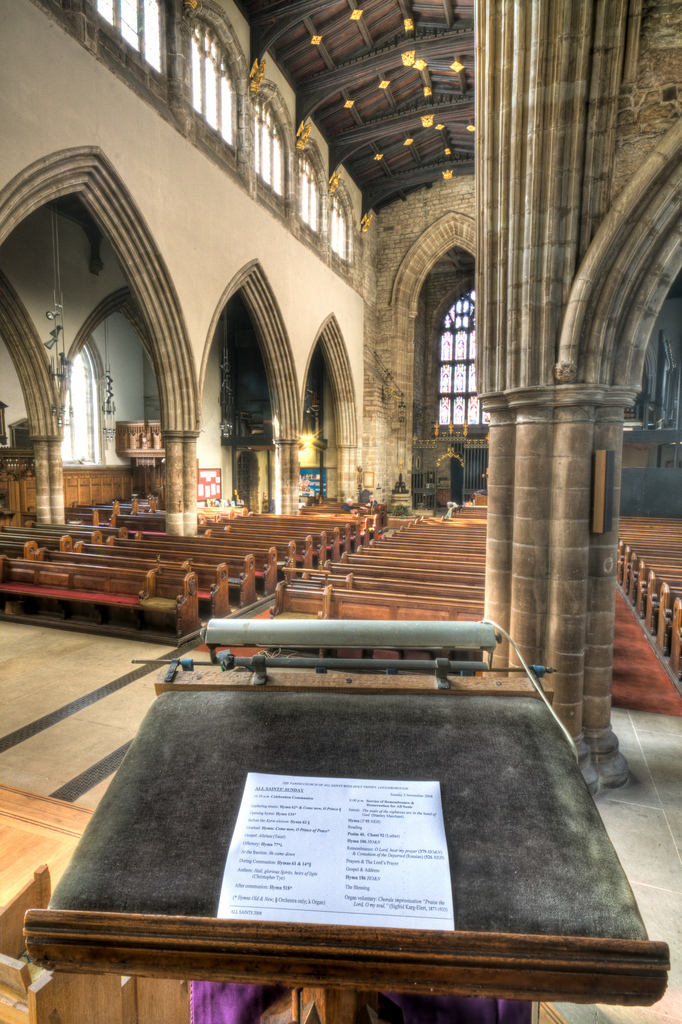
pulpit-church-hdr-bibleFor a class recently, I had to read a bunch of items on the part of a worship service in which the Bible is front and center. This “section” of the service is called “The Proclamation of the Word”, or more generally, the “sermon” or homily”. I ran across this great quote:

The very act of preaching, in fact, sets up questions and problems.  Most people no longer understand the difference between preaching and other types of public speaking…. Many people think of a sermon as an occasion for being entertained, instructed, or inspired in matters of religion — hence the customary comment at the church door, “I enjoyed your sermon.”  Nowadays, it is only congregations who have been engaged in a new way of thinking for a long time who are going to sit expectantly waiting for the Word of God to be spoken — for preaching, properly understood, is the good news that God preaches through human beings.  Astonishingly enough, this is the method of communicating that God has chosen.  This is an offensive idea; there are a hundred complaints to be brought against it.  Most common is the objection, “How can anyone presume to speak the Word of God?”  Or to put it another way, “How can any human being be so arrogant as to think he is a mouthpiece of God?”  How indeed?  It is a very good question.  The validity or invalidity of preaching rests on such issues as these. (Fleming Rutledge, Not Ashamed of the Gospel)

I think Rutledge is right (and not just because she is an incredible preacher–all you complementarians could learn a thing or two from her!): people don’t seem to really see preaching as fundamentally different than any other lecture or other public speaking. Preaching is often (subtly and unspokenly) seen (or at least treated) as “mere” personal edification–similar to a book discussion or philosophical lecture or self-help conference.
Continue reading

The Best Communion Prayer my Church has ever had


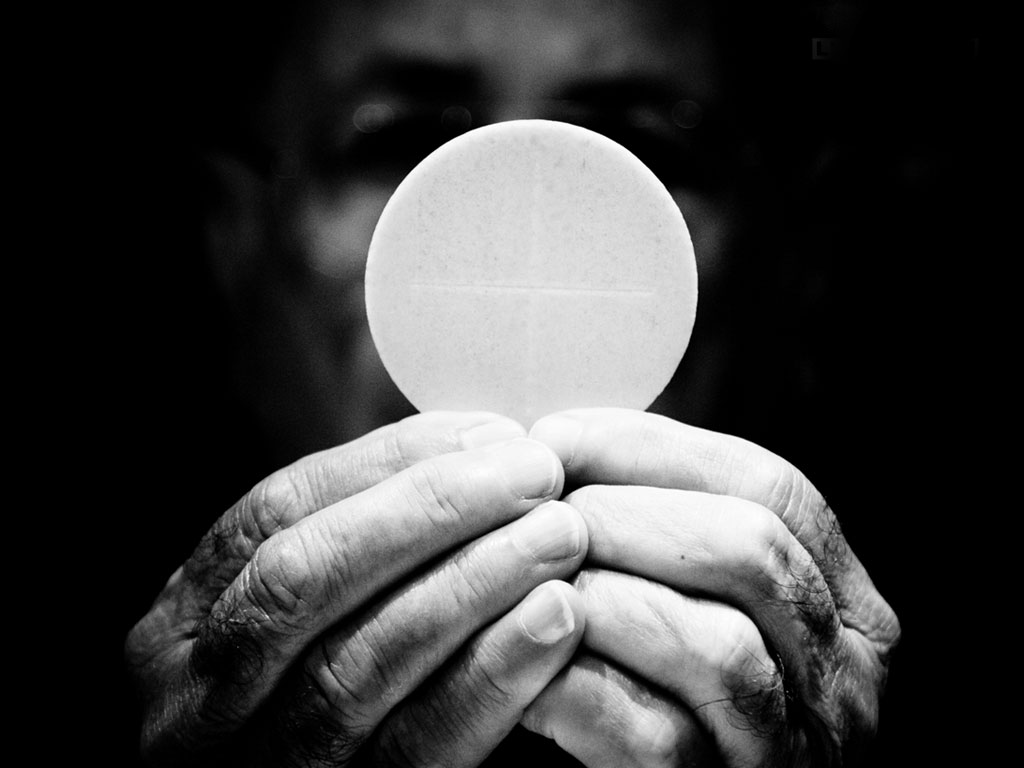
eucharist-bw-waferFather, your table proclaims to us your undying love for us. This table tells us that you do not simply endure our presence. This table tells us that you delight in being with us. You have invited us to feast in your presence.

So we have come to eat and drink deeply of your love for us. May we interpret our lives through this table. May we understand that we are a people with whom you are well pleased. May this reality energize us as we move into our world. May we live out our lives as your deeply loved, anointed children. Fill us with joy as’we labor for you in this world. Amen.

Liberti Church, 10/20/13

How Liturgy Shapes & Makes Us


schrott-cross-church-office-apartment

UPDATE: I posted a brief history of liturgy and its movements.

A couple of nights ago, those that help lead and facilitate the worship service at my church met to discuss how we should continue to grow and remain faithful to our mission in the city of Philadelphia through our liturgy and music. It reminded me once more of how much I love being a part of this church and its tradition, and how excited I am to live life with these people.

Meditating on these discussions about our liturgy, I was reminded of the myriad of ways that the structure of one’s worship service forms the people that sit there each Sunday. I thought of how liturgy functions. If you go to a church, it has a liturgy: some structure that proclaims a certain story and shape of existence, and it changes people to fit into that shape and story.

And this got me thinking of a document I wrote up a couple of years ago to help train and encourage those leading liturgy at our church. In it, I wrote about six “facets” of the diamond that is liturgy. And that’s what I wanted to post here today.

These are some ways that liturgy acts to shape us. After each thing, I’ve given a sample topic and tried to show how liturgy functioning in that way can speak to and shape someone in that area. This was originally meant as a guide for people that introduce the service and try to acclimate people to the liturgy.

I hope this reminds us that liturgy matters, and being intentional about your liturgy is such an important part of leading and ministering within your church context. If you don’t serve as a leader in this aspect of your church’s life, and don’t really speak to liturgy formation, I hope this helps you recognize the formative nature of your church’s liturgy, and that it helps you connect to and engage with your church in a deeper, more intentional way. For more on this, I could not suggest more highly James K.A. Smith’s book Desiring the Kingdom.

Continue reading

Advent & Christmas: they’re not the same thing (Ode to a Christian Calendar)


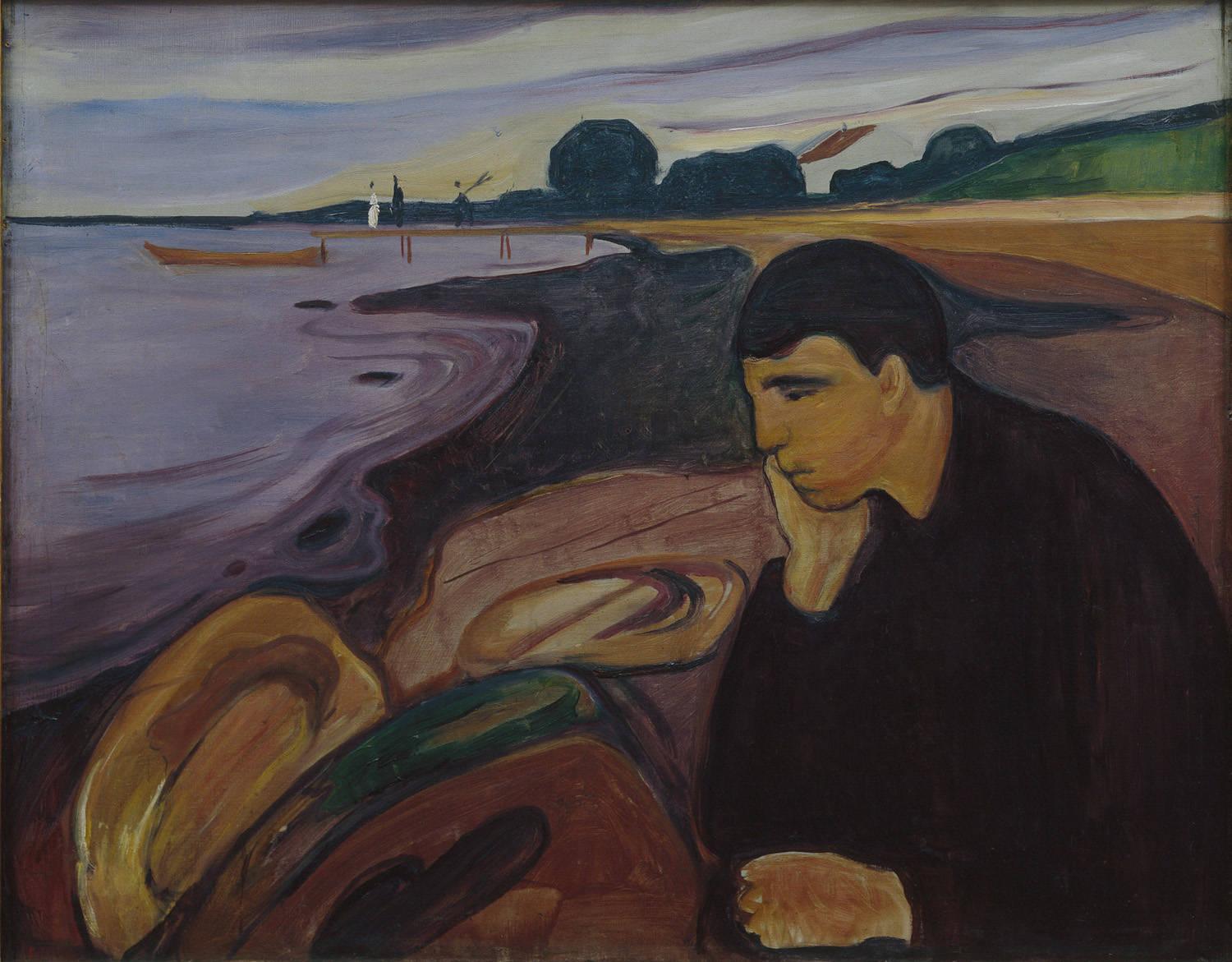
Munch-melancholyWell, it’s the Eve of Christmas season. Yes, that’s right, Christmas is not only an entire season in the Church calendar, but it’s a season that is distinct from Advent.

I know many in the global church know this fact, but I only learned it a couple of years ago, and each year it seems I have to be reminded. (Hopefully with this post, I can start internalizing it some.)

I find it interesting that we in the West have not only removed the “seasonal” aspects of the holiday, but have reduced this nearly two-month-long Advent/Christmas time into a single day on which we put most of our attention.

So why is the calendar structured like this? And what do we lose when we boil this down to one day?
Continue reading

The Heretical Liturgy of American Nationalism [QUOTE]


I’m suggesting that [Nationalism] constitutes a liturgy because it is a material ritual of ultimate concern: through a multisensory display, the ritual both powerfully and subtly moves us, and in so doing implants within us a certain reverence and awe, a learned deference to an ideal that might one day call for our “sacrifice”…. Over time, these rituals have a cumulative, albeit covert, effect on our imaginary. And together, I’m arguing, these constitute liturgies of ultimate concern: the ideal of national unity and commitment to it’s ideals is willing to make room for additional loyalties, but it is not willing to entertain trumping loyalties. (Just try to remain seated at the next playing of the national anthem.) The fact that there seems to be little tension between Christianity and American Nationalism is not a function of the generosity (let alone “Christianness”) of the America ideal but rather a sign of a Christianity they has accommodated itself to these military ideals of battle, military sacrifice (which is very different from the Christian ideal of martyrdom), individual (negative) freedom, and prosperity through property.

Implicit in the liturgies of American nationalism is a particular vision of human flourishing as material prosperity and ownership, as well as a particular take on intersubjectivity, beginning from a negative notion of liberty and thus fostering a generally libertarian view of human relationships that stresses noninterference. Related to this is a sense that competition and even violence is basically inscribed into the nature of the world, which thus valorizes competition and even violence, seeing war as the most intense opportunity to demonstrate these ideals. The vision of a kingdom implicit in this liturgy is antithetical to the vision of the kingdom implicit in Christian worship. I think the liturgical take on American nationalism can help us to see why so few Christians experience a tension here; it can also help to diagnose the cause of the church’s complacency and complicity: many Christians experience no tension between the gospel according to America and the gospel of Jesus Christ because, subtly and unwittingly, the liturgies of American nationalism have so significantly shaped our imagination that they have, in many ways, trumped other litutgies. Thus we now see and hear and read the gospel through the liturgical lenses of the “American Gospel”….

The republic claims to have an identity and unity about it, and even claims to have acieved the goal of shalom–to already be a nation “with” liberty and justice for all…. No hint of eschatological deferral; no sense of “not yet” failure to measure up; but a confident claim of justice here and now, secured by the republic….

And as I’ve tried to sketch above, I think there are good reasons to worry that the ideals of the republic are antithetical to some of the defining ideals of the people of God, called to imitate a suffering Savior, who was executed at the hands of military power. What’s explicit in the [Christian] Creed, if we tease it out, is in significant tension with what’s explicit in the Pledge [of Allegiance].

James K. A. Smith, Desiring the Kingdom: Worship, Worldview, & Cultural Formation

Read my thoughts on Christian Patriotism, and a related quote from Ross Douthat in Bad Religion.

Posted from WordPress for Android on my Droid X

The Early Church: not so big on grace, so why are we so obsessed?


As promised, today Lore Ferguson, over at Sayable posted my second guest post on her blog, as she is on a sabbatical. My first post went up yesterday. Originally, Lore had asked me to write a post on grace. Ironically, this was the first post I wrote for her (almost an anti-grace article–even thought it’s really not). Anyway, I hope you enjoy it. Leave comments and, like I said yesterday, follow her blog. You won’t regret it. Here’s a preview of today’s post:

I grew up in a pretty stereotypical Evangelical setting, which led to a pretty stereotypical back-and-forth between guilt and self-righteousness. That is, until I heard the Gospel of radical Grace.

Many of us have this same story, where it has been so healing to hear that how God relates to us is not, in fact, based on our performance. Instead, everything necessary for God to be pleased with us has been accomplished on our behalf by his Son.

And so, in response to this, we fall in love with God’s Grace. We pray for it, long for it, and cry for it. We read books about it, write about it, and blog about it (I even did a five-part series on it myself). We try and speak it into others’ lives while trying to figure out why we don’t apply it to our own. We joyfully build our relationship with God on the glorious foundation of His Grace. It is fundamental, primary, and essential.

In short: we love Grace.

Imagine my surprise, then, as I fell in love with liturgy and forms of worship that were centuries-old, to begin noticing the utter lack of “grace” from the prayers and worship of the earliest saints.

Continue reading →

Weekend Must-Reads {09.09.11} | church leadership retreat edition


This weekend I find myself with the honor, joy, and privilege of heading to a two-day long leadership retreat for my amazing church, liberti church: center city. In honor of this, I wanted to post articles by myself and others focusing on Church philosophy, community, and such. Some of them are a bit longer than usual, so feel free to grab a cup coffee before digging in. I hope you find these helpful and encouraging no matter where you find yourself in relation to the Christian Church. Have a great weekend. And be sure to stop by next week; I’m pretty excited for the stuff I’ve got planned for the blog then.

And Thus It Begins: liberti home meetings & my heart | the long way home

liberti: center city’s home meetings start next week. I wrote this blog post last year the day before I began leading a brand new group in the Rittenhouse neighborhood of Philadelphia. It’s wonderful to look back over the past year with these people and see that God has answered every prayer I had in this post. I’m still serving these amazing people as their leader, and I can’t wait to see them on Tuesday.

On the State of Contemporary Theology | Fors Clavigera – James K.A. Smith

Here, the author of one of my favorite books I’ve ever read, Desiring the Kingdom, offers his thoughts on the current state of theology, denominations, and theological education. A quick must-read for all.

Continue reading

Unceasing Worship (a liturgy)


[photo by p*p on flickr]

[This was a liturgy I delivered at my church this past Sunday as we continued our series from Luke called “conversations with jesus”.  Here is the audio from the message that followed this opening liturgy.  Much of this opening material I stole from the incredible book Unceasing Worship by Harold Best]

Greeting and Preparation

Leader: The Lord be with you.
People: And also with you.

Hello, my name is Paul, and I want to welcome you Liberti Church. Liberti is a community of individuals still trying to figure out this Christian faith we’ve found ourselves in. And if you’re around here long enough you’ll see that we all do this to varying degrees of imperfection, more often than not. So, whether this is your first time here, or you are firmly rooted in this community, I hope that your time here today is meaningful; that you feel warmly welcomed and that you are able to experience the God we love in a tangible, real way.

In a few moments we’re going to stand and do the whole traditional, super structured, church thing. We’re going to read things back and forth, say them together, sing some songs, stand up, sit down, stand up again, say hello to one another and listen to a sermon. It’s easy to look at all this and begin to think that all these trappings and movements are what it means to be a Christian; that this is the substance of our faith. It’s easy; after all, we can see, observe, and measure our participation of these things.  But that’s not why we do this.

Continue reading

on Babel, Language, & Identity (a liturgy)


[This was a liturgy I delivered at my church this past Sunday as we concluded our series “in the beginning”.  Here is the amazing message that followed this liturgy.]

Greeting and Preparation

Leader: The Lord be with you.
People: And also with you.

Hello, my name is Paul, and welcome to Liberti Church. Liberti Church is a group of people trying to figure out what it means to be a community of believers in Jesus Christ both in and for this city. This may be your first time here–you may have randomly wandered in here or a friend brought you; or, you may be a regular attender here. Either way, we hope you feel welcome to fully participate in this time and space set aside to worship our God.

Continue reading

The Gospel & Hospitality (a liturgy)


[This was a liturgy I delivered at my church a couple of months ago, while we were going through our series “Practice Resurrection”. You can hear the sermon delivered that Sunday here.]

Greeting and Preparation

Leader: Alleluia! Christ is risen.
People: The Lord is risen indeed. Alleluia!

Hi, my name Is Paul. Welcome to Liberti: South Philly. We’re a community of believers in Jesus Christ wrestling and struggling trying to learn what it looks like to live in the tensions and ambiguities of an ever-changing world; of a world whose systems too often attempt to isolate and pull each other apart. Maybe you’ve graced these pews many times before, maybe you’re still trying to get over the shock that you’re actually sitting in here in the first place. Either way, we want to welcome you today. We hope your time here is meaningful and that you feel the freedom and invitation to wrestle and struggle alongside us.

The aspect of Christian faith we will be exploring today is hospitality. The God of Christianity is not a distant god demanding things of us; putting ever-increasing weights upon our shoulders. Rather, he is a God that removes our burdens, shows us what a well-lived life looks like and invites us in. He invites us into the experience of His Self and His Works.

Continue reading

Of Liturgy, Communion, and Relationship [a liturgy]


[This weekend, I had the privilege of helping lead the prayers and liturgy at my church. I thought I would post my manuscript up for all to read and take part in as well. I hope this blesses you to read as it blessed me to write.]

Greeting and Preparation

Leader: The Lord be with you.
People: And also with you.

Hello, my name is Paul, and welcome to Liberti: South Philly. We are a community of people–people with struggles, doubts, addictions, and frustrations–who are still in the process of figuring out what it means to believe in this God we believe in, and relate to Him and others in a way that reflects that belief. This may be your first time here or your hundredth, but either way we want to welcome you all and we hope that your time here today is meaningful.

The part of the Christian faith we will be talking about today is that of community and relationships. Most likely all of us in here have our own sets of insecurities, uncertainties, and baggage concerning this topic. Our relationships seem to be the area that can frustrate us like no other; the area that it appears no amount of mere intellectual knowledge can change. It is often the source of our greatest joys, our deepest sorrows, and our most profound change.

Continue reading