You marry a family | Genesis 29.13-14


When Laban heard the news about his sister’s son Jacob, he ran to meet him; he embraced him and kissed him, and brought him to his house. Jacob told Laban all these things, and Laban said to him, “Surely you are my bone and my flesh!” And he stayed with him a month.

Genesis 29.13-14

Well isn’t this interesting? Rachel’s father says the same the marital vows to Jacob that Adam said to Eve. It just goes to show you that marrying one person is, quite literally, marrying their family. This is what covenant is. Think of the implications for church life as well. When someone joins the church they’re joining the entire family. This is why it is so deeply flawed to see Baptism as one’s individual “public declaration”. It is the marital vows of God and his family toward us that bring us into the family.

See other Marginalia here. Read more about the series here.

Abraham’s son Ishmael was part of Covenant! | Genesis 17.23-27


This is my covenant, which you shall keep, between me and you and your offspring after you: Every male among you shall be circumcised… and it shall be a sign of the covenant between me and you…. Both the slave born in your house and the one bought with your money must be circumcised. So shall my covenant be in your flesh an everlasting covenant. Any uncircumcised male who is not circumcised in the flesh of his foreskin shall be cut off from his people; he has broken my covenant.”… As for Ishmael, I have heard you; I will bless him and make him fruitful and exceedingly numerous; he shall be the father of twelve princes, and I will make him a great nation. But my covenant I will establish with Isaac, whom Sarah shall bear to you at this season next year.”…. Then Abraham took his son Ishmael and all the slaves born in his house or bought with his money, every male among the men of Abraham’s house, and he circumcised the flesh of their foreskins that very day, as God had said to him…. And his son Ishmael was thirteen years old when he was circumcised in the flesh of his foreskin. That very day Abraham and his son Ishmael were circumcised; and all the men of his house, slaves born in the house and those bought with money from a foreigner, were circumcised with him.
Genesis 17.23-27

Yes, God said that Ishmael would not be the primary bearer and “administrator” of the covenant, but he still bears its marks. Reminds me of a reading from Lesslie Newbigin where he talks about how through our election and Covenantal relationship with God, Salvation is extended to all the nations. “Election” isn’t about blessing; it’s about responsibility to extend the Blessing to others.

Other peoples (even those not in the elect people of God) participate in and receive the full benefits of being part of the Covenant. To be elect is to extend these Covenantal blessings to all nations (as we see here with Abraham). To be marked as God’s is to be placed on mission.

Ishmael was still joined to the covenant! Praise God for his gratuitous grace!

See other Marginalia here. Read more about the series here.

This is why Genesis was written (and Ken Ham doesn’t see it)


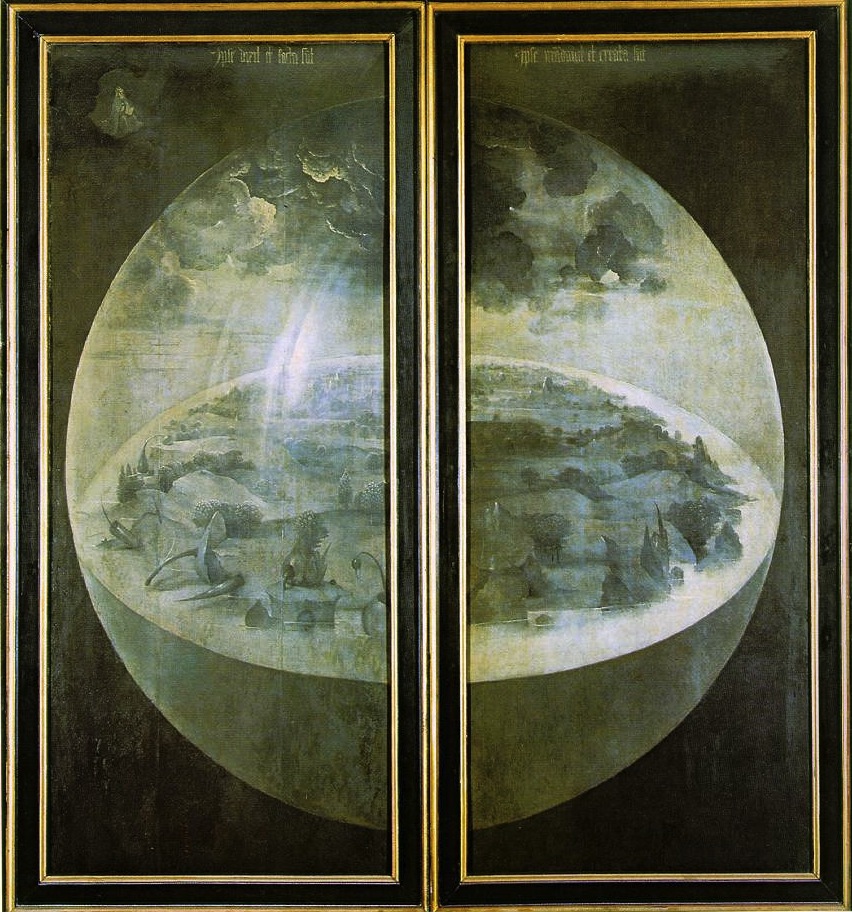
Bosch-Garden-Earthly-Delights-Outer-Wings-Creation-WorldIf my Facebook feed is representative of the general population at all, then I can confidently say that most of you have heard about the debate between Ken Ham and Bill Nye about creationism and evolution.

On this blog, I try not to get too much into issues of great contention in the church family when I don’t think it’s necessary, especially when I think it would unnecessarily prevent someone from reading this blog with a free conscience, or just mess with their head too much. But this is the one issue that I have felt the freedom to be blunt, bold, consistent, and loud about my opinion. So, I don’t have too much to add to everyone else out there that was more or less lamenting this debate more than celebrating it. Maybe I’ll have some thoughts next week coming at it from a different angle, but we’ll see.

Today, I wanted to share with you a video from the in-person portion of my Hebrew class a couple of weeks ago. To get an A in the class I have to translate, memorize, and recite a section of the Genesis 1 in the Hebrew. To help us with that, my professor made a video of him reciting it and acting out the recitation in front of us.
Continue reading

A Biblical Critical Advent: Luke’s Cosmic Christmas


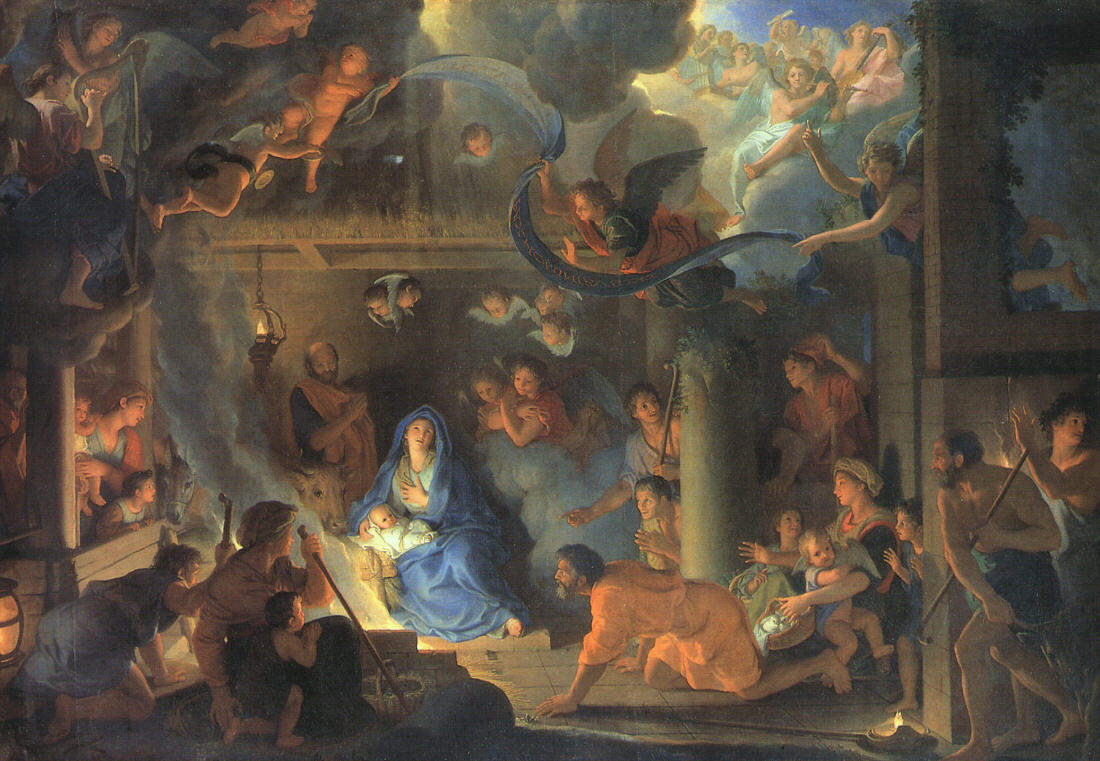
Charles-le-Brun-Adoration-of-ShepherdsFor Advent this year, I wanted to put up a few posts looking at Matthew and Luke’s Nativity stories as they were meant to be read: as two separate stories with their own purposes and themes. We often just mush them together, and I think we lose something in that process. Last week, we sat with Matthew’s Nativity story. Today, we turn to Luke’s Christmas.

Matthew’s Nativity focuses on how Christmas plays right into Israel’s own story; how this is exactly how the Jewish Messiah should be expected to have come into the world. Luke’s Gospel, on the other hand, emphasizes Jesus’ significance to the entire world, all parts of society, and the entire cosmic order.

In other words, Jesus’ mission in Luke is much larger than simply Israel. These and other Lukan themes are brought out quite strongly and explicitly in his Nativity narratives. Today we’ll see how he does this through signs of the universal mission of Jesus, the story’s emphasis on the lowly and powerless, and his stories of Spirit-filled joy.

Continue reading

A Biblical Critical Advent: Matthew’s Old Testament Christmas


root-jesse-matthew-icon

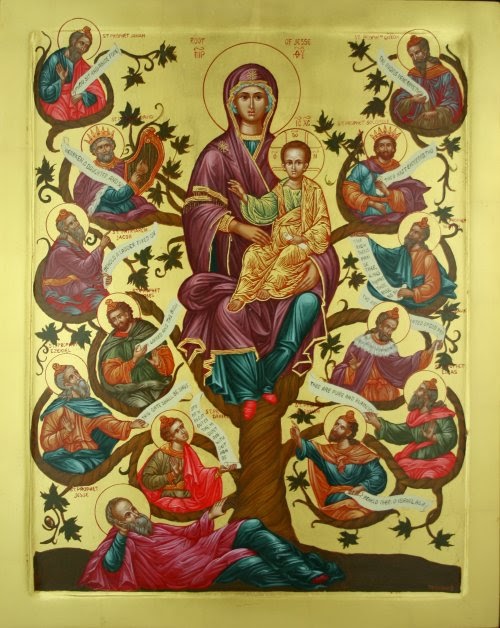
For Advent this year, I wanted to put up a few posts looking at Matthew and Luke’s Nativity stories as they weren’t meant to be read: as two separate stories with their own purposes and themes. We often just mush them together, and I think we lose something in that process. Today, we look at Matthew’s Christmas Story.

It’s well-known that the Gospel of Matthew portrays Jesus as the fulfillment of Jewish messianic expectations. But the path Matthew takes in doing this moves against the way most messianic expectations played themselves out at time. Matthew recalibrates these expectations to show how even in Jesus’ infancy and birth, his “Messiah-ness” includes a retelling of Israel’s own history, both good and bad.

You can see this especially clearly in the way Matthew crafts his version of the Nativity story. Today, we’ll look at three particular aspects of this story that show his unique thematic and purposeful crafting of the birth story: his use of people and names, geography, and the fulfillment of the Old Testament.
Continue reading

Father Abraham, had many sons; and many sons, Moses did not.


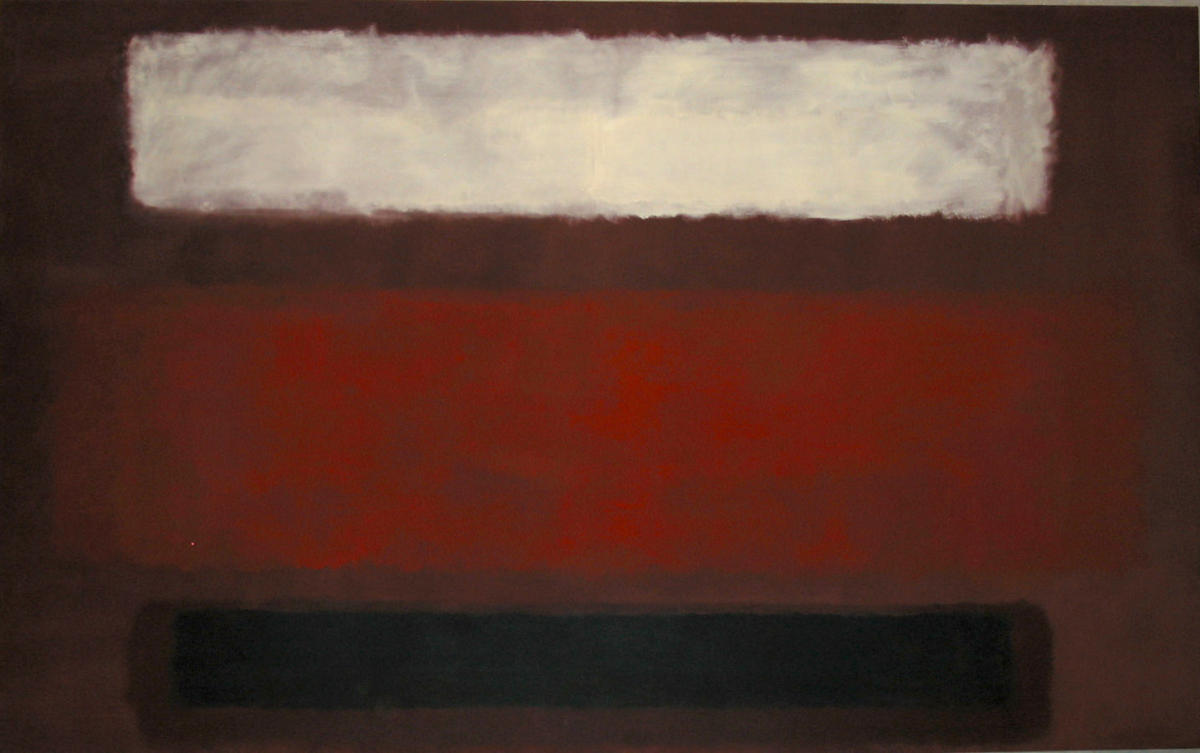
Rothko-9-White-Black-Wine-1958So…I had my mind blown this past week.

I’m taking this class on the idea of “worship” in all its dimensions, and we read a few pieces that gave me an entirely new framework to understand the Bible, particularly the Old Testament, and how God works in those stories. And no, I’m not exaggerating.

In Genesis 15, God makes a covenant with Abraham, and it’s a little weird, mainly because it’s entirely on God. He promises that he will be Abraham’s God. He promises he will give him many descendants. He promises to make those descendants a blessing to the world. And, most importantly, he takes all of the potential negative consequences of breaking the covenant on Himself. In essence, he makes this covenant with Himself on Abraham’s behalf.

What’s Abraham’s part in this whole thing? “He believed the Lord; and the Lord reckoned it to him as righteousness”, the text says (and he’s supposed to circumcise his kids as a visible mark of his belief). This is one of the earliest and clearest depictions of the unconditional grace-driven nature of God’s relationship to humanity and the world–a relationship that would later be called “The Gospel”. In fact, the Apostle Paul would look at this moment in Genesis and say:

Just as Abraham “believed God, and it was reckoned to him as righteousness,” so, you see, those who believe are the descendants of Abraham. And the scripture, foreseeing that God would justify the Gentiles by faith, declared the gospel beforehand to Abraham, saying, “All the Gentiles shall be blessed in you.” For this reason, those who believe are blessed with Abraham who believed.

Okay….so what?
Continue reading

Foreshadowing the City [a photo sermon]


philly-traffic-skyline-sunset

For those new to  the blog: occasionally, I try and write a “photo sermon” based on the themes of WordPress’ Weekly Photo Challenge. This week’s theme is “Foreshadow“.

* * * * *

Foreshadowing is a huge part of the Christian faith. The opening words of the Bible offer us the problem that the rest of the book will explore a solution to. It says, “In the beginning, God created the heavens and the earth.” From the beginning, “heaven” and “earth” are two different things, in two different “places”. God intends to bring them together and make them one. How will he do it? The book invites us to read on.
Continue reading

The Best Bible Resource I’ve Ever Read [casual fri]


To do this Bible Class that has consumed the past few months of my life (and this blog–I swear I’ll stop talking about it soon), I had to read a lot of stuff, including these (as well as their New testament counterparts). I checked out stuff from the Philadelphia library, and watched a bunch of lectures from iTunesU (especially these). I looked through commentaries and websites and articles and handbooks and sermons.

In other words, I at least glanced over a lot.

But there was one resource that I found more helpful, clear, and amazing than any other Bible resource I’ve ever found. No exaggeration. No hyperbole. I’m serious.

It’s a pair of textbooks (one on the Old Testament, one on the New, one combined with both) written by a theologian I had never heard of before. his name is John Drane (here’s his painfully poor-designed website as well). Yes, textbooks. And I read most of the Old Testament one and all of the New Testament one.

Continue reading

Join Us for a Tour of Biblical History at the Penn Museum this Saturday!


As a fitting conclusion to the six-week Bible Survey Class I’ve been teaching at my church, I’ll be leading a tour of The University of Pennsylvania’s Museum of Archaeology of Anthropology, focusing on much of the Biblical History we covered in the class. The museum has a very rich collection of items from the regions and eras in which most all of Biblical History unfolds. We will be following the unfolding storyline of the Bible as we travel to each section, learning the context and the history that set the stage for the faith many of us now call our own.

If you’re interested, meet us at 10am this Saturday, August 25th in the courtyard in front of the main entrance (pictured above). Note: There’s a smaller entrance at street level some may confuse as the main entrance. We will be up the steps where the main fountain is.

The cost is $12 for adults and $8 for students (and well worth the price). The museum is located at 33rd and Spruce (map), right across the South St bridge. (Parking advice: park on the east side of the South St bridge in the Graduate Hospital area and then walk over the bridge). See you there!

Class 6: NT Letters, Revelation, & The Bible in Worship (WE’RE DONE!)


This week was the last week in the six-week Bible Survey class I’m been doing at my church.

It’s been an honor to do this class, and I feel like this last one went especially well. Others seemed to find it genuinely helpful.

We ended our time in this class by talking for a little bit about how we can use the Bible–and all the information we just gleaned these past weeks–in our own, personal, spiritual lives.

To conclude the class, this Saturday we will be going to University of Pennsylvania Museum of Archaeology and Anthropology. You really won’t want to miss this. I’ll be putting a post up on this tomorrow.

For those that have followed in class and online, thank you so much for doing so. It was such an honor to be able to do this class, and I can’t believe I was given the time and grace to do it.

I hope that these resources are found to be helpful to those that invest their time into them; and that they draw each of you into a greater knowledge, love, and desire for our God as He meets us in our Scriptures.

And lastly, over the next months, I will be compiling all of these notes, as well as other essays I’ve written on the Bible in the past and self-publishing a book in both print and electronic forms. If you think about it, please pray for me. I’m starting to see that self-publishing is a lot more costly and complicated than I had originally thought.

This Lecture Covers:

  • A chronological survey of the contents and background of Paul’s letters
  • Discussion of the contents and background of the other letters of the  New Testament
  • A talk about that crowd-favorite, Revelation. We talked about how it fits into the greater story of Scripture, how it’s often misread, how to properly read it, and it’s contents and background
  • How one should approach the Bible to build up their spiritual life
  • Practical methods people can employ to know God through the Scriptures

**Side Note: twice in the audio of this lecture, I refer to Galatians and James as books that may each have been the “first book of the Bible written”. I meant to say “New Testament”, not “Bible”. Sorry.**

Download: [Audio] [Notes] Continue reading

Class 5: Intertestament, pt. 2; NT Intro; Gospels; Acts


This week was the fifth week in the six-week Bible Survey class I’m doing at my church.

And wow, we covered a lot in the class. But still, this class probably had the greatest percentage of material I had prepared that was not actually touched on in the talk. This makes the manuscript that much more full of extra material.

Covering the topics above, I have 35 pages of material below.

You may have noticed that I never actually finished the materials I talked about last week. Well, entering into an entirely new testament of the Bible put me in a mindset that I just couldn’t go back to finish up writing about every one of the Prophets. I’ll do it someday. I promise.

Lastly, mark your calendars for August 25th, where we will be going to University of Pennsylvania Museum of Archaeology and Anthropology. You really won’t want to miss this. Details to come next week.

This Lecture Covers:

  • A discussion of the Political and Religious history between the Old and New Testaments
  • An Introduction to the Background of the New Testament
  • Background and context of Jesus, his upbringing, and his life
  • Survey of the content and background of the Gospels.
  • An extensive and in-depth look at the book of Acts.

Download: [Audio] [Notes] Continue reading

Class 4: Prophets, pt. 2; Wisdom Books; & Intertestamental Period, pt. 1


This week was the fourth week in the six-week Bible Survey class I’m doing at my church.

We didn’t quite get to the Introduction of the New Testament like I had planned. This class was a bit different than other ones. Rather than focusing on a lot fo content of each book, this week was mostly a “tour” of these sections of the Bible and History, with some “highlights” along the way. The main point was to give people a bigger picture of these things to help them read the Bible themselves.

Just like last week, my notes are very incomplete. Most everything I said is in there, but I definitely want to provide a lot more in the notes than I say–and that hasn’t been filled in for most of the books so far. I will be spending the next two weeks filling that in. Once I’m done, I’ll let you all know. Thanks for your patience.

Lastly, I know I did a very poor job at telling the story of the Intertestamental history. I will try this again and condense it more in the next class. I will be much better prepared then.

This Lecture Covers:

  • Principles to keep in mind to help when reading the Prophetic books
  • Highlights from the Prophetic Books
  • Survey of the content and some of the background of the Wisdom Books of the Old Testament, with a special focus on the content of Job
  • Survey of the History between the Old Testament and New

Download: [Audio] [Notes] Continue reading

What do we make of the atrocities of the Old Testament?


This is a slightly edited version of an excursus I wrote in this week’s notes for the Bible Survey Class I’ve been teaching at my church. Follow that link for more information on the class. Also, I’m well-aware that the second half of this is exactly the “angle” talked about in the venerable Pete Enns’ recent blog post. I wrote this before he posted that, but still, I wanted to put it up on the off-chance this articulation might be helpful to others.

In the books of Numbers and Joshua, God commands the Israelites to commit genocide on many different people, including their women and children. He also commands them to forcibly enslave others. And in still another story, he commands Moses to take the remaining virgins of this particular people of which they disobediently did not kill all, and divide them evenly among the soldiers and the “rest of the Israelites”. We can only imagine what for.

A few quick thoughts:

Continue reading

Class 3: The Historical Books & Prophets, pt. 1


This week was the third week in the six-week Bible Survey class I’m doing at my church.

And yes, we actually covered all the books of the Old Testament from Joshua to Nehemiah, did an intro to the Prophets, and had a brief discussion on the ethical problems with the “Old Testament God” in an hour.

You can find a small article I wrote on those atrocities and “ethical dilemmas” of the Old Testament attached to the end of the Notes below.

At the time of this writing, I’m not quite done with the notes, but I wanted to get the lecture audio to everyone. So, below you will find an incomplete version of the notes. I will upload a revised version later today (or tonight) with everything else filled in. I’ll update this post when that happens, as well as the Scribd doc below.

Also, as I posted about earlier today, as part of this class we will be going to the Dead Sea Scrolls exhibit this Saturday in Philadelphia. There are also discounted tickets available. Check the link, and I hope to see you there!

This Lecture Covers:

  • A discussion of the Deuteronomistic and Priestly Histories of the Old Testament
  • Survey of the content and background of the Historical Books of the Old Testament from Joshua to Nehemiah
  • An general introduction to the Prophets
  • A discussion concerning the atrocities committed in God’s name by the Israelites in Joshua and Numbers

Download: [Audio] [Notes] Continue reading

Class 2: The Rest of the Pentateuch (from Exodus to Deuteronomy)


This week was the second week in the six-week Bible Survey class I’m doing at my church. We went through the rest of the Pentateuch, or more specifically, Exodus through Deuteronomy. I was originally hoping to do all the historical books of the Bible, then I was just hoping to get through Joshua. I did neither. We just got to Deuteronomy. But that will be okay.

In the recording, there’s also a brief discussion we ended up having on the importance of historicty and the Old Testament–a topic that’s only going to more of issue as we move forward in this class. Be sure to listen and get in on the discussion! You can follow the class on the class page above.

**Remember, we have next week off, so the next lecture is on 7/22, with our first field trip on 7/28.**

This Lecture Covers:

  • Review of the foundational ideas of the Bible we talked about last week
  • A more refined response on my part on the doctrine of “Revelation”
  • Survey of the content, background, and application of Exodus through Deuteronomy
  • Discussion concerning the historicity of the Old Testament and its importance

Download: [Audio] [Notes] Continue reading