Class 1: The Bible & it’s Story, OT Intro, & Genesis


This past week, I started the Bible Survey Class I mentioned earlier today. It’s a six-week class going through a theology and history of the Bible and its contents, with an emphasis on these facts helping to build up the spiritual life of Christians. It also goes into a lot of the historical development and issues behind the Bible, so it could also be of interest to non-Christians. You can follow the class on the class page above.

This Lecture Covers:

  • What is the Bible?
  • What is Revelation?
  • The History of Israel
  • The History of the Old Testament
  • Genesis: Contents, Background, and relevance to Christians
Download: [Audio] [Notes]

[audio https://prodigalpaul.com/Bible%20Survey/Bible%20Survey%201-Intro-OT-Genesis.mp3]

Uh-oh (a Post-Script to my previous post on Moses)


image

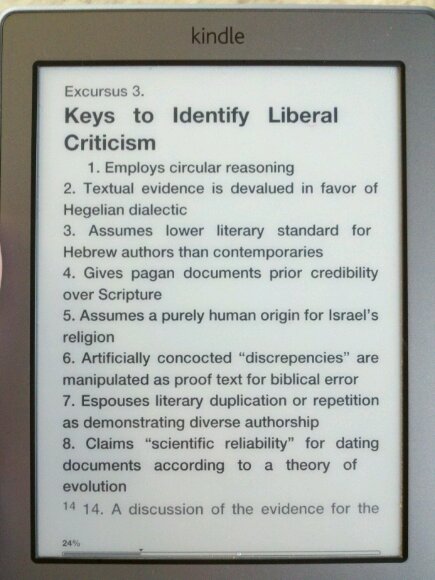
I just reached this part in the book I referenced in my post earlier on Mosaic authorship of the Pentateuch. This book was somewhat challenging the Documentary Hypothesis in my mind. I thought this book, in its recounting of Documentarians, was pretty fair and not too blindly fundamentalistic. But, now that he has turned from documenting the development of the field to laying out his own thoughts, I see I was wrong. Crap.

Posted from WordPress for Android on my Droid X

The Pentateuch: Moses vs. the Documentary Hypothesis [OPEN MIC]


imageUpdate: I realized I was wrong.

Okay, for many of you, this will seem silly and inconsequential; others will find it blasphemous. But bear with me for this quick post.

Starting in a few weeks, I’ll be teaching a survey of the Bible class through the summer at my church (I’m going to try and record it and post it here each week). To prep for this, I’ve been delving back into seminary-land, reading about 12 different OT Surveys, OT intros, and Pentateuchal commentaries to get ready for just the Intro to the Old Testament and Pentateuch parts.

And of course, this brings up the issue of the authorship of the Old Testament. Honestly, I don’t plan on going more than 2 minutes on the topic in this class, but I want that two minutes to be fair, informed, helpful, and above all, edifying to the people in the room. I want people walking away understanding that godly people disagree on this stuff and why they do. I don’t want to caricature and criticize unnecessarily.

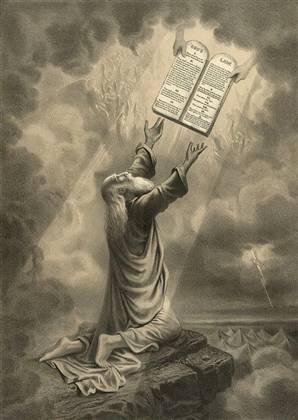
The main issue I’m working through is what part Moses (or any other pre-10,000 B.C. ancient authors/editors/redactors) had in writing the Pentateuch.

Continue reading

Join Us for a Tour of Biblical History at the Penn Museum this Saturday!


For those those in Philadelphia or nearby, I’ll be leading a tour of The University of Pennsylvania’s Museum of Archaeology of Anthropology focusing on Biblical History (mainly Old Testament). They have a very rich collection of items from the regions in which most all of Biblical History unfolds: Mesopotamia, Canaan, and Egypt. We will be following the unfolding storyline of the Bible as we travel to each section, learning the context and the history that set the stage for the faith many of us now call our own.

If you’re interested, meet us at 12pm on Saturday, November 19th in the courtyard in front of the main entrance (pictured above). The cost is $10 for adults and $6 for students (and well worth the price). The museum is located at 33rd and Spruce (map), right across the South St bridge. (Parking advice: park on the east side of the South St bridge in the Graduate Hospital area and then walk over the bridge). See you there!

Troy Davis, Capital Punishment, & the Death of Conscience


This is a tough one to write. And it’s long. I broke almost all of my personal blogging rules in this, but I just need to get this out. I’ve spent the past two days with this post and it’s central ideas rolling around in my head and even now as I sit to type, I have little knowledge how it’s all going to come out.

Today, for the first time in my young life, I shed tears for a man that was executed at the hands of the State. Two nights ago, Troy Davis was finally executed in Georgia for the 1989 murder of an off-duty police officer. Questions still abound concerning his guilt and innocence, the politics at play in the various boards and courts that refused to change their minds, and the calcification of a seemingly dispassionate justice system  that renders helpless the voices of those it presumes to protect. This New York Times article perfectly captures the complexity and tension that exists right now over this topic.
Continue reading

An Open Response to Some Atheist Friends Regarding Slavery & Biblical Ethics (pt. 1)


[First off, this is a long one, and only part 1 of 6, so beware before you start reading.]

On Facebook, there appeared a status by an old atheist friend of mine from undergrad named Larry (supported by another friend Christopher). Here was the thesis of the post:

Regarding moral relativism the christians are hypocritical. They say they believe in a moral objectivity given by god…but how is it then, that they believed slavery was a product of the old days, as it was applicable to the time it was practiced (and sanctioned by the bible) but now condemn it? The bible, last I checked did not change. I think this is a PRIMARY example of moral relativism exhibited by the church and christians. So how can they sit here and tell us that a proof for god is moral objectivity?

In other words, how could the ethics of Christians change over time if the book they supposedly base their ethics upon has not changed? Either the God that inspired the Bible was completely incompetent in his revelation or there was no God revealing anything at all. The note caused a discussion that resulted in almost 90 comments, and I quickly realized that if I were going to respond, it would need to be in a more lengthy manner than a Facebook comment (which is not the most helpful of mediums of debate). So here it is. I’d like to respond to the ideas that came out in the discussions. I want to disagree with them on the basis of five ideas:

Continue reading