A Baby Step Against My Latent Racism (And Maybe Yours?)


client-coffee-hands-bwI know, I know. One of the worst types of writing there is in the world is a white person writing about their discovery that they are privileged and this is deeply engrained. I know. This post isn’t that, I promise. Just stay with me for a little bit.

Having worked in social work for a little over five years now, I’ve grown in my understanding that racism is about a whole lot more than individuals feeling an active, conscious dislike of someone just because of their race. It’s structural, cultural, political, economic, and systemic.

(Still, I’ve really missed this at times, and old habits and ways of thinking die hard. I’m really, really sorry for that.)

Recently, I had the honor to speak at one of my church’s ministries for those in homelessness. Afterward, I walked around saying hello to the almost-exclusively black crowd there. As I made eye contact with different people, I would offer a smile to them and give them as warm of a look as I could. I did really feel a genuine warmth and love for this group.

And yet, I started feeling this…thing…within me. As I gave my smiles away to the crowd, I realized that this was a problem. I was giving my smiles to them. Something in me felt as if I, as a privileged white male, was “serving” these people by “granting” or “bestowing” upon them affection. Does this make sense? Do you see the problem?
Continue reading

Hey Church Planters! A Quick Question for you.


As part of my seminary program, I’m currently in an Urban Church Planting class. As an assignment, I’m supposed to ask you all:

What are some things you wish you had known before planting, or things you wish you had done differently?

A penny for your thoughts? Please also include your church’s name and your position there.

A Sermon I Got to Preach on Isaiah 61 [VIDEO]


Believe it or not, I don’t really have much experience at all in preaching. Yeah, I’ve spoken and “preached” at some things, but I’ve still never offered the preached proclamation at a Sunday worship service. It’s an area I’ve wanted to grow in for a while.

To that end, I took a preaching class last semester for my seminary program. It was a powerful course that changed my whole relationship to both the Bible and the act of preaching. Each of us wrote and presented a sermon on an assigned text. The sermons were recorded, and I’m offering mine here today. It opens with some brief words on the context I had in mind when preparing this.

I hope it meets you and speaks to you, wherever you are. The video is above, the text and my manuscript are below. You can also download files for both the audio or the manuscript.

Special thanks also to an old friend, J. Chord Barnes of ASERWorks Media, for fixing some audio issues in the original recording and remastering it for me. Check him out at the link above. Continue reading

Should Protestantism Still Be a Thing?


Roger-Smith-cc-rosary-bible

For years now, I have described my place in the Christian family as a “Protesting Catholic“. I love Catholicism (and Orthodoxy. I’m so sorry you are so frequently left out of these discussions–I’m as guilty of doing this as any). I love the entire Church family, in fact, and I can’t think of a tradition from which I have not benefited greatly from it nuancing, sharpening, refining, or deepening my theological thinking in some way.

A friend posted this interview with Stanley Hauerwas, on his new book on the “end times”. It’s a brief interview with some nice quotes and sentiments from the elder public theologian, but this set of lines particularly caught my eye:

My suggestion [that Protestantism may be coming to an end] is meant to be a reminder that Protestantism is a reform movement. When it becomes an end in itself it becomes unintelligible to itself. Protestants who don’t long for Christian unity are not Protestant. There is also the ongoing problem that Catholics have responded to the Protestant critique in a way that the Protestant critique no longer makes much sense. Accordingly, the question is: why do we continue to be kept apart?

I wholeheartedly agree with Hauerwas about the heart of Protestantism and how it should long for unity and, eventually and hopefully, end. So why is Protestantism still a thing I embrace? Why am I not fleeing to Rome, to our Mother Church? Let me offer a few words.

Continue reading

How Preaching Saved Me from Evangelicalism’s Bible


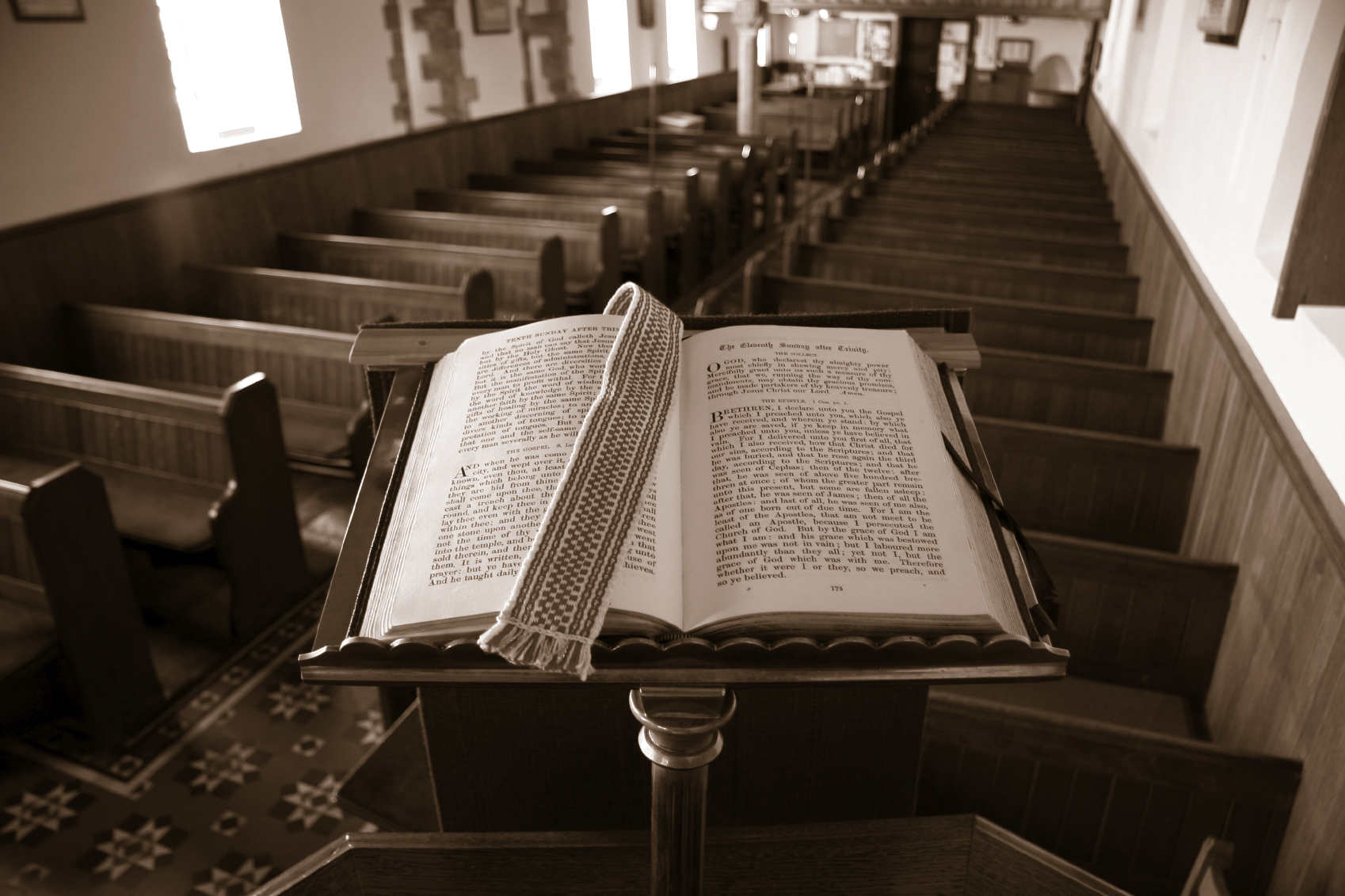
bible-pulpit-sepia

If I’ve learned anything the past few years, it’s that Evangelical Fundamentalism is absolutely right: as I’ve embraced more and more what conservatives often label a “liberal” view of the Bible, it really has negatively affected my spiritual and devotional life.

When you think the Bible is itself the “infallible, inerrant, Word of God”–when you think that the precise words themselves hold a magical power–you do approach the Bible with a greater amount of awe, respect, and mysticism. I’ve written before how it wasn’t until college that I read any of the Gospels on my own, because I had this fear of reading the “literal, unfiltered” words of Jesus. They seemed so big and other-worldly to me.

I’ve loved the Bible my whole life. I still have the first Bible I was ever given as a child. I still vividly remember the evening on my parent’s bed after they had read a Psalm that had been stuck in the middle of the stories about David that it finally clicked for me that the Bible wasn’t just narratives, but also poems and other kinds of writing.

My Southern Baptist upbringing has got it engrained in me that my entire spiritual and devotional life should revolve around this book. No matter how much I tell myself otherwise, something in me always has (and always will) “evaluate” my spiritual health by how I engage the Scriptures, in both quantity and quality.
Continue reading

Logos Bible Software & Evangelical Insecurity


devil-jesus-arm-wrestle

I use and love Logos Bible Software for my Bible study and seminary work. It really is an amazing piece of software. You can amass such a huge library of books and resources that all connect and sync up to one another.

The one problem is that they can only put the time and resources into putting out books that people will actually buy. This means that their library selection has long been skewed towards a certain demographic: American Conservative Evangelicals, usually of the “Neo-Reformed” variety.

I don’t tend to like the books that are geared for this market. Their theological assumptions seem to come first, and the text seems to often come second. I love reading robust, scholarly commentaries and books that help grow and stretch me; books that focus on the messiness of Scripture and how it is historically and culturally conditioned. Yes, this means I end up preferring writings from “liberal” (God, I hate that term) perspectives and institutions, even if my actual theological conclusions are fairly conservative.

So it’s been frustrating to me that Logos was lacking in this scholarship and thinking for some time. But in the past year, I’ve noticed this changing. More and more commentary series and scholarship book bundles are coming out by Logos that I am loving (though my bank account hasn’t). Maybe I just never noticed them before, I don’t know. But either way, I’m noticing it now, and I’m really happy.

Or rather, I was.
Continue reading

The Privilege of Holiness; The Holiness of Privilege


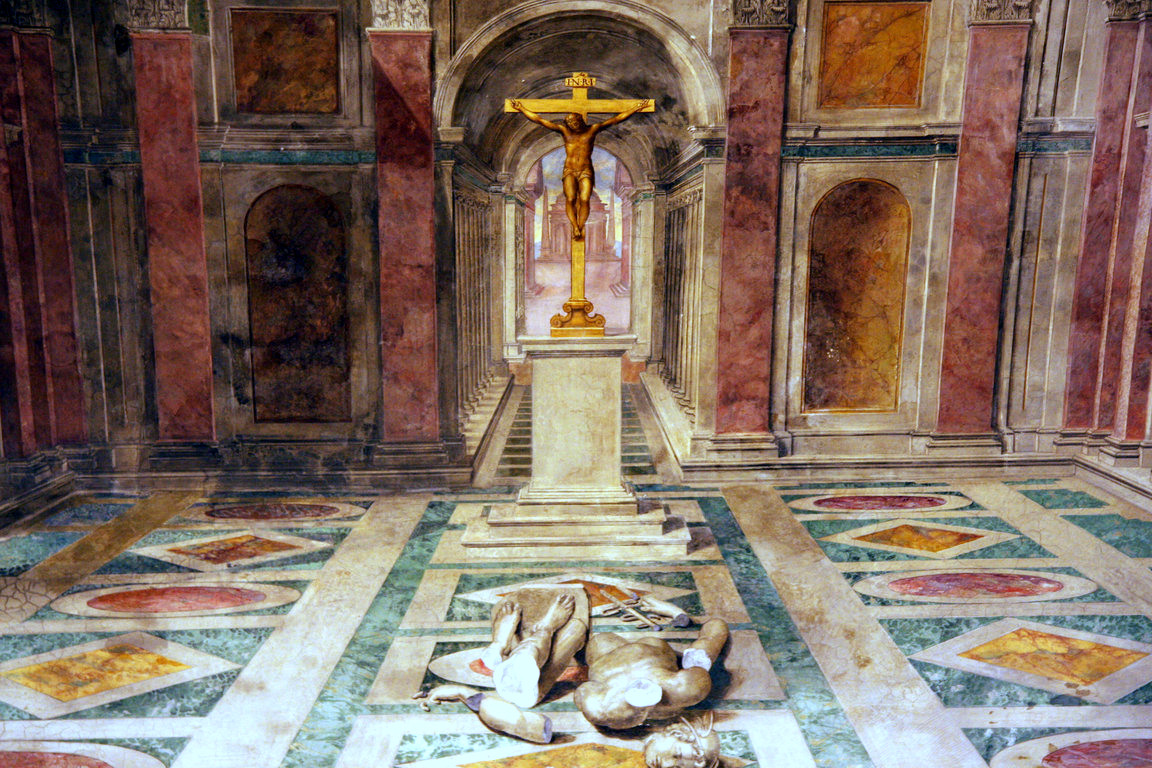
laureti-triumph-christianity-pagan-statue

I was at a coffee shop this past weekend doing some schoolwork when this beautiful lesbian couple came in, got some coffee, and left. I don’t know what it was about them, but they were stuck in my mind for quite a while after this. I wondered how the America church would be relating to gays at this point had sweet, loving relationships like that been the primary display Evangelicals had seen all these years.

I remembered that, as I was growing up, one of the primary Evangelical apologetics against gay rights was the whole litany of emotional, psychological, and societal detriments that come with homosexuality. I can’t tell you how many times I was told about the higher rates of depression, suicide, relationship abuse, physical health problems, STDs, and rampant unsafe sexual practices among the majority of gay population. The implicit (and sometimes explicit) suggestion was that, when someone moves so radically against “the way God designed things”, great problems are sure to follow.

Continue reading

Seminary & Ministry in the Post-Everything World


Grace-words-mouth-poetry-psalms

All last week I was in Holland, MI attending another one of our in-person sessions for my seminary program. It was another week with amazing people, at an amazing place, learning and discussing amazing things.

One of that classes I had was my preaching class. Over the course of five days, every one of us in the class got up and preached a 15-20 minute sermon. Every person–again, every. single. person.–did amazingly well. There were many surprises. People delivered messages that we could not have anticipated, in both skill and content.

Imagine listening to 14 full-on sermons in the course of a few days. It’s emotionally draining; it’s intense; it’s life-giving. It’s trying to drink from a fire hose of God’s Word and Spirit.

One benefit of this is that I got to get a glimpse into the future of the Church’s preaching ministry, and I am happy to say that I am really encouraged.

Continue reading

Wolterstorff: the liturgy & worship of lament [quote]


job-silohetteLast week, I was in Michigan again for my seminary program. Tomorrow I will post some reflections on my time there. Today, I want to offer you this amazing post-length excerpt by Nicholas Wolterstorff from an amazing piece of his called, “Trumpets, Ashes, & Tears” (pdf):

I suggest that there is yet one more thing which the believer experiences in his life of dispersion and which he brings with him to the liturgy….

As we human beings travel through life we experience pain and suffering–in part our own, in part that of others. Some of this pain and suffering is non-innocent suffering; it is punishment for, or the consequence of, moral evil. But not all of it is that.

The suffering of the Israelites in the brickyards of Egypt was not the consequence of their sin, nor was the suffering of the Jews in the camps of Auschwitz. Some of the suffering of our world even resists our seeing it as the counterpart of anyone’s sin–the accidental death of a child, for example.

Continue reading

Jonah: a Children’s Story of Verbs


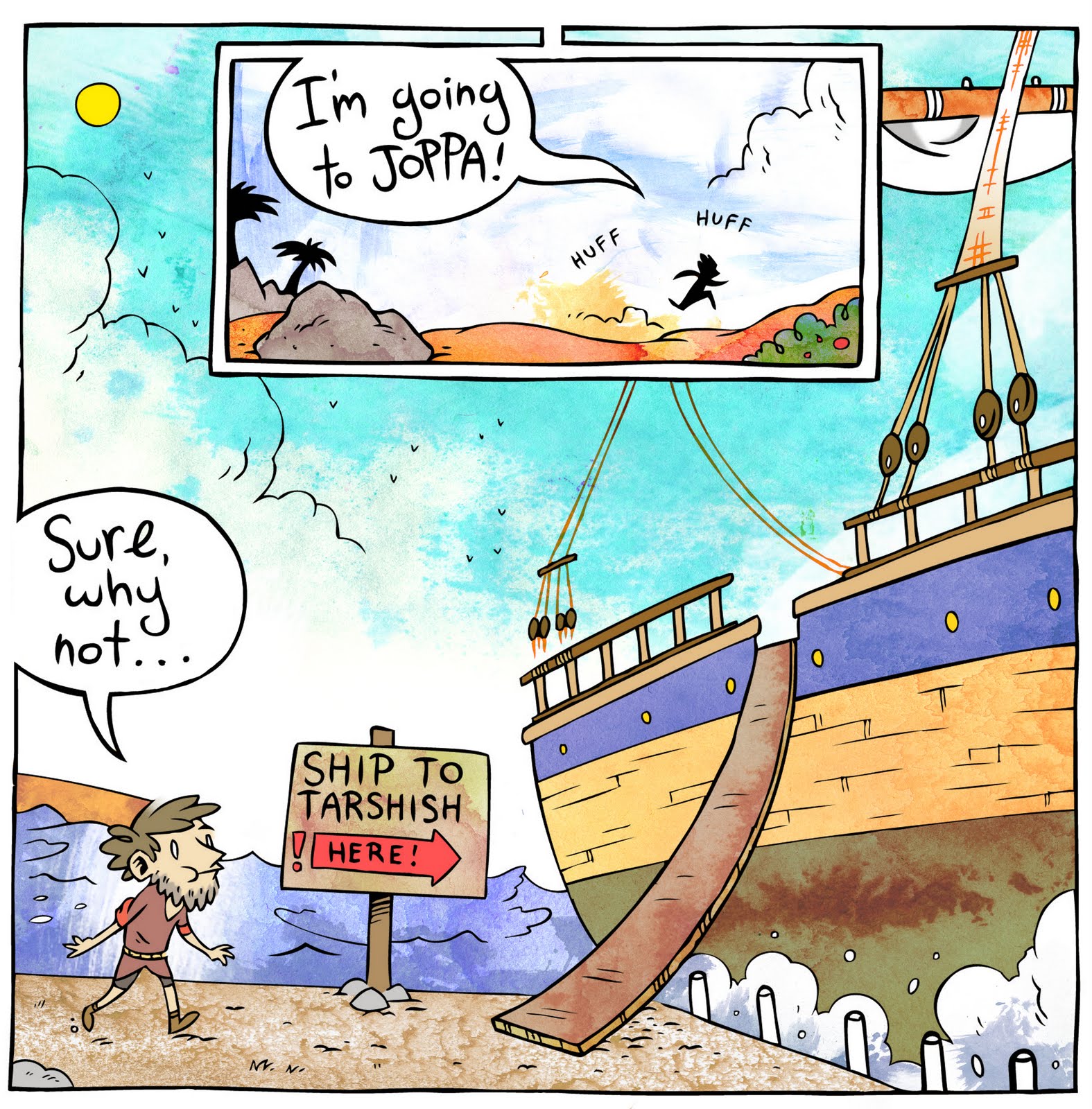
Jonah-boat-comicMy Hebrew class has moved from learning grammar to the actual process of translation and interpretation. To do this, we’re going through the book of Jonah. Our first interpretive assignment was to look at all the Jonah-related verbs in the first six verses and draw some theological conclusions. Here was my contribution.

But first, my incredibly literal and somewhat stilted translation of the opening verses [Jonah 1.1-6], including all the odd word order and idioms of Hebrew:

(1) And the word of the LORD was to Jonah son of Amittai, in order to say, (2) “Rise, go to Ninevah, the large city, and cry out against her because their evil arose to my face.” (3)And Jonah rose in order to flee in the direction of Tarshish from the toward-facing faces [Hebrew idiom for “Presence”] of the LORD and went down to Joppa and he reached a ship going to Tarshish and he gave its fare and went down in it in order to enter with them to Tarshish away from the toward-facing faces of the Lord. (4) And the LORD hurled a large wind upon the sea and it manifested as a large storm among the sea and the ship thought to shatter towards itself. (5) And the sailors were afraid and they cried out, man to his God, and they were made to throw the receptacles which were in the ship into the sea away from them towards making themselves small and Jonah had gone down into the rear of the vessel and had laid down and slept heavily. (6) And the chief sailor came to him and said to him, “Why are you sleeping? Arise! Cry out towards your gods! Perhaps the god of you will bear us in mind and we will not perish.”

And now for some lessons we can draw…
Continue reading

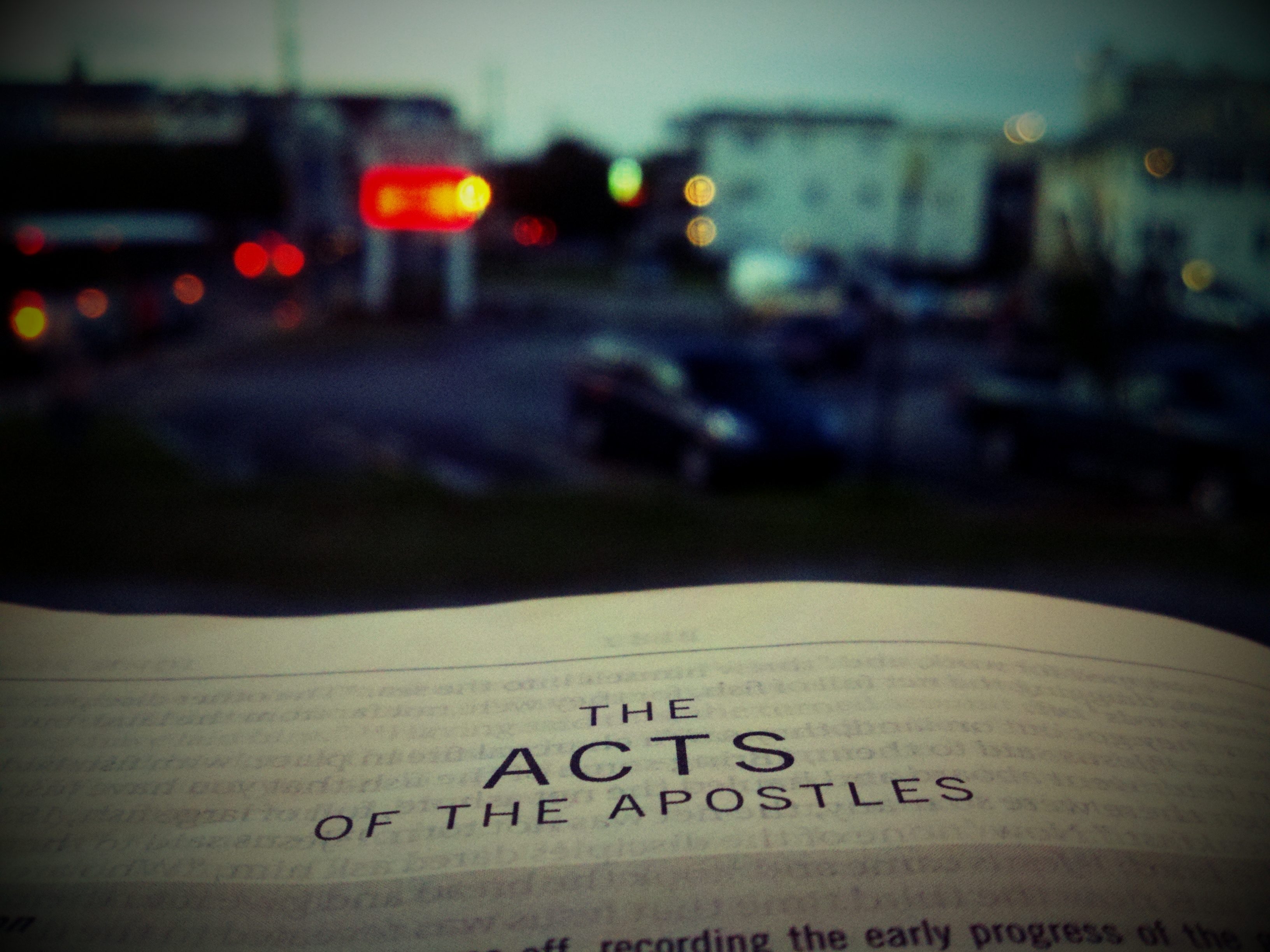
My Gospel Terror, Acts, & Letters [photo sermon]


Acts-bible-lomo

Each week, WordPress has a Weekly Photo Challenge, where they give a theme and invite people to highlight photography representing that theme, accompanied by a few meditations on it. OccasionallyI try and write a “photo sermon” or meditation based on those themes, accompanied by a photo of mine . This week’s theme is “Letters“.

* * * * *

I grew up in church and grew up loving the Bible. I did devotionals and sat in Sunday School classes for the vast majority of my life. And yet, it wasn’t until I got to my junior year of college and took a class on the Gospels that I read any of the Gospels all the way through. Sure, I had probably heard most of the Gospels preached on or excerpted in devotionals and books, but I had never read a Gospel from beginning to end.

At the time, I thought it was because they seemed too holy. It felt like too much for my young soul to handle to read the very words of Jesus on my own. It was too weighty for me and scared me. Maybe I just wanted to wait until I could drink whiskey or wine while reading them.
Continue reading

Fundamentalist vs. Pentecostals vs. the Cross | 1 Corinthians 1.27-31


For the message about the cross is foolishness to those who are perishing, but to us who are being saved it is the power of God. For it is written,

“I will destroy the wisdom of the wise,
    and the discernment of the discerning I will thwart.”

Where is the one who is wise? Where is the scribe? Where is the debater of this age? Has not God made foolish the wisdom of the world? For since, in the wisdom of God, the world did not know God through wisdom, God decided, through the foolishness of our proclamation, to save those who believe. For Jews demand signs and Greeks desire wisdom, but we proclaim Christ crucified, a stumbling block to Jews and foolishness to Gentiles, but to those who are the called, both Jews and Greeks, Christ the power of God and the wisdom of God. For God’s foolishness is wiser than human wisdom, and God’s weakness is stronger than human strength.
1 Corinthians 1.27-31

So good. And also really appropriate for this age. The fundamentalists want knowledge and certainty, and the Pentecostals want experience and signs. But we preach Christ crucified.

See other Marginalia here. Read more about the series here.

A Holy Saturday kind-of Easter (on doubting the Resurrection)


Rothko-blue-and-gray

The culmination of Lent is Holy Weekend, prefaced by Maundy Thursday and consisting of Good Friday, Holy Saturday, and Easter Sunday. I realized that each year that I have been really intentional about my Lenten engagement, one of those four “Holy Days” seems to overshadow the the others and carry over into this Easter season (yes, it’s a season).

There are some years where the foreshadowing and ever-repeating Presence of Jesus in Communion makes Maundy Thursday the highlight (or lowlight?) of Lent. Some years, the utter darkness, weight, and drama of Good Friday overtake me and linger in my mind well into Easter season. And still others, no matter how I try to reflect and meditate on sinfulness and fallenness, I still can’t escape the lighted joy and horizon-cresting dawn of Easter, whose anticipation overshadows (or over-brightens?) my Lenten experience, making all the doom and gloom seem foreign to me.

For me, this year is a Holy Saturday kind-of Easter.
Continue reading

Longing for Liturgy (a Catechumen’s reflection on Holy Week) {by David Schrott}


In recent years, and prior to my Orthodox catechesis, I heard many a Protestant writer or preacher lament that Easter was not of enormous import to most Christians when it was the eminent Christian holiday.  I didn’t share that view. Easter was an after-thought for me – another spring holiday without much real significance. Little did I know that it was the cultural liturgy of the market-place that informed my position towards the holiest of Christian celebrations.

Liturgies form us. Whether they are cultural or religious, we are moved to be formed in the image of something and in the West, the market-place is driven by the most powerful liturgy called Consumerism. Christmas is the most powerful holiday in our culture and not because of what it is or what it means; it is the most powerful because of the 30-something day cultural liturgy from Black Friday til Christmas day that forms our hearts not toward God, but towards pretty much everything else. As James K.A. Smith notes in his book Desiring the Kingdom, the Culture understands liturgical formation better than the modern church does.photo1

The Holy Orthodox Church is not the modern church.  Before I decided that Orthodoxy was the church of the Apostles, the Fathers and Christ himself, I longed for liturgy without knowing what I was longing for. I think this is the basis of the modern Evangelical root of church innovation. The Western Christian wishes to attach himself or herself to something, but doesn’t know how or have the framework for doing so; so innovation in church methods based on market research emerge. A few years ago, I’d fast all of Good Friday (and accidentally get drunk when breaking fast that night with beer and bread; Lord have mercy!) or round up friends for a Maundy Thursday dinner or try to watch the Passion movie. These were my own personal longings for connectedness to Holy Week and the larger Church; these were longings for liturgy. Little did I know that there was already a place where these connections existed and they existed nearly unchanged for most of 2000 years.
Continue reading

Holy Week Music: Mozart’s “Requiem”


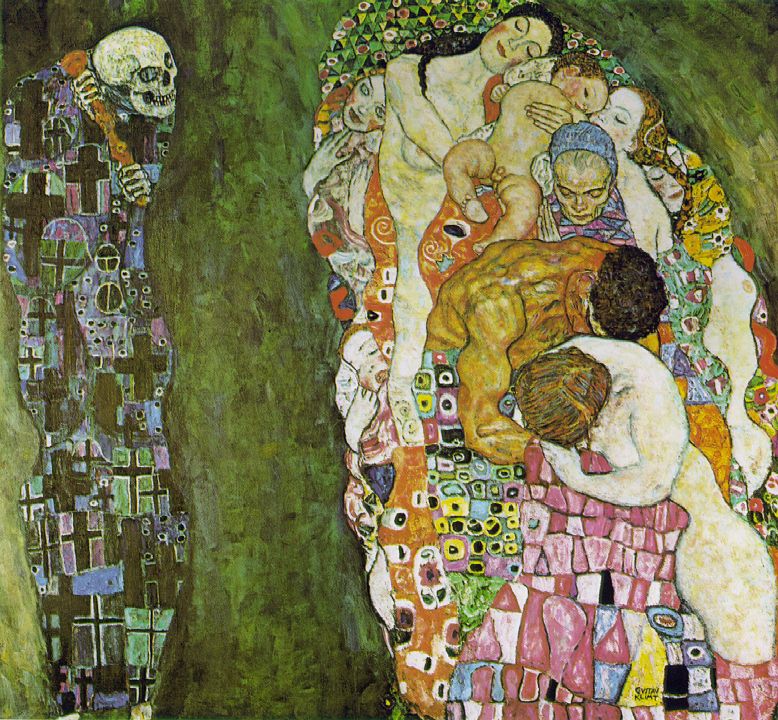
Klimt-Death-LifeOne of the primary ways I relate to the Church Calendar is through music (hence the free Mixtapes I put out each season). Even when I am terrible at engaging at an intellectual or even a practical devotional way, I am really intentional about filling my life with music that will still put my soul in the proper posture for the particular season.

For this Lent, I found myself spending significant time with Mozart’s Requiem, a “Mass for the Dead”. This was his last (and still mysterious) piece–unfinished before he died. Before Holy Week was over, and as we enter into the Holy Weekend, I wanted to offer this to as a way you might be able to engage in these last few days of Lent. Here is the audio, and below that you will find an English translation of the entire Mass. The words are achingly haunting and beautiful and deserve your perusal whether you have time for the music or not. Have a blessed Lent.

W. A. MOZART, REQUIEM
English Translation, from St. Matthew’s choir
Continue reading