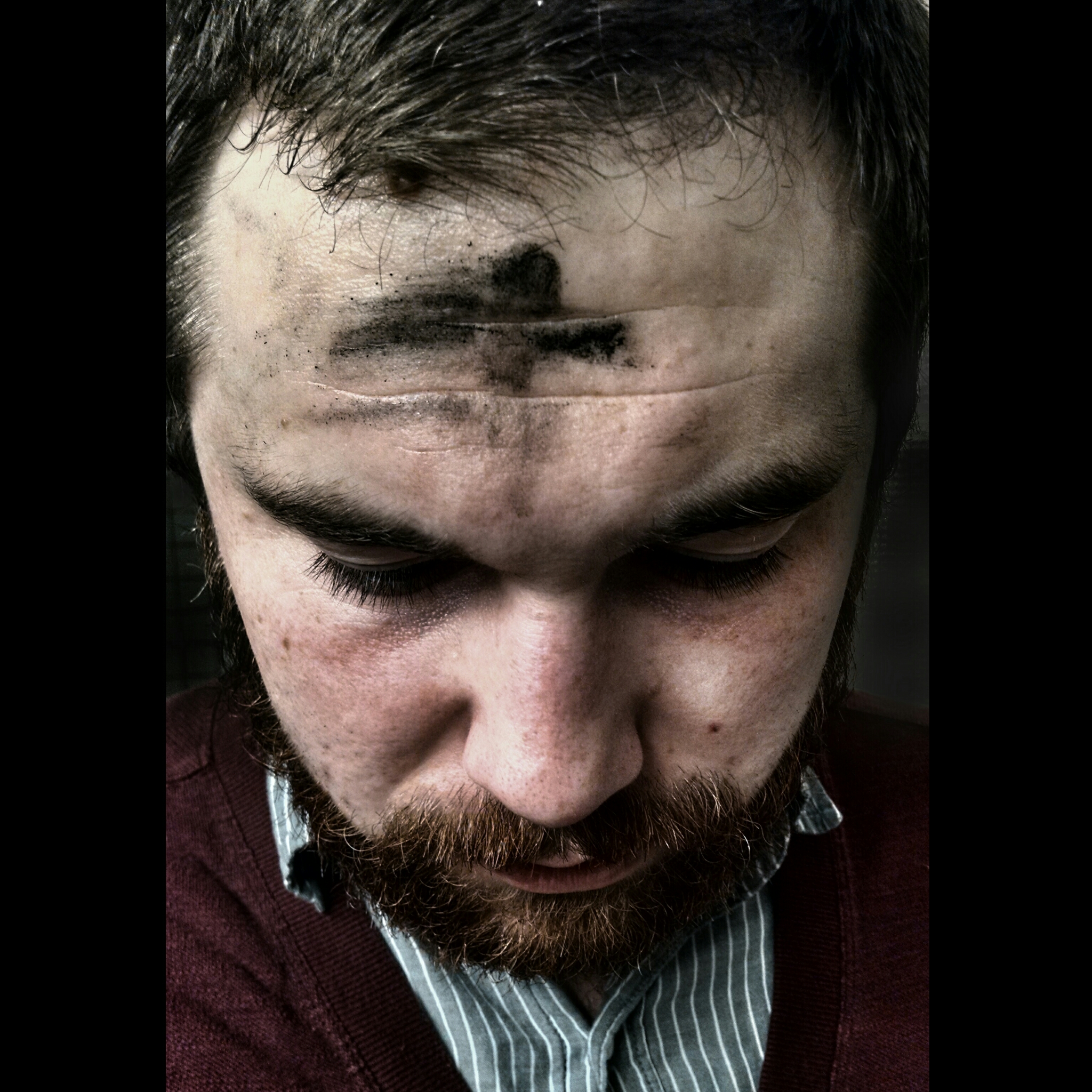
Palm Sunday: “The Emperor Has No Clothes” [POEM]


I feel far, Lord.
But I know you’re here.  I know it.
(Do I?)

(Can I?)

It’s the nature of the matter; a matter of nature, I suppose.
Perhaps only now I feel at the deepest existential depths:
“I believe! Help my unbelief!”

Or in a word: Hosanna

That cry.  That plea.

The certainty of uncertainty.
The pregnancy of a pause.
The pondering of a moment.

That moment.  The moment.  

The moment that dressed my doubt in assurance.
But that emperor has no clothes
(or so everything says).

So where does my assurance lie?
Where do my feet stand?

My body pelted with rain, snow, and hail;
I pray my heart rests beside a fire,
drinking tea,
rocking in a chair,
my shoulders draped in that most costly of quilts –
my Rest.

Clothe me–
with the coat I lay on your path–
for this emperor is naked

and needs his King.

[read my other Holy Day poetry here]
all writings licensed: Creative Commons License

Timothy’s Tears: A Holy Week Pre-Game | 2 Tim 1, Acts 16 & 20


paul-and-timothy

This is part of our Lent series, “The Weeping Word“, where we look at different moments of crying, lament, and tears in the Scriptures.

To Timothy, my beloved child…

I am grateful to God—whom I worship with a clear conscience, as my ancestors did—when I remember you constantly in my prayers night and day. Recalling your tears, I long to see you so that I may be filled with joy.
2 Timothy 1.2-4

Next week is Holy Week, the high (or low?) point of Lent, leading to the crescendo of Easter. It will be a time of darkness, reflection, lament, and meditation. But we’re not there yet. Before the seriousness of Holy Week arrives, I thought I’d share with you a funny memory that’s connected to our Lent series on tears in the Bible.

I was sitting in the little campus ministry Bible Study my junior year of college. Our style of Bible Study was simply sitting down with an eloquent, wise, and gifted pastor, and then walking verse-by-verse through a given book of the Christian Scriptures.

Having just finished nearly a year in the book of Romans, we were just starting our next book: 2 Timothy. Many scholars believe it was Paul’s last letter he wrote before he died. And he wrote it to the man he mentored more than any other we know about: Timothy, a young elder at the church in Ephesus who was still struggling to get this little church plant off the ground.
Continue reading

What the heck is Preaching, even?


peter-preaching-statueFor my preaching class, we’ve been trying to get at what this weird thing called “preaching” really is. It’s not a lecture, it’s a not a conversation, it’s not a debate. So what is it? Here are some of my random thinking on this. But I’d love to hear yours.



As much as I want something far more profound and original, I have not been able to find anything simpler and clearer than Alan of Lille‘s definition: “Preaching is an open and public instruction in faith and behavior, whose purpose is the forming of men [sic].”

Continue reading

Let’s just finish Esther already (On Purim & History) | Esther 9 & 10


Haman son of Hammedatha the Agagite, the enemy of all the Jews, had plotted against the Jews to destroy them, and had cast Pur—that is “the lot”—to crush and destroy them; but when Esther came before the king, he gave orders in writing that the wicked plot that he had devised against the Jews should come upon his own head, and that he and his sons should be hanged on the gallows. Therefore these days are called Purim, from the word Pur. Thus because of all that was written in this letter, and of what they had faced in this matter, and of what had happened to them, the Jews established and accepted as a custom for themselves and their descendants and all who joined them, that without fail they would continue to observe these two days every year, as it was written and at the time appointed. These days should be remembered and kept throughout every generation, in every family, province, and city; and these days of Purim should never fall into disuse among the Jews, nor should the commemoration of these days cease among their descendants.
Esther 9.24-28

Historically, I wonder: Is this it? Is this the reason for this story? As I said before, it genuinely doesn’t look like this story is historical, so it must have served some other purpose in the community. I wonder if the Jews were coming back from exile and had this random festival named after the plural of “lots”, and so they needed to write a story about how it came about. But if so, how do you go from the word “lots” to all of this story? Quite the stretch. So…what’s the historical core? This one’s tough.

King Ahasuerus laid tribute on the land and on the islands of the sea. All the acts of his power and might, and the full account of the high honor of Mordecai, to which the king advanced him, are they not written in the annals of the kings of Media and Persia? For Mordecai the Jew was next in rank to King Ahasuerus, and he was powerful among the Jews and popular with his many kindred, for he sought the good of his people and interceded for the welfare of all his descendants.
Esther 10

So… Mordechai is the hero here? I guess it could make sense, but he plays such a bit part in the story. He’s consequential, sure; he’s just not around that much, is all. This seems more like the mythologizing of a popular leader in the Jewish diaspora.

And lastly, one last “Christian” reading of this story. If we can analogize this a little, Mordechai “intercedes” for God’s people, for their good and for their descendants. And they’re enemies (like death and sin for us) are comprehensively and almost over-the-top-ly destroyed. And God is faithful to accomplish all of this, even when he seems absent. With this book, that’s the best I can do. I genuinely don’t like this story.

See other Marginalia here. Read more about the series here.

Some emotional outbursts at Esther. I don’t like this book. | Esther 9


Now in the twelfth month, which is the month of Adar, on the thirteenth day, when the king’s command and edict were about to be executed, on the very day when the enemies of the Jews hoped to gain power over them, but which had been changed to a day when the Jews would gain power over their foes, the Jews gathered in their cities throughout all the provinces of King Ahasuerus to lay hands on those who had sought their ruin; and no one could withstand them, because the fear of them had fallen upon all peoples. All the officials of the provinces, the satraps and the governors, and the royal officials were supporting the Jews, because the fear of Mordecai had fallen upon them. For Mordecai was powerful in the king’s house, and his fame spread throughout all the provinces as the man Mordecai grew more and more powerful. So the Jews struck down all their enemies with the sword, slaughtering, and destroying them, and did as they pleased to those who hated them. In the citadel of Susa the Jews killed and destroyed five hundred people. They killed Parshandatha, Dalphon, Aspatha, Poratha, Adalia, Aridatha, Parmashta, Arisai, Aridai, Vaizatha, the ten sons of Haman son of Hammedatha, the enemy of the Jews; but they did not touch the plunder.
Esther 9.1-10

What on earth? No gonna lie, this is maybe the first real deep reading I’ve given to Esther. I never internalized that this part was here. This is always skipped in popular retellings of this story. And I can see why. What was the point of this stuff? Save the Jews just to kill an even greater number of people? I can see why this book was so despised by many Jews. Once again, Esther is no model to follow after. I genuinely have no idea why this book is in the Bible. What little research I’ve done has said that there’s no evidence that this meant to be taken historically, so what purpose would this book have played in the community? Anti-imperialist wish fulfillment? A giant cathartic “what if?”

That very day the number of those killed in the citadel of Susa was reported to the king. The king said to Queen Esther, “In the citadel of Susa the Jews have killed five hundred people and also the ten sons of Haman. What have they done in the rest of the king’s provinces? Now what is your petition? It shall be granted you. And what further is your request? It shall be fulfilled.” Esther said, “If it pleases the king, let the Jews who are in Susa be allowed tomorrow also to do according to this day’s edict, and let the ten sons of Haman be hanged on the gallows.” So the king commanded this to be done; a decree was issued in Susa, and the ten sons of Haman were hanged. The Jews who were in Susa gathered also on the fourteenth day of the month of Adar and they killed three hundred persons in Susa; but they did not touch the plunder.

Now the other Jews who were in the king’s provinces also gathered to defend their lives, and gained relief from their enemies, and killed seventy-five thousand of those who hated them; but they laid no hands on the plunder. This was on the thirteenth day of the month of Adar, and on the fourteenth day they rested and made that a day of feasting and gladness.
Esther 9.11-17

What? Oh, and 75,000 people killed? Yeah right. This is a despicable book.

See other Marginalia here. Read more about the series here.

I’m terrified of becoming a Pastor


paul-art-wingThis seminary semester, I’m taking classes on both Preaching and the Emotional/Spiritual/Psychological Identity of Pastors. So yeah, get used to seeing more posts like this on the blog. This week, in my “Pastor class” we did readings and had a lecture on “vocational hazards” and discerning one’s “call” to ministry. We were asked about what challenges and encourages us most about this possibility of being “called” to serve the Church in pastoring. Here were my thoughts. 

The biggest fear going into this course–and reinforced in the lecture–is the whole question of whether it is my “False Self” that is called, rather than my True Self. I have spent much of my life following Spurgeon’s (I think) advice that if you feel called to ministry at all, try to do everything else in your life you possibly could do. If you still end up in ministry, then congratulations, you were called.

Continue reading

For the times you want to be strong, but aren’t | 1 Corinthians 1.27-31


But God chose what is foolish in the world to shame the wise; God chose what is weak in the world to shame the strong; God chose what is low and despised in the world, things that are not, to reduce to nothing things that are, so that no one might boast in the presence of God. He is the source of your life in Christ Jesus, who became for us wisdom from God, and righteousness and sanctification and redemption, in order that, as it is written, “Let the one who boasts, boast in the Lord.”
1 Corinthians 1.27-31

Oh how encouraging this is in those moments that I feel most inadequate intellectually and spiritually.

See other Marginalia here. Read more about the series here.

This is my 1,000th Post. WARNING: You cannot un-watch this.


This is my 1,000th post. Thank you all for the chance to write this blog these past (almost) 10 years. It has grown me in countless ways. It took seven and half years to get to 500 posts, and less than two more to double that. Here’s to 2,000. Thanks for the encouragement, commenting, and criticism. It means a lot. Really.

As is my custom, here is your blog milestone dancing video:


Continue reading

Mark Driscoll: Now just another fundie, but it still hurts


TT_May_Driscoll

Let not those who hope in you be put to
shame through me, O lord God of Hosts;
let not those who seek you be brought to
dishonor through me, O God of Israel.
Psalm 51

I have written before how much I enjoy my own ignorance of the Christian blogosphere. Things happen in evangelical corners of the world, that I have no idea about. I am happy to know more about the Ukrainian crisis than whatever crisis some mega church or celebrity pastor is going through.

And yet, somehow (usually Facebook), I always seem to keep up with whatever is going on with Mark Driscoll. He has lots of critics, and I am certainly one of them, and many of them seem to be grasping at whatever they can to “bring him down”. There seem to be so many Driscoll obsessions out there, be it plagiarism, making fun of “effeminate” church leaders, extreme church discipline, messy staff turnovers, un-credited ghost writing, or buying his way onto best seller lists. (If you care about those “scandals”, just Google them.)

I have big problems with how a lot of folks criticize Driscoll and the glee they seem to feel in each new thing we all find out. Lore Ferguson has the best and most beautiful articulation I’ve read of the unhelpful ways people levy these criticisms his way.

Continue reading

Paul must’ve been pretty irritating | Acts 27.21-26


Since they had been without food for a long time, Paul then stood up among them and said, “Men, you should have listened to me and not have set sail from Crete and thereby avoided this damage and loss. I urge you now to keep up your courage, for there will be no loss of life among you, but only of the ship. For last night there stood by me an angel of the God to whom I belong and whom I worship, and he said, ‘Do not be afraid, Paul; you must stand before the emperor; and indeed, God has granted safety to all those who are sailing with you.’ So keep up your courage, men, for I have faith in God that it will be exactly as I have been told. But we will have to run aground on some island.”
Acts 27.21-26

Good lord,  Paul must have been so freaking annoying. I hope to live up to my namesake, haha.

See other Marginalia here. Read more about the series here.

Justice, Self-Control, & Judgment| Acts 24.24-25


Some days later when Felix came with his wife Drusilla, who was Jewish, he sent for Paul and heard him speak concerning faith in Christ Jesus. And as he discussed justice, self-control, and the coming judgment, Felix became frightened and said, “Go away for the present; when I have an opportunity, I will send for you.”
Acts 24.24-25

These are very odd, very specific things. It’s funny that these things shook him so much to the core. I wonder what it was specifically that was enough for Luke to include this? Was the Justice Paul talked about more along the lines of the wrath of God, or more like equality in society and Social Justice (that would surely shake a wealthy local governor!). It was probably something like the fact that God would make all things right someday. Maybe the judgment piece made him scared? But either way, personally, I find it interesting that the one that scares me the most is the call to self control.

See other Marginalia here. Read more about the series here.

Cool Hand Luke’s “Of Man”: a favorite album is now free (and perfect for Lent)


cool-hand-luke-of-man-coverIf you don’t care about the commentary, and just want the amazing music, you can get it at Noisetrade. If you’d like to listen to the album first, just press play:


Someone’s “favorites” are a weird thing to define.  They are prone to fickleness, are tied so closely with whatever else is subjectively happening in one’s life, and usually bear little resemblance to what that person would consider as the technically “best” of any particular thing. So when you have a “favorite” that sustains that title for years–decades, even–it’s a big deal.

Since high school my favorite band has been Cool Hand Luke. Back then they were a little hardcore screamo band. At that time, to get their CD, you had to mail a check to the lead singer’s house. As time when on, their style changed at the very same time and in the very same way as my own. It felt like we were growing together.

Around my senior year of high school, they came out with an album called Wake Up,  O SleeperAnyone who’s heard of CHL probably knows them from this stunningly powerful work of art. It quickly became the most influential and “favorite” album of mine. And it has been ever since.

Towards the end of college, I became pretty good friends with the lead singer. For a while, every few months, we’d talk for a couple of hours on the phone. He was discerning whether to go to seminary and what to do about the financial mess their shady manager had left the band in. I got to see his heart and the heart behind the beautiful music they made.

Eventually, he got married, I started seminary, and he decided it was time to end the band and begin seminary himself. But there was one last project he felt he had to do.

Of Man.

Continue reading

Lent & Ash Wednesday for Kids (….or maybe not)


rabu-abuLast night, my church had their Ash Wednesday service. I had the honor of helping lead the liturgy by offering the greeting and opening introduction/ explanation. Unlike most times we gather, the kids stayed in the service so I was asked to make sure my opening words were at least somewhat comprehensive to children.

This turned out to be one of the most helpful exercises for me. I ended up spending more time thinking through these brief opening words than I normally do and crafting each line as intentionally as possible. And so, for the heck of it, I thought I’d throw this up on the blog for anyone who was struggling with explaining Lent and/or Ash Wednesday to their young ones, and also to get your thoughts on how best to communicate this to kids. Here’s what I said:

(Lent: Two things hold us back)

Tonight kicks off the Church season of Lent. Most all of us live our lives wanting to be better people than we are right now. But if we’re honest, there are two things that can get in the way of that sometimes and make us frustrated as we try and become the people we want to be.
Continue reading