As many truths as men. Occasionally, I glimpse a truer Truth, hiding in imperfect simulacrums of itself, but as I approach, it bestirs itself & moves deeper into the thorny swamp of dissent.
–fromCloud Atlas, by David Mitchell
As many truths as men. Occasionally, I glimpse a truer Truth, hiding in imperfect simulacrums of itself, but as I approach, it bestirs itself & moves deeper into the thorny swamp of dissent.
–fromCloud Atlas, by David Mitchell
 I’ve mentioned before on this blog (though admittedly in passing) that my favorite artist is Mark Rothko, the 20th century abstract expressionist. He’s often made fun of because his pieces are, usually, blocks of color on canvas. So many people (and I was one of them) look at his pieces and say “Where’s the skill in that? Anyone could do that! How is this art?”
The big turn for me happened several years ago when studying for the lecture/series I did on Beauty. As I spent nearly a year immersing myself in the philosophy, theory, and theology of aesthetics, I came to finally “get” abstract art. And with it, I realized how to connect with Rothko; and my art sensibilities have been the same since. For more, read my post on the beauty of art.
Still don’t get it? Here’s a quick exercise. Look at the two pieces below. The one on the right is the genuine Rothko. The one on the left is one of those reproductions where someone paints it inch for inch as close to the original as possible.
Continue reading
 I hate pontificating.
Now, don’t get me wrong. Often, we can only hate most deeply that which we know most truly. Going through the annals of this very blog and my own conversations (especially during college), pontification makes frequent guest appearances.
By “pontification” I mean saying something authoritatively more for the sake of emphasizing the authority with which you say it than the point for which you did. It’s speaking to your base and those who agree with you, and it often says more about you than it does for the topic at hand. And generally, especially for issues where there is deep disagreement, it accomplishes absolutely nothing more than entrenching each side.
Continuing this series on gender relationships in the church, I don’t want to do that. I really don’t. But too often, this is the case.
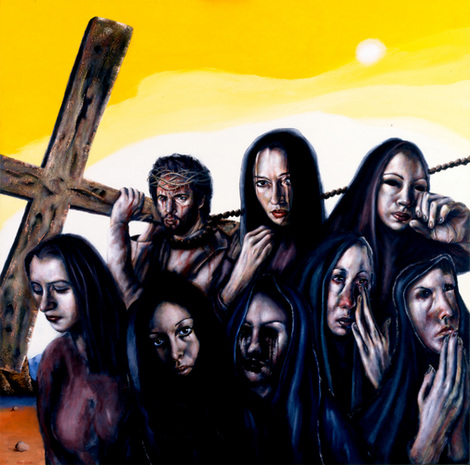 Women, and their role in shaping society’s power structures, are at the fore-front of our nation’s consciousness and cultural discussion right now–Evangelical and otherwise.
Socio-politically: Maureen Dowd wrote about it this past week. Hanna Rosin wrote a book about this happening. Sandra Fluke got Rush Limbaugh into a tizzy and then spoke at the Democratic National Convention. Republican leaders, for some reason, could simply not stop talking about rape. Mitt Romney bragged about his binders full of them. Last week, Americans elected the largest number of females to Congress than it ever has.
In Evangelicalism: Rachel Held Evans brought attention to misogyny and patriarchalism at one of the bastions of the Neo-Reformed. Her new book, which already carried some controversy, has been criticized and patronized by conservative evangelicals, including one of the top female thinkers of that flock (Evans’ response, a scholar’s rebuttal). Concerning said bastion, after a rough search and count for the phrase “Complementarianism”, it seems that over half of the results appeared this year alone. At the time of this writing, a different bastion of the Neo-Reformed, upon visit to their site has as the featured video: “Complementarianism: Essential or Expendable?”. The Church of England just announced their new Archbishop of Canterbury, Justin Welby, and one of the main issues being talked about is his views on women’s ordination.
And so, I’m starting a series of posts (as I usually do) to offer up some of my thoughts on the Christianity side of this discussion–thoughts which I hope are helpful to us all. But first, I find it only fair to tell you all my journey into this and where I stand. I’ve hinted at it before, but a fuller treatment might be in order.
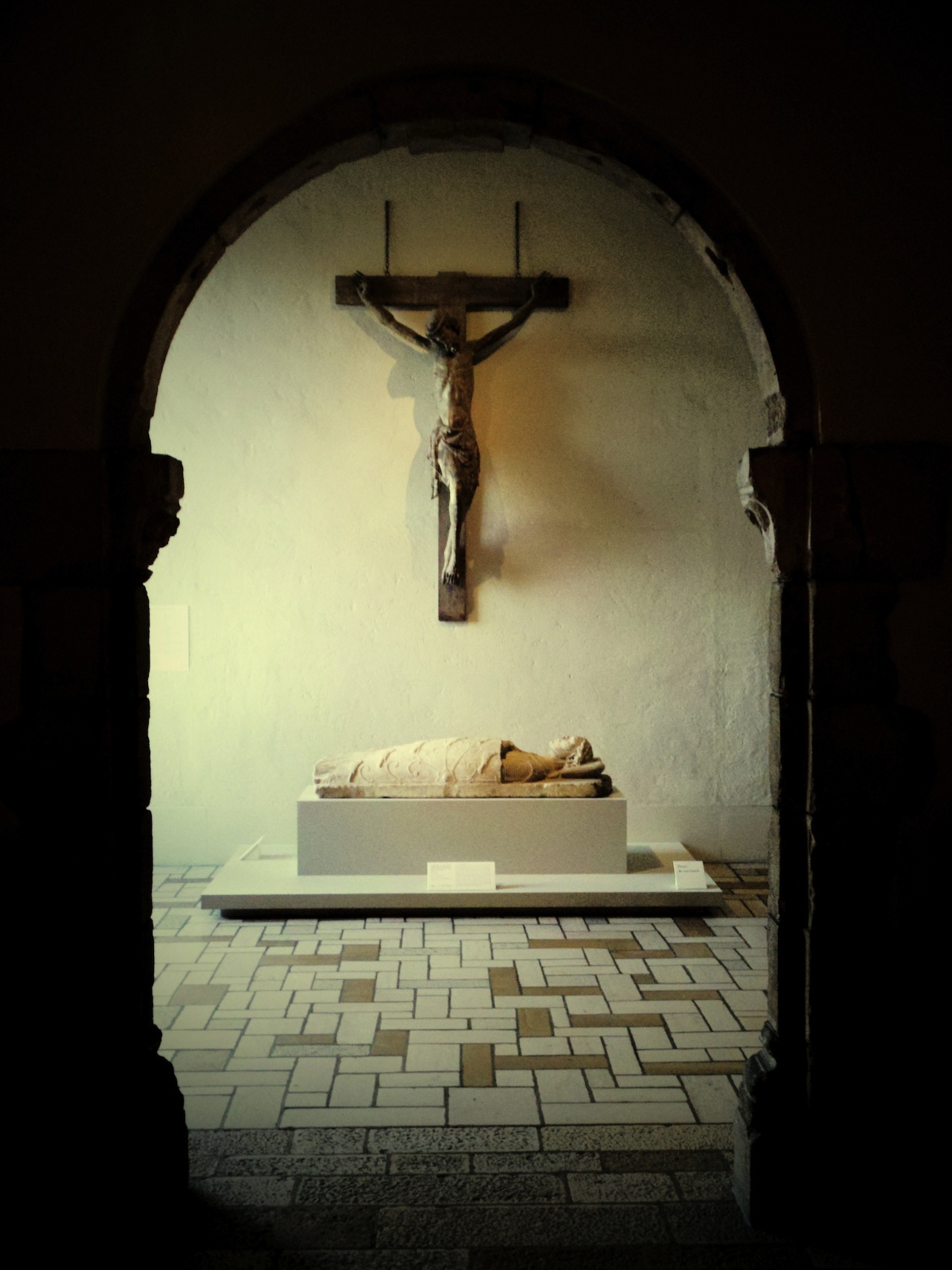
This week’s WordPress Weekly Photo Challenge theme is “Renewal“. This here is a picture of one of my favorite rooms in the Philadelphia Museum of Art. It’s in the medieval art section (a section which, as I’ve written before, carries much significance to my soul).
I still remember the first time I turned the corner and saw this crucifix on the wall. It’s crude, yet so beautiful. It faces another, dimly-lit room in which there is a medieval-era altar on which there was taken countless pieces of Eucharist.
The last time I was at the museum, though, I noticed a bit of symbolism I’d never noticed (and I have no idea why). This crucifix is positioned above a 13th-century knight’s tomb effigy. After spending some time in reflection near the aforementioned altar, I looked back through the arch and for the first time noticed that the gaze of the dying Christ seemed to be settling not on the museum passer-bys, but on the effigy of the dead knight before him.
The Christ’s gaze of sadness and pity no longer seemed to be for his own sufferings, but for the death and suffering of this one that lay before him. This gaze seemed to carry with it not only sadness, but also a stoic confidence that through this act, he would bring an end to this knight’s sleep.
Through this act of loss and sadness, here is a picture now of rebirth and renewal, made all the more meaningful as I took this picture from the steps of that altar, bathed in darkness, on which was consecrated and served Christ’s body, broken for our renewal and light–then, and today.
See my past Weekly Photo Challenges here.
___________________________
 Well, on this blog we’ve contemplated electing Romney, electing Obama, each of the election debates, laughing at the election, the election foreign policy, the election domestic policy, reminded ourselves it’s all going to be okay, voted, laughed on voting day, partied on election night, prayed for the election, and we prayed for the elected officials.
Now we’re all election’d out.
It has now become almost as cliche as election-season Facebook politics posts, to complain about those election season Facebook politics posts. In fact, I think my Facebook feed was filled with more complaining about political posting than actual political posts. (This is not to discount the very real experience that many of us had, to be sure, with those one or two people ib our feeds that would put 12 to 15 posts up a day and carry on endless vitriolic arguments in the comment section.)
I wonder if our malaise wasn’t even as much about other people posting as much as it was the campaign itself. With all the politicking having already wearied us, seeing anything more on Facebook surely just put many of us over-the-top. For any ways that I may have been “that guy”, please forgive me. I had hoped I would be a more clear-headed voice in the political wilderness.
Continue reading
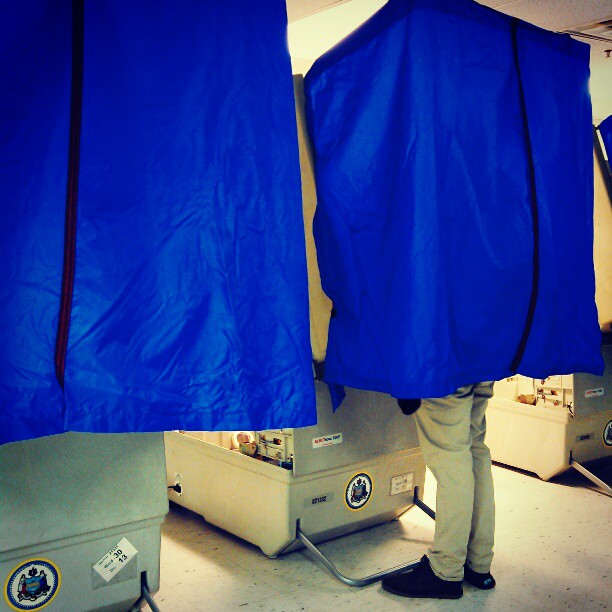 Today is one of my proudest days as a case manager, as I’ve been able to assist several of my clients in voting today. Sitting down with them, helping them find their local polling place, driving to the center, walking them through the ballot and the voting machines, and then watching them vote has been amazing. I wanted to share a conversation I had today with (as we’ll call him) “Chris”. He’s grown up well-within poverty his entire life in the roughest neighborhoods of Philadelphia. He’s been in the mental health system since he was very young, with a mind full of voices and confusion.
Continue reading

 (Forgive the picture. I know it’s weird, but it captures my love for books so well.)
I just wanted to put up a quick post to let it be known (to those few people who might care) that my “The Books” section above is updated again. In the midst of my reading and research for the summer Bible Survey Class, I had to put all personal reading off to the side–and, along with that, that Books page.
But, I’ve updated it now, with my new additions. For personal reading, I’ve added Moby Dick and Stephen Kinzer’s All The Shah’s Men. For my devotional reading, I added the poems of Hart Crane (which are rocking my world). I’ve also changed the formatting on the page for easier reading, and added links to posts in which I’ve shared quotes, reviews, or meditations from my time reading that book. Hopefully this will make this page a little more useful for those looking for book recommendations.
Continue reading
 I wanted to plug an amazing new album I recently ran across. The album is Excellent by L.A. hip-hop and spoken word artist Propaganda. Being part of the record label Humble Beast, his new album is available for a free download, though I would encourage any and all of you to support the artist by buying his album on iTunes.
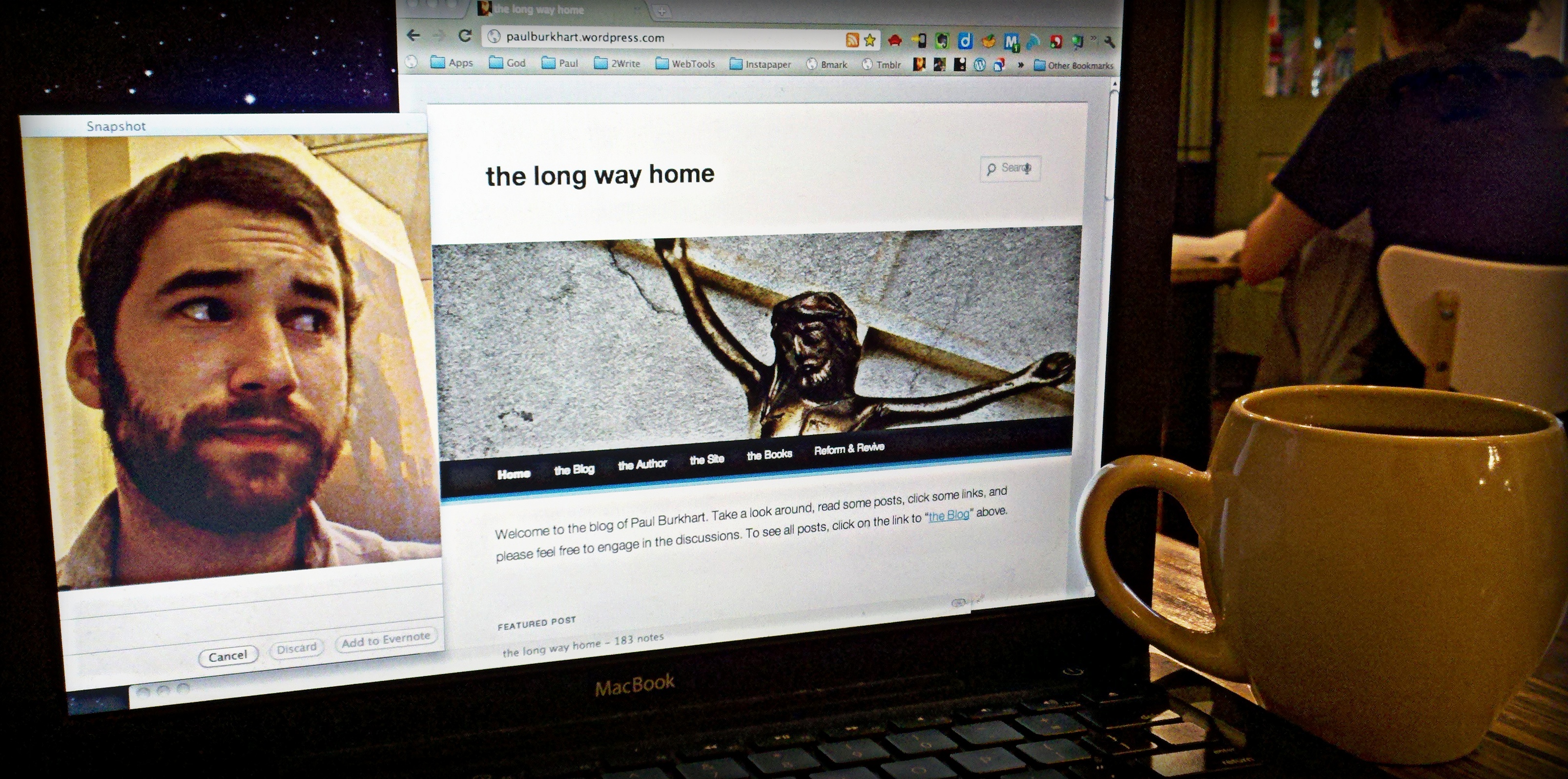
This weekend, I’m going to go to New York. For the first time in a long time, I won’t be bringing my computer on a trip. I had no idea how tethered I was to this thing until I felt the thrill shudder through me at the thought of having a weekend with just a moleskine, my new (real) book, a Kindle, and a phone (hey, I can’t completely unplug in New York, right?).
About a year-and-a-half ago I read Tim Challie’s The Next Story about a Christian perspective on the digital explosion. He explored: How do we embrace technology rightly? How do we tend to do it wrongly? What are some temptations inherent in technology? How might we act to not let technology consume us? How do we maintain our humanity and community in the midst of it? What is a “theology” of technology?
Continue reading
 November 7th, we will wake up to front pages declaring with finality the results of the American Presidential Election. Most of us will see these headlines and have some sort of emotional reaction (especially those of us that stayed up as late as we could to know the results early).
Depression? Fear? Anger? Injustice? Sadness? Joy? Elation? Ecstasy? Worship? Peace?
I remember after the 2004 election when Bush beat Kerry. Going to a large, urban University dominated by idealistic and passionate liberal youth, the campus was in mourning for the rest of that week. People walked in silence, hugged one another, and I saw a good number of people crying as they resigned themselves to what they felt would be the end of every good thing they’d ever thought about this country.
This election cycle, I was certainly active–probably more so than ever before (especially on this blog, at least). I’m almost certain that I have been blocked from my fair share of Facebook feeds and removed from some feed readers in the past six months or so. I’ve been quite passionate on those few issues that have guided so much of my writing and reading.
But I haven’t lost a bit of sleep over any of that stuff. I’ve been able to enjoy good books and beers, and pipes and peers, without any discussion of politics or debates or elections.
Continue reading

Earlier today, I posted my 10 suggestions for changes the President should make in our foreign policy. Now, I want to offer the one thing I’d ask to change about our domestic policy.
But first, why only one thing? Not only do I think that our legacy and history is far more shaped by foreign policy, but to me, these domestic issues are a lot less certain. I hear great arguments on all sides for all of these issues. Countries all over the world have prospered and waned in both high and low taxes, in both high and low employment, and in both bigger and smaller government. There’s simply no inherently “right” way to run a nation. And so, to me, the best thing we can change domestically is systemic rather than particular. So what’s that one thing?
Steal Britain’s brilliant idea and institute “President’s Questions” here in the States.
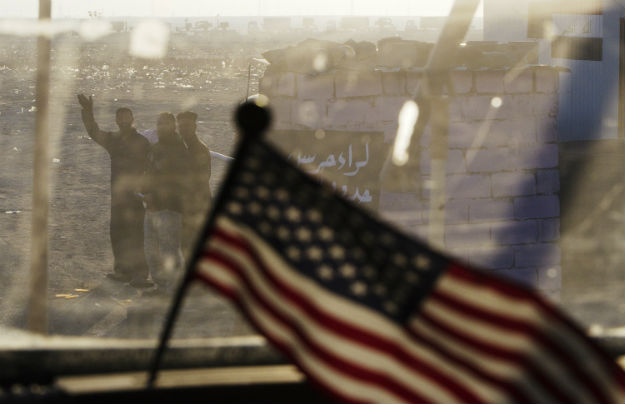
I said yesterday that I’m growing tired of my political arguing and whining. I realized that, in what I’ve been writing during this campaign, I’ve mostly been laying criticisms (which is easy) and not offering any real solutions (which is much harder). So as I wind down my political talk, in the interest of trying to helpful and productive, I tried to think of some realistic things that could be changed with our foreign policy.
A lot of times, people with my same criticisms and concerns can come across as pretty paranoid, conspiratorial, and anarchistic. I hope I haven’t. I’m still sleeping fine. These issues are the natural ebbs and flows that every powerful nation in history has gone through. We went through it with McCarthy and eventually corrected (mostly), but people pointing this stuff out and complaining about it is part of that corrective. I guess I’m just playing my part. Here’s hoping it does some good.
One more caveat. This list is meant to be as realistic as possible. My ideal list would be much more development-heavy, pacifistic, and non-interventionist. With that being said, here are my top 10 alternative realistic foreign policy solutions that the President could employ to put us on a healthier course:

 the long way home