Derek Webb, Pete Yorn, Scarlet Johanssen, Jesus, & Art


Break UpThe Mockingbird blog did a great interview with Derek Webb that was published today.  It seems like every interview he’s been doing has consisted of the same content, but this seems to have a few original questions in it.  It’s really enjoyable.

This was my favorite quote from the whole thing.  It’s a very biblical view of “Christian art” and it resonates well with my recent article on the Beauty of Art, so I thought I’d share it with all of you.

As an artist, my job is to look at the world and tell you what I see. Every artist, regardless of their beliefs, has some way that they look at the world that helps them make sense of what they see. A grid through which they look at the world which makes order out of it. For me that’s following Jesus, for other artists it’s other things. It could be anything, but every artist has that grid. Most Christian art unfortunately is more focused on making art/writing songs about the grid itself. As opposed to writing songs about what you see when you look through the grid. I’m more interested in looking through the grid and telling you what I see.

In other art news, I can stop listening to the new Pete Yorn/Scarlet Johanssen duet/compilation album Break Up.  It’s pretty phenomenal.  Expect a review here in the coming days. You can listen to the entire thing online here.  I know Scarlet’s received a lot of crap about her voice and singing ability, especially after her solo album of Tom Waits covers called Anywhere I Lay My Head.  Personally, I love her voice.  I think it’s amazing, refreshing, and seductive.  Here, try this random single she did called “Last goodbye” (I have no idea where it’s originally from.  Sorry.):

Enjoy the quote, links, and audio and let me know what you think.

“Letting Seminary Doctrinally Change You” & Controversy – GoingToSeminary.com


Remember “that” article I was talking about last week?  The one that may begin some “controversy” at GoingToSeminary.com?

Well, it’s up now.

It’s part one of two on a little series I’m writing on doctrinal changes while in seminary.  As I said then, I’m more concerned about this next article than this one.  If it even comes out.  In an hour and a half I have been called upon by the “Vice President of Advancement” and “Associate Professor of Systematic Theology” of Westminster Theological Seminary, David Garner to grab some lunch.  I have no idea what the topic of conversation is (and the one time I’ve asked, he never answered), but I’m optimistic.  He has always been one of my favorite professors I ever had and has one of the most pastoral, worshipful, Christ-centered hearts I’ve ever seen in a man.  I look up to him greatly as a pastor, preacher, teacher, husband, and father.

But, he is very much on the side of the issues at Westminster that I am not.  So I’m wondering what this is about.  I haven’t been that vocal against WTS have I?  I feel like whenever I have I’ve always made it clear that this is my opinion and I that I know I’m still young, arrogant, and don’t know anything.  I don’t know.  We’ll see.  I may let you all know.  But, in the meantime, read and enjoy the article “Letting Seminary Doctrinally Change You” at GoingToSeminary.com.  Here it is:

Letting Seminary Doctrinally Change You

Check out the rest of my Going To Seminary posts.

NPR, News, & the Politics of Change


npr search

I encountered one of the most fascinating things the other day. In the picture above (click for a larger version), you will see a search I recently did on Twitter for “npr”. I was trying to find their various Twitter accounts so I could follow, get news updates, and the like. I was shocked to see that with 1,448,766 followers, NPR’s Politics account is by far the most popular. NPR News is a distant second with only 123,086 followers.

Why is that?

This has been giving more pause than it should. Why are there more than ten times as many people wanting to follow NPR Politics than NPR anything else? Of course, there are many factors I don’t know that could contribute to these results. The Politics account could be the oldest account, and the News one being a relatively new one. They all could have been started around the time of the election. The Politics account could have been advertised more. I don’t know, but still: would those variables fully account for the inequality?

Are Americans really that much more interested in Political news as opposed to general News? Actually, maybe. I know that prior to this election, I only got obsessed with politics for the five or so months leading up to voting night, and then dropped it like a bad habit the next morning. But not this time. For some reason unbeknownst to me, I have kept up with my political engagement – perhaps increased it, in fact. My personal addiction to NPR, The Economist, the Politics section of the New York Times and Slate magazine, various editorials and opinion columns, and all things Social Justice-y has only increased since November.

Could this be a reflection of the amount of hope and anticipation a completely new guard promised to bring? That Americans freely ascribed to? That all of us knew was needed? Perhaps. Personally, I think that the academy is moving past postmodernity into what I’m currently calling “neo-pragmatism” (some good friends would rather call it “critical realism”, and they have some good points). But either way, I feel like modernity preached to us the mind, postmodernity the heart, and now “neo-pragmatism” the legs. In short, I think people are seeking a “whatever works” approach. The great fulfillment promised by the previous two major philosophical epochs never happened, so now people are willing to do whatever it takes – throw off any convention, question so many presuppositions, and change ideologies – in the hopes that something might actually effect change and lasting growth in our lives.

Perhaps this simple Twitter search is a reflection of this? Maybe there really is a much greater interest in the mechanisms of change in the world because people know we need it, they want it, and want to know how their leaders are trying to help them accomplish it. Need I mention more than Obama’s campaign-winning slogan? It wasn’t Ideology you can believe in or even Truth you can believe in. It was Change. And politics is much more likely to accomplish change than news (for better or worse).

I think we’re right in looking for change. I think we’re right in looking for that which will actually be readily applicable in our everyday lives. I think we’re right in looking for what works.

I just fear we’re looking in the wrong place.

uh…about that article I talked about yesterday…


Some may have read my post yesterday about my upcoming article on GoingToSeminary.com.  Well, I also mentioned that the site was changing servers all day yesterday, and in the process they lost a few articles . . . including mine.

They’re still down with posting it, I just need to send it to them, which I am about to do right now (here’s a lesson for all you bloggers out there: always do your writing in some other program and save a copy on your hard drive).  But, this being the case, I have no idea when it will actually go up.  Hopefully in the next couple of days.

But not today.  I’ll let you all know when it does.  And . . . I am currently working on the next Beauty post to put up in the next hour or so.  See you then!

–paul

Controversy, Controversy, Controversy at GoingToSeminary.com


old lady

Update: The two posts mentioned in this article are now up. “Letting Seminary Doctrinally Change You” and “Seminaries & the Nature of Truth“.

Yep, it’s a double-post sort of day.  (let’s just say I’m making up for Labor Day.)  But this is a personal one.  I’m asking for some prayer.

At publication time for this post, the site GoingToSeminary.com is currently changing servers, so it’s down.  It was just bought by the somewhat Lutheran and fully online Rockbridge Seminary, sold by my good friend (and former campus minister) Ryan Burns of Design Simple.

As some of you know, I am a Contributor for the site, and my articles have tended to be pretty weighty.  I don’t know why.  It hasn’t been purposeful.  I suppose when I think of seminary it tugs at my urgent pastoral heart more than the light, fun, twentysomething heart; and this has been evident in the posts.  From what I can tell, my last article “Realizing Seminary’s Not For You” has received more comments than any other single article that I can find on the site, and those comments were fiery.  I got blasted from every side (and defended by many – thank you all, by the way).  A couple of people even compared me to an unfaithful Israelite who saw the giants in the Promised Land and got scared.  Another, in light of my severe disappointment in Westminster Theological Seminary as an institution, said that apparently I don’t know good doctrine when I see it.  In short, it caused some controversy.  I really try not to seek such controversy, and I never thought that post would spurn such heated discussion.

But –

Tomorrow’s another story.  Tomorrow my new article is going live on the site and I’m fairly sure this one will ruffle some feathers.  In fact, I’m shocked Rockbridge went ahead and decided to post it.  Kudos to them.  It will be very easy for this article to be misunderstood on both sides: those that think I go too far, and those that think I don’t go as far as I am in fact trying to go.

The article is a discussion of how to let seminary doctrinally change you.  To do this, I very consciously employ postmodern thought into my own thinking and advocate others do so as well.  It’s very touchy and I am not wholly confident that I phrased myself as articulately as a more experienced writer may have been able to.  I guess we’ll see over the next couple of days.

But, I’m actually not as concerned with this article as I am with the follow-up article I am about half-way through writing.  In the first article I lay out the responsibilities for the seminarian in this respect; in this second one, I talk about the responsibilities of the healthy seminary institution.  And in doing so I am directly taking Westminster to task for how they have abandoned the principles I lay out in this first article.  I’m sort of doubting Rockbridge would run it on the site, but who knows?  Westminster’s a competing institution and Rockbridge is marketing themselves as a seminary for the 21st century, so we’ll see.

All that to say, look for my article tomorrow at GoingToSeminary.com, and please pray for me if you could.  I’m still young and arrogant, and I need the spiritual support.  I’ll also link to the article tomorrow.  Until then . . .

My Official Review of “Fearless” by Max Lucado at Reform & Revive


Look at that face.  That’s Max Lucado.  And I just reviewed his new book Fearless.  You can find the review here at Reform & Revive.  Some of you may have read my “Review Preview” and now are wondering why on earth I’m putting up this little post, just to send people somewhere else for the review.

Well, that “Review Preview” got a lot of hits due to search engine traffic.  That means that this site will appear sooner in a search for the book than will Reform & Revive.  But, seeing as reviews of this sort are much more in line with the mission and purpose of R&R, rather than that of this bog, I thought it was more appropriately posted there, and not on this blog.  So, I’m putting up this post on the off chance someone meanders here due to a search engine.  So, if you have fallen victim to such an off-chance, you can find the review at my webzine, Reform & Revive, found at the link below:

http://reformandrevive.com/2009/09/08/review-fearless-by-max-lucado/

By the way, for those that have stopped by for the next part of my Beauty series, you will find the next installment here tomorrow.  Probably.  Well, technically, my review of John Navone’s book Toward a Theology of Beauty counted as the “next installment”, but I’ll write another tomorrow.

Max Lucado’s “Fearless” and my heart (a review preview)


I’m a book reviewer for Thomas Nelson Publishers.  A few weeks ago I received a pre-publication copy of Max Lucado‘s upcoming book “Fearless“.  I hate so much about Christian “culture”, especially its commercialism, cheesy cliches, seemingly naive treatment of the fallenness of the world, and an inability to know and apply a deep understanding of the Gospel.  For years, admittedly, Lucado has stood in my mind as a representative of much of this.  I have, with little engagement with his material (other than his children’s books), tagged him as such a man; and in a certain way, he is the cheesy, cliche-ridden, mass appealing writer I have assumed (as is evidenced by this official site for the book), and the official trailer found below:

Let’s just say it’s been a big change going from Francis Turretin, John Calvin, and Herman Bavinck to Max Lucado in a matter of months.  Anyone that knows me knows that it has been a long journey through many frustrations with mainline evangelical culture to teach me how to love the Bride of Christ.  And I’m still learning.  I have belittled her, talked her down, mocked her, and ridiculed her in the most shameful of ways.

And this book has been a healing process for me.  Not giving away too much of my upcoming review when the book’s released, I just want to say that this book is amazing.  Save for the first few chapters, I have been shown that even amidst bad jokes, inadequate metaphors, “simple” writing, and an over-commercialized release (including shirts, calendars, mugs, study guides, DVDs, children’s books, teaching curricula), there can be poetry, depth, a real exploration of the human condition, and beautiful articulations and applications of the deepest, most precious truths of the Gospel.  Lucado has shocked me.  And taught me.  And helped me.  And stirred me for this God, His Gospel, and all that it supplies us.  Though I may be going against the fine print in my publisher’s agreement in doing so, I want to share with you all my favorite few paragraphs from the book so far:

A calmer death would have sufficed.  A single drop of blood could have redeemed humankind.  Shed his blood, silence his breath, still his pulse, but be quick about it.  Plunge a sword into his heart.  Take a dagger to his neck.  Did the atonement for sin demand six hours of violence?

No, but his triumph over sadism did.  Jesus once and for all displayed his authority over savagery.  Evil may have her moments, but they will be brief.  Satan unleashed his meanest demons on God’s Son.  He tortured every nerve ending and inflicted every misery.  Yet the master of death could not destroy the Lord of life.  Heaven’s best took hell’s worst and turned it into hope.

I pray God spares you such evil.  May he grant [you] long life and peaceful passage . . .. But if he doesn’t, if you “have been given not only the privilege of trusting in Christ but also the privilege if suffering for him” (Phil. 1:29 NLT), remember, God wastes no pain.

Amazing.  Look for my review September 8.  In the meantime, you can order the book here, and read some of the ebook here.

Facebook Friends, sorry for the inconvenience


screen-captureMost of my friends on Facebook probably think I just write a lot of Facebook notes.  This isn’t actually the case.  As many know, I have a personal blog, “the long way home“, that I write everything on.  Facebook has a great little feature where it will import the RSS feed from this blog into Facebook as a note.  So, long story short, I write a post on the blog, it shows up in Facebook as a note.  I never actually touch the Notes feature.  But there’s a problem with this.

When the feature first came out, there was a prominent “View Original Post” button attached to the facebook note.  Clicking this would take you to the blog itself.  Alas, as time has gone by, this button has grown smaller and more obscure (you can find it now on the very bottom of this Note next to the “Like” and “Comment” links.  This has caused fewer and fewer people to go to the actual site, because they can just stay on Facebook and read.  This causes many problems on my end.  So, after today, I will no longer be importing my blog posts to Facebook.  Read on if you care to know why.

First, formatting.  I format all my posts based on how they look on the blog, not on Facebook.  This means that embedded images, videos, and audio either get all jacked up, appear merely as links, or don’t show up at all.

Second, there are many resources and links that I provide on the blog in the sidebar and in the various pages.  Of course, these do not import to Facebook, meaning that there’s a whole dimension of engaging with the content that’s lost to the casual Facebook reader.

Third, it’s tough maintaining two separate audiences.  I get far more people leaving comments on the Facebook version of posts, and these comments only stay within our little particular corner of the Facebook community.  Having these same discussions on the blog let the rest of the world engage and broaden the conversation.  Also, there have been several occasions where blog visitors have left similar comments as people did on Facebook, so I’ve had practically the same conversation running in two separate places at once.

Lastly, and most importantly, tracking who reads what on the site.  This is not about needing the praise that comes with knowing people have read something of yours.  Anyone that has a site knows that knowing where the traffic comes from and what it’s reading is so important to knowing in what direction you should take the site.  I really have no idea how many people actually read what I write and this is frustrating.  I may go for weeks or years putting a lot of thought and energy into a particular series of writings, not knowing that nobody is actually reading them.  That’s a lot of wasted time that could be spent writing about things that will actually help people.  Also, I have a couple of sites I write for, and it would be great to know how much traffic each one gets so I can post appropriate writings in the appropriate places.  With more people visiting and linking to my actual site instead of just Facebook notes, this will also increase my exposure on search engines thereby driving more people to the site and to possible helpful resources.

Those are all the reasons I have decided to stop importing my posts to Facebook (after this post).  I will still put up a note each time I write, but it will only have a brief summary of the content and a link to the blog.

We’ll see how this goes.  If the number of people actually reading things on the site doesn’t jump up significantly, or if people make a big stink over it on Facebook, I may put it back, but in the meantime, I just want to see how this goes.  Links to the posts will still appear via the Facebook App “Networked Blogs” as well.

Sorry, if this isn’t as convenient.  Feel free to leave me your input.

May I Offer a Definition of | Beauty{2} ?


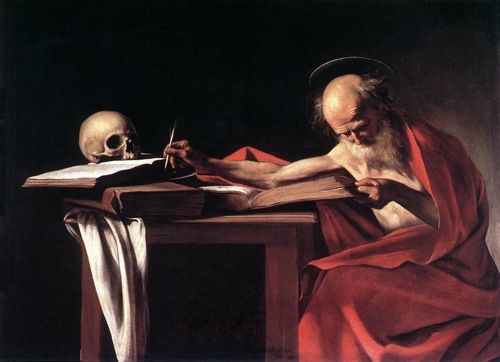
Caravaggio - Saint Jerome2This is Part 2 of an ongoing series based on the paper I wrote on Beauty and the subsequent sermon I gave on it. [Bold: things I had time to say // Regular: things I didn’t have time for]

__________

Whenever you go to study a particular topic in the Bible, the first place you go is the concordance. You go online, or you look in a book, and you search for every time that word is used. If you’re lucky, you’ll find some place in the Bible where the the writer gives you a direct definition for that topic. You look for statements like “This is love” or “Faith is” or “This is the will of God”. The Bible never gives a definition of Beauty. It calls God, creation, and people all beautiful. It says some people are beautiful. It says some people do beautiful things. It calls both good things and evil things beautiful. It calls for us to seek after certain beautiful things. It tells to avoid certain other beautiful things. So, just simply looking at the whenever the Bible uses the word “beautiful” doesn’t help us tremendously, but it’s a start. We can start to see that beauty is a bit more complex than we’re sometimes told. We start to see how a lot of common definitions we hear some times aren’t true Biblically. We see that:

  • it’s not perfection.
  • it’s not just when something reflects God.
  • it’s not just order or symmetry. We all know there can be beauty in chaos sometimes.
  • it’s not just in the eye of the beholder. There is some objective sense of beauty.
  • it’s not just an attribute of things or people.

The next step in studying something topically is to look at the original language to see what the English translation “beauty” meant in the Greek and Hebrew. When you do this, things get nuts. In the ESV alone, there are over 20 very different Hebrew and Greek words all translated as “beauty” or “beautiful”, but we can still learn a few things. First off, we see that the Hebrew mindset is a lot richer than the Greek one. The Hebrew words range in literal meanings such as pleasant, dignified, adorned, sweet, delightful, precious, boastful, arrogant, glorious, vigorous – one word used only once even means “scraped of all impurity”. The Greek words mean simply good and beautiful. But there is some depth here. The most common NT word used for “beautiful”, but most often translated as “good”, originally comes from a verb which means “to call”, speaking to the attractive nature of beauty. The other word used comes from the word for “hour” which describes beauty as being “within one’s hour”. By the way, in the attached manuscript, you can find a full breakdown of every instance these words appear in the Bible, their form, their frequency, and what each of those Greek or Hebrew words most literally mean.

So now we have a fuller idea of beauty, but still no working definition. At this point you just have to pray, read, and think a lot while looking at the broader context of theology. We use the things we clearly know about the nature of God, humankind, and reality to shed light on the ambiguous things and help us get closer to a definition. When you do that, some things come up that we need to keep in mind.

First, our definition needs to make God the most beautiful Person in the universe, it needs to make the cross the most beautiful event in history, it needs to make Jesus the most beautiful man who lived the most beautiful life this world has ever known, and lastly, it needs to make the Gospel (or the message of Christianity) the most beautiful thing anyone could ever hear or believe.

Secondly, we see that there is a tension that has to be held when it comes to talking about Beauty. It seems like Christians throughout history have fallen into one of two errors when thinking about it: either a pantheistic view or deistic view of beauty. The pantheistic view would say that God is beauty so only things that join him in His beauty can be beautiful. Nothing can have beauty in and of itself. It’s only beautiful as much as God shines through it. This definition would say that bad music made by Christians will always be more beautiful than really good music made by non-Christians. Now we all know that’s not true, because we’ve all heard really bad Christian music. This is the over-objective view of of beauty. The other view, the deistic view would say that God is beautiful, so He put beauty on earth that’s completely separate from Him so we can have a beauty that’s all our own, and it doesn’t relate to God in any way. God is beautiful. Humans are beautiful. There’s no connection. We don’t share in God’s beauty. This view would say that there is absolutely nothing more beautiful about one song that talks about the depths of who God is as opposed to another that doesn’t. They’re just songs. This view is an over-subjective view of beauty.

The Biblical view is different from both of these. The Bible teaches that God is separate from His creation, but He’s still present. God is not in created things, but those things can and do preach about who God is. Man is not God, but God has become a man so that He might communicate Himself to us and accomplish for us what we could not do for ourselves. So God is completely other, but He’s near. So, our definition of beauty has to reflect this. It has to be something that is connected to the nature of God but is still something humans can possess, but not in the same way. It has to objective for God, but subjective for us.

After doing all that, are you ready for an actual definition? The best definition that my arrogant, immature, and prideful 23-year old mind has been able to come up with for beauty is this:

Beauty is the attribute of something that expresses complexity, simply.

That’s it. Beauty is what makes infinity, finite; it makes transcendent things seem near. So the more “stuff” that is represented more “simply”, the more beautiful something is. The best image I’ve been able to think of to explain beauty is the Hebrew word shalom. Many people know that this word is usually translated as “peace” but it has a much richer meaning than this. The Old Testament uses this word to describe the ultimate goal and end of history and all that God is doing–peace. Now, when we think of peace, we usually define it negatively- no fighting, no war, no hunger, no pain. But this word in the Hebrew carries with it the connotation of reknitting the very fabric of the universe. It paints a picture of a world that is made up of an infinite number of “strands” of sorts, and shalom is when these strands are re-woven together into a sort of tapestry. Beauty, therefore, is when some or many of these complex strands are woven together into a tapestry that we can perceive with our senses, both physical and spiritual. The more complex strands contained in one simple “tapestry”, the more beautiful that thing is.

This is the objective idea of beauty. But, this definition also has the benefit of having an appropriate subjective component as well. You see, we as individuals over time become more sensitive to certain ones of those strands of the universe and less sensitive to to others. Our culture, experiences, natural make-up, and ultimately our spiritual state all cause us to sense and value various strands differently, making us value different “tapestries” differently.

Next time, we’ll begin applying this definition to other things to (a) better explain it, (b) see if it works, (c) explain why we find somethings beautiful. The first thing we’ll talk about being beautiful? God. Until then . . .

Click for Manuscript Pdf

Manucscript

Click here for sermon audio

Audio


CashTag

Enjoy the Post? Leave a tip with Square Cash!

Why We Long (Setting the Stage) [Eccl.2+3] |Beauty{1}


Scotland-Summer 2006-Edinburgh-Calton Hill-040This is the first part in my series going through the different ideas in the manuscript I wrote for a recent message I gave at Epiphany Fellowship’s monthly ministry “First Friday Fundamentals”. Upcoming topics include what Beauty is, how science reveals Beauty, why we find some things/people unattractive, and the nature of physical beauty. This first part lays out a theological and psychological understanding for why we long for beauty in the first place and how even that longing can get derailed because of our fallenness, finitude, and sinfulness. Also, I made a Web Album of pictures I took from Calton Hill.  They can never do it justice, and they look really anticlimactic, I know, but just trust me, God met me there.  I also linked relevant references in the manuscript to their appropriate pictures.

[Bold: things I had time to say // Regular: things I didn’t have time for]

___________________

In the Summer of 2006 I spent some time studying Creative Writing abroad at the Glasgow School of Art in Glasgow, Scotland. It was amazing in many ways. It was the first time I’d ever been out of the country. I saw things, met people, and went places I only could have dreamt of seeing, meeting, or going. One particularly memorable highlight: I had my first beer ever in a Scottish pub, July 4th, during the World Cup. The third week or so into the program, we had a free weekend so I decided to spend the weekend in Scotland’s capitol, Edinburgh. On Sunday I found a church and attended this amazing service. Afterwards, I just started walking around the city. I ended up following my map to this place called “Calton Hill. I walked in the shade of the tress around the base of the hill and found these little stairs to my right. I followed those stairs and as I reached the top, the trees broke just right, and the light fell so precisely, and I turned at just the right angle that I suddenly found myself standing above the entire city of Edinburgh looking out for miles. As I turned around 360 degrees, I could see the ocean on one side, the city on the other, and the giant hill to my left a mile or so away called Arthur’s seat that they say figures into the King Arthur legend.  [Click Here for the Web Album]

I began to cry almost immediately. One thing you’ll realize about me over time: I’m either the most rational romantic or the most romantic rational. To the charismatics in an old church of mine in Richmond I was the cold, dead theologian. To the seminarians up here I was the feely, emotional charismatic. They’re probably both right. But regardless, I broke down on top of this hill because I was staring at the most beauty I’ve ever seen. I felt small, I felt sinful, I felt worshipful, and I felt the presence of God more tangibly in those few hours I spent on top of that hill than at any other moment of my life. At the very same time I felt the most complexity and simplicity of emotions. I was so at peace, yet I wanted to scream.

So why is it that beauty draws those sorts of things from us? What is it anyway? How do we know what is beautiful and how to respond to it? We live in a world of such paradox. Pain and ugliness are the primary soundtrack of our lives, it seems, and yet most of us don’t live in a constant state of despair. We seem to live off those little oases of beauty in life. So how do we understand what beauty is and how it works in the midst of the seeming vanity of all life? Well, there was another man in history that pondered these things and recorded them in the book of the Bible we know as “Ecclesiastes”. He looked out on his own existence and the nature of life and saw it for what it was: full of useless strivings and the vain repetitions of repeated history as all reality just keeps turning, turning, turning. We know him today by the Hebrew word for “Speaker” or “Preacher” and that is what he does. In the text we’ll be in he tells us about life and beauty and how these things relate.

The Text (Ecclesiastes 2:22-3:15)

Read 2:22-24 | verse 24, as the Hebrew literally says it, and how it can legitimately be translated, reads: Nothing is better unto mankind than that he should eat and drink and see his soul as beautiful in the midst of his toil.

Read 2:25-26 | The “toil and striving of the heart” the writer talks about here is the work that we do in light of our deepest desires. It’s the pursuits to fulfill all we want and all we long for. It is those pursuits that can never be accomplished, those longings that can never be fulfilled. It’s the deepest drives within us that motivate everything we do. The writer says that these desires, these strivings can never be satisfied. We can try all we want, but no matter what, that pain and vanity will always be the constant state of our lives. But why? Why is it so vain to work so hard at this?

Read 3:1-8 | You see, it’s vain because all things already have their proper predetermined season. Everything you work to accomplish will only come in it’s appointed season for you, and everything you work to avoid will always come in its appointed season for you. That is why our toil is all in vain. But yet we strive anyway. So why do we still strive in this life? The Preacher asks this very same question: What gain has the worker from his toil? He then tells us that he thinks that God has given him a special perspective to give us some insight on why we do (and should do) the strivings that we do. He says: I have seen the business that God has given to the children of man to be busy with. He says that he thinks he sees it. He has looked out over history and life and he thinks he sees why it is we strive. Though it’s in vain, God still births something in us to toil. The Preacher has seen the proper striving that God has given humans to do. So what is it? Well, his answer to that is our main text tonight.

Read 3:9-15 | The writer says I have seen the business that God has given to the children of man to be busy with. He has made everything beautiful in its time. Also, he has put eternity into man’s heart, yet so that he cannot find out what God has done from beginning to end. Does anyone else see how weird this sounds? The writer says this is the business of man and then goes on to talk about God doing things and what we can’t do. So what’s going on? This is what I think the writer is saying: God has a picture of what a good and beautiful world looks like and He is forming this world into that picture as he is making all things beautiful. This beautiful world is an Infinite, eternal one. So, He has put eternity into our hearts, or in other words, put a deposit of this eternal beautiful world in our hearts, causing us to long for it. This seems to be so we can recognize the beauty that God is making while not seeing the exact mechanisms that God is using to do it. It forces us to enjoy what God is doing while still having to trust Him rather than trying to predict Him. Apparently the business of man, then, is to see, recognize, and enjoy the beauty God is doing. But, in our sinfulness, we don’t like not being able to find out what God is doing from the beginning to the end, so we like to form our own pictures in our heads of what a good and beautiful world looks like. So every action of every human being is to make the world out there match the world in their head. The task of the Christian, then, is to make the world they want in their head match the world the God has placed a longing for in their heart. The rest of our text describes what this looks like, so we’ll get to that later when we talk about how we respond to beauty. But let’s first get down a definition of Beauty.

And that, my friends, is for next time . . . Here are the audio and manuscript links, as promised:

Click for Manuscript Pdf

Manucscript

Click here for sermon audio

Audio

Eternity in Our Hearts: The God of Beauty, the Beauty of God


Sargent - Madame Errazuriz-smallThis message was seven months in the making, and this past Friday I finally delivered it.  So, as promised, I’m posting both the audio and the manuscript here.  You can also find a general outline on my Sermon site, and you can also find it at my Podcast.

Click here for sermon audio

Click for Audio

Click for Manuscript Pdf

Click for FULL Manuscript

This is the message I gave at Epiphany Fellowship. The topic was Beauty. The attached manuscript is the full manuscript. It is 43 pages long and contains far more information than I was able to give in a 40 minute message. It includes an appendix where every form of every word in the Greek and Hebrew translated as “Beauty” or “Beautiful” in the English Standard Version of the Bible is ordered by frequency and includes the literal meanings and lexical range of each word.

I really cannot stress how much more is in the manuscript than was preached.  Every section has huge amounts of thought and prayer in it that was not able to be included in the final message.  That’s why throughout the next week or more, I’ll be blogging about every section of this manuscript.  Each post will focus and discuss the fuller version of each section.  If it gets to be too much I’ll spread it out as need be, but we’ll see.  This is where your thoughts and insights will be so helpful and needed, but if you have a question now, don’t feel like you have to wait for that blog post to come to ask.  Engage with any and everything now.

I hope this blesses all of you as much as it did me.  The feedback that evening was more than I knew how to handle and perhaps I’m still processing it.  Thank you all for your grace and affirmation.  For those that came out, I thank you. I very much enjoyed both preparing and delivering this message, and I look forward to further chances to do so.  If you’re interested in giving me such a chance, feel free to use the contact email on the sidebar to the right (or just click here).

Enjoy, and feel free to let me know what you think, and please at least look through some of the manuscript.  Until next time . . .

One small final note: on most every site and post I’ve used to discuss this message I’ve used the attached piece of art.  It is a piece called “Madame Erraruriz” and it is by my favorite American painter John Singer Sargent.  I got to see this painting in an exhibit of his at the Virginia Museum of Fine Arts and ever since seeing the brushstrokes in this simple painting and seeing the nuances and the subtleties that don’t quite come across from this digital shot, I have long found it to be one of the most beautiful paintings I’ve ever seen.  It is for that reason I have chosen it as the picture that has constantly been up for all these posts.  A few years back I even wrote a poem based on the piece called “Extended Engagement”.  I ended up writing two versions, one less structured than the other to better mirror the feel of the piece, but on this blog you can read both Version 1 and Version 2.  Let me know which you prefer.

I’m preaching in Philadelphia.


As the title clearly says, I will be giving the message tomorrow at Epiphany Fellowship‘s monthly event called “First Friday Fundamentals“.  Each month we take a topic and see how the culture, media, and world at large views this topic.  We look at various forms of media, art, film clips, and music to observe the predominant worldviews.  Then someone gives a message on a Biblical perspective on that topic.

This month’s topic is Beauty.

If you can make it, should be a great evening.  The info is below.  If you can’t make it, please pray for me (I’m not very experienced at this stuff).  And also know that I’ll be posting the audio, full manuscript (almost 40 pages long!) and other resources on the topic on this very blog you’re reading, my sermon site, and my podcast.  I’ll also be blogging about it all next week to let people discuss it further.  Here’s the info for the night:

First Friday Fundamentals @ Epiphany Fellowship

Friday, August 6, 2009

17th & Diamond, Philadelphia, PA

8-10:30pm, Free

I hope to see many of you there.  Below is the trailer for the evening:

{3John11} | Of Translations, Repentance, and Worship


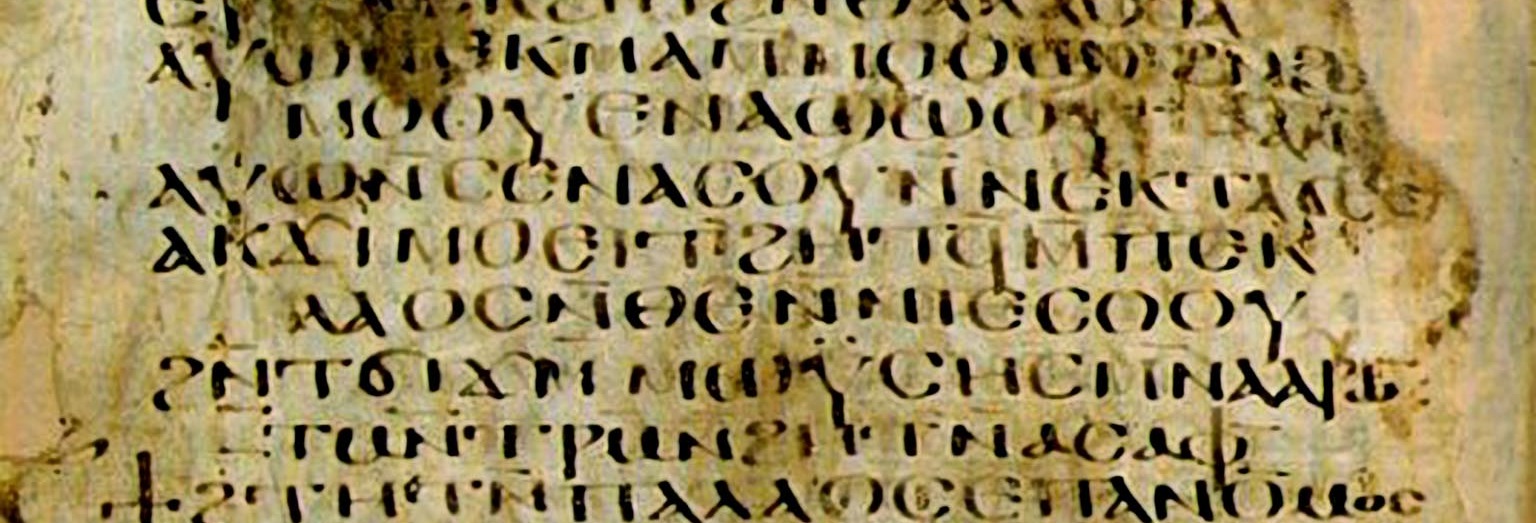
bible-greek-manuscript

ὁἀγαθοποιῶνἐκτοῦθεοῦἐστιν· ὁκακοποιῶνοὐχἑώρακεντὸνθεόν.

[ho agathopoion ek tou theou estin; ho kakopoion ouk heoraken ton theon.]

The one who does good is

[of/from/because of/in the manner of/apart from/part of/controlled by]

God.

The one who does evil has not seen God.

{3John11}

Forgive these fragmented and perhaps poorly-written or elementary thoughts. I write this post not to “show off my Greek” (today was the first I had opened it up in the past couple of months) nor to confuse people by talking very technically. I (hopefully) write this as worship.

I finished translating 3 John today. I’m starting with the shortest New Testament book and just continually trying to translate up to the longest. It’ll probably never be done, but it’s some sort of system, so it works for me. I always know what’s next so that’s helpful.

Anyway, like I said earlier, this was the first day I had gone back to 3 John in a couple of months. I only had a few more verses left so I quickly finished it and then started the first couple of verses of 2 John. I then began to shut my books and move on to the next item on my reading list when I realized something: I couldn’t even remember vaguely what I had translated in 3 John. I had been so concerned with just translating and “getting it done” that I forgot to even meditate or think on it.

I turned to my translation and looked over what I had written and the above verse popped out at me. So, I’m writing this as my act of both repentance for having this gift of the ability to translate and not using it to know God more, and as my act of worship, that I might explore some nuances in this text.

The problem with this verse is a problem common in any language: the preposition. That word εκ [ek] means any of the bracketed things above. Most simply, it’s translated as “of”, but the question always turns to “what does ‘of’ mean here? “Which of the myriad of possible translations does this mean? Well, you look at the context.

What I noticed is that whatever it means, it’s supposed to be a contrast to “The one who does evil has not seen God”. So whatever this “of God” means, it is in contrast with “not seeing God”. It also means that being “of” or “from” God is a matter of seeing him. To see Him is to be joined to Him, to be of Him, or to be from Him. I don’t know enough about Greek to make a definitive call about precisely which translation is correct, but this idea is enough for me: walking obediently so as to please God is a matter of seeing God, and those that continue in disobedience show that they have not.

The way this is phrased let’s us know that whoever is walking obediently can take no credit for this, because their obedience is of/from God. But at the same time, those that are still walking in disobedience bear the full weight of responsibility for their disobedience because they have not seen Him. It is a mystery that leads to God’s greatest Glory and our greatest joy.

So for those saints weary under the weight of their sin and disobedience, be encouraged: obedience and doing good is not a matter of striving and fighting your own will. It is a matter of seeing Him and therefore being joined with Him so that all our being, living, and moving is from/of/in the manner of God. Seeing and therefore being joined to Him through Christ allows us to move according to His nature and will. All disobedience, sin, and evil results from not seeing God. He is our hope. He is our salvation.

Let us therefore fix our eyes on Him, and run.

For those wondering how my job is going . . .


unemployment. . . well, it’s not.

In May, I wrote about my journey in looking for a job.A month and half later(ish) I wrote of having found a job.My start date was July 1st.

But July 1st was the appointed day for another reason: it was the official first day of a new fiscal year for many companies, churches, and governments (federal, state, and local), therefore, of course, it was the day that new 2009 budgets went into effect all across the country.

Well, at least, when those budgets were supposed to go into effect.

The State of Pennsylvania is embroiled in an ever-increasingly heated battle over its State Budget that was supposed to be done and go in effect July 1st.The company I got my job with gets most of its money from the State Health Department, so this poses a problem for them, seeing as the State Health Department has no 2009 money allocated to them by an effective budget to give to my company any money to hire me – so they’re under a hiring freeze.Did that all make sense?

So, in short, I’ve been waiting for over a month for Pennsylvania to pass its own budget, after which I can start my job.Assuming of course that my usual luck doesn’t come into play and my job decides to drop me for some reason.I don’t know.Pray this doesn’t happen.It seems the budget problem is this: there’s a huge gap in the budget between income and expenses.So they either need to get more money or make more cuts.The Governor has suggested a very small increase to the income tax to cover this, but Republicans have cried foul.Democrats have said they’re not “wedded” to the idea of a tax increase and are open to any ideas, but Republicans have been both unable to suggest any new ideas and unwilling to make any cuts in their various localities, insisting further cuts happen at the State level.So, tax increases are being forbidden, no new ideas being brought forth, no new cuts being suggested, and no one willing to budge.Therefore, I have a job, but don’t – all at the same time.

It’s an excellent object lesson in the angst and tension in the Biblical idea of things “already being accomplished, but not yet fully realized”. By the way, last Friday was the last day State employees were actually getting paid.now they’re getting I.O.U.’s. Ugh.

I am trying to find odd jobs to hold me over, but may be looking for a more stable job here shortly, and eventually if I need to, I may look somewhere else entirely for a “real” job (any ideas or possible work is more than appreciated).I hope I don’t have to move on, for as I have said, this job is my dream position, but if I need to, I need to.

God certainly deals with us strangely, confusingly, and mercifully. So much opportunity in this time of “unemployment” to draw near to my God and serve are currently being wasted day to day due to my inherent lack of discipline. He really desires more of me in this time, and I fear I haven’t taken advantage of these moments to learn my neediness and His presence.Pray I learn these lessons well in the “already but not yet”.

And pray that Pennsylvania passes a flippin’ budget already (and that I still have a job waiting for me when they do)!