Because We’re Not Good: “East of Eden”, a Book Review


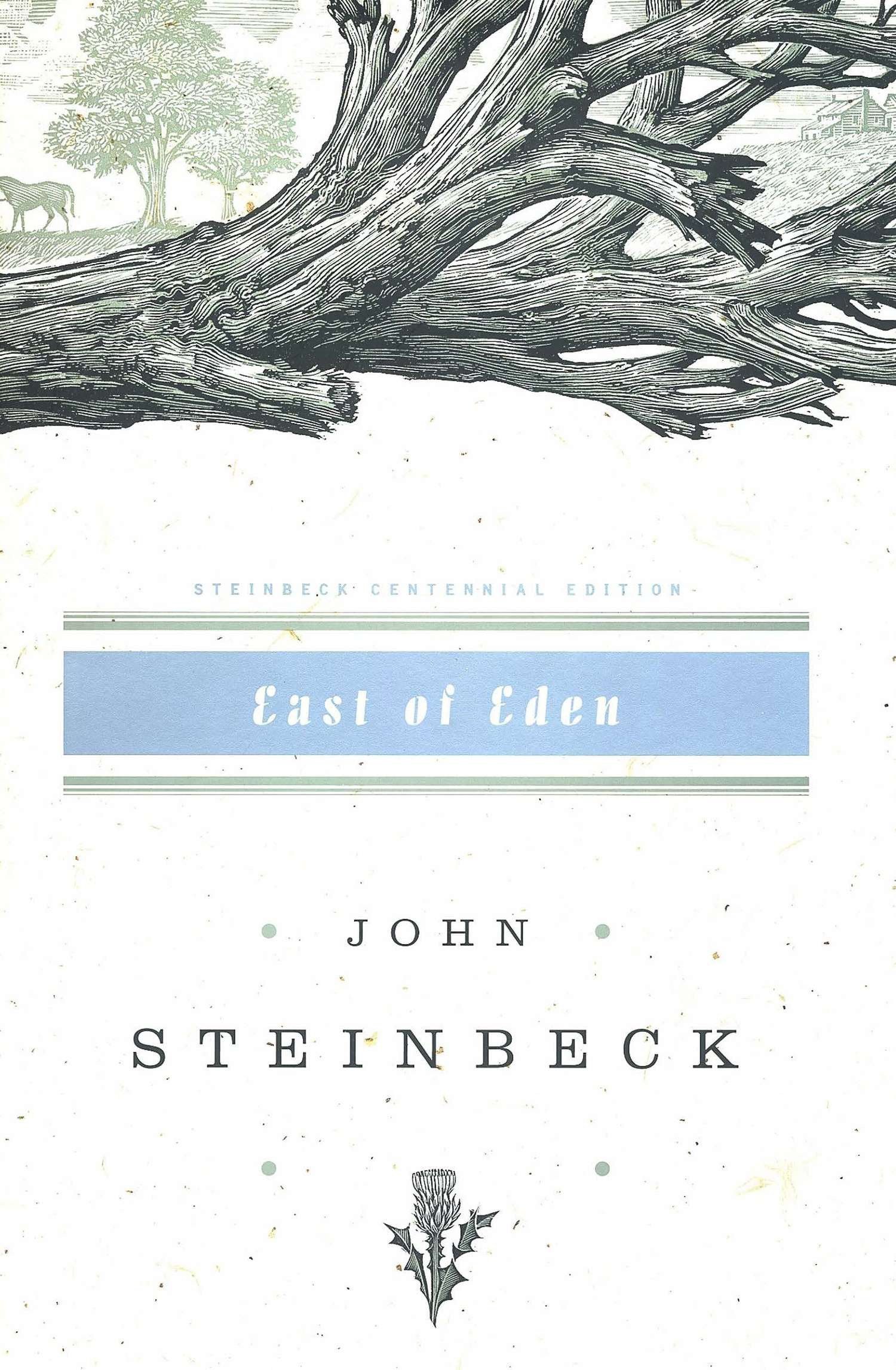
We all have those pieces of art–be they movies, books, music, what have you–that upon first exposure we fall in love. We turn the last page or exit the theater or concert hall certain that this will surely be added to our list of favorites and long-held companions. Yet, how many times do we say this and a year or two down the road someone mentions that very piece of art and we find ourselves thinking, “oh yeah, I did read that, didn’t I?” or “I had forgotten how much I loved that album!”

So often we get swept away in the immediate experience of something skipping upon the waters of our soul, leaving little ripples and echoes dancing in its wake. But these dimples and dapples merely play on the surface for a time, returning once more to their source, leaving the waters ultimately undisturbed–the liquid plane unbroken; the deepest depths untouched.

There are other times, however, that we encounter a piece of art–or rather, it encounters us–and we are changed. It transcends mere rankings of “favorites” and “Top 10s” and weaves itself into our fibers. We do not critique and assess it, so much as it sizes and weighs us. The surface tension is broken and we are plunged beneath, staring humanity’s unvarnished truths in the face. And in so doing our own humanity is enlarged, a spaciousness expands in our souls, and we feel more human–even as our foundations are shaken.

John Steinbeck’s 1952 magnum opus, East of Eden, is just this kind of piece of art. It’s the kind of book people say they will read “someday”, only to read it and wish “someday” had come a lot sooner. So if you haven’t read it. Do so. Start today.
Continue reading

Deep Sin & The Christian Soul


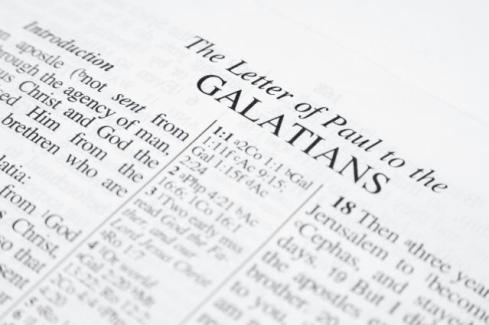
Now the works of the flesh are obvious: fornication, impurity, licentiousness, idolatry, sorcery, enmities, strife, jealousy, anger, quarrels, dissensions, factions, envy, drunkenness, carousing, and things like these. I am warning you, as I warned you before: those who do such things will not inherit the kingdom of God. (Gal. 5.19-21)

As I recently finished a Church Bible Study on the book of Galatians, those verses inevitably caused some discussion.

I mean, we’ve all to some degree engaged in most–if not all–of the items on that list at some point in our lives, right? Even if you’re a Christian.

So what does it mean to say “those who do such things will not inherit the kingdom of God”?

As we discussed it, we arrived at the answer many of us come to if you grew up in the Church: these scary statements only apply to those individuals who have these “works of the flesh” as a pattern of their life to such a degree one might be able to say that the sins have “dominion” over them. That answers it, right?

Not really. Because there are Christians who find themselves in seasons–days, weeks, months, decades, even–where these sins are their practice over time, seasons where these sins have a very real sense of dominion over them and their lives.

And, this isn’t theoretical or theological for me. To be honest, I myself am coming out just such a time.

. . . . . 

I wrote the above words a couple of weeks ago. Since then, I’ve only sunk deeper into the bewilderment of this season I’m coming out of. How does a Christian understand a period of time in which they’re given over so deeply into self-absorption, sin, and hurting of others? I’ve sat on this question, mulling it over, letting it ruminate within me to see what fruit it bore. I’ve wanted to figure out a nice, tidy answer to this post–for the sake of both others and myself.

And alas, I have been found wanting.
Continue reading

Sometimes, Mercy is Sweeter Than Grace


I grew up in a pretty stereotypical Evangelical setting, which led to a pretty stereotypical back-and-forth between guilt and self-righteousness. That is, until I really heard the Gospel of radical Grace.

Many of us have this same story, where it has been so healing to hear that how God relates to us is not, in fact, based on our performance. Instead, everything necessary for God to be pleased with us has been accomplished on our behalf by his Son.

In response to this, we fall in love with God’s Grace. We pray for it, long for it, and cry for it. We read books about it, write about it, and talk about it. We try and speak it into others’ lives while trying to figure out why we don’t apply it to our own. We joyfully build our relationship with God on the glorious foundation of His Grace. It is fundamental, primary, and essential.

In short: we love Grace.

Imagine my surprise, then, as I fell in love with liturgy and ancient forms of worship, to notice the utter lack of “grace” from the prayers and worship of the earliest saints. Continue reading

Philly: Join Me for an In-Depth Galatians Bible Study


book-of-galatians.jpgFriends in the Philly area: starting next Tuesday I will be leading a six-week Bible Study on the Epistle to the Galatians.

It’ll be on six consecutive Tuesdays at 7pm, starting next week, July 11th. You can sign up for it and the resources here.

I’m really excited about this. Each evening will be split into two parts. In the first, we will read through the chapter and study it using pre-modern, non-scholarly methods. We will sit with it and see what it might say to us if we had no other information and resources in front of us other than the text itself–hopefully, lessons we can bring to any passage of Scripture. We will try out methods that appeal to both the more “feely” types out there, as well as the more analytical ones. We’ll also look at how some ancient Christians experienced that text.

The second half of each evening will be mainly me leading a talk and discussion around historical, scholarly, and theological issues that come up within the text. We’ll talk about various scholarly views on different aspects of the text and how we might navigate them and incorporate them into our own study. (I may also put some of this material on this blog.)

Lastly, I also want to encourage us to do a little Scripture memorization. For this first week, I’m going to encourage everyone to memorize some of these opening lines from the first chapter:

Grace to you and peace from God our Father and the Lord Jesus Christ, who gave himself for our sins to set us free from the present evil age, according to the will of our God and Father, to whom be the glory forever and ever. Amen. (1.3-5)

So if you’re in Philly and are interested, sign up!–even if you’re not a part of my church, feel free to join us! See you then!


CashTag

Enjoy the Post? Leave a tip with Square Cash!

“The First Christian Sermon” [a sermon, ironically]


Well, I’m finally coming off a whirlwind month of preaching three out of four weeks while our lead pastor is on vacation…and while I keep doing my full-time day job. So now, hopefully I’ll be able to post more here again. I do want to share with you these sermons though.

This summer, my church is going through different key texts in the book of Acts, chronicling the opening years of the Christian movement in the world. In the first of these sermons I’ve done during the past month, I got to preach on the Christian holiday of Trinity Sunday and my text was the very first Christian sermon ever preached–Peter’s Pentecost message. I tried to weave these together best I could.

The text is Acts 2.22-39, and here’s the sermon audio. Feel free to send me any thoughts, questions or concerns:

You can also download it here, or subscribe to our podcast. If reading is more your style, here are my notes for your perusal. Continue reading

Falling Off the Face of the World


I really debated on writing this post. Those most intimate of place between my soul and my Creator are too often converted in my mind into sermon, blog, or conversational thoughts. I tend to be quite promiscuous with the details of my relating to God.

Yes, for many, it is helpful, valuable, and “authentic” to be let in to the inner sanctum of one’s spiritual processing. But it comes at great cost to my own vibrancy. I recall a critique I heard once of the great mystic monk Thomas Merton that he “never had an unpublished thought or experience”.

I can relate.

So what am I talking about? When you read this, I will be on a bus from Holland, Michigan to Kalamazoo. A monk will meet me there and will take me to St Gregory’s Abbey in Three Rivers for a week-long silent retreat where I will disconnect from all electronics and means of communication. I won’t read anything but prayer books, poetry, and my Bible. No phone, email, texting, kindle, news, podcasts, or anything.
Continue reading

After the Final “No”, There Comes a “Yes” [Good Friday Sermon 2017]


I’m really looking forward to doing a happy sermon sometime soon. But alas, I find myself preaching on both Ash Wednesday and Good Friday this year–not the happiest of Church Holy Days.

And yet there is hope.

It’s fashionable to emphasize the narrative nature of God’s work in the world. And yes, it’s true–there is a progressive nature to Redemption, with a beginning, middle, and end.

But God’s work is also often cyclical, with certain rhythms and movements that return, repeat, and fold within one another.

I had this in mind as I went into this sermon. Yes, we ought to press into the darkness and doubt of the Cross without just quickly comforting ourselves with the Resurrection–we have to sit there for a bit–and yet the Church Calendar gets into our bones and souls to such an extent that it transforms the darkness. We can never sit in the Cross’ forsakenness without feeling the spiritual muscle memory of previous Easters gone by. And in that is hope.

This realization led me to largely do away with my notes (which you can find below) when giving this sermon and largely ad-lib, speaking from the heart as I wrestled with this stuff in real-time. The text selections came from Matthew 26-27, and here’s the sermon audio. Feel free to send me any thoughts, questions or concerns:

You can also download it here, or subscribe to our podcast. If reading is more your style, here are my notes for your perusal. Continue reading

i am not my own (Abide with Me)


…fast falls the eventide; the darkness deepens; Lord with me abide…

Both viruses and people get themselves into us, infect us, surprise us, and change us–both for good and ill. And when they depart we are left with that most complex simplicities of emotions, asking simply: what was that? The story, the episode, that previously seemed to exist with such continuity now seems so disjointed from all others that “the purpose” seems our only thought.

…When other helpers fail, and comforts flee, Help of the helpless, abide with me…

We wonder, we wander, seeking our Home, our Rest, our Selves. We recast our history in the eyes of this present trial, this present pain, this present darkness, and feel the twitch and fear that comes whenever we seriously consider all we’ve done before and all it represents within us–all the trials caused, the pains committed, and the darknesses within us.

Continue reading

“Teach Us to Number Our Days” (Psalm 90) [a Lent sermon]


I had the privilege of preaching the Ash Wednesday service at one of my church’s campuses a few weeks ago. As is appropriate to that Holy Day and this Lenten season itself, we sat with words that drew us into a meditation on our mortality and death.

(I also talk about my grandfather’s death. For more about that, you can read my reflections.)

I help lead a Bible Study and sometimes, when I’m feeling artsy, to help us start a discussion on a certain text from Scripture, I’ll ask my group a question: what color is this text? As in, what’s the emotional tone? When you close your eyes, and let its words sit in you, what color are the images that come to mind? For me, sitting with this Psalm before preaching it, I felt it was a dull, pale blue–or maybe more like a burlap grey. And I have found that “hue” marking much of my time this Lent.

So even now, a few weeks in to season, I find myself returning to the themes of this Scripture text. I hope it might lead you to engage all the more deeply into this Holy Lent. The text is Psalm 90.1-12, and here’s the sermon audio. Feel free to send me any thoughts, questions or concerns:

You can also download it here, or subscribe to our podcast. If reading is more your style, here is my manuscript for your perusal. Continue reading

“George Washington: A Life” by Ron Chernow [REVIEW]


chernow-washington-book

Washington: A Life by Ron Chernow
2010, Penguin Books
Kindle / Paperback

Along with so many of you, I have spent the past year-and-a-half poring over the stories of our Founding Fathers in response to the musical Hamilton. I admit it: I know every song, every lyric, and I’ve been fascinated by the subtle nuances and references to historical details behind the lyrics. Complicating matters, I was steeped in these Wikipedia pages and (the amazingly comprehensive) Genius lyrics annotations all while there was a heated Presidential campaign going on.

All these factors came together to give me a new life-goal: to read a major biography on every President of the United States. And so I picked up my copy of Ron Chernow’s fantastic book Washington: A Life (for Hamilton fans, you may recognize Chernow as the author of the book on which the musical is based).

Appropriately, I finished the book this past Monday, President’s Day (previously celebrated as Washington’s Birthday). It’s the longest book I’ve ever read (weighing in at 905 small print pages), but easily one of the most enjoyable. Continue reading

“Darkest Before the Dawn” [a sermon]


church-philly-bw-cross-market-eastDuring the Advent and Christmas season, my church did a sermon series going through the key texts of Handel’s Messiah.

I got to preach during that series and only recently realized I never posted it here.

I’m beginning to see that light and darkness are constant themes through my preaching, and in this sermon, those themes are explicitly in the text. God’s people have returned from exile to their homeland, but it still hurts. Things aren’t the way they remembered, and they keep encountering difficulties and old temptations at every turn.

And so God acknowledged the darkness, but promises light. Is that enough, though? How do we not just sit back and say, “yeah, yeah yeah–I’ve heard this all before” and then continue on steeped in our cynicism? In this sermon (as with others I’ve preached), I try to press more deeply into the darkness to see what God might say. The text is Isaiah 60.1-3, and here’s the sermon audio. Feel free to send me any thoughts, questions or concerns:

You can also download it here, or subscribe to our podcast. If reading is more your style, here are my notes for your perusal. Continue reading

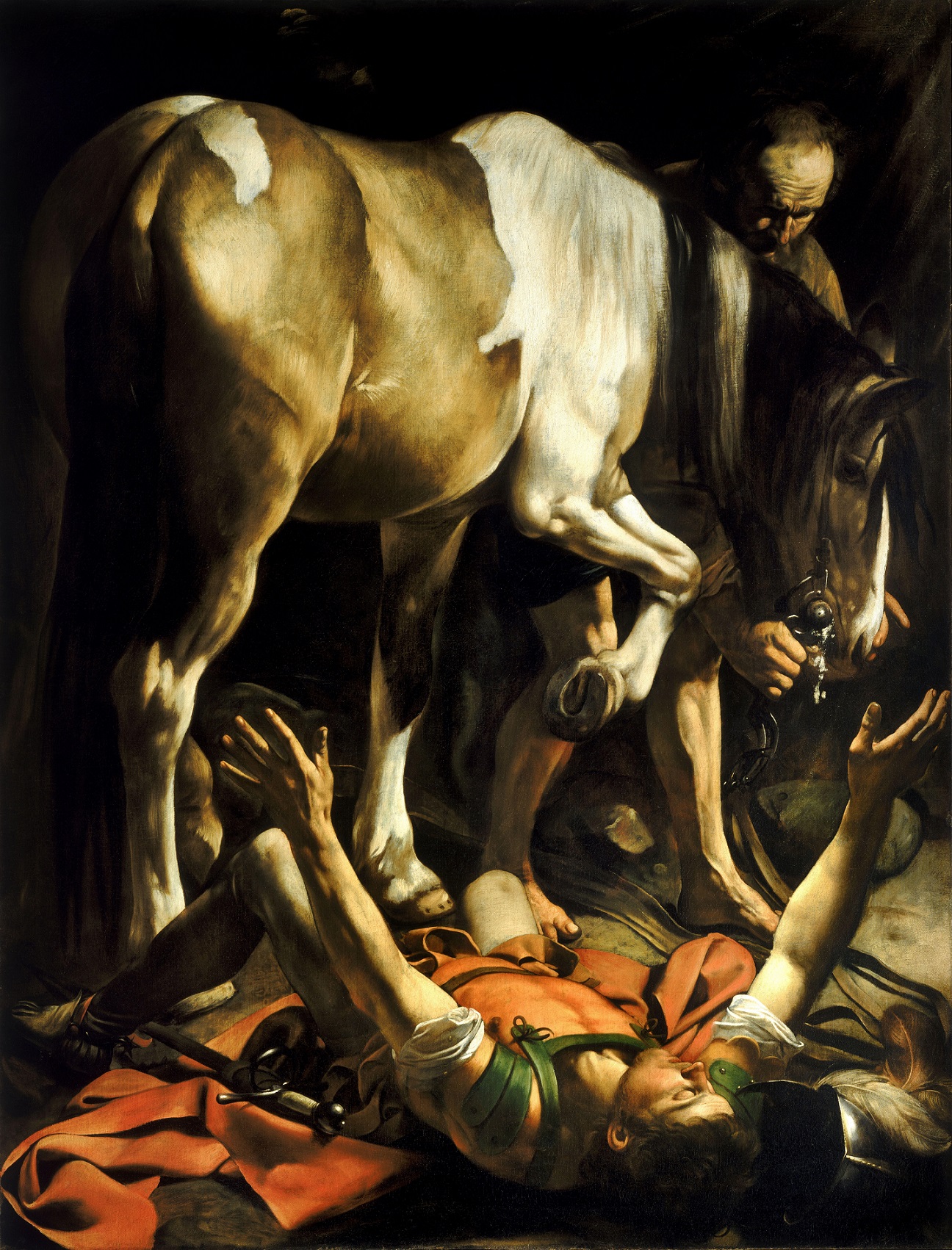
“Damascus” (a poem for the Feast of Paul’s Conversion)


conversion_on_the_way_to_damascus-caravaggio_c-1600-1

A troubled heart troubled still as I walk in the valley of the shadow of death but Im the shadow of that valley as I strike them with one rod while another comforts them why wont they die as I strike them with My Left as your right upholds them all Ill kill them inhale Ill kill them exhale Ill kill them inhale so on and so forth I walk as the dust of My sandals covers their face while Mine is clean Mine is pristine following none but MySelf on this dusty Damascus road and
then—
Continue reading

George Washington: A Guide for Immigration Policy (or is he?)


crossing-the-delaware-web-2

I’m currently reading Ron Chernow’s biography of George Washington, and it is astonishingly good (I believe the proper word is “magisterial”). In the book, I’m currently in the late 80s (the 1780s, that is), in the odd period after the War, but before he was drafted into Presidential politics. He’s having old friends visit him at Mount Vernon while he’s doing renovations after its long wartime neglect.

One of those friends was Washington’s first real biographer, David Humphreys–an aide of Washington’s during the War. He liked Humphreys so much that after the British defeat at Yorktown, Washington had him take the British flags from the fort and deliver them in person to Congress as the sign of victory.

Continue reading

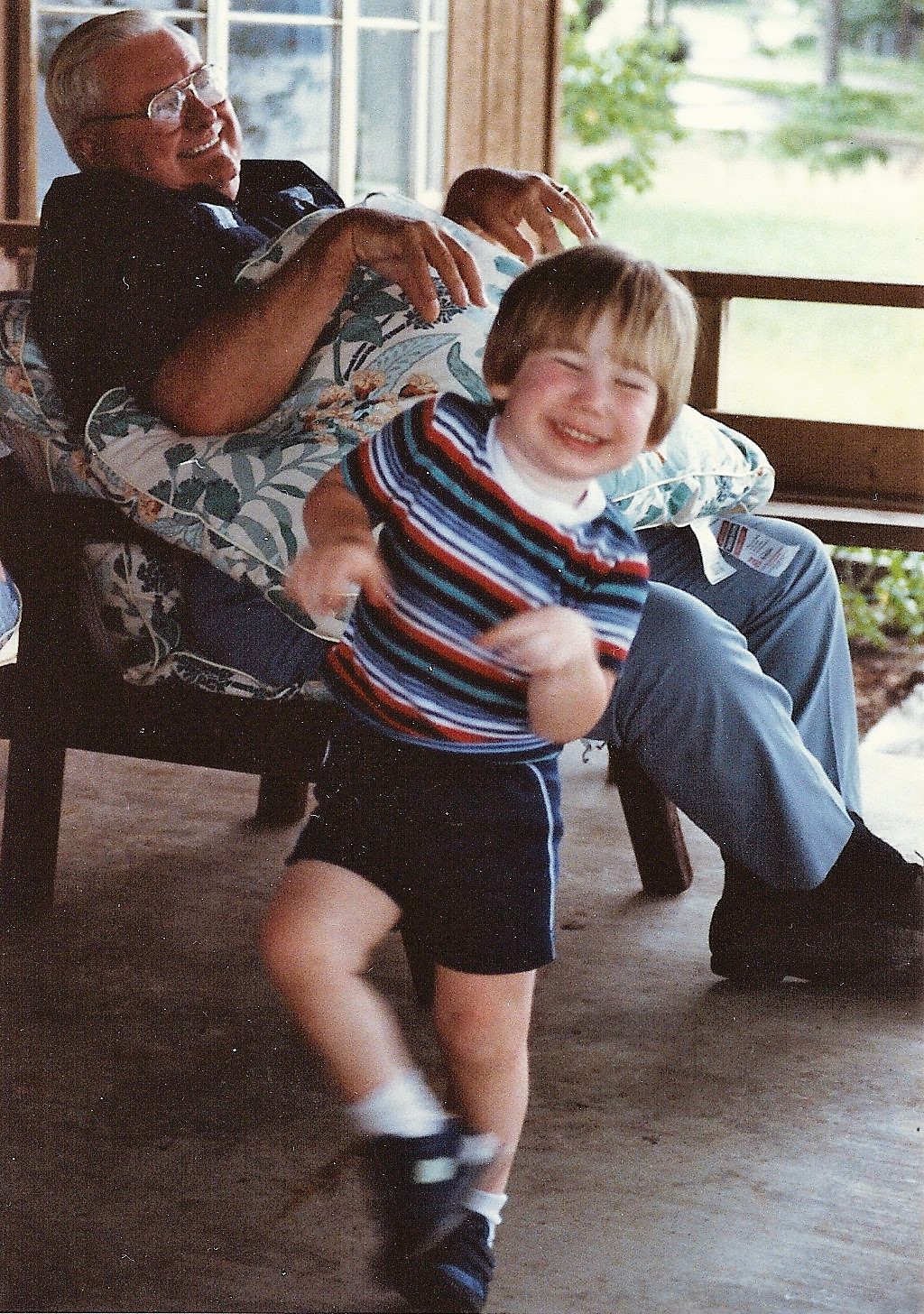
My Grandfather’s Passing (Hope in Death?)


peep-paul-dance-2Today is the sixth anniversary of my Grandfather’s death. I am reposting this reflection I wrote at the time.

This past Sunday, the day after Christmas, I watched my grandfather die. This is the first death I’ve experienced of someone very close to me. I’ve known people who had died, sure, but no one as close as this.

This man walked with me and I with him for my entire life. I sat on his knee and was tickled by his hands. I grew up hearing legends about him, and I walked in a general sense of awe and disbelief when in his presence.

His name was (is?) Lester Travis Williamson, or as I knew him for most my life: Peep (a mispronunciation due to the first grandchild’s toddler lisp).

Peep represented for me a tenacity and determinedness of love that great stories of tragedy and triumph are built upon. As their old pastor said during the funeral, he was a man that if you asked for a crumb would give you the entire loaf and then chase you out the door to give you another loaf for the road.

But this is not to be confused with the contemporary pictures of the sentimental, gratuitously giving man–cheerful, talkative, jocular, and always-optimistic. If Peep was anything, he was the quintessential man of his generation–America’s vision of a “real man”–quiet, determined, and strong. He spoke with intention in every syllable, meaning what he said and saying what he meant.

Continue reading