Global Clean Water Access: Staggering Statistics & A Call to Action


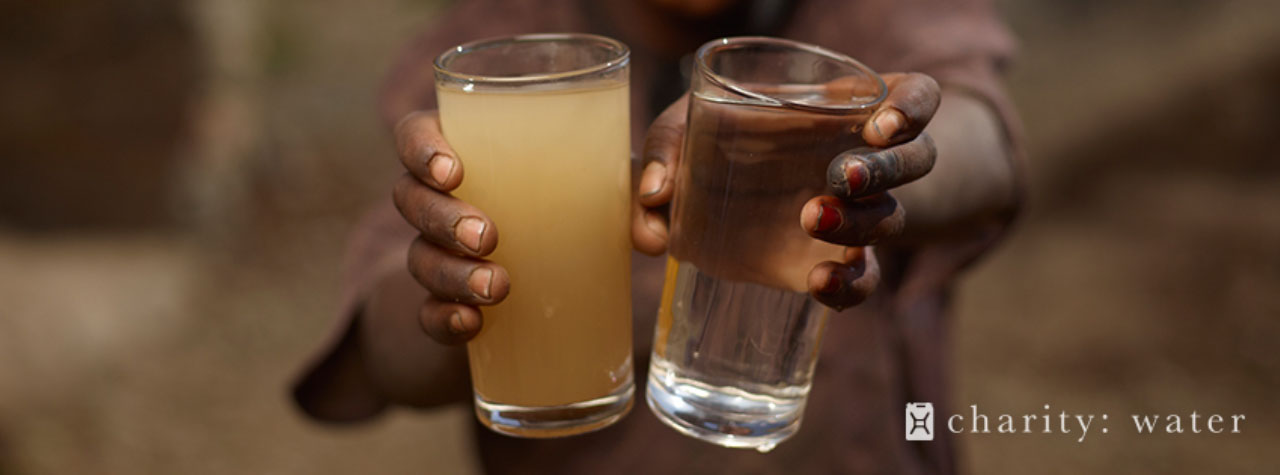
charity-water-glass

For my birthday this year, I’ve been trying to raise money through Charity: Water to give clean water access to those in developing countries. At the time of this writing, we’ve raised nearly 60% of my total goal! That’s crazy to me.

I recently wrote about uniquely Christian reasons to care about this issue, but today, i want to make one last appeal and explain why everyone, regardless of personal belief system ought to care about the lack of clean water globally.

The Problem

I admit: “Social Justice-y” issues are in style. As globalization and social media collide, our global neighbors are feeling ever and ever closer, and our awareness to global issues is rising. Everyone’s got their own specific concern. What’s yours? Women’s rights? Children’s rights? Animal rights? Education? Poverty? Global Health? The Environment? Global conflict and wars? As Charity: Water points out, this clean water access issue is a primary factor in all of the above areas.

1 in 10 humans on earth don’t have clean drinking water. Unclean and unsafe water is the primary cause of 80% of all disease and it kills more people every year than all forms of violence, including war. 90% of all of these deaths happen to children.

Many global wars, including the humanitarian disaster in Syria (and also Darfur), can find their root in water access. Notice I didn’t say that the conflicts only bring about lack of clean water (though they do)–the poor water access is part of the cause of these conflicts in the first place.

Further, the hours spent finding, carrying, and distributing water–and not going to school or working–are so numerous that it is a major source of poverty in the world. It severely limits women’s rights, political integrity, and social upbuilding due to the constant time and attention devoted to water rather than other socio-cultural needs. Indeed, there are even more implications for this most basic of issues. Clean water touches everything.

Continue reading

A Theology of Clean Water, Christmas, & Advent


Tomorrow is my 31st birthday, and instead of any gifts or Facebook Wall well-wishes, I’m asking people to give $31 on my campaign page at Charity: Water to give access to clean water to those in developing country.

But it is also Advent and Christmas season, giving an even deeper and fuller reason to give, especially if you would call yourself a Christian.

Yes, as Christians we ought to care about the pain and suffering of the world no matter what chapter and verse we can cite on a particular issue. But water, however, is uniquely theological and full of meaning.

A Theology of Water & Advent

Water is an essential and mystical part of the Christian story and message, giving us unique motivations and resources for addressing the issue of clean water. The Israel story begins with God creating the world out of the murky depths. The Israelite people are set free from bondage to a prince of death and find their redemption by passing through a Red Sea, which would have held certain death and return to bondage; they enter the Promised Land in a similar fashion. God promises to sprinkle clean his people with the waters of redemption. It is by more than one water well that Patriarchs find their wives and Christ finds a woman in need of redemption. It is in the world to come that the Tree of Life is seen once more, and a River of Life flows from its roots offering life and salvation to all who drink.

Continue reading

If 31 people gave $31, 31 others could have clean water


charity-water-glass

I wrote recently about how, for my 31st Birthday, I’m asking people to give money to Charity: Water to give people clean water in developing countries. I recently did the math, and this is actually quite attainable.

All it would take to accomplish my goal of giving 31 people clean water would be for 31 of you out there to give just $31 through my Campaign Page.

To me, that’s more than reasonable. I’ve even given the first pledge! This is the time of year where we ought to be thinking of others. We will already be spending for more than $31 on people we love. But what of the people whose loved ones don’t have even $31 to their name?

They deserve love also. And not just a sentiment. Not just sympathy or prayer. They deserve tangible expressions of love that actually add to their quality of life. And there is probably no more basic tangible need for such quality than clean water itself.

It’s so fundamental, so elemental. What better symbol may there be for the most essential aspect of what it means to be an embodied human in this world? Giving water is one of the most beautiful was to give ourselves for others. And it’s easy and simple.

Just go to my Campaign Page and give $31 in the next week to give someone the gift of clean, drinkable water. Thank you.
Baptizing Babies: Re-Creation & Changing My Mind


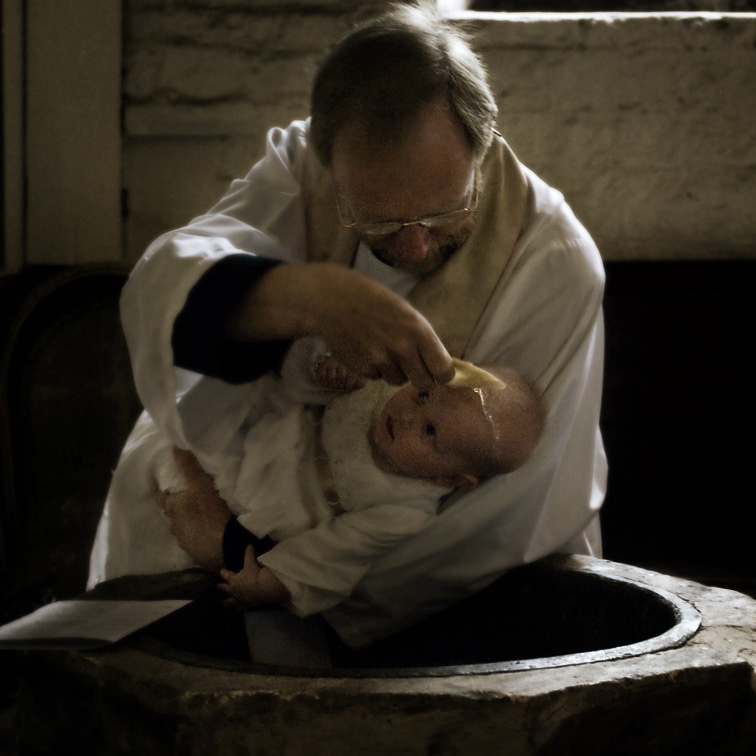
infant-baptism-water-4Inspired by last month’s Theology Book Club, I want to spend some time on the blog reflecting on baptism. Today, I want to tell you the story of how I changed my views on baptism to be in favor of baptizing babies.

I was raised a good Bible Belt Southern Baptist. I was so immersed in this language and perspective on the Bible, that even now that I totally buy into the reasoning and Scripture behind infant baptism, it still “feels” more natural to read the Bible with my Southern Baptist eyes. I get why people would absolutely disagree with infant baptism.

Having come from the Baptist perspective (called “Believer’s Baptism”) gives me some added insight (I hope) into this discussion. It also has helped me see how people can get so insulated in the way they are raised that they can get really wrong impressions of the “other side”. I remember all the beliefs I had about those that baptized infants and now, on the other side, I see how wrong I was.

The Fateful Turn

I got all the way through college and entered a Presbyterian seminary, all while still holding to my theological roots. These Presbyterians spoke as if it was soooo obvious that infants should be baptized, and thought any other way of thinking was pretty silly and naive. I couldn’t have disagreed more.
Continue reading

Forget Gifts. Give Clean Water for My Birthday


israel-en-gedi-1[TL;DR: Instead of gifts for my birthday, I’m asking for donations to Charity: Water to give clean drinking water to those with none. Give on my Campaign Page.]

The picture on this post is from my trip to Israel earlier this year. It’s from En Gedi, an oasis in the the desert, near the Dead, Masada, and the caves where the Dead Sea Scrolls were found. It is literally a random spring in the middle of the vast Israel wilderness.

I thought of this image as I was listening to a recent episode of The Liturgists podcast on suffering. They offered interviews, art, music, and poetry about the pain and injustice which exist on a global scale.

They lamented that many such programs leave us with no ability to do something in response. But they offered a way. They interviewed the founder of Charity: Water, a non-profit that focuses on delivering sustainable clean water wells in underserved parts of the world.

One of the best ways they have found to raise money is to ask others to donate their birthdays to Charity: Water. Instead of getting gifts, people would encourage others to give that gift-money to Charity: Water.

So that’s what I’m doing for my 31st birthday on December 20th. 

Continue reading

Trump & My Sleepwalking Daydream


jamelle-bouie-bw-donald-trump

For several years now, I’ve had this recurring dream in which I’m trying to come up with the scariest story possible. The dream itself isn’t scary, mind you. It’s more about me intellectually trying to think of and experience what would terrify me most.

As I’ve played this out in my dreams over and over, certain contours have emerged as to what would truly scare me and evoke terror the most. It is not necessarily death, harm, nor paranormal antagonism. For me, it is more existential. It is soul-deep.

I still can’t nail down the precise plot to this horror movie in my mind, but it involves a man who has an entire set of worldviews, beliefs, opinions, and actions that are entirely consistent with the data he has available to him. He feels he has a reasonably clear picture of reality–or at least as clear as can be expected–and has a coherent life built on top of that picture of reality.

The soul-terror comes when he realizes that it is all a lie.
Continue reading

October Book Club: Un-Crazy Calvinism, with Richard Mouw


UPDATE: I also did a little series exploring topics in this book, including Calvinism’s history, and TULI-P. Enjoy!

October’s Book

book-mouw-calvinism width=

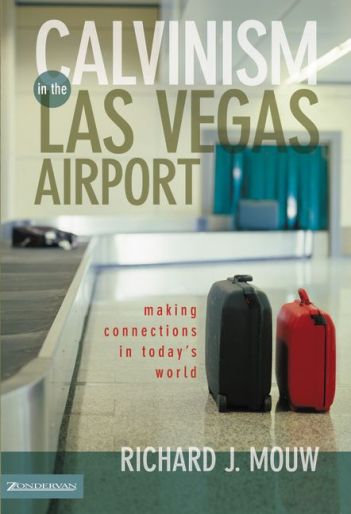
Calvinism in the Las Vegas Airport
by Richard Mouw

For my church‘s monthly Theology Book Club, we’ve been spending the Fall exploring some of the distinctive beliefs of Reformed Theology.

Well, if there’s any set of ideas Reformed Theology is most known for (and controversially so), it is surely that cluster of doctrines known collectively as “Calvinism”. That’s what we’re exploring this month through Richard Mouw’s amazing book, Calvinism in the Las Vegas Airport.

To be clear, “Reformed Theology” is a lot bigger than Calvinism. You can agree with Calvinistic thought and not be Reformed, and you can have a huge range of opinions on Calvinist doctrines while still being Reformed. And yet, it is so connected to the thought of my church’s tradition that it deserves a deep dive.
Continue reading

“The End & The Beginning”: On Houses, Wise & Foolish [sermon]


01111_blacksandbeach_1680x1050

A couple of weeks ago, I got to finish up our church’s series going through the Sermon on the Mount. This sermon was such an experience to prepare and give. For one, this was my first time ever preaching two weeks in a row (if your pastor does this regularly, give him or her a hug for me–it’s hard!)

Second, this was my firs time preaching on a text I previously preached on. This text was the same as my first ever “real” sermon. It was the oddest experience diving back into this text and it feeling so new–as if I’d never read or studied it previously.

And lastly, this is the shortest set of verses I’ve ever been able to preach on–5 verses! This gave me the freedom to slow down, and experiment with how I wanted to structure this and go about writing the sermon.

This sermon tries to serve both as a summary of the entire Sermon on the Mount as well as a conclusion and call to action for those of us who have sat under it all Summer. If that piques your interest, feel free to listen to or read the sermon below. The text is Matthew 7:24-29. Here’s the audio:

You can also download it here, or subscribe to our podcast. If reading is more your style, here is my manuscript for your perusal. Continue reading

September Book Club: What IS Reformed Theology, anyway?


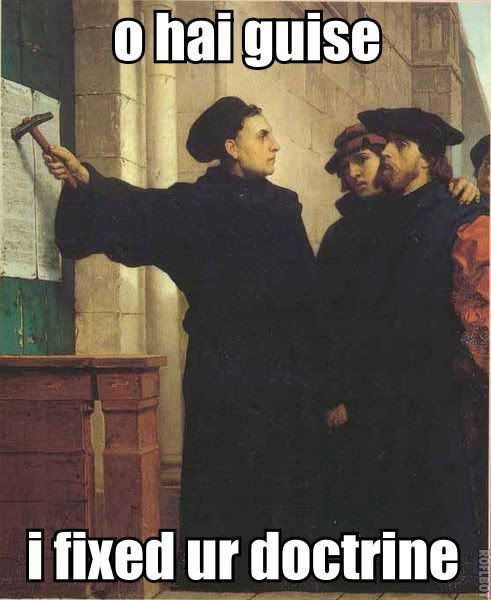
luther-95theses-humor-memeSeptember’s Books
(just pick 1)

Welcome to a Reformed Church: A Guide for Pilgrims by Daniel Hyde

Reformed Theology by R. Michael Allen

One thing I appreciate about my church is that we don’t wear our labels on our sleeve. That does mean, however, that a lot of people can go to our church for quite a while and not know that there is a very real theological ethos woven into everything we do.

We belong to the oldest American denomination–the Reformed Church in America–which ascribes to a theological tradition called “Reformed Theology”. And because many, many people in our church likely have little idea of what that especially means within the broader Christian family, we’ll be spending this Fall exploring these ideas in our monthly Theology Book Club.

So how are we going to do this? Well, I really struggled with this one, because though Reformed Theology has some general contours, there really is quite a bit of diversity and flexibility within that definition of being “Reformed”. In looking for a good book, the problem I kept finding was that most books on this topic tend to define Reformed Theology very narrowly and very dogmatically. I don’t think this is helpful.
Continue reading

“Do Unto Others”: The Golden Rule of God’s Kingdom [a sermon]


bw-three-paths-meet-williams-cairns-photography-llc

As part of my church’s series on The Sermon on the Mount, I got to preach this past week on the Golden Rule, as well as Jesus’ call to action at the end of the Sermon.

For many of us, when exploring Christian faith, what we’re really looking for is what makes Christianity distinctive. What does it have to say that any other perspective on existence doesn’t—or can’t? I can imagine many people see Jesus offer the Golden Rule and think that he is acting as just one more ethical teacher repeating this ethical principle that most anyone who wants to be a nice person knows about. And it’s true: much of what Jesus says is, technically, not new in human history.

But here’s the trouble: as a human race, we’ve had a lot of practice with the Golden Rule. It’s in us. It’s in our laws. It’s in our societies. It’s in our intuitions that guide and shape how we move through the world. It shapes our sense of justice and morality. And yet we still fail it every day. We’ve had so much practice legislating it, commanding it, manipulating it, teaching it, and hoping for it. And yet it is not the predominant reality in our world or relationships.

That’s why when Jesus comes on the scene, it’s not enough for him to simply repeat the same old teachings in the same old ways. We need more than that if we have any hope for living his vision out. And in this sermon I argue that what Jesus offers here is an entirely new framing and context of the Golden Rule. What Jesus offers here is so much more than a simple ethical maxim. It’s not even Ethics at all! Further, if we see Jesus as just one more religious authority trying to tell people how to act, then we’ve profoundly missed Jesus’ point and what he’s trying to offer us here.

So feel free to listen to or read the sermon, and let me know what you think. The sermon text is Matthew 7:12-23. Here’s the audio:

You can also download it here, or subscribe to our podcast. If reading is more your style, here is my manuscript for your perusal. Continue reading

August Book Club on Christianity & Race: “Divided by Faith” by Emerson & Smith


August’s Book book-divided-by-faith-race width=

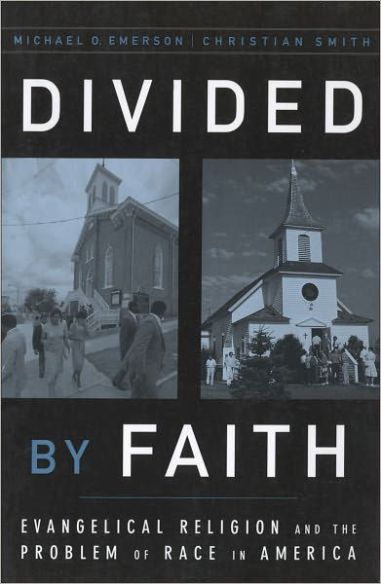
Divided by Faith: Evangelical Religion & the Problem of Race in America
by Michael Emerson & Christian Smith

Last night’s book discussion went really well, and it makes me even more excited for this month’s meeting.

For my church‘s monthly Theology Book Club, I’m excited to have us read an especially timely and important book, Divided by Faith by sociologists Michael Emerson and Christian Smith. The opening lines of the Preface summarize their purpose beautifully:

To learn more about American life, this book examines the role of white evangelicalism in black-white relations. Our argument is that evangelicals desire to end racial division and inequality, and attempt to think and act accordingly. But, in the process, they likely do more to perpetuate the racial divide than they do to tear it down.

In America, we have a problem with race. White Christians, I think, genuinely act in good faith to play a positive role in race relations in America. And yet, they often end up unintentionally exacerbating some of the broader cultural problems that feed into racial injustice.
Continue reading

On the Trump Convention Speech: We are better than this


trump-convention

The hardest thing about writing anything about politics (or religion, for that matter) is not having someone write you off immediately by placing you into one of the Right-Left boxes that dominate our national discussion. I am really not a liberal progressive. I have voted Republican, Democrat, Libertarian, and even Green Party. In 2008 I voted down the ticket but conscientiously abstained from casting a vote for President as a “none of the above” protest vote.

All that to say, on most any issue, I can see both sides of it. I can see why people believe what they believe and I can see much of its merits. But (as so many written sentences this election season have concluded), that was until Donald Trump.

I am so strongly against Trump for President. I am not against critiquing the foreign and domestic policy views of the Obama administration and Secretary Clinton. I am not closed off to new recalibrations over trade and foreign policy. I understand the economic forces that have driven wedges between the working class and all others, and I can see the pain and malaise in middle America and groups that have been so forgotten and overlooked.

I see the forces that have given rise to Donald Trump and though I want to validate the cynicism, pain, and feeling of disempowerment, I struggle to know how to communicate to these voters that Trump is not the answer. He will not help you. People may respond that he’s better than Secretary Clinton. He’s not. Crunching the numbers, it is clear that Clinton’s policies would be far more effective in ameliorating these cultural and economic pressures.

You may not like Clinton personally, then, but we can’t overlook one candidate’s personal foibles only to condemn the other for theirs. On moral, legal, ethical, intellectual, and religious grounds, Trump is far and away the lesser of the candidates. If character, morality, and heck, even legal uprightness are important to you in choosing a candidate, Trump is worse.
Continue reading

Philly TONIGHT: Open Sanctuary Time for Reflection & Prayer


liberti-church-ceiling-lights

We live in a time and place that is happy to tell us all the things we need to do to be the kinds of people we want to be. And churches are good at telling us more things to do and occupy our time with in order to live in greater closeness with God.

But there are some parts of being human and knowing God that don’t involve doing more, but rather stopping and doing less.

At my church, over the summer, we want to try and create space where people can come and just stop; to experience silence, reflection, prayer, meditation, and a little guidance in those things. This is a spiritual muscle we don’t exercise much, but it’s an essential one to work out if we are to become more human and know God more deeply.

So starting tonight, from 6:30-8pm and every Thursday in July and August, we’ll be having an open, unstructured time for prayer, reflection, contemplation, journaling, and meditation.

A few times I’ll get up and read some Scripture, but outside of that, it’s a space people are free to come and go, lie down, walk around, sit on the floor, or whatever they need to connect with themselves and connect with God. No matter your church home, religious tradition, or lack of belief, feel free to use this space in whatever way you need.

So feel free join us at 17th and Sansom St in Center City Philadelphia between 6:30 and 8, and each subsequent Thursday.