Back on Track: The How (and Why) of Christian Male Feminism


maleFeminism110314

Remember the beginning of Lent, when I said I wanted to lay out a vision for how Christian men can think about God, the Church, and Theology in a way that takes into account the concerns of feminists? I said that these thinkers had been exposing the very real damage that has been wrought by us treating “White Male Theology” as default, neutral, objective “Theology”.

Well, believe it or not, we never actually got to what I wanted to write about. Full disclosure: that whole series was conceived because I had written a paper on this topic that I was proud of–a paper I wanted to edit down and make into a series of blog posts. And yet, before we could get to what amounted to a term paper, I had to take the reader through a lot of the other ideas that were in the rest of the class.
Continue reading

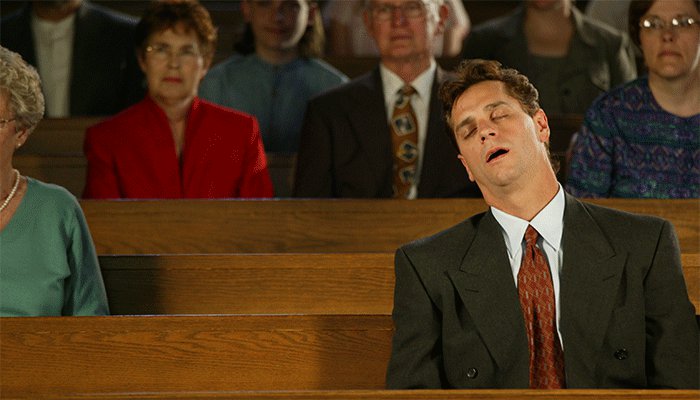
NEW POST: Why Sleep is an Essential Seminary Course


church-sleep-humor
I have such a love-hate relationship with sleep. I love it when I’m in it, but avoid it at all costs. I also have a new post on Going To Seminary in which I talk about sleep and the seminarian. No, it’s not just about how sleep is good for you, but how it actually affects us spiritually. Check it out. Here’s the intro:

In any school, especially graduate school—including seminary—one of its greatest costs is to one’s sleep. At least, I know that’s the case for me. I spent most of my adult schooling years with an average nightly sleep duration of 4 to 6 hours. And let’s be honest, for most of us that find ourselves staying up late, it’s often not that we’re doing school the entire time. Sometimes we’re trying to recover from the school work we’ve already finished, or maybe further putting off the work we’ve yet to do.

Read the full post:
“Sleep: One of Your Most Important Seminary Classes

Check out the rest of my Going To Seminary posts.

Orthodox Holy Week, Continued.


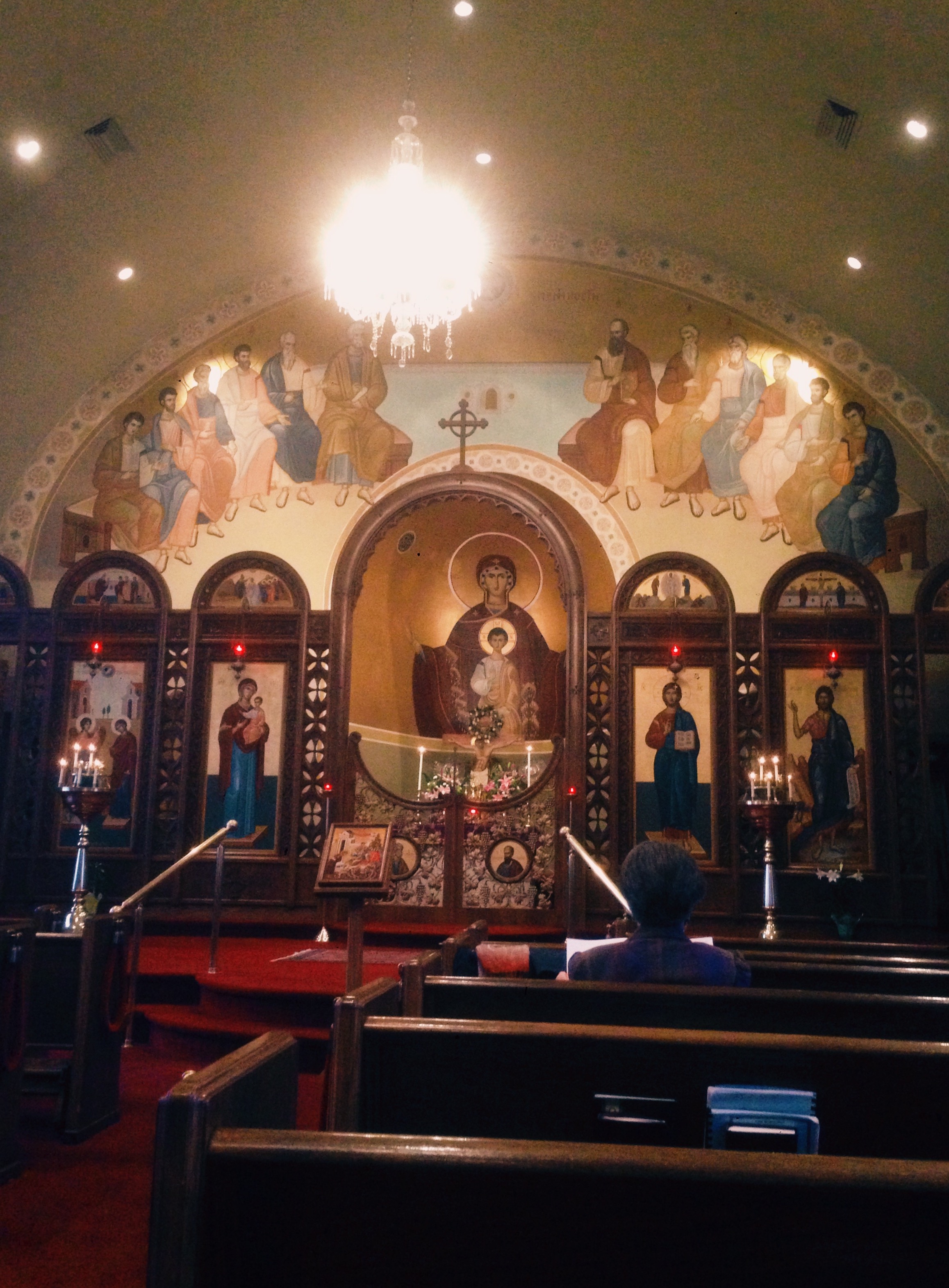
I wish everyone I know and love could come to Holy Week. The service of the Twelve Gospel Readings is so rich. It is long and it is rigorous (3 hours) but that is the purpose of liturgy — to re-form us in the spirit of Christ, away from the World, and that takes work. A lot of it. After the reading of the 5th Gospel, the lights go nearly out. The Priest enters carrying the icon of Christ on the Cross (video can be seen here). It is a slow procession and he hymns: Continue reading

Orthodox Holy Week, the Liturgy of the Pre-Sanctified Gifts, Resurrection.


Liturgy of the Pre-Sanctified Gifts

Liturgy of the Pre-Sanctified Gifts

**Disclaimer: the views here may not reflect those of the owner of this blog; Mr Paul Burkhart**

Orthodox Holy Week falls on a different schedule. To the best of my understanding, it is mostly because we never updated our lunar calendar circa the 16th century. Orthodox Pascha can fall as late as early May, I believe. Last year, I was a Catechumen. This year, I’m a full participant. It is vastly different. Lent is a long and arduous spiritual journey of fasting, forgiveness and repentance. Including the Triodion, the march to Pascha lasts 70 days. Lent begins with Forgiveness Vespers. It is one my favorite services of the whole year. At the end of the service, the priests come out and ask each parishoners forgiveness with a prostration and a hug and kiss. Each parishioner does the same to each other. It takes time, but it is worth every second. It is magnificently beautiful and helps show us the absolute need for forgiveness and reconciliation. The Church cannot exist without it. One cannot be saved without it.
Continue reading

New Seminary Post: Holy Week Music & Readings on Death


Jesus & The Cross

I have a new post on the site Going to Seminary. I am putting up occasional posts giving different things to read around the interwebs, and this week focuses on Holy Week and its theme of death–Christ’s Death, Our Death, and Death conquered. I also give some classical music suggestions for this week (more Lent music suggestions here). I link to articles about a sister in Christ who recently died well, a New York Times piece about watching family die, and some writings by non-Christians about death. It ends with one of my favorite quotes ever. May these writings help you press into this time and our Savior all the more deeply.

Read the full post:
“Around the Web: Holy Week Edition

Check out the rest of my Going To Seminary posts.

God in Her Glory {1b}: A Good Facebook Debate (for a change)


wwii-woman-we-can-do-it-feminismWow. I’ve actually been surprised at the response to the last post in this little mini-series on using feminine language to talk of God. I thought I was addressing one simple thing in the life of churches, but I misjudged the degree to which people would feel like this touched on everything from their thoughts on the Bible to the nature of Jesus himself. One of the best sets of exchanges was on Facebook in response to yesterday’s post. Below, I’ve reproduced a lightly edited version of the conversation. I hope you find it interesting as well. And let me know what you think!

DEBATER: Your post says, “The model of God as Father may be profound and true; but it is not the only model, and it does not render other models less true or profound.”  It’s Jesus’ own self-disclosure and revelation of God. It’s more important than any other ‘model’ and it isn’t really a model. “Father” is not a metaphor. Its a reality for Jesus. And I’m not talking about Jesus’ physicality like his weight or hair color. Jesus revelation is of God as Father. That’s the particularity. He said pray to God as father. And he’s the Son. That’s ontological. The feminine is redeemed in Jesus, but its redeemed not by Jesus taking on the sign of the feminine, but by taking on the sign of the masculine redeemer of the oppressed and abused feminine.

ME: Your last line especially uses terms and ideas entirely foreign to the Scriptures. I’m actually shocked that you saw no issue in writing that. Women need a male redeemer to be redeemed? Even if you point to the ancient cultural idea of the male kinsman-redeemer, surely you aren’t saying that this (clearly) cultural accommodation is some revelation of the essentially gendered nature of God and redemption? The Old Testament also had lambs being sacrificed, and not people. Does that mean that Jesus in some sense had to partly be an “actual” lamb rather than a metaphorical one?
Continue reading

New Post on Why I’m Terrified of Seminary


paul-window-bw-header

I have a new post on the blog of Best Seminary. It’s on the heart and soul that one brings into seminary and the hard things one wrestles through when considering it.

My biggest fear going into seminary (and perhaps it’s yours, as well?) is the whole question of whether it is my “False Self” that is called to it and pastoral work, rather than my “True Self”. I have spent much of my life following Spurgeon’s (I think) advice that if you feel called to ministry at all, try to do everything else in your life you possibly could do. If you still end up in ministry, then congratulations, you were called.

Read the full post: “Terrified of Going to Seminary? Join the Club.”

My Sermon on Judgment, Poverty, Sheep, & Goats


Christ-Shepherd-Judgment-Icon

Yesterday, I got to preach the hardest sermon I’ve gotten to preach (so far).

The text is Matthew 25:31-46, what is commonly called “The Parable of the Sheep and the Goats”. It’s also the one where Jesus shows up as a naked and hungry beggar and prisoner. It’s one of the most difficult, confusing, and doubt-inducing texts in the Gospels. Let me know what you think. Sermon cameos include Albert Camus, Samuel Beckett, Martin Luther, and homeless Jesus. Here’s the audio:

You can also download it here, or subscribe to our podcast. If reading is more your style, here is my manuscript for your perusal. Continue reading

5 Advantages & Disadvantages of Distance Seminary Education


sermon-prep-seminary-books
For the site Best Seminary, I recently wrote two pieces about Distance Education. As I begin:

When I originally entered seminary, it was in a pretty traditional setting. A walled-in, ivy-laden campus with bearded men roaming the grounds, coffee-in-hand. We had a set schedule of classes that we dutifully went to, staring at Powerpoint presentations of varying quality, accompanied by live lecture and in-the-moment Q&A. My classmates and I would spend all our free hours together debating, arguing, refining, and sharing all our theological growth and such.

But after one year there, circumstance and convictions led me to leave that school. I worked for several years, but now I’m back in seminary, in a distance program. These two schools have similar doctrinal convictions, professorial pedigree, institutional history, and such. Therefore, I feel that I’ve been able to experience distance seminary education in a way that hopefully can give insight to anyone out there considering what sort of program to enter.

The first post gives “5 Advantages of Distance Seminary Education“:

  1. You make your own schedule
  2. You can stay invested in your church community and ministry
  3. It’s often more thoughtful and grace-filled
  4. The depth and diversity of community
  5. It’s Incarnational and humbling

The second is “5 Disadvantages of Distance Seminary Education“:

  1. You have to create your own structure
  2. You have less immediate access to the professors—or none at all
  3. It’s greater temptation to be dishonest
  4. Reading, reading, and more reading. Oh, and writing
  5. The experience is less cohesive

Click on those links for more thoughts on each of those points. And don’t forget to leave your own thoughts!

Let’s try this again: “Going (Back) to Seminary”


cropped-2012-06-26-11-14-02.jpeg

Years ago, on my first go-around with seminary, I wrote for a website called Going To Seminary. The site was started by an old campus minister of mine, and it was meant to be a place for wisdom and encouragement in seminary life. Looking back on the posts I wrote then, I still can’t believe how overzealous and eager I was, just six years ago.

Anyway, the last post I ever wrote for them was called “Realizing Seminary’s Not For You“, in which I wrote about my experience of deciding to drop out of school. Many people found this post encouraging, but astonishingly, the post inspired some comments that were some of the harshest I’ve ever received online for something I’ve written. People couldn’t imagine that God could call someone to seminary and then call them out before it was finished. Surely it must be a lack of trust and faith on my part, right?

Well, I still stand by that decision, and one of the main reasons why is that it set me up to now return to seminary with a much more clear, gracious, and (hopefully) mature mindset on the whole enterprise. Since I’ve been going back to seminary, I suppose it’s time for me to go back to writing on Going To Seminary. And so I have. Today marks the return of my writing on that site (I gave y’all a heads up last week).

Appropriately, my first post is an update and follow up to that previous piece. It’s called “Going (Back) to Seminary“.

It goes through each of those reasons why I left seminary and talks about how God worked in me and my life to lead me back, albeit to a different school. I hope each of you are able to be encouraged in your own journeys with God. Also, leave some comments and let us know what you think!

Check out the rest of my Going To Seminary posts.

Writing News: Seminary Thoughts & Musings


paul-surface-coffeeJust wanted to drop a quick note about this. I’ve been asked by an old friend and minister of mine if I could share my varied experiences on seminary life and work on a couple of sites. As those writings get posted, I’ll link to them from here. But, if you’re a seminarian, let me encourage you to follow these sites for my ideas and information on how to engage in seminary preparation, study, life, spirituality, and work well. Both of these sites are in the midst of a revitalization process, so expect some cosmetic looks in the weeks and months ahead. Let me know what you think! Here are the sites:

– Best Seminary.com –
– Going To Seminary.com –

Check out all of my Going To Seminary posts.

Lent: Poems, Mixtapes, Prayerbooks – Oh My!


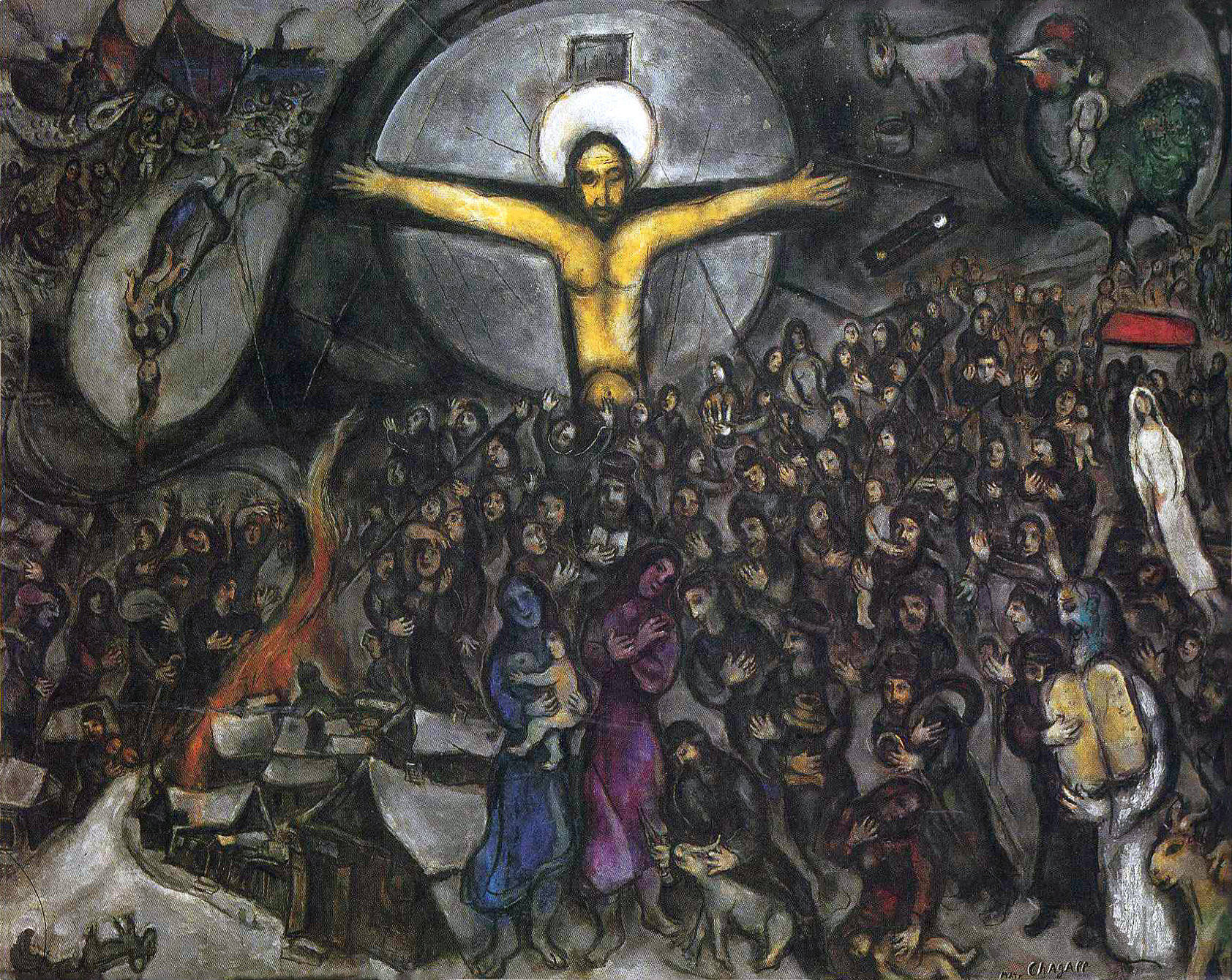
chagall-exodusI’ll be honest, one of the reasons why I love Lent and the Church Calendar is because it is a helpful corrective for my own personal lack of personal discipline. I’m not especially skilled at putting together my own structure, and so I really flourish when structure and pattern is placed on me from the outside.

This is especially true with spiritual practices. To engage with a Church season like Lent, I often need to give myself a blog series to keep me thinking on a theme for the season (see above, under “Lent Posts“, and also check out this year’s series). I really do well with reading plans, prayerbooks, music albums, etc. If you find yourself in the same boat, here are some resources for this year’s Lent that some of you may find helpful.
Continue reading

This Ash Wednesday, I can’t do ‘Ashes to Go’ or ‘#Ashtag’


Processed with VSCOcam with hb2 preset

Hmm… I definitely took an Ash Wednesday selfie (see above). After this, though, I don’t know that I will in the future. As for Ashes To Go, I couldn’t agree with this piece more.

The Rev. Erik Parker's avatarThe Millennial Pastor

ashtag-selfie-ashwed-churchmojo-squareThis morning a blogger and writer that I like to read and whom I respect, David R Henson, posted an insightful blog post about the problems with #AshTag.

As I prepare for Ash Wednesday, my own thoughts have been swirling around how to approach and understand this first day of Lent. As David considered the problem of Ash Wednesday selfies posted to social media using the hashtag #AshTag, one line in particular caught my attention.

The systemic push within the church for Ash Wednesday selfies is an exercise in whistling past graveyards.

Needless to say, I won’t be posting an Ash Wednesday selfie (one would think that Shrove Tuesday or Mardi Gras would be the big selfie night).

AshestoGo4But another Ash Wednesday innovation that I have surprised myself by not being terribly interested in is ‘Ashes to Go.’ Ashes to go is where clergy go out…

View original post 642 more words

Lent & Male Feminism: Reflections & Repentance


ash-wednesday-faces-of-the-faithful-photos

Today is Ash Wednesday. It is the beginning of the Lent season of the Christian Church Calendar. It is the time of year in which we turn up the volume on those darker whispers in our hearts to hear what they say. We turn our ears to the cries of the world bear the wounds of a weeping earth in our hearts and hands. And oh, the wounds are deep.

We come to this Lent with the weight of so much on our collective shoulders: so much brokenness, so much injustice, so much pain, heartache, death, and violence in the world. I honestly thought that 2015 would bring relief from 2014. So far, it has not.

But in the midst of the chaos that reigns both within and without, I am determined to turn my thoughts and this blog towards one area in which the Church as a whole needs to repent; an area in which I feel we can make some real progress in this day and age: Women in the Church.

I do have an on-going series on this topic that I’ve been adding to for the past couple of years, but I think it’s important and helpful to turn towards it particularly now. Lent has always had a deep connection to this topic for me.
Continue reading