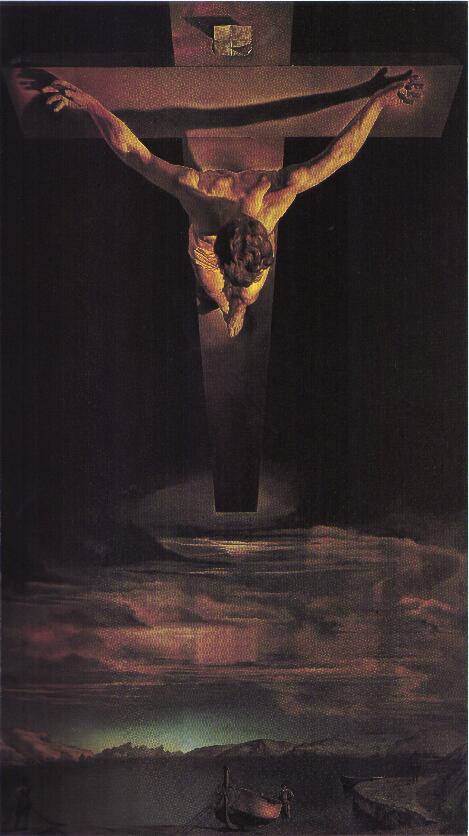
God, eternally-slain | Lent series {1:intro}


“…the Lamb who was slain before the foundation of the world.” –Revelation 13.8

“…you were ransomed…with the precious blood of Christ, like that of a lamb without blemish or spot, who was foreknown before the foundation of the world but was made manifest in the last time for your sake.” –1 Peter 1:18-20

“Jesus Christ and him crucified… a secret and hidden wisdom of God, which God decreed before the ages for our glory” –1 Corinthians 2:1,7

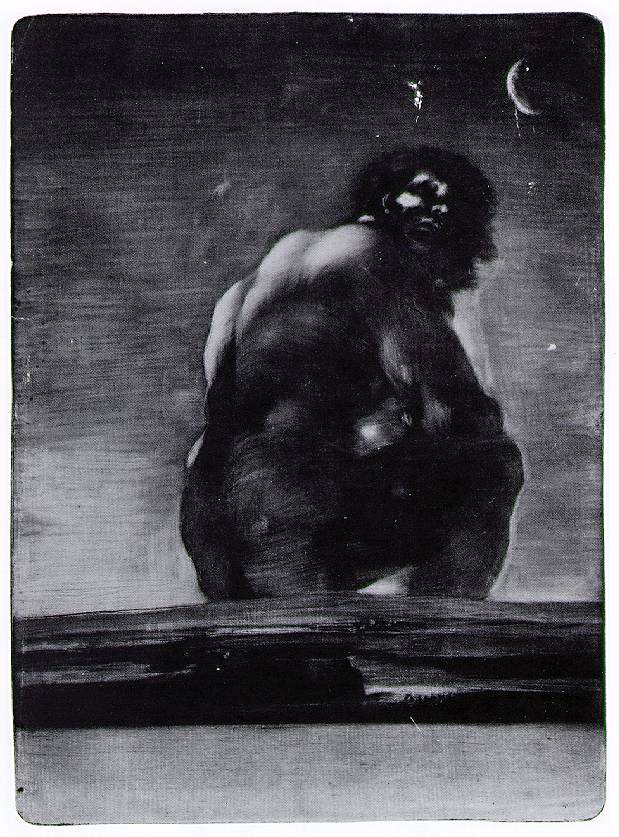
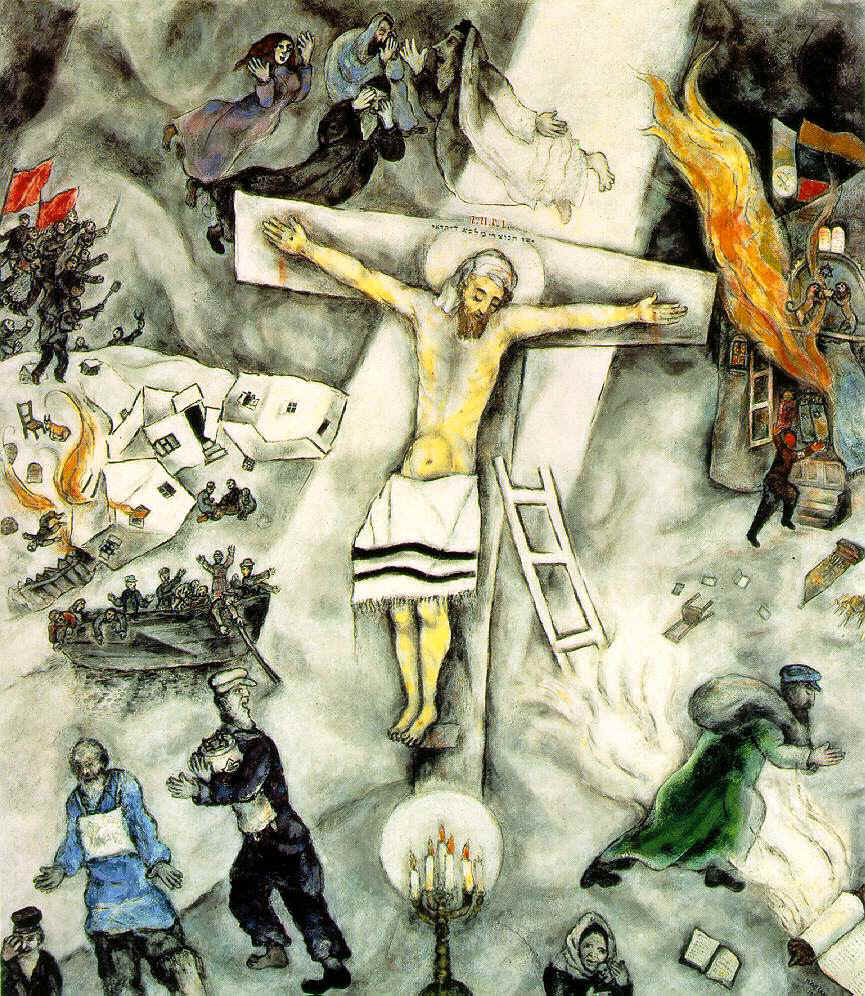
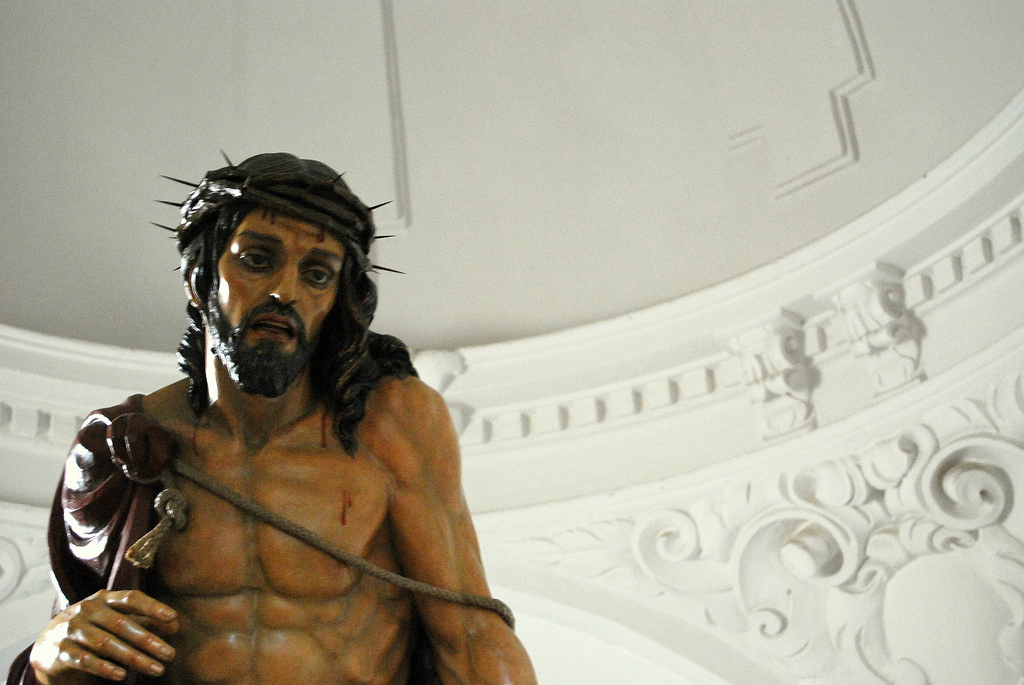
Today, I just want to briefly introduce the Lent series I’ll be doing (while listening to some free Lenten music!). It will be a meditation on an idea that only explicitly appears a few times in the Bible, but it’s truth echoes throughout the Scriptures. It’s mind-boggling in both its scope and implication, and yet gets so little treatment from mainstream Protestantism.

The idea? That Christ was slain in eternity past–before anything was; before any sin had been done by a single human.
Continue reading
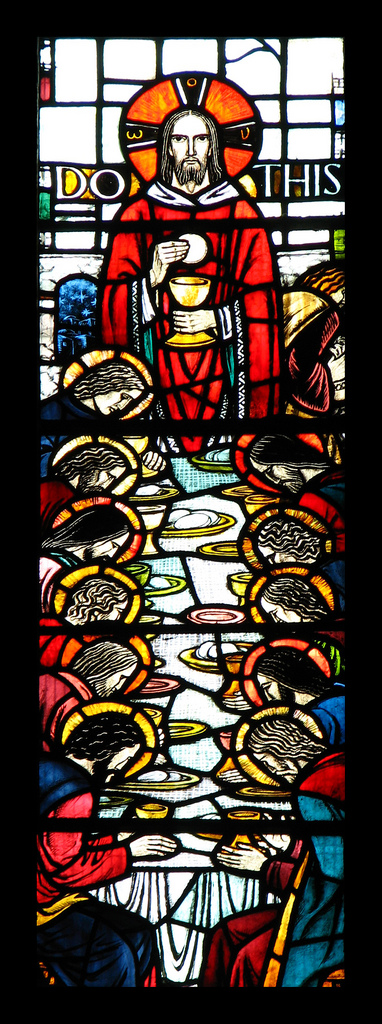
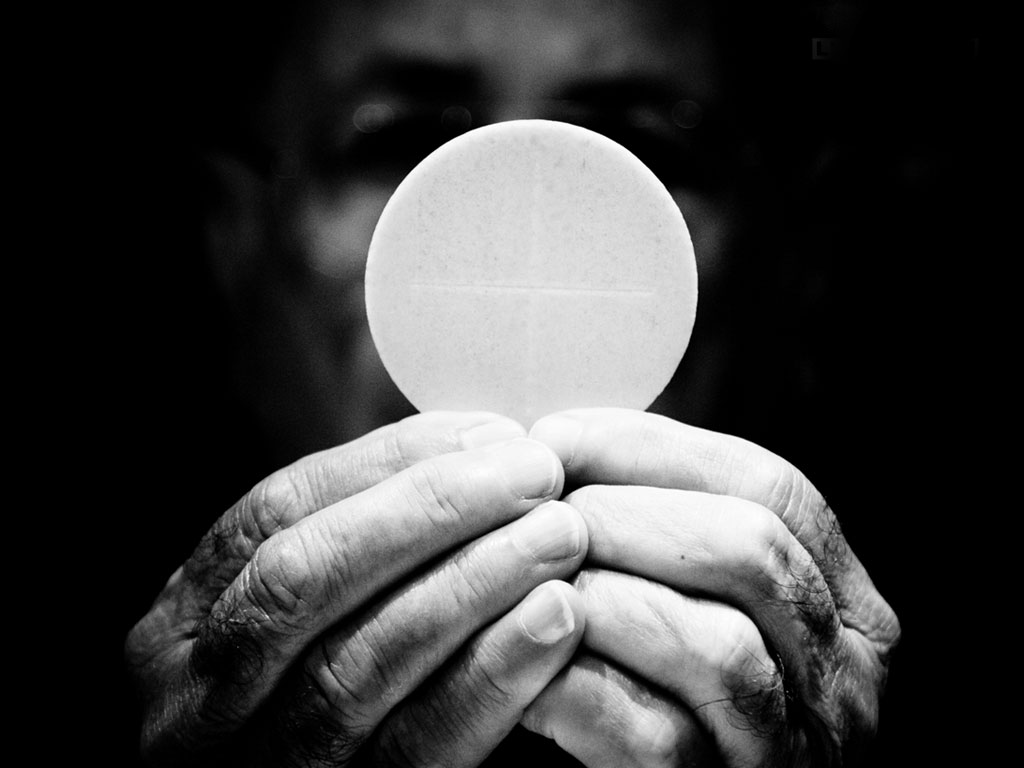
Catholics Aren’t Crazy: an Advent & Communion Theological P.S. (for those who care) | Advent {7a}


After my previous post on how Communion is no more a “symbol” than Advent itself, I can already hear some people right now thinking: “Wait. Isn’t this the Catholic idea of communion?” (As if that would be the worst thing.) I’ve mentioned some of my Communion views before in this ongoing series, and what I articulated is a synthesis and summary of the ideas of many theologians, both Protestant and Catholic. The pop idea of the Catholic view on the Eucharist is not really right or helpful (as is the pop conception of most of Catholic doctrine). Catholicism’s “Eucharist problem” is more historical and rhetorical than theological.

In the earliest decades and centuries of church history, people were able to simply maintain the simple doctrine that at Communion, they are receiving the true presence of Christ in the Bread and the Wine (source, albeit biased). In the middle ages, though, people starting asking themselves “Wait, what does that actually mean?” Differing answers started forming and a diversity of opinion about the Eucharist began taking place. The leaders of the Church tried to bring some commonality to this. In fact, the medieval Catholic church made a few “errant” teachers affirm these statements in 1078 and 1079:
Continue reading

The Holy Sacrament of Advent {7}


There is an abiding idea and assumption that plagues us humans. It has come up at various times in various worldviews with various names. It’s found in the implications of what Zoroastrians called the conflict between “Asha” and “Druj”, what Plato called “Dualism”, Diogenes called “Cynicism”, first-century heretics called “Gnosticism”, Descartes: “Rationalism”, Kant: “Idealism”, Bacon: “Empiricism”, French Enlightenment-ers: “Materialism”, Modernists: “Realism”, Postmodernists: “Pragmatism” and “Constructivism”, so on and so forth through the ages.

The thing all of these ideas have in common is a separation between the material and the immaterial; the abstract and the physical; the temporal and eternal; the objective and subjective; the spiritual and the human. Further, they tend to elevate one over the other.

We can’t really escape this (I’ve written about this before).

One of the basic obvious tenets of finitude is that we can’t be in two places at once, neither physically nor intellectually. To perfectly hold the delicate balance between these poles of the seen and unseen is difficult, if not impossible.

But Advent can help us.

Continue reading

A Death Penalty Follow-Up


Last week, I wrote a post about the recent case of Troy Davis and how this had inspired me to rethink and reconsider my position on the use of Capital Punishment by the government to punish those convicted of crimes they deemed worthy of such a response. In my attempt to be nuanced, I fear I may have given a wrong impression of where I stand now.

I think some people may have walked away from the post thinking that I believe that the government should have the right to bring the death penalty to bear upon some criminals, but Christians shouldn’t actually do it (or something like that). This isn’t quite the case.

Let me restate what I’m thinking even more clearly and simply: I don’t see a justification for Christians supporting the use of Capital Punishment by the government in any case. 

Continue reading

to “why?” is human, to “what” is divine


One of the most impacting moments of Terrence Malick‘s Tree of Life is this moment where the son in the film prays to God: why do I have to be good if you’re not? Shortly after, there is this beautiful shot where the camera zooms in on the silhouetted back of the boy as he stands in an open door. As the camera approaches, we get a voice-over from the grown-up version of this child saying: Father, why do you hurt us? This moment is so powerful because you don’t know if he’s talking about his earthly father or his Heavenly one.

Fast-forward. The other day, as I was looking through The Economist and reading on all the loss, debt, crisis, and violence in the world, I noticed I kept having similar fleeting prayers go through my mind: why did that happen? or why did it have to be that way?

Neither the son in Tree of Life nor I found answers.

Continue reading

Sex & Crazy People


I’m currently at the beach all this week for work. I’m having to help some clients learn the real-world skills of socialization, vacationing, and relaxation (yes, seriously–my job is awesome).

I’ve been working in the direct care and counseling of individuals with mild to severe mental illness for just over two years now. I’ve encountered many different presentations of many different mental illnesses and disabilities, but I’m beginning to notice some common themes.

One of the main (obvious) effects of mental illness and disability is that they prevent the person (or at least hinder them) from conforming to the normal standards of behavior and acculturation most of the rest of us go through more or less successfully. In other words, mental health issues are very good windows into the heart and nature of humanity apart from the “limitations” and “controls” our culture and our upbringing place on us.

So as I have looked into these bits and pieces of our truest, most unfiltered humanity, what have I seen? Sex. Lots and lots of sex. Continue reading

Weekly Must-Reads {08.11.11} | reasonable Christianity edition (in honor of John Stott)


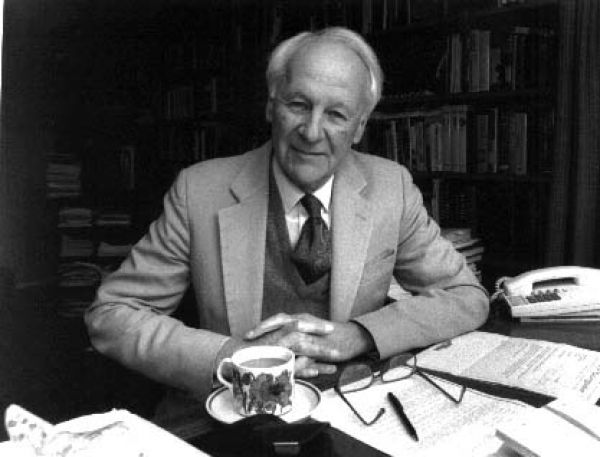
This week, I wanted to focus on extremely “reasonable” expressions and discussion surrounding Christianity: it’s heroes, it’s application, and how to live it out. This is in honor of a great man we lost recently. A couple of weeks ago, John Stott, a great and fairly unassuming hero of the Church, died. He is very much responsible for the shaping of a Christianity that is both just and intelligent. Even though he did not preach nor speak regularly, and mostly wrote academic books, it is he that laid the theological foundation that has only now finally trickled down to the masses of young and “restless” Christians today–whether we know his name or not. It is the shoulder of this giant of the faith upon which we all now stand. Let us not forget that. I have provided some links to that end.

___________

John Stott Has Died | Christianity Today

This is Stott’s obituary in Christianity Today. Read up on his life and read some of the homages linked to in this article. He was an amazing man.

Evangelicals Without Blowhards | NYTimes.com Opinion

This is by Bill Kristof, a weekly contributor to the blogs at NYT. He is not a Christian, and yet he devotes this article in honor of John Stott–his work, his influence, and the presence of millions of Evangelicals that are continuing his work today by caring about justice in this world.

Continue reading

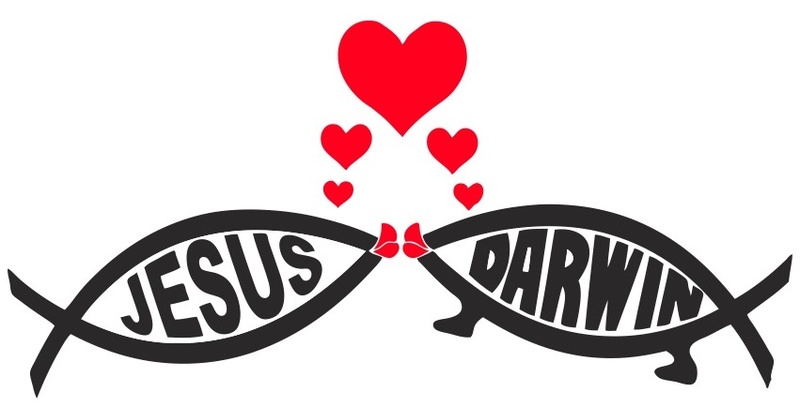
On Darwinism vs. Design (a response to the Richmond Center for Christian Study) {pt.2}


Yesterday, I posted the first part of a reply to Chris Daniel, Executive Director of the Richmond Center for Christian Study, who wrote an article titled The Origin of Life: Darwinism vs. Design. Here is part 2.

Chris, you are right to attack Darwinism as a philosophy or worldview; just like it is also appropriate to attack humanism, hedonism, racism, sexism, bibliolatry, and “systematic theology-ism”. Any system that builds its existence and definition around a created thing rather than the Person of God Himself ought to be attacked and shown to be the inadequate system it is.

But just because those “isms” above shouldn’t define our worldviews, it does’t mean that there isn’t truth and goodness even in the the things they are tempted to define themselves by: humanity has worth, pleasure is good, races are beautiful, genders are different, the Bible is the primary revelation of God (we are not a people of the Book, but a people of the Word that is testified to by the Book), and systematic theology can be helpful as we interpret and apply the Scriptures.

And Darwinism as a philosophy is an improper elevation of a seemingly true process.

Continue reading

On Darwinism vs. Design (a response to the Richmond Center for Christian Study) {pt.1}


[Update: Part 2 has been posted]

Chris Daniel, Executive Director of the Richmond Center for Christian Study posted this article titled The Origin of Life: Darwinism vs. Design. In it, he unpacks why he thinks agreement with evolution is an incorrect posture for Christians and how “Intelligent Design” is the superior and clearer stance to take.

I consider Chris a friend. He led the Reformed University Fellowship at VCU when I went there and our campus ministries worked together on several occasions. He is a great man of God, a brilliant teacher, and an articulate apologist for the Christian faith.

Nevertheless, my feelings on this topic are no secret, and my heart has broken frequently over these discussion (and has become angered some times). As I started writing out a little comment on the post on their site, it turned into a full-fledged response, which I’ll break up into two posts today and tomorrow. Please refer to his article for any references I make that seem to have no context. Here’s part 1 of my response. Part 2 is here: Continue reading

Weekly Must-Reads {03.21.11}


I will be spending most of this week at a conference in St. Louis (see below). Blogging might be a little light. I may try and sneak away at some point, but I can’t make any promises. For that reason, this week’s Weekly Must-Reads list is a little longer than usual. In it, we have articles about fat Christians, single Christians, disagreeing “liberal” Christians, and other writings about business and the media. People really seemed to enjoy the last list I posted. I hope this one also serves you all well. And remember: comment, comment, comment!

Liturgy, Music, & Space | Bifrost Arts

This is the conference that I will be attending this week (Facebook page). It’s being put on by an artist’s collective known as Bifrost Arts. They have some amazing music that you should all check out, including one of the most beautiful Christmas album I’ve ever heard. Also check out this video of some of the things they are doing.

Continue reading

The Gospel: The Limitation of God


The question came from a friend of a friend; a fellow pilgrim, sojourner, doubter, skeptic, thinker, brother:

If God is omnipotent [all-powerful] can he use this attribute to limit his omniscience [all-knowing] or omnipresence [all- er…present]?

It’s an interesting question, similar to the whole can God create a rock that’s too heavy for him to lift? or (my favorite) can he make a burrito too spicy for him to eat? I think part of the issue here is how we view the idea of attributes.  In our Western, scientific, and post-Enlightenment mindset, we often think of people as fully assembled “systems” of interconnected attributes.  And so, like the chemical compounds that create our physical bodies, we assume that these attributes are separate things that have come together to make us who we are.

Continue reading

Anti-Wikileaks Legislation Already Passed by Congress


Here’s a quote from the bill, already voted upon and passed by Congress (the excerpt is shortened for readability, emphasis mine):

Section 1. Be it enacted by the Senate and House of Representatives of the United States of America, in Congress assembled…That if any persons shall unlawfully combine or conspire together, with intent to oppose any measure or measures of the government of the United States…or to intimidate or prevent any person holding a place or office in or under the government of the United States, from undertaking, performing or executing his trust or duty;…whether such conspiracy, threatening, counsel, advice, or attempt shall have the proposed effect or not, he or they shall be deemed guilty of a high misdemeanor….

Sec. 2. And be it further enactedThat if any person shall write, print, utter or publish, or shall cause or procure to be written, printed, uttered or published, or shall knowingly and willingly assist or aid in writing, printing, uttering or publishing any false, scandalous and malicious writing or writings against the government of the United States, or either house of the Congress of the United States, or the President of the United States, with intent to defame the said government, or either house of the said Congress, or the said President, or to bring them, or either of them, into contempt or disrepute; or to excite against them, or either or any of them, the hatred of the good people of the United States,…then such person, being thereof convicted before any court of the United States having jurisdiction thereof, shall be punished by a fine not exceeding two thousand dollars, and by imprisonment not exceeding two years.

Continue reading

I Am A Fearful Man (and i need to get over it) {pt2}


[Read Part 1 and Part 3 of this series]

And… intensity at work, lack of sleep, church home group beginnings, Fall TV premieres, a trip with the lady to meet the parents, and two weeks later, I find myself here, computer atop my lap, typing these words over a bowl of stove-top-made oatmeal. I’m ready to pick this blog post up again after more facebook, blog comments, and text messages than usual asking when the next post would be. This sets up a pressure under which I don’t work well, but it’s a pressure I feel is appropriate to bring up considering the content to follow.

In my last post, I unpacked a bit of my own story which has led me to often be perceived as an arrogant overly-sure man–and indeed I see this in myself often. But I went on to point out how this arrogance is not necessarily at its root sprung from pride or over-confidence, but rather a deep fear and insecurity that at the end of all things I wouldn’t be found pleasing to the God I know I love.

Continue reading

on Babel, Language, & Identity (a liturgy)


[This was a liturgy I delivered at my church this past Sunday as we concluded our series “in the beginning”.  Here is the amazing message that followed this liturgy.]

Greeting and Preparation

Leader: The Lord be with you.
People: And also with you.

Hello, my name is Paul, and welcome to Liberti Church. Liberti Church is a group of people trying to figure out what it means to be a community of believers in Jesus Christ both in and for this city. This may be your first time here–you may have randomly wandered in here or a friend brought you; or, you may be a regular attender here. Either way, we hope you feel welcome to fully participate in this time and space set aside to worship our God.

Continue reading

An Amazingly Thoughtful Discussion on Gay Marriage


Thanks to David Sessions, the editor of Patrol Magazine for bringing this all to our attention.

Now, I have remained in the closet for much of this discussion (forgive the pun), though I have spoken of this in-person with others, with varying reactions. For a myriad of reasons, it’s generally wiser to controvert into a half-empty coffee cup or beer pint than it is to do so on the web. But nevertheless, this is a charged issue that demands response, both public and private, from those that have (hopefully) given it deep and communal thought, allowing both time and others to help refine and nuance one’s opinions. I hope I may be so bold as to include myself in those numbers.

Someday.

For now, I’m still figuring it out, and discussions like the one I want to bring to your attention today both clarify and confuse the issue for me.  I find myself agreeing with each article you will find below; a similar reaction Sessions has eloquently articulated in his Patrol article.  I appreciate his public candor and can easily relate.

Continue reading