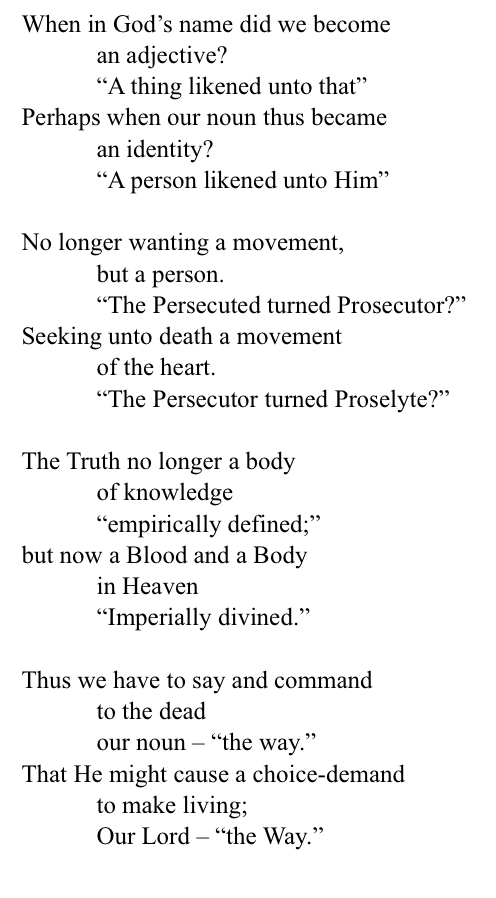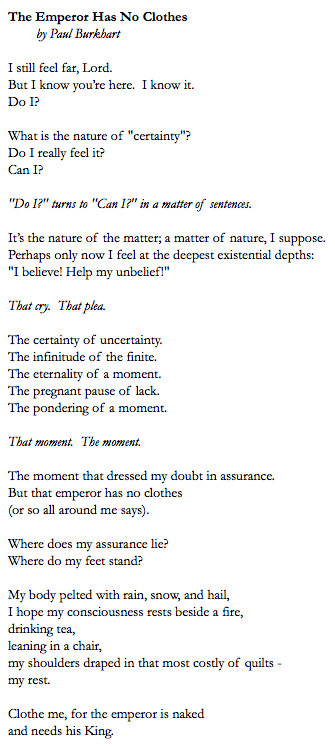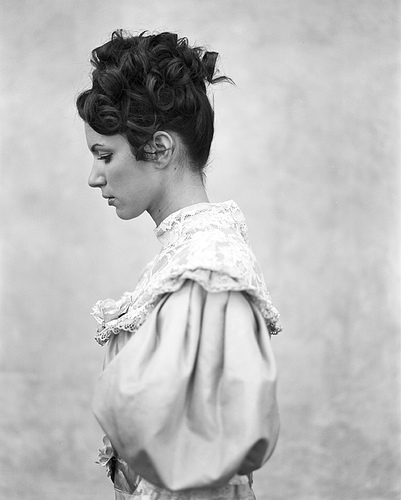
The Portrait of the Artist as a Never Ending Series of Name-puns (a poem) | {story#16}


This is an original fiction piece written for StoryADay September. Read more & follow here.
________________________________

I
She stands alone,
lost in a process she only knows;
the reflection staring back in silent contemplation
of a piece going “God knows where”.

The streets lie lifeless in her eyes;
those eyes hidden by a façade of powder and colour,
yet somehow come through.

The mousy bed face wins again.

It wins the hearts of those around her,
a victory bitter in her mouth as unintentioned
as the betrayal of a love

far less worthy than she.
Continue reading

Visions of Arcadia: the most terrifying art exhibit I’ve ever seen


This weekend I had the privilege of seeing the Philadelphia Museum of Art’s new exhibit Gauguin, Cézanne, Matisse: Visions of Arcadia. The exhibit showcases works exploring the idea of “Arcadia“: an idyll pastoral world envisaged in Virgil’s first major poetic work Eclogues where nymphs and fauns dwell alongside Bacchus and Pan; where human dwellers exist in peace, rest, and joy in the natural world.

(To put it simply: you can usually recognize Arcadian themes at work in a piece of art when it has naked people hanging out in nature–usually around rivers.)

This image of Arcadia, having been explored in art epochs in the past, overtook art once more right as modern art was being born, right around the turn of the 20th century. In fact, the exhibit subtly makes the argument that this image of a rural, paradisal ideal is an essential element in modern art’s development. The modernists’ dilemma–the tensions between longing and reality, finding and losing, permanence and transience, human and mythic–all find their embodiment in this Arcadian world.

The exhibit begins with excerpts from Virgil’s poetic treatment of this theme, set beside works that visualized his words. These run along one wall. On the opposing wall of this introductory hallway, there are excerpts from Stéphane Mallarmé’s modernist treatment of Arcadia, L’Apres-midi d’un Faune, accompanied by pen-and-ink drawings from Matisse that visualize his words.

The exhibit is great, but very theoretical. It works subtly and on nuance. It’s not just a bunch of pretty things thrown into a room. Instead it is a thesis–an argument–in visual form. It watches a theme develop from myth to poetry to visual art (and then from Renaissance to modern) and explores how they are all connected and converse with one another. It’s really like no other exhibit to which I’ve ever been. If you get the chance, see it.

But that’s not why I’m writing today.
Continue reading

on Easter: “to Life, a sonnet” [a poem]


to Life, a sonnet

____________________________________Praise.
_________________________________Ovate
______________________________Now
___________________________How’s
________________________Why’s
_____________________Cries
__________________Birth
_______________Groans
____________Crows
_________Creation
______Weep
___There:

Here:
Sleep…

[read my other Holy Week poetry here]

all writings licensed: Creative Commons License

on Holy Saturday: “to death, a sonnet” [a poem]


to death, a sonnet

A fear as frank as frankness be
I hold within this frame so dear;
so dear please hold me, till this dark is past
_____— till the darkness passes mine eye.

But to be so engraced I know I must face
_____– and lose-
___________to this spectre this prospect requires.

O this still darkest night, I lie here betwixt
competing rays
__________of glory’s gaze.
One lies ahead; one lies to my face
___both wooing and charming a choice from my hands:

___________to re-seize and be lived,
___________or release and be sieved?

[read my other Holy Week poetry here]

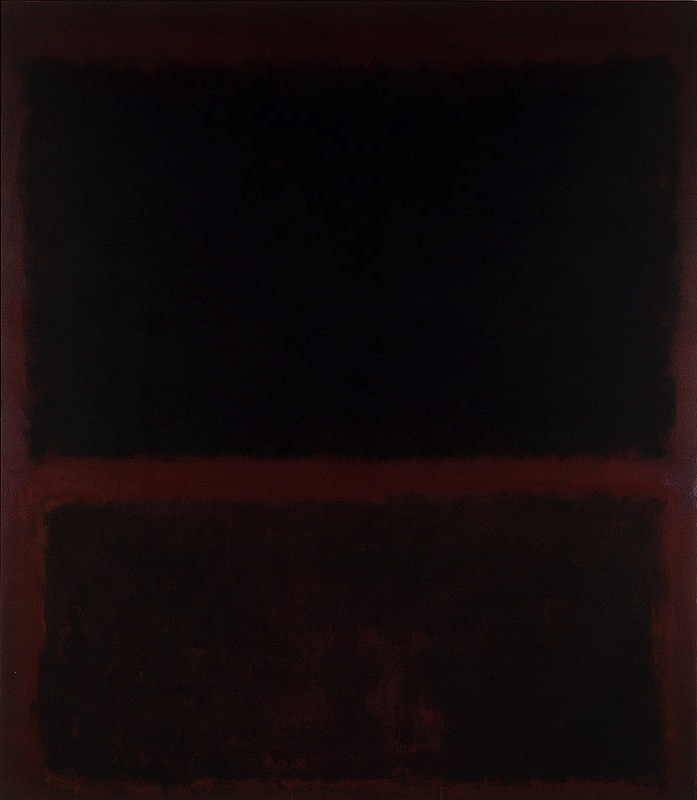
[image by Mark Rothko]

all writings licensed: Creative Commons License

on Good Friday: “Coffee Crucifix” [a poem]


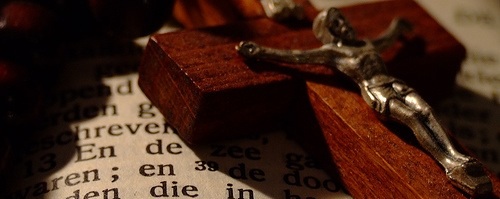
Coffee Crucifix

Crescent ring under porcelain smooth
___stain the wood-stained finish.
______(It is finished.)
___Marked with muddy water;
___mark the merry day; to
___marry the murdered man.

Floral notes in blackened waves
___crash the shore of trembled lips.
Choral bright, in darkest night,
___wake the tone of trebled kiss.

Younger tastes left open-wide; older eyes made
satisfied.

Mark the wood: complex simplicity.
Pierce my heart: storied infinity.

[read my other Holy Week poetry here]

all writings licensed: Creative Commons License

From His Father [GUEST POEM]


by Jen Huber

He can easily say what he has lived by:
God and belonging; known from childhood.

He was raised to believe in what was taught
To stand by his father’s belief in his Father
Accept the judgement of another,
The forgiveness of one another
Believing in something unseen

From generation to generation
This belonging to faith has remained
And grasped his life long-lived
And to know that his Father carried
Him throughout his time

He can easily say what he has died for

[image credit: Lauren Chandler]

On Easter: “Adam Killed a Bird, But Jesus Brought Him Back” (a poem)


_____________________________________________________

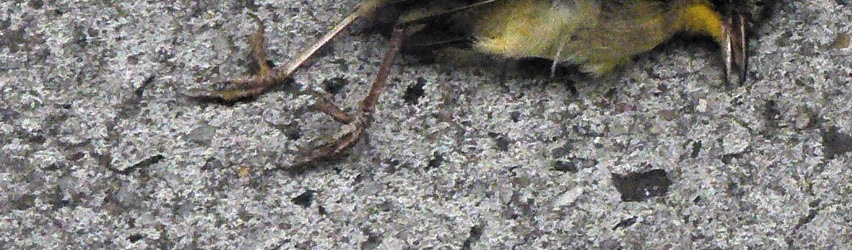
Adam Killed a Bird, But Jesus Brought Him Back

Now looking through the glass not dim, Coltrane all around;
he sets a tone of dissonance, rightly now it seems.
For as the beauty clothes me in, a tragedy is found:
woodchips below – a resting place – long for love supreme.

For there he lies with outstretched span, stricken by a car;
afflicted by our fallenness, and smitten by our thorns.
He struggles with the weight of pain, not getting very far.
To stop, release his spirit’s breath – give way to Death’s dark door.

I prayed a prayer, and thought some thoughts, and something in me burned.
Oh I see my Savior, the pains he took! For me: protect,
for prone to wander, weak I am, to that which I once yearned.
Until you did in me and Him- my soul: You resurrect.

And thus to show He heard my prayer and strengthen my weak frame,
up pops the bird, into the air; and now my soul shall do the same.

[read my other Holy Week poetry here]

all writings licensed: Creative Commons License

On Good Friday: “Scotchful Thoughts on Treason & War” (a poem)


_____________________________________________________

Scotchful Thoughts on Treason & War

You’re stronger than Scotch, though that’s not what my throat urgently screams at the moment. Ah, the struggles of an artist, a mystic, one whose deep cries out for yours – to express the inexpressible.  To package in words that which can’t be contained.  You’ve caringly — lovingly, even — taken me, torn open my chest, pulled out my heart, and have affectionately run my broken body into your knee such that I am torn in two
_____– one spirit, one flesh:

All of reality stands at this heralding moment:
_____Wide-eyed, eager – youthful
_____anticipation abounds.
Hands on knees looking forward, rocking back
_____so on and so forth they watch:
_____smiles ear to ear.
Continue reading

On Poetry & Atheism (I’m Writing for Patrol Magazine)


Sorry things have been so slow this week on the blog.  I’m still trying to find my rhythm for writing while I have this new full-time job.

As of late last week, I am the newest writer for the blogs at Patrol Magazine. Patrol is a great site putting forward some of the best writing available on culture, the arts, and spirituality from the perspective of post-everything twenty-somethings. I am the Thursday contributor to “The Scanner” section of the site. The Scanner is the place for “daily culture, media, views, and blather.” Today, my first article went up. Here’s the link:

Poetry is the Only Thing That Can Save Atheists, Says Other Hitchens Brother

I’m really excited and grateful to have the opportunity to contribute to one of my favorite sites. Like I said, you can see my writing every Thursday there on Patrol Magazine. As I continue writing, you can see all of my articles here.

Does anyone have any ideas for future posts?

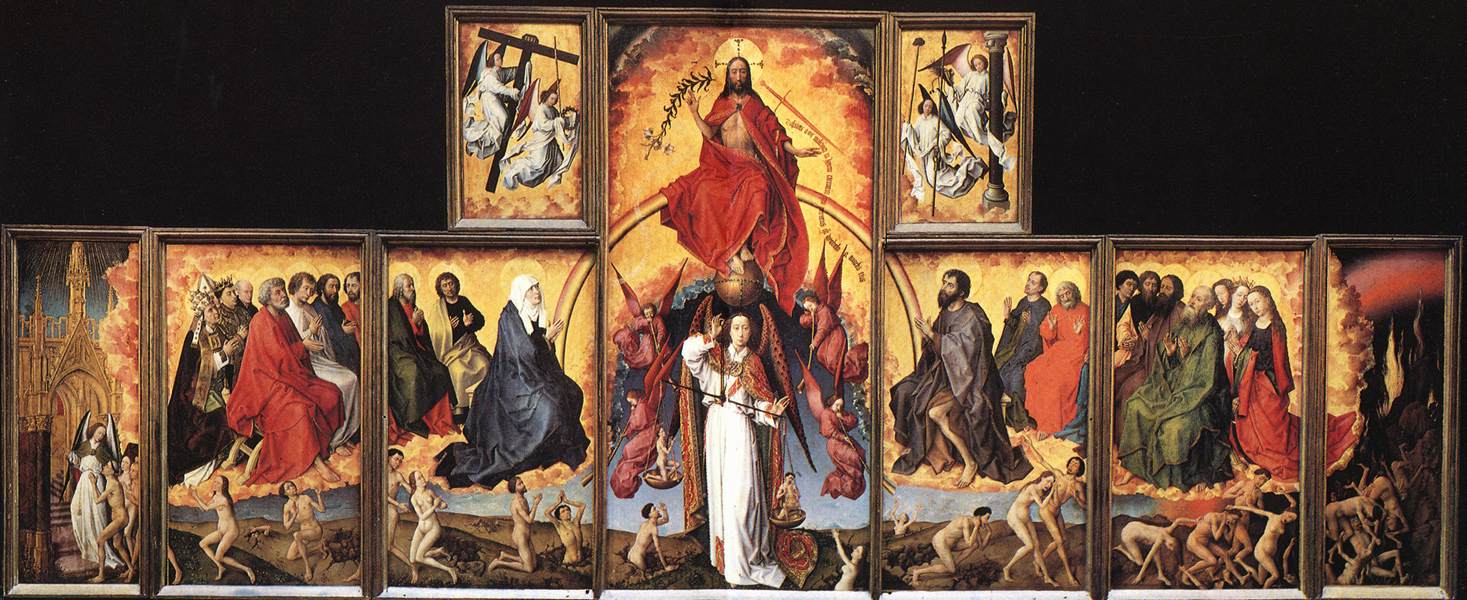
[Art above: “The Last Judgment” by Rogier van der Weyden. Just read the article. It’ll make sense.]

“O Sovereign, Come” (an original Advent hymn)


On this beautiful White Christmas (at least where I’m at), for those precious few of you that will make it online today, I wanted to put up a hymn I wrote a about a year ago.  I pray this encourages you and creates anticipation for the Advent that is to come. Merry Christmas.

O Sovereign, Come

Our chains behind us, our sin before us
showing all our crippling need.
Your Grace within us, Your Spirit upon us
transforming our every deed.

After our freedom and we pass through the Red Sea,
let us not forget the desert comes.

Refrain:
Rip through the clouds, tear through the skies;
Let us see that you’re God on High.
O Sovereign, Come.  Seize our hearts.
Show yourself as Beautiful.

Your triumph of Glory, You crimson Cross
heralding Your Sovereign Way
of life through our death, enduring our thorns,
completing Your sufferings in ourselves.

Let us embrace your cross that’s set there before us
and know that it precedes the crown.

Refrain

On that day, when freed from sinning,
how I’ll see Thy lovely Face.
Clothed then in blood-washed linen,
how I’ll sing Thy Sovereign Grace.

Refrain

Baptized in Beauty{10} (Enjoy, Pt. II)


Schrott1

photo credit: David Schrott

For those that have followed this series on Beauty, you will know that we have hit three major sections so far: “Why do we long for Beauty?“, “What is Beauty?“, “What things are Beautiful?“, and now we’re in the “How do we respond to this Beauty” section. I am in the process of laying out four “stages” of an appropriate and full response to Beauty. The first stage of this response is a contemplation of the Beauty.  The second is our enjoyment of it.  The first step in that process is Praising Beauty, which we talked about last time. In this post, we talk about the next step. This also happens to be my favorite part of the process of responding to Beauty. It’s when we are joined to Beauty and are swept up in its complexity and nuances. I love this feeling, I love this experience, and I loved writing and talking about it. I hope you enjoy reading it. Once again, the full manuscript and audio of the lecture I gave on this is below. We pick up right where we left off, saying that we must praise Beauty.

______________

Bur praising is not enough. Seeing something beautiful and calling it such does not complete the purpose for which that beauty exists. Beauty has an attractive quality. It draws you toward it at a very deep level. The next step, after acknowledging this beauty is to allow it to suck you in. I call this “Participating” with the Beauty of that thing or person.

Practically, this looks lots of different ways. With other people, it’s a drawing near to that person. Conversing with them. Viewing more of the nuances of the Image of God in them that makes them beautiful. For art, it looks like accepting the art on its own grounds and letting it draw you in in whatever way it’s asking of you. For plays and films it’s that idea of “suspension of disbelief”, where you allow yourself to forget that you technically “know” this isn’t real, and you let yourself get sucked into this beauty. Other forms of art tend to ask us to get lost in the object itself and explore its nuances. Closing your eyes during a musical piece and hearing every note; letting the words of a poem get inside of you and change the vocabulary you use to describe its own beauty or the world around you; letting distractions fade as you stare at a painting and see every stroke, every color (anyone who has seen a piece in real-life by John Singer-Sargent or Vincent VanGogh knows this feeling most definitely). Have you ever cried because of Beauty? This is participating with it. In the contemplation stage of this process you ask yourself “what is the beauty of this thing asking of me? It’s drawing me to itself, but to what end?”

But what about God? What about Divine Beauty?  This is where His Beauty shows especially brilliantly. All other forms of beauty can only draw you near to itself. God can and does actually draw you into Himself and Himself in you. We can participate with Him in a way that every other form of beauty only faintly strives for. How? Well, He takes the first step upon changing someone by actually sending his very Spirit to dwell within His people.

But God not only let’s us participate in His Beauty spiritually, but also physically.  After He draws near to us, we do what the Bible calls “abiding” in Him, where we draw near to Him through various things the Bible calls “means of grace”. These are traditionally called sacraments.  They are physical things that we participate in and by faith He meets us there. One of the clearest examples is Baptism.  It is where we are brought into union and participation with Christ in response to his faithfulness and action toward us.  Another is Communion. Just think of the word: “Co-mmunion”. It’s where we “commune” with God. That bread and wine is a symbol, but not just that. It is in those elements that we His people are actually drawn further into God to “commune” and participate with Him in His beauty. This is why Communion is such a big deal in the Bible. God kills people – even Christians – because they misuse this beautiful thing. He will let no one lightly and trivially participate and be drawn into His Beauty.

This should lead us to a “sacramental” view of life, where God is using all things to communicate Himself to us and communicate His Grace to us. Let everything: every good-tasting piece of food, every sunset, every cool breeze, every joyful moment all be moments where God communicates Himself and His grace to you so you might participate and be joined to Him in His Beauty and we further praise Him even more. Historically, the Christians that do this well have been referred to as “mystics”. They are the ones that say seemingly crazy things. Brother Lawrence was a 17th century monk and he said: “I have at times had such delicious thoughts on the Lord I am ashamed to mention them.” John Owen, my favorite Puritan, says

O to behold the glory of Christ…Herein would I live; herein would I die; herein would I dwell in my thoughts and affections…until all things below become unto me a dead and deformed thing, no way suitable for affectionate embraces.

Oh that we longed in that way for God. There is a participation in the Glory, Beauty, Majesty, Goodness, and Love of God that is at hand for those who believe and far for those who don’t. Please, I beg of you, if you are not a believer, seek the Beauty of God, for it’s only suitable response is to be drawn into into and know his intimacy in this way. He, the fountain of all good things, the One for Whom your soul was made, does not disappoint those who seek to know Him. Participate in Beauty.

Click for Manuscript Pdf

Manucscript

Click here for sermon audio

Audio

From the iMonk: Mary Consoles Eve


I found this at the site of Michael Spencer (a.k.a. The Internet Monk).  This guy is having an increasing amount of influence and inspiration on my thinking as a Christian in this world.  You find him at The Internet Monk. Anyway, I love this piece of art and the poem.

Crayon & pencil drawing by Sr. Grace Remington, OCSO. Copyright 2005, Sisters of the Mississippi Abbey

_______________

O Eve!

My mother, my daughter, life-giving Eve,

Do not be ashamed, do not grieve.

The former things have passed away,

Our God has brought us to a New Day.

See, I am with Child,

Through whom all will be reconciled.

O Eve! My sister, my friend,

We will rejoice together

Forever

Life without end.

Sr. Columba Guare copyright© 2005 Sisters of the Mississippi Abbey

_______________

This was found by Michael Spencer at Inside Catholic.

Regina Spektor’s upcoming album “Far”


First off, I really want to do more cultural critique on this blog.  I feel like I have had my head in the ether for far too long.  Now, I don’t want to talk any less about theology and Christianity, I just want to talk a whole lot more about television, music, movies, politics, technology and the like.  Secondly, I was in the process of ignoring this desire of mine and was almost done putting the finishing touches on an upcoming three(?) part series on philosophy and theology, when @NPRnews popped on my twitter feed with a link to where they are currently streaming the new Regina Spektor album (due out June 23rd).

Let’s just say the philsophy series got put on hold for a day or two.

This album is spectacular.

I’ve never listened to Regina Spektor.  I regret that now.  This album (according to NPR) was produced by four different people in four different places at four different times.  For those circumstances to produce this record is astonishing.  Admittedly, I was really enjoying just the music, vocals, and melodies.  Until I heard the song below.  I really had no idea how wonderful of a lyricist she is.  Good gracious.  And no, I don’t just like the song because it talks about God (in fact, she’s a practicing Jew, apparently).  The lyrics are so thoughtful and smart, the music is so beautiful, and the melodies are those of a very experienced artist.

There are so many beautiful nuances in this record.  I will spend the next week or so plumbing their depths.  Current favorites tracks are: The Calculation, Blue Lips, Laughing With, Human of the Year, Dance Anthem of the 80’s, Genius Next Door, Man of a Thousand Faces.

So, listen to the album, put it on repeat, pre-order it, watch this video (below), and read/love the lyrics.