What’s With All the Instagram Shots of Your Lunch?


“Food is everything”, says my friend Ben, an organic farmer who runs a small vegetable stand at Lancaster’s Central Market. Each generation pushes back on the one that came before it, often a reaction against cultural norms that seem to be inherently evil. One of those such current ideas comes as a blowback in how we produce and consume food. Since WWII, our food supply has been mass-produced and mass-processed, often putting in it more preservatives than nutrition. In recent years, organic farming has blossomed (in part) as a reaction against the greed, industrialization and lack of nutrition of America’s food supply. At Ben’s market stand, a small sign reads something like “out of the ground comes nutrition for our food”.

There’s certainly something deeper to this little sign whether he knows it or not.

“Man is what he eats”, writes Alexander Schmemann. All of life is sacramental, and therefore, Eucharistic. He continues, “Man must eat in order to live. He must take the world into his body and transform it into himself; into flesh and blood.” In the same way, at the celebration of the Eucharist, the very flesh and blood of Christ come to man. Man eats it and in this most revered element of Christian worship, he ascends to heaven with Christ, receives the Kingdom of God, and takes it with him back into the world. Eating is sacred business in the Christian economy and without it, the Kingdom of Heaven does not come to the world. Schmemann even goes so far as to say that all food leads us to Christ.

Meals in community are sacred. They have been for most all peoples for all time.  There is something deep within the heart of humankind that knows this. There is a longing for communion and companionship over any meal we eat. But alas, our culture does not work this way. We are hurried to and fro and are lucky to grab something at a café or in a drive thru or whatever quick meal we can get out of the way to get on with the more important things of life. But, even in our hurried state, we stop and take the time to photograph our food and post it for all to see – our new “social” community – facebook or instagram. What we miss by eating alone so often, we try to reacquire via our mobile technology. Our souls crave the sacred meal together, yet, for whatever reason we make little effort to make this a primary part of our lives. We want others to share in our experience and the best way we can get them to do that is to post our square images  of eggs in a frying pan or the coffee we got on the way to a meeting on our own little online kingdom.

Each Sunday, as we partake of the Eucharist, we ascend with Christ into his Kingdom for the good of his world. In the same way, let us strive to make our daily meals a little more sacramental; a little more Eucharistic, even.

Weekend Photo Challenge: Beyond (beauty beyond love)


scotland-glasgow-hill

This week’s WordPress Weekly Photo Challenge theme is “Beyond“. Basically, the challenge was to find a picture that guides the viewer’s eye beyond the primary subject of the photo. I’ve chosen the above photo.

In the summer of 2006, between the sophomore and junior years of college (when my hair still looked like this), I did a Study Abroad program in writing art, and architecture in Glasgow, Scotland. It was my first time out of the country, and my first time flying by myself. For all my youthful expressions of confidence, I was still scared.

Anyway, after getting on the plane on one of the runways of Richmond International Airport, I noticed a group of older ladies having to talk across the aisle to one another.

They were funny and loud, but in an inviting way, and not annoying, but the most distinctive thing about them was their thick, barely-understandable Scottish accents. I eventually asked them, and discovered that we were all indeed hitting the same connecting flights, and ultimately heading to Glasgow. They told me to stick with them and they’d help me navigate.

We made the flight, survived the trip, and landed in Glasgow.

Continue reading

Weekend Photo Challenge: Illumination (of Richmond & my Soul)


Richmond-GrandIllumination

This week’s WordPress Weekly Photo Challenge theme is “Illumination“. One of the biggest benefits of this weekly photo challenge is the chance to go through some of my old pictures and bring to mind favorite memories from the past.

The picture above was taken in 2006 in Richmond, Virginia while I was in college. It was after one of my favorite Richmond traditions: the Grand Illumination.

Throughout the winter holidays, the skyscrapers in Richmond are all lined with lights, lighting up the skyline in a way that it is not during the rest of the year. These lights are turned on all at once at something called the Grand Illumination, which takes place in early December. Not only are the skyscraper lights turned on, but the annual Christmas display at the Omni Hotel is turned on also. This display has lit-up mechanical reindeer, a giant Christmas tree, and the bell tower plays Christmas music on the hour.

After watching the Grand Illumination lighting from the bridge to Belle Isle, one of my favorite spots in all of Richmond (see picture below), we drove through the streets to see everything up close. The picture above was taken around the Omni Hotel as we passed their display.

But that’s not all this made me think of…

Continue reading

Epiphany is here! So what? (And another free Mixtape!)


epiphany-mixtape-coverIf you’re just looking for the mixtape, click here for the official Epiphany Mixtape page.

From now until Lent, the Church Calendar is in the season of Epiphany. Up until this year, I had never really given much thought or focus to Epiphany. In fact, I hadn’t ever really understood Epiphany until this year. I knew it had something to do with light and with Magi, but beyond that, I didn’t get it.

Basically, this season seems like it’s sort of a Church Calendar “junk drawer” to meditate and celebrate on all the other parts of Jesus’ life that happened between his Advent/Birth and his Death.

And don’t misread that. With me saying that, I hope that doesn’t diminish this season for anyone. Perhaps the most precious doctrine of the Christian faith for me is that of the Imputation of Christ’s Righteousness to me. And this Righteousness in which I am dressed was not created out of thin air, nor was it created by Christ at the Cross, or even his Resurrection. It was built throughout his life of obedience to His Father.

And this is amazing. As I’ve written before, if Herod had been successful in killing the child Jesus, there would be an aspect of our salvation that’s missing.

And so, to try and help me spend some time meditating on this season, the best way I knew to think deeply about all this was to make another Church season mixtape. If I’m being honest, these things are more for me than all of you out there. This one particularly, though, helped me think through Epiphany and try and create something from it. I hope you enjoy it.

To read more about the specifics of Epiphany, the mixtape, and to listen/download it yourself, you can either read below or just go to the official Epiphany Mixtape page. Let me know what you think!

Here’s some more info, from the page:
Continue reading

Merry Christmas Season!!!


wood-jesus-heart-christmas-humor

As of today, it is Christmas season!

Today, we turn our minds from the sin that required God to take human form in Jesus Christ, and we give ourselves the freedom to respond with unfettered joy to this fact. We give gifts in response to the gift that’s been given to us; we sing songs in response to the heavenly angelic song that inaugurated his birth; we eat good food with others in response to the body of Christ–the bread of life–having come among us.

Today begins the culmination of our thinking and meditating these past 4 and half weeks. This Advent, I’ve been trying to connect this time to parts of life that we may not usually associate with it. And so, if you have any time and interest, here are those posts from this year’s Advent series (and by the way, holy crap. I had no idea how much I had written this year until I made this list).

May they help you enter into this next Church season with depth and joy. (You can also check out last year’s series, if you want.) Continue reading
Advent Transition Music: Christmas Eve “Vespers” by Sergei Rachmaninov


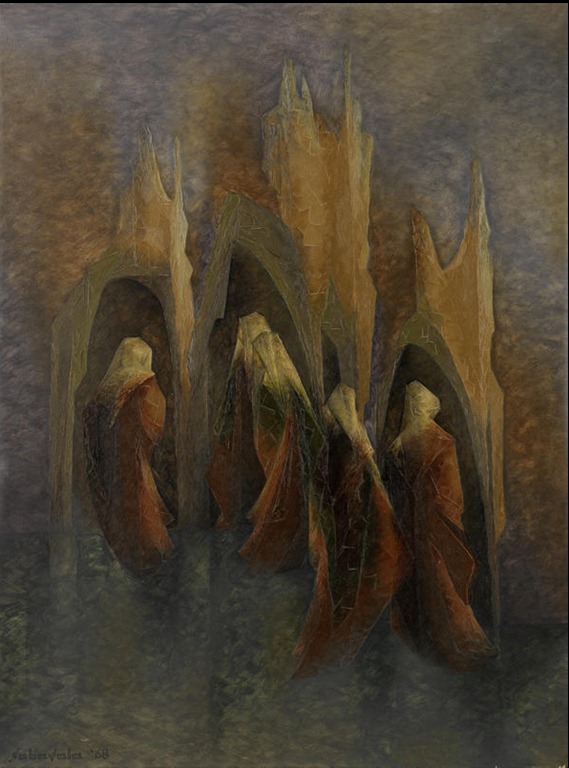
vespers-1-art-sabawala-paintingPerhaps Sergei Rachmaninov’s greatest piece, All-Night Vigil (usually simply called Vespers) is a choral presentation of the texts used during Eastern Orthodox all-night vigils. These vigils are usually done on the Eve of major church festivals, such as…Christmas Eve!

As I said earlier today, Christmas isn’t simply a day; it’s an entire church season. It’s a season where we transition from repentance and meditation to celebration and joy. And to aid in that transition, many traditions have all-night Vespers to help us move from one season to the next.

And so, to encourage us in this transition time, I’d like to offer you my favorite recording of one of my favorite pieces ever, Sergei Rachmaninov’s Vespers, performed by the Swedish Radio Choir. You will need Spotify to play the playlist below (you can purchase the album as well). Have fun:

[image credit: “Vespers 1” by Jehangir Sabavala]

Advent & Christmas: they’re not the same thing (Ode to a Christian Calendar)


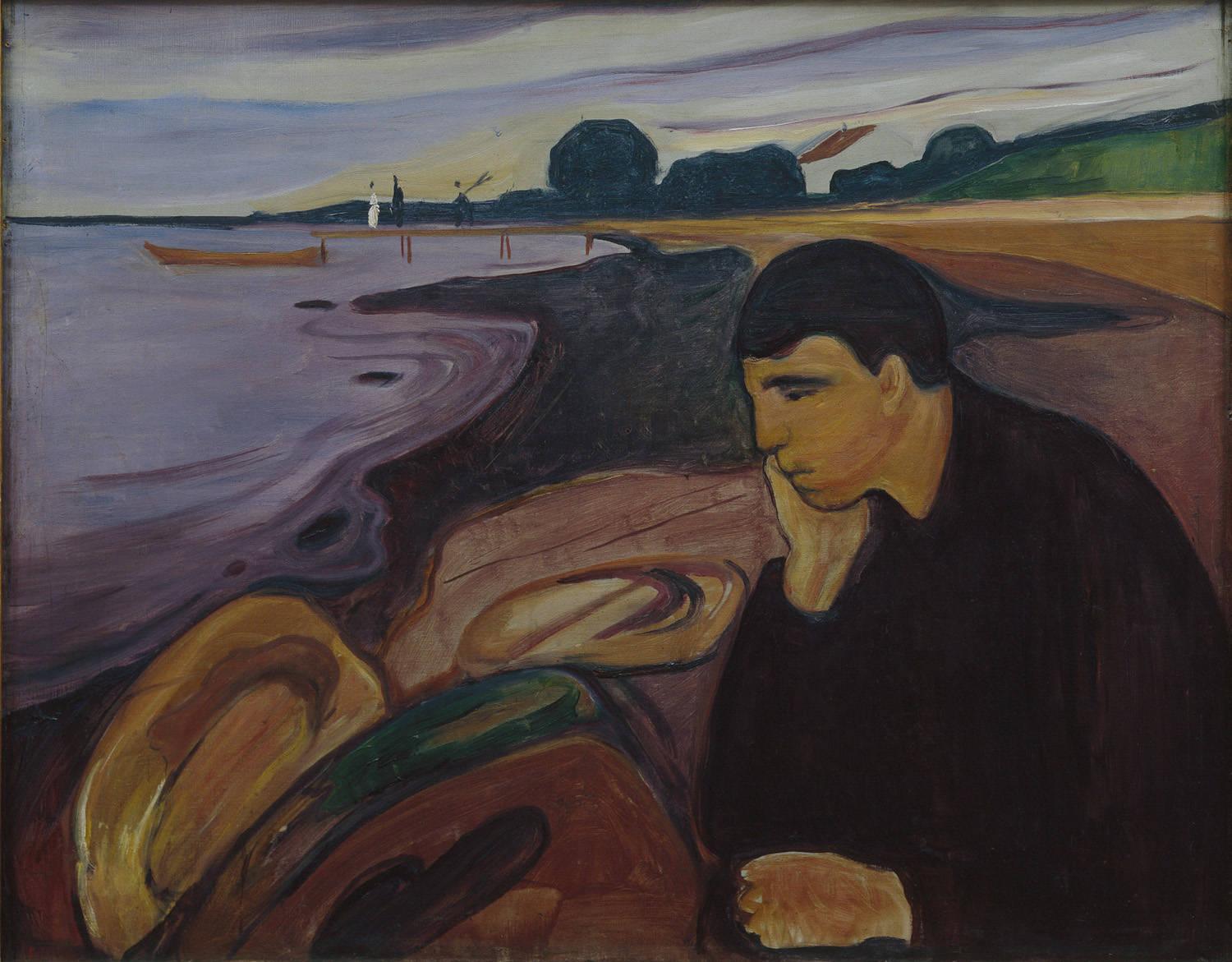
Munch-melancholyWell, it’s the Eve of Christmas season. Yes, that’s right, Christmas is not only an entire season in the Church calendar, but it’s a season that is distinct from Advent.

I know many in the global church know this fact, but I only learned it a couple of years ago, and each year it seems I have to be reminded. (Hopefully with this post, I can start internalizing it some.)

I find it interesting that we in the West have not only removed the “seasonal” aspects of the holiday, but have reduced this nearly two-month-long Advent/Christmas time into a single day on which we put most of our attention.

So why is the calendar structured like this? And what do we lose when we boil this down to one day?
Continue reading

Art & Advent’s Intellect: Barnett Newman’s “Black Fire”


barnett-newman-black-fireIf you look at the top of every page on this site, you’ll notice there is a prominent header image. If you’ve paid any sort of repeated attention to the posts on this site, you’ll notice I have different headers for different themes and series. Lent, Easter, Women in Ministry, The Bible, Theology, Art, Personal, Political, Writing, and my upcoming Guatemala posts each have their own distinct headers.

Throughout this year’s Advent series, I’ve used a cropped version of the above piece as the header image. It’s called Black Fire by Barnett Newman. Until recently, it hung for many years in the abstract expressionism room in the Philadelphia Museum of Art. I’ve spent much time sitting in the presence of this piece, contemplating it’s meaning.
Continue reading

Advent & the Goodness of Worldliness, c/o Dietrich Bonhoeffer [QUOTE]


‎”I remember a conversation that I had in America thirteen years ago with a young French pastor. We were asking ourselves quite simply what we wanted to do with our lives. He said that he would like to become a saint (and I think it’s quite likely that he did become one). At the time I was very impressed, but I disagreed with him, and said, in effect, that I should like to learn to have faith. For a long time I didn’t realize the depth of the contrast. I thought I could acquire faith by trying to live a holy life, or something like it. I suppose I wrote The Cost of Discipleship as the end of that path. Today I can see the dangers of that book, though I still stand by what I wrote.

I discovered later, and I am still discovering right up to this moment, that it is only by living completely in this world that one learns to have faith. One must completely abandon any attempt to make something of oneself, whether it be a saint, or a converted sinner, or a churchman (a so-called priestly type!), a righteous man or an unrighteous one, a sick man or a healthy one. By this-worldliness I mean living unreservedly in life’s duties, problems, successes and failures, experiences and perplexities. In so doing we throw ourselves completely into the arms of God, taking seriously not our own sufferings, but those of God in the world–watching with Christ in Gethsemane. That, I think, is faith: that is metanoia; and that is how one becomes a [human] and a Christian (cf. Jer. 45!). How can success make us arrogant, or failure lead us astray, when we share in God’s sufferings through a life of that kind?”

— Dietrich Bonhoeffer, Letters and Papers from Prison (via Kait Dugan)

Advent & Sex-lessness: here’s to singleness & celibacy!


sandorfi-le-pardon-wide

Yesterday, I wrote a post about some implications of Advent on sex. And, of course, I stressed the goodness and beauty and transcendance of that act as God intended it.

And it was one of my least read posts in a long time (as an update, interestingly, this is to date one of my most-read posts of all time!). I’m wondering if people are tired of hearing Christians talk about sex ad nauseam.

It is my humble opinion that the American Church right now is currently obsessed with sex. Well, to be fair, it’s always been obsessed with it; but now, it seems, the obsession is with “taking it back” and yelling and screaming about how Christians are just as sex-crazed, sex-eager, and sexually exciting as the most ardent secular hedonist.

Of course, they all qualify it by saying (as I even said yesterday) that this (oh my god really amazing Christian sex that we value so much) has to be “within the confines of marriage”. And so, this sex-obsession often expresses itself in an equal obsession with marriage. Preparing people for it, encouraging people towards it, beating up guys that aren’t “pursuing” women (or at least “preparing to”), and giving women tips on how to attract a “good, godly husband.”

And yet, yesterday, when I was thinking about the Advent of God into the world in the person of Jesus Christ, and the idea of the Incarnation, I realized something:

What is the story of Advent but the story of a virgin girl who has a virgin birth of a man who will remain a virgin his whole life?

The story of the Incarnation is, relatively speaking, one of the most “sex-less” stories in the Bible.

Continue reading

Advent & Sex: we are holy ground


Huber-untitled-crop

Update: I’ve also written some Advent thoughts on singleness and celibacy.

In Advent, we celebrate that God came as a human, in a mysterious act called the Incarnation. But in this act, God didn’t merely clothe himself in humanity. Flesh and blood were not the trappings of God. Instead, he became human. It was no mere illusion, nor was it a facade God took on.

God became flesh and blood.

God found it suitable (desirable, even!) to take on a body–a created, formed, physical, material body. The implications of this are huge. Take sex for example.

Advent show us that the created world can contain God, and it still does not violate God’s Holiness–his “Otherness” or “Separated-ness”. He can know his Creation in such union and intimacy and yet still remain transcendent above it. Our bodies do not challenge his Holiness. He can take it on and still remain Other. He became “one” with us in a similar way to how we become “one” with others in sex. With this in mind, let’s unpack some implications:

Continue reading

Advent & Suffering: silent only for a time [GUEST POST]


richmond-mary-snow

[Here’s another post by my good friend and occasional blog contributor Austin Ricketts. In light of last week’s shooting in Connecticut, it takes on even more meaning.]

“I was mute and silent, I refrained even from good. And my sorrow grew worse…I have become mute, I do not open my mouth, because it is you who have done it. Remove your plague from me; because of the opposition of your hand I am perishing”

These words are painful. They hit the reader with sadness and little hope. The Psalm itself does not end on a happy note:

“Turn your gaze away from me, that I may smile again before I depart and am no more.”

Why all this talk of sorrow during this time of year, a time that should be joyous and celebratory? It’s safe to say that many will not feel the joy that should be felt during this Advent. Many will feel that deep turning feeling in their stomach, the beginning of depression, the weight in the center of their back.

Not all see the light.
Continue reading

Advent & Humor: stop taking yourself so seriously [casual fri]


santa-baby-jesusIn one of the posts in last year’s Advent series, I posed this question:

“Why [did Mary, Joseph, and Jesus] flee to Egypt? If they stayed and Herod killed the child Jesus, would that not still be Jesus, the Son of God–the Incarnate God–dying unjustly at the hands of a Roman provincial governor attempting to cement the reign of the powers and principalities of the world? Why go to all that effort to wait 30 years later for the same thing to happen on a cross?”

The answer we discussed was that Christ’s purpose for coming was much bigger than the cross. He did not come just so he could die. As St. Paul said, “For if while we were enemies we were reconciled to God by the death of this Son, much more, now that we are reconciled, shall we be saved by his life.”

Jesus couldn’t die when he was so young, because the benefits we receive from his Advent are not limited to his death, but also his life. We receive his life of lived-out righteousness as our own when we come to know him.

I thought about this yesterday when pondering stand-up comedy.
Continue reading

Herman Bavinck on the Advent Election of Mary [QUOTE]


In a comment on yesterday’s post on Mary, occasional blog contributor Austin Ricketts posted this quote, another gem by Dutch Reformed theologian Herman Bavinck:

[the] entire preparation of the incarnation in the preceding centuries is concentrated, as it were, and completed in the election and favoring of Mary as mother of Jesus. Mary is the blessed one among women. She received an honor bestowed to no other creature. In the undeserved favor granted her, she far exceeds all other people and all other angels. Rome was right in maintaining this; those who deny it are not taking the incarnation of God seriously…Among all Protestants who confess the incarnation of the Word, Mary is held in high esteem. She was chosen and prepared by God to be the mother of his Son. She was the favored one among women. Christ himself desired her to be his mother, who conceived him by the Holy Spirit, who carried him beneath her heart, who nursed him at her breast, who instructed him in the Scriptures, in whom, in a word, the preparation of the incarnation was completed.

Reformed Dogmatics, Vol. 3, pp. 274; 281-282