Liturgy & Readings for Holy Saturday (2014)


This is from the Liberti 2014 Lent & Easter Prayerbook. Download the book for free for poetry and extended reflections for this week and next.

WORSHIP

call to prayer.

Be pleased, O God, to deliver us;
O LORD, make haste to help us!
–Psalm 70.1

the Gloria.

Glory be to God the Father, God the Son,
and God the Holy Spirit.
As it was in the beginning, so it is now,
and so it shall ever be, world without end.
Amen!
-the “Gloria Patri” !

the Psalm.
Continue reading

Liturgy & Readings for Good Friday (2014)


This is from the Liberti 2014 Lent & Easter Prayerbook. Download the book for free for poetry and extended reflections for this week and next.

WORSHIP

call to prayer.

Be pleased, O God, to deliver us;
O LORD, make haste to help us!
–Psalm 70.1

the Gloria.

Glory be to God the Father, God the Son,
and God the Holy Spirit.
As it was in the beginning, so it is now,
and so it shall ever be, world without end.
Amen!
-the “Gloria Patri” !

the Psalm.
Continue reading

Longing for Liturgy (a Catechumen’s reflection on Holy Week) {by David Schrott}


In recent years, and prior to my Orthodox catechesis, I heard many a Protestant writer or preacher lament that Easter was not of enormous import to most Christians when it was the eminent Christian holiday.  I didn’t share that view. Easter was an after-thought for me – another spring holiday without much real significance. Little did I know that it was the cultural liturgy of the market-place that informed my position towards the holiest of Christian celebrations.

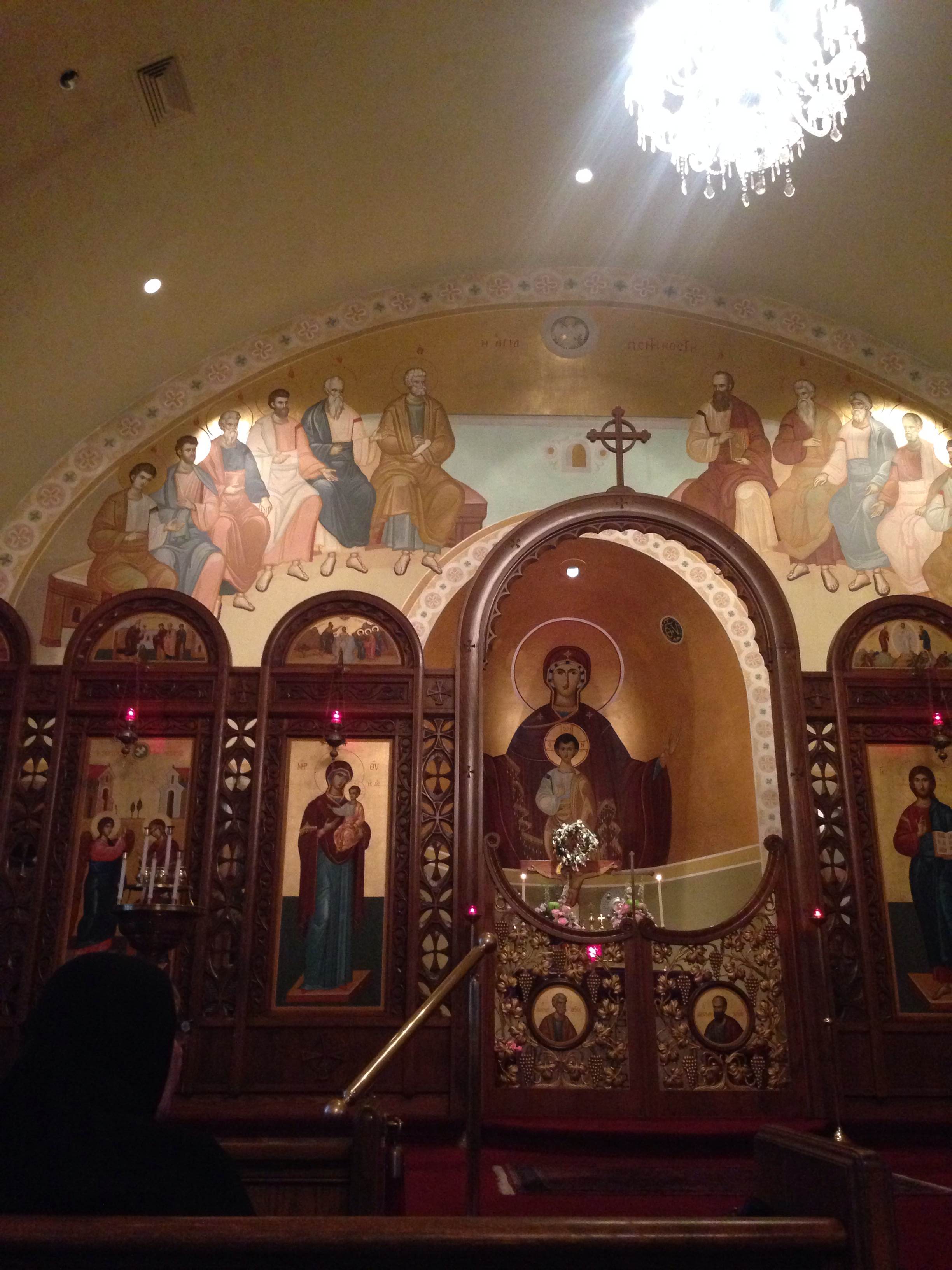
Liturgies form us. Whether they are cultural or religious, we are moved to be formed in the image of something and in the West, the market-place is driven by the most powerful liturgy called Consumerism. Christmas is the most powerful holiday in our culture and not because of what it is or what it means; it is the most powerful because of the 30-something day cultural liturgy from Black Friday til Christmas day that forms our hearts not toward God, but towards pretty much everything else. As James K.A. Smith notes in his book Desiring the Kingdom, the Culture understands liturgical formation better than the modern church does.photo1

The Holy Orthodox Church is not the modern church.  Before I decided that Orthodoxy was the church of the Apostles, the Fathers and Christ himself, I longed for liturgy without knowing what I was longing for. I think this is the basis of the modern Evangelical root of church innovation. The Western Christian wishes to attach himself or herself to something, but doesn’t know how or have the framework for doing so; so innovation in church methods based on market research emerge. A few years ago, I’d fast all of Good Friday (and accidentally get drunk when breaking fast that night with beer and bread; Lord have mercy!) or round up friends for a Maundy Thursday dinner or try to watch the Passion movie. These were my own personal longings for connectedness to Holy Week and the larger Church; these were longings for liturgy. Little did I know that there was already a place where these connections existed and they existed nearly unchanged for most of 2000 years.
Continue reading

Holy Week Music: Mozart’s “Requiem”


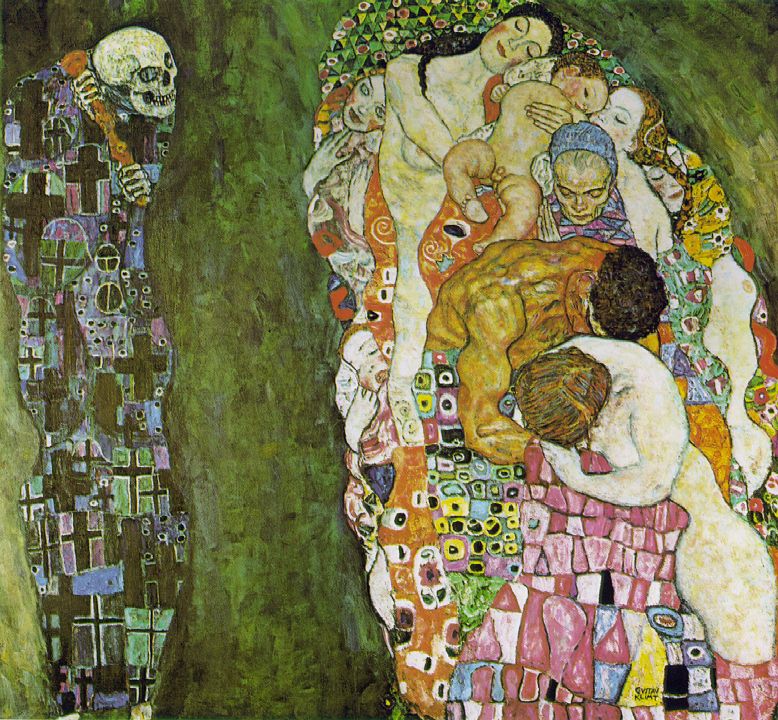
Klimt-Death-LifeOne of the primary ways I relate to the Church Calendar is through music (hence the free Mixtapes I put out each season). Even when I am terrible at engaging at an intellectual or even a practical devotional way, I am really intentional about filling my life with music that will still put my soul in the proper posture for the particular season.

For this Lent, I found myself spending significant time with Mozart’s Requiem, a “Mass for the Dead”. This was his last (and still mysterious) piece–unfinished before he died. Before Holy Week was over, and as we enter into the Holy Weekend, I wanted to offer this to as a way you might be able to engage in these last few days of Lent. Here is the audio, and below that you will find an English translation of the entire Mass. The words are achingly haunting and beautiful and deserve your perusal whether you have time for the music or not. Have a blessed Lent.

W. A. MOZART, REQUIEM
English Translation, from St. Matthew’s choir
Continue reading

Liturgy & Readings for Maundy Thursday (2014)


This is from the Liberti 2014 Lent & Easter Prayerbook. Download the book for free for poetry and extended reflections for this week and next.

WORSHIP

call to prayer.

Be pleased, O God, to deliver us;
O LORD, make haste to help us!
–Psalm 70.1

the Gloria.

Glory be to God the Father, God the Son,
and God the Holy Spirit.
As it was in the beginning, so it is now,
and so it shall ever be, world without end.
Amen!
-the “Gloria Patri” !

the Psalm.
Continue reading

Liturgy & Readings for Holy Wednesday (2014)


This is from the Liberti 2014 Lent & Easter Prayerbook. Download the book for free for poetry and extended reflections for this week and next.

WORSHIP

call to prayer.

Be pleased, O God, to deliver us;
O LORD, make haste to help us!
–Psalm 70.1

the Gloria.

Glory be to God the Father, God the Son,
and God the Holy Spirit.
As it was in the beginning, so it is now,
and so it shall ever be, world without end.
Amen!
-the “Gloria Patri” !

the Psalm.
Continue reading

The Darkest Week in Human History.


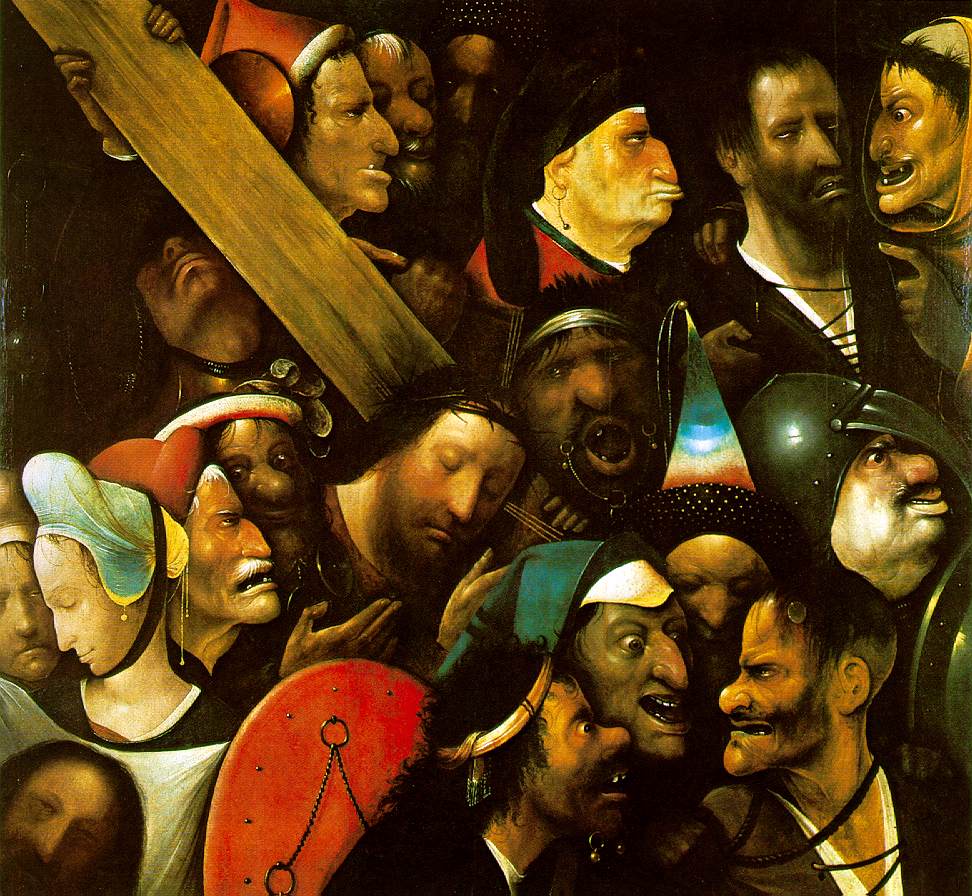
bosch-christ-carrying-the-crossIn our Holy Week reading of the Parable of Tenants, we see the startling revelation that the long-awaited Messiah—the One sent of God to accomplish salvation and liberation for his people—will be rejected by those very people.

And yet, this rejection was not limited to these religious leaders, or even to the ethnic group they represented. During Jesus’ Passion Week—which we meditate upon during this Holy Week—we see Jesus rejected at every level of his Creation.

On Palm Sunday, a large group accompanies Jesus, proclaiming his blessedness. This is not the group that later cries out to crucify him. Instead, it might be worse. These are people from the Jerusalem “suburbs” who have been receiving Jesus’ teaching for months. They accompany Jesus to Jerusalem, and then…. they just disappear, showing their ultimate apathy and indifference towards him.
Continue reading

Palm Sunday: “The Emperor Has No Clothes” [POEM]


I feel far, Lord.
But I know you’re here.  I know it.
(Do I?)

(Can I?)

It’s the nature of the matter; a matter of nature, I suppose.
Perhaps only now I feel at the deepest existential depths:
“I believe! Help my unbelief!”

Or in a word: Hosanna

That cry.  That plea.

The certainty of uncertainty.
The pregnancy of a pause.
The pondering of a moment.

That moment.  The moment.  

The moment that dressed my doubt in assurance.
But that emperor has no clothes
(or so everything says).

So where does my assurance lie?
Where do my feet stand?

My body pelted with rain, snow, and hail;
I pray my heart rests beside a fire,
drinking tea,
rocking in a chair,
my shoulders draped in that most costly of quilts –
my Rest.

Clothe me–
with the coat I lay on your path–
for this emperor is naked

and needs his King.

[read my other Holy Day poetry here]
all writings licensed: Creative Commons License

Responding to Prophets: The Holy Spirit Changes Everything | Acts 11:27-30


At that time prophets came down from Jerusalem to Antioch. One of them named Agabus stood up and predicted by the Spirit that there would be a severe famine over all the world; and this took place during the reign of Claudius. The disciples determined that according to their ability, each would send relief to the believers living in Judea; this they did, sending it to the elders by Barnabas and Saul.
Acts 11:27-30

Sounds pretty Old Testament to me. But notice how the people of God respond. In the OT, when prophets spoke all of this, the people either barely responded, or responded in overdramatic wailing and (temporary) repenting. This group of God’s people, however, indwelt with the Holy Spirit, proceed to act in light of the prophecy to seek human flourishing and societal good. This is the response that the prophets of old were looking for and never got.

See other Marginalia here. Read more about the series here.

Who God is When We’ve Forgotten Who He is | Exodus 3.13-15


But Moses said to God, “If I come to the Israelites and say to them, ‘The God of your ancestors has sent me to you,’ and they ask me, ‘What is his name?’ what shall I say to them?” God said to Moses, “I am who I am.” He said further, “Thus you shall say to the Israelites, ‘I am has sent me to you.’” God also said to Moses, “Thus you shall say to the Israelites, ‘The Lord, the God of your ancestors, the God of Abraham, the God of Isaac, and the God of Jacob, has sent me to you’:

This is my name forever,
and this my title for all generations.

Exodus 3.13-15

Oh this could be for us. The people had been so far from there God, that they may have even the forgotten his name. I feel like this is a similar time to where we are now, with people needing to be told the name of God and reminded who he is and what he does.

God says that this is his name for every generation. Even now? Could this somehow be a model for how Christians today are to live in this world where people have forgotten the name and identity of God? What if we lived as if God is not “The One Who Must be Defended”, “The One Who Judges & Condemns”, “The One Whose Way of Living Must Be Forced Upon Societies”, “The One Who Must Be Pleased”, “The One Who Accepts All”, or even “The One Who Saves Us”.

How would our lives look if we read this Exodus passage, saw this name, title, and covenantal nature and lived embracing this name and identity: The One Who Simply Is, and Is Ours.

See other Marginalia here. Read more about the series here.

Our infinitely compassionate (and delegating) God | Exodus 3.7-8


Then the Lord said, “I have observed the misery of my people who are in Egypt; I have heard their cry on account of their taskmasters. Indeed, I know their sufferings, and I have come down to deliver them from the Egyptians, and to bring them up out of that land to a good and broad land, a land flowing with milk and honey….
Exodus 3.7-8

Notice the verbs hear that God uses to describe how he relates to his people. He observes, hears, knows, and comes down. How intimate, tender, and powerful. Also, it’s a little funny that he says that he has come down to save if his people right as he’s commissioning Moses to do it for him.

See other Marginalia here. Read more about the series here.

Ancient Miracles, Skepticism, & Historicity | Mark 2.12


And he stood up, and immediately took the mat and went out before all of them; so that they were all amazed and glorified God, saying, “We have never seen anything like this!”
Mark 2.12

Even ancient people knew magic tricks. This was utterly different than anything else they’d ever seen or even thought was possible. This point is especially interesting considering the things they believe God had done in history in the past. Even though they “believed” the things happened, it wasn’t until they were face to face with the New Creation that they really saw the things this God could do.

Similarly to today, I wonder if there’s a subtle, unconscious “wink-wink” about how seriously we take some of these things. In their case, I actually think it was right, however, as those miraculous things in their stories were to be seen more as symbols and shadows that would point forward to an “actual” manifestation in Christ–not as historically-essential events. And yet, when that Christ was there, it still blew there minds.

See other Marginalia here. Read more about the series here.

Our Exile is for the world’s salvation | Acts 7.6-7


And God spoke in these terms, that his descendants would be resident aliens in a country belonging to others, who would enslave them and mistreat them during four hundred years. “But I will judge the nation that they serve,” said God, “and after that they shall come out and worship me in this place.”
Acts 7.6-7

Our exile/ambassadorship/pilgrim-nature as well as God’s judgment are all for the sake of the ultimate worshipnot condemnation–of the nations and the world!

See other Marginalia here. Read more about the series here.