Retelling the Story (in crisis, loss, & healing)


Why does healing take time? Have you ever asked yourself that? Why does pain, heartbreak, and loss seem to have a very real lifespan it must go through before the process seems completely done?

As I’ve said several times before on this blog, we humans live on the basis of story. Our life, our world, and our faith provide our lives with a grand “narrative” in which all of our “sub-plots” find shape. We can’t help but use this shape of the present story to fashion some sort of idea of where this story is going. We’ve all experienced this when reading a book. The entire time, we have a guess of where the plot is heading; as we receive more information, we naturally readjust our expectations and thoughts as to the goal or end.

In short, the only way we know to make sense of the various aspects of our lives is to give them shape, narrative, and an anticipated goal towards which they are moving. This is the only way we know to justify each step forward we take in this career, relationship, etc. It gives us our bearings and a point of reference.

Continue reading

Dmitri, I Am (on sin, story, & salvation)


I once read a very good book by one of my former professors called When People Are Big and God is Small. It’s about the sin many in church history have called “Fear of Man.” I read this entire book with a particular friend in mind, wanting to know what I could say to her to help her in her struggles with this. It wasn’t until the final pages that I realized that this was something that I myself wrestle with profoundly.

But the book was now done, I didn’t want to immediately re-read it, and so I had missed my place in the story; I had missed how it could have spoken to me and perhaps led me to some freedom and healing in this. Indeed, even though I’d hear the author lecture about it years later, I still write about and struggle with my “Fear of Man” issues today.

Have you ever had a similar experience of missing yourself in a story?
Continue reading

A Theology of Sleep (i need it) | Psalms 63, 121, 127


Lately, I haven’t been able to sleep. It’s not that if I lay in my bed, I can’t fall asleep, mind you. It’s the getting to bed part that keeps getting to me. I find myself staying up way too late (usually writing up these blog posts) until I can barely function, and then falling into my bed–unconscious even before my head hits the pillow. I then struggle to wake up and don’t end up having time and energy to start my day in the way I would hope.

Continue reading

Of Robes & Righteousness


Yesterday I went to two church services. The first was my home church, where I participated in one of the best services we’ve ever had (oh, Communion was so sweet!); the second was the church of one of my closest and dearest friends. I could have just met up with him after his service, but I decided to go anyway. Why?

I thought I was looking pretty good yesterday.

Of course, this wasn’t the only reason I went (it’s an amazing church and I’d definitely go there if liberti weren’t around), but it was a real factor. People had spent that morning complimenting me, and I both appreciated and enjoyed it. And so, I wanted to be seen. (Surely all of us have experienced this sometime, right? Come on, I’m just trying to be honest.)

During the service, I found myself thinking about this. There is a constant conflict we have with our embodied selves and the garments that clothe them. I’ve spoken of this tension before and how our responses to it often betray a hatred we seem to have for our bodies. Our clothing both reveals and conceals at the same time; it communicates things about us all the while hiding our greatest intimacies.

Continue reading

to “why?” is human, to “what” is divine


One of the most impacting moments of Terrence Malick‘s Tree of Life is this moment where the son in the film prays to God: why do I have to be good if you’re not? Shortly after, there is this beautiful shot where the camera zooms in on the silhouetted back of the boy as he stands in an open door. As the camera approaches, we get a voice-over from the grown-up version of this child saying: Father, why do you hurt us? This moment is so powerful because you don’t know if he’s talking about his earthly father or his Heavenly one.

Fast-forward. The other day, as I was looking through The Economist and reading on all the loss, debt, crisis, and violence in the world, I noticed I kept having similar fleeting prayers go through my mind: why did that happen? or why did it have to be that way?

Neither the son in Tree of Life nor I found answers.

Continue reading

Sex & Crazy People


I’m currently at the beach all this week for work. I’m having to help some clients learn the real-world skills of socialization, vacationing, and relaxation (yes, seriously–my job is awesome).

I’ve been working in the direct care and counseling of individuals with mild to severe mental illness for just over two years now. I’ve encountered many different presentations of many different mental illnesses and disabilities, but I’m beginning to notice some common themes.

One of the main (obvious) effects of mental illness and disability is that they prevent the person (or at least hinder them) from conforming to the normal standards of behavior and acculturation most of the rest of us go through more or less successfully. In other words, mental health issues are very good windows into the heart and nature of humanity apart from the “limitations” and “controls” our culture and our upbringing place on us.

So as I have looked into these bits and pieces of our truest, most unfiltered humanity, what have I seen? Sex. Lots and lots of sex. Continue reading

Weekly Must-Reads {08.11.11} | reasonable Christianity edition (in honor of John Stott)


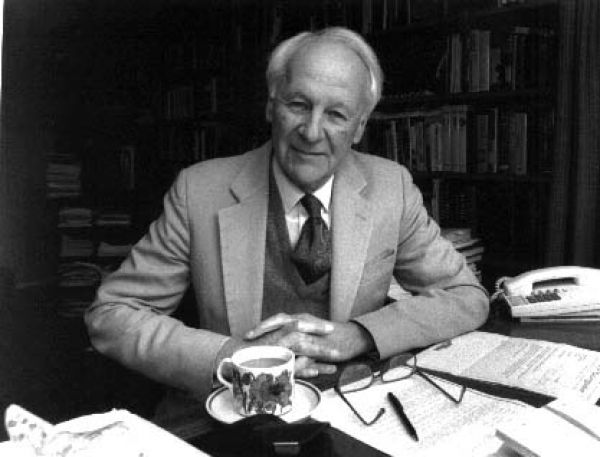
This week, I wanted to focus on extremely “reasonable” expressions and discussion surrounding Christianity: it’s heroes, it’s application, and how to live it out. This is in honor of a great man we lost recently. A couple of weeks ago, John Stott, a great and fairly unassuming hero of the Church, died. He is very much responsible for the shaping of a Christianity that is both just and intelligent. Even though he did not preach nor speak regularly, and mostly wrote academic books, it is he that laid the theological foundation that has only now finally trickled down to the masses of young and “restless” Christians today–whether we know his name or not. It is the shoulder of this giant of the faith upon which we all now stand. Let us not forget that. I have provided some links to that end.

___________

John Stott Has Died | Christianity Today

This is Stott’s obituary in Christianity Today. Read up on his life and read some of the homages linked to in this article. He was an amazing man.

Evangelicals Without Blowhards | NYTimes.com Opinion

This is by Bill Kristof, a weekly contributor to the blogs at NYT. He is not a Christian, and yet he devotes this article in honor of John Stott–his work, his influence, and the presence of millions of Evangelicals that are continuing his work today by caring about justice in this world.

Continue reading

Why do we hate our bodies so much?


Originally, I was going to entitle this post, Worship, Bodies, and the Economics of Self-Loathing. But, in the interest of readability and trying to seem less intense (and douche-baggy), I’ve changed this to the above title. But still, as that original title implies, there’s a lot here on this topic that I have to say–and may, at some point. But for now, I just wanted to give some musings and thoughts I’ve been having.

I went to a conference a couple of weeks ago put on by a group of artists called Bifrost Arts, and it was on “Liturgy, Music, and Space”. While there, I attended a workshop on the use of our bodies in worship. I was struck at the immense beauty that the Bible offers as it pertains to our embodiment. Our bodies are essential instruments in the worship and life of God. Heck, it’s essential to our very redemption as God Himself took on a body to save us.

And yet, very few of us engage our bodies in those most meaningful of spheres of life, especially when it comes to our spiritual existence. That blasted dualism of our world that elevates the “spiritual” above the “physical” pervades even those most passionate and dedicated of believers in Jesus. We often see our worship merely as a process of dropping immaterial ideas into our immaterial selves to help stir up immaterial emotional responses. And then we wonder why our embodied actions and obedience don’t follow. Could it be that we need to preach the Gospel to our bodies as well?

As I was thinking about this, I was forced to ask: Why do we hate our bodies so much?
Continue reading

i am not my own


…fast falls the eventide; the darkness deepens; Lord with me abide…

Both viruses and people get themselves into us, infect us, surprise us, and change us–both for good and ill. And when they depart we are left with that most complex simplicities of emotions, asking simply: what was that? The story, the episode, that previously seemed to exist with such continuity now seems so disjointed from all others that “the purpose” seems our only thought.

…When other helpers fail, and comforts flee, Help of the helpless, abide with me…

We wonder, we wander, seeking our Home, our Rest, our Selves. We recast our history in the eyes of this present trial, this present pain, this present darkness, and feel the twitch and fear that comes whenever we seriously consider all we’ve done before and all it represents within us–all the trials caused, the pains committed, and the darknesses within us.

Continue reading

“Information Overload, Social Darwinism, Linguistics, & Nuclear Forensics”-Patrol


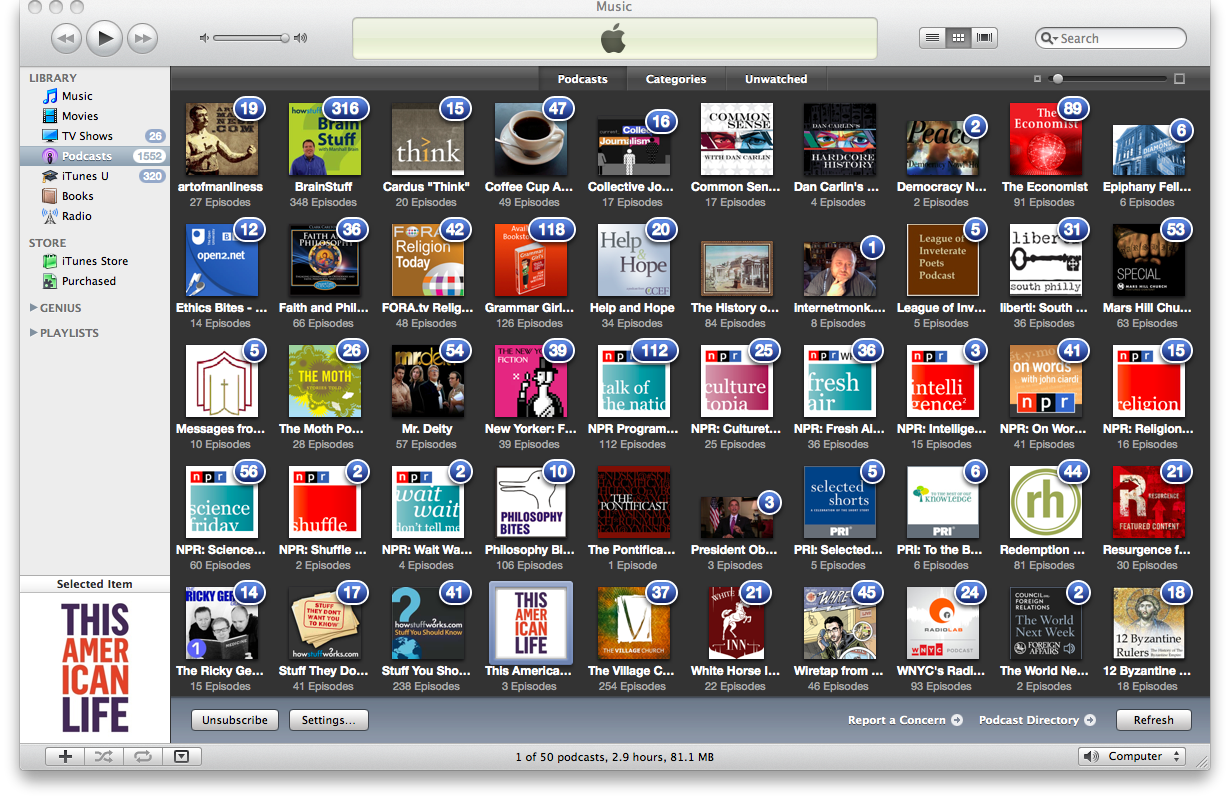
Look at that picture above.  Click on it to make it bigger.  That’s my iTunes.  As you can see, I listen to a LOT of podcasts.  And no, this isn’t just a  narcissistic  moment  to seem smart.  You see all those blue numbers above each podcast?  Well, those are just the episodes I haven’t listened to.  Also notice the 320 iTunesU lectures that have also been neglected.

And so begins my newest article in Patrol Magazine.  It’s about our culture’s (and my own) addiction to information consumption, how we should think about it, and where our hope is that something good may come of it.  I know, it’s some light reading, right?  Here’s the link:

“Information Overload, Social Darwinism, Linguistics, & Nuclear Forensics”

For all my previous articles at Patrol, click here.

Beauty: Revisited


Last year I gave a seminar/lecture/sermon thing at my old church, Epiphany Fellowship. The topic I spoke on was Beauty. I spent about nine months doing research, reading, talking, and thinking before ultimately delivering it last August. After the break is the full “Table of Contents” for each part of the blog series I did going through each individual part of the manuscript.  Those blog parts have not yet been updated.  Here are the the updated full written Manuscript, the audio of my “lecture”, and an appendix with the Greek/Hebrew breakdown of the words for “Beauty” in the Bible.

Full Talk
Full Audio
Language Appendix

Series Table of Contents:

Why do we long for Beauty?

What is Beauty?

What Things are Beautiful, and why?

How do we respond to this Beauty?

Conclusion

On Christian Books & Marriage (and a great 48-hour book sale)


trippI’m not married.  I don’t even see it on the imminent horizon for myself. But it’s something I’ve waited for, have tried to prepare myself for, and have written my fair share of poetry about throughout the years (here’s a sampling of my passion for it, my confusion about it, my fears about it, and my desire for it).  The Westminster Bookstore is having a 48 hour sale ending at 3pm on Friday, April 16th.

There are two books that this sale affects, but there are three books I’m mainly talking about in this post, so don’t stop reading until I get to the third.  The main book being promoted in this sale here is Paul Tripp‘s new book, What Did You Expect?: Redeeming the Realities of Marriage.  The second book is not a new one, but it is one of WTSbooks’ “favorite books on marriage”, and that is John Piper‘s This Momentary Marriage: A Parable of Permanence.

Continue reading

On Palm Sunday (or, “Oh, the Glory, the Beauty, & the Tragedy of Being Human!”)


This past Sunday was Palm Sunday, the Christian holiday that ushers in Holy Week. It celebrates the “triumphal entry” of Jesus into Jerusalem (Mk 11:1-11). Seen with the insight of hindsight, though, this is one of the oddest “triumphal entries” one could imagine. It is the triumphal kick-off for what will be the death of the Son of God.

Lately, I’ve been thinking about the common “courtroom” analogy for the Gospel. You’ve surely heard it: You are standing before a judge. You are guilty. The punishment is death. It is a right and just penalty for your crimes. But then Jesus comes in and freely offers to take your punishment for you on your behalf so you can be set free. Will you accept this gracious offer?

Many an atheist has pointed out the logical flaws in this analogy, but I think there are even bigger issues I have with it. Really, it only works if the parties involved in this switch are seen as equals. A pure man for a guilty man — seems like an even trade, right? But how does the death of this one man absolve the sins of a multitude? How is this even just?

Continue reading

On Holy Week, Idolatry, & Suicidal Ideations


This week marks the most important week of the entire Christian calendar. It’s Holy Week; the time we meditate upon Christ’s Passion — the last week he spent in Jerusalem during the Passover preparing to be the true and perfect Passover Lamb. This is also the final week of the Lent season. For weeks now we have celebrated the angst, tension, and pain of Lent. This has been a time where we have focused on the fact that we have not yet become who we will be, and we still live in much of that old way of life. This has been a time where we look our idols in the eyes, hear their whispers and discern what they have been promising us and what we have believed they can give. Love. Security. Affirmation. Rest. We seek all these things under the sun, but all these things find their Source beyond.

Continue reading

A Great Deal from the Westminster Bookstore


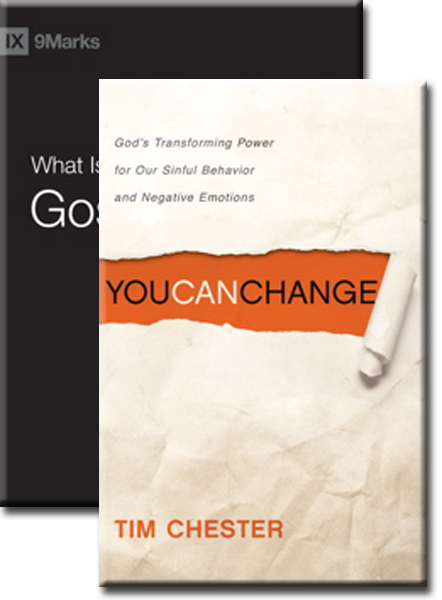
Just wanted to drop a quick note to let everyone about a great deal I saw at WTSBooks.com. I’ve long said that Westminster Theological Seminary’s Bookstore is the best bookstore I know of.  Between classes, it where we’d go to have fun.  It was like a candy store for all those theologically-inclined individuals.  They’re dirt-cheap (more often than not cheaper than Amazon) and usually have some good deal going on.  And this one is no exception.  Two brand new books.  $14.49.  Here’s the link:

You Can Change/ What Is The Gospel (Two Pack)- WTSBooks.com

I’m most excited about this first book, You Can Change: God’s Transforming Power for Our Sinful Behavior and Negative Emotions by Tim Chester.  A little while back I read a book he wrote with Steve Timmis, Total Church: A Radical Reshaping Around Gospel and Community.  That book changed my entire perspective on the Church, the Gospel, preaching, and simply living life as a Christian.  It put many of the pieces together in my mind concerning the Church and spirituality and their place in society.  I became convinced that these guys “get it”.  They have such a full understanding of the Gospel in a corporate context, so I’m so pumped to see Chester’s thoughts on the Gospel on an individual level.  Here’s the trailer for the book:

Continue reading