Ascension: Our glory & the Bible’s hinge


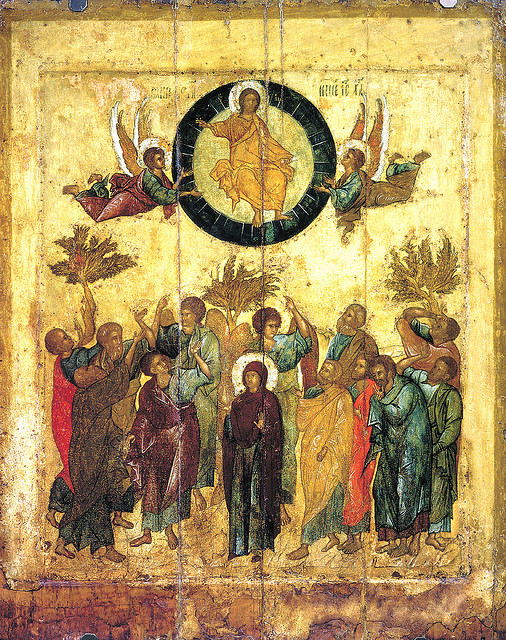
jesus-christ-ascension-iconToday in the Christian church calendar is Ascension Day, the day we celebrate Christ ascending into heaven 40 days after his resurrection and now sits at “the right hand of God the Father.” (You can read a prayer and poem I posted earlier for this Holy Day)

The Useless Ascension

The idea of “Ascension” doesn’t seem to get a lot of play nowadays in the Church. This, in spite of the fact that it is an essential part of all the Church’s earliest doctrinal formulations, and the subject of the most-quoted Old Testament verse in the New Testament:

The Lord says to my lord, “Sit at my right hand until I make your enemies your footstool.”

Compared to other, non-creedal things like Hell, homosexuality, and “attacks on biblical authority”, the Ascension isn’t really talked about. Maybe this is because the Ascension isn’t really a “doctrine”–it’s an “event” and a “declaration”.

And we western Christians love our systematic “doctrines” that we can pick apart as nauseam and/or figure out how we can “apply it to our lives” in such a way that we can feel like we’re “good Christians.” But honestly, the Ascension doesn’t have many direct applications for today.
Continue reading

A Holy Saturday kind-of Easter (on doubting the Resurrection)


Rothko-blue-and-gray

The culmination of Lent is Holy Weekend, prefaced by Maundy Thursday and consisting of Good Friday, Holy Saturday, and Easter Sunday. I realized that each year that I have been really intentional about my Lenten engagement, one of those four “Holy Days” seems to overshadow the the others and carry over into this Easter season (yes, it’s a season).

There are some years where the foreshadowing and ever-repeating Presence of Jesus in Communion makes Maundy Thursday the highlight (or lowlight?) of Lent. Some years, the utter darkness, weight, and drama of Good Friday overtake me and linger in my mind well into Easter season. And still others, no matter how I try to reflect and meditate on sinfulness and fallenness, I still can’t escape the lighted joy and horizon-cresting dawn of Easter, whose anticipation overshadows (or over-brightens?) my Lenten experience, making all the doom and gloom seem foreign to me.

For me, this year is a Holy Saturday kind-of Easter.
Continue reading

We worship Christ and…. the Resurrection? | Acts 17 & 24


Also some Epicurean and Stoic philosophers debated with him. Some said, “What does this babbler want to say?” Others said, “He seems to be a proclaimer of foreign divinities.” (This was because he was telling the good news about Jesus and the resurrection.)
Acts 17:18

One of the funniest moments in Acts. Notice they accuse him of preaching foreign “divinities” (plural). The Greek word for Resurrection is Anastasis. Paul has rolled in preaching “ton Iesous kai thn Anastasin”, or “the Jesus and the Resurrection”. The Philosophers think that Paul is preaching about two gods: “Jesus” and his wife, “Resurrection”.

I have a hope in God—a hope that they themselves also accept—that there will be a resurrection of both the righteous and the unrighteous. Therefore I do my best always to have a clear conscience toward God and all people.
Acts 24:15-16

Paul is obsessed with the resurrection. Well technically, Luke is. If you see the charge against Paul earlier, it was that he was preaching Christ and the Resurrection. They thought he was teaching two gods. Apparently, he must have been talking about the Resurrection so passionately. Almost as passionately as Christ.

They did not accuse him of preaching Jesus and the Cross, Jesus and the Tomb, Jesus and the Jews, Jesus and Grace through Faith, or even Jesus and the New Creation! It was Jesus and the Resurrection. The Resurrection is Paul’s way out of trouble. It’s his way of telling his story. Of causing divisions between himself and some Jews, and to show his solidarity with others. It’s everything to who Paul is and what he’s come to do.

See other Marginalia here. Read more about the series here.

Resurrection: Matthean Apologetics | Matthew 27.62-66


The next day, that is, after the day of Preparation, the chief priests and the Pharisees gathered before Pilate and said, “Sir, we remember what that impostor said while he was still alive, ‘After three days I will rise again.’ Therefore command the tomb to be made secure until the third day; otherwise his disciples may go and steal him away, and tell the people, ‘He has been raised from the dead,’ and the last deception would be worse than the first.” Pilate said to them, “You have a guard of soldiers; go, make it as secure as you can.” So they went with the guard and made the tomb secure by sealing the stone.
Matthew 27.62-66

Apologetics by the gospel writer at work, haha. We know in subsequent debates that this was a major argument by the Jews, so this is a very important record that Matthew is putting down. He has to prove as best as he can that Jesus did indeed rise from the dead, and that his body was secure.

See other Marginalia here. Read more about the series here.

Sin: God’s Favorite Part of Being God


sandorfi-le-pardon-wide

Lent is a time that we dwells a lot on Sin. It’s a preparation for Easter and celebrating the Resurrection, and so to prepare for this, we must meditate on those things that Resurrection itself addressed. Resurrection was a response to Sin and Death. The more we feel and dwell in the reality of our Sin and Death, the more tangible Resurrection becomes.

This can seem morose, annoying, unnecessary, or not in line with our identity as Christians. Should we do this though it might make us depressed, feel like self-focused navel-gazing, or if it distracts us from much of the rest of our Christian living?

There’s definitely a time and place for it and a degree after which it becomes unhealthy, but more than what this does for/to us or our emotional state, could I offer another reason that it’s good to have times where we bring our focus to our weakness and sinfulness?

God loves it.
Continue reading

Welcome to Ash Wednesday. Lent begins.


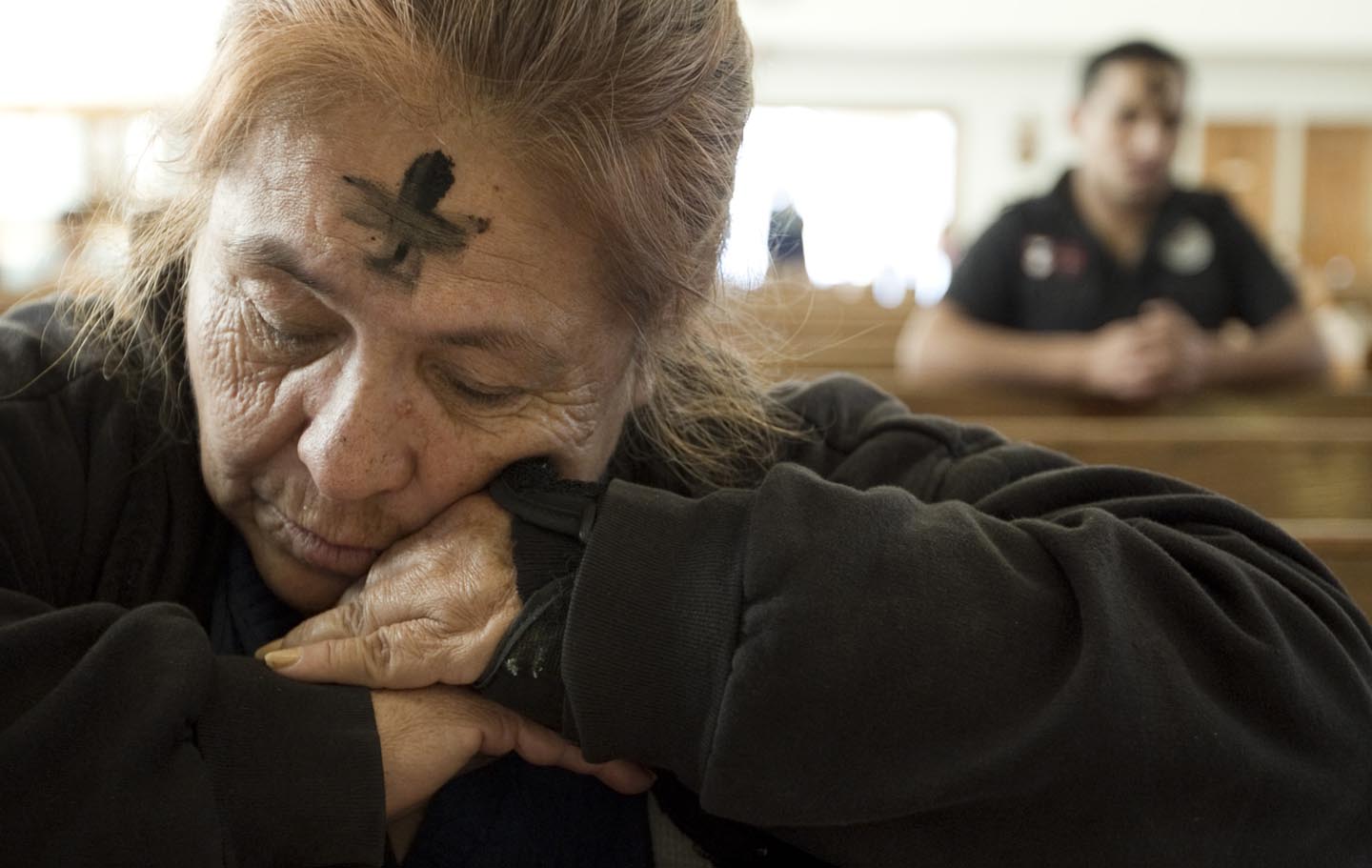
ash-wednesday-pew-lentToday is Ash Wednesday. In just under two months from today we’ll come to the highest point in the Christian Church calendar, Easter. That is where we’ll celebrate Christ’s Resurrection and how God’s perfect world broke into the present and our greatest enemies–sin and death–were conquered and shown to have no more dominion over us and the rest of the world. It’s meant to be the most effusive, overflowing, even ridiculous time of joy.

And yet, when we look at Jesus’ Resurrection, we see that before it ever took place, there was Death. And before that, there was an entire lifetime of loneliness, pain, suffering weakness, and isolation. We see that it was a life surrounded by evil forces and whispers that haunt and hurt Jesus and the people he loved.

And so, our early Church Mothers and Father thought it would be wise to have this time before Easter to prepare, so we might end up celebrating during Easter all the more.

Resurrection was itself a statement against our two greatest enemies: Sin and Death. And so to participate in Resurrection, we take the time of Lent to meditate and press into those things to which Resurrection was the response. We do this not out of morbidity, but out of anticipation.

Continue reading

Death & Life; Names & Vows | Genesis 3.20-21


The man named his wife Eve, because she was the mother of all living. And the Lord God made garments of skins for the man and for his wife, and clothed them.
Genesis 3.20-21

I don’t know why I’ve never noticed this before. Why does Adam only name Eve after they sin? Further, of all the things to do after receiving the curse from God, he does this covenantal, marital act: he gives her a name.

I know this isn’t in this text, nor was it on the mind of the original writer, but it reminds me of the odd line in Revelation where God promises to give each person a new name that only He and they will know.

It seems that in the whole sweep of redemptive history, the Bride of the first Adam received a new name when he brought death, just as the Bride of the second Adam receives a new name when he brings life.

See other Marginalia here. Read more about the series here.

“New Testament Historicity: A Response” by Daniel Bastian [GUEST POST]


run-down-Bible

(Note: These exchanges are now complete. There is a Table of Contents to the discussion now available.)

Today continues an on-going exchange between myself and a friend of mine, Daniel Bastian. These were inspired by a Facebook post he wrote about why he is Atheist (in this current post, whenever he says “OP”, he means “original post” and is referencing that). Last week, I wrote a post about the trustworthiness of the Scriptures and miracles. Here is his response.

Update: I have some responses posted for his section on miracles in this post. And, honestly, I feel he gets so many things wrong int his post, I’ll have to write another response to this tomorrow. 

More important update: I have a full response to this article now posted.

Paul,

Thank you for the thoughtful post. I think this is your most cohesive piece yet and, better yet, even dives below the surface of a few of my arguments. And allow me to just say up front that it is truly a breath of fresh air to commune with a non-fundamentalist on matters of faith. Rarely do I find a Christian with a sophisticated understanding of the faith’s foundational texts and the underlying nuance operative in these discussions. It is truly refreshing.

In my response I’d like to first address the broader themes of your post and then drill into a few of the more specific items you have noted. Along the way, I will correct some errors, highlight some omitted details, and point out some oversights and oversimplifications that obscure the analysis of New Testament historicity.

At the first, it seems that you still resist recognizing the non-Christian-centric applications of my arguments. Yes, some of my arguments did single out Christianity, as that is the religion I retired from at age 25 and is thus the one in which I am most conversant. However, if you were to step outside the hermetically sealed Christian bubble for just a moment, their broader implications should become apparent. Let’s try again.
Continue reading

Simplistic Atheism {3}: The Bible, Miracles, & History


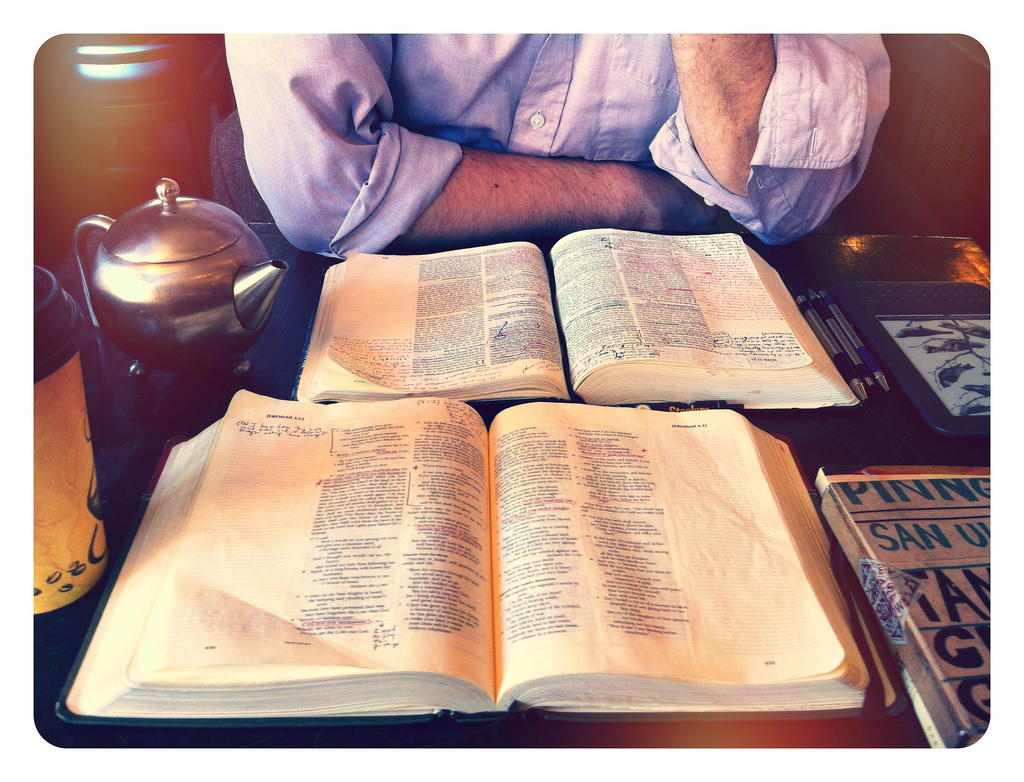
schrott-bibles-paul-coffee

(Note: These exchanges are now complete. There is a Table of Contents to the discussion now available.)

We continue our response to Daniel Bastian’s blistering critique of religious belief. Part 1 tried to respond to what seems to be Daniel’s basic understanding of the world, reason, and spirituality. Part 2 focused entirely on his use of scientific claims and findings to discredit (at least the need for) religiosity. Yesterday, Daniel responded to Part 2 (here was my response). Today, we narrow in on his views of the Bible, miracles, and history.

A Simplistic Bible

(Disclosure: a lot of this is cut-and-paste from various comments here and on Facebook. Also, I’ve taught a few classes that have a more detailed discussion of a theology of Scripture. Those can be found here, here, and here.)

The points about the Bible in Daniel’s post were especially difficult to read. In fact, they were my inspiration for my post last week talking about how Christianity can shape the types of Atheistic beliefs people come to. My frustration came from the fact that, since Daniel originally wrote this (a while ago), I’ve watched him engage with and express respect for others that offer substantive critiques to what he ended up re-posting last week.

In his points, he expresses a view of the Bible that is mechanical, wooden, systematic, simplistic, and puts expectations on the text that it doesn’t even place on itself. It seems like he is only responding to the modernist, fundamentalist view of the Bible (what I called a “Straw Bible”), and I know his thinking is far more nuanced than that–I couldn’t understand why he still perpetuated this. But nevertheless, he did, so I’ll address it as it’s posted.
Continue reading

Ascension: Our glory & the Bible’s hinge


jesus-christ-ascension-iconToday in the Christian church calendar is Ascension Day, the day we celebrate Christ ascending into heaven 40 days after his resurrection and now sits at “the right hand of God the Father.” (You can read a prayer and poem I posted earlier for this Holy Day)

The Useless Ascension

The idea of “Ascension” doesn’t seem to get a lot of play nowadays in the Church. This, in spite of the fact that it is an essential part of all the Church’s earliest doctrinal formulations, and the subject of the most-quoted Old Testament verse in the New Testament:

The Lord says to my lord, “Sit at my right hand until I make your enemies your footstool.”

Compared to other, non-creedal things like Hell, homosexuality, and “attacks on biblical authority”, the Ascension isn’t really talked about. Maybe this is because the Ascension isn’t really a “doctrine”–it’s an “event” and a “declaration”.

And we western Christians love our systematic “doctrines” that we can pick apart as nauseam and/or figure out how we can “apply it to our lives” in such a way that we can feel like we’re “good Christians.” But honestly, the Ascension doesn’t have many direct applications for today.
Continue reading

Trickle-Up Resurrection (Guatemala Lessons)


Rothko-easterMy church is currently in a series called “Resurrection Stories” in which we’re going through each of the non-Jesus stories of resurrections (or “resuscitations”—whatever) found in the Bible. It is, after all, still Easter.

A few weeks ago, as we were talking about Elisha raising the Shunnamite’s son, our pastor pointed out that most of these resurrection stories seem to center more on the people around the dead person than the dead person themselves. And so, in a sense, these resurrections are more for the people affected by death than the one dead; the ones that “receive” the true resurrection power are mostly those around the resurrected one.

Further, as he pointed out, most all of these people that “receive” the truest benefits of these resurrections are women—the most alienated and disempowered group throughout world history.
Continue reading

It’s Still Easter: a Theology of Color [photo sermon]


philly-tree-pink-spring

This week’s WordPress Photo theme is “Color“. Rather than simply writing about different pictures I’ve taken, I’m instead trying to write “photo sermons” based on these topics. In these posts, I want to try and use the photo itself as my “text”–trying to see how God reveals himself in his “other” book, in addition to the Bible.

In our last photo sermon, I talked about how I love that Easter comes around Spring time and so the natural world beautifully reflects the spiritual truth being celebrated. Also in line with this truth is the fact that Easter–just like Spring–is not just one day–it’s an entire season in the Church calendar.

It takes time for beauty and truth to get into and blossom within our souls. It takes preparation and anticipation for the roots of our hearts to quicken like the trees around us–to feel life coursing in them once more.

This is beautiful. And it doesn’t need to be this way.
Continue reading

The Cross vs. The Resurrection


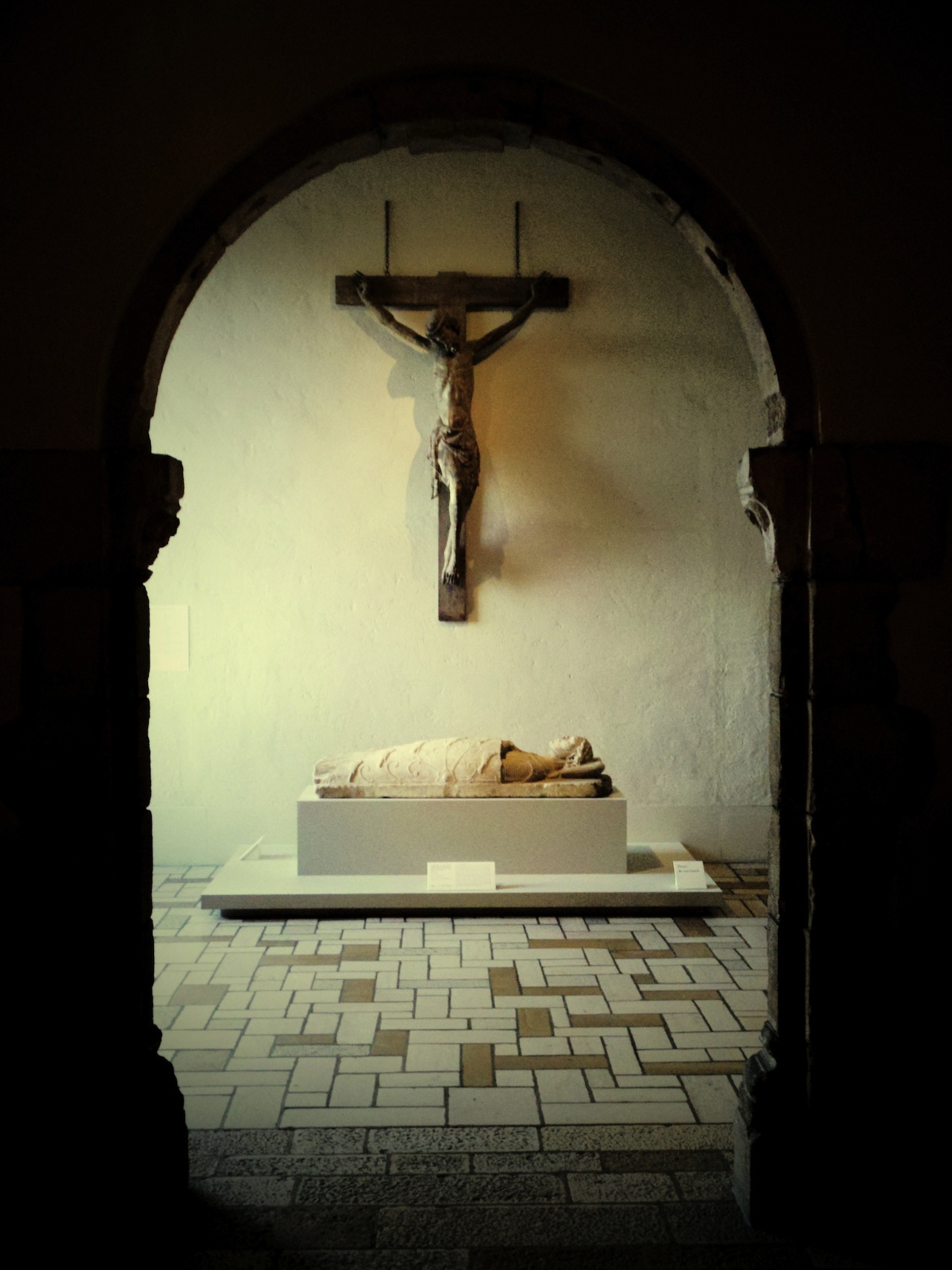
art-museum-crucifix-death-pmaIn Christian theology, there is a seemingly small thing that really influences so much of one’s theological outlook and even how they think they should live as a Christian.

Are you “Team Cross” or “Team Resurrection”?

Yeah, yeah, I know that the right answer is “both”, but really, most people tend to emphasize one more than the other.

What got me thinking about this was a Facebook post I saw on Easter evening. The poster said that the Resurrection was not when Jesus conquered sin and death. Instead, Jesus did that on the Cross, and the Resurrection was “simply” the “validation” of what Jesus did.

In other words, all that Jesus came to accomplish was done on Good Friday. God the Father saw it, thought it was awesome, so he went ahead and raised Jesus on Sunday.

In other other words, if the Resurrection never happened, nothing “essential” to salvation would be lost, merely the “proof” that it had been accomplished.

It really stuck with me, and no matter how much I tried to re-articulate it in my mind, give him the benefit of the doubt, or pick apart my own presuppositions, I really couldn’t shake how strongly I disagreed with this statement.

Continue reading

Our Easter Hope: Jesus Didn’t Rise from the Dead


statue-easter-bookHappy Easter! Let me greet all of you with the same Easter greeting that has been offered by generations upon generations of Christians before:

Alleluia, Christ is risen!

(And you respond with:)

Christ is risen indeed, Alleluia!

Now I don’t know how many of you have grown up saying that or have eventually settled into traditions that do, but I wonder how many of us have noticed the grammar of that statement. Why has it never said, “Alleluia, Christ rose”, or “Alleluia, Christ has risen”?

There is an extremely important and immensely practical aspect of the Resurrection that, as I’ve moved in more and more church circles, I’ve realized has either become de-emphasized, forgotten, or never known in the first place:

Jesus did not rise from the dead.
Continue reading

Palm Sunday: Future-Tense [photo sermon]


church-easter-tree

Continuing WordPress’ uncanny timing of photo challenges with the Christian Church calendar, this week’s theme is “Future-Tense“. In essence, they’re wanting pictures that anticipate something to come; something that’s being waited for; some future thing who’s presence is felt in the picture, even in its absence.

This is most appropriate today, as it’s Palm Sunday of 2013.

It takes some real significance for an event from the Bible to find itself as a major Church Holiday. Considering that, it can be odd that Palm Sunday is one of these: there’s nothing really unprecedented or special about it in and of itself.

There are other places in the gospels where Jesus is proclaimed king, proclaimed Messiah, prophecies are fulfilled, large groups believe in him, and even several times he enters Jerusalem. So what’s so special about this moment?

The future.
Continue reading