Advent & Longing for Home


Sandorfi-MadeleineThis is the meditation I wrote that appears in a reading and reflection in Liberti Church’s Advent 2013 Prayerbook, which can be downloaded for free.

There is an incredibly profound way in which we don’t feel at Home in our own humanity.

Too often, Christians see their own personal spiritual growth as a loss, a lessening, or an abandoning of their own humanity. This can lead us to subtly use people and things to try and find our soul’s Home. And so we awake to find anxiety, manipulation, doubt, guilt, and self-loathing ruling and reigning so many parts of our lives and relationships. (Am I alone in this?)

We can sometimes think of Christianity as a process of our souls leaving the “Home” of their weakened humanity and finding a “new, spiritual Home” in Jesus. The logic goes that you were originally one way, then Jesus “saved” you, and now you are able (and are commanded) to be something else, now that you are His.

But Advent radically flies in the face of this.
Continue reading

Advent & Hoping for Justice


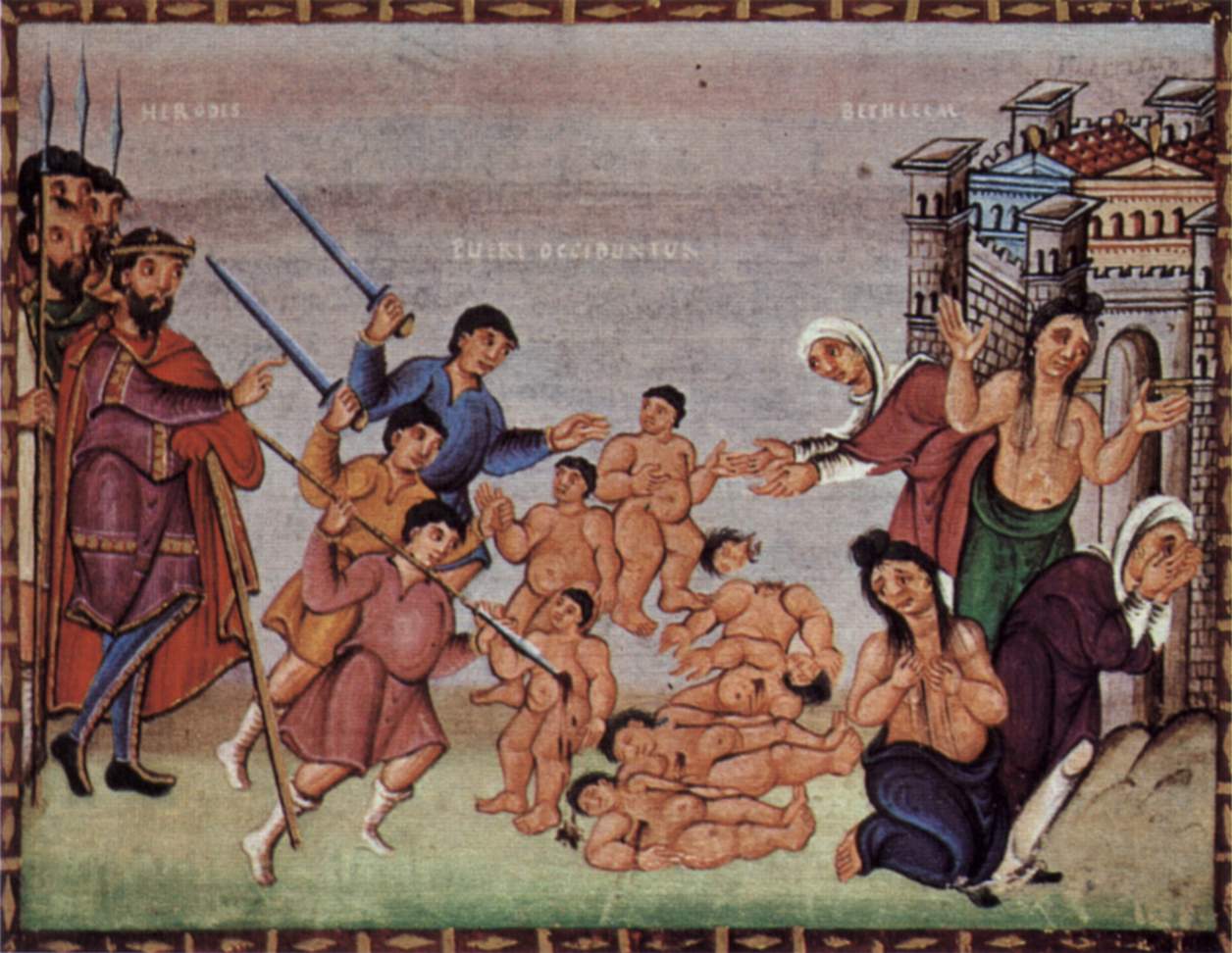
Massacre-of-innocentsThis is the meditation I wrote that appears in today’s reading and reflection in Liberti Church’s Advent 2013 Prayerbook, which can be downloaded for free.
First, a question.

Think back on the Christmas story. After Jesus is born, when he’s about three-years old, King Herod puts out a decree calling for the death of all infants, trying to kill Jesus. An angel comes to Joseph in a dream and tells him to flee to Egypt to prevent Jesus from dying in this slaughter.

Here’s the question: why flee to Egypt?

If they stayed and Herod killed the child Jesus, wouldn’t that still be the Son of God dying unjustly at the hands of a Roman provincial governor? Why go to all that effort to wait 30 years later for the same thing to happen on a cross?
Continue reading

Advent & Hoping for Peace


Rothko-untitled-2This is the meditation I wrote that appears in today’s reading and reflection in Liberti Church’s Advent 2013 Prayerbook, which can be downloaded for free.
This world is anything but peaceable. Humanity is constant in its injustice and wickedness inflicted upon one another across this world. It makes you wonder if “humane” is a misnomer. And we can’t just blame all of this on free will, either. The natural world rages against us with its own violence with staggering regularity. And all of this hits home the most when it’s those closest to us that suffer under this world with little peace on hand.

We look at all of this and ask that oldest of questions: “Why?” But when we open the pages of Scripture, we don’t find answers to this seemingly core thread running through our existence. The God of the Bible seems far more concerned with answering “what” questions than “why” questions–what is the nature of reality? what is the problem with the world? what is the solution?

But there is good news for all of us that struggle against the violence of this world: Advent.

In Advent, God does not merely see our why‘s and disregard them as silly and human; he does not simply leave us to our own to wrestle and struggle and doubt. He doesn’t answer our whys. He simply looks at us and the world with compassion, acknowledges to us the way things are, and rolls up his sleeves to address it.
Continue reading

Lament & Remembrance (Nostalgia Can Hurt)


paul-window-bw-schrott

Lately, I’ve found myself getting very nostalgic, remembering past relationships, friends, places I’ve lived, and people I’ve known. And honestly, I don’t know why my remembering and thinking through all of these things in the past has caused more tears than laughter, especially in the area of relationships.

I have found myself lingering on the Facebook profiles of old roommates whom I’ve completely lost touch with inexplicably. I have been reading through old emails and blog posts that remind me of spiritual fathers and mothers with whom disagreements over the past several years have led to very real divisions..

And yesterday, I heard a song that reminded me of a situation a couple of years ago that was incredibly painful for me. It wasn’t really any one’s particular sin or moral failings that ended up causing all the hurt and pain; just the collision of people’s own baggage and immaturity and struggles. As I thought back on it I remembered the false ideal picture of reality I had blindly painted for myself at that time. I remembered the slow, painful process that was this picture being broken down brick by brick over the course of several weeks. I felt again the shadows of the anxiety and pain from that time.
Continue reading

Father Abraham, had many sons; and many sons, Moses did not.


Rothko-9-White-Black-Wine-1958So…I had my mind blown this past week.

I’m taking this class on the idea of “worship” in all its dimensions, and we read a few pieces that gave me an entirely new framework to understand the Bible, particularly the Old Testament, and how God works in those stories. And no, I’m not exaggerating.

In Genesis 15, God makes a covenant with Abraham, and it’s a little weird, mainly because it’s entirely on God. He promises that he will be Abraham’s God. He promises he will give him many descendants. He promises to make those descendants a blessing to the world. And, most importantly, he takes all of the potential negative consequences of breaking the covenant on Himself. In essence, he makes this covenant with Himself on Abraham’s behalf.

What’s Abraham’s part in this whole thing? “He believed the Lord; and the Lord reckoned it to him as righteousness”, the text says (and he’s supposed to circumcise his kids as a visible mark of his belief). This is one of the earliest and clearest depictions of the unconditional grace-driven nature of God’s relationship to humanity and the world–a relationship that would later be called “The Gospel”. In fact, the Apostle Paul would look at this moment in Genesis and say:

Just as Abraham “believed God, and it was reckoned to him as righteousness,” so, you see, those who believe are the descendants of Abraham. And the scripture, foreseeing that God would justify the Gentiles by faith, declared the gospel beforehand to Abraham, saying, “All the Gentiles shall be blessed in you.” For this reason, those who believe are blessed with Abraham who believed.

Okay….so what?
Continue reading

The Church: Being in Becoming (a Sunday pre-game)


church-philly-bw-cross-market-eastFor my Gospel, Culture, and Church course this past week, we had to read the opening chapter of this book on the Church as mission, rather than seeing the Church as something that does mission. We also had to read some mind-blowing pages from Hans Kung’s epic work The Church. It got me thinking a lot about what precisely the “church” is and how it is that thing. I just wanted to share some disjointed thoughts today.

Throughout the readings, the (perhaps over-used) term “Being in Becoming” kept coming to mind. (For my more philosophically-trained friends, forgive me if I’m simplifying this term too much; My main exposure to this has been cursory, in the context of the Trinitarian theology of Karl Barth and how he describes God).

In others words, the Church’s very Being is in its efforts to more faithfully “Become” what it is. It is not and cannot become a static entity into which we invite people. As we are caught up in the missional plan of the missional God, it propels forward into places where the old notions of Christendom and privilege are not relevant and are shown to be the anemic frameworks they are.
Continue reading

Prayer: Doubt’s Doorway (on the Philippine typhoon)


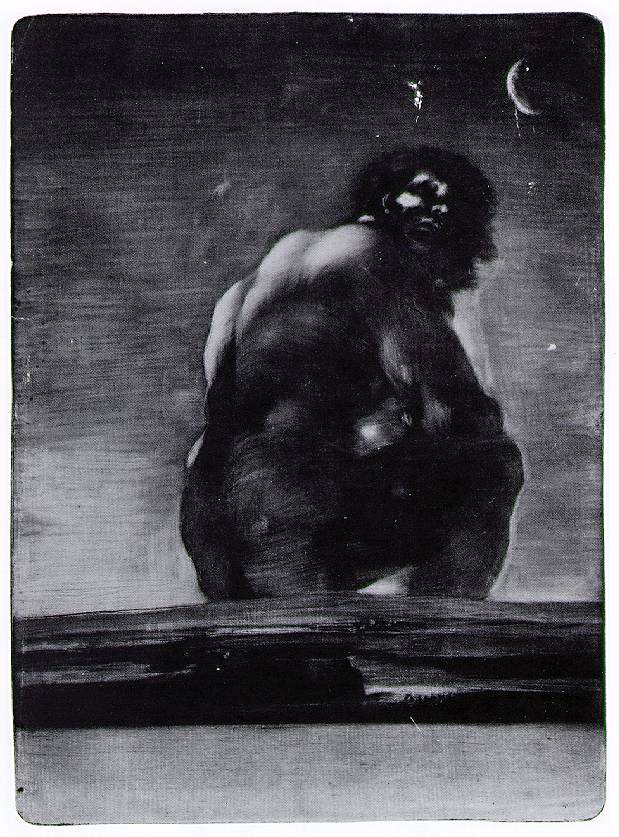
de-Goya-The-Giant“So, like I said, we’re trying something different by spending some time each week praying for something in the world or the city, and not just for our own issues. Does anyone have anything?”

“One of my best friends is in the Philippines and–you know–the huge typhoon is heading their way. I’d like us to pray for my friend and everyone there in danger.”

“Oh yeah, that’s supposed to be the biggest storm ever in history or something.”

I was embarrassed. Anyone that knows me knows that I stay glued (too much) to various news sites throughout the given day. And yet, I hadn’t heard of this storm. While someone in the home group prayed for those in the path of this storm, I snuck a peak at my New York Times app. Yep, the top story was still about the FDA all but banning trans fats.

Why hadn’t I heard about this?
Continue reading

Urban Lessons: Why cities will save our souls. [VIDEO]


Yesterday I started a brief little series going through some lessons I have learned from my first semester back in seminary. I first talked about how (at least in my mind) cities had to be taken off their pedestal. There are desires and needs of the human soul that can’t be met in cities. We need other types of livable environments as well.

And yet, through this semester I was re-grounded in my belief in the essential importance and centrality of urban settings. Above, you’ll find a video reflection I had to make in which I give my perspective on this question: Why should Christians engage in cities? In it, I speak about some of these dynamics that are in greater detail below. (Sorry for the poor video quality.)
Continue reading

Urban Lessons: Why cities will kill your soul.


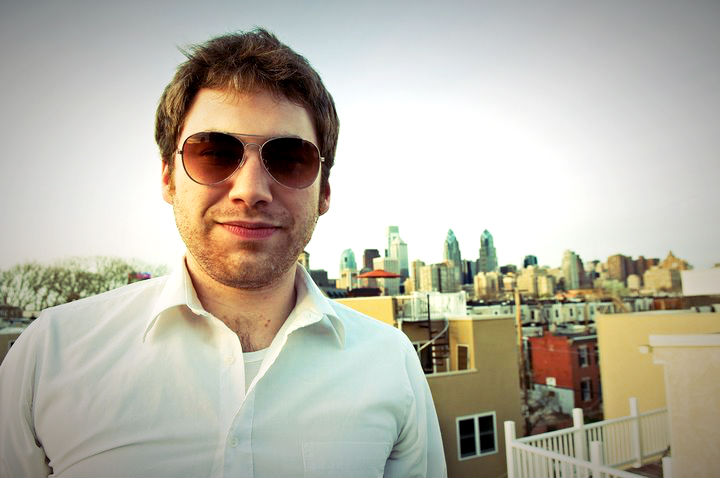
paul-philly-skyline-2I just completed my first trimester of seminary (round 2). I took a class class on Urban Christianity that, while it may not sound like a difficult and comprehensive graduate course, really was demanding at every level. So much so, in fact, it has really changed a lot of the ways I’ve thought about the city and how humans relate to it (especially Christians).

The class really caught me at just the right time. To a certain extent, even before coming to this class, I “got” it. I had imbibed enough Tim Keller and Church Planting material to understand the centrality of the city in the story of the Bible. Further, my church is now my fourth urban church plant, I go to church and live, literally, in “Center City” Philadelphia, and I work in the midst of the brokenness of the city, seeing the extremes of its beauty and brokenness in ways that few people do in their everyday lives.

And yet, especially due to the rural roots of “certain people” extremely close to me (haha), I felt I needed to engage in this class to develop a far more nuanced view of the city. And I think I got that. Over a few posts over the next couple of weeks, I’d like to share some of the lessons I’ve learned through this time. I think some of these things are lessons that all of us cool urban twentysomethings could do well to internalize.

Continue reading

Catholics Aren’t Crazy: On Praying to Saints (Happy All Saints’ Day!)


This is a post in an on-going series called Catholic Aren’t Crazy exploring misconceptions Protestants have about Catholicism and lessons we can learn from them.

UPDATE: I responded to some critiques and gave some clarifications.

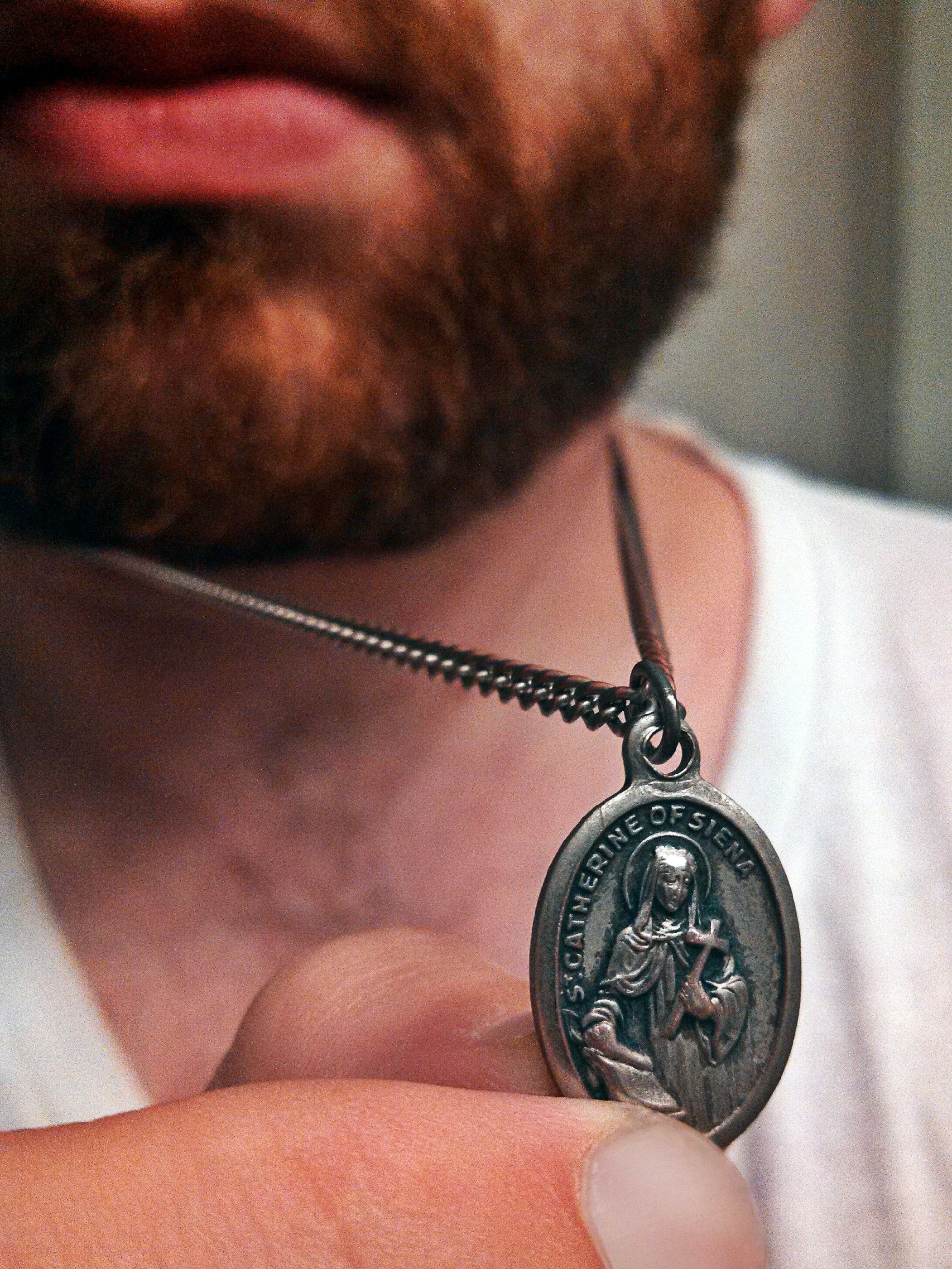
UPDATE II: Here’s the story of the Saint I pray to, Catherine of Siena.

Yesterday was Halloween. That makes today All Saints’ Day (read more about the history of these holidays in yesterday’s post).

All Saint’s Day has taken on different meanings for different groups of Christians. What seems to stay consistent, though, is that it is a celebration of the victory attained by those faithful Christians who have died. They are no longer pilgrims, as we are, but are the triumphant ones, having finished their race well and been brought into their peace with God. We celebrate Christ’s effectual victory over sin and death and that this has been granted to those that have gone before us.

The hope and encouragement in this holiday is not simply that we “remember” these saints, or meditate on their example. Instead (and this is important), there has been a long-held belief in the Christian Church that we still have a mystical communion and relationship with those saints that have already died. When Christians throughout Church history (and the Bible) have referred to “The Church”, they don’t simply mean those still around today, but all the saints who have ever lived (even in the Old Testament!). We are all the Church.

So we can truly celebrate those that have gone before us because we are truly still connected to them in a very real and vibrant way.
Continue reading

Karl Barth: Our Freedom, Our Home, & God’s Directing [AMAZING QUOTES]


karl_barth crop

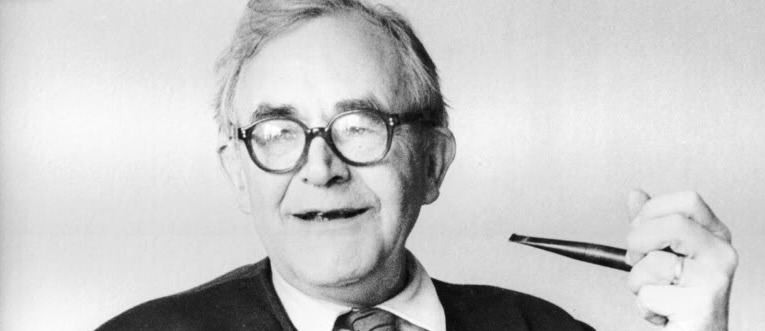
I’m writing this long paper on the ancient Christian Practice of Discernment. In my research, I pulled out some Karl Barth, my favorite theologian (hands down), and got to soak in the beauty of these words, and I wanted to share them. Now, for people that don’t read “real” and “proper” theology, this is it. It’s circular, it repeats itself, and it’s unnecessarily complicated and unclear. I know. I get that. But I promise, if you can spend a few minutes, quiet yourself, and focus, I promise the pay-off is huge. This guy stands as a tower over all of modern theology and deserves more attention than he gets. I’ve done slight edits to some of the wording and paragraph breaks for clarity. Enjoy.

* * * * * * * *

God’s direction is an all-powerful decision, His own divine act of lordship. By this means, too, God vindicates His honor and maintains His glory. By this means, too, He exercises authority….

God’s direction is the directing of humans into the freedom of His children. It is this which has taken place in Jesus Christ no less uniquely than the once-for-all fulfillment of the divine sentence on all humanity. In suffering in our stead the death of the old nature, and bringing in by His resurrection the life of the new, He has made room for the being of all humanity to be at peace with God.

On the basis of what we are and is not by virtue of the divine sentence passed and revealed in Jesus Christ… we have no other place but this—the kingdom in which God can be at peace with us and us at peace with God. Jesus Christ…is the all-powerful direction of God to us to occupy this place, to live in this kingdom. If we are told in Him who we are and are not, we are also told in Him where we belong, where we have to be and live.

Continue reading

Good Morning (prayer)! [photo sermon]


ultimo-coffee-cortado

Each week, WordPress has a Weekly Photo Challenge, where they give a theme and invite people to highlight photography representing that theme, accompanied by a few meditations on it. OccasionallyI try and write a “photo sermon” or meditation based on those themes, accompanied by a photo of mine . This week’s theme is “Good Morning“.

* * * * *

In one of those oddities of tire human condition, I love sleep, and yet I avoid it like the plague. I have a terrible sleep schedule. My sleep pattern is a microcosm of my lack of discipline in many parts of life, and maybe even an extremely low level of self-harm, where my body and heart wouldn’t really know what to do if it were consistently well-rested. There’s something about a constant weight of tiredness that—maybe—makes one feel “productive”, even as it steals productivity away from you.

This is a lie. I know. I’m working on it in therapy.

In some Christian circles, people claim “life verses” for themselves; bits of the Bible that they feel speak to them so deeply that the words amount to a blanket summary, call, encouragement, guiding principle, or telos to their life. People usually pick a “life verse” that speaks to what they want their life to be or how they want God to work in their lives.

Continue reading

“Coffee Crucifix” (a sonnet for National Coffee Day)


Coffee Crucifix

Crescent ring under porcelain smooth
___stain the wood-stained finish.
______(It is finished.)
___Marked with muddy water;
___mark the merry day; to
___marry the murdered man.

Floral notes in blackened waves
___crash the shore of trembled lips.
Choral bright, in darkest night,
___wake the tone of trebled kiss.

Younger tastes left open-wide; older eyes made
satisfied.

Mark the wood: complex simplicity.
Pierce my heart: storied infinity.

[read my other Holy Week poetry here]

all writings licensed: Creative Commons License