The Lord is Fleeting [photo sermon]


train-knitting-fleeting

For those new to  the blog: each week, I try and write a “photo sermon” based on the themes of WordPress’ Weekly Photo Challenge. This week’s theme is “Fleeting“.

* * * * *

A garden cool. A God at leisure. Lovers conspire. Nectar tasted.

The God is gone.

He appears in visitors and shapes and shadows, and as a voice to an ancient Babylonian:

“I will make you…”

The Babylonian’s faith is counted as righteousness, and deservedly so, for this man doesn’t hear the voice of God in any way for decades. (And I get mad when his voice leaves me for months.)

This God lets his people sit in slavery for hundreds of years. When his Chosen asks to see his Glory, He offers only the briefest glimpse of his back. When His People stray at Sinai, He still offers to give them every benefit that He promised–the land, the victory, and their identity. The only difference: He would send his angels with them and withdraw his own Presence.

They freak out.
Continue reading

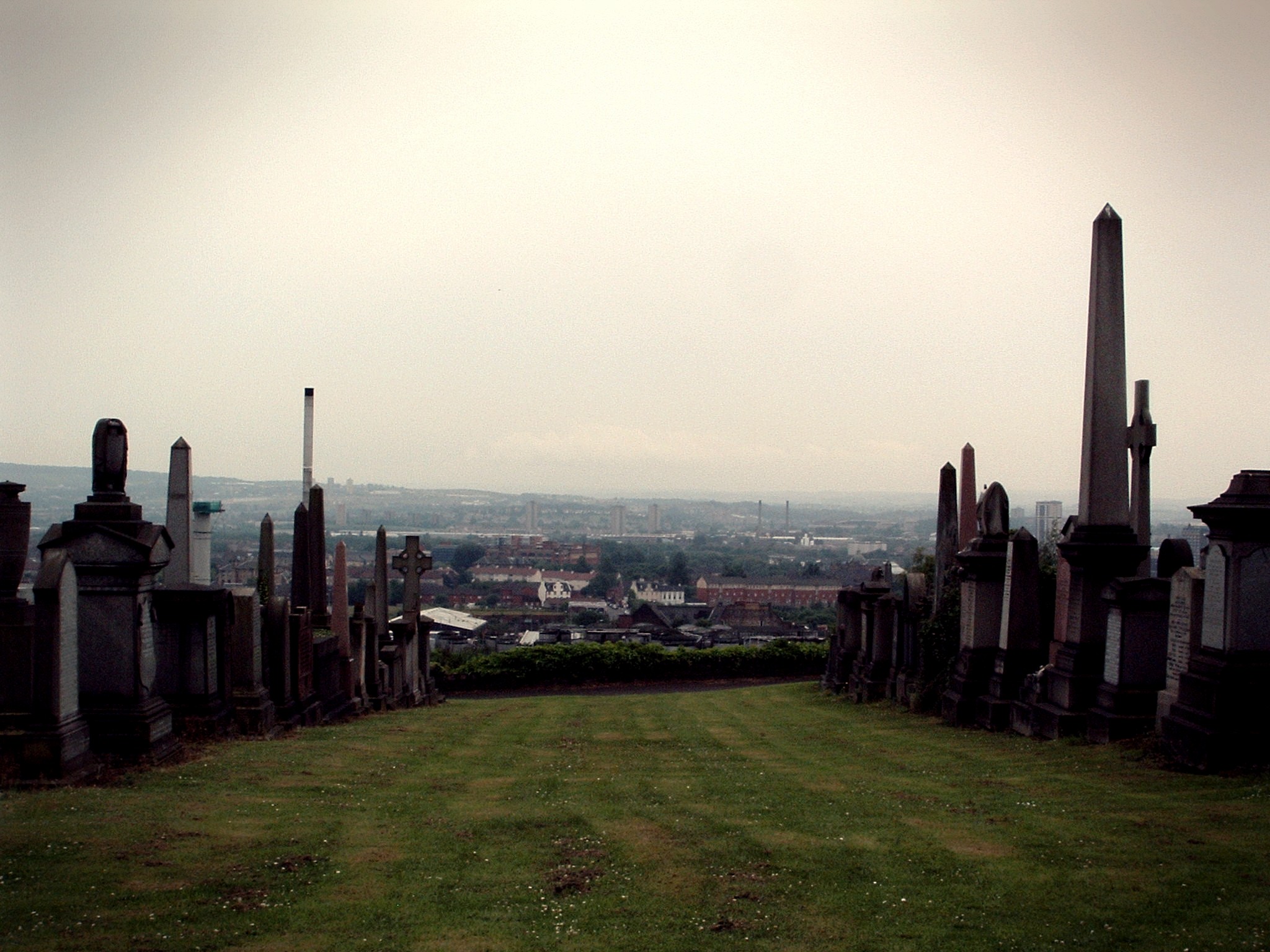
Diving into Death


books-death

It’s always difficult to talk about one’s own fear of one’s own death. It usually comes across as a little melodramatic and seems to carry with it the appearance that somehow your fear of your death is somehow felt more deeply, analyzed more fully, or experienced more truly.

In short, when people start whining about their fear of death. It can be annoying. I acknowledge this. And yet, here I am, telling you all that I am really, really scared of death.

When I mention this to people that know me as the guy who writes a lot about faith and seems to believe these things pretty deeply, people are (for some reason) shocked to hear me explain just how deep my fear of death goes. I know it’s not logical, but I somehow find the past works of God more easily believable than the future acts of God. I know you can’t have one without the other, but the human heart is a storm of contradiction and paradox.

And for some reason, Death has occupied my thoughts of late. Sure, I’ve wrestle with it’s reality, thought through it’s theological origin, seen it in the faces of the hurting, wrote about how to live in spite of it, and even engaged it in poetry and in song, but something has really captured me recently. I’ve been sitting in the presence of this fear.
Continue reading
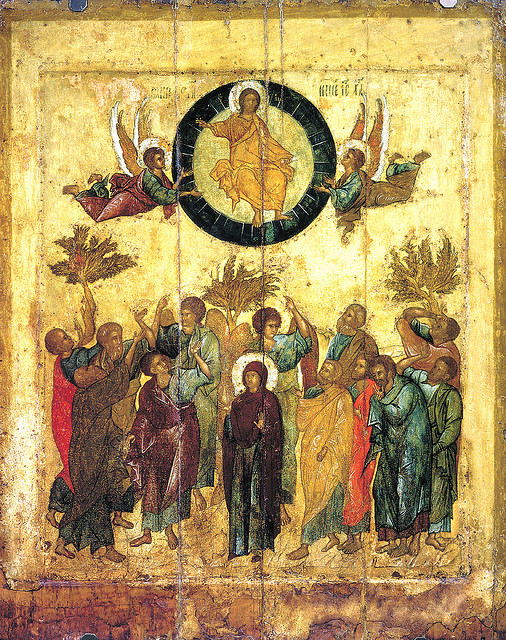

Ascension: Our glory & the Bible’s hinge


jesus-christ-ascension-iconToday in the Christian church calendar is Ascension Day, the day we celebrate Christ ascending into heaven 40 days after his resurrection and now sits at “the right hand of God the Father.” (You can read a prayer and poem I posted earlier for this Holy Day)

The Useless Ascension

The idea of “Ascension” doesn’t seem to get a lot of play nowadays in the Church. This, in spite of the fact that it is an essential part of all the Church’s earliest doctrinal formulations, and the subject of the most-quoted Old Testament verse in the New Testament:

The Lord says to my lord, “Sit at my right hand until I make your enemies your footstool.”

Compared to other, non-creedal things like Hell, homosexuality, and “attacks on biblical authority”, the Ascension isn’t really talked about. Maybe this is because the Ascension isn’t really a “doctrine”–it’s an “event” and a “declaration”.

And we western Christians love our systematic “doctrines” that we can pick apart as nauseam and/or figure out how we can “apply it to our lives” in such a way that we can feel like we’re “good Christians.” But honestly, the Ascension doesn’t have many direct applications for today.
Continue reading

Trickle-Up Resurrection (Guatemala Lessons)


Rothko-easterMy church is currently in a series called “Resurrection Stories” in which we’re going through each of the non-Jesus stories of resurrections (or “resuscitations”—whatever) found in the Bible. It is, after all, still Easter.

A few weeks ago, as we were talking about Elisha raising the Shunnamite’s son, our pastor pointed out that most of these resurrection stories seem to center more on the people around the dead person than the dead person themselves. And so, in a sense, these resurrections are more for the people affected by death than the one dead; the ones that “receive” the true resurrection power are mostly those around the resurrected one.

Further, as he pointed out, most all of these people that “receive” the truest benefits of these resurrections are women—the most alienated and disempowered group throughout world history.
Continue reading

Why I’m in Guatemala: Meet Lemonade International


La-limonada-lemonade-international-guatemala

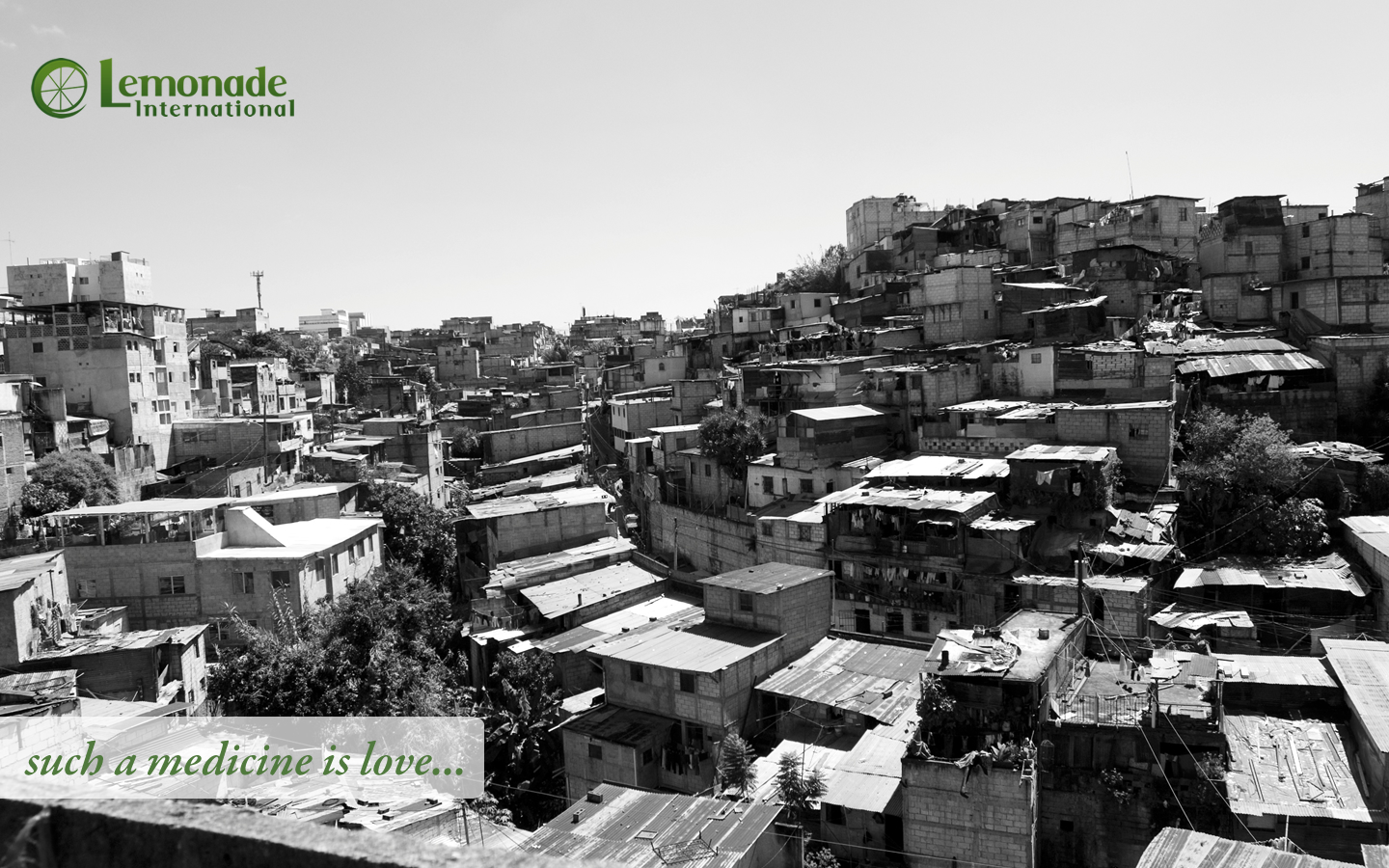
Yesterday, I touched down to begin my week in Guatemala on a blogger’s trip with Lemonade International, a non-profit development organization doing work in a particular called La Limonada.

This community of La Limonada is the largest slum community in Central America. After the 36-year-long Guatemalan Civil War began (due to an American coup to overthrow their leader), many, many children and women lost their fathers and husbands to fighting, leaving this huge community of hurting people. Many, many of the refugees ended up in La Limonada.

This community is a 1-mile long stretch that is a half-mile wide and straddles a ravine. 60,000 to 100,000 people live there. It is considered a “red zone” by Guatemala, meaning that deliveries, police, and most outsiders in general don’t go in there. In the boundaries of the “zones” of Guatemala City, La Limonada is between two different zones–it doesn’t even have a place in the official boundaries of the city.

It’s literally been abandoned and marginalized by the very nation in which it resides.
Continue reading

Death & Dignity: what’s the point?


philly-life-wall

Next week I head to Guatemala for the Lemonade International Blogger’s Trip. Having been introduced to this organization, I’ve been following their blog closely, trying to get to know them more and more.

A couple of days ago, they posted about a tragic loss. A member of their school, Herber Giovanni Sandoval, died a couple of days ago at the age of 17. In the conclusion of their post, they said this:

“We are especially grateful to the youth group at Lifepointe Church in Raleigh, NC for sponsoring him while he was still attending the Limón Academy.”

I immediately had the image of the youth group kids or sunday school class at that church who probably spent years following the story of Herber. I wondered how they would feel and respond to this news. How would the leaders help them process this? Would it impact the kids at all or would they be too removed from it?
Continue reading

The Cross vs. The Resurrection


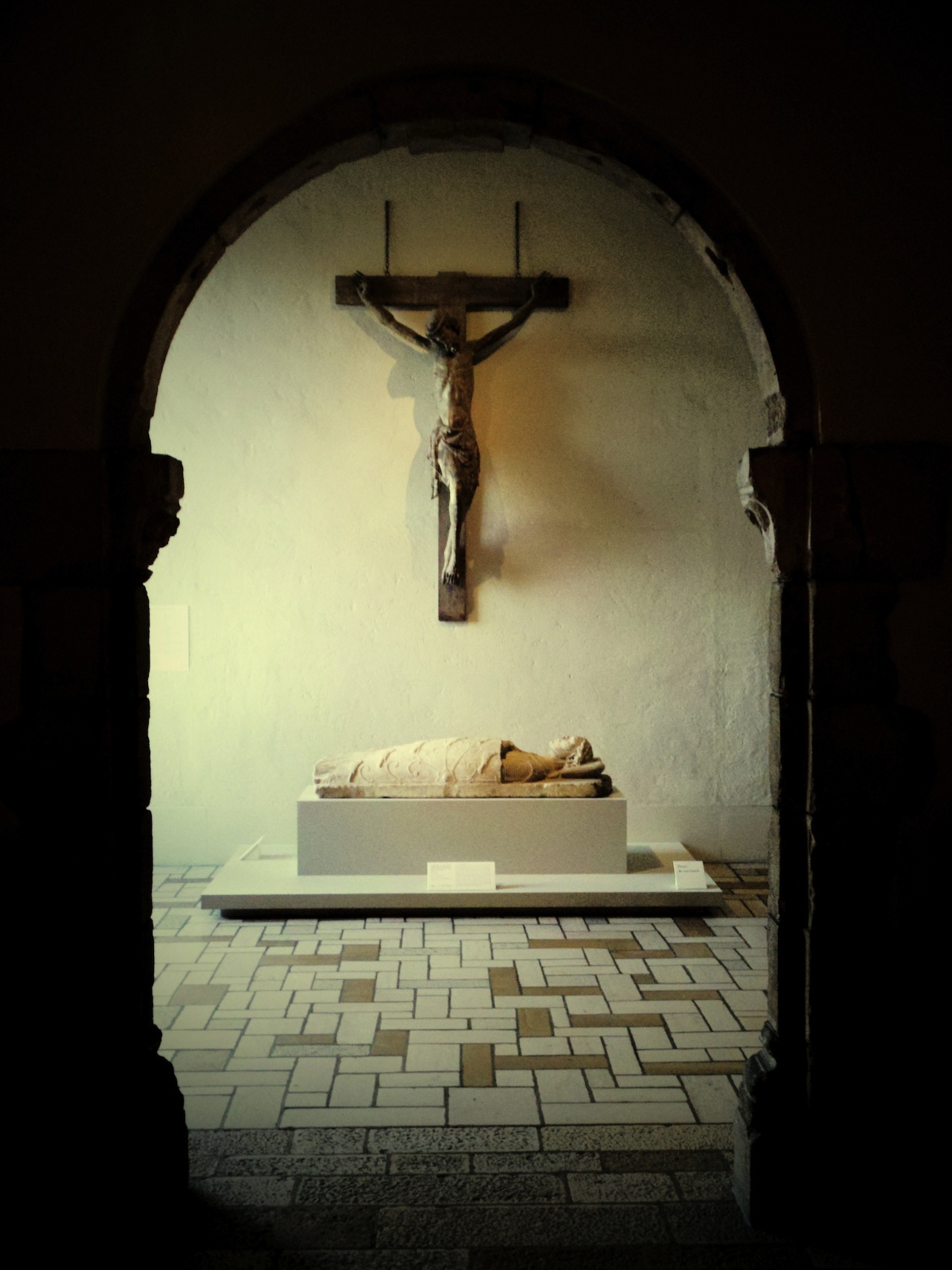
art-museum-crucifix-death-pmaIn Christian theology, there is a seemingly small thing that really influences so much of one’s theological outlook and even how they think they should live as a Christian.

Are you “Team Cross” or “Team Resurrection”?

Yeah, yeah, I know that the right answer is “both”, but really, most people tend to emphasize one more than the other.

What got me thinking about this was a Facebook post I saw on Easter evening. The poster said that the Resurrection was not when Jesus conquered sin and death. Instead, Jesus did that on the Cross, and the Resurrection was “simply” the “validation” of what Jesus did.

In other words, all that Jesus came to accomplish was done on Good Friday. God the Father saw it, thought it was awesome, so he went ahead and raised Jesus on Sunday.

In other other words, if the Resurrection never happened, nothing “essential” to salvation would be lost, merely the “proof” that it had been accomplished.

It really stuck with me, and no matter how much I tried to re-articulate it in my mind, give him the benefit of the doubt, or pick apart my own presuppositions, I really couldn’t shake how strongly I disagreed with this statement.

Continue reading

Our Easter Hope: Jesus Didn’t Rise from the Dead


statue-easter-bookHappy Easter! Let me greet all of you with the same Easter greeting that has been offered by generations upon generations of Christians before:

Alleluia, Christ is risen!

(And you respond with:)

Christ is risen indeed, Alleluia!

Now I don’t know how many of you have grown up saying that or have eventually settled into traditions that do, but I wonder how many of us have noticed the grammar of that statement. Why has it never said, “Alleluia, Christ rose”, or “Alleluia, Christ has risen”?

There is an extremely important and immensely practical aspect of the Resurrection that, as I’ve moved in more and more church circles, I’ve realized has either become de-emphasized, forgotten, or never known in the first place:

Jesus did not rise from the dead.
Continue reading

Palm Sunday: Future-Tense [photo sermon]


church-easter-tree

Continuing WordPress’ uncanny timing of photo challenges with the Christian Church calendar, this week’s theme is “Future-Tense“. In essence, they’re wanting pictures that anticipate something to come; something that’s being waited for; some future thing who’s presence is felt in the picture, even in its absence.

This is most appropriate today, as it’s Palm Sunday of 2013.

It takes some real significance for an event from the Bible to find itself as a major Church Holiday. Considering that, it can be odd that Palm Sunday is one of these: there’s nothing really unprecedented or special about it in and of itself.

There are other places in the gospels where Jesus is proclaimed king, proclaimed Messiah, prophecies are fulfilled, large groups believe in him, and even several times he enters Jerusalem. So what’s so special about this moment?

The future.
Continue reading

Reflections on Psalm 51: the People & their Fallen King [intro]


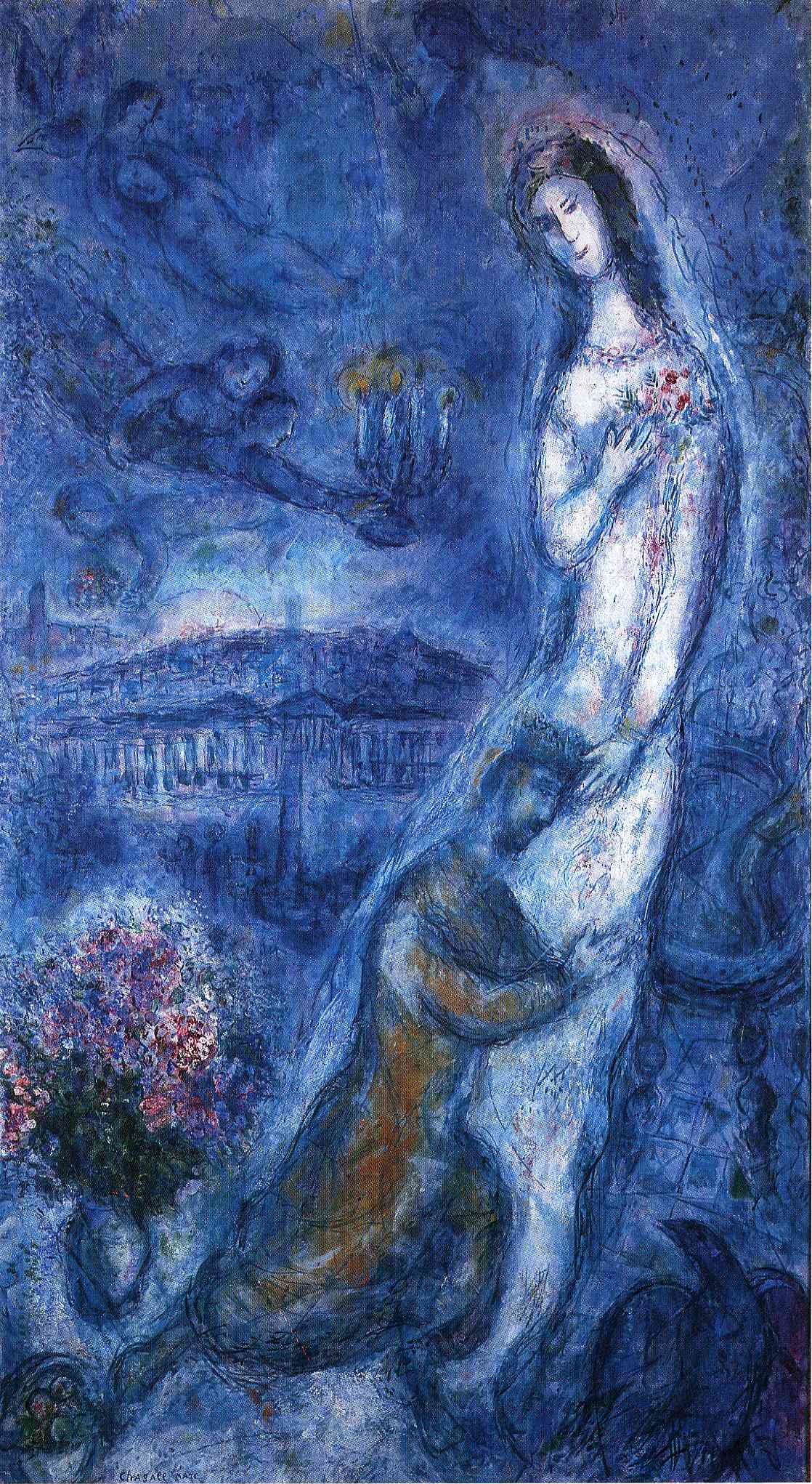
bathsheba-marc-chagallWhen it comes to talking about Repentance, there are few favorite passages to study than Psalm 51. As part of this year’s Lent series on Repentance, I’d like to spend the rest of this series exploring this Psalm verse-by-verse.

So today we begin. But not with verse 1. Instead we begin with that superscription found above it:

To the choirmaster. A Psalm of David, when Nathan the prophet went to him, after he had gone in to Bathsheba.

This is actually an important place to start. Most of the Hebrew writings we have outside of the Old Testament are pieces that were written to fill in gaps left in the biblical account. It seems the people of God have always had difficulties living with what God did not tell them.

Continue reading

The Story of Repentance: believing vs. achieving


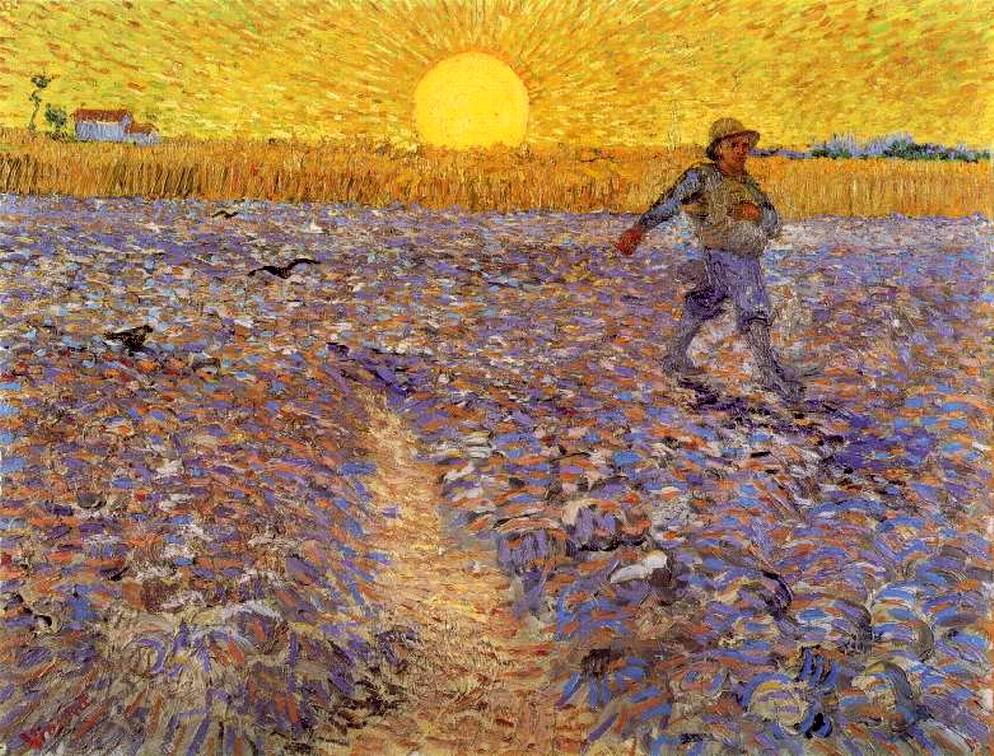
Van Gogh-Sower with Setting SunThis post is part of my 2013 Lent series: Reflections on Repentance.

I almost titled this post “theology in the service of real-life”.

The last time I wrote about repentance, I talked about the difficulties I have with some of the ways people in the Church talk about repentance. I then started researching the topic. And as I did, I found some amazingly helpful realizations about this in the Bible.

So today, I just wanted to take some time and explore this topic throughout the entire story of the scriptures. Hopefully, we can come to some conclusions about what repentance means for us today, and perhaps even some answers to our previous concerns in the last post.
Continue reading

Resurrection Gives Us Joy in Lent & Death


La-Pieta-IYes, as cliché as it is, I’m watching the new Bible mini-series on the History Channel. I’m actually enjoying it. A few things are odd (the ninja angel, for one), and they made some interesting choices on what to leave out (was the extended Sodom sequence really worth cutting out the entire Exodus story, Wilderness wandering, and golden calf rebellion?). But there is still a sense of ownership, that this is our story.

(Side note: for those of us that study the Bible and don’t necessarily think historicity is the highest purpose for which it was written, it’s encouraging to still feel that feeling of identity-formation when encountering our story–even when it’s seen as “just” a story.)

Anyway, a review of the show is not why I’m writing today. I just had a brief thought I wanted to share.

In Episode 1 of the mini-series, we see Pharaoh’s son die at the end of the plague sequence. Watching him carry the pale, lifeless body of his son, it reminded me of Michelangelo’s la Pieta (a version of which you can see above). It was actually quite moving, and I was surprised that I only realized now the sadness of this part of the story. Continue reading

Marveling in the Cross: Lost in the Details [photo sermon]


pma-cross-skull-pma

For several months now I’ve been doing the WordPress Weekly Photo Challenge. Honestly, I’ve gotten a little tired of that, so I’m going to start mixing it up with some weekly “photo sermons”, taking the weekly theme, picking an appropriate photo, and writing up a short meditation on the theme. We’ll see how it goes. This week’s theme is “Lost in the Details“.

One of my best (and oldest) friends is named David Schrott. He’s an incredible photographer, and an even more incredible man of God. He’s currently been spending an extended period of time back in his hometown of Lancaster, PA, recovering from surgery.

In this time of recovery, he’s only grown in his intimacy with God, his love as a friend, and the depth of his experience of spirituality. Recently, when I asked how he’s seemingly unlocked this door to the depths of the spirit and, as he puts it “longing for the resurrection in ways I never have”, he simply said this:

“Suffering! Without it, it is hard to long for anything but immediate pleasure.”

I love that guy.

Continue reading

I’ve got some problems with repentance (and how you people talk about it)


belle-isle-bridge-long-walk This post is part of my 2013 Lent series: Reflections on Repentance.

Martin Luther famously kicked off the Reformation by saying the whole of the Christian life is one of repentance. In this, he was implying that it was not a singular moment, but rather a lifelong process. Yet, as I’ve lived life in the Church, I have found that this is not quite the way that most Christians talk about repentance, nor does it seem to be the way the Bible itself does.

If you ask your run-of-the-mill Christian convert, or even pastor or theologian, what repentance is, you will usually get some answer that involves the phrase “180 degrees” or talk about a change of your mind or turning away from a sin you do.

Good sermons and books on repentance will usually involve the Luther formula of using the Holy expectations of a Holy God to expose just how sinful we are, and then hitting us with just how radical God’s grace is in light of that. They will show us our need, trying to woo us to a God that forgives us. They try to expose even those sins hidden to ourselves or those that we hide from others or those that have beset us for years, and then invite us to “turn” from those things and instead trust God.

Sermons and books like this have contributed to beautiful moments in my life, drawing my heart to God and convicting me of my sins.

And yet, I have a problem with this. In these articulations of repentance, there seems to be a disconnect. A major, major disconnect.
Continue reading

Intelligent Repentance: Hearing our Hearts


[This is part of my 2013 Lent series: Reflections on Repentance.]

“Is anyone thirsty? Come and drink— even if you have no money!
Come, take your choice of wine or milk— it’s all free!
Why spend your money on food that does not give you strength? Why pay for food that does you no good?
Listen to me, and you will eat what is good. You will enjoy the finest food.

“Come to me with your ears wide open. Listen, and you will find life.
I will make an everlasting covenant with you.
I will give you all the unfailing love I promised to David.
See how I used him to display my power among the peoples.
I made him a leader among the nations.
You also will command nations you do not know, and peoples unknown to you will come running to obey,
because I, the Lord your God, the Holy One of Israel, have made you glorious.”

Seek the Lord while you can find him. Call on him now while he is near.
Let the wicked change their ways and banish the very thought of doing wrong.
Let them turn to the Lord that he may have mercy on them.
Yes, turn to our God, for he will forgive generously.

“My thoughts are nothing like your thoughts,” says the Lord.
“And my ways are far beyond anything you could imagine.
For just as the heavens are higher than the earth,
so my ways are higher than your ways and my thoughts higher than your thoughts.”

The writings of the Prophet Isaiah, Chappter 55, verses 1-9 Continue reading