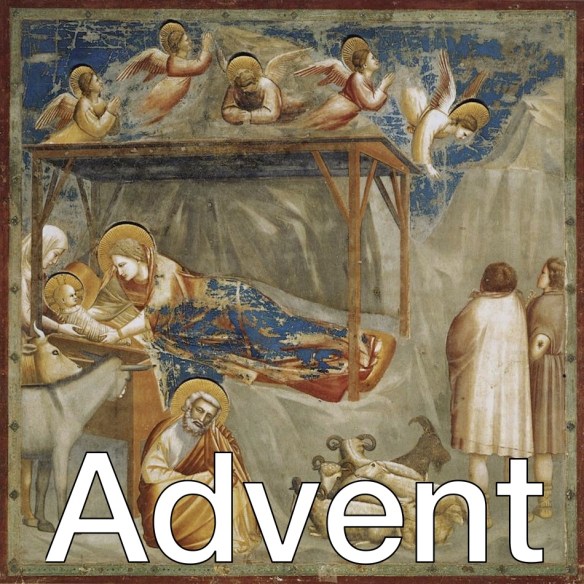
Advent & Suffering: silent only for a time [GUEST POST]


richmond-mary-snow

[Here’s another post by my good friend and occasional blog contributor Austin Ricketts. In light of last week’s shooting in Connecticut, it takes on even more meaning.]

“I was mute and silent, I refrained even from good. And my sorrow grew worse…I have become mute, I do not open my mouth, because it is you who have done it. Remove your plague from me; because of the opposition of your hand I am perishing”

These words are painful. They hit the reader with sadness and little hope. The Psalm itself does not end on a happy note:

“Turn your gaze away from me, that I may smile again before I depart and am no more.”

Why all this talk of sorrow during this time of year, a time that should be joyous and celebratory? It’s safe to say that many will not feel the joy that should be felt during this Advent. Many will feel that deep turning feeling in their stomach, the beginning of depression, the weight in the center of their back.

Not all see the light.
Continue reading

Advent & Humor: stop taking yourself so seriously [casual fri]


santa-baby-jesusIn one of the posts in last year’s Advent series, I posed this question:

“Why [did Mary, Joseph, and Jesus] flee to Egypt? If they stayed and Herod killed the child Jesus, would that not still be Jesus, the Son of God–the Incarnate God–dying unjustly at the hands of a Roman provincial governor attempting to cement the reign of the powers and principalities of the world? Why go to all that effort to wait 30 years later for the same thing to happen on a cross?”

The answer we discussed was that Christ’s purpose for coming was much bigger than the cross. He did not come just so he could die. As St. Paul said, “For if while we were enemies we were reconciled to God by the death of this Son, much more, now that we are reconciled, shall we be saved by his life.”

Jesus couldn’t die when he was so young, because the benefits we receive from his Advent are not limited to his death, but also his life. We receive his life of lived-out righteousness as our own when we come to know him.

I thought about this yesterday when pondering stand-up comedy.
Continue reading

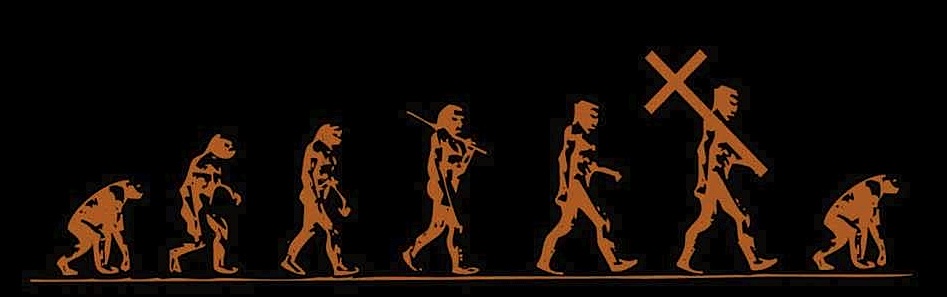
Advent, Evolution, & Absolution [RE-POST]


Today, I’m re-posting a piece I wrote exactly a year ago for last year‘s Advent series. During this year‘s, we’re seeing how the Advent event affects parts of our lives that we usually don’t associate with it. Today, it’s Advent and Evolution. You can follow the series here.

It’s Advent. A time where we especially orient ourselves towards rejoicing and celebrating the fact that God did not remain far off and merely create a “legal” or “dogmatic” satisfaction for the plight of his creation and creatures. Rather, he broke into it and came into his creation and among his creatures. In this year’s Advent series, we’re exploring how, in this Coming, Jesus took on our creaturely formcare-taking functioncomprehensive fallenness, and communal formation.

First, God took physical, human, creaturely form. In the study I did–and subsequent lecture I gave–on Beauty a couple of years ago, I defined “Beauty” as the attribute of something that expressed complexity simply. Is not this God-in-human-flesh (theologically referred to as the Incarnation) the most beautiful of all miracles to take place? The Infinitely Complex God inhabits the simplest of human forms: a child.

Continue Reading –>

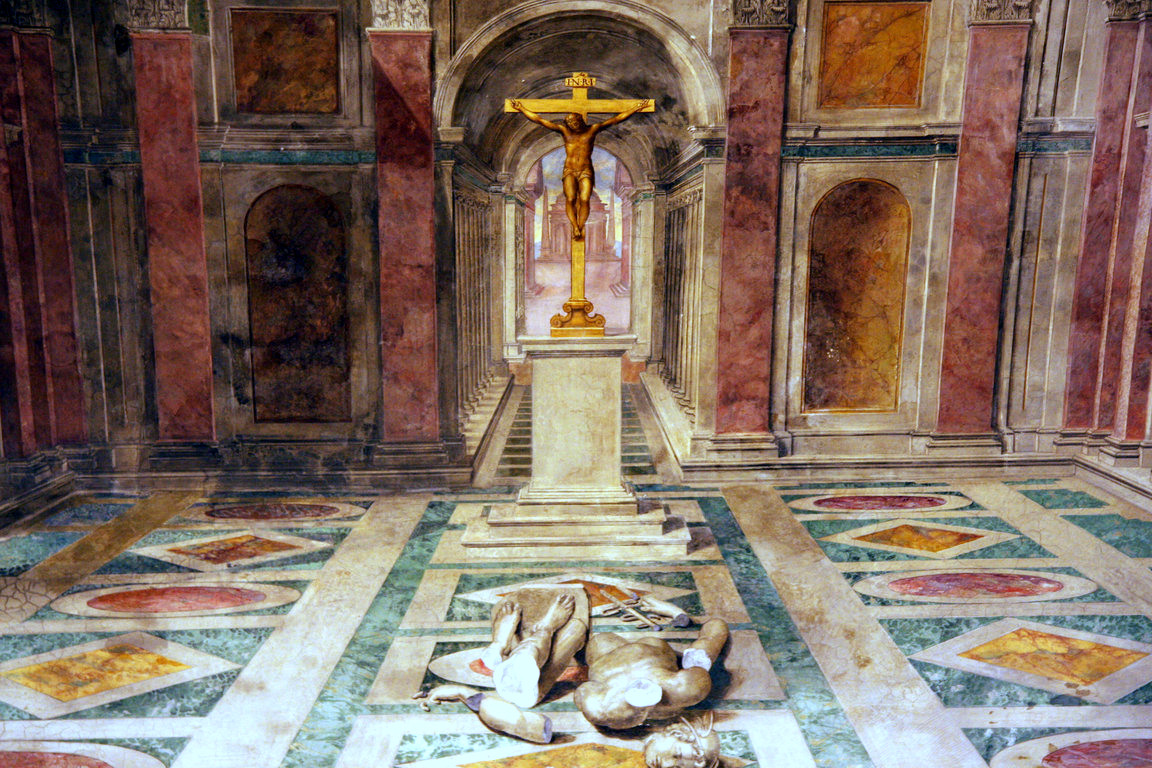
Advent & Politics: The Government is on His Shoulders


laureti-triumph-christianity-pagan-statue

This Advent season, we’re seeing how the Advent event affects parts of our lives that we usually don’t associate with this time. You can follow the series here.

The book of Isaiah is a minefield for biblical studies, mainly because of the development it seems its contents went through to get to its final form. It appears to be a strange stitching together of many writings, perhaps by many people, for several different purposes. But in all of its complexity and mystery, there is one theme that it consistently holds throughout its contents: politics. The political movements of the nation of Israel and the nations around it–and God’s movement in and through all of it–occupy most every chapter of the book.

Interestingly, this is also where many of the most dramatic and explicit messianic prophecies are found–specifically Advent prophecies. When telling the Christmas story, the gospels quote Isaiah (I believe) more than any other Old Testament book. Images of virgins, Emmanuel, Davidic lineage, “roots of Jesse”, and John’s “voice crying in the wilderness” all find their source here.

There seems to be an intimate connection between politics and Advent.
Continue reading

Free Advent Mixtape Available Now!


Advent-Mixtape-Cover

Update: I got some inspiration and updated the Mixtape, changing the song selection/order a little bit from when this was originally posted. Sorry for the inconvenience.

A new church season, a new mixtape. You can find this year’s Advent Mixtape above, in the appropriately-named tab, or just click here. It’s free, and you can stream, download, or share it.

It’s very similar to last year’s except with some songs removed, added, and re-ordered. I definitely think this one is better. (Let me know what you think!) Be sure to read my post introducing Advent this year, including ways than you can more intentionally participate in this season. I hope this Mixtape can play some role in your time as well.

Here’s some more info, from the “Advent Mixtape” page:
Continue reading

Women & the Church: 2 things that began changing my mind


the journey

If it’s not obvious so far, I wanted to make something clear before we begin: these posts in this series on Women the Church are walking through the same path my own journey took get to where I am.

In my last post, there was a concern that a friend brought up that I didn’t get to talking about the biblical texts enough. Well, this is because both egalitarians and complementarians are looking at the same biblical texts. In my own shifts on this issue, the key changes were not “new” Bible verses I found.
Continue reading

Weekly Photo Challenge: Renewal


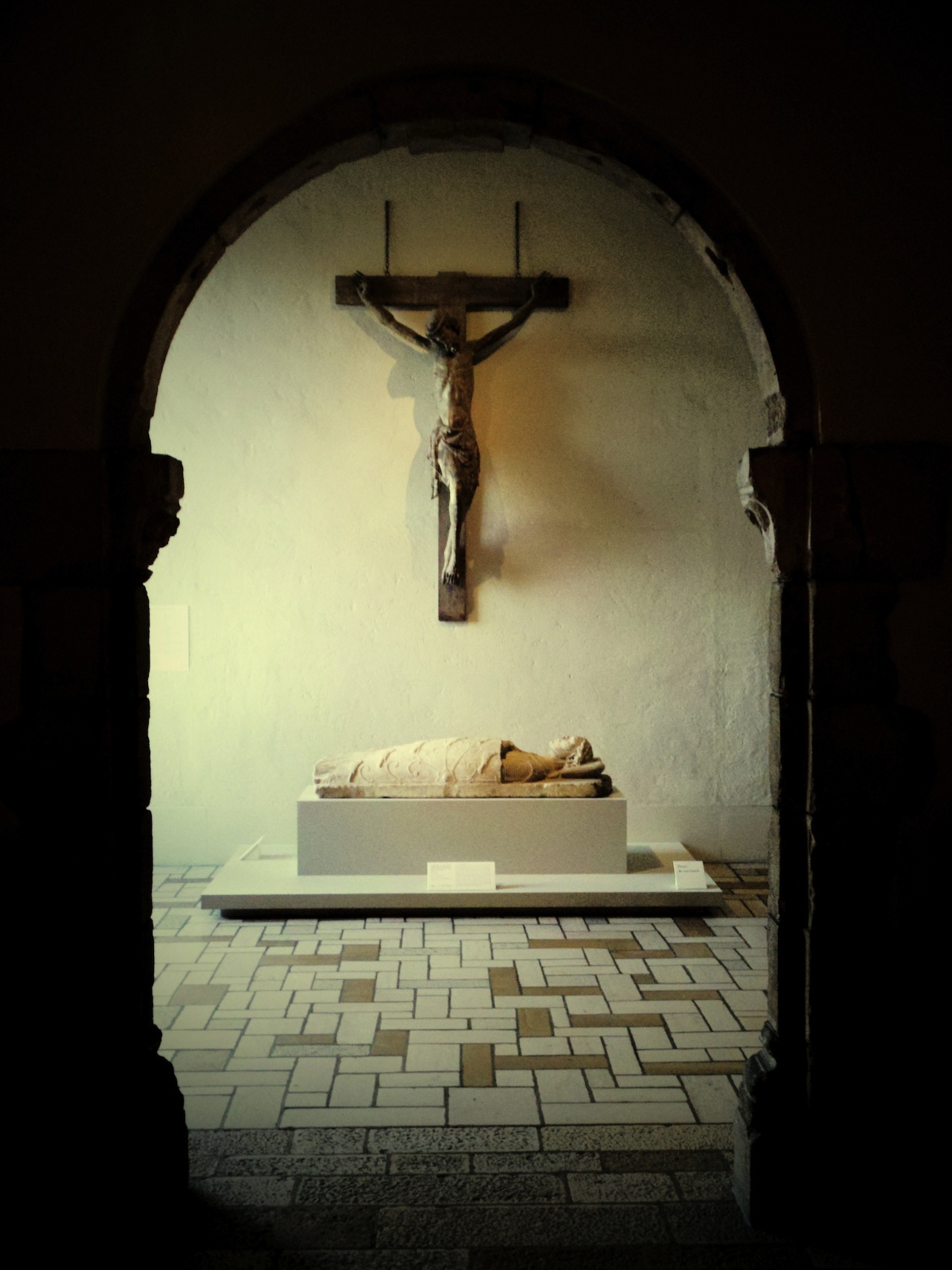
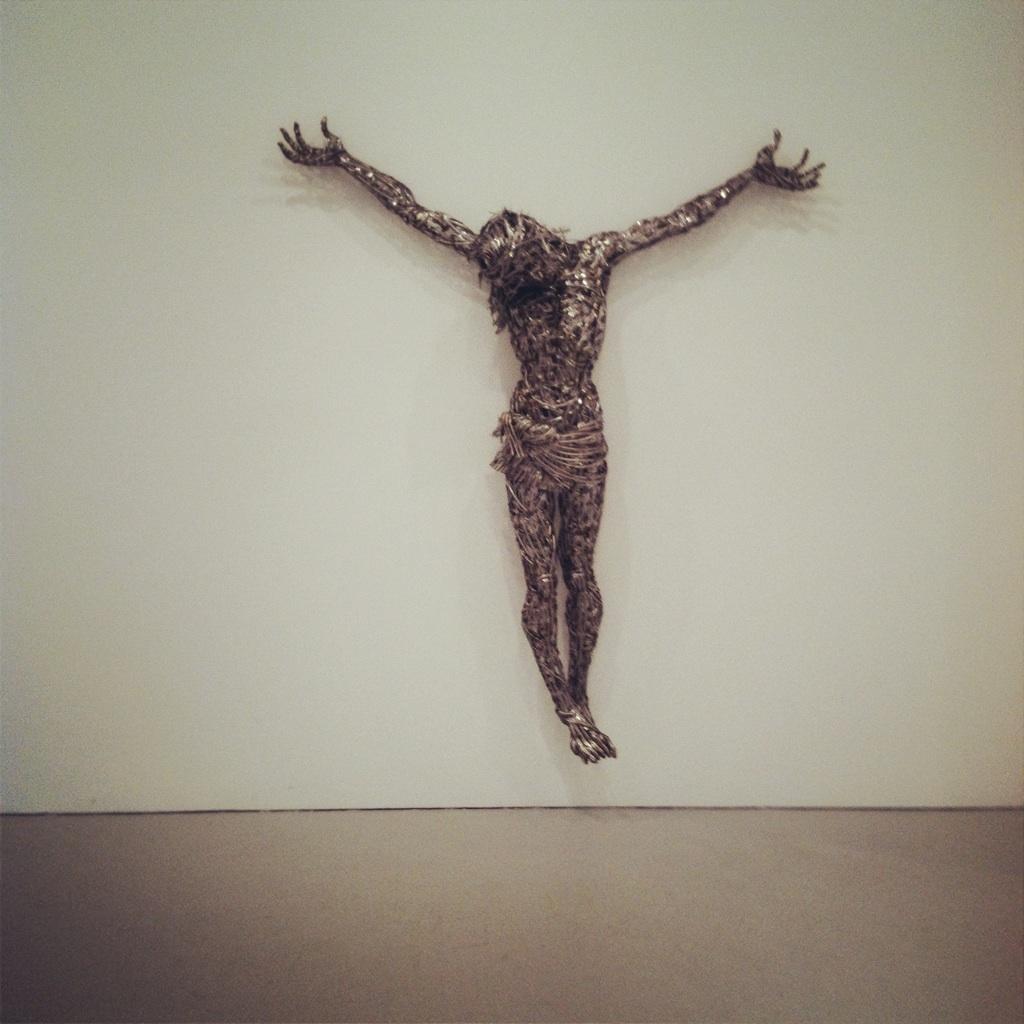
This week’s WordPress Weekly Photo Challenge theme is “Renewal“.  This here is a picture of one of my favorite rooms in the Philadelphia Museum of Art. It’s in the medieval art section (a section which, as I’ve written before, carries much significance to my soul).

I still remember the first time I turned the corner and saw this crucifix on the wall. It’s crude, yet so beautiful. It faces another, dimly-lit room in which there is a medieval-era altar on which there was taken countless pieces of Eucharist.

The last time I was at the museum, though, I noticed a bit of symbolism I’d never noticed (and I have no idea why). This crucifix is positioned above a 13th-century knight’s tomb effigy. After spending some time in reflection near the aforementioned altar, I looked back through the arch and for the first time noticed that the gaze of the dying Christ seemed to be settling not on the museum passer-bys, but on the effigy of the dead knight before him.

The Christ’s gaze of sadness and pity no longer seemed to be for his own sufferings, but for the death and suffering of this one that lay before him. This gaze seemed to carry with it not only sadness, but also a stoic confidence that through this act, he would bring an end to this knight’s sleep.

Through this act of loss and sadness, here is a picture now of rebirth and renewal, made all the more meaningful as I took this picture from the steps of that altar, bathed in darkness, on which was consecrated and served Christ’s body, broken for our renewal and light–then, and today.

See my past Weekly Photo Challenges here.

___________________________

Continue reading

Prodigal, Let’s Go Home {pt.2} [GUEST POST]


Yesterday, I posted Austin’s first part to this final(?) reply to a series of discussions we’ve been having on the place of suffering and Evil in the world and the Nature of God. See that post for more background and links to the previous posts. I’ll have a few disparate thoughts about this whole exchange to share with all of you next week to close us out. Here, in this post, Austin sees right through much of my thinking to get at the root assumptions behind it. He also responds to five premises to my thinking that I laid out in my own last post.

_______________________

In all that I’ve written in all of these posts, it should be obvious that I believe stories to be of the utmost value. But I have to be clear that Story, if it is a metaphor for God, is but one metaphor among many. And I thank Paul for mentioning something along these lines. I’m not quite sure that I understand Paul’s notion of Story in enough detail. There are a few things that I do think need to be critiqued, if I have understood them correctly.
Continue reading

Prodigal, Let’s Go Home {pt.1} [GUEST POST]


This is Austin’s final response to a conversation we’ve been having on the blog concerning the Nature of God and Evil in the world–I know: light stuff, right? Here are the relavant links, if you’re interested: I wrote a post mentioning God taking death onto his own self; Austin took issue with this; I replied with a full-on development of the idea that God’s Nature is like an unfolding narrative–one in which there is Evil and Death; Austin responded by critiquing some of my Bible interpretation; I then wrote two posts, one responding to his response, and one telling of my fears that I’m wrong (where I also quote the James Joyce book Austin references below, as well as list out my 5 main premises for my thoughts he responds to here). This post is Austin’s final words on this (or part 1 of those words, at least). I’ll have a few concluding thoughts next week.

_______________________

Is then the whole of life only a contradiction; can love not explain it, but only make it more difficult? That thought he could not endure; he must seek a way out. There must be something wrong with his love.

—Kierkegaard, The Expectation of Faith

I, like Paul, am one who has been deeply affected by Joyce’s story. That story, A Portrait of the Artist as a Young Man, is really the central struggle of my life: Artist or Theologian? Much in that book, including the scene that Paul elaborated in his response, continues to resonate in the sometimes hollow-feeling caverns of my mind. “I shall never swing the thurible…the oils of ordination shall never touch my head.” Those words wounded me and have stayed with me like a scar, long after their initial cut. I, too, am often much afraid.

Like Jacob, I wrestle with God. Israel indeed.
Continue reading

for your soul, unplug. [casual fri]


This weekend, I’m going to go to New York. For the first time in a long time, I won’t be bringing my computer on a trip. I had no idea how tethered I was to this thing until I felt the thrill shudder through me at the thought of having a weekend with just a moleskine, my new (real) book, a Kindle, and a phone (hey, I can’t completely unplug in New York, right?).

About a year-and-a-half ago I read Tim Challie’s The Next Story about a Christian perspective on the digital explosion. He explored: How do we embrace technology rightly? How do we tend to do it wrongly? What are some temptations inherent in technology? How might we act to not let technology consume us? How do we maintain our humanity and community in the midst of it? What is a “theology” of technology?
Continue reading

Hope of the Earth: a political eschatology (we can all breathe)


November 7th, we will wake up to front pages declaring with finality the results of the American Presidential Election. Most of us will see these headlines and have some sort of emotional reaction (especially those of us that stayed up as late as we could to know the results early).

Depression? Fear? Anger? Injustice? Sadness? Joy? Elation? Ecstasy? Worship? Peace?

I remember after the 2004 election when Bush beat Kerry. Going to a large, urban University dominated by idealistic and passionate liberal youth, the campus was in mourning for the rest of that week. People walked in silence, hugged one another, and I saw a good number of people crying as they resigned themselves to what they felt would be the end of every good thing they’d ever thought about this country.

This election cycle, I was certainly active–probably more so than ever before (especially on this blog, at least). I’m almost certain that I have been blocked from my fair share of Facebook feeds and removed from some feed readers in the past six months or so. I’ve been quite passionate on those few issues that have guided so much of my writing and reading.

But I haven’t lost a bit of sleep over any of that stuff. I’ve been able to enjoy good books and beers, and pipes and peers, without any discussion of politics or debates or elections.
Continue reading

Evil & God {2}: I’m a Heretic, I Fear


This is my final post in a discussion I’ve been having with a very good friend of mine, Austin Ricketts, about the relation of Evil to the Nature of God. For more on the background of this discussion, see  Part 1 of this reply, although you should be able to gather a good idea of the conversation from this post. After this, I’ll let Austin have the last word, if he’d like.

Pressing into the Story of God’s Nature

I’ve been saying that God’s Nature is not static, but, just like us humans, it’s like a Story, unfolding in time (click here for more). Further, it’s a Story that includes Evil and Death within in. Hopefully I can clarify some points all the more by drawing out the “Story” metaphor further (because, at the end of the day, that’s all this whole “Narrative” framework is).

When I write a story about redemption and healing, I include evil in that story–evil that ends up being resolved and healed in the end. The thought of that evil (whatever it may be) is borne from my mind and existence. Just because the thought of that evil has “existed” in my mind, does not, however, make me evil.
Continue reading

Evil & God {1}: a refutation’s refute


Update: Part 2 of this post is up.

Last week, I wrote a post about being overwhelmed by God’s beauty in Western Pennsylvania. In it, I talked of the beautiful paradox of a God who would incorporate within his own divine life both Beauty and Suffering. My good friend (and huge theological influence) Austin Ricketts (who’s written on this blog beforetook issue with these statements, saying that he fears that they lead to making God the author of Sin and Evil. I wrote a reply to his comments in which I asked whether the very nature of God might be “narratival” and unfold over the course of history, and perhaps suffering and even Evil itself are “motifs” or “themes” in that “Storied Essence” of God–a story that eventually does away with these things. He wrote a reply in which he countered some of my views on revelation and some biblical texts.

Here, in the two parts of this post, I plan on (1) responding to Austin’s refutation, and (2) writing up some final thoughts (and fears) on my end. I’ll leave the final word to Austin if he so desires. Feel free to also chime in with your own thoughts if you like!
Continue reading

Evil & the Essence of God {2}: a storied solution?


Updates: Austin has replied to this post with his own thoughts. I have also edited this post to correct some of my incorrect Hebrew grammar Austin pointed out.

Earlier, I posted some comments that my good friend (and occasional contributor to this blog) Austin Ricketts wrote on my post yesterday about the relationship between evil, beauty, and the nature of God. Read those words if you would like his beautiful and articulate wrestling with this idea. Here is my response.

At some point in their lives, most people face the question: Can God stop this suffering? If not, is he God? If he can, but doesn’t, what kind of God is he?

Most of the time, attempts to push this question to a solid conclusion lead to unfortunate results. Many have abandoned God altogether over this, and still others, who maintain their faith, end up doing the mental gymnastics only to end up in positions entirely foreign to the Bible or that are even more illogical than when you began.

Here’s my attempt at a response, fully aware of the dangers that come with doing so. Please be gracious. Please reply. Point out my heresies, And please allow me the room to change my mind later on.

Continue reading

Evil & the Essence of God {1}: the discussion


Update: Part 2 is now up.

Yesterday, I wrote some meditations on the world’s suffering and evil in light of the incredible Beauty I saw this past weekend on a trip to western Pennsylvania. One of my very best friends, Austin (who’s written for this site before), appreciated the post but had some thoughts on some of the theological implications of my thinking, and talked about where/how he differed. I love his mind (and his heart), and I see where he’s coming from, but it’s a place I can’t go. I want to offer you all his comment, and then my perspective on all of this, hoping to offer all of you some things to think about and a space to discuss anything that strikes you as off.

Continue reading