Christianity: paradox & Paradise, fall & Fall


I had the privilege of spending a long weekend these past few days in western Pennsylvania under the kindness and hospitality of my girlfriend and her family. It’s a place that is hard to describe without falling into cliches of big sky, clear air, and bright stars. It’s near the area that Johann Jacob Burkhardt, my first ancestor in America, settled in 1754 after sailing from Germany and landing in Philadelphia exactly a week ago today. I made almost the exact same trek as Johann and his family, from the rivers of Philly to the rural countryside of unsettled Pennsylvania.

Strangely, in the rest of Pennsylvania that I have seen, the trees are still mostly green and just starting to turn for the Fall. But here, this weekend marked the peak of that beautiful transition. The pictures above and below should testify to this (click them for larger versions). They were taken only a couple of days ago–with my phone (fun fact: the picture directly above this text was taken from Mt. David, the highest point in Pennsylvania).

I can’t express to you the beauty my eyes and soul were able to behold.
Continue reading

Atheist: A Biography | {story#18}


This is an original fiction piece posted for StoryADay September. It’s a long one, so for your convenience, you can also read this story in PDFKindle, or EPUB formats. Read more about StoryADay & follow here.
________________________________

Luke was born into a moderately religious household. His family spent each Sunday morning rushing around the house amid a flurry of curses and arguments trying to get everyone ready for the Sunday School and service at the large Baptist church down the street. When Luke was older, he also went to the Wednesday night youth group this church had. But outside of that, religion wasn’t any great percentage of his day-to-day life. His parents never prayed before meals, there was no religious paraphernalia around the house, and the most frequent invocation of God was in front of the phrase “damn it”.

There was one time, though, that for some reason, Luke remembered his entire life. During one period when he was about 6 or 7, when his parents were fighting a lot, Luke found himself needing his father for something shortly after a particularly loud argument had concluded. His mother was in the washroom, loudly banging the doors to the washer and dryer as she changed loads. Luke walked into his parent’s bedroom and found his father on his knees beside the bed, knuckles clasped as if he would die should he let go, muttering quiet pleas within breaths taken between violent sobs. Luke stood there wordless for about 30 seconds watching this, until his presence was felt by his father. His father looked up and saw Luke staring at him with wide eyes.
Continue reading

Awash | {story10}


This is an original fiction piece written for StoryADay September. Read more & follow here.
________________________________

The plates shift in the sink, startling her out of her daydream. Her thoughts had lingered away into thoughts of autumns gone by. She resumes her circular repetition, her hands enjoying the warmth of the water as a cold body enjoys the comfort of bed. The suds feel like velvet across her skin, and as she scratches an itch on her face, it leaves a little tuft of bubbles on her cheek. She feels the pops and tingles, causing her to leave them there for a moment longer than she normally would.

The tomato sauce wipes cleanly from the plate, making this an act of leisure and not a chore. The morning stresses of dressing kids follow the tomato sauce down the drain, leaving only a porcelain plate in porcelain hands. She imagines her heart as porcelain as well.

Porcelain? Yes. Broken? No.
Continue reading

Debates with Atheists (And Good News for Them)


Recently, a friend sent me a link inviting me to a debate between a prominent evangelical intellectual and a prominent atheist thinker. It made me remember how I used to eat those sorts of things up when I was in college, and I really appreciated this friend sending it, but at this point in my life, I genuinely had no interest whatsoever.

Eventually, you realize that every debate of this sort goes the exact same way. At some point–without fail– there’s comes a moment when the evangelical says something to which the atheist responds with “well, what proof [or “evidence” or “basis” or “reason”] do you have to make such a claim!”, to which the evangelical responds with something like “well, it’s faith” (or something like that).

And then the debate should end. The fool’s errand of these events has been exposed.

Continue reading

Here I am leading a Port Wine tasting with Fluffer-Nutter Sandwiches [VIDEO]


Last night, some of my best friends threw a wine-tasting and food pairing party. Some of the people closest to me presented wine and food pairings that blew my mind. I had no idea that wine could do all of that. It was the perfect way to end a very busy summer.

Above, you will find a video of me presenting my wine and pairing. I led a tasting of a Tawny Port wine and paired it with Fluffer-Nutter sandwiches (my new obsession). I hope you enjoy it and learn some things.

You can see the videos of the other wine-presenters, as well as other highlights of our evening here.

Thanks go to Paul and Natanya Ma for hosting us, and specifically to Paul for taking and posting these videos.
Continue reading

Using the Bible to Meet with God


Last week, I asked a bunch of you how you go about using the Bible and the study of its contents to actually nourish your soul and meet with God. I got some great responses both here and on Facebook. This week, I wanted to put up how I ended up approaching this during the class I taught at my church. It’s super short, not very deep, and much more can/should/will be said. For what it is, I hope it’s genuinely helpful and speaks to how we might meet God through the Scriptures.

How do we move from the Facts of the Bible to the God of the Bible? From knowing the Bible, to knowing the Person? From Scripture being informational to formational?

The Meeting Place of God

As I said in the first class I taught, the Bible is not the passive “Revelation of God”. It is the place through which the Holy Spirit actively “reveals God” to us. When it comes to the Bible, we should start thinking more in verbs, not nouns. The Bible is “simply” a meeting place for God and his people, where he might meet them as he desires, by His Spirit.

When we meet God in Scripture, its the convergence of four things: Us and our faith, God and His Spirit.
Continue reading

The New Old New Atheism of Simon Critchley & Others


I have noticed, recently, especially with the waning influence (or at least presence) of the “New Atheists” in the public square, that there has been a shift in the tack that Atheists have taken against Christianity in the past year or so.

Philosophical movements generally begin in academia, then find themselves trickling down to the masses as those twenty-something college students that were influenced by these academic discussions now move on into the wider world. Both Atheism and Evangelical Christianity generally find themselves one generation behind in these philosophical developments of the world.

So, for example, when the world was just beginning to move on into “post-modernity” (notwithstanding the functional meaninglessness of such terms at this point), it was the heyday of  Atheistic and Evangelical evidentiary apologetics, representing firm pre-modernist, Enlightenment thought (on both sides). Arguments centered around the very existence of Jesus, fidelity in translation and transmission, Intelligent Design, and the general historical reliability of the Bible.

Continue reading

the order of the cosmos; the chaos of our souls [QUOTE]


We have been to the moon, we have charted the depths of the ocean and the heart of the atoms, but we have a fear of looking inward to ourselves because we sense that is where all the contradictions flow together.

Terence McKenna

This is why, I feel, that Order had to take on Disorder, and order it within Himself: so that all things, though still in chaos, might find their rest in Him.

Visions of Arcadia: the most terrifying art exhibit I’ve ever seen


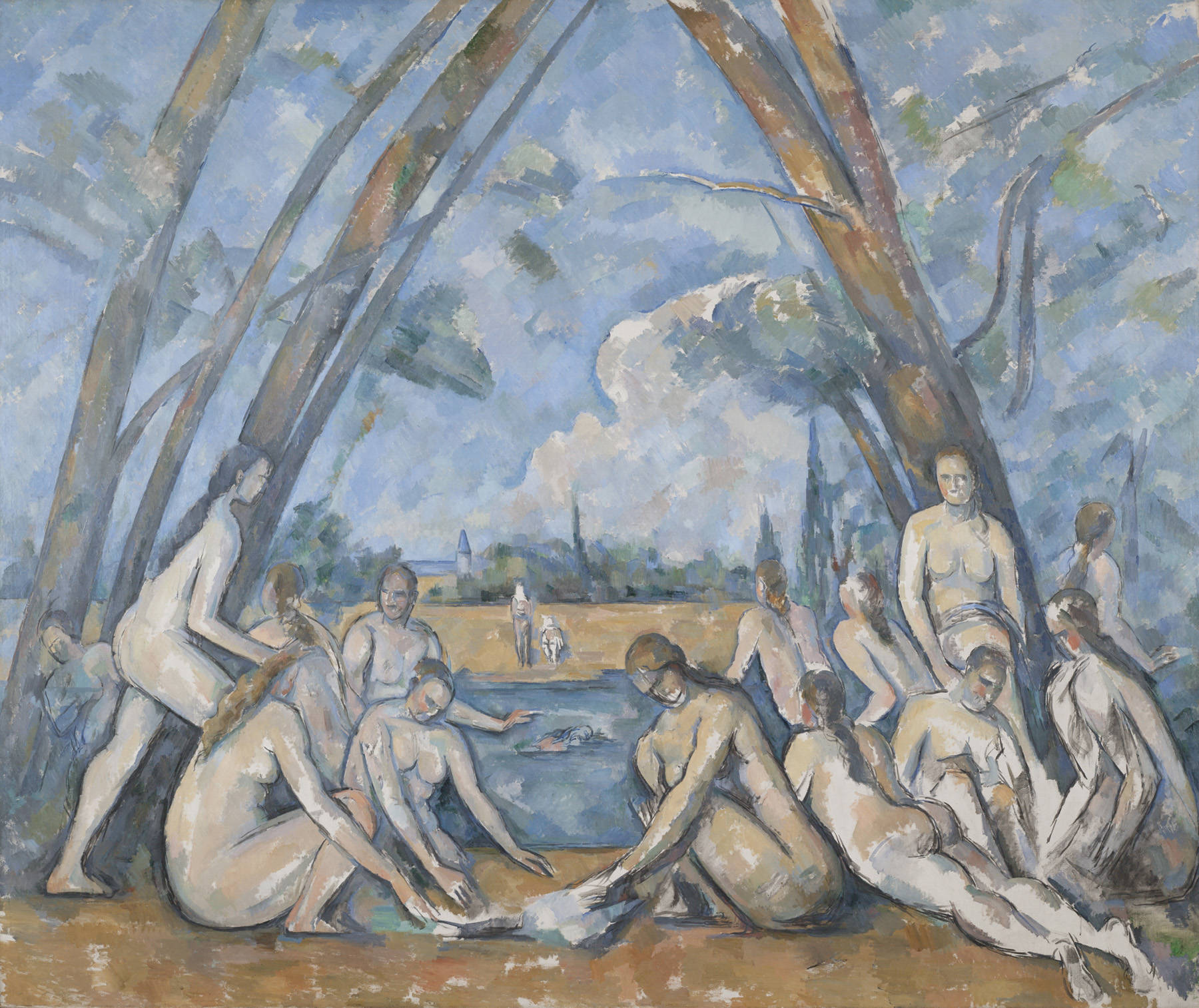
This weekend I had the privilege of seeing the Philadelphia Museum of Art’s new exhibit Gauguin, Cézanne, Matisse: Visions of Arcadia. The exhibit showcases works exploring the idea of “Arcadia“: an idyll pastoral world envisaged in Virgil’s first major poetic work Eclogues where nymphs and fauns dwell alongside Bacchus and Pan; where human dwellers exist in peace, rest, and joy in the natural world.

(To put it simply: you can usually recognize Arcadian themes at work in a piece of art when it has naked people hanging out in nature–usually around rivers.)

This image of Arcadia, having been explored in art epochs in the past, overtook art once more right as modern art was being born, right around the turn of the 20th century. In fact, the exhibit subtly makes the argument that this image of a rural, paradisal ideal is an essential element in modern art’s development. The modernists’ dilemma–the tensions between longing and reality, finding and losing, permanence and transience, human and mythic–all find their embodiment in this Arcadian world.

The exhibit begins with excerpts from Virgil’s poetic treatment of this theme, set beside works that visualized his words. These run along one wall. On the opposing wall of this introductory hallway, there are excerpts from Stéphane Mallarmé’s modernist treatment of Arcadia, L’Apres-midi d’un Faune, accompanied by pen-and-ink drawings from Matisse that visualize his words.

The exhibit is great, but very theoretical. It works subtly and on nuance. It’s not just a bunch of pretty things thrown into a room. Instead it is a thesis–an argument–in visual form. It watches a theme develop from myth to poetry to visual art (and then from Renaissance to modern) and explores how they are all connected and converse with one another. It’s really like no other exhibit to which I’ve ever been. If you get the chance, see it.

But that’s not why I’m writing today.
Continue reading

What do we make of the atrocities of the Old Testament?


This is a slightly edited version of an excursus I wrote in this week’s notes for the Bible Survey Class I’ve been teaching at my church. Follow that link for more information on the class. Also, I’m well-aware that the second half of this is exactly the “angle” talked about in the venerable Pete Enns’ recent blog post. I wrote this before he posted that, but still, I wanted to put it up on the off-chance this articulation might be helpful to others.

In the books of Numbers and Joshua, God commands the Israelites to commit genocide on many different people, including their women and children. He also commands them to forcibly enslave others. And in still another story, he commands Moses to take the remaining virgins of this particular people of which they disobediently did not kill all, and divide them evenly among the soldiers and the “rest of the Israelites”. We can only imagine what for.

A few quick thoughts:

Continue reading

a homosexuality post-script & conclusion


Most of last week on this blog was spent discussing some recent “conversations” about the Evangelical church’s relationship with the homosexual community. I first addressed conservatives, and then progressives (as well as some thoughts on the “willful persistence in sin” comment I hear from conservatives a lot). This week, we move on. But not yet. In response to some of the ways people have responded to these posts, I felt I needed to write this.

In conclusion to it all…

These posts I’ve written got a lot of circulation around the web (and to those who commented/posted links, I thank you), and so for anyone that runs across them, I want to make something clear:

It might seem odd that I’ve typed far more words and dripped more sarcasm in attacking the more conservative side of this issue, all while ultimately agreeing more with them at the end of the day. In the end, even with all of my many theological and social disagreements, I cast my lot with them, even though I know most of them would not have me.

These posts, hopefully, have been written in the same spirit as Mark Noll’s blistering attack on Evangelical anti-intellectualism, The Scandal of the Evangelical Mind, which he calls “an epistle from a wounded lover”.
Continue reading

some brief thoughts on “willful persistence in sin” & homosexuality


Update III: I posted some final thoughts on these posts.

Update II: In some commenting I did on facebook, I feel I communicated myself more clearly on a couple of issues than I did on this post. So, below, you’ll find those clearer comments, edited for your consideration.

Update: The second and final part of these posts is up.

In response to my post earlier today on Exodus International’s decision to move away from “conversion therapy” of homosexuals, in which I criticized many more conservative reactions (don’t worry, you progressives will get your due tomorrow, haha). A couple of comments, messages, and such have asked me about that classic Evangelical formulation that homosexuals that “persist in their sin” or “walk in deliberate willful disobedience” cannot be “saved”.  (This idea is based on some parts of 1 John, but that application of those verses has too many interpretive issues to go into here, as I type on my phone. Suffice it to say, though, that it’s a bad application and doesn’t naturally flow from the text).

Anyway, back to the question.

Life is much more complicated than those simplistic categories of “willful”, “deliberate”, and “persistent” (and “sin”, frankly). Being in counseling myself, and being a counselor, this whole “willful disobedience” thing is much grayer than that articulation implies.

What do you do with pastors that are irresponsible in their preaching and “pastoring”, and even in light of SO many other believers telling them they are wrong, disobedient, harmful, and sinfully relating to their people, they “wilfully persist” in that? What about all of us Christians that “willfully persist” in driving even 5 mph above the speed limit? What about the person in the church that never stops gossiping, even in spite of sitting in sermon after sermon on the topic? Or all the southern and midwestern christians that “wilfully persist” in their gluttony?
Continue reading

Exodus International is Right on Gay Reparative Therapy (i)


Update III: I wrote some final thoughts on these posts.

Update II: The second part of this post is up.

Update: I wrote some brief thoughts on a frequent reply I’ve received to this post: “what about gays that are wilfully and persistently disobedient in their sin?” Check it out.

Why on earth am I writing such lose-lose posts as these? I have no idea. Well, here we go.

Last week, Exodus International, one of the biggest and most-well-known Evangelical ministries to homosexuals, came out against what’s called “Reparative Therapy” or “Conversion Therapy”. The New York Times had a big write-up on it (as well as NPR) and an interview with Alan Chambers, the President of Exodus International. And now the whole news cycle is all a-flutter over this. Right when I think the story is dead, I see another headline about “rifts” forming in the Evangelical community and such.

Reading these articles has made me so frustrated with both the Right and the Left in their treatment of this discussion. There’s so much to say, I apologize for the lack of flow or organization that follows.

There are some really important things that seem to be getting lost in this discussion–on both sides.

Continue reading

Philly Beer Lovers: get very, very excited.


From the article “Pennsylvania debates new beer flow” in today’s Philadelphia Inquirer:

States have adopted various strategies in the 79-year effort to prevent pre-Prohibition alcohol abuses, but Pennsylvania has been particularly idiosyncratic, said Eric Shepard, longtime editor of Beer Marketer’s Insights in Suffern, N.Y.

“Pennsylvania is unique,” he said. “You are by far the weirdest state.”

The bill under consideration, introduced by state House Majority Leader Mike Turzai (R., Allegheny) with Gov. Corbett’s backing, is just the latest effort to get the state out of the liquor business. But Turzai’s new twist would permit beer distributors and other businesses that could afford a license to sell beer in any quantity, along with wine and liquor.

In short, one-stop shopping for alcohol buyers, a la New Jersey.

Read more…

Also, be sure to contact your local representative to support this bill.

Posted from WordPress for Android on my Droid X

The Heretical Liturgy of American Nationalism [QUOTE]


I’m suggesting that [Nationalism] constitutes a liturgy because it is a material ritual of ultimate concern: through a multisensory display, the ritual both powerfully and subtly moves us, and in so doing implants within us a certain reverence and awe, a learned deference to an ideal that might one day call for our “sacrifice”…. Over time, these rituals have a cumulative, albeit covert, effect on our imaginary. And together, I’m arguing, these constitute liturgies of ultimate concern: the ideal of national unity and commitment to it’s ideals is willing to make room for additional loyalties, but it is not willing to entertain trumping loyalties. (Just try to remain seated at the next playing of the national anthem.) The fact that there seems to be little tension between Christianity and American Nationalism is not a function of the generosity (let alone “Christianness”) of the America ideal but rather a sign of a Christianity they has accommodated itself to these military ideals of battle, military sacrifice (which is very different from the Christian ideal of martyrdom), individual (negative) freedom, and prosperity through property.

Implicit in the liturgies of American nationalism is a particular vision of human flourishing as material prosperity and ownership, as well as a particular take on intersubjectivity, beginning from a negative notion of liberty and thus fostering a generally libertarian view of human relationships that stresses noninterference. Related to this is a sense that competition and even violence is basically inscribed into the nature of the world, which thus valorizes competition and even violence, seeing war as the most intense opportunity to demonstrate these ideals. The vision of a kingdom implicit in this liturgy is antithetical to the vision of the kingdom implicit in Christian worship. I think the liturgical take on American nationalism can help us to see why so few Christians experience a tension here; it can also help to diagnose the cause of the church’s complacency and complicity: many Christians experience no tension between the gospel according to America and the gospel of Jesus Christ because, subtly and unwittingly, the liturgies of American nationalism have so significantly shaped our imagination that they have, in many ways, trumped other litutgies. Thus we now see and hear and read the gospel through the liturgical lenses of the “American Gospel”….

The republic claims to have an identity and unity about it, and even claims to have acieved the goal of shalom–to already be a nation “with” liberty and justice for all…. No hint of eschatological deferral; no sense of “not yet” failure to measure up; but a confident claim of justice here and now, secured by the republic….

And as I’ve tried to sketch above, I think there are good reasons to worry that the ideals of the republic are antithetical to some of the defining ideals of the people of God, called to imitate a suffering Savior, who was executed at the hands of military power. What’s explicit in the [Christian] Creed, if we tease it out, is in significant tension with what’s explicit in the Pledge [of Allegiance].

James K. A. Smith, Desiring the Kingdom: Worship, Worldview, & Cultural Formation

Read my thoughts on Christian Patriotism, and a related quote from Ross Douthat in Bad Religion.

Posted from WordPress for Android on my Droid X