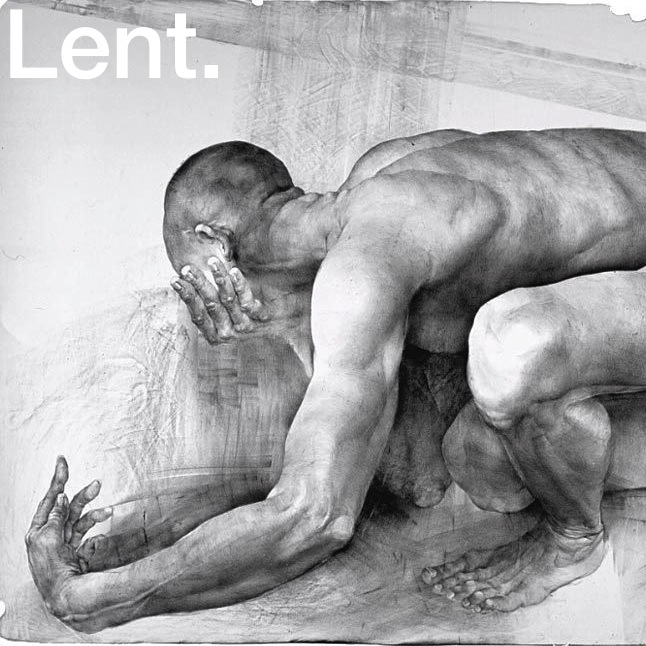
 Continuing a tradition I started during Advent, I’ve made a mixtape for the Lenten season. The simple act of making this mixtape really helped me in my meditation and prayer time. My hope is that it can do the same for you. So, for your streaming and/or downloading pleasure, click over to the page:
Salvation
Please help me give my money away! [UPDATED]

As I said the other day while introducing Lent this year, the Lenten season has historically been marked by three practices of those that participate in it. Prayer and fasting tend to get most of the attention, but almsgiving is another component of a Lent-historically-done-well. Almsgiving is the ancient term for giving materially of your resources for the purpose of charity, love, and grace.
I have never been good at giving my money away. Tithing has always been difficult for me to practice; giving to the homeless has been hard; and I always have a good excuse why I’m not able to give to some cause greater than myself. Sure, I’ll talk about the organization or even write a blog post in support of it, but it’s hard for me to part ways with my money.
This season, however, I wanted to try an experiment to fight against this and hope and pray that God meets me in it and grows me in deep, lasting ways.
This Lent, I want to give away some of my money everyday. For Monday through Saturday (the Church considers Sundays Lent “mini-breaks”), I want to give some amount of money to a non-profit or charity that can use it to help others.
But I need help.
If you have a non-profit or charity or social justice organization that you particularly like, could you leave a comment below telling me what it is?
Continue reading
a beautiful quote on our security in the Incarnation (by T.F. Torrance)
The stark actuality of Christ’s humanity, his flesh and blood and bone, guarantees to us that we have God among us. If that humanity were in any sense unreal, God would be unreal for us in him. The full measure of Christ’s humanity is the full measure of God’s reality for us, God’s actuality to us, in fact the measure of God’s love for us. If Christ is not man, then God has not reached us, but has stopped short of our humanity – then God does not love us to the uttermost, for his love has stopped short of coming all the way to where we are, and becoming one of us in order to save us. But Christ’s humanity means that God’s love is now flesh of our flesh and bone of our bone, really one of us and with us.
— T.F. Torrance, Incarnation, 185
A good friend posted this on Facebook, and I just had to post it. It connects very well to a few of the Advent posts I did recently (namely the ones on Evolution, our Fallenness, doubting God’s “liking” of us, and how he makes us most human).
I’ve never actually read Torrance before, but I’ve heard a lot about him from people that were, at the time, reading his work. From what I understand, though, he is a theologian whose mind is brilliant and pen is beautiful–a combination sorely lacking in the Christian world today. I also hear that he is a theologian to which I would feel a certain affinity, so I look forward to reading more of him.
HAPPY ADVENT!! {10}
 Well, it’s here. The day we’ve been building up to and meditating upon. This is the day we joyfully celebrate the King who broke into our reality and ushered in His Kingdom and our salvation by coming in the form of a little child.
Even though this time can be tough for some (my grandfather died a year ago tomorrow), I do hope and pray that we are all able to have at least one good laugh this year and see the smile of at least one person we love and that we know loves us. And eat good food. And drink good drink. And listen to bad, cheesy music. (On a side-note: the picture above is a picture of the wall-hanging that went up in my house every year as I grew up. And now I have it. I love it.)
Don’t worry, this isn’t really a whole other post. This Advent season has been an especially fruitful time for my writing (as my Facebook Wall obviously shows). I want to thank everyone that has been telling me how helpful these posts were–or even those that just told me they were reading them in the first place!. I can’t tell you how much it affects me, sticks with me, and encourages me. But anyway, I just wanted to write this post so I could put up all these posts in one place for you easy reading pleasure, should you so desire. Happy Advent!
Continue reading
What is the True Gospel of Advent? {9} (hint: it’s not your salvation)
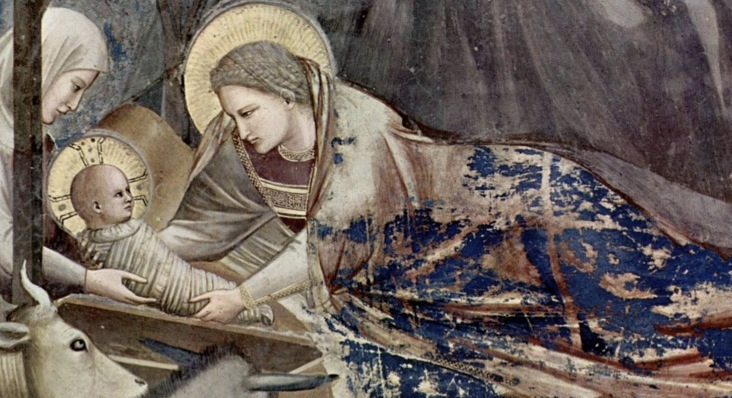 As I mentioned in my previous post, my church has been doing an Advent series called “The Other Christmas Stories” where we’ve been looking at various texts (outside of the traditional Christmas narratives) that comment on the Advent event. Last week, our pastor preached from the book of Revelation, including some of these verses:
Then I heard a loud voice in heaven say: “Now have come the salvation and the power and the kingdom of our God, and the authority of his Messiah. For the accuser of our brothers and sisters, who accuses them before our God day and night, has been hurled down. They triumphed over him by the blood of the Lamb and by the word of their testimony; they did not love their lives so much as to shrink from death. Therefore rejoice, you heavens and you who dwell in them!”
–Revelation 12:11-12
God loves me. But does he like me? (on being “Christ-like”) | Advent {8b}
[This is Part 2. Read Part 1 here.]
My church has been doing a series called “The Other Christmas Stories” where we’ve been going through other texts in the Bible that comment on and meditate upon the event of Advent. The first message was preached on that quintessential Advent text, John 1. The preaching on these verses really struck me:
But as many as received him, to them he gave power to become the sons of God, even to them that believe on his name: Which were born, not of blood, nor of the will of the flesh, nor of the will of man, but of God.
— John 1:12-13
The sermon went on to remind us that in these verses is a promise that the Advent did not happen in order to make us into something we are not, but rather to give us the power to become who we most truly are (children of God). Now, I want to be clear. I grew up in Church hearing that phrase “be who you are” (and hearing it in music), and in certain seasons that thought has been helpful to me, but I’m not quite trying to express the same sentiment.
Continue reading
God loves me. But does he like me? (on being “Christ-like”) | Advent {8a}
UPDATE: Part 2 of this post is now up.
I have a quick confession. I technically ascribe to the “flavor” of Protestantism called “Reformed” that takes the roots of its doctrinal tradition all the way back to the leaders of the Reformation. The first church I really learned much of anything about Christianity and theology is Reformed…ish. The seminary I went to prides itself in being the bastion of orthodoxy for “Reformed” theology. My church is a member of the Reformed Church in America family of churches.
But, I’m not a good Reformed man.
Continue reading
There is No One Like You (Adv, Days 23/24; HelloGoodBye 09/10) by David Schrott [GUEST POST]

[Through college up through about a year and a half ago, I ran a little online magazine called Reform & Revive. It’s dead now. While it was going on, one of my best friends, David Schrott, was one of our contributors. He’s an amazing drywaller, photographer, writer, person, and boyfriend (also here, here, and here). This is a post he wrote for R&R back in 2009 at the end of a particularly trying year for him. It’s one of my favorite Advent meditations I’ve ever read, and so I wanted to share it with all of you. Enjoy.]
_______
“I want men everywhere to lift up holy hands in prayer.”
–I Timothy 2.8, NIV
There are these days, when it is so difficult to find words that wrap around concepts, that, no matter how concrete in one’s mind, find it impossible to find substance in the barrier we use to communicate called language. In those moments, it seems that experience does precede existence and existentialism, for a moment, seems fun (and fun is clearly the wrong word, but for to-day, for this beautiful-day-before-Advent, will have to do).
Continue reading
The Holy Sacrament of Advent {7}
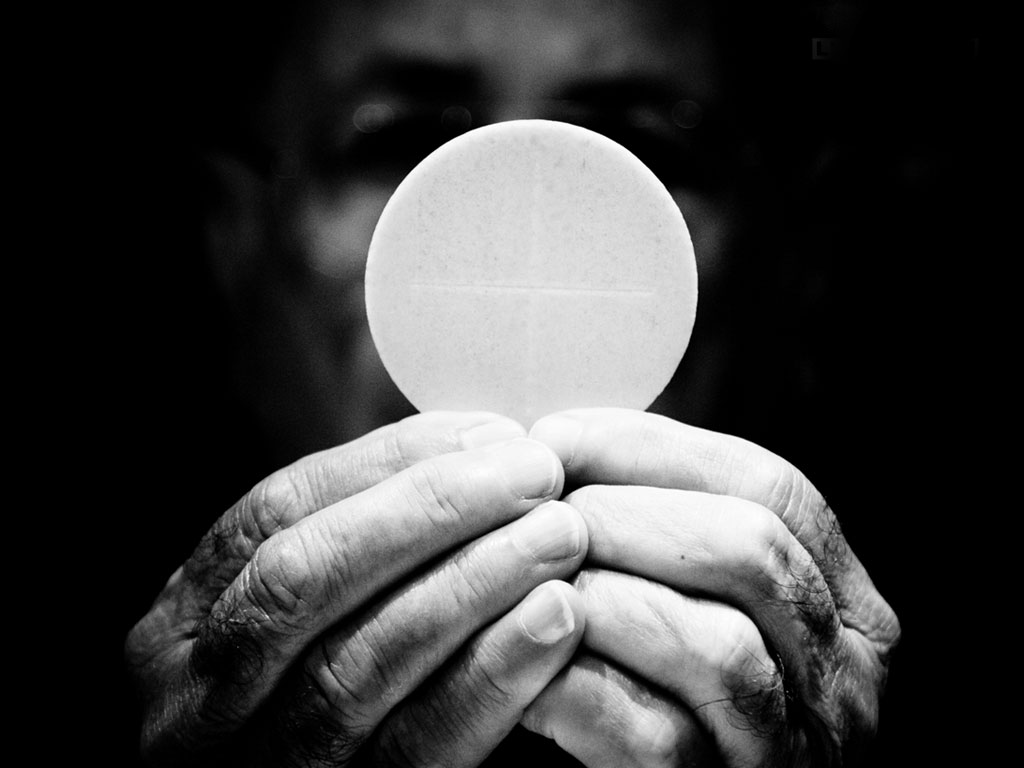 There is an abiding idea and assumption that plagues us humans. It has come up at various times in various worldviews with various names. It’s found in the implications of what Zoroastrians called the conflict between “Asha” and “Druj”, what Plato called “Dualism”, Diogenes called “Cynicism”, first-century heretics called “Gnosticism”, Descartes: “Rationalism”, Kant: “Idealism”, Bacon: “Empiricism”, French Enlightenment-ers: “Materialism”, Modernists: “Realism”, Postmodernists: “Pragmatism” and “Constructivism”, so on and so forth through the ages.
The thing all of these ideas have in common is a separation between the material and the immaterial; the abstract and the physical; the temporal and eternal; the objective and subjective; the spiritual and the human. Further, they tend to elevate one over the other.
We can’t really escape this (I’ve written about this before).
One of the basic obvious tenets of finitude is that we can’t be in two places at once, neither physically nor intellectually. To perfectly hold the delicate balance between these poles of the seen and unseen is difficult, if not impossible.
But Advent can help us.
The Formation of God | Advent {6}
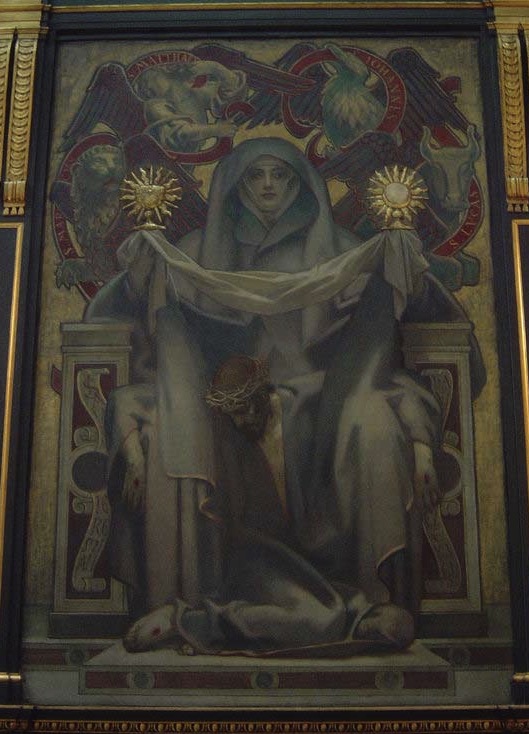 All last week, I offered some meditations on this season of Advent. I actually have several more I’ll be posting more or less every day until Christmas, but today I’ll be offering the last in this little alliterated series in which we’ve been exploring how in the Advent event, Jesus took on our creaturely form, care-taking function, comprehensive fallenness, and now, communal formation.
We spend a lot of time and energy in this season focusing on how Jesus has changed everything and how the implications of Advent change much of our lives and existences. But Jesus did not merely come to change and affect things, but to also be changed and affected by them.
Continue reading
What Christ did not taste, Christ did not redeem. | Advent {4}
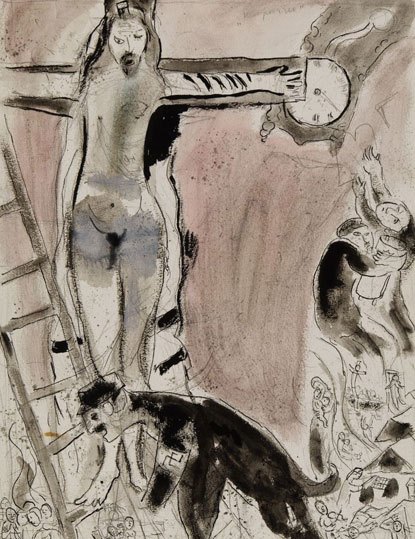 This Advent season, we’ve been meditating on how the Advent reminds us how God took on our creaturely form, care-taking function, comprehensive fallenness, and communal formation.
First, a question.
Think back on the Christmas story. After Jesus is born, when he’s about three years old, the wise men go to King Herod and say that they’re looking for this newborn King. Herod is shocked to hear about a child-king having been born right under his nose, whose potential future reign threatens his own, and so he puts out a decree calling for the death of all children ages three and under (in history and art this is referred to as “The Slaughter of the Innocents”. An angel comes to Joseph in a dream and tells him to flee to Egypt to prevent this from happening.
Here’s the question:
Why flee to Egypt? If they stayed and Herod killed the child Jesus, would that not still be Jesus, the Son of God–the Incarnate God–dying unjustly at the hands of a Roman provincial governor attempting to cement the reign of the powers and principalities of the world? Why go to all that effort to wait 30 years later for the same thing to happen on a cross?
Continue reading
our failed function, God’s full faithfulness | Advent {3}
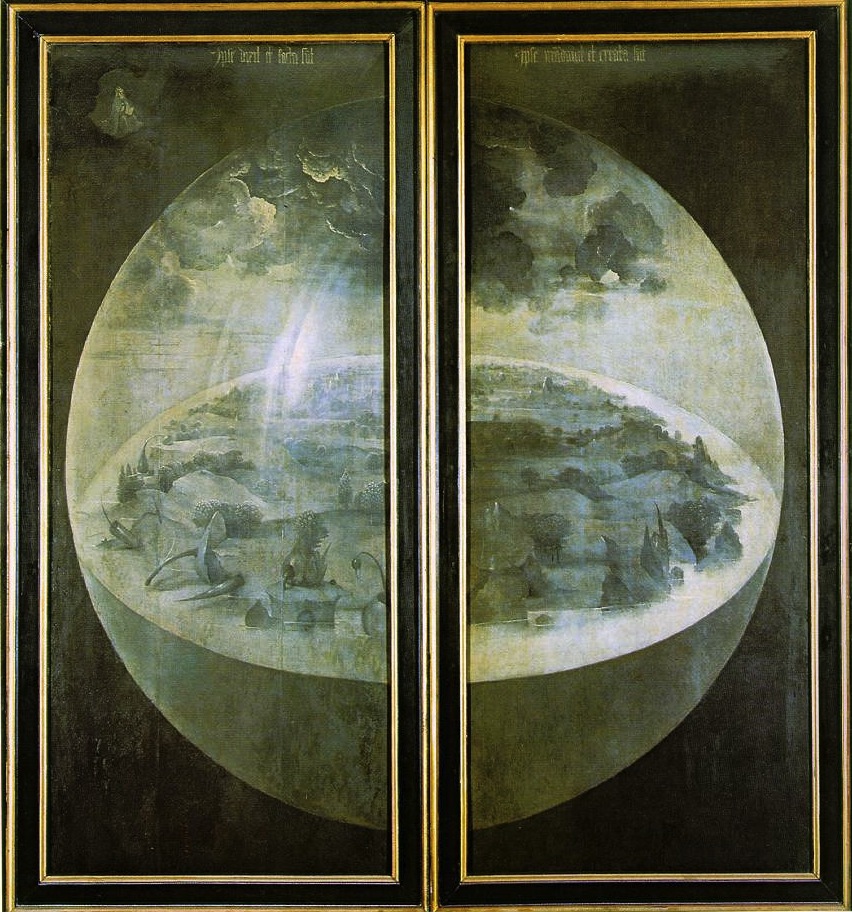 This week, I’m meditating on a few particular aspects of the Advent event. I’m thinking through and writing about how, in Jesus, God inhabited our creaturely form, care-taking function, comprehensive fallenness, and communal formation.
As I said in the teaching I gave over the summer about the Nature and Narrative of the Bible, the opening chapters of the Bible describe this divine act of creating in very architectural terms; the same words are later used in describing the building of the tabernacle and the temple. In this we see that God’s act of creating was, in essence, building this world as his temple in which he would rest (for more on this see John Walton’s amazing book, The Lost World of Genesis One, or just watch this short video).
In the story, he builds and establishes this Temple-World, and then creates and ordains two priests–Adam and Eve–to be his representatives in this temple to care for it and work in it faithfully. In the ancient world, temples were usually placed in the midst of large and beautiful gardens which acted as extensions of the temple itself; to care for the garden was to care for the temple, and to make the garden larger was to expand the scope and size of the temple.
Continue reading
Advent, Evolution, & Absolution

It’s Advent. A time where we especially orient ourselves towards rejoicing and celebrating the fact that God did not remain far off and merely create a “legal” or “dogmatic” satisfaction for the plight of his creation and creatures. Rather, he broke into it and came into his creation and among his creatures. In this year’s Advent series, we’re exploring how, in this Coming, Jesus took on our creaturely form, care-taking function, comprehensive fallenness, and communal formation.
First, God took physical, human, creaturely form. In the study I did–and subsequent lecture I gave–on Beauty a couple of years ago, I defined “Beauty” as the attribute of something that expressed complexity simply. Is not this God-in-human-flesh (theologically referred to as the Incarnation) the most beautiful of all miracles to take place? The Infinitely Complex God inhabits the simplest of human forms: a child.
Continue reading
a beautiful quote on life & pain
One cannot cut the lines of experience out of one’s face, like the rotten bits in an apple; one has to carry them about in one’s face and know that one carries them; one sees them, as in a mirror, every day when one washes oneself, and cannot cut them out, they belong there. But all the same, it is a festive waiting, full of joy and sorrow and remembrance and good-bye for ever.
— from “Death of the Adversary” by Hans Keilson, our December book club selection for Staché
Posted from WordPress for Android on my Droid X
Welcome to Advent. 2011. {1}
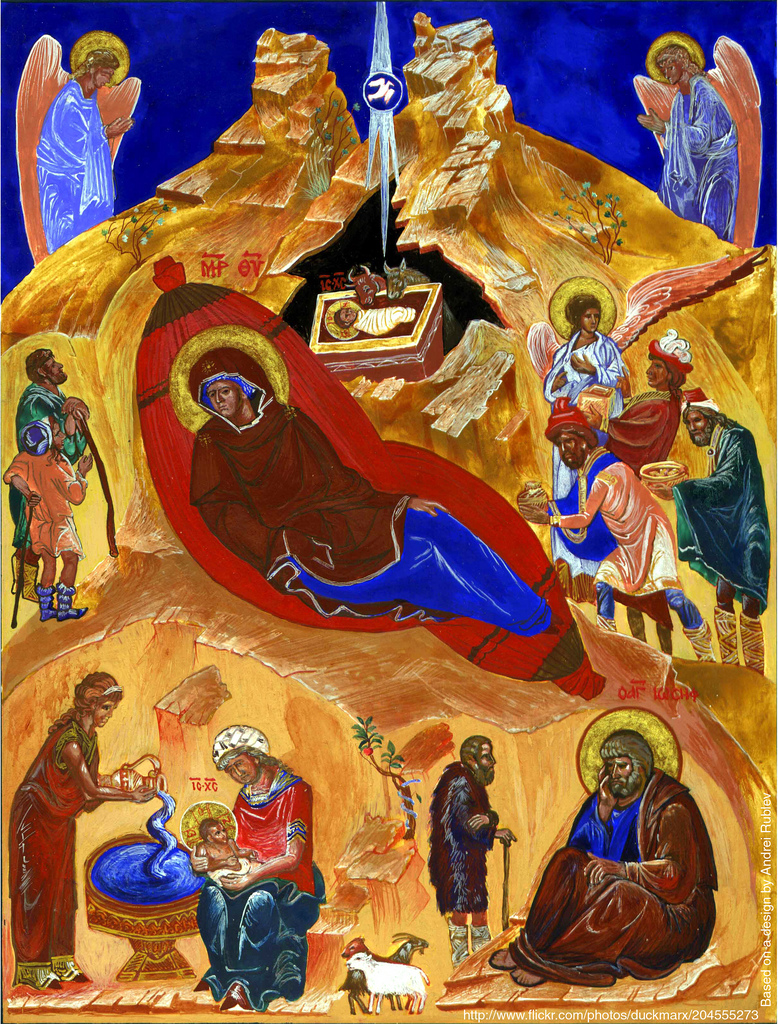 Yesterday was Day 1 of the season of the Church Calendar known as Advent (latin for “coming) . From now until Christmas, we spend time intentionally mediating upon the truth this season brings: God has come among us, clothed in the vestiges of human flesh.
Yes, this time of year was arbitrarily chosen centuries ago to recast pagan lunar festivals in a new light. Yes, many of the traditions of Christmas (fir trees, gift-giving, wreaths, etc.) find their source in pagan socio-religious rites. Yes, Jesus was probably more likely born in April, not December. Yes, Christmas has been co-opted by commercialism and consumerism. Nevertheless, this time has been set aside for nearly two millennia so that Christians around the world could, with one mind and heart, dwell upon the depths of the glory given to us in the events that transpired all those years ago.
Continue reading
 the long way home