What the heck is Preaching, even?


peter-preaching-statueFor my preaching class, we’ve been trying to get at what this weird thing called “preaching” really is. It’s not a lecture, it’s a not a conversation, it’s not a debate. So what is it? Here are some of my random thinking on this. But I’d love to hear yours.

As much as I want something far more profound and original, I have not been able to find anything simpler and clearer than Alan of Lille‘s definition: “Preaching is an open and public instruction in faith and behavior, whose purpose is the forming of men [sic].”

Continue reading

Random Thoughts on Preaching: The Trinity


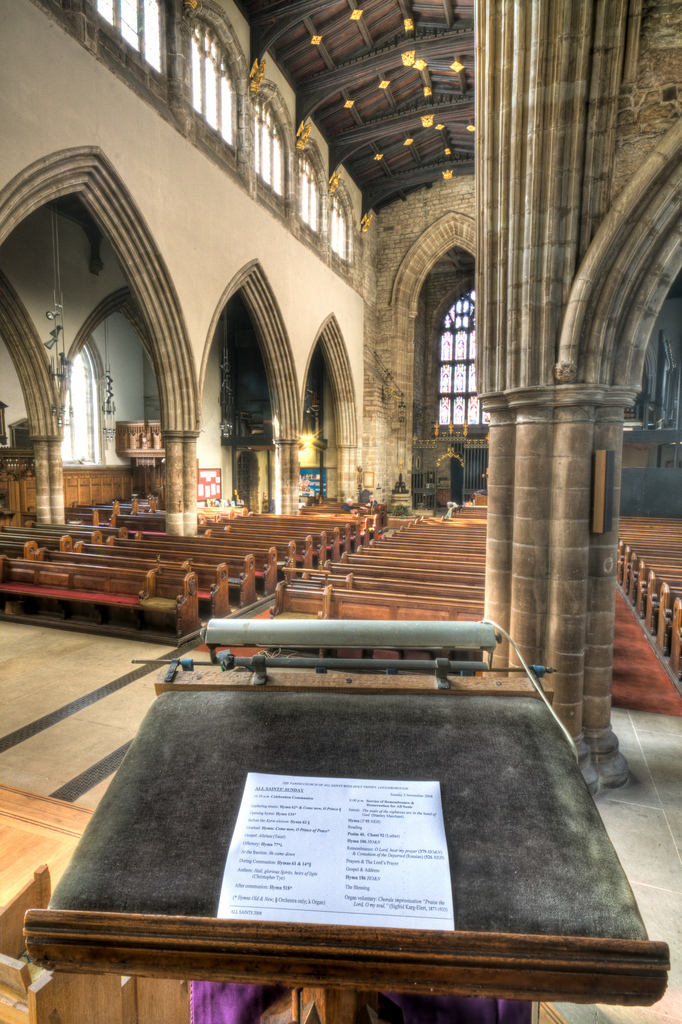
pulpit-church-hdr-bible

First: Our worship is a participation, mediated by the Spirit, in Christ’s Communion with the Father.

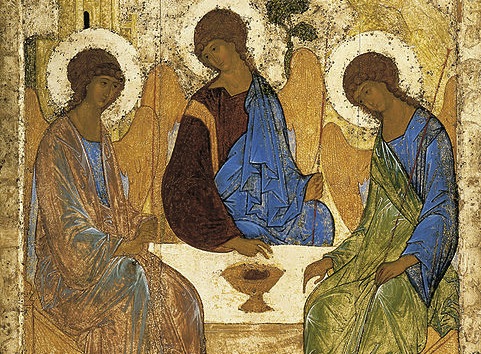
In this Trinitarian picture of worship, where does preaching fit in? Well, there is an eternal “conversation” happening among all the members of the Trinity. The divine words of Creation are presented as an “overflow” of this divine conversation. So to me, preaching is a Spirit-“infused” (and humanly articulated) mediation of the words between the Father, the Son, and the Holy Spirit.

Because the Spirit enables our union with Jesus, and because Jesus is joined to the Father, we find ourselves mystically and intimately in union with the whole Trinitarian God Himself. And so, preaching is–in a sense and at its best–an articulation and “listening in” on this eternal “trialogue” within the Godhead.

The world having been created through and for the Son means that the Father’s words to the Son are now his words to and for us. And this Word that is spoken to the Son by the Father is the Gospel. When it is offered to humans, this eternal, mysterious articulation of the Gospel in the Godhead is always mediated and contextualized in order to be received and perceived by the hearer. This is why the Bible is the way it is.
Continue reading

When & How to Criticize Other People’s Pastors | 1 Corinthians 4.2-5


Moreover, it is required of stewards that they be found trustworthy. But with me it is a very small thing that I should be judged by you or by any human court. I do not even judge myself. I am not aware of anything against myself, but I am not thereby acquitted. It is the Lord who judges me. Therefore do not pronounce judgment before the time, before the Lord comes, who will bring to light the things now hidden in darkness and will disclose the purposes of the heart. Then each one will receive commendation from God.
1 Corinthians 4.2-5

What does this mean? At least right now, my instinct is to take it like this: outside of clear sin issues, we should not divide and judge other Church leaders (nor effusively favor them). If you can’t find clear sin issues in their lives, churches, or teaching, then don’t demean their doctrine, style, gifting, or missional emphases. In the same way, though, even if there are no clear sin issues going on, don’t exalt them because of their doctrine, style, gifting, or Missional emphasis.

If a church doesn’t fit for you, fine. Go in peace to love and serve the Lord. But don’t bad-mouth, criticize, gossip, complain, or be overly-sensitive and judgmental at them. To both conservatives and liberals, neither of us should criticize other members of the family, no matter how kooky they are–not even for what we feel is “bad” teaching. “Sinful” teaching, however is another issue. Clear historical heresy, teaching that abuses and harms the dignity of humanity, and things like prosperity preaching are examples of things that should be judged harshly and criticized.

See other Marginalia here. Read more about the series here.

Donald Miller is just plain wrong about church. But it’s not his fault.


donald-miller-bw-1

Donald Miller, author of Blue Like Jazz, started a little kerfuffle last week when he wrote about how he doesn’t really go to church any more. He doesn’t learn much about God through sermons, and he doesn’t connect with God through songs. Church just doesn’t connect with him in any way and doesn’t fit within his own learning style, which is far more participatory. He says the Church is all around us and in believers so he feels free to “have church” in the way(s) that most connect him to God and others.

Well, this caused quite the backlash. He wrote again a couple of days ago in response, but it seems that most people still really disagree with him.

But here’s the problem: Donald Miller is absolutely right in everything he says if he still insists on calling himself an “Evangelical”, or at least using that as his frame of reference.

If you consider yourself an Evangelical in any traditional sense, and you’re looking at Donald Miller’s church practices with dismay, well then welcome to your future–the logical conclusion of your theology and how you’ve practiced church for a few generations now.
Continue reading

What is the Proclamation of the Word?


pulpit-church-hdr-bibleFor a class recently, I had to read a bunch of items on the part of a worship service in which the Bible is front and center. This “section” of the service is called “The Proclamation of the Word”, or more generally, the “sermon” or homily”. I ran across this great quote:

The very act of preaching, in fact, sets up questions and problems.  Most people no longer understand the difference between preaching and other types of public speaking…. Many people think of a sermon as an occasion for being entertained, instructed, or inspired in matters of religion — hence the customary comment at the church door, “I enjoyed your sermon.”  Nowadays, it is only congregations who have been engaged in a new way of thinking for a long time who are going to sit expectantly waiting for the Word of God to be spoken — for preaching, properly understood, is the good news that God preaches through human beings.  Astonishingly enough, this is the method of communicating that God has chosen.  This is an offensive idea; there are a hundred complaints to be brought against it.  Most common is the objection, “How can anyone presume to speak the Word of God?”  Or to put it another way, “How can any human being be so arrogant as to think he is a mouthpiece of God?”  How indeed?  It is a very good question.  The validity or invalidity of preaching rests on such issues as these. (Fleming Rutledge, Not Ashamed of the Gospel)

I think Rutledge is right (and not just because she is an incredible preacher–all you complementarians could learn a thing or two from her!): people don’t seem to really see preaching as fundamentally different than any other lecture or other public speaking. Preaching is often (subtly and unspokenly) seen (or at least treated) as “mere” personal edification–similar to a book discussion or philosophical lecture or self-help conference.
Continue reading

How Liturgy Shapes & Makes Us


schrott-cross-church-office-apartment

UPDATE: I posted a brief history of liturgy and its movements.

A couple of nights ago, those that help lead and facilitate the worship service at my church met to discuss how we should continue to grow and remain faithful to our mission in the city of Philadelphia through our liturgy and music. It reminded me once more of how much I love being a part of this church and its tradition, and how excited I am to live life with these people.

Meditating on these discussions about our liturgy, I was reminded of the myriad of ways that the structure of one’s worship service forms the people that sit there each Sunday. I thought of how liturgy functions. If you go to a church, it has a liturgy: some structure that proclaims a certain story and shape of existence, and it changes people to fit into that shape and story.

And this got me thinking of a document I wrote up a couple of years ago to help train and encourage those leading liturgy at our church. In it, I wrote about six “facets” of the diamond that is liturgy. And that’s what I wanted to post here today.

These are some ways that liturgy acts to shape us. After each thing, I’ve given a sample topic and tried to show how liturgy functioning in that way can speak to and shape someone in that area. This was originally meant as a guide for people that introduce the service and try to acclimate people to the liturgy.

I hope this reminds us that liturgy matters, and being intentional about your liturgy is such an important part of leading and ministering within your church context. If you don’t serve as a leader in this aspect of your church’s life, and don’t really speak to liturgy formation, I hope this helps you recognize the formative nature of your church’s liturgy, and that it helps you connect to and engage with your church in a deeper, more intentional way. For more on this, I could not suggest more highly James K.A. Smith’s book Desiring the Kingdom.

Continue reading

It’s Still Easter: a Theology of Color [photo sermon]


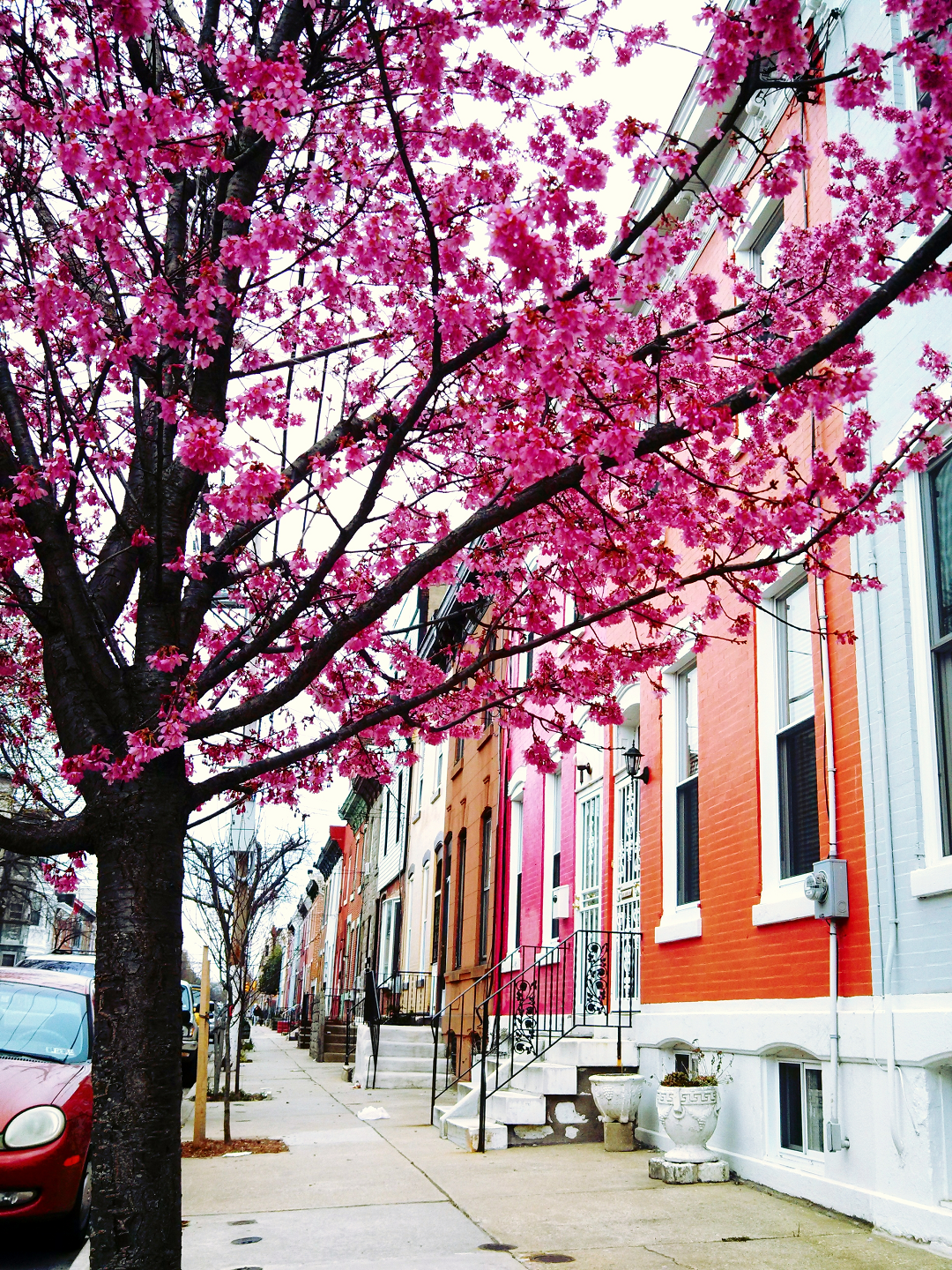
philly-tree-pink-spring

This week’s WordPress Photo theme is “Color“. Rather than simply writing about different pictures I’ve taken, I’m instead trying to write “photo sermons” based on these topics. In these posts, I want to try and use the photo itself as my “text”–trying to see how God reveals himself in his “other” book, in addition to the Bible.

In our last photo sermon, I talked about how I love that Easter comes around Spring time and so the natural world beautifully reflects the spiritual truth being celebrated. Also in line with this truth is the fact that Easter–just like Spring–is not just one day–it’s an entire season in the Church calendar.

It takes time for beauty and truth to get into and blossom within our souls. It takes preparation and anticipation for the roots of our hearts to quicken like the trees around us–to feel life coursing in them once more.

This is beautiful. And it doesn’t need to be this way.
Continue reading

Palm Sunday: Future-Tense [photo sermon]


church-easter-tree

Continuing WordPress’ uncanny timing of photo challenges with the Christian Church calendar, this week’s theme is “Future-Tense“. In essence, they’re wanting pictures that anticipate something to come; something that’s being waited for; some future thing who’s presence is felt in the picture, even in its absence.

This is most appropriate today, as it’s Palm Sunday of 2013.

It takes some real significance for an event from the Bible to find itself as a major Church Holiday. Considering that, it can be odd that Palm Sunday is one of these: there’s nothing really unprecedented or special about it in and of itself.

There are other places in the gospels where Jesus is proclaimed king, proclaimed Messiah, prophecies are fulfilled, large groups believe in him, and even several times he enters Jerusalem. So what’s so special about this moment?

The future.
Continue reading

Marveling in the Cross: Lost in the Details [photo sermon]


pma-cross-skull-pma

For several months now I’ve been doing the WordPress Weekly Photo Challenge. Honestly, I’ve gotten a little tired of that, so I’m going to start mixing it up with some weekly “photo sermons”, taking the weekly theme, picking an appropriate photo, and writing up a short meditation on the theme. We’ll see how it goes. This week’s theme is “Lost in the Details“.

One of my best (and oldest) friends is named David Schrott. He’s an incredible photographer, and an even more incredible man of God. He’s currently been spending an extended period of time back in his hometown of Lancaster, PA, recovering from surgery.

In this time of recovery, he’s only grown in his intimacy with God, his love as a friend, and the depth of his experience of spirituality. Recently, when I asked how he’s seemingly unlocked this door to the depths of the spirit and, as he puts it “longing for the resurrection in ways I never have”, he simply said this:

“Suffering! Without it, it is hard to long for anything but immediate pleasure.”

I love that guy.

Continue reading

“But even if not” | one of the best sermons I’ve ever heard, by Sam Wells


This past weekend, I had the honor of being at Duke Divinity’s baccalaureate for their graduating divinity students. It was a full-scale service (minus communion, and plus the hood ceremony for the graduates), complete with songs, prayers, and a homily.

And oh what a homily it was.

That night, Sam Wells, the (now former) dean of Duke Chapel, delivered his last ever message as dean. Late last year, he accepted the call to vicar of St. Martin-in-the-Fields in London, and this was the last homily he was to offer to these students he obviously loved so much. These final words to them were purposeful and intense, offering a handhold for each one of us in the muddy waters of life and vocation.

I pray these words impact you as they did me, and that you return to them often. You can view the message below, or check out Duke Chapel’s myriad of other ways to find and keep up with their messages. The message starts at 57:40 (the embedded video won’t jump to that time-mark automatically, but this link will take you right there if you don’t want to click around below).


CashTag

Enjoy the Post? Leave a tip with Square Cash!

Unceasing Worship (a liturgy)


[photo by p*p on flickr]

[This was a liturgy I delivered at my church this past Sunday as we continued our series from Luke called “conversations with jesus”.  Here is the audio from the message that followed this opening liturgy.  Much of this opening material I stole from the incredible book Unceasing Worship by Harold Best]

Greeting and Preparation

Leader: The Lord be with you.
People: And also with you.

Hello, my name is Paul, and I want to welcome you Liberti Church. Liberti is a community of individuals still trying to figure out this Christian faith we’ve found ourselves in. And if you’re around here long enough you’ll see that we all do this to varying degrees of imperfection, more often than not. So, whether this is your first time here, or you are firmly rooted in this community, I hope that your time here today is meaningful; that you feel warmly welcomed and that you are able to experience the God we love in a tangible, real way.

In a few moments we’re going to stand and do the whole traditional, super structured, church thing. We’re going to read things back and forth, say them together, sing some songs, stand up, sit down, stand up again, say hello to one another and listen to a sermon. It’s easy to look at all this and begin to think that all these trappings and movements are what it means to be a Christian; that this is the substance of our faith. It’s easy; after all, we can see, observe, and measure our participation of these things.  But that’s not why we do this.

Continue reading

The Gospel & Hospitality (a liturgy)


[This was a liturgy I delivered at my church a couple of months ago, while we were going through our series “Practice Resurrection”. You can hear the sermon delivered that Sunday here.]

Greeting and Preparation

Leader: Alleluia! Christ is risen.
People: The Lord is risen indeed. Alleluia!

Hi, my name Is Paul. Welcome to Liberti: South Philly. We’re a community of believers in Jesus Christ wrestling and struggling trying to learn what it looks like to live in the tensions and ambiguities of an ever-changing world; of a world whose systems too often attempt to isolate and pull each other apart. Maybe you’ve graced these pews many times before, maybe you’re still trying to get over the shock that you’re actually sitting in here in the first place. Either way, we want to welcome you today. We hope your time here is meaningful and that you feel the freedom and invitation to wrestle and struggle alongside us.

The aspect of Christian faith we will be exploring today is hospitality. The God of Christianity is not a distant god demanding things of us; putting ever-increasing weights upon our shoulders. Rather, he is a God that removes our burdens, shows us what a well-lived life looks like and invites us in. He invites us into the experience of His Self and His Works.

Continue reading

Beauty: Revisited


Last year I gave a seminar/lecture/sermon thing at my old church, Epiphany Fellowship. The topic I spoke on was Beauty. I spent about nine months doing research, reading, talking, and thinking before ultimately delivering it last August. After the break is the full “Table of Contents” for each part of the blog series I did going through each individual part of the manuscript.  Those blog parts have not yet been updated.  Here are the the updated full written Manuscript, the audio of my “lecture”, and an appendix with the Greek/Hebrew breakdown of the words for “Beauty” in the Bible.

Full Talk
Full Audio
Language Appendix

Series Table of Contents:

Why do we long for Beauty?

What is Beauty?

What Things are Beautiful, and why?

How do we respond to this Beauty?

Conclusion

Repentance (for Liberti & my Home Group)


I help lead a home meeting for Liberti Church: Center City. In these home meetings we usually further discuss the sermon from Sunday and try and see what bearing it might have on our everyday life. As most everyone knows, I have started my new job now and had to work last night so I wasn’t able to attend the home group. So, I thought I’d write out my thoughts here.

This post is mainly trying to place this past week’s message in the broader context of our current series “Lent For Everyone”. The first week, we looked at Jesus’ temptations in the desert to show us how we are meant to live life here and now in the “desert” of history — after our freedom from slavery but before the Promised Land (Audio). The second week of Lent Jared preached on how the God of Christianity  is unlike any other god we make, because of his Covenantal character, and how He does not demand that we bound ourselves to Him, but rather He commits Himself to us (Audio). This past week we heard God in Isaiah 55:1-9 invite us toward the gift of repentance, and in that find life (Audio). Next week, he will talk about the celebration this God is actually inviting to take part in (Audio), and in the final week, he will talk about who this King is that has been with us all along (Audio). In our home meeting, we’ve been talking about these ideas and how our sins reveal the true nature of our hearts.

Continue reading

weekend update


I wanted to write a quick note to anyone that’s been confused about the lack of writing on all of my sites.

For one reason or another, I’ve decided to do more research on the Slavery, Bible, and Atheism series.  Here’s why: It’s a six part series and so far each part has required two separate posts.  I am mostly done with the second post of Part 2, and for the whole series so far, I have almost 20 pages of content written.  With the stuff I want to say, and the content I wish to cover, I’ve realized that by the end of the series, if I stay on pace, I could have anywhere between 60 and 75 pages worth of material written.  And this doesn’t even include the pages worth of comments I’ve written on comments on Facebook and here on the blog.  So far, all I’ve written has been very “bloggy” in style and language; in other words — completely unworthy of even considering trying to see published.  It’s been very polemical and directly addresses other people and conversations not directly involved in this blog.

Continue reading