
sin
I Am at the Whim of the Forces Around Me

I appeal to you therefore, brothers and sisters, by the mercies of God, to present your bodies as a living sacrifice, holy and acceptable to God, which is your spiritual worship. Do not be conformed to this world, but be transformed by the renewing of your minds, so that you may discern what is the will of God—what is good and acceptable and perfect.
For by the grace given to me I say to everyone among you not to think of yourself more highly than you ought to think, but to think with sober judgment, each according to the measure of faith that God has assigned.
~ Romans 12.1-3
I Am Unable to Know Myself & Who I Really Am

The heart is devious above all else;
it is perverse—
who can understand it?
I the Lord test the mind
and search the heart,
to give to all according to their ways,
according to the fruit of their doings.
~ Jeremiah 17.9-10
I Am Undisciplined, Unrestrained, & Unregulated

His divine power has given us everything needed for life and godliness, through the knowledge of him who called us by his own glory and goodness. Thus he has given us, through these things, his precious and very great promises, so that through them you may escape from the corruption that is in the world because of lust, and may become participants of the divine nature. For this very reason, you must make every effort to support your faith with goodness, and goodness with knowledge, and knowledge with self-control, and self-control with endurance, and endurance with godliness, and godliness with mutual affection, and mutual affection with love. For anyone who lacks these things is short-sighted and blind, and is forgetful of the cleansing of past sins.
~ 2 Peter 1.3-10
I Am a Racist, Misogynist, & Homophobe
But now in Christ Jesus you who once were far off have been brought near by the blood of Christ. For he is our peace; in his flesh he has made both groups into one and has broken down the dividing wall, that is, the hostility between us. He has abolished the law with its commandments and ordinances, that he might create in himself one new humanity in place of the two, thus making peace, and might reconcile both groups to God in one body[c] through the cross, thus putting to death that hostility through it. So he came and proclaimed peace to you who were far off and peace to those who were near; for through him both of us have access in one Spirit to the Father. So then you are no longer strangers and aliens, but you are citizens with the saints and also members of the household of God
~ Ephesians 2.13-19
I Am a Fornicator

On that day, says the Lord, you will call me, “My husband,” and no longer will you call me, “My Idol.” For I will remove the names of the idols from your mouth, and they shall be mentioned by name no more. I will make for you a covenant on that day with the wild animals, the birds of the air, and the creeping things of the ground; and I will make you lie down in safety. And I will take you for my wife forever; I will take you for my wife in righteousness and in justice, in steadfast love, and in mercy. I will take you for my wife in faithfulness; and you shall know the Lord.
~ Hosea 2.16-20
I Am a Glutton
O God, you are my God, I seek you,
my soul thirsts for you; my flesh faints for you,
as in a dry and weary land where there is no water.
So I have looked upon you in the sanctuary,
beholding your power and glory.
Because your steadfast love is better than life,
my lips will praise you.
My soul is satisfied as with a rich feast,
and my mouth praises you with joyful lips
when I think of you on my bed,
and meditate on you in the watches of the night;
for you have been my help,
and in the shadow of your wings I sing for joy.
My soul clings to you;
your right hand upholds me.
~ Psalm 63.1-8
I Am a Victimizer
Whoever says, “I am in the light,” while hating a brother or sister, is still in the darkness. Whoever loves a brother or sister lives in the light, and in such a person there is no cause for stumbling. But whoever hates another believer is in the darkness, walks in the darkness, and does not know the way to go, because the darkness has brought on blindness.
~ 1 John 2.9-11
I Am A Cheater & Philanderer
I passed by you again and looked on you; you were at the age for love. I spread the edge of my cloak over you, and covered your nakedness: I pledged myself to you and entered into a covenant with you, says the Lord God, and you became mine. Then I bathed you with water and washed off the blood from you, and anointed you with oil. I bound you in fine linen and covered you with rich fabric. I adorned you with ornaments: I put a beautiful crown upon your head. You were adorned with gold and silver. You grew exceedingly beautiful, fit to be a queen. Your fame spread among the nations on account of your beauty, for it was perfect because of my splendor that I had bestowed on you, says the Lord God.
~ Ezekiel 16.8-14
I Am Unable To Do This Alone
The prayer of faith will save the sick, and the Lord will raise them up; and anyone who has committed sins will be forgiven. Therefore confess your sins to one another, and pray for one another, so that you may be healed. The prayer of the righteous is powerful and effective.
~ James 5.15-16
Male Feminist Theology & Sinning Against Women
 This is an incredibly hard post to write, but an important one, I think.
A couple of years ago, I started (and never really finished–but I will!) a blog series which outlined a systematic way that as a male, I can incorporate feminist perspectives on theology into the way I think about God and life.
I call it “Male Feminist Theology” because there’s something about truly being a “feminist” that requires having embodied the experience of being a woman–which I have not. (Similarly, I could not call myself a “Black Activist” with any kind of integrity.)
I started this series with a bunch of posts about using feminine language for God. There was a lot of blowback from that, most of it entirely unexpected. I still hold to that belief that God is gender–ful (not gender-less) and so the full range of human language, both masculine and feminine, ought to be applied to God.
And yet, in my actual-lived out spiritual life, this hasn’t seeped into my engagement with God as much as one would expect, considering how strongly I intellectually believe these things. Maybe an occasional substitute of “Mother” for “Father” in the Lord’s prayer or a Creed recitation, but I do it quietly under my breath. Only occasionally do I find myself remembering to pray to God in such terms. My unconscious reflexive depiction of God in my imagination is still fundamentally male. I have to actually exert energy and thought to try and conceive of something different.
Continue reading
Because We’re Not Good: “East of Eden”, a Book Review
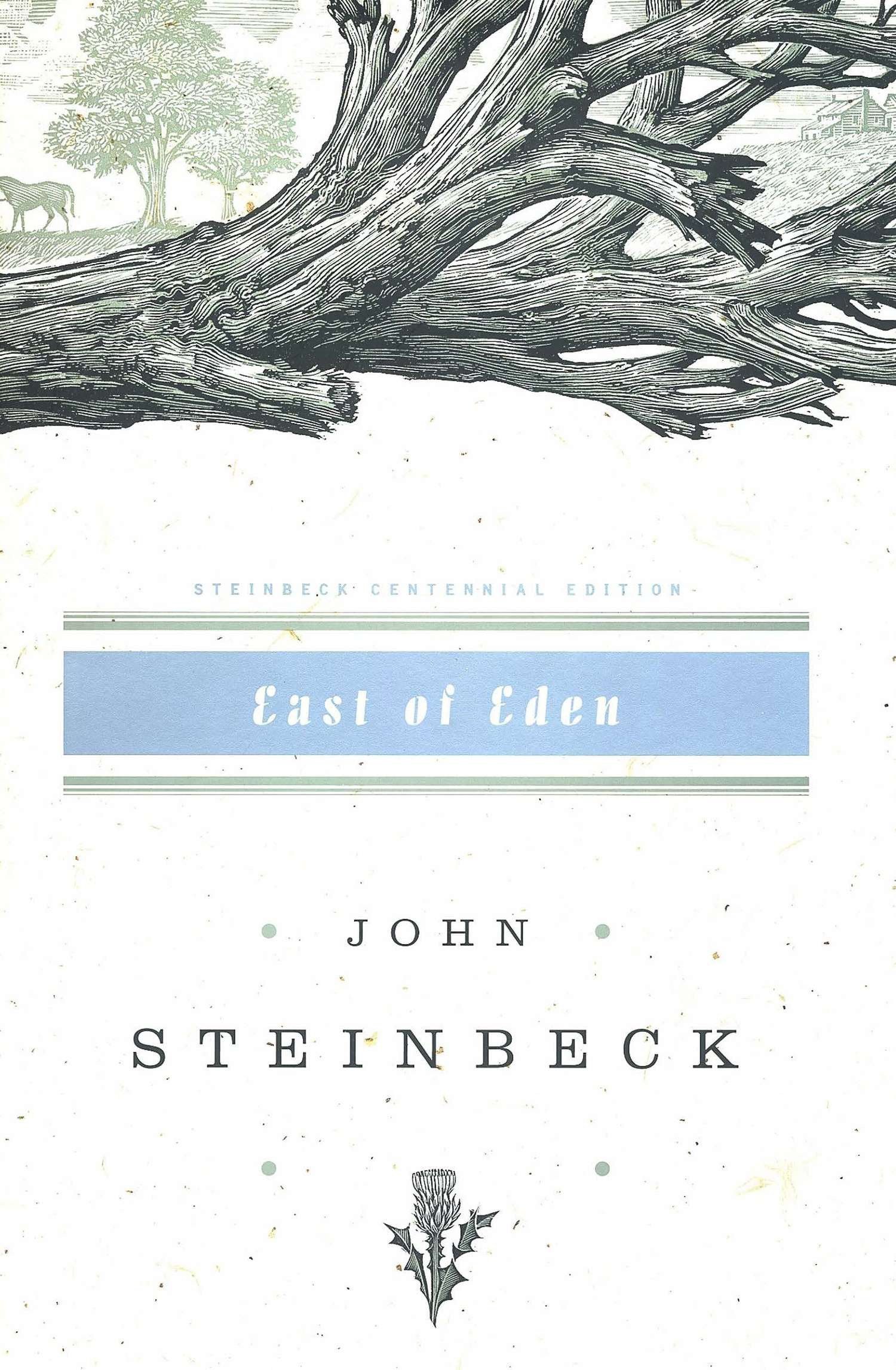 We all have those pieces of art–be they movies, books, music, what have you–that upon first exposure we fall in love. We turn the last page or exit the theater or concert hall certain that this will surely be added to our list of favorites and long-held companions. Yet, how many times do we say this and a year or two down the road someone mentions that very piece of art and we find ourselves thinking, “oh yeah, I did read that, didn’t I?” or “I had forgotten how much I loved that album!”
So often we get swept away in the immediate experience of something skipping upon the waters of our soul, leaving little ripples and echoes dancing in its wake. But these dimples and dapples merely play on the surface for a time, returning once more to their source, leaving the waters ultimately undisturbed–the liquid plane unbroken; the deepest depths untouched.
There are other times, however, that we encounter a piece of art–or rather, it encounters us–and we are changed. It transcends mere rankings of “favorites” and “Top 10s” and weaves itself into our fibers. We do not critique and assess it, so much as it sizes and weighs us. The surface tension is broken and we are plunged beneath, staring humanity’s unvarnished truths in the face. And in so doing our own humanity is enlarged, a spaciousness expands in our souls, and we feel more human–even as our foundations are shaken.
John Steinbeck’s 1952 magnum opus, East of Eden, is just this kind of piece of art. It’s the kind of book people say they will read “someday”, only to read it and wish “someday” had come a lot sooner. So if you haven’t read it. Do so. Start today.
Deep Sin & The Christian Soul
Now the works of the flesh are obvious: fornication, impurity, licentiousness, idolatry, sorcery, enmities, strife, jealousy, anger, quarrels, dissensions, factions, envy, drunkenness, carousing, and things like these. I am warning you, as I warned you before: those who do such things will not inherit the kingdom of God. (Gal. 5.19-21)
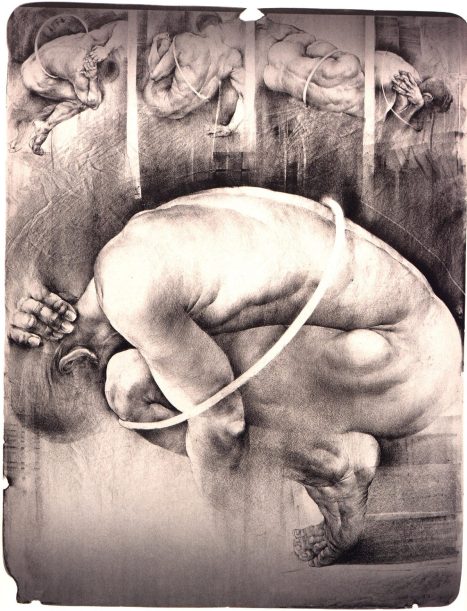
As I recently finished a Church Bible Study on the book of Galatians, those verses inevitably caused some discussion.
I mean, we’ve all to some degree engaged in most–if not all–of the items on that list at some point in our lives, right? Even if you’re a Christian.
So what does it mean to say “those who do such things will not inherit the kingdom of God”?
As we discussed it, we arrived at the answer many of us come to if you grew up in the Church: these scary statements only apply to those individuals who have these “works of the flesh” as a pattern of their life to such a degree one might be able to say that the sins have “dominion” over them. That answers it, right?
Not really. Because there are Christians who find themselves in seasons–days, weeks, months, decades, even–where these sins are their practice over time, seasons where these sins have a very real sense of dominion over them and their lives.
And, this isn’t theoretical or theological for me. To be honest, I myself am coming out just such a time.
. . . . .
I wrote the above words a couple of weeks ago. Since then, I’ve only sunk deeper into the bewilderment of this season I’m coming out of. How does a Christian understand a period of time in which they’re given over so deeply into self-absorption, sin, and hurting of others? I’ve sat on this question, mulling it over, letting it ruminate within me to see what fruit it bore. I’ve wanted to figure out a nice, tidy answer to this post–for the sake of both others and myself.
And alas, I have been found wanting.
Continue reading
Sometimes, Mercy is Sweeter Than Grace
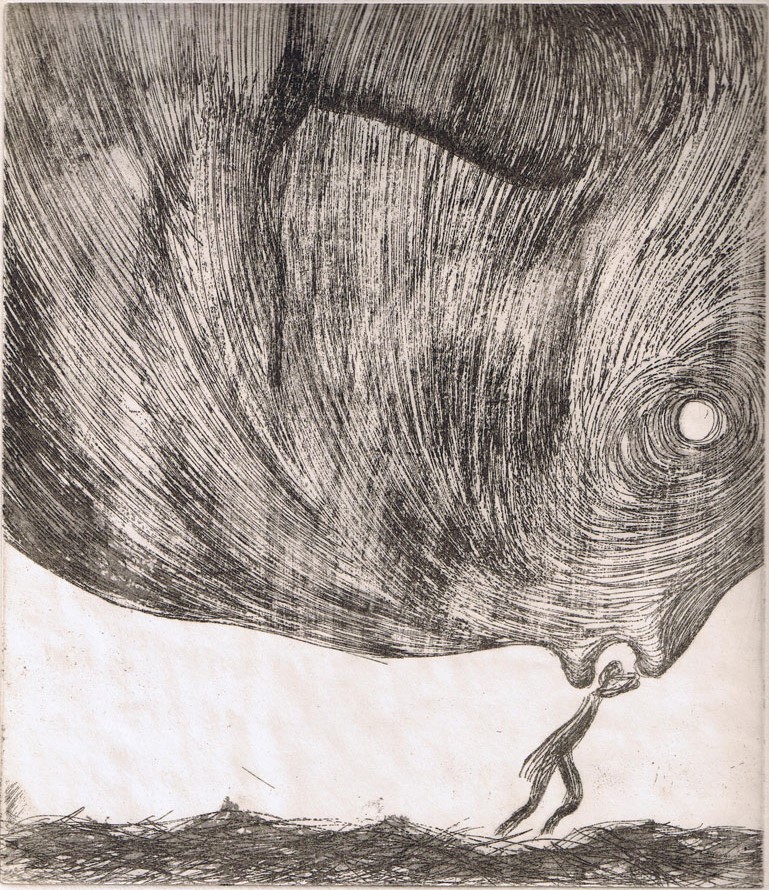 I grew up in a pretty stereotypical Evangelical setting, which led to a pretty stereotypical back-and-forth between guilt and self-righteousness. That is, until I really heard the Gospel of radical Grace.
Many of us have this same story, where it has been so healing to hear that how God relates to us is not, in fact, based on our performance. Instead, everything necessary for God to be pleased with us has been accomplished on our behalf by his Son.
In response to this, we fall in love with God’s Grace. We pray for it, long for it, and cry for it. We read books about it, write about it, and talk about it. We try and speak it into others’ lives while trying to figure out why we don’t apply it to our own. We joyfully build our relationship with God on the glorious foundation of His Grace. It is fundamental, primary, and essential.
In short: we love Grace.
Imagine my surprise, then, as I fell in love with liturgy and ancient forms of worship, to notice the utter lack of “grace” from the prayers and worship of the earliest saints. Continue reading
The Mission of Confession: the World needs the Church to Confess

And the Lord said, “What have you done? Listen; your brother’s blood is crying out to me from the ground!
—Genesis 4.10
I was taking another look at the verses I wrote about earlier this week, and was struck by a few more thoughts I wanted to share. As I said then, the passage is structured liturgically. The story of Cain and Abel follows the flow of liturgy that God’s people have used for the duration of their existence. (It’s usually something like this: Call to Worship–>Call to Confession–>Passing the Peace–>Word–>Sacrament–>Benediction)
I pointed out that the blood-soaked soil “crying out” was the first instance of lament in the Bible, and it appears in the “Call to Confession” section of this odd liturgy-story, and it shows us how the world bears the weight of our own sin. Looking at it again, though, I see it means much more than just that.
 the long way home