Sin: God’s Favorite Part of Being God


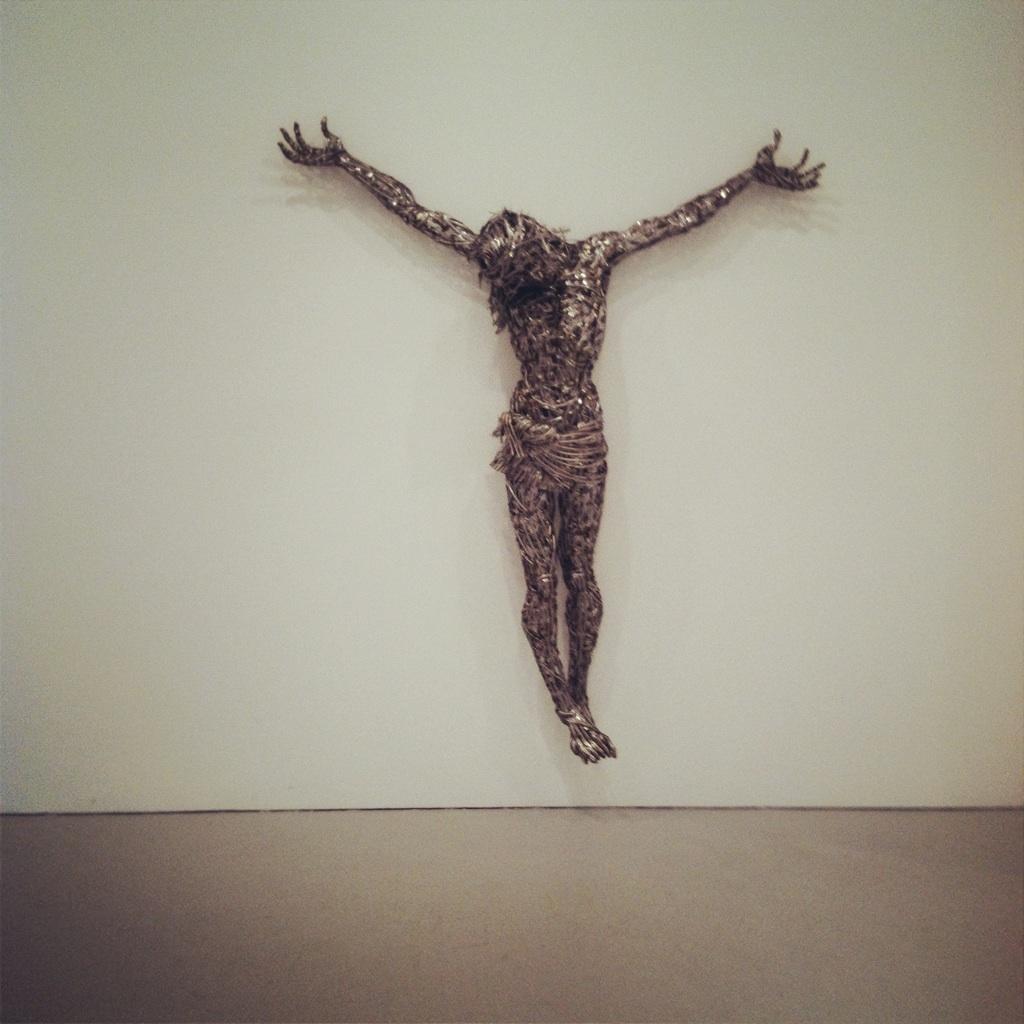
sandorfi-le-pardon-wide

Lent is a time that we dwells a lot on Sin. It’s a preparation for Easter and celebrating the Resurrection, and so to prepare for this, we must meditate on those things that Resurrection itself addressed. Resurrection was a response to Sin and Death. The more we feel and dwell in the reality of our Sin and Death, the more tangible Resurrection becomes.

This can seem morose, annoying, unnecessary, or not in line with our identity as Christians. Should we do this though it might make us depressed, feel like self-focused navel-gazing, or if it distracts us from much of the rest of our Christian living?

There’s definitely a time and place for it and a degree after which it becomes unhealthy, but more than what this does for/to us or our emotional state, could I offer another reason that it’s good to have times where we bring our focus to our weakness and sinfulness?

God loves it.
Continue reading
Death & Life; Names & Vows | Genesis 3.20-21


The man named his wife Eve, because she was the mother of all living. And the Lord God made garments of skins for the man and for his wife, and clothed them.
Genesis 3.20-21

I don’t know why I’ve never noticed this before. Why does Adam only name Eve after they sin? Further, of all the things to do after receiving the curse from God, he does this covenantal, marital act: he gives her a name.

I know this isn’t in this text, nor was it on the mind of the original writer, but it reminds me of the odd line in Revelation where God promises to give each person a new name that only He and they will know.

It seems that in the whole sweep of redemptive history, the Bride of the first Adam received a new name when he brought death, just as the Bride of the second Adam receives a new name when he brings life.

See other Marginalia here. Read more about the series here.

Discipleship: Making Good Little Pharisees?


Caravaggio-The Calling of Saint Matthew{summary: the way we disciple others in the church is far too often a results-based process, and not a grace-driven one. Here, I explore Jesus’ example in Matthew as a guide for us. And, once again, we see Jesus’ radical application of grace to his Disciples’ lives.}

I’m taking a class on “The Practice of Discipleship”. Some discussions on our online message boards inspired these thoughts. Discipleship, as many people could tell you is all about “following Jesus”. After all, that’s how Jesus himself invited his disciples into it. But as I was thinking about this, I realized something: Pharisees had disciples too.

Now, with “Pharisee Discipleship” the point was to let that Pharisee get all up in your business so that you could become a good, well-behaved Pharisee someday. Christian Discipleship, as we are often told, is not about following Christians per se, but following Christians who are following Christ. The ultimate goal is to follow Christ and to help one another do that.

This is how it works in theory. I can’t speak for everyone, but at least in my experience, a lot of Christian Discipleship subtly looks more like the type that creates well-behaved Pharisees than the one that truly follows Christ.
Continue reading

Some random, contradictory thoughts on Hell. Discuss.


Rothko-untitled-2Below, you’ll find a random assortment of 30 completely disjointed musings on Hell. Each paragraph is its own statement, in no particular order. This is not meant to be a discussion of where I currently land on this issue. I’d love to just get your thoughts. Respond as you like, below.

(1) In the past 10 to 15 years, the American Church saw a new emphasis on Idolatry as the foundation of sinfulness, rather than “Law-breaking”. I’m starting to see a new re-emphasis on Law-Breaking and Hell as punishment for this. And yet, the “Law” is always connected to God’s Image and Character, and so Law-Breaking is living by a wrong law, or image, and therefore is idolatry. We have an analogy for how a Judge responds to breaking the law, and this leads to the popular view of Hell since Medieval times. But what is the analogy for the response to transgressing an image?

(2) Can any Universalist tell me what the point of missions or Evangelism is in this life, if their perspective is true?
Continue reading

The Story of Repentance: believing vs. achieving


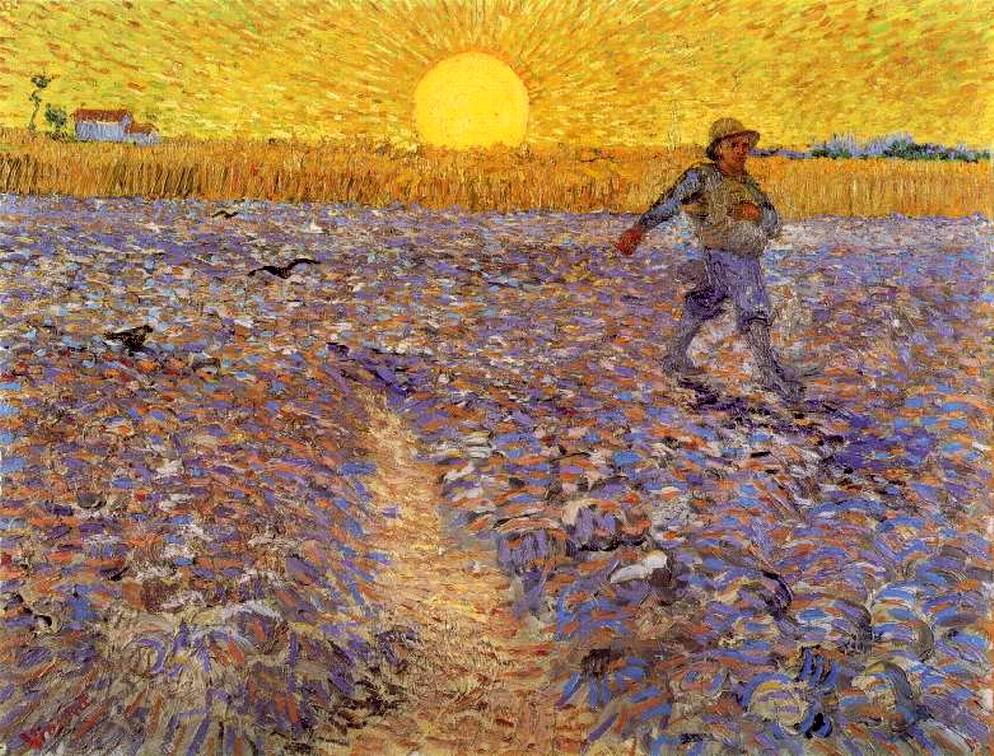
Van Gogh-Sower with Setting SunThis post is part of my 2013 Lent series: Reflections on Repentance.

I almost titled this post “theology in the service of real-life”.

The last time I wrote about repentance, I talked about the difficulties I have with some of the ways people in the Church talk about repentance. I then started researching the topic. And as I did, I found some amazingly helpful realizations about this in the Bible.

So today, I just wanted to take some time and explore this topic throughout the entire story of the scriptures. Hopefully, we can come to some conclusions about what repentance means for us today, and perhaps even some answers to our previous concerns in the last post.
Continue reading

Intelligent Repentance: Hearing our Hearts


[This is part of my 2013 Lent series: Reflections on Repentance.]

“Is anyone thirsty? Come and drink— even if you have no money!
Come, take your choice of wine or milk— it’s all free!
Why spend your money on food that does not give you strength? Why pay for food that does you no good?
Listen to me, and you will eat what is good. You will enjoy the finest food.

“Come to me with your ears wide open. Listen, and you will find life.
I will make an everlasting covenant with you.
I will give you all the unfailing love I promised to David.
See how I used him to display my power among the peoples.
I made him a leader among the nations.
You also will command nations you do not know, and peoples unknown to you will come running to obey,
because I, the Lord your God, the Holy One of Israel, have made you glorious.”

Seek the Lord while you can find him. Call on him now while he is near.
Let the wicked change their ways and banish the very thought of doing wrong.
Let them turn to the Lord that he may have mercy on them.
Yes, turn to our God, for he will forgive generously.

“My thoughts are nothing like your thoughts,” says the Lord.
“And my ways are far beyond anything you could imagine.
For just as the heavens are higher than the earth,
so my ways are higher than your ways and my thoughts higher than your thoughts.”

The writings of the Prophet Isaiah, Chappter 55, verses 1-9 Continue reading

Lent 2013 is on the way. What are you doing?


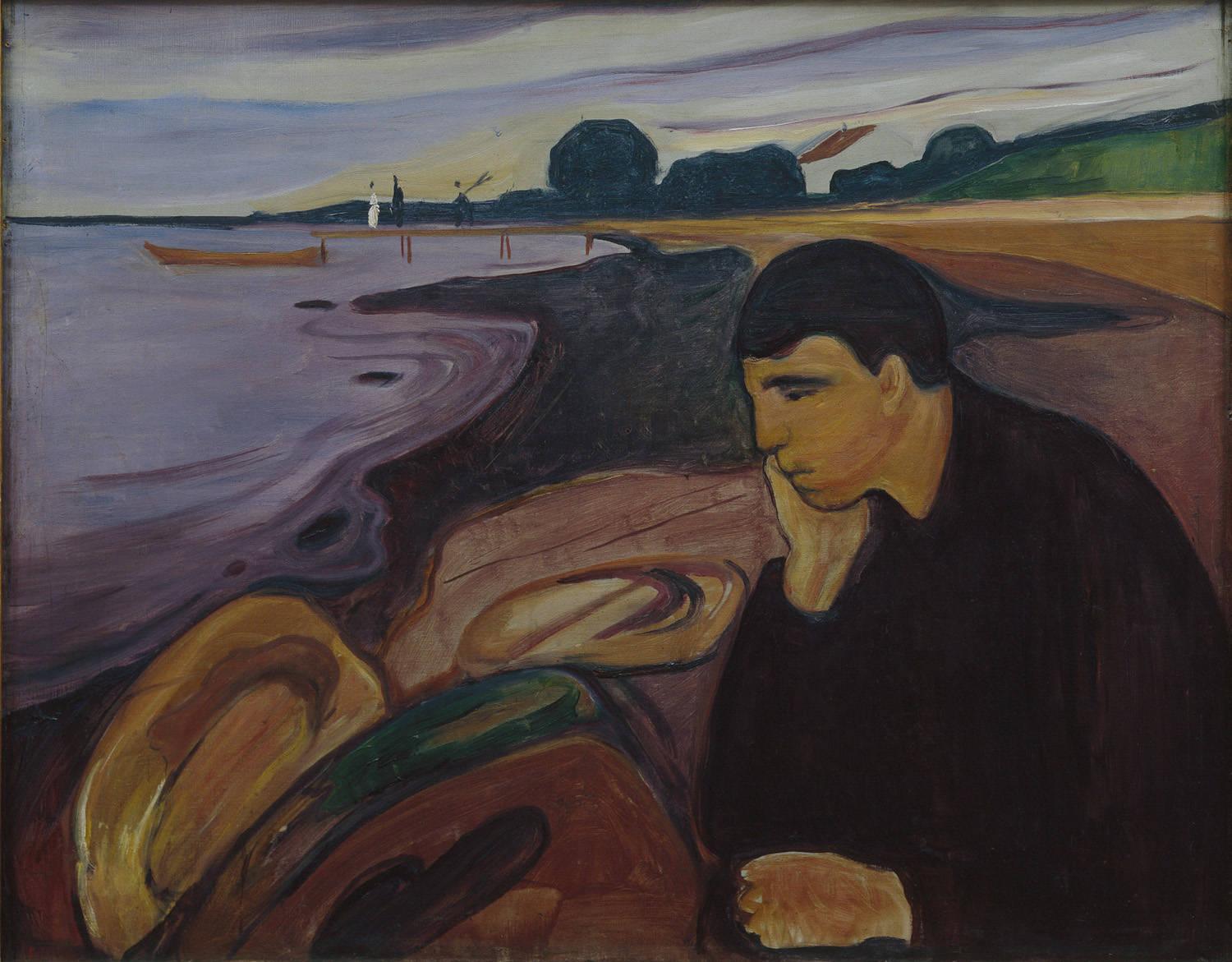
Munch-melancholyNext Wednesday is Ash Wednesday, which kicks off Lent, the time of year in which we our sins and shortcomings weigh on our minds and shoulders a little more than usual, that we might feel their sting, and that might propel us to Christ.

Lent is always a very meaningful time for me spiritually. It is my most fruitful time of blogging and meditating, and I hope that today is similar. This is probably because I’m wired to be extra sensitive to the quieter, subtler movements of my own heart.

I can also be prone to despair over my inability to change or grow, but even in the midst of the difficulty and darkness of this season, there’s always the dawn of Easter ever-more cresting upon the Lenten horizon.

Historically, there have been many ways that the Church had engaged in this time, and so there is great freedom in how we might do that. This is how I’m engaging in Lent this season: Continue reading

Male-Only Church Leadership: Blessing or Curse?


michaelangelo-adam-eve-eden-fall

In these discussions on women’s roles in church leadership, a favorite little one-off argument by Egalitarians (and a pretty darn good sound bite) is that the very idea of exclusive male headship is part of the curse laid upon humans in the Genesis Eden story. In Genesis 3, this is what God speaks over the woman as a curse in response to her sin:

“I will greatly increase your pangs in childbearing; in pain you shall bring forth children, yet your desire shall be for your husband, and he shall rule over you.”

I’ll be honest with you. I haven’t done the research on the Hebrew or scholarship on those lines to know exactly what these lines really might mean.

Honestly, both sides could use them. Conservatives could say that the curse is that women will desire the authority that God rightfully gave men. Egalitarians would say that man’s “rule” over women is the curse.
Continue reading

Evil & God {2}: I’m a Heretic, I Fear


This is my final post in a discussion I’ve been having with a very good friend of mine, Austin Ricketts, about the relation of Evil to the Nature of God. For more on the background of this discussion, see  Part 1 of this reply, although you should be able to gather a good idea of the conversation from this post. After this, I’ll let Austin have the last word, if he’d like.

Pressing into the Story of God’s Nature

I’ve been saying that God’s Nature is not static, but, just like us humans, it’s like a Story, unfolding in time (click here for more). Further, it’s a Story that includes Evil and Death within in. Hopefully I can clarify some points all the more by drawing out the “Story” metaphor further (because, at the end of the day, that’s all this whole “Narrative” framework is).

When I write a story about redemption and healing, I include evil in that story–evil that ends up being resolved and healed in the end. The thought of that evil (whatever it may be) is borne from my mind and existence. Just because the thought of that evil has “existed” in my mind, does not, however, make me evil.
Continue reading

Evil & God {1}: a refutation’s refute


Update: Part 2 of this post is up.

Last week, I wrote a post about being overwhelmed by God’s beauty in Western Pennsylvania. In it, I talked of the beautiful paradox of a God who would incorporate within his own divine life both Beauty and Suffering. My good friend (and huge theological influence) Austin Ricketts (who’s written on this blog beforetook issue with these statements, saying that he fears that they lead to making God the author of Sin and Evil. I wrote a reply to his comments in which I asked whether the very nature of God might be “narratival” and unfold over the course of history, and perhaps suffering and even Evil itself are “motifs” or “themes” in that “Storied Essence” of God–a story that eventually does away with these things. He wrote a reply in which he countered some of my views on revelation and some biblical texts.

Here, in the two parts of this post, I plan on (1) responding to Austin’s refutation, and (2) writing up some final thoughts (and fears) on my end. I’ll leave the final word to Austin if he so desires. Feel free to also chime in with your own thoughts if you like!
Continue reading

God is Light: A Refutation [GUEST POST]


Koelle-job
I love when I get to do some back-and-forths on the blog. My good friend (and blog contributor) Austin Ricketts wrote a comment on my post earlier this week about beauty and suffering in the world. I posted his comments, and then I wrote a reply to them. Well, as is the nature of these sorts of things, here is Austin’s “refutation” of my post. You will see he has a great mind and sensitivity to these weighty issues. Usually, I let the other person have the last word in these things, and I’d usually end this exchange here, but I actually have some thoughts I’ll spend the weekend pondering and writing; I’ll post it on Monday.

Update: my response to this post is now up.

First things first, I always enjoy a spirited debate among brothers and friends.  Iron sharpens iron.  Paul is a very good friend of mine, one of my best friends.  And I love that he and I can disagree deeply and yet remain quite close.  I know my friend Paul’s logic quite well.  I was once in a similar position as he.  Previously, I wrote an article entitled, “Love—The Beginning and End of Divine Suffering”.  I set forth an argument to state that there is a notion of death entailed in God’s being.  I write now officially to recant that position.  A new assessment of the Trinity will have to be written.  For now, I write in refutation of the notion that there is evil in God, by writing a refutation of Paul’s most recent article.
Continue reading

Evil & the Essence of God {2}: a storied solution?


Updates: Austin has replied to this post with his own thoughts. I have also edited this post to correct some of my incorrect Hebrew grammar Austin pointed out.

Earlier, I posted some comments that my good friend (and occasional contributor to this blog) Austin Ricketts wrote on my post yesterday about the relationship between evil, beauty, and the nature of God. Read those words if you would like his beautiful and articulate wrestling with this idea. Here is my response.

At some point in their lives, most people face the question: Can God stop this suffering? If not, is he God? If he can, but doesn’t, what kind of God is he?

Most of the time, attempts to push this question to a solid conclusion lead to unfortunate results. Many have abandoned God altogether over this, and still others, who maintain their faith, end up doing the mental gymnastics only to end up in positions entirely foreign to the Bible or that are even more illogical than when you began.

Here’s my attempt at a response, fully aware of the dangers that come with doing so. Please be gracious. Please reply. Point out my heresies, And please allow me the room to change my mind later on.

Continue reading

Evil & the Essence of God {1}: the discussion


Update: Part 2 is now up.

Yesterday, I wrote some meditations on the world’s suffering and evil in light of the incredible Beauty I saw this past weekend on a trip to western Pennsylvania. One of my very best friends, Austin (who’s written for this site before), appreciated the post but had some thoughts on some of the theological implications of my thinking, and talked about where/how he differed. I love his mind (and his heart), and I see where he’s coming from, but it’s a place I can’t go. I want to offer you all his comment, and then my perspective on all of this, hoping to offer all of you some things to think about and a space to discuss anything that strikes you as off.

Continue reading

Sinning Into Our Day of Grace (and God’s Joy in it)


One of my favorite bloggers, Lore Ferguson of the blog Sayable, has taken a sabbatical from her writing for the month of May, and asked me to write a couple of guest posts on her site about grace. My first one is up todaythe second will be up tomorrow (Update: the second post is up). Feel free to read my and comment there. And be sure to follow her blog. She’s an amazing writer that can find God and beauty in the most seemingly mundane of things. Here’s a taste of my post today (it touches on some similar ideas as yesterday’s post):

Pharisees grumble: why do you eat with sinners?

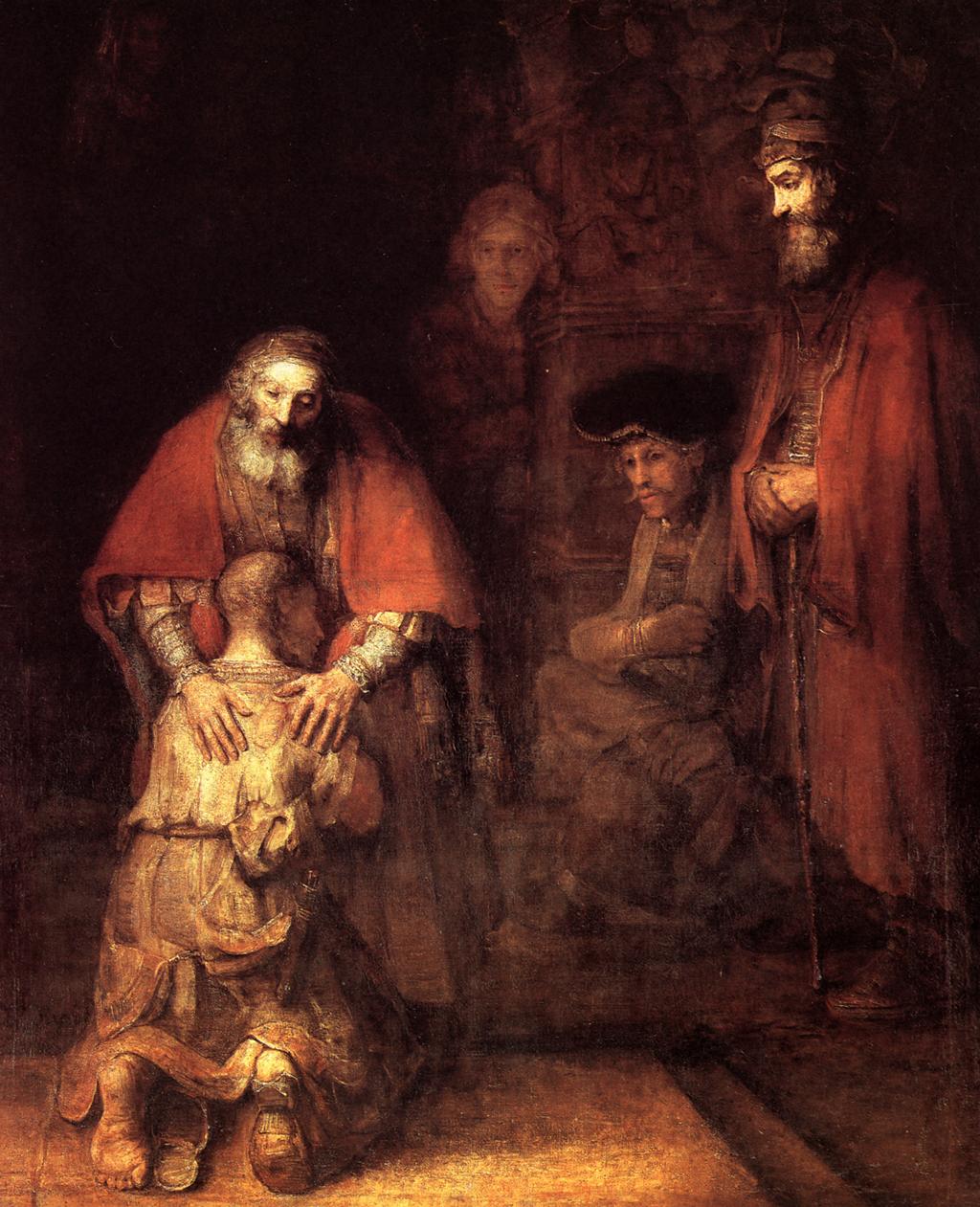
He tells them a story about a lost coin and the joy one has when they find it. He then goes on to tell similar stories about a lost lamb and a lost son.

We love to jump from the coin to the lamb and the son, but Jesus says something very interesting between those sections. He reminds the Pharisees of a central truth to the heart of God:

“there is more joy in heaven over one sinner who repents than over ninety-nine persons who need no repentance.” (lk15.7)

Did you catch that? He doesn’t say: “there’s more joy over one sinner who repents over ninety-nine that do not repent.” He focuses not on our action, but on our need.

It seems there is more joy in the heart of God over his creation needing forgiveness than if it had never needed forgiveness at all. God takes joy in forgiving and being gracious, but this implies there needs to be sin to graciously forgive.

Perhaps our sin can be good news to God.

Continue reading →

“I once dated someone that…” {on enduring love}


 I hate being able to say that line.

I was reminded of this when I was walking out of one of my neighborhood coffeeshops this past week and overheard someone begin a story like that just as I walked out of earshot. The person saying this–a woman–said this in an almost cheery way. My first thought was, “I never say that phrase in that tone.” At least for me, there is a sobriety and somberness that I feel whenever some sort of reference to an old relationship comes up.

So, like I said, I hate being able to say that. Yes, yes, I know: I’ve learned much in these experiences and my story is my story and I wouldn’t be who I am and where I am without them. I wouldn’t know God, suffering, people, their hearts, counseling, or relationships in any sort of depth or in a way that could help others had I not gone through these things.
Continue reading