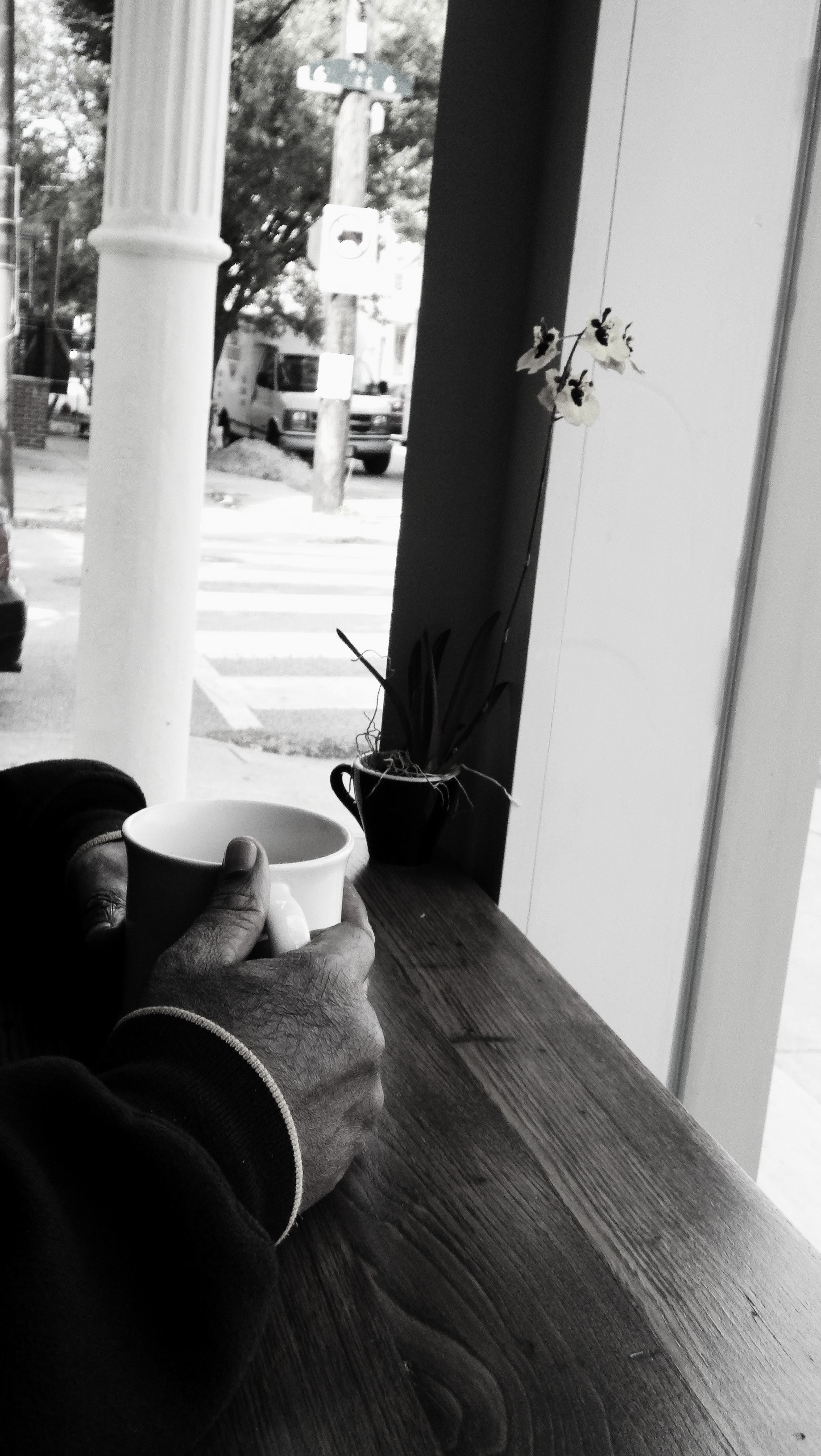
A Baby Step Against My Latent Racism (And Maybe Yours?)


client-coffee-hands-bwI know, I know. One of the worst types of writing there is in the world is a white person writing about their discovery that they are privileged and this is deeply engrained. I know. This post isn’t that, I promise. Just stay with me for a little bit.

Having worked in social work for a little over five years now, I’ve grown in my understanding that racism is about a whole lot more than individuals feeling an active, conscious dislike of someone just because of their race. It’s structural, cultural, political, economic, and systemic.

(Still, I’ve really missed this at times, and old habits and ways of thinking die hard. I’m really, really sorry for that.)

Recently, I had the honor to speak at one of my church’s ministries for those in homelessness. Afterward, I walked around saying hello to the almost-exclusively black crowd there. As I made eye contact with different people, I would offer a smile to them and give them as warm of a look as I could. I did really feel a genuine warmth and love for this group.

And yet, I started feeling this…thing…within me. As I gave my smiles away to the crowd, I realized that this was a problem. I was giving my smiles to them. Something in me felt as if I, as a privileged white male, was “serving” these people by “granting” or “bestowing” upon them affection. Does this make sense? Do you see the problem?
Continue reading

God, Social Justice, & Social Welfare | Job 5.15-16


But he saves the needy from the sword of their mouth,
from the hand of the mighty.
So the poor have hope,
and injustice shuts its mouth.
Job 5:15–16

I want to take this to all of my conservative friends. They are right that much of the life circumstances of the poor are often from the “sword” coming from their own mouth. But we also see here that their lot is not only attributed to “the sword of their mouth”, but also “the hand of the mighty”. And either way, regardless of the cause of their situation (and its persistence), the people of God are called to follow God’s lead in a commitment to pursue their freedom from these types of bondage–both within them and without. The good news is that this not only gives them hope, but it also shuts the mouth of injustice itself.

And this doesn’t seem to just be in individual ways, but even in systemic ones. Does it not follow, then, that Christian can (should?) in good conscience see their role as political beings as a means by which to accomplish these systemic ends? Perhaps it’s not just for individual Christians and Churches to “serve the poor”, but Christians utilizing political capital to mobilize government resources to follow God’s lead? Just asking.

See other Marginalia here. Read more about the series here.

Must-Read: The meteoric, costly & unprecedented rise of incarceration in America [LINK]


I promise, this is the most important thing you’ll read today. One of the many stunning facts: in this report:

“As a result of these trends, black men younger than 35 without a high school degree are now more likely in America to be imprisoned than employed in the labor market”

http://www.washingtonpost.com/blogs/wonkblog/wp/2014/04/30/the-meteoric-costly-and-unprecedented-rise-of-incarceration-in-america/

The Mission of Confession: the World needs the Church to Confess


yoder-farm-bw-snow-instagram

And the Lord said, “What have you done? Listen; your brother’s blood is crying out to me from the ground!
Genesis 4.10

I was taking another look at the verses I wrote about earlier this week, and was struck by a few more thoughts I wanted to share. As I said then, the passage is structured liturgically. The story of Cain and Abel follows the flow of liturgy that God’s people have used for the duration of their existence. (It’s usually something like this: Call to Worship–>Call to Confession–>Passing the Peace–>Word–>Sacrament–>Benediction)

I pointed out that the blood-soaked soil “crying out” was the first instance of lament in the Bible, and it appears in the “Call to Confession” section of this odd liturgy-story, and it shows us how the world bears the weight of our own sin. Looking at it again, though, I see it means much more than just that.

Continue reading

The Liturgy of Cain & the Tears of the Earth


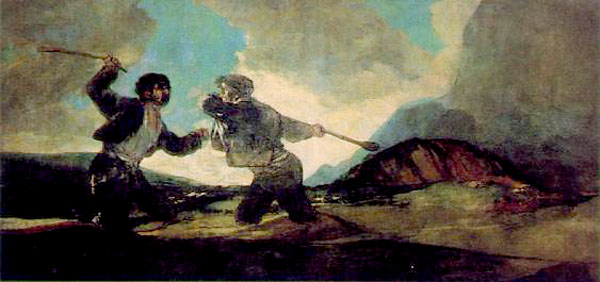
de Goya-fight with cudgels"Our Lent series this year is “The Weeping Word“, where we’re meditating on key places in the Scriptures where Lament, crying, tears, and weeping happen. Today, we look at the first instance of this in the Bible.

There is a particular rhythm that God’s people have always used in their liturgy. If you pay attention, you’ll see this rhythm pop up in lots of different places throughout the Christian Scriptures. My favorite unexpected place where this shows up is in the story of Cain and Abel.

Worship

The story opens with these two brothers coming to worship, answering an implied Call to Worship that issues from God. This is where the liturgical rhythm begins. God calls us to worship him, and we respond by offering him this worship to him.

But everyone comes to worship from different places, and not everyone’s heart and offering is pure.

And the Lord had regard for Abel and his offering, but for Cain and his offering he had no regard. So Cain was very angry, and his countenance fell. The Lord said to Cain, “Why are you angry, and why has your countenance fallen? If you do well, will you not be accepted? And if you do not do well, sin is lurking at the door; its desire is for you, but you must master it.”

Our worship gets twisted and directed towards the wrong things, and this is what we call sin. Offering worship wrongly and to the wrong things. Wrong worship produces wickedness within us.

“Cain said to his brother Abel, “Let us go out to the field.” And when they were in the field, Cain rose up against his brother Abel, and killed him.

Continue reading

The Privilege of Church-lessness: a Donald Miller post-script


donaldmiller-bw-2Donald Miller put up another post sort of talking more about his church attendance thoughts, this time talking about how the doctrine of the “priesthood of believers” means he does sacraments on his own and whenever he wants because God has given us all “agency” in this world to do that kind of stuff. He longs that pastors would empower their people to feel free to do these sort of things as well.

I made my thoughts clear last week about how wrong I think he is on this stuff (especially so with the sacraments. He even says he does baptisms for other people even though he himself has never been baptized). I won’t rehash that here. I did want to bring up one thing I noticed in his other posts that was more explicit in this last post. He writes:

To be fair, I’m wired a bit differently. I’m creative and I’m a risk taker. I realize a mistake I often make in my writing is assuming people are wired the way I’m wired. They aren’t. Most people are looking to “do it right” and play by the rules. This saves them from the trouble I often find myself in.

I can’t get past the the feeling here that Miller is saying that “most people” (read: “those that go to church”) at least primarily go to church because they want to “do it right” and “play by the rules”; that not going to church is an act of freedom, while those that still go are bound by something Miller thinks he has freed himself from. It’s not that he necessarily thinks he’s “better” than others, but I fear he makes a dangerous division within the Body of Christ between himself and “most people”.
Continue reading

Weekly Must-Reads {2.12.14} | Creation, Masturbation, & Communism


guy-newspaper-reading

Well, it’s been a good long while since I’ve posted a Reading List for you all to enjoy–too long, in fact. These were some of my favorite things I read this week. What were some of yours?

__________

In defense of creationists | The Week
Michael Brendan Dougherty

I referenced this at the end of my post yesterday, but this is a stunningly beautiful piece that wrestles with humanizing those that frustrate us the most in the Christian family. A must-read for sure.

Escaping the Prison of the Self: C.S. Lewis on Masturbation | First Things
Wesley Hill

Don’t overlook this piece too quickly. It is an incredibly powerful piece that speaks to how all of us–married, single, gay, straight–engage our sexuality in this world. It showed me how having celibate unmarried people in the world is necessary for healthy marriages, as well as how masturbation ruins even good friendships.

Continue reading

How to End Homelessness (this is what I do for a living) [VIDEO]


philly-rowhomes-neBelow, you will find a brief documentary that was done at my wonderful job, Pathways to Housing, to highlight the work that we do. It features many of the clients and coworkers I work with, and I had the chance to be present for a few of the film shoots. It is so beautiful and well-done. I’m so happy to share with you all a part of me that I don’t really talk about much in the rest of my life.

(Also, if you’ve lived in Philadelphia for a few years, you might recognize some folks in this video that you used to see on the street. But now, they have housing.)

I have spent most of my time in the field of social work pretty disengaged intellectually and emotionally. The older, more subtly coercive model of social work marked my previous companies, and the way the work was structured definitely played more to my weaknesses than my strengths. This left me in a constant state of feeling like I was terrible at my job. And so, it was just easier to not invest much of myself into it at all.

And so I’m only now learning how much of a difference it makes to love and adore your job. This is where I’m at now. I’m at an amazing company with amazing people doing amazing work that produces amazing results. I feel I’m good at my job, and I feel like I’m flourishing professionally, intellectually, and emotionally in it. There’s so much hope and excitement over my work. Here a couple of things I’ve recently heard clients say:

“When I was homeless, I felt like an animal, stuck in a concrete jungle. I only came out to eat and survive. Now that I have housing, though, I feel like a human again. It feels good to be human.”

“I haven’t been homeless my whole life, but I’ve always been a human being.”

And so, though much of my writing (and conversation) is centered around religious, political, and church things, I’m happy to share a little bit of how I spend 40+ of my hours each week. I hope you are encouraged and that you are offered a little bit of hope in the midst of our urban brokenness.

See the Official Guatemala Blogger’s Trip Photo Essay


lemonade-international-la-limonada-guatemala-logo

Though I love to take pictures, I didn’t take that many shots when I was in Guatemala with Lemonade International alongside the rest of the team of bloggers there. This was because we had a professional, dedicated photographer with us. I wrote about Scott Bennett and my thoughts on his work before the trip.

Each night as we writers sat down to blog, he’d show us the pictures he took for the day, and we’d fight over which ones we got to use in our posts. He took some amazing pictures, and shared many of the raw, untouched photos with us.

Well, now that he’s had time to dedicate more time and resources to focusing his creative eye on the pictures, he has now released his official photo documentary  from the trip, as part of the site Visual Peacemakers.

This photo essay beautifully captures the essence of our time and the people there as well as (if not better) than the words of us writers. I encourage you to spend some time with these pictures and let their weight and beauty affect you. Then, would you consider joining with Lemonade International in their continuing work in the La Limonada community of Guatemala?
Continue reading

From Above: What’s better than Tom’s shoes? I’ll show you.


otto-shoes-guatemala

WordPress’s Photo Challenge theme for this week is “From Above

I have been very proud, up to this point, of not having ever posted an Instagram picture of my feet. I don’t know where that trend came from, but I’ve bucked it for so long. Until yesterday.

That’s when I received the above shoes in the mail.

No, those are not Tom’s, the shoe company famous for its idea of giving away one pair of shoes to a child in a developing country for every pair that is purchased.

Instead, they are Otto’s.

Continue reading

Change: God is Real [Guatemala, Day 4] [photo sermon]


church-philly-bw-cross-market-east

For those new to  the blog: each week, I try and write a “photo sermon” based on the themes of WordPress’ Weekly Photo Challenge. This week’s theme is “Change“. I thought I’d take this chance to begin processing my time in Guatemala with Lemonade International.

* * * * *

I don’t struggle with the plurality of beliefs about God. If there is a God, I am quite confident (as arrogant as it may sound) that Christianity is the proper understanding of Him.

Rather, my struggle is with the sense that God is there at all. Many of the posts on this blog have dealt with my open acknowledgment of my “inner atheist” (as I’ve called him several times), and how I’ve tried to deal with him.

I don’t know that I need to expound on this too much, as I’m confident many of the readers here get this already, but just in case: this doubt is not intellectual; it is existential. I often miss that abstract sense and “feeling” of God’s existence. Continue reading

“Strong like Lemonade….and sweet.” [Guatemala, Day 3]


LemonadeInternationalB-25

Tonight is my last night in Guatemala. By the time this is posted and most of you read this, I will be on a plane (or, more likely, waiting in an airport), on my way back home.

The past couple of posts this week have been a little intense. The way I received and processed those first few days was definitely through the filter of brokenness and pain. And this was definitely appropriate. There were so many stories of poverty, violence, abuse, economic exploitation, injustice, paedophilia, and rape that I simply could not tell.

We have to see the need for hope before we can feel its presence.
Continue reading

As We Lay Dying [Guatemala, Day 2]


guatemala-cemetery-dump-cross

Since God’s children share in flesh and blood, Jesus himself likewise partook of the same things

Today began with a meeting of the microenterprise crew–the staff and several of the women who have benefited from small loans to help start small businesses in the area.

Lemonade International is insistent that this is merely a solution to help some of those that are gifted in this way. Lemonade International partakes of the flesh and blood of these people, weak as they are, and sees how they can serve them as individuals with individuals needs.

I leave encouraged. Continue reading

Chasing Grace [Guatemala, Day 1]


la-limonada-door-1

Last night. She sat in the corner of the bed-couch in the corner of the room. One leg tucked under the other, face still red from the laughter she has both given and received over dinner. In one turn, though, the tone becomes serious as a question rises above the crowd, asking for her story. The story that has brought us here.

A nurse to burn victims, Tita began making home visits to a severely injured gang member, not knowing that her feet were walking upon the holy ground of poverty, violence, and death.

She eventually realized that she was in the neighborhood of La Limonada, nestled in the valley of the shadow of Guatemala City, considered a trash heap by those outside; both the people and the items are considered its waste.

And yet she continued going. And serving. And loving. Continue reading

Why I’m in Guatemala: Meet Lemonade International


La-limonada-lemonade-international-guatemala

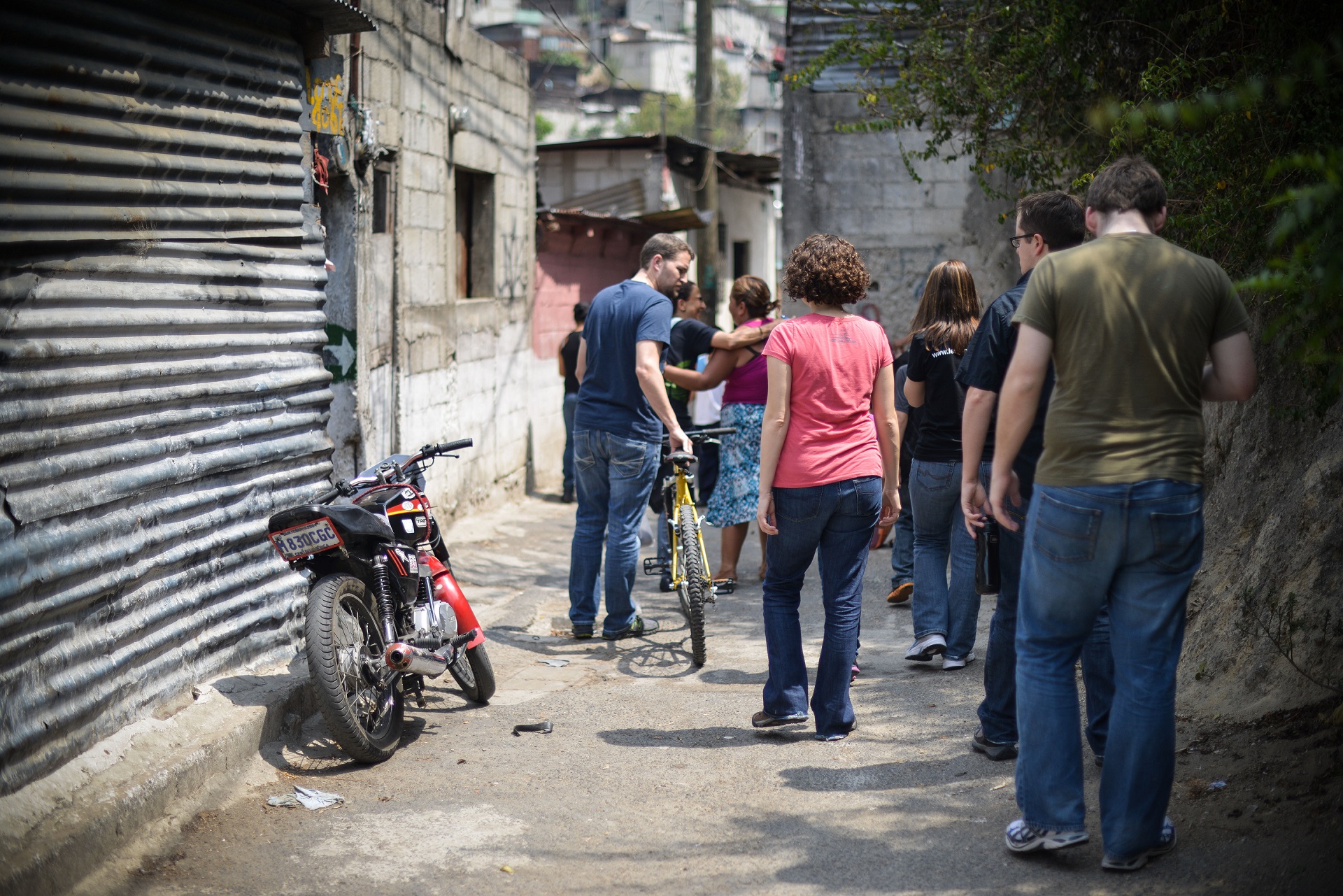
Yesterday, I touched down to begin my week in Guatemala on a blogger’s trip with Lemonade International, a non-profit development organization doing work in a particular called La Limonada.

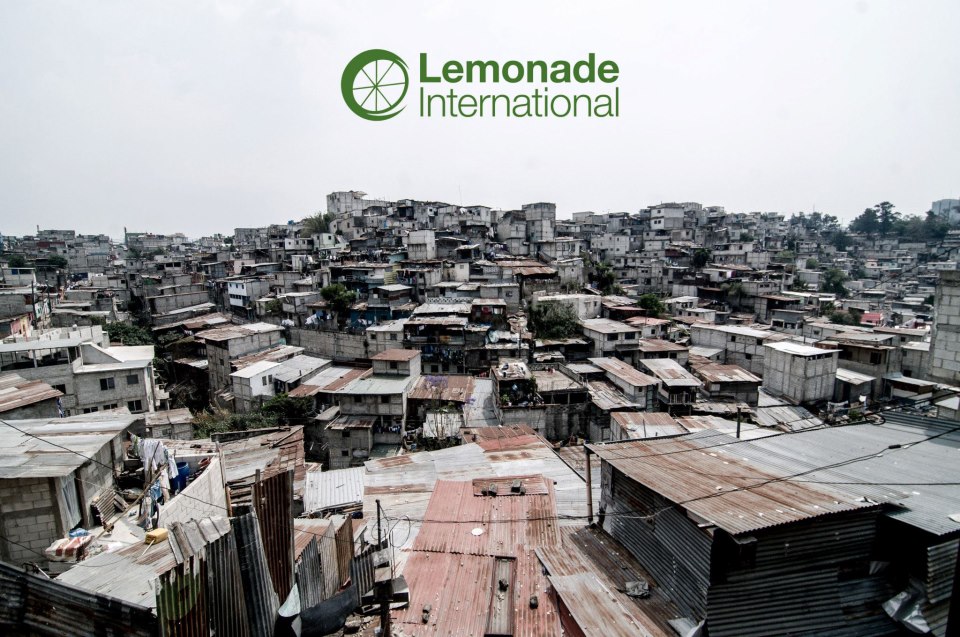
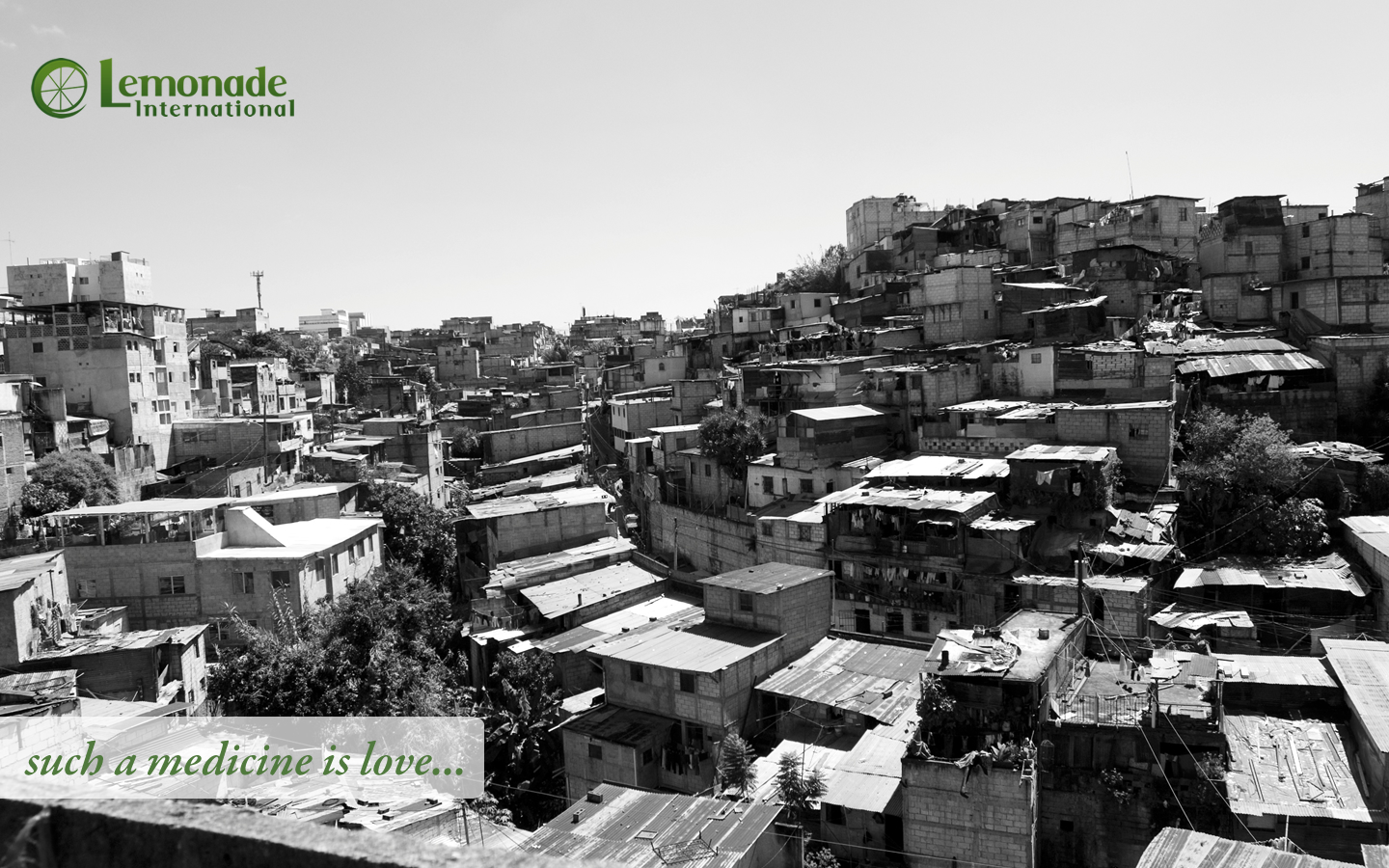
This community of La Limonada is the largest slum community in Central America. After the 36-year-long Guatemalan Civil War began (due to an American coup to overthrow their leader), many, many children and women lost their fathers and husbands to fighting, leaving this huge community of hurting people. Many, many of the refugees ended up in La Limonada.

This community is a 1-mile long stretch that is a half-mile wide and straddles a ravine. 60,000 to 100,000 people live there. It is considered a “red zone” by Guatemala, meaning that deliveries, police, and most outsiders in general don’t go in there. In the boundaries of the “zones” of Guatemala City, La Limonada is between two different zones–it doesn’t even have a place in the official boundaries of the city.

It’s literally been abandoned and marginalized by the very nation in which it resides.
Continue reading