Trusting in our theology vs. Trusting in Jesus {guest post}


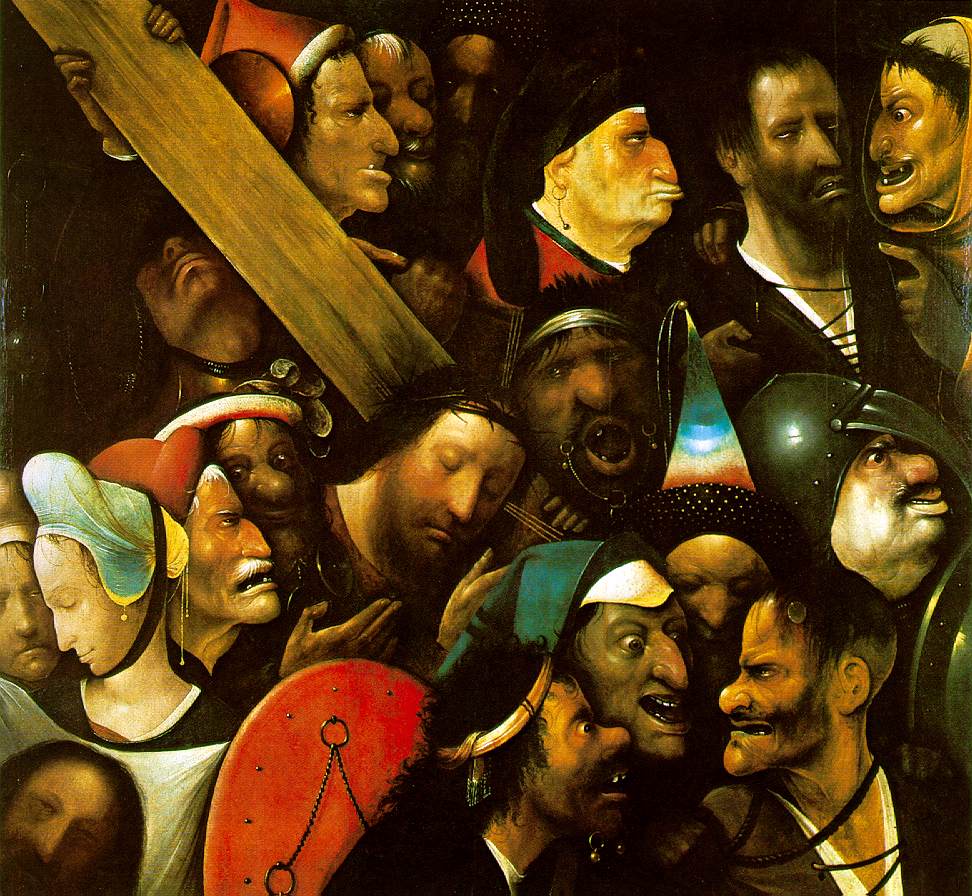
bosch-christ-carrying-the-crossToday’s post is by one of my oldest and best friends, Whit Wilson. He is currently in his first year in a master’s in counseling program at Biblical Seminary, just outside Philadelphia. I hope you get to hear more from him as he continues his education.

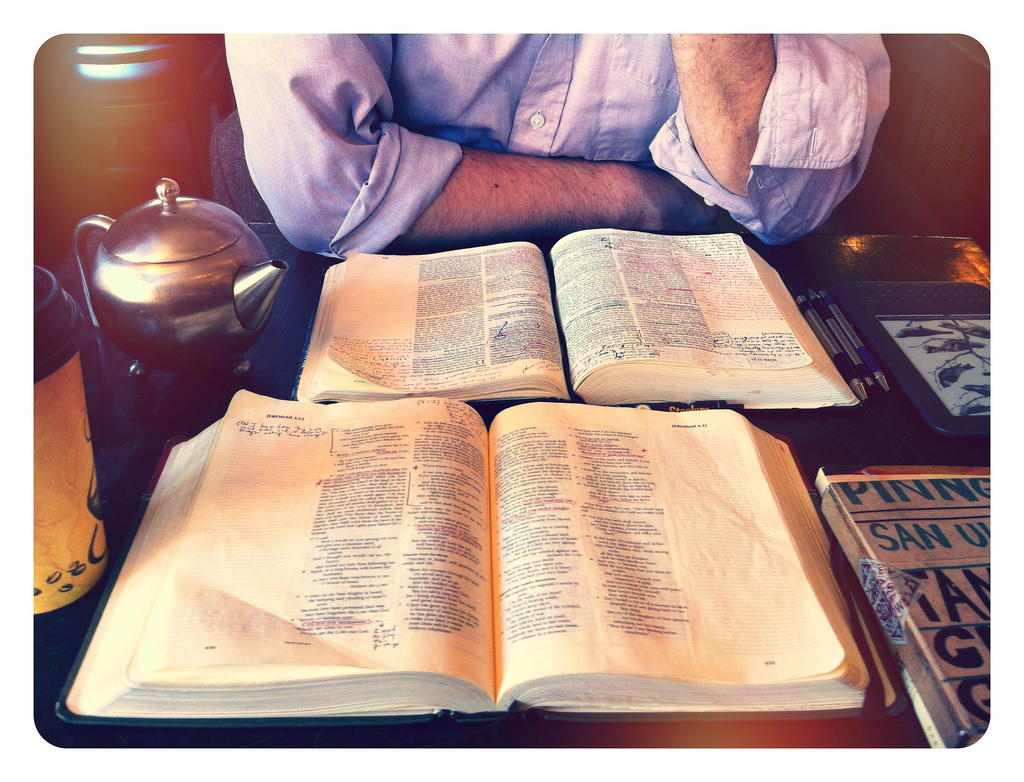
In the first year of my current program, three classes are required relating to the use of the Scriptures in counseling. Class 1 focuses on an overall interpretational approach to Scripture, class 2 is on the Old Testament, and class 3 is on the New Testament.

This semester my cohort and I are in the New Testament class with an eccentric and somewhat unorthodox professor who enjoys challenging various long-held theological assumptions and beliefs with the goal of helping us freshly think through these issues (everything from gender roles to homosexuality to the afterlife). I can’t say that I agree with him on everything (or most things for that matter), but I have enjoyed his fresh approach and the way he encourages us to think critically about how we use and interpret the Bible.
Continue reading

Ash Wednesday Egalitarianism, or “Why do female preachers suck?”


paul-schrott-ash-wednesday-bwYes, that’s me in that picture. I love that picture. It’s been used in a few posts since it was taken a couple of years ago. This isn’t (just) because of some weird sense of narcissism that loves to see my face on my blog posts. Rather, this picture is a very meaningful reminder of one of the most formative nights in my Christian life.

I said in the beginning of this series on Women in the Church that for most of my life, I had been one of the staunchest defenders of male-led church leadership. I knew all the arguments, I believed the caricatures of the other side, and importantly, I had experienced that women made terrible preachers of sermons.

Now remember: this was “pre-conversion” Paul that was thinking these things. But still, as I had visited friend’s churches, listened to audio, and seen female televangelists, it was hard not to notice that I had never heard a “good” sermon offered by a woman. It seemed clear to me, then, that this unique “anointing” and “gifting” to preach was reserved for men.

Don’t get me wrong. I had received incredible guidance, teaching, and wisdom from women. But these had been in the contexts of schools, lectures, books, blogs, campus ministers, podcasts, and the wider world–not church sermons.

Continue reading

Women & the Church: 2 things that began changing my mind


the journey

If it’s not obvious so far, I wanted to make something clear before we begin: these posts in this series on Women the Church are walking through the same path my own journey took get to where I am.

In my last post, there was a concern that a friend brought up that I didn’t get to talking about the biblical texts enough. Well, this is because both egalitarians and complementarians are looking at the same biblical texts. In my own shifts on this issue, the key changes were not “new” Bible verses I found.
Continue reading

Women & the Church: we’re ALMOST to the Bible, but first…


Well, we’ve gone through some of my own journey and some of the ways this discussion goes, but the real meat of this discussion centers around a few key biblical texts. Various refutes and refutations’ refutes can be found with any easy Google search. I don’t necessarily want to re-hash the more widely-publicized textual minutiae of the issue, though some of that will be necessary.

In this post, I could easily just list the three primary offending texts and then talk about how my view differs from others’ views. But those other people’s views don’t come out of thin air. They are based in many more (and, epistemologically more important) assumptions and bigger issues that usually never get touched on.

And so, as I continue this series, today I just want to touch on the ways people go about using the Bible in this, and then defending how I feel like we should use the Bible here. After this post, beginning next week, I promise we’ll start getting into actual biblical texts. But we need to do this first.

Because, as anyone that has studied theology begins to realize, everything comes back to your chosen interpretive method and filters–what’s usually referred to as a “hermeneutic”.

Continue reading

Christian egalitarians: authority-fearing, culture-worshipping, Bible-hating, puppy-kicking liberals (and other truths)


I hate pontificating.

Now, don’t get me wrong. Often, we can only hate most deeply that which we know most truly. Going through the annals of this very blog and my own conversations (especially during college), pontification makes frequent guest appearances.

By “pontification” I mean saying something authoritatively more for the sake of emphasizing the authority with which you say it than the point for which you did. It’s speaking to your base and those who agree with you, and it often says more about you than it does for the topic at hand. And generally, especially for issues where there is deep disagreement, it accomplishes absolutely nothing more than entrenching each side.

Continuing this series on gender relationships in the church, I don’t want to do that. I really don’t. But too often, this is the case.

Continue reading

On women leading & teaching stuff in churches: a story


Women, and their role in shaping society’s power structures, are at the fore-front of our nation’s consciousness and cultural discussion right now–Evangelical and otherwise.

Socio-politically: Maureen Dowd wrote about it this past week. Hanna Rosin wrote a book about this happening. Sandra Fluke got Rush Limbaugh into a tizzy and then spoke at the Democratic National Convention. Republican leaders, for some reason, could simply not stop talking about rape. Mitt Romney bragged about his binders full of them. Last week, Americans elected the largest number of females to Congress than it ever has.

In Evangelicalism: Rachel Held Evans brought attention to misogyny and patriarchalism at one of the bastions of the Neo-Reformed. Her new book, which already carried some controversy, has been criticized and patronized by conservative evangelicals, including one of the top female thinkers of that flock (Evans’ response, a scholar’s rebuttal). Concerning said bastion, after a rough search and count for the phrase “Complementarianism”, it seems that over half of the results appeared this year alone. At the time of this writing, a different bastion of the Neo-Reformed, upon visit to their site has as the featured video: “Complementarianism: Essential or Expendable?”. The Church of England just announced their new Archbishop of Canterbury, Justin Welby, and one of the main issues being talked about is his views on women’s ordination.

And so, I’m starting a series of posts (as I usually do) to offer up some of my thoughts on the Christianity side of this discussion–thoughts which I hope are helpful to us all. But first, I find it only fair to tell you all my journey into this and where I stand. I’ve hinted at it before, but a fuller treatment might be in order.

Continue reading

Prodigal, Let’s Go Home {pt.2} [GUEST POST]


Yesterday, I posted Austin’s first part to this final(?) reply to a series of discussions we’ve been having on the place of suffering and Evil in the world and the Nature of God. See that post for more background and links to the previous posts. I’ll have a few disparate thoughts about this whole exchange to share with all of you next week to close us out. Here, in this post, Austin sees right through much of my thinking to get at the root assumptions behind it. He also responds to five premises to my thinking that I laid out in my own last post.

_______________________

In all that I’ve written in all of these posts, it should be obvious that I believe stories to be of the utmost value. But I have to be clear that Story, if it is a metaphor for God, is but one metaphor among many. And I thank Paul for mentioning something along these lines. I’m not quite sure that I understand Paul’s notion of Story in enough detail. There are a few things that I do think need to be critiqued, if I have understood them correctly.
Continue reading

Prodigal, Let’s Go Home {pt.1} [GUEST POST]


This is Austin’s final response to a conversation we’ve been having on the blog concerning the Nature of God and Evil in the world–I know: light stuff, right? Here are the relavant links, if you’re interested: I wrote a post mentioning God taking death onto his own self; Austin took issue with this; I replied with a full-on development of the idea that God’s Nature is like an unfolding narrative–one in which there is Evil and Death; Austin responded by critiquing some of my Bible interpretation; I then wrote two posts, one responding to his response, and one telling of my fears that I’m wrong (where I also quote the James Joyce book Austin references below, as well as list out my 5 main premises for my thoughts he responds to here). This post is Austin’s final words on this (or part 1 of those words, at least). I’ll have a few concluding thoughts next week.

_______________________

Is then the whole of life only a contradiction; can love not explain it, but only make it more difficult? That thought he could not endure; he must seek a way out. There must be something wrong with his love.

—Kierkegaard, The Expectation of Faith

I, like Paul, am one who has been deeply affected by Joyce’s story. That story, A Portrait of the Artist as a Young Man, is really the central struggle of my life: Artist or Theologian? Much in that book, including the scene that Paul elaborated in his response, continues to resonate in the sometimes hollow-feeling caverns of my mind. “I shall never swing the thurible…the oils of ordination shall never touch my head.” Those words wounded me and have stayed with me like a scar, long after their initial cut. I, too, am often much afraid.

Like Jacob, I wrestle with God. Israel indeed.
Continue reading

Christians & the Art of Profanities in Art


This post is not a defense of Christians cursing in their everyday lives (I wrote that post a few years ago, though I think at some point I may need to revisit some of what I said there).

This post, rather, is about the merits of Christians creating (or doing) art in which there are profanities (this also has implications on other “worldly” things in art like sex and violence, but they won’t be my main focus today). I’m writing this to prepare some people for the stories I plan on writing for this blog. I talked yesterday about how I’m participating in StoryADay September (Update: I’m done), and hope to post an original, completed fiction story every weekday in September. Concerning that, I wrote:

I will not be doing “Christian art” or “prophetic art” or “evangelistic art” as I write and post here. I will simply be trying to create Beauty in words and character and story in a way that is original, interesting, and stirring.  My stories tend to be rooted in reality as much as possible, and so they will probably include “real” things like sadness, violence, sexuality, cursing, or other things that challenge many Christians’ sensibilities. Know this ahead of time.

Continue reading

Class 6: NT Letters, Revelation, & The Bible in Worship (WE’RE DONE!)


This week was the last week in the six-week Bible Survey class I’m been doing at my church.

It’s been an honor to do this class, and I feel like this last one went especially well. Others seemed to find it genuinely helpful.

We ended our time in this class by talking for a little bit about how we can use the Bible–and all the information we just gleaned these past weeks–in our own, personal, spiritual lives.

To conclude the class, this Saturday we will be going to University of Pennsylvania Museum of Archaeology and Anthropology. You really won’t want to miss this. I’ll be putting a post up on this tomorrow.

For those that have followed in class and online, thank you so much for doing so. It was such an honor to be able to do this class, and I can’t believe I was given the time and grace to do it.

I hope that these resources are found to be helpful to those that invest their time into them; and that they draw each of you into a greater knowledge, love, and desire for our God as He meets us in our Scriptures.

And lastly, over the next months, I will be compiling all of these notes, as well as other essays I’ve written on the Bible in the past and self-publishing a book in both print and electronic forms. If you think about it, please pray for me. I’m starting to see that self-publishing is a lot more costly and complicated than I had originally thought.

This Lecture Covers:

  • A chronological survey of the contents and background of Paul’s letters
  • Discussion of the contents and background of the other letters of the  New Testament
  • A talk about that crowd-favorite, Revelation. We talked about how it fits into the greater story of Scripture, how it’s often misread, how to properly read it, and it’s contents and background
  • How one should approach the Bible to build up their spiritual life
  • Practical methods people can employ to know God through the Scriptures

**Side Note: twice in the audio of this lecture, I refer to Galatians and James as books that may each have been the “first book of the Bible written”. I meant to say “New Testament”, not “Bible”. Sorry.**

Download: [Audio] [Notes] Continue reading

Class 5: Intertestament, pt. 2; NT Intro; Gospels; Acts


This week was the fifth week in the six-week Bible Survey class I’m doing at my church.

And wow, we covered a lot in the class. But still, this class probably had the greatest percentage of material I had prepared that was not actually touched on in the talk. This makes the manuscript that much more full of extra material.

Covering the topics above, I have 35 pages of material below.

You may have noticed that I never actually finished the materials I talked about last week. Well, entering into an entirely new testament of the Bible put me in a mindset that I just couldn’t go back to finish up writing about every one of the Prophets. I’ll do it someday. I promise.

Lastly, mark your calendars for August 25th, where we will be going to University of Pennsylvania Museum of Archaeology and Anthropology. You really won’t want to miss this. Details to come next week.

This Lecture Covers:

  • A discussion of the Political and Religious history between the Old and New Testaments
  • An Introduction to the Background of the New Testament
  • Background and context of Jesus, his upbringing, and his life
  • Survey of the content and background of the Gospels.
  • An extensive and in-depth look at the book of Acts.

Download: [Audio] [Notes] Continue reading

the order of the cosmos; the chaos of our souls [QUOTE]


We have been to the moon, we have charted the depths of the ocean and the heart of the atoms, but we have a fear of looking inward to ourselves because we sense that is where all the contradictions flow together.

Terence McKenna

This is why, I feel, that Order had to take on Disorder, and order it within Himself: so that all things, though still in chaos, might find their rest in Him.

Class 4: Prophets, pt. 2; Wisdom Books; & Intertestamental Period, pt. 1


This week was the fourth week in the six-week Bible Survey class I’m doing at my church.

We didn’t quite get to the Introduction of the New Testament like I had planned. This class was a bit different than other ones. Rather than focusing on a lot fo content of each book, this week was mostly a “tour” of these sections of the Bible and History, with some “highlights” along the way. The main point was to give people a bigger picture of these things to help them read the Bible themselves.

Just like last week, my notes are very incomplete. Most everything I said is in there, but I definitely want to provide a lot more in the notes than I say–and that hasn’t been filled in for most of the books so far. I will be spending the next two weeks filling that in. Once I’m done, I’ll let you all know. Thanks for your patience.

Lastly, I know I did a very poor job at telling the story of the Intertestamental history. I will try this again and condense it more in the next class. I will be much better prepared then.

This Lecture Covers:

  • Principles to keep in mind to help when reading the Prophetic books
  • Highlights from the Prophetic Books
  • Survey of the content and some of the background of the Wisdom Books of the Old Testament, with a special focus on the content of Job
  • Survey of the History between the Old Testament and New

Download: [Audio] [Notes] Continue reading

Class 3: The Historical Books & Prophets, pt. 1


This week was the third week in the six-week Bible Survey class I’m doing at my church.

And yes, we actually covered all the books of the Old Testament from Joshua to Nehemiah, did an intro to the Prophets, and had a brief discussion on the ethical problems with the “Old Testament God” in an hour.

You can find a small article I wrote on those atrocities and “ethical dilemmas” of the Old Testament attached to the end of the Notes below.

At the time of this writing, I’m not quite done with the notes, but I wanted to get the lecture audio to everyone. So, below you will find an incomplete version of the notes. I will upload a revised version later today (or tonight) with everything else filled in. I’ll update this post when that happens, as well as the Scribd doc below.

Also, as I posted about earlier today, as part of this class we will be going to the Dead Sea Scrolls exhibit this Saturday in Philadelphia. There are also discounted tickets available. Check the link, and I hope to see you there!

This Lecture Covers:

  • A discussion of the Deuteronomistic and Priestly Histories of the Old Testament
  • Survey of the content and background of the Historical Books of the Old Testament from Joshua to Nehemiah
  • An general introduction to the Prophets
  • A discussion concerning the atrocities committed in God’s name by the Israelites in Joshua and Numbers

Download: [Audio] [Notes] Continue reading