For Theology Nerds: a satirical dictionary (don’t miss this!) [casual fri]


Andrew Wilson, over at The Theology Forum has done us a great service my creating this “Brief A–Z of Theological Jargon”, and it is great. Everyone gets some elbows in the ribs. Check it out. You don’t want to miss it. Here are some of my favorites:

Complementarianism 
1. The belief that men and women are complementary.
2. The antiquated and repressive notion that wives should submit to their husbands, and women should not teach or have authority over men.
3. The attempt to disguise (2) by referring to (1).

Egalitarianism 
1. The belief that men and women are equal.
2. The modern and liberating notion that women can do everything a man can, sister, including wearing trousers, leading the home, leading churches and teaching and having authority over men.
3. The assumption that (1) necessitates (2).

Roman Catholicism
The belief that the church is universal, apart from Anglicans, Baptists, Methodists, Presbyterians, Pentecostals, and pretty much everyone except Roman Catholics.
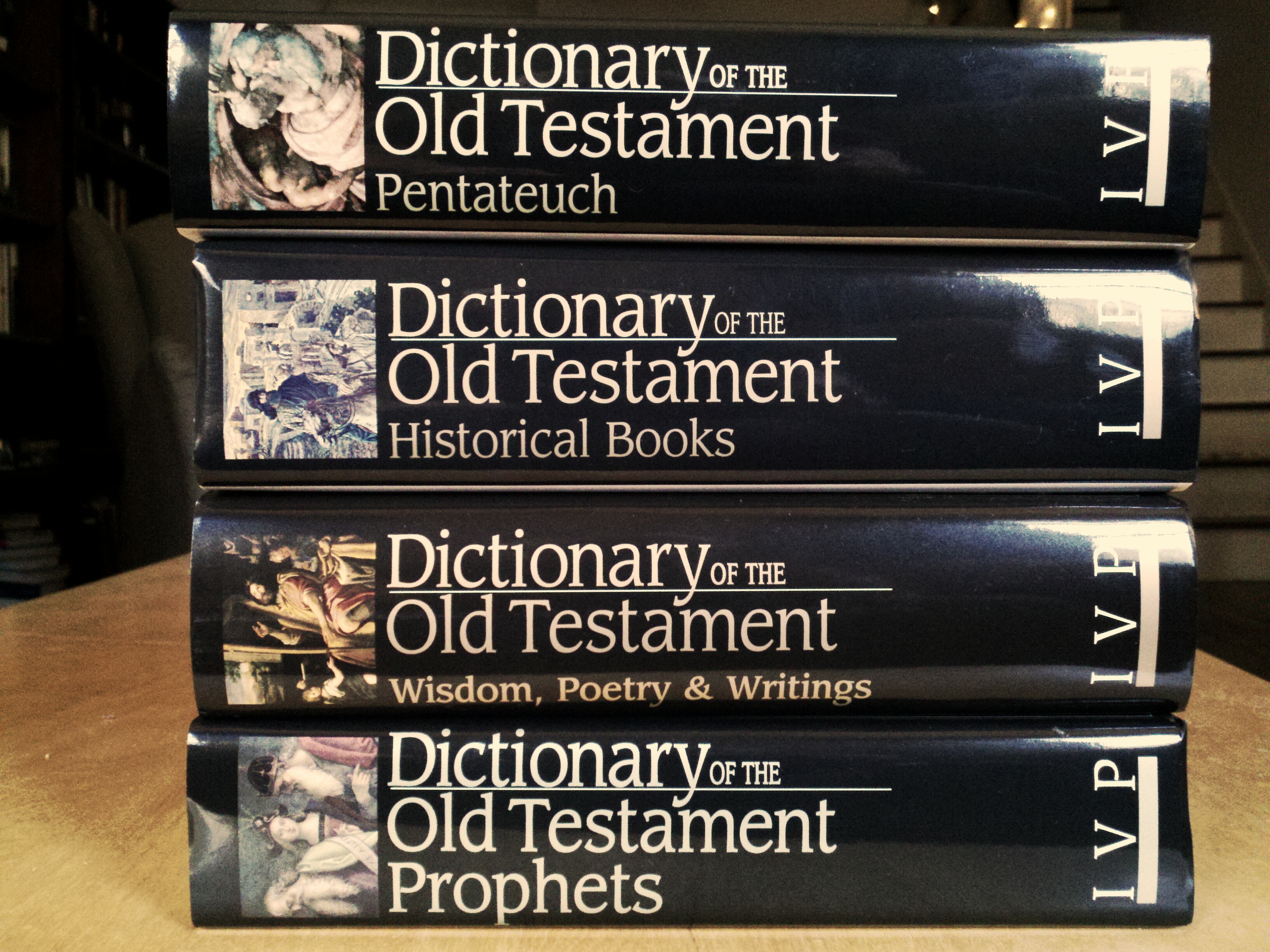
Class 2: The Rest of the Pentateuch (from Exodus to Deuteronomy)


This week was the second week in the six-week Bible Survey class I’m doing at my church. We went through the rest of the Pentateuch, or more specifically, Exodus through Deuteronomy. I was originally hoping to do all the historical books of the Bible, then I was just hoping to get through Joshua. I did neither. We just got to Deuteronomy. But that will be okay.

In the recording, there’s also a brief discussion we ended up having on the importance of historicty and the Old Testament–a topic that’s only going to more of issue as we move forward in this class. Be sure to listen and get in on the discussion! You can follow the class on the class page above.

**Remember, we have next week off, so the next lecture is on 7/22, with our first field trip on 7/28.**

This Lecture Covers:

  • Review of the foundational ideas of the Bible we talked about last week
  • A more refined response on my part on the doctrine of “Revelation”
  • Survey of the content, background, and application of Exodus through Deuteronomy
  • Discussion concerning the historicity of the Old Testament and its importance

Download: [Audio] [Notes] Continue reading

Class 1: The Bible & it’s Story, OT Intro, & Genesis


This past week, I started the Bible Survey Class I mentioned earlier today. It’s a six-week class going through a theology and history of the Bible and its contents, with an emphasis on these facts helping to build up the spiritual life of Christians. It also goes into a lot of the historical development and issues behind the Bible, so it could also be of interest to non-Christians. You can follow the class on the class page above.

This Lecture Covers:

  • What is the Bible?
  • What is Revelation?
  • The History of Israel
  • The History of the Old Testament
  • Genesis: Contents, Background, and relevance to Christians

Download: [Audio] [Notes]

[audio https://prodigalpaul.com/Bible%20Survey/Bible%20Survey%201-Intro-OT-Genesis.mp3]

Uh-oh (a Post-Script to my previous post on Moses)


image

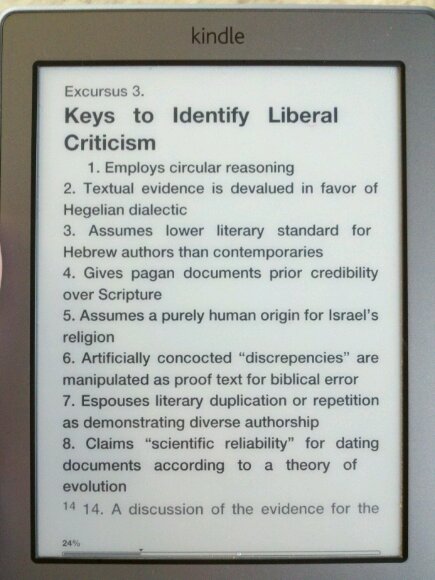
I just reached this part in the book I referenced in my post earlier on Mosaic authorship of the Pentateuch. This book was somewhat challenging the Documentary Hypothesis in my mind. I thought this book, in its recounting of Documentarians, was pretty fair and not too blindly fundamentalistic. But, now that he has turned from documenting the development of the field to laying out his own thoughts, I see I was wrong. Crap.

Posted from WordPress for Android on my Droid X

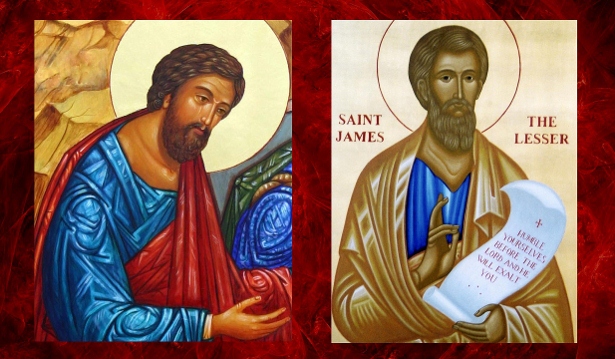
a prayer, a creed, and some history for the Holy Day of Apostles Philip & James


prayer.

Almighty God, who gave to your apostles Philip and James grace and strength to bear witness to the truth: Grant that we, being mindful of their victory of faith, may glorify in life and death the Name of our Lord Jesus Christ; who lives and reigns with you and the Holy Spirit, one God, now and for ever. Amen.
(from the Book of Common Prayer)

apostles’ creed.

I believe in God, the Father almighty, creator of heaven and earth.

I believe in Jesus Christ, his only son, our Lord.
He was conceived by the power of the Holy Spirit and born of the Virgin Mary.
He suffered under Pontius Pilate, was crucified, died, and was buried.
He descended to the dead. On the third day he rose again.
He ascended into heaven, and is seated at the right hand of the Father.
He will come again to judge the living and the dead.

I believe in the Holy Spirit, the holy catholic Church, the communion of saints, the forgiveness of sins, the resurrection of the body, and the life everlasting. Amen.
Continue reading

Some Help for the Journey & the Fall (Matt Chandler, Patrol Mag, & the iMonk)


In light of my post yesterday on Driscoll, I thought it would be appropriate to re-blog this post as well. It’s my own take on the future of evangelicalism and the possibilities available for those super-conservative pastors (like Driscoll and gang) who would otherwise be left behind the curve. It shows how Mat Chandler is an example of what Driscoll could be, if he were to hold, in m humble opinion, the right priorities in life and faith.

Paul Burkhart's avatarthe long way home

Melograna - fallingArt by Julia Meolgrana

If you have about an hour or so, I wanted to plug several articles and a sermon.  The sermon is from Matt Chandler.  It is a message he gave during a chapel service at Southern Baptist Theological Seminary.  There is both audio and video available.  The message is walking through Hebrews Chapter 11 and into 12 to show what the Christian life is meant to consist of.  This message blew me away.  It’s about 40 minutes long, and I was almost crying at work by the end.  It is a call to see the Fallenness of this world, the Beauty of its Savior, and our need to repent.

The main article I want to push now is an editorial from Patrol Magazine, a frequent subject and inspiration for posts on this blog.  These weekly editorials are becoming a highlight of my week.  They are…

View original post 830 more words

Why I “hate” Mark Driscoll so much (p.s. I don’t)


[This is a reply I wrote to an email asking me “why do you hate Mark Driscoll so much?” Driscoll is a prominent Evangelical pastor of Mars Hill Church in Seattle. He is controversial for his outspoken views on women, sex, homosexuals, men, church government, church culture, biblical interpretation, and theology. In other words, he can’t seem but to attract attention. In the particular circles I run in, his name and views often come up, so I felt it warranted some discussion.]

I “hate” Driscoll like Luther and Calvin hated the Catholic Church: maybe too much, but not without very, very good reason. So, in other words, I don’t actually hate him. I love him dearly, but my heart breaks over some things about how he conducts himself and his ministry.

The “New Reformed” need a new reformation, in my opinion, and my problem is mainly with individuals that happen to be put up as the main faces of this “movement”: Mark Driscoll, Justin Taylor, Carl Trueman, Al Mohler, and Douglas Wilson (at times). My problem is with these particular people, more than it is with the movement itself. They just happen to “define” much of that movement.

I will never discourage people to not listen to Matt Chandler (as I also said here), John Piper, Francis Chan, or even D.A. Carson, even though, theologically, I disagree with them on a lot (mainly on very secondary issues–even though they wouldn’t think they’re very secondary–and that’s another problem I have).

Continue reading

“15 Glances” at the Crucifix | Lent {11}


In the tradition of giving honor where it’s due, I’ve like to offer up the post that served a the inspiration for this whole series I’ve been doing on “The Lamb Eternally Slain” (which still isn’t done, even though it’s no longer Lent. It’ll be okay, though). The post is by Ben Myers, a thoughtful and thought-provoking theologian who draws from many theological corners for his thinking (much like myself). Here it is:

The Icon of the Cross: 15 Glances | Faith & Theology

Austin Ricketts, who wrote a couple of the posts in this series, sent to me this post of Ben’s nearly nine months ago. I still remember where I was as I read it and was caught up in it’s transcendent, sweeping reflections on the icon of the Cross. (Yes, we are referring here to “icon” as in the artistic representation of religious things for use in meditation or worship. Don’t worry, fellow Protestants, icons aren’t nearly as bad or idolatrous of a thing as we were raised being told.) I had the idea then for this blog series on my blog, but held on to it until Lent, thinking it most appropriate for this time (instead of Advent, haha).

In his post, Myers spends some time jotting down 15 reflections (or “glances”) on this icon. I have copied a few of my favorites below, but please check out the full post–there’s far more beauty in store for you.

Continue reading

Love: The Beginning & End of Divine Suffering | Lent {7b} [GUEST POST]


[Yesterday, my good friend Austin Ricketts kicked off this two-part post, part of my own Lent series, talking about how the “disposition” or “intention” of God is Love, firstly exercised towards God’s own Self in the Trinity. And this Love moves away from the lover toward the loved as it is given. Therefore….]

Update II: In an interesting twist, Austin has since recanted these comments, though I still entirely agree with these original ones. So….I’m going to keep them up, but with this comment.

death & distinction in God

The reason why death is an appropriate notion by which to understand this relation, then, is that death entails separation or distinction between two or more things that otherwise belong together.

Death is not an end of life, necessarily, but rather a limit and transition.  For humans, the Bible points out that there is a limit and transition that occurs at material death.  At that time, humans exist as a bodiless soul, at least until the final resurrection.

Death is a separation or distinction between two or more things that naturally belong together; in the case of humans—a body and a soul.

Considering God again, “separation” can’t really be the right word.  Distinction is more orthodox.  I mentioned earlier that it is incorrect to see a “lessening” of the Father’s being when transitioning to the Son.  That’s because there isn’t a lessening of being at all.  Quite the opposite.
Continue reading

Love: The Beginning & End of Divine Suffering | Lent {7a} [GUEST POST]


[Note: Today, we have another post by my good friend Austin Ricketts. I asked for him to write some of his thoughts on the current Lent series I’m doing and this is what he came up with. He’s written other things for my blogs before, and each time, I end up with my mind blown. This post certainly follows in that tradition. This piece is a bit longer (even after breaking it up into two posts), but I encourage you to read it in its entirety. Really, you will not be disappointed.]

Update: Part 2 of this post is up.

Update II: In an interesting twist, Austin has since recanted these comments, though I still entirely agree with these original ones. So….I’m going to keep them up, but with this comment.

When delving into the mystery of the Trinity, it is inevitable that one approaches Light too bright to see through, a mountain too high to climb, a cave too deep to spelunk.  That this is the case does not mean that one shouldn’t move into any light, climb as highly as she can, spelunk as deeply as he may.  That would be an unbiblical quietism, and unhealthy for the soul.  The soul needs exercise.

Here I attempt to exercise my soul by exorcizing the ancient demons called simplicity and impassiblity.  I pray that I do this while abiding in love.  But I do it nonetheless.
Continue reading

Lent-erpretative Musings {a theological interlude} {3a}


WARNING: this post gets into some theological discussion that, for most everyone out there, will be neither helpful nor interesting. And it’s way too long (which is why I’ve broken it up into two separate posts). Forgive me and please be gracious.

_____________

Anyone that follows the blog knows that I’m currently thinking through and writing a Lent series on the theological idea that Jesus was slain “before the foundations of the world” (Part 1, Part 2). Even though no one has said anything to this effect, I have felt like somewhat of a hypocrite. As I’ve been doing this, I’ve been haunted by a little voice reminding me that it seems like I’m employing many of the same techniques of interpretation and viewing the Bible that I’ve criticized in others before. This post is my attempt at reconciling this in my own head (in front of all of you).

As J.R.D. Kirk (and others) has often talked about, many of our theological disagreements in the church boil down to a simple question “what is the Bible?”. At the end of the day, we can argue about any number of things appealing to the Bible, but if we believe fundamentally different things about what the Bible is–and how it is that–we will never get anywhere.

And here’s where I’m getting into problems with this series: there are ways of viewing the Bible that, in others, I have criticized as reductionistic, simplistic, and frankly, abusive to the text itself, and I fear that I’m employing many of those same techniques in my thinking through this series. Here are two of those ways (two more later):
Continue reading

God, eternally-slain | Lent series {1:intro}


“…the Lamb who was slain before the foundation of the world.” –Revelation 13.8

“…you were ransomed…with the precious blood of Christ, like that of a lamb without blemish or spot, who was foreknown before the foundation of the world but was made manifest in the last time for your sake.” –1 Peter 1:18-20

“Jesus Christ and him crucified… a secret and hidden wisdom of God, which God decreed before the ages for our glory” –1 Corinthians 2:1,7

Today, I just want to briefly introduce the Lent series I’ll be doing (while listening to some free Lenten music!). It will be a meditation on an idea that only explicitly appears a few times in the Bible, but it’s truth echoes throughout the Scriptures. It’s mind-boggling in both its scope and implication, and yet gets so little treatment from mainstream Protestantism.

The idea? That Christ was slain in eternity past–before anything was; before any sin had been done by a single human.
Continue reading

Weekend Must-Reads {09.09.11} | church leadership retreat edition


This weekend I find myself with the honor, joy, and privilege of heading to a two-day long leadership retreat for my amazing church, liberti church: center city. In honor of this, I wanted to post articles by myself and others focusing on Church philosophy, community, and such. Some of them are a bit longer than usual, so feel free to grab a cup coffee before digging in. I hope you find these helpful and encouraging no matter where you find yourself in relation to the Christian Church. Have a great weekend. And be sure to stop by next week; I’m pretty excited for the stuff I’ve got planned for the blog then.

And Thus It Begins: liberti home meetings & my heart | the long way home

liberti: center city’s home meetings start next week. I wrote this blog post last year the day before I began leading a brand new group in the Rittenhouse neighborhood of Philadelphia. It’s wonderful to look back over the past year with these people and see that God has answered every prayer I had in this post. I’m still serving these amazing people as their leader, and I can’t wait to see them on Tuesday.

On the State of Contemporary Theology | Fors Clavigera – James K.A. Smith

Here, the author of one of my favorite books I’ve ever read, Desiring the Kingdom, offers his thoughts on the current state of theology, denominations, and theological education. A quick must-read for all.

Continue reading

Weekly Must-Reads {08.30.11}


Admittedly, this week’s Must-Reads are a bit random, but I think you all will enjoy them. There are no consistent themes this time around, just a little hodge-podge of humor, politics, theology, etc.. As usual, feel free to add your own links for myself and others to read in the comments section, as well as comment on these articles.

__________

Things Organized Neatly

This site is starting to make its rounds amongst our crew here in Philly. We’re obsessed, but it’s so worth it. I’ve taken some of the pictures and have them rotating as my laptop background to reflect my interest in bookswritingcoffee and breakfasthistorymy favorite board gamedressing nicelybeing coolfacial hair, and shaving.

God, Math & the Multiverse | the Veritas Forum

I haven’t actually watched/listened to it yet, but it should be pretty phenomenal. Thanks for the link, Colin.

Continue reading