Prayer & the Christian Life [a teaching I did at liberti church] {AUDIO}


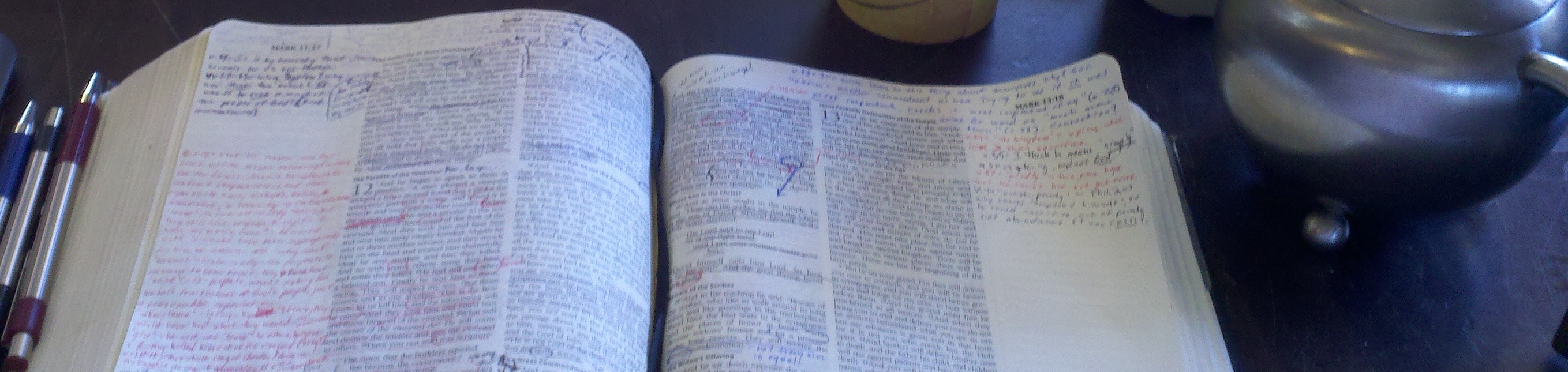
Last week, I posted the manuscript and audio from a teaching I did on the Bible from a series of seminars/discussions my church has been doing called “Summer Conversations“. This week I wanted to post the other teaching I did. This one was on the idea of Prayer. This was a really amazing thing to prepare for and the night went really well. Also, unlike last week, the audio turned out really clear.
Audio | download
Notes| download: pdf, Word, Kindle, ebook read: Google DocsScribd
Continue reading

The Nature & Narrative of the Bible [a teaching I did at liberti church] {AUDIO}


This summer, my church has been doing a series of seminars/discussions called “Summer Conversations“. I was asked to teach at two of them. I am providing the manuscript and audio from the first night here. The second one I’ll post next week. This first “seminar” was on The Nature & Narrative of Scripture. The night went really well. The audio, on the other hand, did not. This recording is really tough to listen to. Fortunately, for this particular talk, I wrote everything out in manuscript form and stuck pretty closely to it (especially Part 1). So, feel free to download/preview these in whatever way/format is most convenient for you and may they enhance your understanding of our God and how He has revealed himself.

[Also check out the other talk I gave at liberti on Prayer and the Christian Life (much better audio)]

Audio | download
Manuscript | download: pdf, Word, Kindle, ebook read: Google DocsScribd
Continue reading

Weekly Must-Reads {05.24.11} | theology & politics edition


As promised, this week’s weekly must-reads tend towards the theological. We do have some political “leftovers” from last week that you all should find interesting. So, as usual, read to your heart’s content and please comment and let me know what you think about these! 

__________

More Like Prayer 5 | Jesus Creed

Fascinating and oh-so-brief introduction to a whole new way of looking at the gospel, politics, and the church. Wow.

Mercifully Forsaken | Christianity Today | A Magazine of Evangelical Conviction

Wow. Simply wow. Such a beautiful and powerful piece of writing on the mercy of God in his forsaking of us. Did not expect this from Christianity Today (front page, no less!).

Continue reading

The Scandal of Holy Week {v}: conclusion & benediction


As I said in Part 1, this series was originally given as a sermon to a group of prisoners attending my church’s prison ministry. This is the conclusion and benediction I gave them at the end. This post picks up right after the end of Part 4, where we listed out practical ways that Jesus prepares his disciples for them forsaking him and the ways he reveals himself to already-wayward disciples, thereby calling them back to Him. I encourage you to read the other parts of this message: Part 1: the forsaking of GodPart 2: the Grace of JesusPart 3: the limits of Grace?Part 4: the restoration of disciplesPart 5: conclusion & benediction]

Conclusion

These are not guarantees: all these different practical things I’ve mentioned are not the “magic formula” for how to restore your faith if you feel you’ve lost or forsaken it. Sometimes none of these things are necessary; the Centurion did not seem to have any of these things. Sometimes, you’ll do all of these things for years–decades, even–and nothing will change.

All I can tell you is that He is worth it. The God of Holy Week is a God worthy to be wrestled against for years and years and years and years until he finally meets you, even if it is for the briefest of moments before slipping away back into frustration, doubt and sin.
Continue reading

The Scandal of Holy Week {iv}: the restoration of disciples


[Update: this series has been completed. Part 1: the forsaking of GodPart 2: the Grace of JesusPart 3: the limits of Grace?Part 4: the restoration of disciplesPart 5: conclusion & benediction]
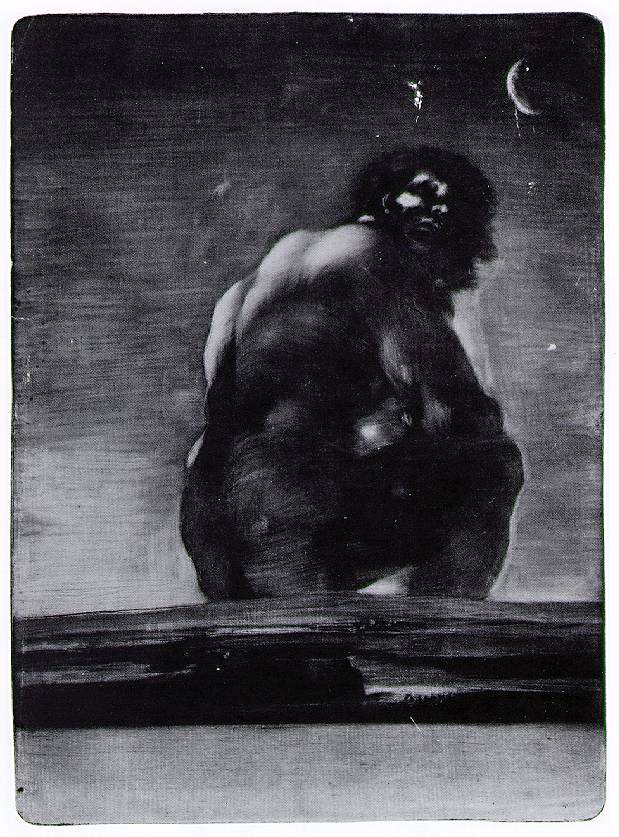
In Part 1 of this series, we saw that we will all forsake Jesus many times in our lives, just as the disciples did on the Thursday night of Holy Week. In Part 2, we saw that in light of this abandonment, Jesus responds to those that forsake him by being unconditionally and unlimitedly gracious towards them in their forsaking of him. In Part 3, we looked at just how scandalous and beautiful this grace is and how and why we often try and limit it. Today, we give practical ways that we can prepare ourselves to come back to our Lord, even after we have forsaken him in our own “Thursday” seasons.

As we saw in Part 1, Holy Week was a week-long process in which everything–creation, creatures, and God Himself–all forsook Jesus, turning their back on him. We’ve said several times now that true disciples of Jesus are not those that never forsake Jesus, but they are those that after forsaking him, turn back. And so, to help us see how we do this, let’s look at the first person in this story to turn back.

Continue reading

The Scandal of Holy Week {iii}: the limits of Grace?


[Update: this series has been completed. Part 1: the forsaking of GodPart 2: the Grace of JesusPart 3: the limits of Grace?Part 4: the restoration of disciplesPart 5: conclusion & benediction]
In part 1 of this series, we looked at the original Holy Week and saw how everything and everyone has and will forsake Jesus. We said that “Thursday”–the day when the disciples forsook Jesus–will come for every disciple. In part 2, we saw that Jesus, as he relates to those that have forsaken him and those that will do so, responds and relates to them on the basis of pure, unfettered grace. Today we look at why this matters and what it looks like in our lives.

We’ve seen that every disciple will forsake Jesus, but the true disciples of God are the ones that come back after they have left him. And further, it is my contention that what brings people back is not fear, not Law, but the unbounded and free Grace of Jesus.

But let’s be honest–this process can be a long one. It can be months, years, or even decades before these true disciples of God return to Him. People can go very far down the path of sin’s temptations, and still be Christians. In fact, any of us can go very far down the path of sin’s temptations and still absolutely be beloved, regenerated, Christian children of God.
Continue reading

The Scandal of Holy Week {ii}: the Grace of Jesus


[Update: this series has been completed. Part 1: the forsaking of GodPart 2: the Grace of JesusPart 3: the limits of Grace?Part 4: the restoration of disciplesPart 5: conclusion & benediction]
Last week, we saw how Holy Week, kicked off by Jesus’ “Triumphal Entry” into Jerusalem, was merely the beginning of a series of events that led to everything around Jesus forsaking him. We went on to ask how disciples of Christ might avoid their own version of “Thursday”–the night the disciples betrayed and forsook Jesus. The reality is, though, that every disciple of Christ has, does, and will forsake Jesus many times over. And so, the proper question to bring to Holy Week is not “how might I keep myself from forsaking Jesus”, but rather “how does Jesus respond to those–including myself–that will end up forsaking him?” I went on to say

“The answer I want to fight for? Jesus responds to all of our forsaking him with pure, unadulterated, offensive, and scandalous Grace. My main point in this message is this: A disciple is not someone who never forsakes Jesus; it’s someone who, after forsaking him, comes back.

Today we will look back at Holy Week to see the ways that Jesus demonstrates this scandalous Grace to those that have and will turn their backs and abandon him.
Continue reading

The Scandal of Holy Week {i}: the forsaking of God


[Update: this series has been completed. Part 1: the forsaking of GodPart 2: the Grace of JesusPart 3: the limits of Grace?Part 4: the restoration of disciplesPart 5: conclusion & benediction]
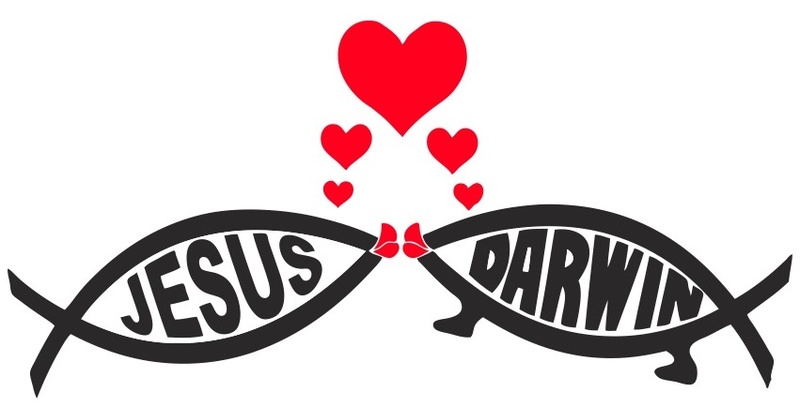
This Palm Sunday I had the honor to preach at the prison ministry that my church does. It was amazing. I love those guys so much. My message was scrawled in my journal in outline form, so this will be only a rough and condensed manuscript of what was said. I hope you find it beneficial as you navigate these murky waters of life and spirituality.

“As they approached Jerusalem and came to Bethphage and Bethany at the Mount of Olives, Jesus sent two of his disciples… When they brought the donkey to Jesus and threw their cloaks over it, he sat on it. Many people spread their cloaks on the road, while others spread branches they had cut in the fields. Those who went ahead and those who followed shouted, ‘Hosanna! Blessed is he who comes in the name of the Lord! Blessed is the coming kingdom of our father David! Hosanna in the highest heaven!’” —Mark 11:1,7-9

This event is traditionally called the “Triumphal Entry”. It is when Jesus enters into the city of his people in such a way that confirms the suspicions of those around him: he is Messiah; he is King; he is Lord. But we also see that this Palm Sunday begins a week-long process of everything around Jesus forsaking and turning their backs on him, making this a very strange “triumphal” entry.

Continue reading

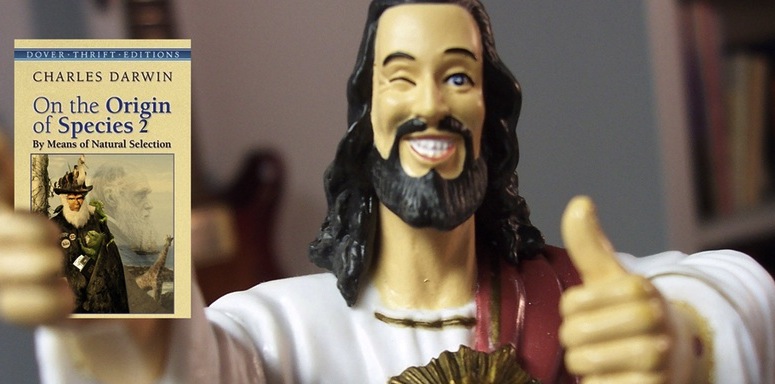
On Darwinism vs. Design (a response to the Richmond Center for Christian Study) {pt.2}


Yesterday, I posted the first part of a reply to Chris Daniel, Executive Director of the Richmond Center for Christian Study, who wrote an article titled The Origin of Life: Darwinism vs. Design. Here is part 2.

Chris, you are right to attack Darwinism as a philosophy or worldview; just like it is also appropriate to attack humanism, hedonism, racism, sexism, bibliolatry, and “systematic theology-ism”. Any system that builds its existence and definition around a created thing rather than the Person of God Himself ought to be attacked and shown to be the inadequate system it is.

But just because those “isms” above shouldn’t define our worldviews, it does’t mean that there isn’t truth and goodness even in the the things they are tempted to define themselves by: humanity has worth, pleasure is good, races are beautiful, genders are different, the Bible is the primary revelation of God (we are not a people of the Book, but a people of the Word that is testified to by the Book), and systematic theology can be helpful as we interpret and apply the Scriptures.

And Darwinism as a philosophy is an improper elevation of a seemingly true process.

Continue reading

On Darwinism vs. Design (a response to the Richmond Center for Christian Study) {pt.1}


[Update: Part 2 has been posted]

Chris Daniel, Executive Director of the Richmond Center for Christian Study posted this article titled The Origin of Life: Darwinism vs. Design. In it, he unpacks why he thinks agreement with evolution is an incorrect posture for Christians and how “Intelligent Design” is the superior and clearer stance to take.

I consider Chris a friend. He led the Reformed University Fellowship at VCU when I went there and our campus ministries worked together on several occasions. He is a great man of God, a brilliant teacher, and an articulate apologist for the Christian faith.

Nevertheless, my feelings on this topic are no secret, and my heart has broken frequently over these discussion (and has become angered some times). As I started writing out a little comment on the post on their site, it turned into a full-fledged response, which I’ll break up into two posts today and tomorrow. Please refer to his article for any references I make that seem to have no context. Here’s part 1 of my response. Part 2 is here: Continue reading

Pain, Sickness, & the Goodness of God (by Jen Justice) [Guest Post]


Okay, for those that haven’t been keeping up with this. I wrote a post about meeting God in an illness I was facing. Steve Wolf left a comment taking issue with joyfully finding this sickness within God’s Providence. I wrote a response to him. He wrote a response to me. I then sent my final reply to Him. He sent his final reply. Now, an old friend of mine, Jen Justice, who is both one of the most faithful women of God I know and someone who has faced many medical issues in her life wishes to give a few words to Steve. I knew her in Richmond and she now lives in Atlanta with her husband Josh. She is a woman full of both wisdom and grace and this response from her to Steve exemplifies this well. Also be sure to read her article on humility she wrote for my old web magazine Reform & Revive. Here’s Jen:

Steve-

First, I just want to let you know that no one is mad at you for healing people. I also believe in the gift of healing and praise God whenever He heals someone. I continue to ask Him to heal me, and I’m grateful whenever a brother or sister prays for my healing, as well.

Continue reading

Weekly Must-Reads {03.07.11}


This week’s weekly must-reads contain some links to articles I was reading a couple of weeks ago but didn’t end up doing one of these reading lists in order to share. They include articles on singleness, economics, foreign policy and art. I hope you find these intriguing, thought provoking, and discussion-causing. As usual, feel free to add your own links for myself and others to read in the comments section, as well as comment on these articles.


Tree of Failure – NYTimes.com

I know this is a few weeks old, but it’s amazing and I wasn’t able to post it when it came out. It’s a beautiful, substantive article on the necessity of weakness, sin, and failure in our search for civility and grace.  Anybody know the religious leanings of David Brooks?

Continue reading

A Theology of Wikileaks: is there a Christianly way to view all this? {2}


 [Part 2 of 2] In my previous post, I referenced a series of articles a wrote a couple years ago concerning the relationships between the Church and State.  I talked about one article where I pointed out that “the Apostle Paul advocates for Christians to support the government and seek to change individuals rather than institutions by being the Church to the broken world around them (which will in turn shape institutions)”.  I then showed how Paul stayed politically neutral most of the time, except when the government was acting in a way that kept him from living as a faithful member of the Church of Christ.

I then concluded that “political views are generally theologically-neutral and are up to the individual Christian’s conscience except when the State hinders the Church from freely being the Church to the world around it. At that point Christians are called, I feel, to engage in whatever means necessary to remain independent and able to do that which they are called to do: preach, gather, serve, give, and love.” Continue reading

A Theology of Wikileaks: is there a Christianly way to view all this? {1}


Update: Part 2 of this article is up.

A while ago, I wrote up a defense of Wikileaks, cataloguing several of the prevailing myths surrounding this event.  I have been in nearly unqualified support of Wikileaks, but it has given me much pause to hear the nearly unified voice with which people in America have been opposing them.

But in the end, I can’t help but feel that I and the little corner of pro-Wikileaks columnists and writers around me are standing on the outside of a greater narrative of secrecy, propaganda, and historical analogy that is bewildering to see the American people fall for in such droves.

For the first time in my life, I’m actually scared of my government.

But, there’s the added reality that I am a Christian; a source of meaning and interpretation far deeper than politics, but equally impacting on my thought as a political being.  And so, I’m forced to ask myself (and the reader) how, if at all, should my theology impact how I view this issue I have become so passionate about?
Continue reading

Reform & Revive: officially shutting down


Rest in peace, Reform & Revive.

As of today, the online magazine I used to run, Reform & Revive, is no more.  It was started in a coffee shop in Richmond, and now it is ending in a coffee shop in Philly (forgive the melodramatic picture attached to this post).

For those that just met me, just started following this blog, or just started reading my stuff, you probably have never really heard much about this little attempt at an online magazine I had.  That’s because it’s last original article was posted almost nine months ago.

The original idea of the site was to gather a diverse group of writers and guest contributors who would then write about the “intersection of theology and life”.  This could find its expression in art, poetry, prose, meditationshort fiction, or more typical non-fiction theological fare.  But in the end, I wanted it to be the expression of hearts whose affections had been inflamed by the deeper truths of who God is.

And I think we greatly succeeded in this.  The vast majority of writings on the site certainly constituted this calibre of expression.  It was exciting.  But then people, due to life and such, stopped writing.  Eventually, in my desperation to get somebody–anybody–to consistently write, I let the quality of the posts at times slip.  The site’s readership, for one reason another (probably because it had the word “Reform” in it) began to appeal and primarily lead towards the Mark Driscoll/John Piper groupies and wanna-be’s; the “TR’s” as we would call them at my seminary (the “Totally Reformed!”).  It just wasn’t fun and fruitful anymore when the hyper-Calvinistic theology police came to town, and it all went downhill from there, until no one was writing anything, and the only other person that had written as much as I had on the site deleted all of her stuff off the site, on the off-chance that someone would find her name attached to it someday.
Continue reading