Bible Survey Class // liberti church center city


Update: I have the first lecture up.

For those interested, I have been given the opportunity to serve at my church this summer by teaching a six-week long Survey of the Bible class. It’s been super fun getting back into all my old seminary books (as well as getting some new ones).

In the class, we’ll go through a theology of the Bible, the history and background of the Bible, as well as go through each of the books of the Bible. In the last class, we’ll talk about how to use this knowledge and the Bible itself to cultivate an actual life of worship and  devotion. We will also taking two “field trips”. One to see the Dead Sea Scrolls at the Franklin Institute, the other to the Penn Museum of Archaeology and Anthropology.

We’ll be recording the lectures, and I’ll post both the audio and my manuscripts on this blog for your edification (hopefully). So feel free to take a look at the official page above for the Bible Survey Class.

Be sure to question, counter, encourage, and ask me on the posts for each of these posts.

Also, if you’re in Philly on Sundays through July and August, please feel free to stop by. We”ll be doing these classes at liberti church: center city from am to pm, after church, at 17th and Sansom in center city Philadelphia.

The first class audio and manuscript will be going up later today so check back!
Girls: my new obsession


The TV show. The TV show. Rest assured, I mean HBO’s new dramedy, produced by Judd Apatow, about four twentysomething girls living in New York City. It just wrapped up its first season, and it was amazing.

Why was it amazing? Well, a few reasons. The writing is wonderful–it’s funny, thought-provoking, real, and profound. The characters are distinct and well-acted.

The show casts outright indictments against many of the marks of current twentysomething culture, revealing our narcissism, obsession with irony, and incessant naval-gazing; our infatuation with “becoming” and “being” more than “doing”; it betrays how our
Facebook culture has reduced our self-identity to the level and substance of a “Profile”, and the way we present ourselves and relate to others appears more like a well-manicured “Wall” (or rather, “Timeline”) rather than real, human interaction and messiness.

Further, the show shows genuinely messy and hard friendships and relationships. Granted, other media does this, but Girls is the best I’ve seen at showing how these difficulties are not “hiccups” or “things to overcome and get past”, but instead are the very things that challenge, shape, grow, and mature the characters and ultimately help them overcome those above-mentioned shortcomings of contemporary culture. It’s only by our messiness colliding and us holding on (as opposed to discarding) one another that we will become who we are trying to be.

Yes, the show takes us into the most intimate moments of characters’ lives–moments that are at times beyond our normal sensibilities of sexuality, relational “health”, and humor–and so many people (especially Christians, the primary readership of this site) will want to think long and consider deeply before embarking on this show.

Girls is indeed unflinching in its voyeurism and dysfunction, but it’s precisely that rawness and nakedness that ultimately turns the accusing finger towards us, exposing the ultimate delusion of our generation: that we’ve made emperors of us all, but emperors, in the end, with no clothes–more naked, awkward, fearful, and in need of covering than anyone that shows up on that screen.

But it’s also a comedy, so in the end, it reminds us not to take ourselves, the show, or even reviews of the show too seriously.

It’s so good.

Philly Beer Lovers: get very, very excited.


From the article “Pennsylvania debates new beer flow” in today’s Philadelphia Inquirer:

States have adopted various strategies in the 79-year effort to prevent pre-Prohibition alcohol abuses, but Pennsylvania has been particularly idiosyncratic, said Eric Shepard, longtime editor of Beer Marketer’s Insights in Suffern, N.Y.

“Pennsylvania is unique,” he said. “You are by far the weirdest state.”

The bill under consideration, introduced by state House Majority Leader Mike Turzai (R., Allegheny) with Gov. Corbett’s backing, is just the latest effort to get the state out of the liquor business. But Turzai’s new twist would permit beer distributors and other businesses that could afford a license to sell beer in any quantity, along with wine and liquor.

In short, one-stop shopping for alcohol buyers, a la New Jersey.

Read more…

Also, be sure to contact your local representative to support this bill.

Posted from WordPress for Android on my Droid X

Uh-oh (a Post-Script to my previous post on Moses)


image

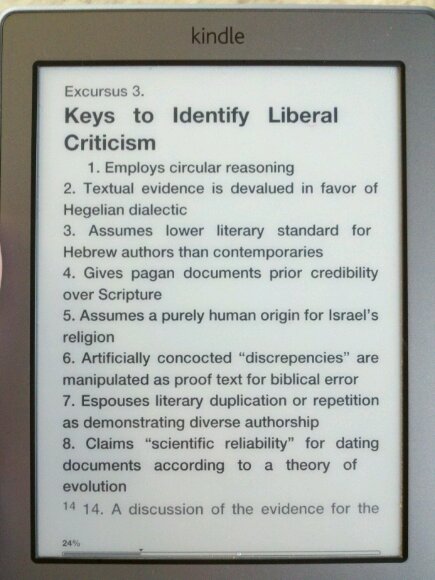
I just reached this part in the book I referenced in my post earlier on Mosaic authorship of the Pentateuch. This book was somewhat challenging the Documentary Hypothesis in my mind. I thought this book, in its recounting of Documentarians, was pretty fair and not too blindly fundamentalistic. But, now that he has turned from documenting the development of the field to laying out his own thoughts, I see I was wrong. Crap.

Posted from WordPress for Android on my Droid X

The Pentateuch: Moses vs. the Documentary Hypothesis [OPEN MIC]


imageUpdate: I realized I was wrong.

Okay, for many of you, this will seem silly and inconsequential; others will find it blasphemous. But bear with me for this quick post.

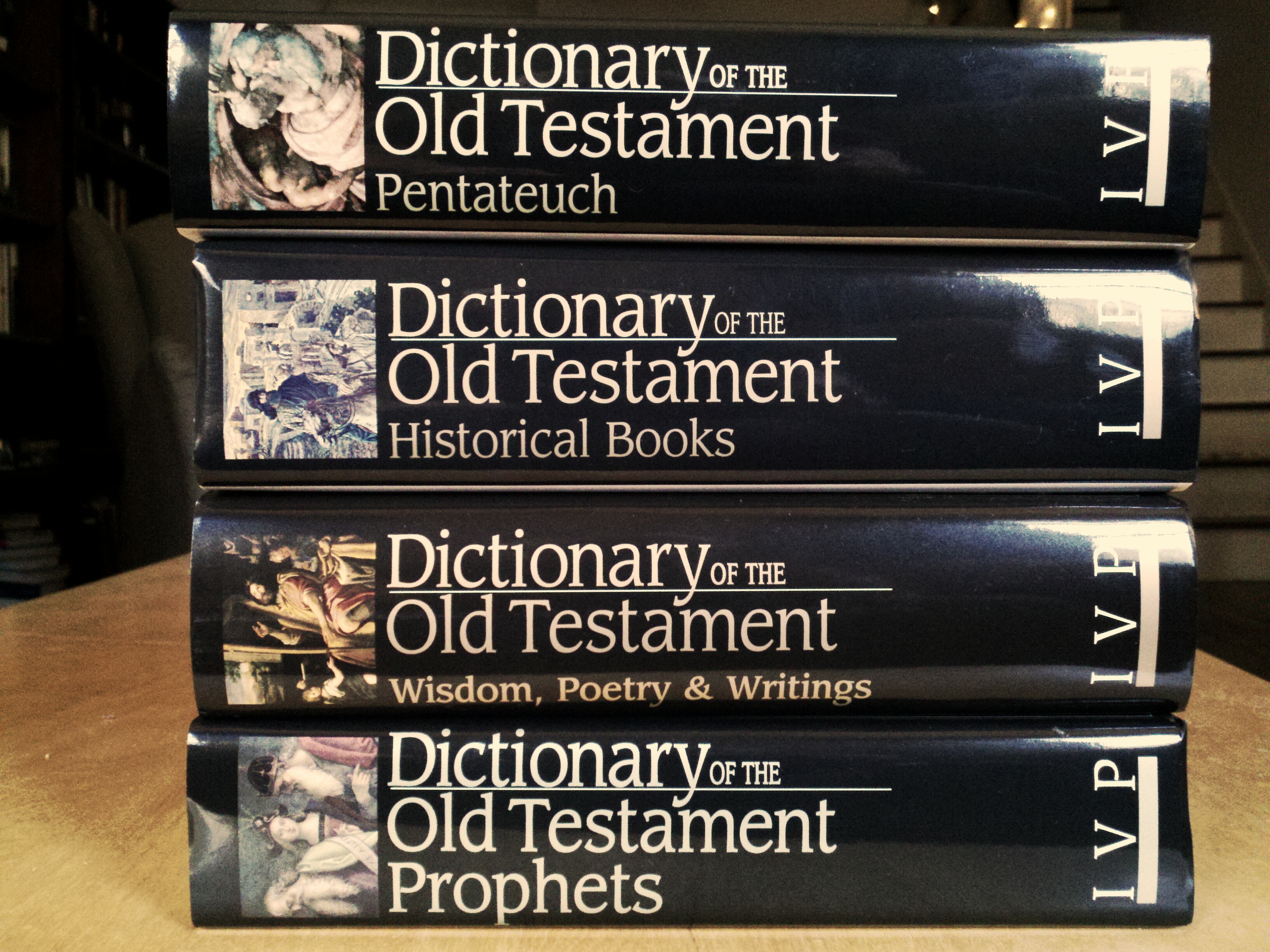
Starting in a few weeks, I’ll be teaching a survey of the Bible class through the summer at my church (I’m going to try and record it and post it here each week). To prep for this, I’ve been delving back into seminary-land, reading about 12 different OT Surveys, OT intros, and Pentateuchal commentaries to get ready for just the Intro to the Old Testament and Pentateuch parts.

And of course, this brings up the issue of the authorship of the Old Testament. Honestly, I don’t plan on going more than 2 minutes on the topic in this class, but I want that two minutes to be fair, informed, helpful, and above all, edifying to the people in the room. I want people walking away understanding that godly people disagree on this stuff and why they do. I don’t want to caricature and criticize unnecessarily.

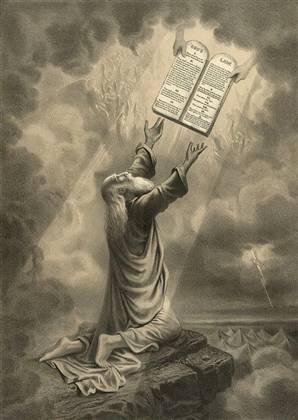
The main issue I’m working through is what part Moses (or any other pre-10,000 B.C. ancient authors/editors/redactors) had in writing the Pentateuch.

Continue reading

Obama’s War on the World (and Americans) vs. the War on Women


No, this isn’t a full post (I’m still not blogging). Just wanted to vent. A week ago, a damning piece of journalism was published in the New York Times. Or at least, it should have been damning. It was a piece by Jo Becker and Scott Shane on Obama’s free use of, and unilateral decision-making authority in, Executive “kill lists” against those he uses secret intelligence to deem as “threatening”, including American citizens. Times editors, commentators, and blogs were writing about this all last week.

And nobody cares.

I was shocked that this article made barely a ripple in the media, the blogosphere, the twittersphere, facebook, and our societal conversation in general. As others have wondered, have we really let this nation go this far down this path, that it no longer phases us? These actions by Obama are a neo-conservative’s wet dream, and liberals don’t want to–under any circumstances, it seems–criticize their guy whom they, perhaps, feel is the “lesser evil”. After all, it’s an election year.

But what does phase us as a culture? What causes the blogosphere and editorials to go crazy? A New York Times article about a tech lawsuit with this golden opening line: “Men invented the internet”. (It also has a few other gender offenses.)

Is this article insensitive and silly? Yes. Should it be talked about and criticized? Yes. Is there consistent inattention and inaction given to the needs, abilities, rights, and presence of women in our national story (and Church)? Absolutely.

But is this “War on Women” worse than Obama’s War on the World, our civil liberties, and American citizens themselves? I challenge you to answer that yourself.

(And once again: no, I don’t consider this blogging.)

The Heretical Liturgy of American Nationalism [QUOTE]


I’m suggesting that [Nationalism] constitutes a liturgy because it is a material ritual of ultimate concern: through a multisensory display, the ritual both powerfully and subtly moves us, and in so doing implants within us a certain reverence and awe, a learned deference to an ideal that might one day call for our “sacrifice”…. Over time, these rituals have a cumulative, albeit covert, effect on our imaginary. And together, I’m arguing, these constitute liturgies of ultimate concern: the ideal of national unity and commitment to it’s ideals is willing to make room for additional loyalties, but it is not willing to entertain trumping loyalties. (Just try to remain seated at the next playing of the national anthem.) The fact that there seems to be little tension between Christianity and American Nationalism is not a function of the generosity (let alone “Christianness”) of the America ideal but rather a sign of a Christianity they has accommodated itself to these military ideals of battle, military sacrifice (which is very different from the Christian ideal of martyrdom), individual (negative) freedom, and prosperity through property.

Implicit in the liturgies of American nationalism is a particular vision of human flourishing as material prosperity and ownership, as well as a particular take on intersubjectivity, beginning from a negative notion of liberty and thus fostering a generally libertarian view of human relationships that stresses noninterference. Related to this is a sense that competition and even violence is basically inscribed into the nature of the world, which thus valorizes competition and even violence, seeing war as the most intense opportunity to demonstrate these ideals. The vision of a kingdom implicit in this liturgy is antithetical to the vision of the kingdom implicit in Christian worship. I think the liturgical take on American nationalism can help us to see why so few Christians experience a tension here; it can also help to diagnose the cause of the church’s complacency and complicity: many Christians experience no tension between the gospel according to America and the gospel of Jesus Christ because, subtly and unwittingly, the liturgies of American nationalism have so significantly shaped our imagination that they have, in many ways, trumped other litutgies. Thus we now see and hear and read the gospel through the liturgical lenses of the “American Gospel”….

The republic claims to have an identity and unity about it, and even claims to have acieved the goal of shalom–to already be a nation “with” liberty and justice for all…. No hint of eschatological deferral; no sense of “not yet” failure to measure up; but a confident claim of justice here and now, secured by the republic….

And as I’ve tried to sketch above, I think there are good reasons to worry that the ideals of the republic are antithetical to some of the defining ideals of the people of God, called to imitate a suffering Savior, who was executed at the hands of military power. What’s explicit in the [Christian] Creed, if we tease it out, is in significant tension with what’s explicit in the Pledge [of Allegiance].

James K. A. Smith, Desiring the Kingdom: Worship, Worldview, & Cultural Formation

Read my thoughts on Christian Patriotism, and a related quote from Ross Douthat in Bad Religion.

Posted from WordPress for Android on my Droid X

The New York Times finally calls out Obama.


The NYTimes, the paper of record in America, finally just called out Obama on his civil liberties abuses! Satan just bought a parka.

A unilateral campaign of death is untenable. To provide real assurance, President Obama should publish clear guidelines for targeting to be carried out by nonpoliticians, making assassination truly a last resort, and allow an outside court to review the evidence before placing Americans on a kill list. And it should release the legal briefs upon which the targeted killing was based.

Read more.

Posted from WordPress for Android on my Droid X

On Post-Partisanship, Conservative Condescension, & Hope | Patrol Magazine


I love this post from Patrol last week, where Jonathan D. Fitzgerald replies to a recent post by David French at Patheos. In Fitzgerald’s piece, he encourages us to keep our post-partisanship and hope, no matter what “real life” might throw at us.

One point of dissent, though: what he calls “Idealism”, I think is a lot closer to “Realism”. Post-partisanship is very earthy, ground-level, and pragmatic, not simply conviction to an idea; it’s a commitment to the world that actually is, rather than a world conformed to pre-conceived “ideals” of right and left.

Christ isn’t pushing us to an idealized world, but rather a realized one. Just as in God’s Word and on Christ’s body, in the New Creation there will still be scars and grit and paradoxes–hardly an “ideal”–but there will also be the full realization of all the intention, promise, and telos of Creation.

This is all semantics, probably, but I think many in Church History (especially Neibuhr) would agree with this re-phrasing. Either way, read the post:

We Will Not Give in to Pessimism: A Response to David French by Jonathan Fitzgerald

I’m Obsessed with Myself (a blog fast)


I haven’t talked about it much (on this blog or to many people), but for the past 6 or 7 months I’ve been in professional counseling, primarily for anxiety (and it’s various outward expressions). There is a constant tension and busyness inside me that keeps me from living so many aspects of life. The counseling has been challenging, amazing, and painfully slow in the growth it has been producing in me.

But growth it has produced.

A couple of weeks ago, I decided to take a week off from the blog, somewhat as an experiment. That week, I experienced more freedom from the various expressions of anxiety in my life than I had for years. I began to experience once again that communion with Christ I’ve written about wanting before. I was reading his Word, praying, and serving those around me with such calm and freedom.

I then thought to myself, “Wow. That was amazing! Now, I can go back to blogging.” I came back to the blog all last week, and all the anxiety came rushing back with it.

Continue reading

“God & Country” vs. “God & Church” [QUOTE]


If American nationalism appeals to Christians because of the resemblance between the idea of America and the idea of the universal Church, then it stands to reason that the weakening of the major Christian churches, Catholic and Protestant alike, would make the Church of America (in both its progressive and conservative forms) more appealing than ever before. Almost every major Christian body has less moral authority today than it did a few generations ago, and while the idea of America has been battered over this period as well, patriotism in its various forms burns far brighter than most religious Americans’ affections for their particular churches and denominations. “God and country” has a stronger pull than “God and the Catholic bishops” or “God and the United Methodist Church,” and the partisan mind-set increasingly provides a greater sense of solidarity, shared purpose, and even eschatological fervor than the weakened confessions of Protestantism or the faded grandeur of Rome.

Ross Douthat, Bad Religion: How We Became a Nation of Heretics.

Also, read my review preview of Bad Religion, as well as some of my other thoughts on this Memorial Day 2012.

Posted from WordPress for Android on my Droid X

Memorial Day: American Malaise & Christian Skepticism


Update: Shortly after writing this, I ran across this amazing quote in Ross Douthat’s Bad Religion and posted it on the blog.

In America, today is Memorial Day. This is the day Americans pay tribute to the soldiers that have served in our nation’s military and in our various wars. I grew up in Dallas, Texas, ostensibly (as you can see to the right) the most Patriotic state in the Union (Hmm… I can hear cries of “damn right!” ringing through the air from the South….). Of the Unquestionable Cultural Orthodoxy I was raised with, the glorification of the military sat right there next to Jesus, George W. Bush, and any anti-abortion and anti-evolution efforts there may have been.

And indeed this was the pattern I observed in this nation in this past one score and one year I have been around. No matter how anti-war some “crazy wack-job” liberal was (because who could possibly be against any war we–The Great Good–were fighting), they were quick to say “but I support the troops!”

Reading the various blogs and articles throughout the interwebs, though, it seems the past year has seen a shift. As our disenchantment with every other American institution has grown, the military does not look to be exempt from this.
Continue reading