The Early Church: not so big on grace, so why are we so obsessed?


As promised, today Lore Ferguson, over at Sayable posted my second guest post on her blog, as she is on a sabbatical. My first post went up yesterday. Originally, Lore had asked me to write a post on grace. Ironically, this was the first post I wrote for her (almost an anti-grace article–even thought it’s really not). Anyway, I hope you enjoy it. Leave comments and, like I said yesterday, follow her blog. You won’t regret it. Here’s a preview of today’s post:

I grew up in a pretty stereotypical Evangelical setting, which led to a pretty stereotypical back-and-forth between guilt and self-righteousness. That is, until I heard the Gospel of radical Grace.

Many of us have this same story, where it has been so healing to hear that how God relates to us is not, in fact, based on our performance. Instead, everything necessary for God to be pleased with us has been accomplished on our behalf by his Son.

And so, in response to this, we fall in love with God’s Grace. We pray for it, long for it, and cry for it. We read books about it, write about it, and blog about it (I even did a five-part series on it myself). We try and speak it into others’ lives while trying to figure out why we don’t apply it to our own. We joyfully build our relationship with God on the glorious foundation of His Grace. It is fundamental, primary, and essential.

In short: we love Grace.

Imagine my surprise, then, as I fell in love with liturgy and forms of worship that were centuries-old, to begin noticing the utter lack of “grace” from the prayers and worship of the earliest saints.
Continue reading →

Sinning Into Our Day of Grace (and God’s Joy in it)


One of my favorite bloggers, Lore Ferguson of the blog Sayable, has taken a sabbatical from her writing for the month of May, and asked me to write a couple of guest posts on her site about grace. My first one is up todaythe second will be up tomorrow (Update: the second post is up). Feel free to read my and comment there. And be sure to follow her blog. She’s an amazing writer that can find God and beauty in the most seemingly mundane of things. Here’s a taste of my post today (it touches on some similar ideas as yesterday’s post):

Pharisees grumble: why do you eat with sinners?

He tells them a story about a lost coin and the joy one has when they find it. He then goes on to tell similar stories about a lost lamb and a lost son.

We love to jump from the coin to the lamb and the son, but Jesus says something very interesting between those sections. He reminds the Pharisees of a central truth to the heart of God:

“there is more joy in heaven over one sinner who repents than over ninety-nine persons who need no repentance.” (lk15.7)

Did you catch that? He doesn’t say: “there’s more joy over one sinner who repents over ninety-nine that do not repent.” He focuses not on our action, but on our need.

It seems there is more joy in the heart of God over his creation needing forgiveness than if it had never needed forgiveness at all. God takes joy in forgiving and being gracious, but this implies there needs to be sin to graciously forgive.

Perhaps our sin can be good news to God.

Continue reading →

Christianity as Sin Management?


Anyone that follows this site regularly has probably noticed I’ve been taking it easy on the blogging this week. As my want to blog slowly began turning into a need, I knew I had to take a step back and approach it a little more leisurely.

This past week, our Executive Pastor preached a great sermon on the “I am the Vine, you are the branches”/”Abiding with Christ” section of John, and it really re-enlivened my taste-buds for time spent with Jesus. I knew I had to reassess my priorities. My near-daily blog writing was only possible because I was sacrificing sleep to do it (as I’ve done before), which in turn made it all the more difficult to wake up in the morning and do anything resembling communing with Christ.

And so, this week, I have been able to get up more easily, make my coffee, pour some cereal and do some devotional time.
Continue reading

Yep. Still Easter. (and you’re already Resurrected)


I posted this earlier last week pretty late in the day, and not many people ended being able to catch it. So, I’m re-blogging it, hoping it can encouraging all of you.

Paul Burkhart's avatarthe long way home

As I wrote a couple of weeks ago, it’s still Easter. Yesterday was only the fourth Sunday of Easter (out of seven).

We’re only half-way through Easter!

The fundamental thing happening at the Resurrection was this: God was ushering in the first part of what would be called the “New Creation”. We usually think of something being “resurrected” as being “brought back”, but what Jesus did was far more than simply moving the clock backwards and rising again. In a sense, he was instead  “brought forward.

As my pastor loves to say, “Jesus is God’s future in our present”. Or, as Eugene Peterson put it in The Message translation, Jesus is “leading the resurrection parade” for the rest of us (I’ve always loved that image).

But how do we personally relate to this Resurrection/New Creation now? When I think of “Resurrection” and “New Creation”, what usually comes to my mind is Jesus…

View original post 483 more words

Thoreau on the Eternal God, made Present [QUOTE]


‎In eternity there is indeed something true and sublime. But all these times and places and occasions are now and here. God himself culminates in the present moment, and will never be more divine in the lapse of all the ages. And we are enabled to apprehend at all what is sublime and noble only by the perpetual instilling and drenching of the reality that surrounds us…The poet or the artist never yet had so fair and noble a design but some of his posterity at least could accomplish it.

Henry David Thoreau, Walden (via Austin Ricketts, who’s contributed to this blog before. My thoughts on this topic here.)

In Defense of Douthat: a response to Patrol Magazine


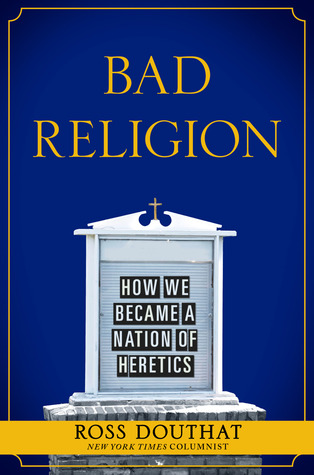
Last night I had the privilege of going to a book talk and signing by Ross Douthat (a new hero of mine), promoting his new book Bad Religion: How We Became a Nation of Heretics. It was, more or less, a summary of the book’s primary lines of argumentation, followed by a Q&A.

The book itself (which I am only half-way through) lays out some pretty provocative ideas that are sure to ruffle the sentiments of most anyone that finds themselves securely in allegiance with either of the left-right poles of society. I have yet to find someone who sits in ambivalence concerning this book. It evokes. It calls out. It leads to introspection and reaction. You either love it, or you hate it.

This is further complicated by the times we live in. In a world of blogs, podcasts, comment boxes, and the online immediacy of opinion, there is an unspoken and unrealistic expectation of comprehensiveness in any person’s expression of thought. There was a time where an author would write a book, others would write whole books in response, and then the original author would respond with a follow-up book. This process then moved on to newspapers and magazines (the Federalist Papers come to mind).

Continue reading

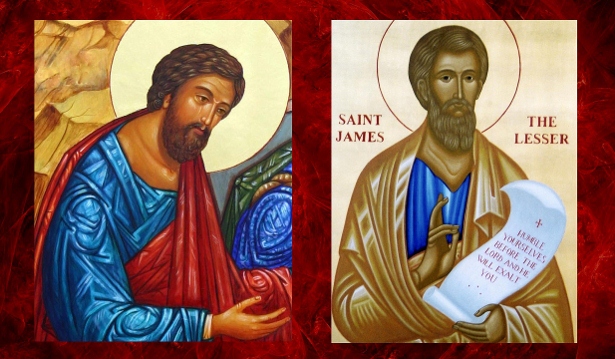
a prayer, a creed, and some history for the Holy Day of Apostles Philip & James


prayer.

Almighty God, who gave to your apostles Philip and James grace and strength to bear witness to the truth: Grant that we, being mindful of their victory of faith, may glorify in life and death the Name of our Lord Jesus Christ; who lives and reigns with you and the Holy Spirit, one God, now and for ever. Amen.
(from the Book of Common Prayer)

apostles’ creed.

I believe in God, the Father almighty, creator of heaven and earth.

I believe in Jesus Christ, his only son, our Lord.
He was conceived by the power of the Holy Spirit and born of the Virgin Mary.
He suffered under Pontius Pilate, was crucified, died, and was buried.
He descended to the dead. On the third day he rose again.
He ascended into heaven, and is seated at the right hand of the Father.
He will come again to judge the living and the dead.

I believe in the Holy Spirit, the holy catholic Church, the communion of saints, the forgiveness of sins, the resurrection of the body, and the life everlasting. Amen.
Continue reading

Yep. Still Easter. (and you’re already Resurrected)


As I wrote a couple of weeks ago, it’s still Easter. Yesterday was only the fourth Sunday of Easter (out of seven).

We’re only half-way through Easter!

The fundamental thing happening at the Resurrection was this: God was ushering in the first part of what would be called the “New Creation”. We usually think of something being “resurrected” as being “brought back”, but what Jesus did was far more than simply moving the clock backwards and rising again. In a sense, he was instead  “brought forward.

As my pastor loves to say, “Jesus is God’s future in our present”. Or, as Eugene Peterson put it in The Message translation, Jesus is “leading the resurrection parade” for the rest of us (I’ve always loved that image).

But how do we personally relate to this Resurrection/New Creation now? When I think of “Resurrection” and “New Creation”, what usually comes to my mind is Jesus, the World being glorified, institutions being made just, a bunch of future stuff that I’ll participate in, and my role in ushering in New Creation; I don’t so much think about my participating in it right now in the present.
Continue reading

one of the most enjoyable TED talks I’ve watched [casual fri]


ALL TED talks are amazing, but thee guys are particularly funny and their content is so interesting. The talk is about the advent of Culturomics, which is for culture what genomics is for human genetics. They reference a Google Tool that can analyze the words from 5 million of the books they have scanned into their system. You can play with it here. Enjoy the talk.

READ THIS BOOK: “Genesis For Normal People” by Peter Enns & Jared Byas


A theologian whom I respect and a professor with whom I went to seminary have teamed up to offer a really great book on the first book of the Bible. Genesis for Normal People: A Guide to the Most Controversial, Misunderstood, and Abused Book of the Bible is a walk-through of Genesis following its themes and history. They open with these words:

Genesis is an ancient story. This may sound like an obvious or even patronizing way to begin. Of course it’s an ancient story. But once we look at what this means, that short phrase might be the most important thing to remember about Genesis. It will guide the rest of this book, showing us how to approach Genesis and what we should expect from it.

For many, the opening book of the Bible is a little confusing. It reads strangely, it doesn’t “sound” like any other book of the Bible, and, as Christians, we don’t know why we would even want to read it (except maybe for the first few chapters, but even those have a bunch of problems of their own).

Ever wondered what a sane, intelligent, and faithful understanding of Genesis would be in light of the findings of science or history? Ever pondered what the relationship between Adam and Darwin might look like? Have you ever been confused by a random history channel special that cast doubt on some of the stuff in Genesis? Ever tried to read the darn book only to only to ask yourself why you started to in the first place? Do you want to know how it connects to the rest of the Bible? Would you want all this talked about and explained in everyday terms with little prior biblical or theological knowledge needed?

Well, this is the book for you. (If you’re still skeptical, you can read a wonderfully comprehensive review of the book here.)

A quick note for any atheists or skeptics that find themselves reading this: this book is also for you. As a champion of (what I feel are) “not crazy” ways of reading Genesis, I have received a lot of pushback from atheists over the years who try and argue that the only true and faithful ways to read the book are in those (what I feel are) “crazy” ways. They try and say that if you “accommodate” the difficulties in Genesis away, you no longer have the faith you were trying to defend in the first place, and so you might as well abandon the whole enterprise. I challenge you to read this book and walk away feeling the same way.

_______

As far as obtaining the book, I have good news, and I have bad news:

Good News: it’s only $1.99 (for a limited time, then it will go up to $4.99)

Bad News: at least for now, it’s only available for Kindle E-Readers.

The Good News about the Bad News: you can download free apps on your computer, phone, or tablet to read the book anyway. A recent survey by the Pew Research Center showed that computers were the most popular device to read an ebook on; not a phone, tablet, or even a Kindle. So….you have no excuse.

a note on Grace from a friend (I miss you, Michael Spencer)


Two years ago (almost to the day), a dear friend of mine passed away. Michael Spencer (or, the “Internet Monk” as he was more widely known) encouraged me for years with his blog writing critiquing the wider church with both wisdom and bite (the site is being continued by one of his good friends and avid readers). He died of cancer, and in that death, the Church lost a great man. His one published book, Mere Churchianity, was published several months later. It’s a great summary of his life and thought. I highly encourage anyone to get it.

While he was still living, I wrote on this site about how he influenced and affected me. I also wrote this piece for Patrol Magazine after he died (I still remember the tears blurring my vision as I typed that up).

Anyway, another dear blogging friend, Lore Ferguson, is going on sabbatical from her own amazing blog and asked me to write a guest post on–of all topics–grace. I told a couple of my friends this the other night, and one of them said, “Wow! That’s you favorite topic!” It certainly doesn’t feel that way.

As I was thinking through that, I was reminded of the best thing I’ve ever read on grace, and I wanted to share it with you all. It’s an essay by Michael Spencer. I cried through this piece as well (a lot of crying in this post. Hmm…). It was the inspiration for the sermon I delivered at my church’s prison ministry that later was turned into a five-part series on this blog called “Holy Week & the Scandal of Grace“.

I want to give you the link to the article, an extended quote, and then the end of his piece that I adapted as a benediction at the end of the sermon. Enjoy. And grab some coffee. And some tissues.

Link: Our Problem with Grace: Sweat. Hand-wringing. “Yes, but…”
Continue reading

Going Medieval on my Atheist Self (on art & assurance)


Even back in my hyper-Calvinist days–assured that I was chosen, secure, and Elected unto salvation–I recognized the reality that if I were not a Christian, I’d certainly be an Atheist. If there was some way that I could be convinced that Christianity was a fraud (and here are some ways), I would not face any temptation to be a Buddhist or New Age mystic or anything of the like. No, No. I would be a hardened, militant Atheist.

How do I know this? Well, Christianity has the idea that within each believer is the “Old Self” and the “New Self”. This Old Self is, essentially, who we are apart from God.

That Old Self, though we fight it our entire Christian lives, won’t actually be fully snuffed out until the end of all things. And so, in a sense, if we’re sensitive to it, we can sometimes “feel” that “without-God” version of ourselves rolling around in there somewhere in our hearts.
Continue reading

Ross Douthat: a new hero of mine


Look at that face. If I saw him walking down the street, I would think he was just another guy; I’d have no idea the kindred spirit that lay in this man’s mind.

Ross Douthat (don’t ask how to say his last name), like myself, seems to be a man that life has continually thrown from one-extreme to the other: born in San Francisco, and then transplanted to New Haven, Connecticut; attended Harvard and then turned around three years later and wrote a book denouncing the Privileged culture there; started out as a Pentecostal, then converted to Catholicism; wrote for his college newspaper and is now the youngest-ever Op-Ed columnist at the New York Times.

These extremes seem to have helped him settle in nicely with a well-informed and balanced view, able to to comfortably exist, engage, and critique in a world of poly-everything.

Over the past year or so, I’ve seen (and been sent), a few of his articles and blog posts, but I think I was missing something. All I knew of him was that he was a Catholic writer with a sharp mind, and I didn’t pay him much proactive attention.

And this was to my great detriment.

Somehow I stumbled upon this set of exchanges on Slate, where Will Saletan, one of the most thoughtful secular liberals I’ve ever read, engages Douthat on some issues raised in Douthat’s newest book Bad Religion: How We Became a Nation of Heretics. This exchange cemented Douthat’s stature in my mind, as well as his place in my reading repertoire. It’s great. You all need to read it.

I’ve started to read the book, and it’s definitely going to be a personal classic for me and a turning point in my development as a solidly religious person firmly engaged in the body politic. I also have the privilege of attending a book talk/signing with him next week here in Philly.

I have much more I could say and commend about him (including the fact that he’s a Catholic who fully-embraces praying in tongues–kindred spirit indeed!), but to do so would steal precious time from you, the gracious reader of this blog post, that could be spent reading Douthat’s work itself. Here’s a representative piece to get you started.

Oh. And you’re welcome.

Hey! It’s Still Easter!


When I had appendicitis last week, our preaching pastor visited me in the hospital. Having missed the service that Sunday–the first after Easter Sunday–I asked him what new sermon series he had started, now that Easter was over.

He looked at me a little surprised (as I’ve been so into liturgy and the Church Calendar the past couple of years) and informed me of something that I had apparently missed:

Easter is an entire season that is 50 days long.

(Wikipedia confirms.) Oh why do we shorten our time to rejoice and celebrate? This season is our excuse to go crazy and be joyful, bold, secure, and confident before our God and this world.

We have 33 more days before we celebrate Pentecost.
Continue reading

our failed function, God’s full faithfulness | Advent [reblog]


In honor of Earth Day 2012, I wanted to post this meditation I did during the Christmas season on how Jesus’ incarnation and life changes how we interact with the world around us.

Paul Burkhart's avatarthe long way home

This week, I’m meditating on a few particular aspects of the Advent event. I’m thinking through and writing about how, in Jesus, God inhabited our creaturely form, care-taking function, comprehensive fallenness, and communal formation.

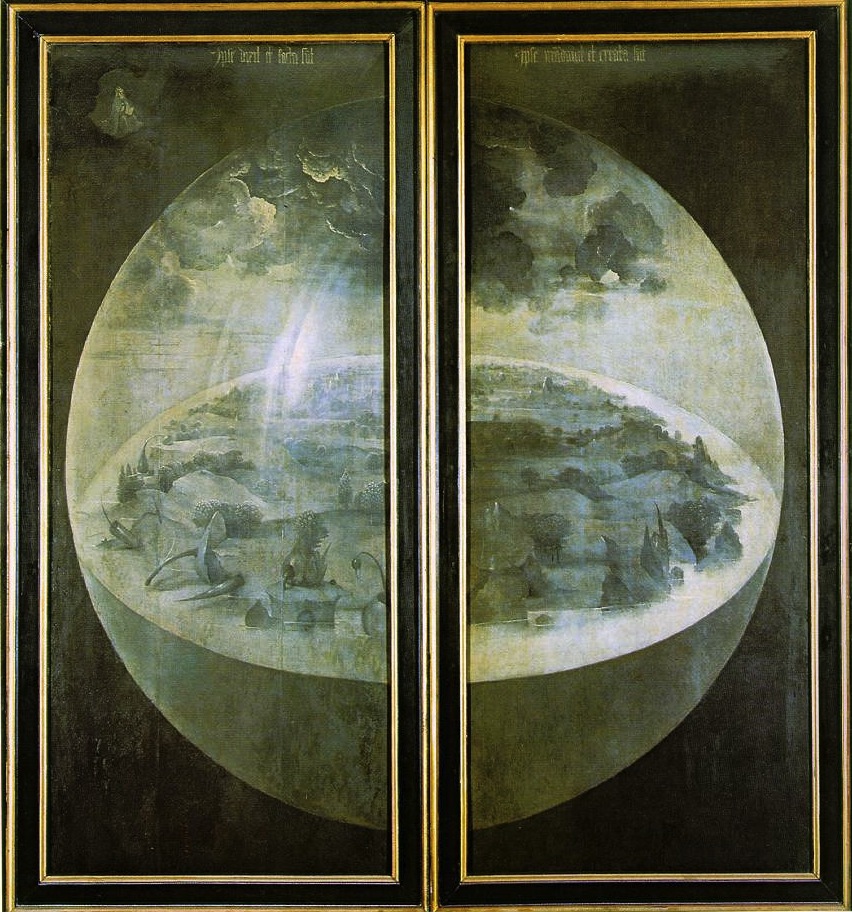
As I said in the teaching I gave over the summer about the Nature and Narrative of the Bible, the opening chapters of the Bible describe this divine act of creating in very architectural terms; the same words are later used in describing the building of the tabernacle and the temple. In this we see that God’s act of creating was, in essence, building this world as his temple in which he would rest (for more on this see John Walton’s amazing book, The Lost World of Genesis One, or just watch this short video).

In the story, he builds and establishes this Temple-World, and then creates and ordains…

View original post 757 more words