Christianity/Theology

Obama’s War on the World (and Americans) vs. the War on Women
No, this isn’t a full post (I’m still not blogging). Just wanted to vent. A week ago, a damning piece of journalism was published in the New York Times. Or at least, it should have been damning. It was a piece by Jo Becker and Scott Shane on Obama’s free use of, and unilateral decision-making authority in, Executive “kill lists” against those he uses secret intelligence to deem as “threatening”, including American citizens. Times editors, commentators, and blogs were writing about this all last week.
I was shocked that this article made barely a ripple in the media, the blogosphere, the twittersphere, facebook, and our societal conversation in general. As others have wondered, have we really let this nation go this far down this path, that it no longer phases us? These actions by Obama are a neo-conservative’s wet dream, and liberals don’t want to–under any circumstances, it seems–criticize their guy whom they, perhaps, feel is the “lesser evil”. After all, it’s an election year.
But what does phase us as a culture? What causes the blogosphere and editorials to go crazy? A New York Times article about a tech lawsuit with this golden opening line: “Men invented the internet”. (It also has a few other gender offenses.)
Is this article insensitive and silly? Yes. Should it be talked about and criticized? Yes. Is there consistent inattention and inaction given to the needs, abilities, rights, and presence of women in our national story (and Church)? Absolutely.
But is this “War on Women” worse than Obama’s War on the World, our civil liberties, and American citizens themselves? I challenge you to answer that yourself.
(And once again: no, I don’t consider this blogging.)
The Heretical Liturgy of American Nationalism [QUOTE]
I’m suggesting that [Nationalism] constitutes a liturgy because it is a material ritual of ultimate concern: through a multisensory display, the ritual both powerfully and subtly moves us, and in so doing implants within us a certain reverence and awe, a learned deference to an ideal that might one day call for our “sacrifice”…. Over time, these rituals have a cumulative, albeit covert, effect on our imaginary. And together, I’m arguing, these constitute liturgies of ultimate concern: the ideal of national unity and commitment to it’s ideals is willing to make room for additional loyalties, but it is not willing to entertain trumping loyalties. (Just try to remain seated at the next playing of the national anthem.) The fact that there seems to be little tension between Christianity and American Nationalism is not a function of the generosity (let alone “Christianness”) of the America ideal but rather a sign of a Christianity they has accommodated itself to these military ideals of battle, military sacrifice (which is very different from the Christian ideal of martyrdom), individual (negative) freedom, and prosperity through property.
Implicit in the liturgies of American nationalism is a particular vision of human flourishing as material prosperity and ownership, as well as a particular take on intersubjectivity, beginning from a negative notion of liberty and thus fostering a generally libertarian view of human relationships that stresses noninterference. Related to this is a sense that competition and even violence is basically inscribed into the nature of the world, which thus valorizes competition and even violence, seeing war as the most intense opportunity to demonstrate these ideals. The vision of a kingdom implicit in this liturgy is antithetical to the vision of the kingdom implicit in Christian worship. I think the liturgical take on American nationalism can help us to see why so few Christians experience a tension here; it can also help to diagnose the cause of the church’s complacency and complicity: many Christians experience no tension between the gospel according to America and the gospel of Jesus Christ because, subtly and unwittingly, the liturgies of American nationalism have so significantly shaped our imagination that they have, in many ways, trumped other litutgies. Thus we now see and hear and read the gospel through the liturgical lenses of the “American Gospel”….
The republic claims to have an identity and unity about it, and even claims to have acieved the goal of shalom–to already be a nation “with” liberty and justice for all…. No hint of eschatological deferral; no sense of “not yet” failure to measure up; but a confident claim of justice here and now, secured by the republic….
And as I’ve tried to sketch above, I think there are good reasons to worry that the ideals of the republic are antithetical to some of the defining ideals of the people of God, called to imitate a suffering Savior, who was executed at the hands of military power. What’s explicit in the [Christian] Creed, if we tease it out, is in significant tension with what’s explicit in the Pledge [of Allegiance].
—James K. A. Smith, Desiring the Kingdom: Worship, Worldview, & Cultural Formation
Read my thoughts on Christian Patriotism, and a related quote from Ross Douthat in Bad Religion.
Posted from WordPress for Android on my Droid X
The New York Times finally calls out Obama.
The NYTimes, the paper of record in America, finally just called out Obama on his civil liberties abuses! Satan just bought a parka.
A unilateral campaign of death is untenable. To provide real assurance, President Obama should publish clear guidelines for targeting to be carried out by nonpoliticians, making assassination truly a last resort, and allow an outside court to review the evidence before placing Americans on a kill list. And it should release the legal briefs upon which the targeted killing was based.
Posted from WordPress for Android on my Droid X
On Post-Partisanship, Conservative Condescension, & Hope | Patrol Magazine
I love this post from Patrol last week, where Jonathan D. Fitzgerald replies to a recent post by David French at Patheos. In Fitzgerald’s piece, he encourages us to keep our post-partisanship and hope, no matter what “real life” might throw at us.
One point of dissent, though: what he calls “Idealism”, I think is a lot closer to “Realism”. Post-partisanship is very earthy, ground-level, and pragmatic, not simply conviction to an idea; it’s a commitment to the world that actually is, rather than a world conformed to pre-conceived “ideals” of right and left.
Christ isn’t pushing us to an idealized world, but rather a realized one. Just as in God’s Word and on Christ’s body, in the New Creation there will still be scars and grit and paradoxes–hardly an “ideal”–but there will also be the full realization of all the intention, promise, and telos of Creation.
This is all semantics, probably, but I think many in Church History (especially Neibuhr) would agree with this re-phrasing. Either way, read the post:
We Will Not Give in to Pessimism: A Response to David French by Jonathan Fitzgerald
I’m Obsessed with Myself (a blog fast)
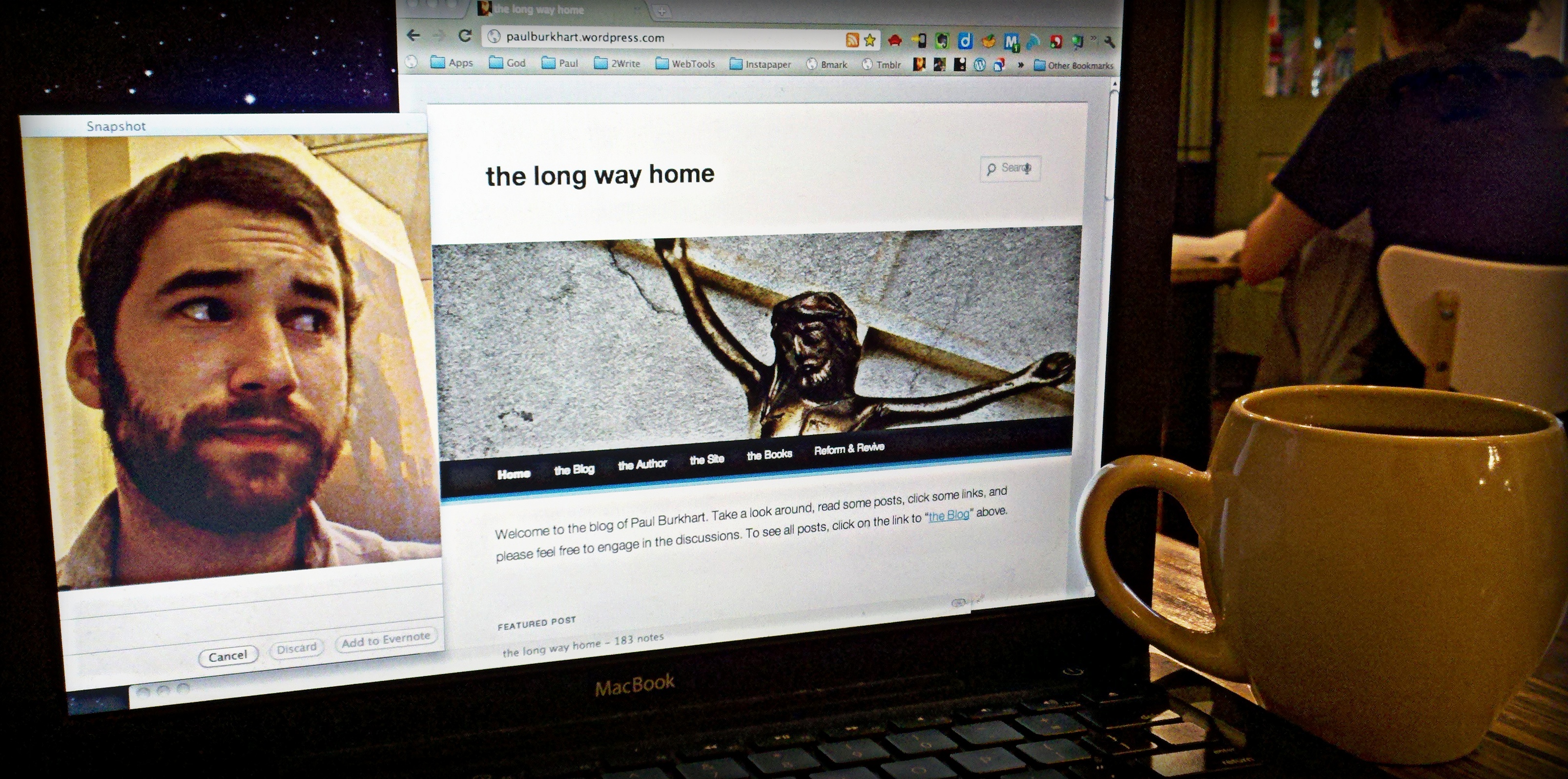
I haven’t talked about it much (on this blog or to many people), but for the past 6 or 7 months I’ve been in professional counseling, primarily for anxiety (and it’s various outward expressions). There is a constant tension and busyness inside me that keeps me from living so many aspects of life. The counseling has been challenging, amazing, and painfully slow in the growth it has been producing in me.
But growth it has produced.
A couple of weeks ago, I decided to take a week off from the blog, somewhat as an experiment. That week, I experienced more freedom from the various expressions of anxiety in my life than I had for years. I began to experience once again that communion with Christ I’ve written about wanting before. I was reading his Word, praying, and serving those around me with such calm and freedom.
I then thought to myself, “Wow. That was amazing! Now, I can go back to blogging.” I came back to the blog all last week, and all the anxiety came rushing back with it.
“God & Country” vs. “God & Church” [QUOTE]
If American nationalism appeals to Christians because of the resemblance between the idea of America and the idea of the universal Church, then it stands to reason that the weakening of the major Christian churches, Catholic and Protestant alike, would make the Church of America (in both its progressive and conservative forms) more appealing than ever before. Almost every major Christian body has less moral authority today than it did a few generations ago, and while the idea of America has been battered over this period as well, patriotism in its various forms burns far brighter than most religious Americans’ affections for their particular churches and denominations. “God and country” has a stronger pull than “God and the Catholic bishops” or “God and the United Methodist Church,” and the partisan mind-set increasingly provides a greater sense of solidarity, shared purpose, and even eschatological fervor than the weakened confessions of Protestantism or the faded grandeur of Rome.
—Ross Douthat, Bad Religion: How We Became a Nation of Heretics.
Also, read my review preview of Bad Religion, as well as some of my other thoughts on this Memorial Day 2012.
Posted from WordPress for Android on my Droid X
Memorial Day: American Malaise & Christian Skepticism
 Update: Shortly after writing this, I ran across this amazing quote in Ross Douthat’s Bad Religion and posted it on the blog.
In America, today is Memorial Day. This is the day Americans pay tribute to the soldiers that have served in our nation’s military and in our various wars. I grew up in Dallas, Texas, ostensibly (as you can see to the right) the most Patriotic state in the Union (Hmm… I can hear cries of “damn right!” ringing through the air from the South….). Of the Unquestionable Cultural Orthodoxy I was raised with, the glorification of the military sat right there next to Jesus, George W. Bush, and any anti-abortion and anti-evolution efforts there may have been.
And indeed this was the pattern I observed in this nation in this past one score and one year I have been around. No matter how anti-war some “crazy wack-job” liberal was (because who could possibly be against any war we–The Great Good–were fighting), they were quick to say “but I support the troops!”
Reading the various blogs and articles throughout the interwebs, though, it seems the past year has seen a shift. As our disenchantment with every other American institution has grown, the military does not look to be exempt from this.
Continue reading
Wedding: done!

“Sleeping Alone”: for all those hurting in their singleness…
 My good (online) friend Lore Ferguson (for whose site I recently guest-posted) just had an old post of her’s published on the site The High Calling. It’s called “Sleeping Alone” and it’s some of her meditations on the sustaining life of God in her singleness.
And wow, is it amazing. It’s raw, honest, unflinching, and gracious. Read it right now and then come back here. Here’s an excerpt:
Singleness is a beautiful thing and when I take account of the past decade I see a faithfulness to its beauty in my life in a way that only comes from grace, but I also see a succession of tiny funerals every step of the way. A cemetery full of them. Adventures I have had alone. Mornings I have woken alone. Moments I have reveled in alone. Each one bringing joy in its experience and mourning in its completion.
Life is meant to be shared and marriage is not the only way to share life, I know this, but the mystery of two flesh becoming one is a mingling that cannot be known by me, with my bed all to myself, 400 thread count sheets, open window, and quiet morning. And I mourn this.
“religion + politics = nothing good” by James Madison [QUOTE]
What influence, in fact, have ecclesiastical establishments had on society? In some instances they have been seen to erect a spiritual tyranny on the ruins of the civil authority; in many instances they have been seen upholding the thrones of political tyranny; in no instance have they been the guardians of the liberties of the people. Rulers who wish to subvert the public liberty may have found an established clergy convenient allies.
— James Madison, Memorial And Remonstrance Against Religious Assessments, June 20, 1785.
(via Charlie Pierce at Esquire’s political blog and Twitter)
MUST-READ: “Why I Will Not Divorce the Bible” by Jared Byas

My fellow former-Westminsterian (and co-author of a book I plugged a few weeks ago), Jared Byas, just posted an incredible blog post on his blog, Seeking the Good & Claiming it for the Kingdom. The post is called “Why I Will Not Divorce the Bible” and he articulates in such clear prose and winsome graciousness many of the thoughts and perspectives I have when engaging the Bible and then turning to engage the world around me.
Byas writes about how Evangelicals and theological “progressives” both end up devaluing the Bible and not truly respecting it or being “married” to it. He does a great job of exposing the reductionism of both sides as they use various techniques to keep the Bible at arm’s length so they don’t really have to deal with it as it is. (I’ve written similarly before.)
Continue reading
Pentecost is Coming: on Law & Spirit (p.s. Easter is forever.)
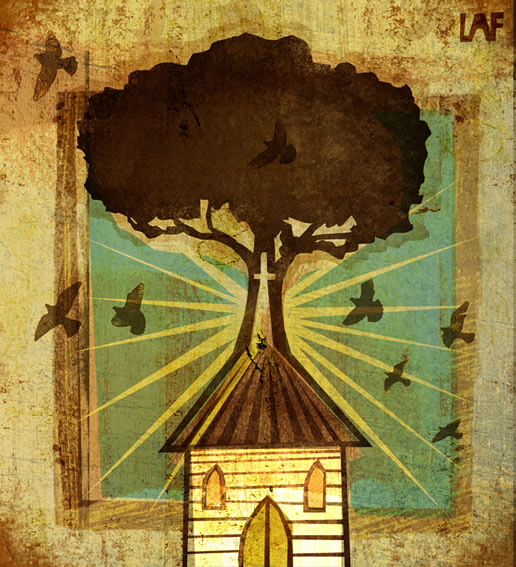 On the night of Passover, a lamb was killed so that God’s people would live. Fifty days later, God offered his law to his people–a picture of who he was, a mark of who his people would be, and the equipping of his people for the purposes God had for them.
And that’s the New Testament version.
Easter officially comes to an end this Sunday. Then comes Pentecost, the season in which we celebrate the Holy Spirit falling on the apostles, fifty days after Jesus’ death (hence the name Penta-cost). This day is celebrated as the “birthday” of the Church. Jesus had told the disciples to go out into the world ministering this Gospel to the world, but first, to wait. What would be so important as to put the brakes on the mission of God in the world?
The Holy Spirit.
Continue reading
Compline: Now I Lay me Down to Sleep (for grown-ups)
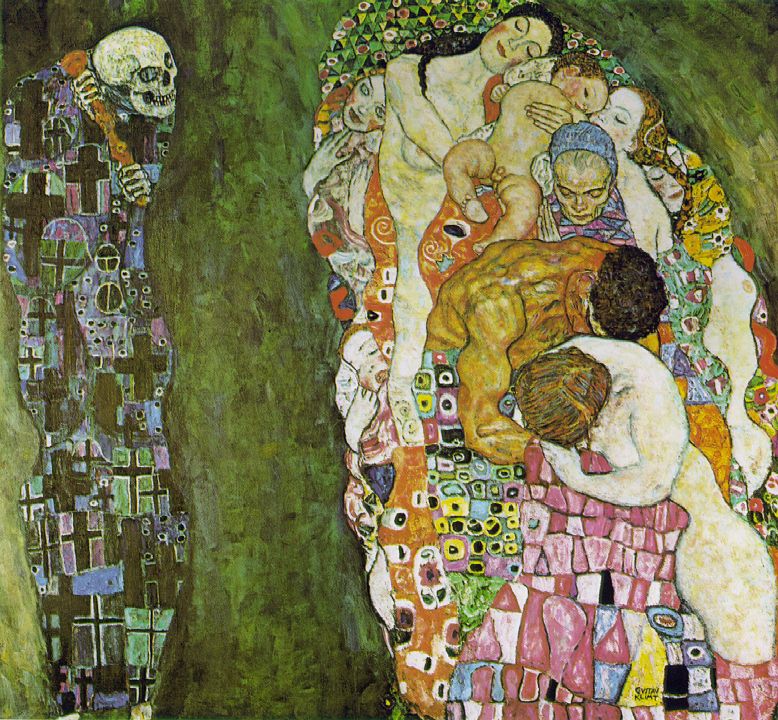 I’ve taken to doing Compline devotions before I go to sleep. In the Church tradition of praying the hours of the day, “Compline” is the word used to describe that twilight space at the completion of the day, between evening and morning. Prayers and devotions for Compline are usually meant to be done right before a person (or couple) goes to sleep (perhaps even done in bed–that’s where I do them).
These devotions have helped mitigate that tendency in myself (which I’ve written about before) to try and ignore the voices of both God and contemplation within my heart as I end my day. These beautiful prayers give me a space that forced me speak to and with God and cry for mercy.
Continue reading
“But even if not” | one of the best sermons I’ve ever heard, by Sam Wells
This past weekend, I had the honor of being at Duke Divinity’s baccalaureate for their graduating divinity students. It was a full-scale service (minus communion, and plus the hood ceremony for the graduates), complete with songs, prayers, and a homily.
And oh what a homily it was.
That night, Sam Wells, the (now former) dean of Duke Chapel, delivered his last ever message as dean. Late last year, he accepted the call to vicar of St. Martin-in-the-Fields in London, and this was the last homily he was to offer to these students he obviously loved so much. These final words to them were purposeful and intense, offering a handhold for each one of us in the muddy waters of life and vocation.
I pray these words impact you as they did me, and that you return to them often. You can view the message below, or check out Duke Chapel’s myriad of other ways to find and keep up with their messages. The message starts at 57:40 (the embedded video won’t jump to that time-mark automatically, but this link will take you right there if you don’t want to click around below).

Enjoy the Post? Leave a tip with Square Cash!
 the long way home